3 Results for "

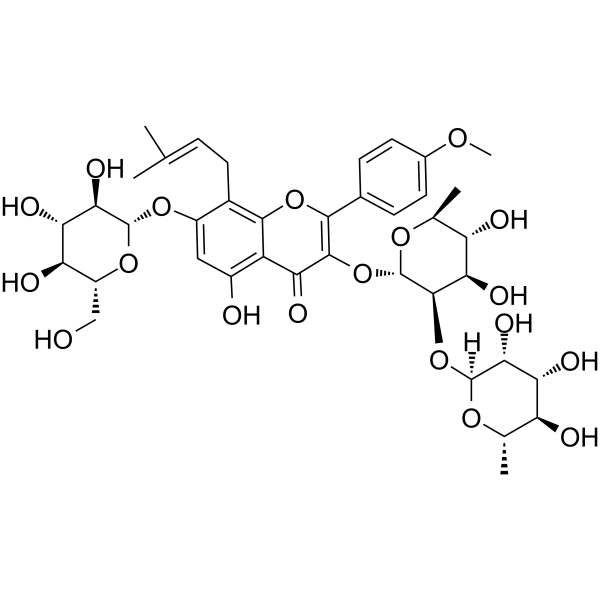
epimedin C

" in MedChemExpress (MCE) Product Catalog:
Products (3)

3 Results for "epimedin C" in MCE Product Catalog:

6
6 Cited Publications
Cat. No.: HY-N0260
CAS No.: 110642-44-9
Synonyms: epimedin-C; Baohuoside-VI
Epmedin C (Epimedin-C; Baohuoside-VI) is an orally active anti-inflammatory agent and immunomodulator that binds to multiple key proteins including UCP1, Caspase-1, CDK2 and Keap1. Epmedin C inhibits epithelial cell proliferation by disrupting the complex function of CDK2/Cyclin E. Epmedin C also upregulates Nrf2 expression, reduces ROS levels and inhibits pro-inflammatory cytokine secretion, thereby effectively restoring antibody production and alleviating tissue damage. Epmedin C has good safety with no hepatotoxicity or skin sensitization, and it has been used in studies on diseases such as obesity, Deoxynivalenol (HY-N6684)-induced immunotoxicity and mammary hyperplasia .
loading...
    loading...
Cat. No.: HY-N8086
CAS No.: 205445-00-7
Synonyms: epimedin I
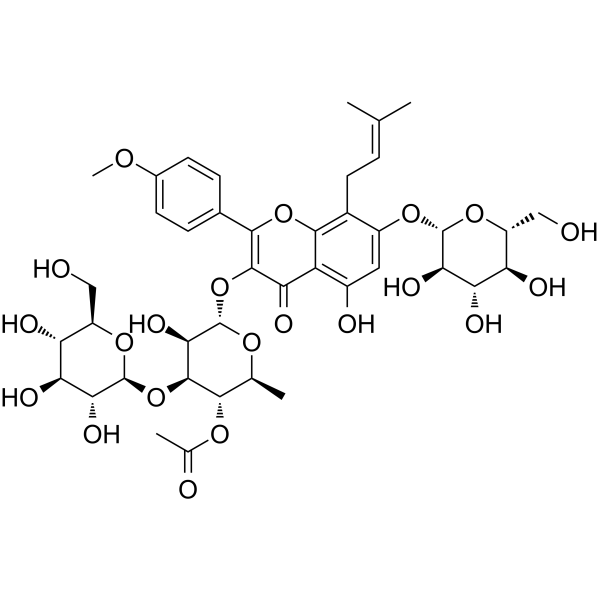
Korepimedoside C (Epimedin I), a flavonol glycoside, is isolated from the aerial parts of Epimedium koreanum Nakai. Epimedium koreanum Nakai is a famous Chinese herbal medicine for the research of impotence, osteoporosis, immune suppression and cardiovascular diseases .
loading...
    loading...
Cat. No.: HY-N0260R
CAS No.: 110642-44-9
Synonyms: epimedin-C (Standard); Baohuoside-VI (Standard)
Epmedin C (Standard) is the analytical standard of Epmedin C. This product is intended for research and analytical applications. Epmedin C (Epimedin-C; Baohuoside-VI) is an orally active anti-inflammatory agent and immunomodulator that binds to multiple key proteins including UCP1, Caspase-1, CDK2 and Keap1. Epmedin C inhibits epithelial cell proliferation by disrupting the complex function of CDK2/Cyclin E. Epmedin C also upregulates Nrf2 expression, reduces ROS levels and inhibits pro-inflammatory cytokine secretion, thereby effectively restoring antibody production and alleviating tissue damage. Epmedin C has good safety with no hepatotoxicity or skin sensitization, and it has been used in studies on diseases such as obesity, Deoxynivalenol (HY-N6684)-induced immunotoxicity and mammary hyperplasia .
loading...
    loading...

