1. Search Result
Search Result
Results for "

eukaryotic ribosome

" in MedChemExpress (MCE) Product Catalog:

13

Inhibitors & Agonists

1

MCE Kits

1

Natural
Products

Cat. No. Product Name Target Research Areas Chemical Structure
  • HY-114231B
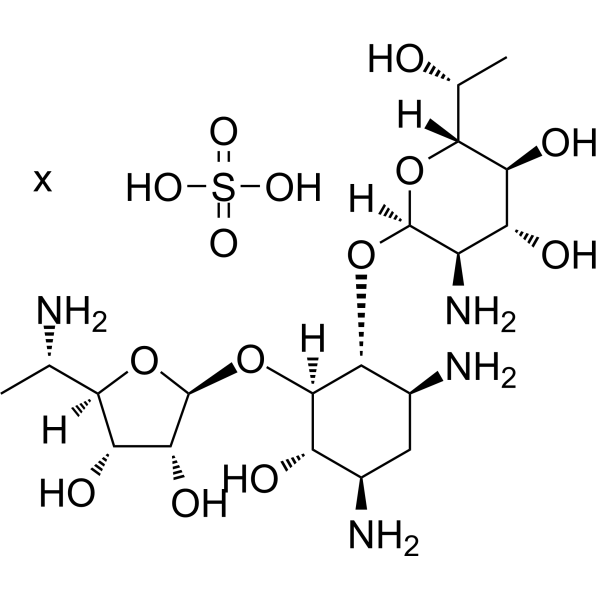
    Exaluren disulfate
    2 Publications Verification

    ELX-02 disulfate; NB-124 disulfate

    DNA/RNA Synthesis Inflammation/Immunology
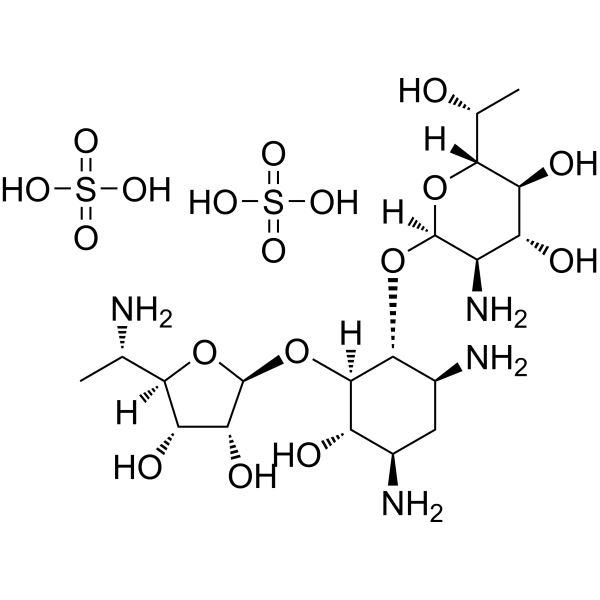
    Exaluren (ELX-02; NB-124) disulfate is an synthetic eukaryotic ribosome-selective glycoside that induces read-through of nonsense mutations, resulting in normally localized full-length functional proteins. Exaluren disulfate is used for the research of cystic fibrosis caused by nonsense mutations .
    Exaluren disulfate
  • HY-114231
    Exaluren
    2 Publications Verification

    ELX-02; NB-124

    Drug Derivative Inflammation/Immunology
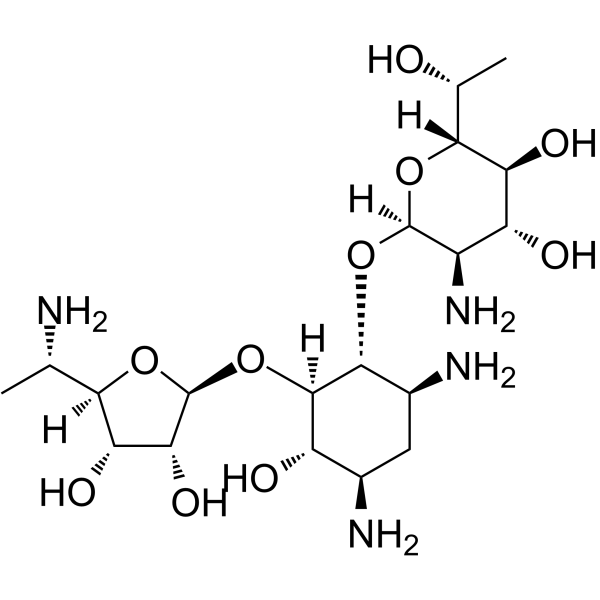
    Exaluren (ELX-02; NB-124) is an synthetic eukaryotic ribosome-selective glycoside that induces read-through of nonsense mutations, resulting in normally localized full-length functional proteins. Exaluren is used for the research of cystic fibrosis caused by nonsense mutations .
    Exaluren
  • HY-100816
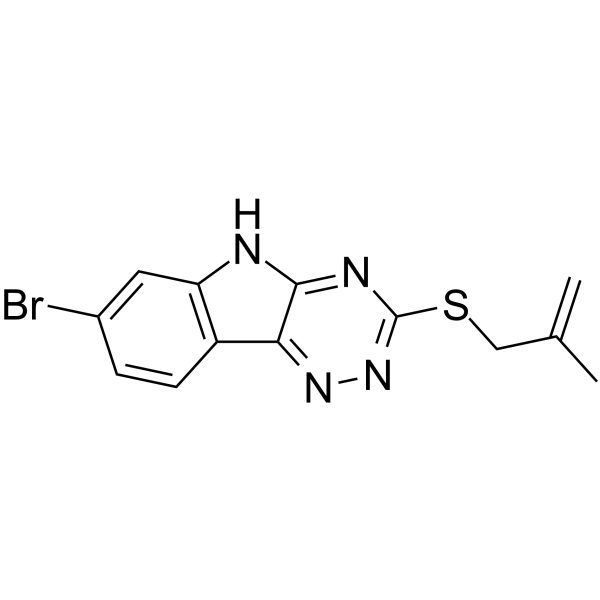
    Rbin-1
    3 Publications Verification

    Ribozinoindole-1

    Phosphatase Metabolic Disease
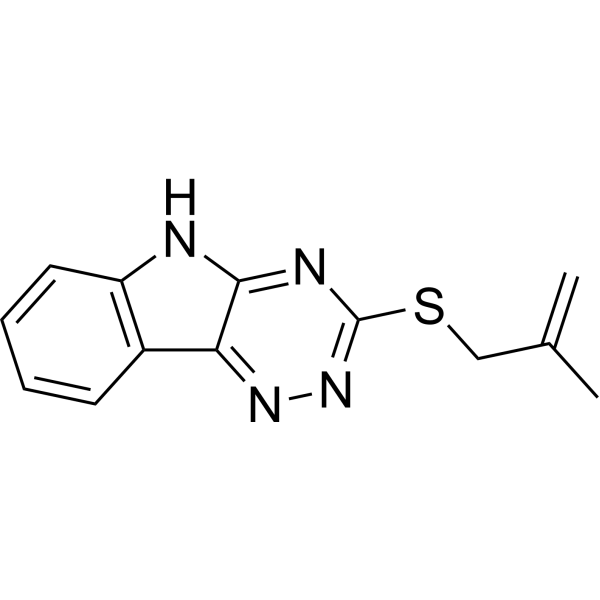
    Rbin-1 is a potent, reversible, and specific chemical inhibitor of eukaryotic ribosome biogenesis. Rbin-1 inhibits the ATPase with GI50 of 136 nM. Rbin-1 is a potent and selective chemical inhibitor of Midasin (Mdn1).
    Rbin-1
  • HY-100817

    Phosphatase Others
    Rbin-2 is a potent, reversible and selective inhibitor of Midasin (Mdn1), an enzyme belonging to the AAA+ (ATPases associated with diverse cellular activities) protein family. Rbin-2 inhibits eukaryotic ribosome biogenesis and is a powerful probe for the eukaryotic ribosome assembly .
    Rbin-2
  • HY-127072

    Antibiotic Bacterial Infection Inflammation/Immunology Cancer
    Amicoumacin A is an orally active antibiotic. Amicoumacin A targets bacterial ribosomes and inhibits bacterial translation by stabilizing the interaction between mRNA and ribosomes. Amicoumacin A induces cancer cell death by targeting eukaryotic ribosomes. Amicoumacin A exhibits anti-inflammatory and anti-ulcer activities, inhibits carrageenan-induced paw edema, and prevents stress-induced gastric ulcers. Amicoumacin A inhibits the growth of Gram-positive bacteria, Salmonella spp., Shigella spp., Helicobacter pylori, and methicillin-resistant Staphylococcus aureus. Amicoumacin A can be used in the research of lung cancer, breast cancer, bacterial infections, inflammatory edema and gastric ulcers [2] .
    Amicoumacin A
  • HY-178497

    PROTACs Ras p38 MAPK TNF Receptor Inflammation/Immunology Cancer
    ZJK-807 is a highly effective and selective PROTAC degrader targeting KRASG12D (DC50 = 79.5 nM in AsPC-1 cells). ZJK-807 shows minimal impact on wild-type KRAS or other mutants (G12C/S/V, G13D), inducing mutant-specific cytotoxicity. ZJK-807 suppresses RAS/MAPK signaling and uniquely modulates TNF signaling and eukaryotic ribosome biogenesis. ZJK-807 can be used for the study of KRAS-driven pancreatic cancer. Yellow: KRASG12D ligand (HY-W087383); Green: E3 ligase CRBN ligand (HY-178507); Black: Linker (HY-178506) .
    ZJK-807
  • HY-137911

    Bacterial Infection Cancer
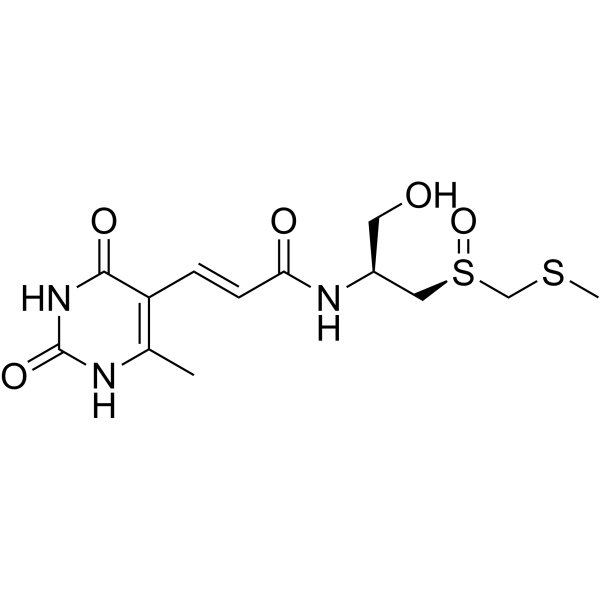
    Sparsomycin is a metabolite of the bacterium Streptomyces sparsogenes. Sparsomycin inhibits protein synthesis in both eukaryotic cells and bacteria. Sparsomycin inhibits the translation extension of ribosome PTC .
    Sparsomycin
  • HY-114231C

    ELX-02 sulfate; NB-124 sulfate

    Drug Derivative Metabolic Disease
    Exaluren (ELX-02; NB-124) sulfate is an synthetic eukaryotic ribosome-selective glycoside that induces read-through of nonsense mutations, resulting in normally localized full-length functional proteins. Exaluren sulfate is used for the research of cystic fibrosis caused by nonsense mutations .
    Exaluren sulfate
  • HY-W995025

    (+)-Actinobolin

    Antibiotic Bacterial Infection
    Actinobolin ((+)-Actinobolin) is an antibiotic, that inhibits protein synthesis by targeting bacterial and eukaryotic ribosomes. Actinobolin inhibits Mycobacterium smegmatis, Escherichia coli and rabbit reticulocyte lysate (RRL) with an IC50 of 19.2, 27.9, and 288 μmol/L, respectively .
    Actinobolin
  • HY-W995025A

    (+)-Actinobolin hemisulfate

    Antibiotic Bacterial Infection
    Actinobolin hemisulfate ((+)-Actinobolin hemisulfate) is the hemisulfate form of Actinobolin (HY-W995025). Actinobolin hemisulfate is an antibiotic, that inhibits protein synthesis by targeting bacterial and eukaryotic ribosomes. Actinobolin hemisulfate inhibits Mycobacterium smegmatis, Escherichia coli and rabbit reticulocyte lysate (RRL) with an IC50 of 19.2, 27.9, and 288 μmol/L, respectively .
    Actinobolin hemisulfate
  • HY-100816R

    Ribozinoindole-1 (Standard)

    Reference Standards Phosphatase Metabolic Disease
    Rbin-1 (Standard) is the analytical standard of Rbin-1 (HY-100816). This product is intended for research and analytical applications. Rbin-1 is a potent, reversible, and specific chemical inhibitor of eukaryotic ribosome biogenesis. Rbin-1 inhibits the ATPase with GI50 of 136 nM. Rbin-1 is a potent and selective chemical inhibitor of Midasin (Mdn1).
    Rbin-1 (Standard)
  • HY-173172

    Eukaryotic Initiation Factor (eIF) Apoptosis c-Myc CDK Cancer
    MG-002 is an orally active eIF4A inhibitor. MG-002 non-productively traps the eukaryotic translation initiation factor 4A (eIF4A) onto RNA, hindering the recruitment and scanning of ribosomes, thereby inhibiting mRNA translation. MG-002 selectively inhibits the growth and metastasis formation of triple-negative breast cancer (TNBC) tumors and induces cell apoptosis. MG-002 significantly inhibits the protein expression of c-MYC and cyclin D1. MG-002 can be used for research on TNBC .
    MG-002
  • HY-181264

    Infection
    Antifungal agent 153, a derivative of Blasticidin S (HY-103401A), is an antibacterial agent. Antifungal agent 153 retains the antibacterial activity of Blasticidin S, exhibits potent inhibitory effects against multidrug-resistant Gram-positive bacteria, and significantly reduces mammalian cytotoxicity. Antifungal agent 153 can be used in studies related to bacterial infections .
    Antifungal agent 153

Inquiry Online

Your information is safe with us. * Required Fields.

Salutation


Country or Region *

Applicant Name *


Organization Name *

Department *


Email Address *


Product Name *

Cat. No.


Requested quantity *

Phone Number *


Remarks

Inquiry Online

Inquiry Information

Product Name:
Cat. No.:
Quantity:
MCE Japan Authorized Agent:

