8 Results for "

heartbeats

" in MedChemExpress (MCE) Product Catalog:
Products (8)

8 Results for "heartbeats" in MCE Product Catalog:

1
1 Cited Publications
Cat. No.: HY-B1486
CAS No.: 6452-73-9
Synonyms: Ba 39089
Target:  

Adrenergic Receptor

Research Areas:  

Cardiovascular Disease

Oxprenolol hydrochloride (Ba 39089) is an orally bioavailable β-adrenergic receptor (β-AR) antagonist with a Ki of 7.10 nM in a radioligand binding assay using rat heart muscle .
loading...
    loading...
Cat. No.: HY-B1482A
CAS No.: 5588-33-0
Synonyms: TPS-23
Target:  

Potassium Channel

Research Areas:  

Neurological Disease

Mesoridazine (TPS-23) , a metabolite of Thioridazine (HY-B0965A), acts as an orally active phenothiazine antipsychotic agent. Mesoridazine is a potent and rapid open-channel blocker of human ether-a-go-go related gene (hERG) channels and blocks hERG currents with an IC50 of 550 nM (at 0 mV) in human embryonic kidney 293 cells .Mesoridazine can be used for the research of schizophrenia, as well as certain other psychiatric disorders .
loading...
    loading...
Cat. No.: HY-P0303
CAS No.: 309247-84-5
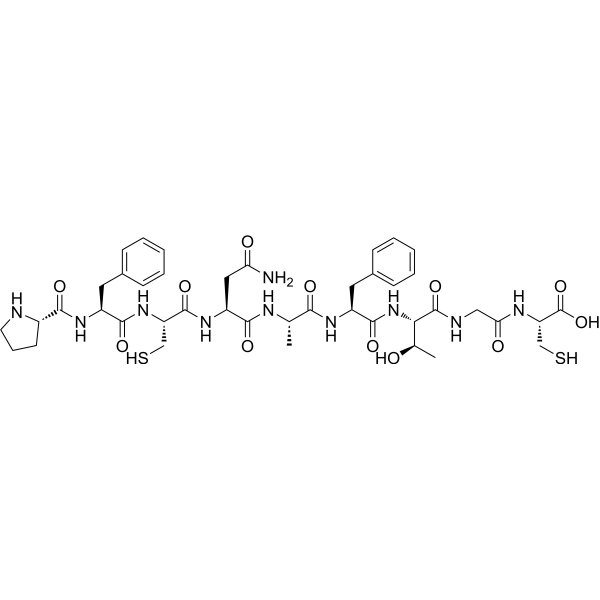
Crustacean cardioactive peptide, free acid is a highly conserved, amidated cyclic nonapeptide, first isolated from the pericardial organs of the shore crab Carcinus maenas, where it has a role in regulating heartbeat; Crustacean cardioactive peptide, free acid also modulates the neuronal activity in other arthropods.
loading...
    loading...
Cat. No.: HY-100952
CAS No.: 5704-60-9
Purity:  99.93%
Target:  

Adrenergic Receptor

Research Areas:  

Cardiovascular Disease

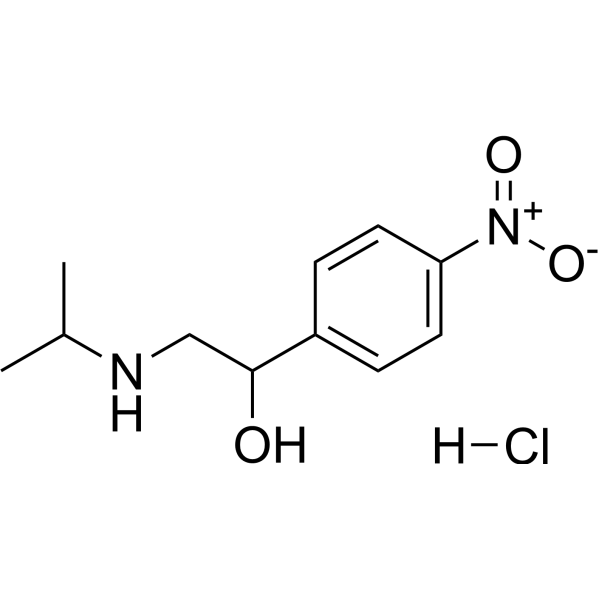
Nifenalol hydrochloride is a β-adrenergic receptor antagonist. Nifenalol hydrochloride induces the Early Afterdepolarization (EAD) effect. EAD is a phenomenon in cardiac electrophysiology that usually occurs during an action potential in ventricular muscle cells and can lead to arrhythmia. The EAD effect of Nifenalol hydrochloride can be blocked by Tetrodotoxin. Nifenalol hydrochloride is used in the study of conditions such as irregular heartbeat or high blood pressure .
loading...
    loading...
Cat. No.: HY-B1482
CAS No.: 32672-69-8
Synonyms: TPS-23 benzenesulfonate
Target:  

Potassium Channel

Research Areas:  

Neurological Disease

Mesoridazine (TPS-23) benzenesulfonate, a metabolite of Thioridazine (HY-B0965A), acts as an orally active phenothiazine antipsychotic agent. Mesoridazine benzenesulfonate is a potent and rapid open-channel blocker of human ether-a-go-go related gene (hERG) channels and blocks hERG currents with an IC50 of 550 nM (at 0 mV) in human embryonic kidney 293 cells .Mesoridazine benzenesulfonate can be used for the research of schizophrenia, as well as certain other psychiatric disorders .
loading...
    loading...
Cat. No.: HY-B1486R
CAS No.: 6452-73-9
Synonyms: Ba 39089 (Standard)
Oxprenolol (hydrochloride) (Standard) is the analytical standard of Oxprenolol (hydrochloride). This product is intended for research and analytical applications. Oxprenolol hydrochloride (Ba 39089) is an orally bioavailable β-adrenergic receptor (β-AR) antagonist with a Ki of 7.10 nM in a radioligand binding assay using rat heart muscle .
loading...
    loading...
Cat. No.: HY-L186
54 compounds

Neurotransmitters are chemical messengers that allows a neuron's electrical signal to pass to a postsynaptic neuron or effect target. Neurotransmitters include amino acids, monoamines, and peptides, while other neurotransmitters are composed of metabolites such as nitric oxide and carbon monoxide. The function of neurotransmitters is closely related to the disease of life, helping to regulate the body's heartbeat, blood pressure, breathing, sleep, aging and muscle activity. Therefore, research based on neurotransmitters can help to increase human understanding of diseases.

MCE collects and organizes 54 neurotransmitters and is a tool library for drug screening and mechanism research.

Cat. No.: HY-L117
226 compounds

Calcium channel blockers (CCBs), also called calcium antagonists are compounds that slow the movement of calcium (Ca2+) through calcium channels into the cells of the heart and blood vessel walls. Calcium causes the heart and arteries to squeeze more strongly. By blocking calcium, calcium channel blockers allow blood vessels to relax and open. So calcium channel blockers are usually used to lower blood pressure, relieve chest pain (angina) and control an irregular heartbeat.

MCE supplies a unique collection of 226 calcium channel blockers and antagonists, all of which have the identified inhibitory effect on calcium channel. MCE Calcium Channel Blocker Library is a useful tool for discovery of antihypertensive drugs and cardiovascular disease research.

