1. Search Result
Search Result
Results for "

hydrophobic region

" in MedChemExpress (MCE) Product Catalog:

20

Inhibitors & Agonists

2

Fluorescent Dyes

3

Biochemical Assay Reagents

3

Peptides

2

Natural
Products

1

Isotope-Labeled Compounds

1

Oligonucleotides

Targets Recommended:
Cat. No. Product Name Target Research Areas Chemical Structure
  • HY-D0896
    ANS
    1 Publications Verification

    ANSA; 8-Anilino-1-naphthalenesulfonic acid

    Bacterial Infection
    ANS (8-Anilino-1-naphthalenesulfonic acid) is a competitive inhibitor targeting thyroxine binding globulin (TBG) (Ki=2.09×10 6 M -1). ANS is used in radioimmunoassay by displacing bound triiodothyronine (T3) to improve detection sensitivity. ANS can block the protein binding site of T3 and release free T3 for antibody recognition. As a fluorescent probe, ANS can specifically bind to the hydrophobic region of proteins (such as membrane proteins) and monitor the dynamics of protein conformation through changes in fluorescent signals. It is widely used in biochemical research and antibacterial material development .
    ANS
  • HY-W010041

    α-synuclein Amyloid-β Neurological Disease
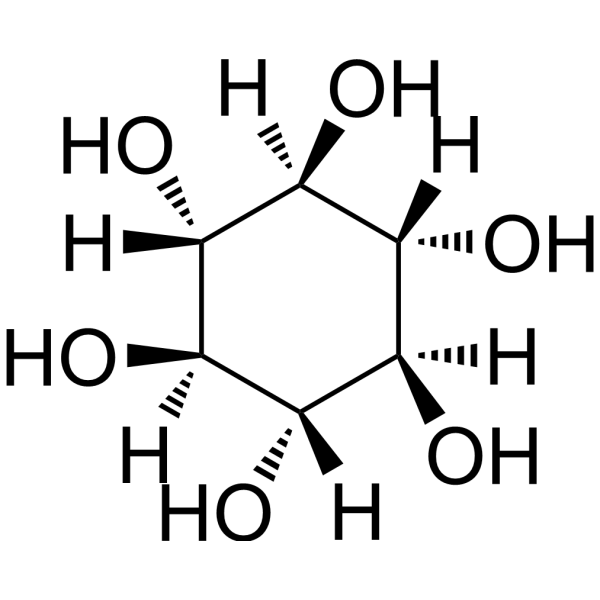
    Scyllo-Inositol is an inhibitor that targets the aggregation of misfolded proteins (such as α-synuclein and Amyloid-β), is orally effective, and can cross the blood-brain barrier. Scyllo-Inositol can selectively bind to and stabilize non-toxic oligomers, preventing them from converting into toxic fibers, exerting protein homeostasis regulation and neuroprotective activity. Scyllo-Inositol binds to the hydrophobic region of pathogenic proteins, inhibits protein aggregation, and promotes lysosome- and proteasome-mediated degradation pathways, thereby reducing neurotoxicity. Scyllo-Inositol can be used in the study of neurodegenerative diseases such as Parkinson's disease, Alzheimer's disease, and Huntington's disease .
    Scyllo-Inositol
  • HY-W013967

    Fluorescent Dye Infection
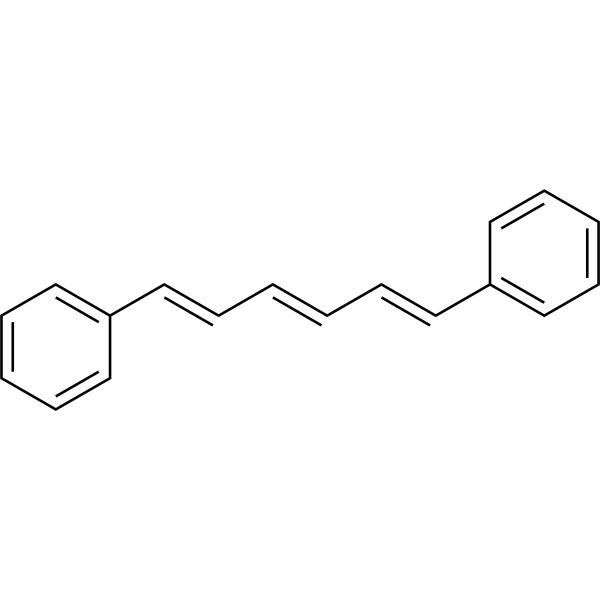
    1,6-Diphenylhexa-1,3,5-triene is a membrane intercalator and hydrophobic fluorescent probe. 1,6-Diphenylhexa-1,3,5-triene intercalates into the non-polar region of lipid bilayers of adipocyte membranes with probe/membrane equilibrium affected by temperature, probe concentration, and membrane concentration. 1,6-Diphenylhexa-1,3,5-triene’s fluorescence intensity correlating with adipocyte membrane probe incorporation (Ex/Em = 350/452 nm) .
    1,6-Diphenylhexa-1,3,5-triene
  • HY-P4704A

    α-synuclein Neurological Disease
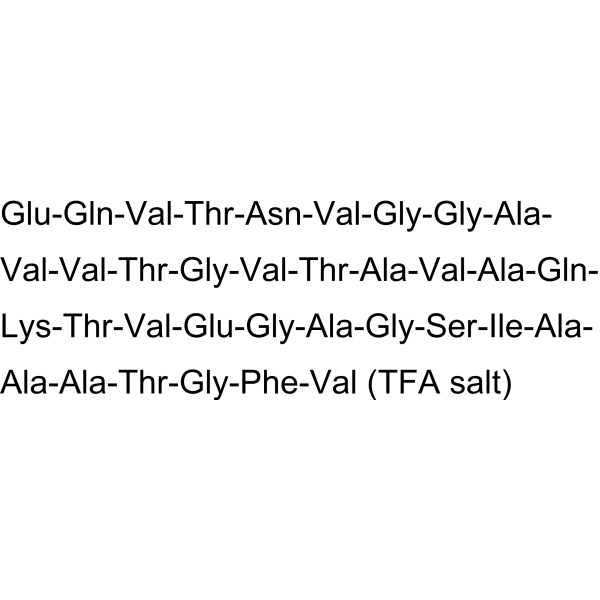
    α-Synuclein (61-95) (human) TFA is the hydrophobic core region of α-synuclein, and induces neuronal cell death. α-Synuclein (61-95) (human) TFA can be used for research of neurodegenerative diseases, including Alzheimer’s disease (AD) and Parkinson’s disease (PD) .
    α-Synuclein (61-95) (human) TFA
  • HY-W077279

    N4-Acetyl-2'-deoxy-5'-O-DMT-cytidine

    Phosphoramidites DNA/RNA Synthesis Others
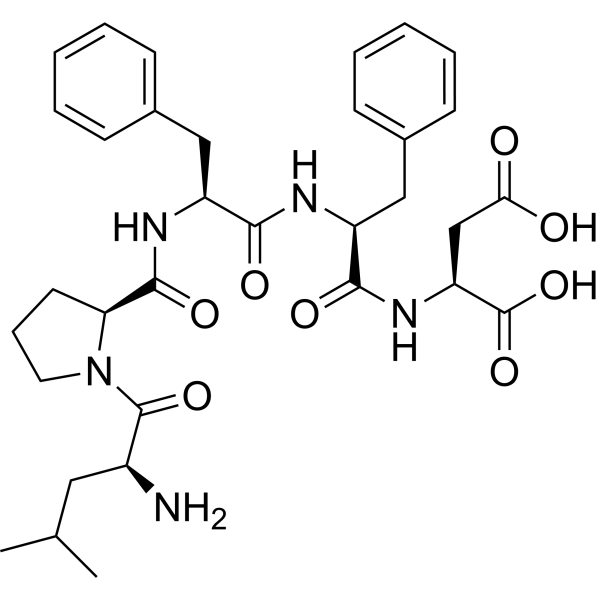
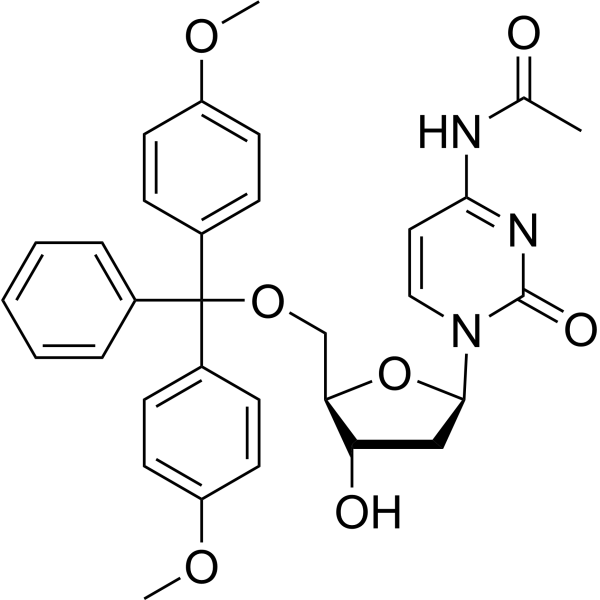
    5'-O-DMT-N4-Ac-dC (N4-Acetyl-2'-deoxy-5'-O-DMT-cytidine, compound 7), a deoxynucleoside, can be used to synthesize of dodecyl phosphoramidite which is the raw material for dod‐DNA (amphiphilic DNA containing an internal hydrophobic region consisting of dodecyl phosphotriester linkages) synthesis .
    5'-O-DMT-N4-Ac-dC
  • HY-157480

    EGFR Aurora Kinase Cancer
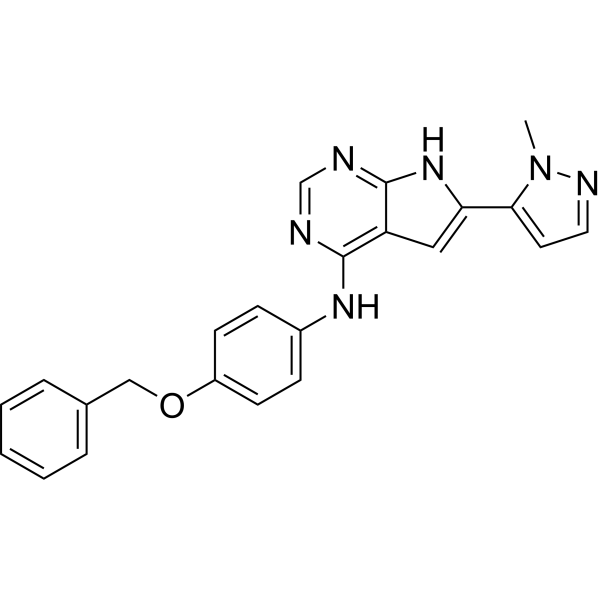
    EGFR/AURKB-IN-1 (compound 7) is a dual-targeted EGFR/AURKB inhibitor, and inhibits the phpsphorylations of L858R EGFR and AURKB with IC50s of 0.07 and 1.1, respectively. EGFR/AURKB-IN-1 occupies the hydrophobic region I or the αC-helix out pocket of EGFR and the back pocket of AURKB, inhibiting the growth, division and metastasis of tumor cells, thus can be used for cancer research .
    EGFR/AURKB-IN-1
  • HY-121900

    PPAR Metabolic Disease Endocrinology
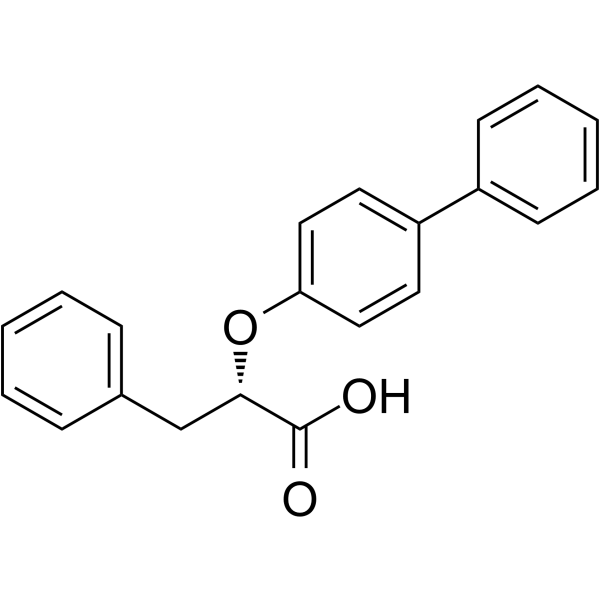
    LT175, a dual PPARα/γ ligand, is an orally active partial agonist against PPARγ(hPPARα:EC50=0.22 μm; mPPARα:EC50=0.26 μm; hPPARγ:EC50=0.48 μm). LT175 interacts with PPARγ and affects the recruitment of the coregulators cyclic-AMP response element-binding protein-binding protein and nuclear corepressor 1 (NCoR1). LT175 interacts with PPARγ in a hydrophobic region called “diphenyl pocket”. LT175 has potent insulin-sensitizing effects and reduced adipogenic properties .
    LT175
  • HY-P4704

    α-synuclein Neurological Disease
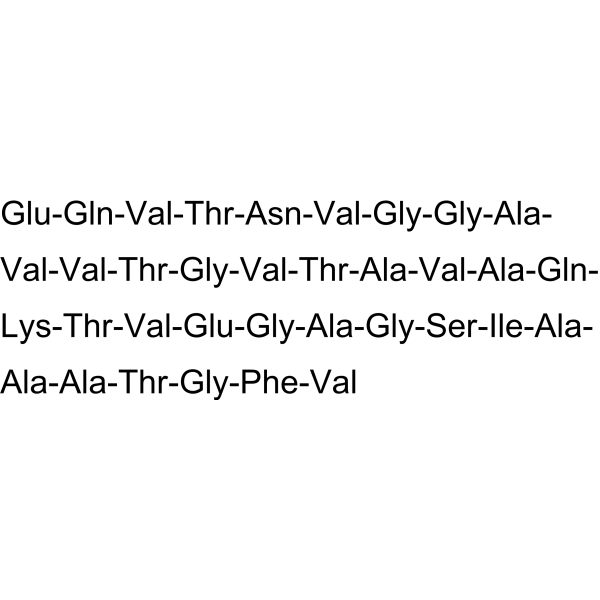
    α-Synuclein (61-95) (human) is the hydrophobic core region of α-synuclein, and induces neuronal cell death. α-Synuclein (61-95) (human) can be used for research of neurodegenerative diseases, including Alzheimer’s disease (AD) and Parkinson’s disease (PD) .
    α-Synuclein (61-95) (human)
  • HY-164523

    Checkpoint Kinase (Chk) Cancer
    PV1162 is a selective Chk2 inhibitor with an IC50 of 0.29 nM. PV1162 inhibits ATP binding to Chk2 by targeting the gatekeeper-dependent hydrophobic pocket, which is specific to Chk2 and located behind the ATP-binding site (adenine-binding region), thereby inhibiting the phosphorylation activity of Chk2. PV1162 holds potential application value in the field of cancer therapy .
    PV1162
  • HY-170221

    Biochemical Assay Reagents Others
    Chol-C10-PC is a cholesterol phosphorylation choline with a hydrophobic region and a large polar head group.
    Chol-C10-PC
  • HY-162832

    Amyloid-β Neurological Disease
    Amyloid-β-IN-1 (compound 13) is a synthetic peptide containing the hydrophobic C-terminal region "VVIA-NH2" and its reverse sequence "AIVV-NH2" of 42, which is an inhibitor. Amyloid-β-IN-1 can inhibit Aβ aggregation and has neuroprotective effects .
    Amyloid-β-IN-1
  • HY-139404

    Anthrylvinyl ceramide; AV Ceramide; AV Ceramide (d18:1/10:0)

    Fluorescent Dye Others
    C10 AV Ceramide (d18:1/10:0) is a fluorescent probe. Anthrylvinyl (AV) acts as the fluorescent label positioned on the amide linked acyl chain on the Ceramide molecule to measure the CERT-mediated transfer. The anthrylvinyl moiety of C10 AV Ceramide (d18:1/10:0) localizes to the hydrophobic region of the bilayer .
    C10 AV Ceramide (d18:1/10:0)
  • HY-W010041R

    Reference Standards α-synuclein Amyloid-β Neurological Disease
    Scyllo-Inositol is an inhibitor that targets the aggregation of misfolded proteins (such as α-synuclein and Amyloid-β), is orally effective, and can cross the blood-brain barrier. Scyllo-Inositol can selectively bind to and stabilize non-toxic oligomers, preventing them from converting into toxic fibers, exerting protein homeostasis regulation and neuroprotective activity. Scyllo-Inositol binds to the hydrophobic region of pathogenic proteins, inhibits protein aggregation, and promotes lysosome- and proteasome-mediated degradation pathways, thereby reducing neurotoxicity. Scyllo-Inositol can be used in the study of neurodegenerative diseases such as Parkinson's disease, Alzheimer's disease, and Huntington's disease .
    Scyllo-Inositol (Standard)
  • HY-W707693

    Isotope-Labeled Compounds Amyloid-β α-synuclein Neurological Disease
    Scyllo-Inositol-d6 is the deuterium labeled Scyllo-Inositol (HY-W010041). Scyllo-Inositol is an inhibitor that targets the aggregation of misfolded proteins (such as α-synuclein and Amyloid-β), is orally effective, and can cross the blood-brain barrier. Scyllo-Inositol can selectively bind to and stabilize non-toxic oligomers, preventing them from converting into toxic fibers, exerting protein homeostasis regulation and neuroprotective activity. Scyllo-Inositol binds to the hydrophobic region of pathogenic proteins, inhibits protein aggregation, and promotes lysosome- and proteasome-mediated degradation pathways, thereby reducing neurotoxicity. Scyllo-Inositol can be used in the study of neurodegenerative diseases such as Parkinson's disease, Alzheimer's disease, and Huntington's disease .
    Scyllo-Inositol-d6
  • HY-126229

    Phosphodiesterase (PDE) Cancer
    PAT-078 is a type II autotaxin (ATX) inhibitor. PAT-078 mainly occupies the hydrophobic pocket of ATX, blocks the bottleneck region between the hydrophobic channel and the catalytic site, and does not interact with the zinc ion at the catalytic site .
    PAT-078
  • HY-W100829

    Drug Intermediate Others
    FPPS ligand 3 (compound 2) is a farnesyl pyrophosphate synthase (FPPS) ligand. FPPS ligand 3 binds to the hydrophobic base region of the FPPS pocket. FPPS ligand 3 can be used to design and synthesize FPPS inhibitors .
    FPPS ligand 3
  • HY-130305A

    PKC Cancer
    GSK-943949A is a PRK1 inhibitor with an IC50 of 40.0 nM. GSK-943949A is applicable to research related to prostate cancer .
    GSK-943949A
  • HY-W237439

    MDM-2/p53 Cancer
    SEN205A is a fragment compound that binds to the hydrophobic pocket of human S100B (Kd=0.5-1.0 mM), which is the key region for the interaction of S100B with TRTK-12 and p53, and SEN205A can be displaced from this site by TRTK-12. SEN205A exhibits excellent in vitro ADME properties, including high metabolic stability, chemical stability, and good solubility under physiological pH conditions. SEN205A can serve as a starting fragment for structure-based optimization to develop inhibitors targeting the S100B-p53 protein-protein interaction and investigate the pathogenesis of malignant melanoma .
    SEN205A
  • HY-181169

    Cyclin G-associated Kinase (GAK) Cancer
    GAK-IN-3 is a cyclin G-associated kinase (GAK) inhibitor with an IC50 of 207 nM and a Ki of 66 nM. GAK-IN-3 inhibits kinase activity in the nanomolar range by binding to GAK’s ATP-binding site. GAK-IN-3 acts as a cytotoxic agent that reduces viability of Ewing sarcoma cells. GAK-IN-3 can be used for the research of ewing sarcoma .
    GAK-IN-3
  • HY-180425

    Amylin Receptor Apoptosis Metabolic Disease
    Cloridarol is a human islet amyloid peptide (hIAPP) inhibitor that prevents its abnormal misfolding and aggregation. Cloridarol can increase cell viability, inhibit apoptosis, and protect islet β-cells from hIAPP-induced cell toxicity. Cloridarol can be used for the research of type 2 diabetes (T2D) .
    Cloridarol

Inquiry Online

Your information is safe with us. * Required Fields.

Salutation


Country or Region *

Applicant Name *


Organization Name *

Department *


Email Address *


Product Name *

Cat. No.


Requested quantity *

Phone Number *


Remarks

Inquiry Online

Inquiry Information

Product Name:
Cat. No.:
Quantity:
MCE Japan Authorized Agent:

