1. Search Result
Search Result
Results for "

hydroxyl groups

" in MedChemExpress (MCE) Product Catalog:

275

Inhibitors & Agonists

2

Screening Libraries

13

Fluorescent Dye

133

Biochemical Assay Reagents

2

Peptides

1

MCE Kits

31

Natural
Products

2

Isotope-Labeled Compounds

13

Click Chemistry

7

Oligonucleotides

Cat. No. Product Name Target Research Areas Chemical Structure
  • HY-103006
    NAI-N3
    5 Publications Verification

    Biochemical Assay Reagents Others
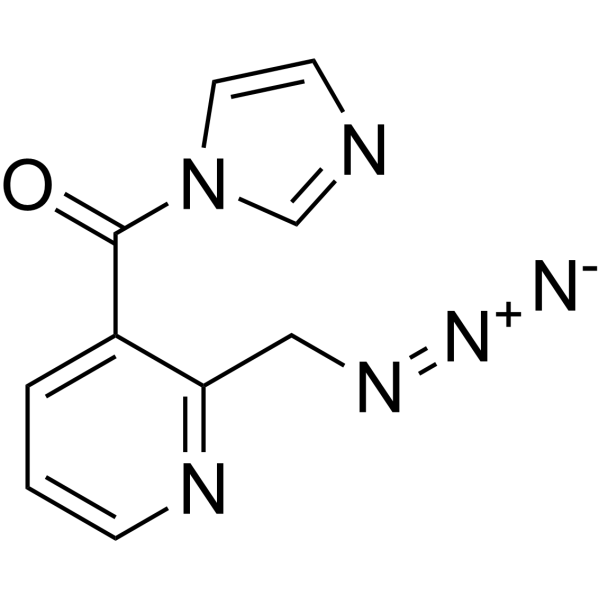
    NAI-N3 is a RNA acylation reagent that enables RNA purification. NAI-N3 is a dual-function SHAPE (selective 2-hydroxyl acylation and profiling experiment) probe (RNA structure probe and enrichment) . It contains an azide group and can undergo copper-catalyzed azide-alkyne cycloaddition (CuAAc) with molecules containing alkyne groups. It can also undergo ring strain-promoted alkyne-azide cycloaddition (SPAAC) with molecules containing DBCO or BCN groups.
    NAI-N3
  • HY-Y0850E

    PVA (Mw 30000-70000, 87-90% hydrolyzed); Poly(Ethenol) (Mw 30000-70000, 87-90% hydrolyzed)

    Environmental Pollutants Biochemical Assay Reagents Cardiovascular Disease Cancer
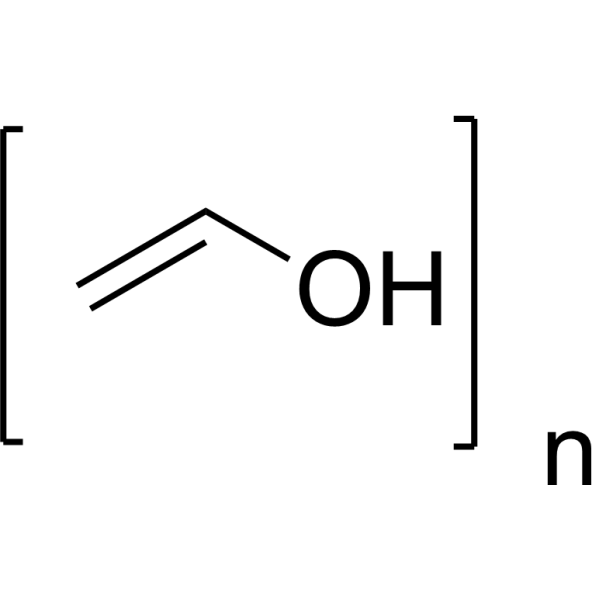
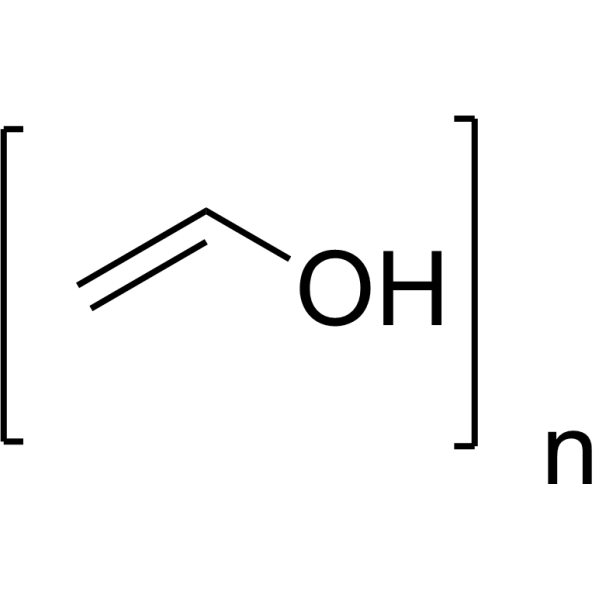
    Polyvinyl alcohol (Mw 30000-70000, 87-90% hydrolyzed) is a polyvinyl alcohol with a molecular weight of 30000-70000 and hydrolytic properties. The degree of hydrolysis refers to the degree to which the acetate groups in the original polyvinyl acetate are converted into hydroxyl groups during the hydrolysis process. Polyvinyl alcohol (Mw 30000-70000, 87-90% hydrolyzed) is the hydrolysis and removal of acetate groups after the polymerization of ethylene acetate. And polyvinyl alcohol is obtained. A degree of hydrolysis of 87-90% indicates that a large part of the acetate groups have been removed, resulting in a large number of hydroxyl groups in the PVA structure. Polyvinyl alcohol with different degrees of hydrolysis can be used to self-crosslink to form cryogel, which can be used as biological excipients .
    Polyvinyl alcohol (Mw 30000-70000, 87-90% hydrolyzed)
  • HY-79880

    1,1'-Carbonyldiimidazole

    MOFs Others
    N,N'-Carbonyldiimidazole (1,1'-Carbonyldiimidazole) is a highly reactive carboxylating reagent that can activate hydroxyl groups to form reactive carbonyl groups. N,N'-Carbonyldiimidazole can be used as a coupling agent and a peptide synthesis reagent .
    N,N'-Carbonyldiimidazole
  • HY-126994

    Fluorescent Dye Others
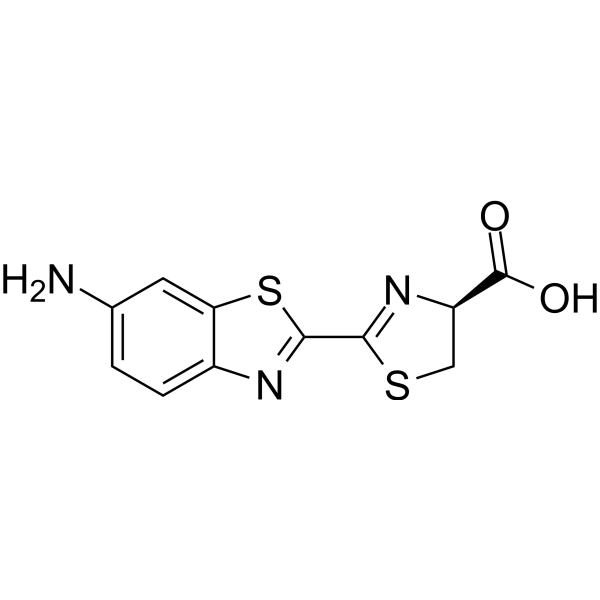
    6’-Amino-D-luciferin is a derivative of D-luciferin (HY-12591A) with an amino group replacing the 6-hydroxyl group. 6’-Amino-D-luciferin is a natural substrate of luciferase (Luc) and can be used for IVIS imaging in cell/animal experiments[1][2][3].
    6′-Amino-D-luciferin
  • HY-Y0850M

    PVA (Mw 85000-124000, 87-89% hydrolyzed); Poly(Ethenol) (Mw 85000-124000, 87-89% hydrolyzed)

    Environmental Pollutants Biochemical Assay Reagents Others
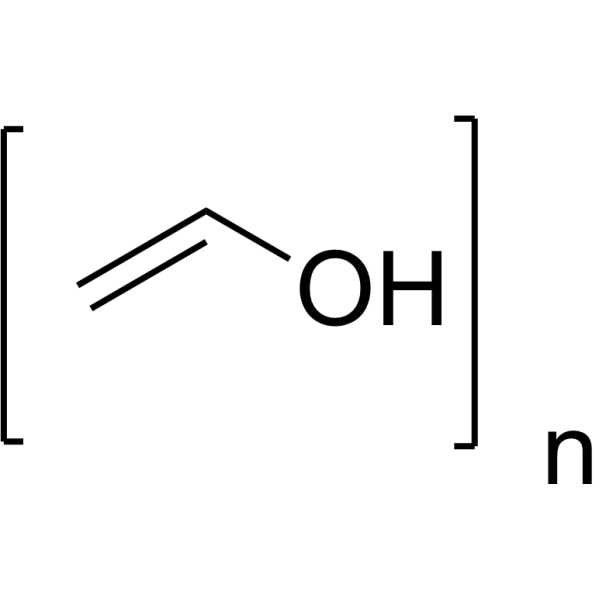
    Polyvinyl alcohol (Mw 85000-124000, 87-89% hydrolyzed) is a polyvinyl alcohol with a molecular weight of 85000-124000 and hydrolytic properties. The degree of hydrolysis refers to the degree to which the acetate groups in the original polyvinyl acetate are converted into hydroxyl groups during the hydrolysis process. Polyvinyl alcohol (Mw 85000-124000, 87-89% hydrolyzed) is the hydrolysis and removal of acetate groups after the polymerization of ethylene acetate. And polyvinyl alcohol is obtained. A degree of hydrolysis of 87-89% indicates that a large part of the acetate groups have been removed, resulting in a large number of hydroxyl groups in the PVA structure. Polyvinyl alcohol with different degrees of hydrolysis can be used to self-crosslink to form cryogel, which can be used as biological excipient .
    Polyvinyl alcohol (Mw 85000-124000, 87-89% hydrolyzed)
  • HY-134222A

    N-Acetyl-L-serine

    Endogenous Metabolite Complement System Others
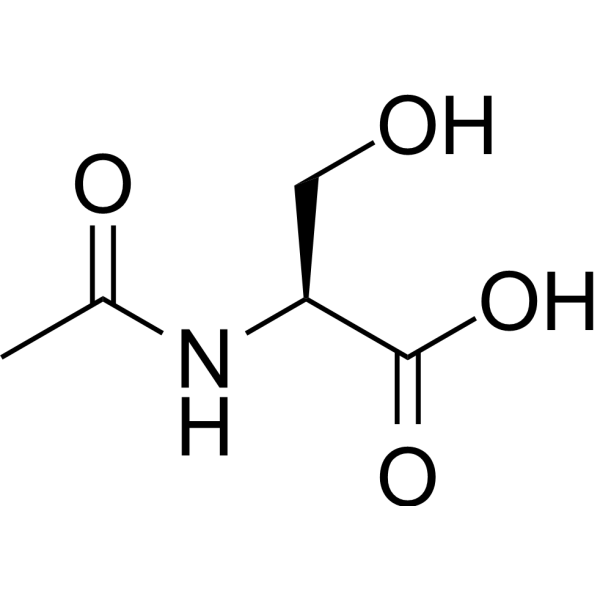
    N-Acetylserine (N-Acetyl-L-serine) is a complement pathway modulator targeting activated third complement protein (C3b) and an amino-terminal residue (an N-terminal acetylation modification group). N-Acetylserine reacts with the exposed thioester group of C3b via its hydroxyl group, thereby blocking the covalent binding of glycerol to this thioester group. N-Acetylserine widely exists in soluble proteins of mammalian cells (accounting for approximately 80% of such proteins). N-Acetylserine has a blocking property that prevents direct Edman sequencing of proteins; deblocking is achievable through trifluoroacetic acid-catalyzed N→O acetyl migration followed by β-elimination. N-Acetylserine is suitable for sequencing of proteins with N-terminal acetylserine modification .
    N-Acetylserine
  • HY-N2436

    Tartaric acid

    Biochemical Assay Reagents Others
    2,3-Dihydroxysuccinic acid (Tartaric acid) is an organic acid containing two hydroxyl groups and two carboxyl groups. 2,3-Dihydroxysuccinic acid exists in various stereoisomers and is widely used in food, pharmaceutical, chemical, and other fields .
    2,3-Dihydroxysuccinic acid
  • HY-Y0801

    Drug Metabolite Others
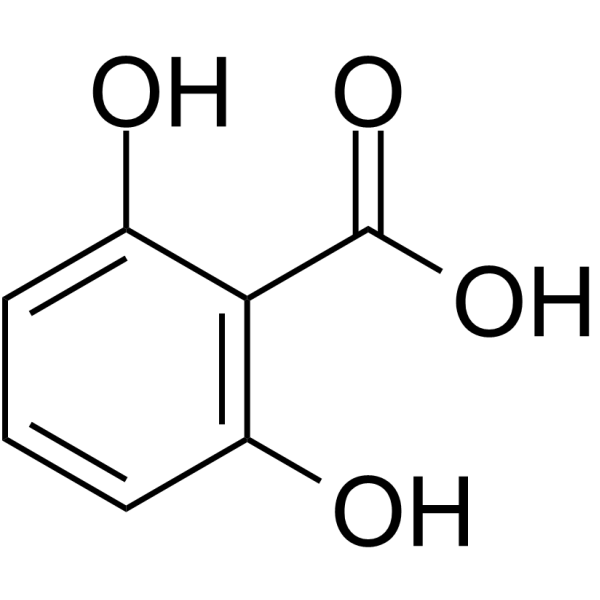
    2,6-Dihydroxybenzoic acid is an aromatic compound containing phenolic hydroxyl groups and carboxyl groups, and it is a secondary metabolite of Salicylic acid (HY-B0167). 2,6-Dihydroxybenzoic acid is also present in olive oil wastewater .
    2,6-Dihydroxybenzoic acid
  • HY-76222

    Drug Intermediate Others
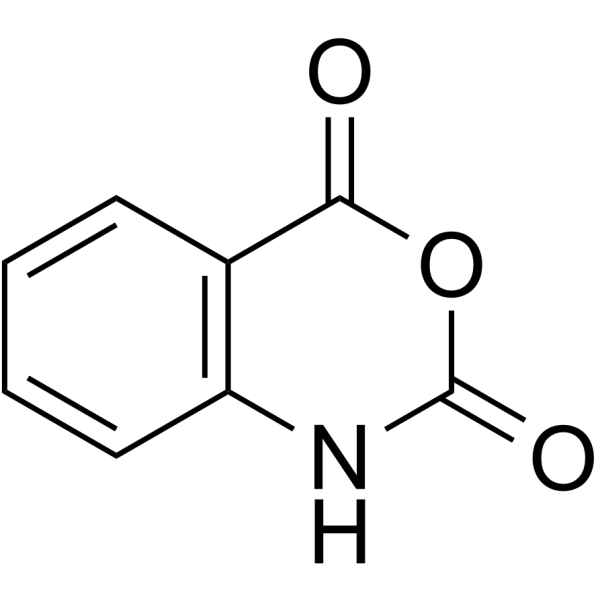
    Isatoic anhydride is a single-adduct forming reagent and a monofunctional SHAPE reagent. Isatoic anhydride reacts with the 2'-hydroxyl group of RNA nucleotides via a single reactive group to form a single adduct, without forming cross-links between nucleotides. In SHAPE-JuMP experiments, Isatoic anhydride serves as a control reagent for single-adduct formation, which is used to distinguish true cross-links from single-adduct formation .
    Isatoic anhydride
  • HY-W004289

    Drug Derivative Others
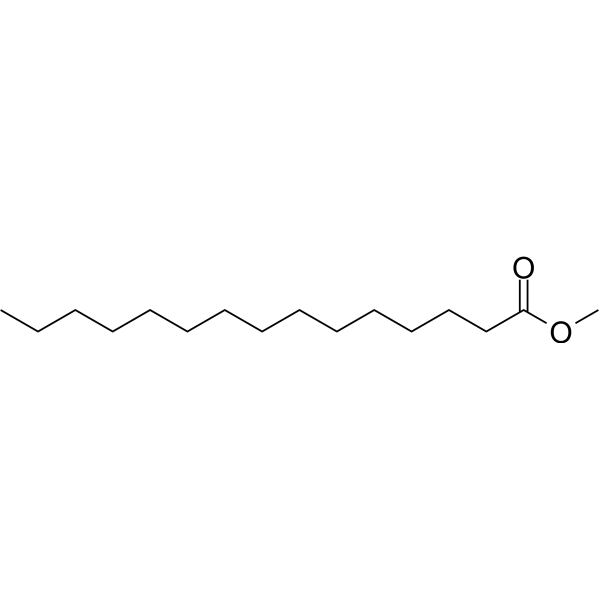
    Methyl pentadecanoate is a fatty acid ester that can be isolated from extracts of L. wallichi. Methyl pentadecanoate is formed by the condensation of the carboxyl group of pentadecanoic acid with the hydroxyl group of methanol .
    Methyl pentadecanoate
  • HY-15157

    1α, 24, 25-Trihydroxy VD3

    VD/VDR Metabolic Disease
    Calcitetrol(1α, 24, 25-Trihydroxy VD3) is the hormonally active form of vitamin D with three hydroxyl groups.
    Calcitetrol
  • HY-W012971

    Biochemical Assay Reagents Others
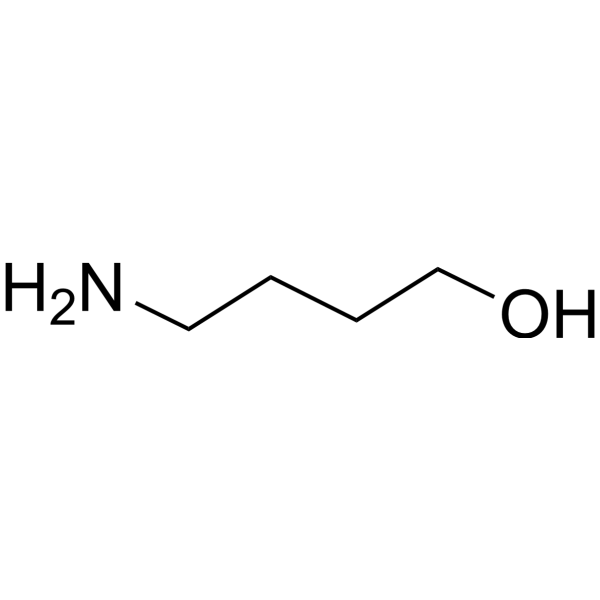
    5-Amino-1-pentanol is a linker containing a hydroxyl group and amine group. The hydroxyl group enables further derivatization or replacement with other reactive functional groups. The amine group is reactive with carboxylic acids, activated NHS esters, carbonyls (ketone, aldehyde) etc.
    5-Amino-1-pentanol
  • HY-W099630

    9-Heptadecanol

    Biochemical Assay Reagents Others
    Heptadecan-9-ol (9-Heptadecanol) is a lipid with a secondary hydroxyl group and two non-polar tails.
    Heptadecan-9-ol
  • HY-P4632
    H-γ-Glu-Leu-OH
    1 Publications Verification

    γ-Glu-Leu

    Amino Acid Derivatives Others
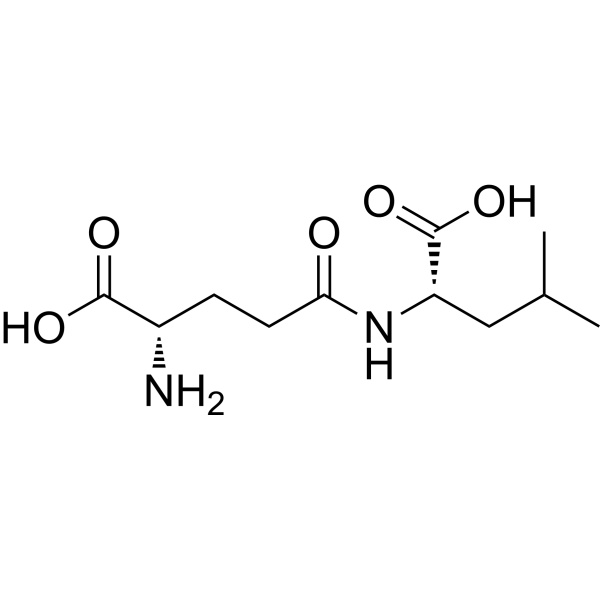
    H-γ-Glu-Leu-OH (γ-Glu-Leu) is a dipeptide consisting of γ-glutamic acid and leucine, terminated by a hydroxyl group .
    H-γ-Glu-Leu-OH
  • HY-Y1374

    Biochemical Assay Reagents Others
    Benzoic anhydride is a catalyst that can be used for organic synthesis reactions. Benzoic anhydride is used as a chemical titration reagent for selective quantification and deactivation of phenolic hydroxyl groups on the surface of carbon nanotubes .
    Benzoic anhydride
  • HY-W460072

    Biochemical Assay Reagents Others
    tert-Butyl 7-hydroxyheptanoate is a linker with a hydroxyl group and a t-butyl ester. The hydroxyl group allows for further derivatization or replacement with many other reactive functional groups. The t-butyl protected carboxyl group can be deprotected under acidic conditions.
    tert-Butyl 7-hydroxyheptanoate
  • HY-W039729

    Biochemical Assay Reagents Others
    5-(Boc-amino)-1-pentanol is a linker containing a hydroxyl group and Boc-protected amino group. The hydroxyl group enables further derivatization or replacement with other reactive functional groups. The Boc group can be deprotected under mild acidic conditions to form the free amine.
    5-(Boc-amino)-1-pentanol
  • HY-174967C

    Biochemical Assay Reagents Others
    4-Arm-PEG20000-OH is a PEG derivative with a four-arm structure and a hydroxyl (OH) functional group. 4-Arm-PEG20000-OH reacts with functional groups on biomolecules (such as proteins, peptides, antibodies, etc.) through hydroxyl groups and can be used for drug delivery .
    4-Arm-PEG20000-OH
  • HY-W683499

    LHSB

    Biochemical Assay Reagents Others
    Lauryl hydroxysultaine (LHSB), a surfactant, is comprised of a core Sultaine structure with a sulphopropyl quaternary ammonium salt, an alkyl group and a hydroxyl group .
    Lauryl hydroxysultaine
  • HY-W016455

    Biochemical Assay Reagents Others
    6-Bromo-1-hexanol posesses a terminal bromine and hydroxylic group. The bromine is a very good leaving group for nucleophilic substitution reactions. The hydroxyl group enables further derivatization or replacement with other reactive functional groups.
    6-Bromo-1-hexanol
  • HY-W007345

    4-Fluoro-2-hydroxyaniline

    Biochemical Assay Reagents Others
    2-Amino-5-fluorophenol is an isomer of aminofluorophenol and also a HONO generator. 2-Amino-5-fluorophenol reacts with nitrogen dioxide (NO2) via two pathways to form nitrous acid (HONO): hydrogen abstraction from the hydroxyl group and hydrogen abstraction from the amino group, with both the amino and hydroxyl groups participating in the reaction in the transition state .
    2-Amino-5-fluorophenol
  • HY-151822

    ADC Linker Others
    Hydroxy-PEG3-DBCO is a click chemistry reagent containing an azide group. Hydroxy-PEG3-DBCO is a PEG linker containing a DBCO moiety and a terminal primary hydroxyl group. The hydroxyl can react with a variety of functional groups and the hydrophilic PEG spacer arm can provide better solubility to labeled molecules. DBCO is commonly used for copper-free Click Chemistry reactions. Reagent grade, for research use only .
    Hydroxy-PEG3-DBCO
  • HY-D1067

    Fluorescent Dye Others
    NIR dye-1 (Compound 1h) is a near-infrared (NIR) fluorescent dye. NIR dye-1 has absorption and emission in the NIR region, while retaining an optically tunable hydroxyl group .
    NIR dye-1
  • HY-W190921

    Biochemical Assay Reagents Others
    t-Butyl 3-(hydroxypropoxyl)-propanoate contains reactive hydroxyl and t-butyl protected carboxyl moieties. The hydroxyl group can react to further derivatize the compound. The t-butyl carbonyl group can be deprotected under acidic conditions.
    t-Butyl 3-(hydroxypropoxyl)-propanoate
  • HY-E70241

    Endogenous Metabolite Others
    3-Hydroxypropionyl-CoA is a derivative of coenzyme A containing a hydroxyl group .
    3-Hydroxypropionyl-CoA
  • HY-174963C

    Biochemical Assay Reagents Others
    DBCO-PEG2000-OH is a PEG derivative composed of DBCO, PEG, and hydroxyl groups. DBCO-PEG2000-OH contains a DBCO group that can undergo strain-promoted alkyne-azide cycloaddition (SPAAC) with molecules containing Azide groups .
    DBCO-PEG2000-OH
  • HY-174955B

    Biochemical Assay Reagents Others
    mPEG5000-Silane is a PEG derivative containing silane that can be used to modify glass, silicon or other surfaces by reacting the hydroxyl groups with ethoxy (methoxy) silane .
    mPEG5000-Silane
  • HY-174955A

    Biochemical Assay Reagents Others
    mPEG2000-Silane is a PEG derivative containing silane that can be used to modify glass, silicon or other surfaces by reacting the hydroxyl groups with ethoxy (methoxy) silane .
    mPEG2000-Silane
  • HY-W142194

    DNA/RNA Synthesis Cancer
    Benzyl (5-hydroxypentyl)carbamate is a linker capable of repairing damaged DNA by binding to the 5'-hydroxyl group on the sugar backbone. Benzyl (5-hydroxypentyl)carbamate can also bind to DNA ligands and can inhibit cell proliferation in resistant cell lines. However, Benzyl (5-hydroxypentyl)carbamate is toxic to cells and can also cause DNA damage and strand breakage.
    Benzyl (5-hydroxypentyl)carbamate
  • HY-W800822

    Lauryl lactate

    Biochemical Assay Reagents Others
    Lactic acid dodecyl ester (Lauryl lactate) is a lipid with a terminal hydroxyl group at the head. The hydroxyl group enables further derivatization or replacement with other reactive functional groups.
    Lactic acid dodecyl ester
  • HY-W174661

    Biochemical Assay Reagents Others
    tert-Butyl 6-hydroxyhexanoate is a linker with a hydroxyl group and a t-butyl ester. The hydroxyl group allows for further derivatization or replacement with many other reactive functional groups. The t-butyl protected carboxyl group can be deprotected under acidic conditions.
    tert-Butyl 6-hydroxyhexanoate
  • HY-W591962

    1-Pentanol, 5-azido-

    Biochemical Assay Reagents Others
    5-Azidopentan-1-ol (1-Pentanol, 5-azido-) is a linker containing an azide group and a terminal hydroxyl group. The azide group can react with alkyne, BCN, DBCO via Click Chemistry to yield a stable triazole linkage. The hydroxyl group enables further derivatization or replacement with other reactive functional groups.
    5-Azidopentan-1-ol
  • HY-174967A

    Biochemical Assay Reagents Others
    4-Arm-PEG5000-OH is a PEG derivative with a four-arm structure and a hydroxyl (OH) functional group. 4-Arm-PEG5000-OH reacts with functional groups on biomolecules (such as proteins, peptides, antibodies, etc.) through hydroxyl groups and can be used for drug delivery .
    4-Arm-PEG5000-OH
  • HY-W250446

    Biochemical Assay Reagents Others
    (R)-Methyl 3-hydroxydecanoate is an enantiomerically pure hydroxylated fatty acid methyl ester. The hydroxyl group enables further derivatization or replacement with other reactive functional groups.
    (R)-Methyl 3-hydroxydecanoate
  • HY-135580A

    Drug Metabolite Endocrinology
    Raloxifene Bismethyl Ether hydrochloride is a metabolite of Raloxifene and an estrogen receptor inactive compound on which both hydroxyl groups are absent .
    Raloxifene Bismethyl Ether hydrochloride
  • HY-135580

    Drug Metabolite Endocrinology
    Raloxifene Bismethyl Ether is a metabolite of Raloxifene and an estrogen receptor inactive compound on which both hydroxyl groups are absent .
    Raloxifene Bismethyl Ether
  • HY-W1120392

    Biochemical Assay Reagents Others
    HO-PEG36-OH is a PEG derivative with a hydroxyl (OH) functional group that can be used for drug delivery .
    HO-PEG36-OH
  • HY-174951

    Biochemical Assay Reagents Others
    Pyrene-PEG1000-OH is a PEG derivative with Pyrene and hydroxyl (OH) functional groups that can be used for drug delivery .
    Pyrene-PEG1000-OH
  • HY-174931

    Biochemical Assay Reagents Others
    HO-PEG1000-NH-Fmoc is a PEG derivative with an Fmoc protecting group and a hydroxyl (OH) reactive group. Fmoc is a commonly used amino protecting group that protects the amino group from unwanted reactions until it is removed for a specific coupling reaction.
    HO-PEG1000-NH-Fmoc
  • HY-N9332

    Others Others
    Kalopanax saponin G is an ester glycoside of oleanolic acid possessing no sugar moiety at the C-3 hydroxyl group. Kalopanax saponin G is isolated from the bark of Kalopanax pictus .
    Kalopanax saponin G
  • HY-174963D

    Biochemical Assay Reagents Others
    DBCO-PEG3400-OH is a PEG derivative composed of DBCO, PEG, and hydroxyl groups. DBCO-PEG3400-OH contains a DBCO group that can undergo strain-promoted alkyne-azide cycloaddition (SPAAC) with molecules containing Azide groups .
    DBCO-PEG3400-OH
  • HY-174963B

    Biochemical Assay Reagents Others
    DBCO-PEG1000-OH is a PEG derivative composed of DBCO, PEG, and hydroxyl groups. DBCO-PEG1000-OH contains a DBCO group that can undergo strain-promoted alkyne-azide cycloaddition (SPAAC) with molecules containing Azide groups .
    DBCO-PEG1000-OH
  • HY-174963E

    Biochemical Assay Reagents Others
    DBCO-PEG5000-OH is a PEG derivative composed of DBCO, PEG, and hydroxyl groups. DBCO-PEG5000-OH contains a DBCO group that can undergo strain-promoted alkyne-azide cycloaddition (SPAAC) with molecules containing Azide groups .
    DBCO-PEG5000-OH
  • HY-174963A

    Biochemical Assay Reagents Others
    DBCO-PEG600-OH is a PEG derivative composed of DBCO, PEG, and hydroxyl groups. DBCO-PEG600-OH contains a DBCO group that can undergo strain-promoted alkyne-azide cycloaddition (SPAAC) with molecules containing Azide groups .
    DBCO-PEG600-OH
  • HY-174963

    Biochemical Assay Reagents Others
    DBCO-PEG400-OH is a PEG derivative composed of DBCO, PEG, and hydroxyl groups. DBCO-PEG400-OH contains a DBCO group that can undergo strain-promoted alkyne-azide cycloaddition (SPAAC) with molecules containing Azide groups .
    DBCO-PEG400-OH
  • HY-174955

    Biochemical Assay Reagents Others
    mPEG1000-Silane is a PEG derivative containing silane that can be used to modify glass, silicon or other surfaces by reacting the hydroxyl groups with ethoxy (methoxy) silane .
    mPEG1000-Silane
  • HY-E70037

    N-Acetylglucosamine kinase

    Endogenous Metabolite Metabolic Disease
    GlcNAc kinase (EcNagK) (N-Acetylglucosamine kinase) is a GlcNAc-metabolizing enzyme. GlcNAc kinase (EcNagK) transfers the gamma-phosphoryl group of an ATP onto the hydroxyl group at the C-6 of GlcNAc to generate a GlcNAc-6-P .
    GlcNAc kinase (EcNagK)
  • HY-174948

    NHS-PEG1000-Aldehyde

    Biochemical Assay Reagents Others
    NHS-PEG1000-CHO (NHS-PEG1000-Aldehyde) is a PEG derivative consisting of an aldehyde group (-CHO), a PEG unit, and an NHS ester. NHS esters can be conjugated to amino acids or other molecules containing amino groups. Aldehyde groups are reactive functional groups that can react with compounds containing amino or hydroxyl groups .
    NHS-PEG1000-CHO
  • HY-174948C

    NHS-PEG5000-Aldehyde

    Biochemical Assay Reagents Others
    NHS-PEG5000-CHO (NHS-PEG5000-Aldehyde) is a PEG derivative consisting of an aldehyde group (-CHO), a PEG unit, and an NHS ester. NHS esters can be conjugated to amino acids or other molecules containing amino groups. Aldehyde groups are reactive functional groups that can react with compounds containing amino or hydroxyl groups .
    NHS-PEG5000-CHO
  • HY-W190939

    Biochemical Assay Reagents Others
    C11-PEG9-alcohol is a linker with an aliphatic carbon chain and a PEG chain. The hydrophilic PEG chain increases the water solubility of the compounds in the aqueous media. The hydroxyl group enables further derivatization or replacement with other reactive functional groups.
    C11-PEG9-alcohol

Inquiry Online

Your information is safe with us. * Required Fields.

Salutation


Country or Region *

Applicant Name *


Organization Name *

Department *


Email Address *


Product Name *

Cat. No.


Requested quantity *

Phone Number *


Remarks

Inquiry Online

Inquiry Information

Product Name:
Cat. No.:
Quantity:
MCE Japan Authorized Agent:

