
1. Search Result
Search Result
Results for "

inotropic

" in MedChemExpress (MCE) Product Catalog:

98

Inhibitors & Agonists

1

Fluorescent Dye

1

Biochemical Assay Reagents

9

Peptides

8

Natural
Products

3

Isotope-Labeled Compounds

1

GMP Molecules

Cat. No. Product Name Target Research Areas Chemical Structure
  • HY-15371
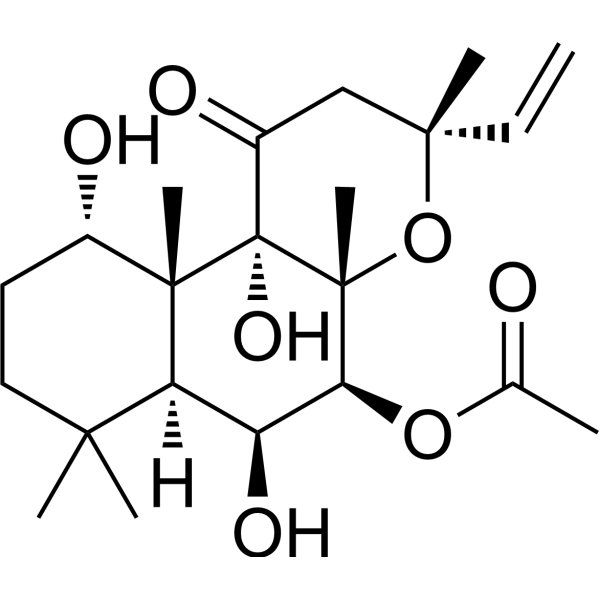
    Forskolin
    205+ Cited Publications

    Coleonol; Colforsin; HL 362

    Organoid Adenylate Cyclase FXR Autophagy PKC Metabolic Disease Inflammation/Immunology Endocrinology Cancer
    Forskolin (Coleonol) is a potent adenylate cyclase activator with an IC50 of 41 nM and an EC50 of 0.5 μM for type I adenylyl cyclase . Forskolin is also an inducer of intracellular cAMP formation . Forskolin induces differentiation of various cell types and activates pregnane X receptor (PXR) and FXR . Forskolin exerts a inotropic effect on the heart, and has platelet antiaggregatory and antihypertensive actions. Forskolin also induces autophagy .
    Forskolin
  • HY-P1071
    α-CGRP (human)
    4 Publications Verification

    Calcitonin gene-related peptide

    CGRP Receptor Cardiovascular Disease
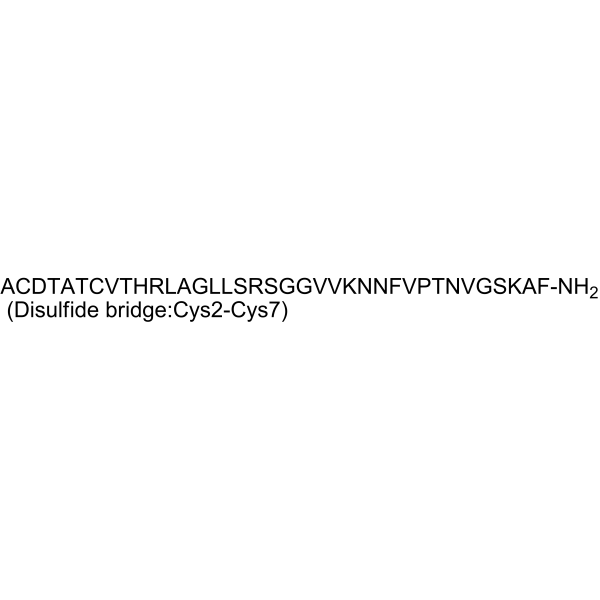
    α-CGRP (human) (Calcitonin gene-related peptide) is a regulatory neuropeptide of 37 amino acids. α-CGRP (human) is widely distributed in the central and peripheral nervous system. α-CGRP (human) is a potent vasodilator and has inotropic and chronotropic effects .
    α-CGRP (human)
  • HY-109128
    Danicamtiv
    1 Publications Verification

    MYK-491

    Myosin Cancer
    Danicamtiv (MYK-491), an inotropic agent, is a selective allosteric activator of cardiac myosin. Danicamtiv increases cardiac systolic function and preserves mechanical efficiency .
    Danicamtiv
  • HY-B1294

    Inamrinone

    Phosphodiesterase (PDE) Cardiovascular Disease
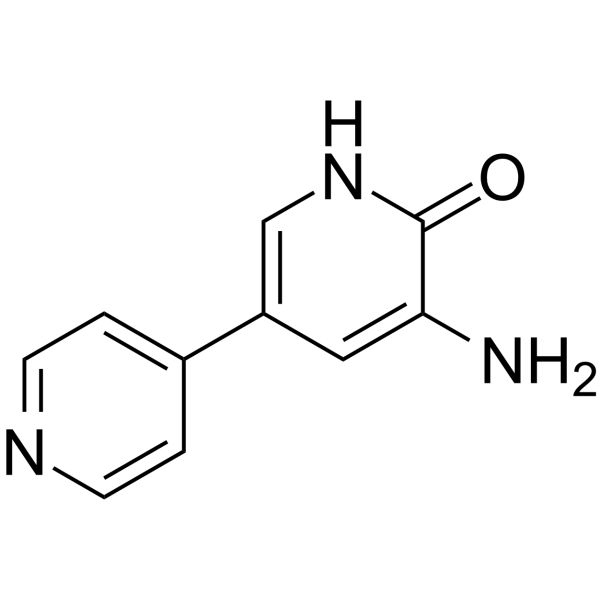
    Amrinone (Inamrinone) is a positive inotropic-vasodilator agent. Amrinone is a selective phosphodiesterase III inhibitor that increases cyclic adenosine monophosphate by preventing its breakdown. Amrinone is also an orally active, non-glycosidic and non-catecholamine cardiotonic agent .
    Amrinone
  • HY-12533
    Disopyramide
    2 Publications Verification

    Dicorantil; SC-7031

    Sodium Channel Potassium Channel Cardiovascular Disease
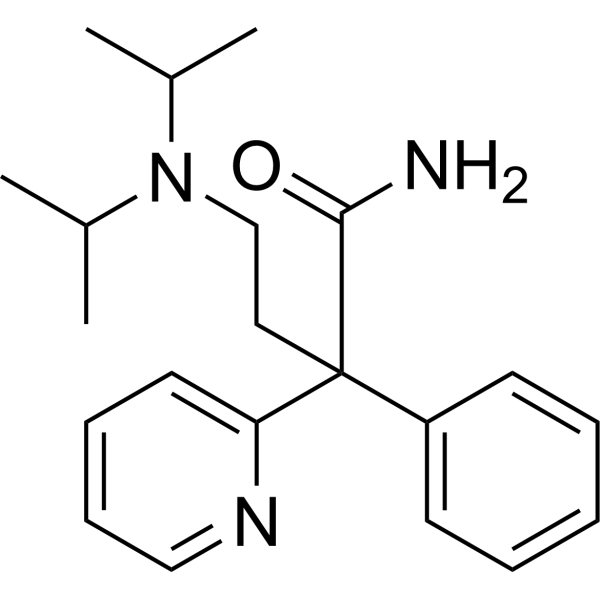
    Disopyramide (Dicorantil) is a class IA antiarrhythmic agent with efficacy in ventricular and atrial arrhythmias. Disopyramide blocks the fast inward sodium current of cardiac muscle and prolongs the duration of cardiac action potentials. Disopyramide inhibits HERG encoded potassium channels. Disopyramide also exhibits complex protein binding, and has a potent negative inotropic action .
    Disopyramide
  • HY-15477
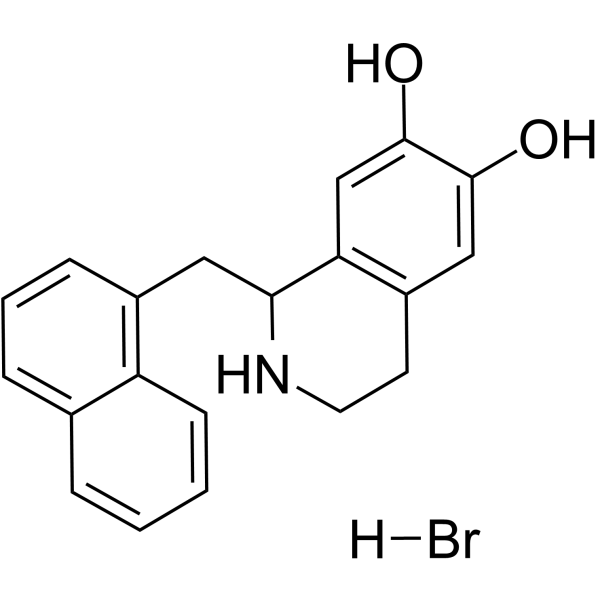
    YS-49
    10+ Cited Publications

    Akt PI3K Angiotensin Receptor Adrenergic Receptor Cardiovascular Disease Endocrinology
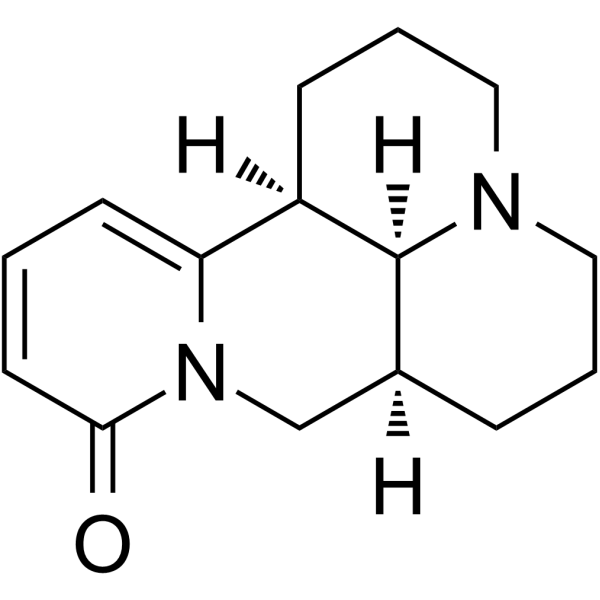
    YS-49 is a PI3K/Akt (a downstream target of RhoA) activator, to reduce RhoA/PTEN activation in the 3-methylcholanthrene-treated cells. YS-49 inhibits angiotensin II (Ang II)-stimulated proliferation of VSMCs via induction of heme oxygenase (HO)-1. YS-49 is also an isoquinoline compound alkaloid, has a strong positive inotropic action through activation of cardiac β-adrenoceptors .
    YS-49
  • HY-12533A
    Disopyramide phosphate
    2 Publications Verification

    Dicorantil phosphate; SC-7031 phosphate

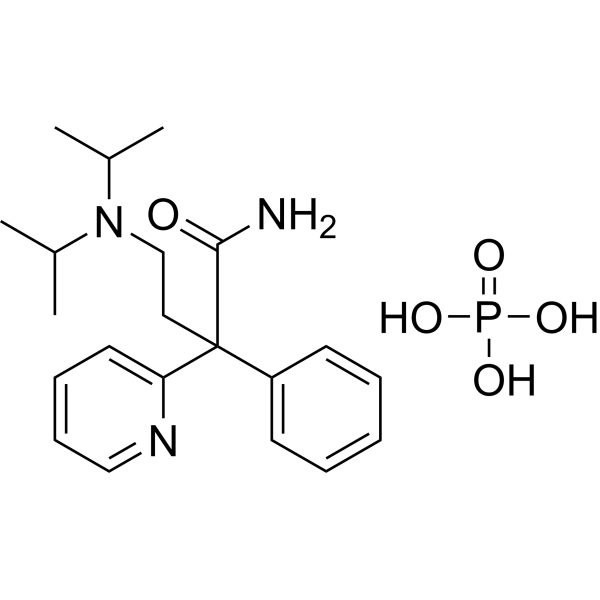
    Potassium Channel Sodium Channel Cardiovascular Disease
    Disopyramide phosphate is a class IA antiarrhythmic agent with efficacy in ventricular and atrial arrhythmias. Disopyramide phosphate blocks the fast inward sodium current of cardiac muscle and prolongs the duration of cardiac action potentials. Disopyramide phosphate inhibits HERG encoded potassium channels. Disopyramide phosphate also exhibits complex protein binding, and has a potent negative inotropic action .
    Disopyramide phosphate
  • HY-14254A
    Olprinone
    1 Publications Verification

    Loprinone

    Phosphodiesterase (PDE) Cardiovascular Disease
    Olprinone (Loprinone) is a potent phosphodiesterase (PDE) 3 inhibitor, with IC50s of 150, 100, 0.35 and 14 μM for PDE1, PDE2, PDE3 and PDE4, respectively. Olprinone is used for the research of heart failure due to its positive inotropic and vasodilative effects. Anti-inflammatory activity .
    Olprinone
  • HY-15297
    Vesnarinone
    2 Publications Verification

    OPC-8212

    Phosphodiesterase (PDE) Infection Cardiovascular Disease
    Vesnarinone (OPC-8212) is an orally active phosphodiesterase 3 (PDE3) inhibitor. Vesnarinone can increase in calcium flux and decrease in potassium flux. Vesnarinone shows dose-dependent positive inotropic activity. Vesnarinone can be used in heart failure research .
    Vesnarinone
  • HY-P2106
    Elabela(19-32)
    Maximum Cited Publications
    6 Publications Verification

    Arrestin Apelin Receptor (APJ) Cardiovascular Disease
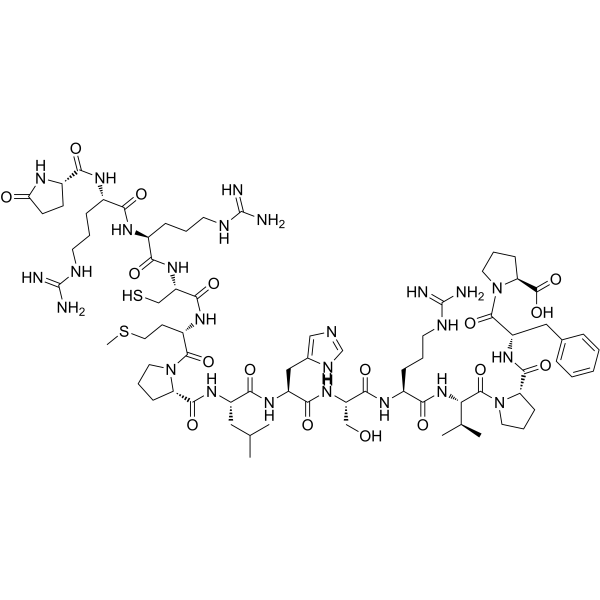
    Elabela(19-32) is an active fragment of ELABELA (ELA) that binds to apelin receptor (APJ). Elabela(19-32) activates the Gαi1 and β-arrestin-2 signaling pathways with EC50s of 8.6 nM and 166 nM. Elabela(19-32) induces receptor internalization and reduces arterial pressure, exerts positive inotropic effects on the heart .
    Elabela(19-32)
  • HY-B1639

    Phosphodiesterase (PDE) Cardiovascular Disease Inflammation/Immunology
    Enoximone is an inotropic vasodilating agent and a selective and orally active phosphodiesterase III (PDE3) inhibitor with an IC50 of 5.9 μM. Enoximone induces vasodilatation and increases intracellular levels of cAMP by inhibiting cGMP-inhibited PDE. Enoximone also exhibits PDE4 inhibitory effect with an IC50 of 21.1 μM for myocardial PDE4A. Enoximone has the potential for congestive heart failure research and has bronchodilatory, antiasthma and anti-inflammatory effects .
    Enoximone
  • HY-100607A

    ONO1101 hydrochloride

    Adrenergic Receptor Calcium Channel Potassium Channel Reactive Oxygen Species (ROS) Cardiovascular Disease Inflammation/Immunology Endocrinology
    Landiolol (ONO1101) hydrochloride is a highly selective, ultra-short-acting competitive inhibitor of β1 adrenergic receptors. Landiolol hydrochloride specifically blocks cardiac β1 receptors, reducing heart rate and myocardial oxygen consumption. Landiolol hydrochloride inhibits TNF-α-induced excessive mitochondrial oxygen consumption and reactive oxygen species production in a sepsis model, alleviating renal injury. Landiolol hydrochloride has little effect on cardiac ion channels (such as L-type calcium current and inward rectifier potassium current) and has a weak negative inotropic effect. Landiolol hydrochloride can be used for perioperative tachycardia control and protection studies of sepsis-related acute kidney injury .
    Landiolol hydrochloride
  • HY-14254
    Olprinone Hydrochloride
    1 Publications Verification

    Loprinone Hydrochloride

    Phosphodiesterase (PDE) Cardiovascular Disease
    Olprinone (Loprinone) Hydrochloride is a potent phosphodiesterase (PDE) 3 inhibitor, with IC50s of 150, 100, 0.35 and 14 μM for PDE1, PDE2, PDE3 and PDE4, respectively. Olprinone Hydrochloride is used for the research of heart failure due to its positive inotropic and vasodilative effects. Anti-inflammatory activity .
    Olprinone Hydrochloride
  • HY-B1233

    2-Amino-6-methylheptane; 1,5-Dimethylhexylamine; 6-Methyl-2-heptylamine

    Dopamine Receptor Others
    Octodrine (2-Amino-6-methylheptane) is a central nervous stimulant that increases the uptake of dopamine and noradrenaline. Octodrine is found to increase the pain threshold, cardiac rate (positive chronotropic effect) and myocardial contractility (positive inotropic effect) .
    Octodrine
  • HY-P1071A
    α-CGRP (human) TFA
    4 Publications Verification

    Calcitonin gene-related peptide TFA

    CGRP Receptor Cardiovascular Disease
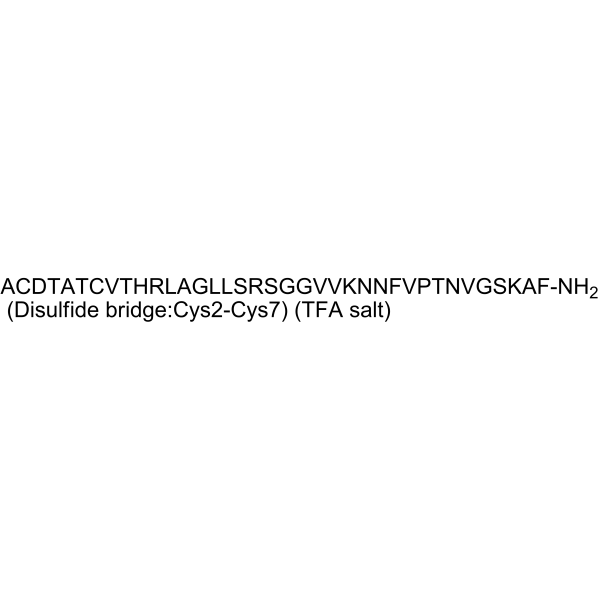
    α-CGRP (human) (TFA) is a regulatory neuropeptide of 37 amino acids. α-CGRP (human) (TFA) is widely distributed in the central and peripheral nervous system. α-CGRP (human) (TFA) is a potent vasodilator and has inotropic and chronotropic effects .
    α-CGRP (human) TFA
  • HY-15371R

    Coleonol (Standard); Colforsin (Standard); HL 362 (Standard)

    Organoid Reference Standards Adenylate Cyclase FXR Autophagy PKC Metabolic Disease Inflammation/Immunology Endocrinology Cancer
    Forskolin (Standard) is the analytical standard of Forskolin. This product is intended for research and analytical applications. Forskolin (Coleonol) is a potent adenylate cyclase activator with an IC50 of 41 nM and an EC50 of 0.5 μM for type I adenylyl cyclase . Forskolin is also an inducer of intracellular cAMP formation . Forskolin induces differentiation of various cell types and activates pregnane X receptor (PXR) and FXR . Forskolin exerts a inotropic effect on the heart, and has platelet antiaggregatory and antihypertensive actions. Forskolin also induces autophagy .
    Forskolin (Standard)
  • HY-18740A

    HL 725

    Phosphodiesterase (PDE) Neurological Disease Metabolic Disease Cancer
    Trequinsin hydrochloride (HL 725) is a PDE inhibitor, CatSper channel activator, and sperm potassium channel modulator. Trequinsin hydrochloride targets PDE3 with an IC50 of <1 nM. Trequinsin hydrochloride enhances currents and elevates intracellular calcium and cGMP levels via direct activation of the CatSper channel, while inhibiting the outward current conductance of sperm potassium channels. Without inducing premature acrosome reaction, Trequinsin hydrochloride significantly enhances sperm hyperactivated motility, forward motility, and the ability to penetrate viscous media. Trequinsin hydrochloride exerts age-specific positive inotropic and positive lusitropic effects on rabbit ventricular papillary muscles. Trequinsin hydrochloride has been used in studies on the mechanisms underlying male infertility (e.g., asthenozoospermia) .
    Trequinsin hydrochloride
  • HY-P2106A
    Elabela(19-32) TFA
    Maximum Cited Publications
    6 Publications Verification

    Apelin Receptor (APJ) Arrestin Cardiovascular Disease
    Elabela(19-32) TFA is an active fragment of ELABELA (ELA) that binds to apelin receptor (APJ). Elabela(19-32) TFA activates the Gαi1 and β-arrestin-2 signaling pathways with EC50s of 8.6 nM and 166 nM. Elabela(19-32) TFA induces receptor internalization and reduces arterial pressure, exerts positive inotropic effects on the heart .
    Elabela(19-32) TFA
  • HY-19666
    DPI 201-106
    1 Publications Verification

    SDZ 201106

    Sodium Channel Cardiovascular Disease
    DPI 201-106 (SDZ 201106) is a cardiotonic agent with a synergistic sarcolemmal and intracellular mechanism of action. DPI 201-106 shows cardioselective modulation of voltage-gated sodium channels (VGSCs) resulting in a positive inotropic effect .
    DPI 201-106
  • HY-15371G

    Coleonol; Colforsin; HL 362

    Adenylate Cyclase FXR Autophagy PKC Metabolic Disease Inflammation/Immunology Endocrinology Cancer
    Forskolin (Coleonol) (GMP) is a potent adenylate cyclase activator with an IC50 of 41 nM and an EC50 of 0.5 μM for type I adenylyl cyclase . Forskolin (GMP) is also an inducer of intracellular cAMP formation . Forskolin (GMP) induces differentiation of various cell types and activates pregnane X receptor (PXR) and FXR . Forskolin (GMP) exerts a inotropic effect on the heart, and has platelet antiaggregatory and antihypertensive actions. Forskolin (GMP) also induces autophagy .
    Forskolin
  • HY-15477A
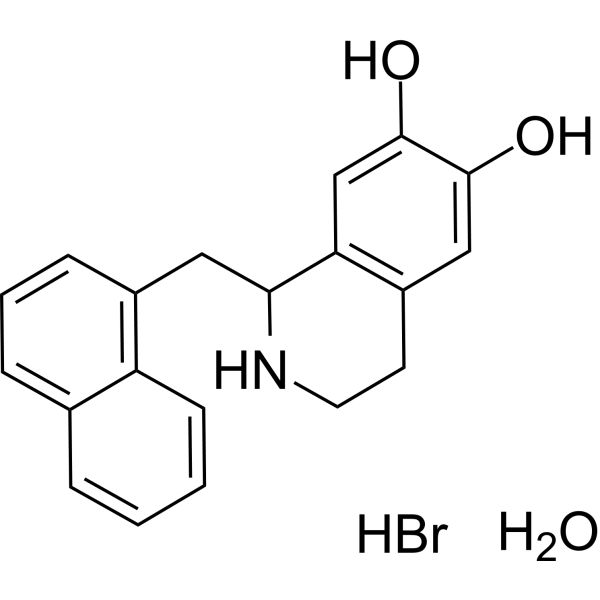
    YS-49 monohydrate
    10+ Cited Publications

    Akt PI3K Angiotensin Receptor Adrenergic Receptor Cardiovascular Disease Endocrinology
    YS-49 (monohydrate) is a PI3K/Akt (a downstream target of RhoA) activator, to reduce RhoA/PTEN activation in the 3-methylcholanthrene-treated cells. YS-49 inhibits angiotensin II (Ang II)-stimulated proliferation of VSMCs via induction of heme oxygenase (HO)-1. YS-49 is also an isoquinoline compound alkaloid, has a strong positive inotropic action through activation of cardiac β-adrenoceptors .
    YS-49 monohydrate
  • HY-14252A
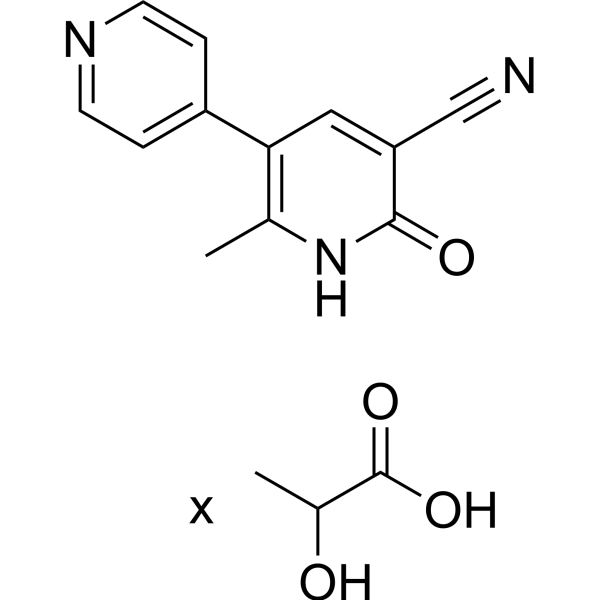
    Milrinone lactate
    30+ Cited Publications

    Win 47203 lactate

    Phosphodiesterase (PDE) Cardiovascular Disease
    Milrinone lactate is a potent inotropic dilating agent. Milrinone lactate shows simultaneous positive inotropic and vasodilating activities. Milrinone lactate promotes reduction of SVR and PVR in patients with DCM and NYHA class III and IV of heart failure. Milrinone lactate has the potential for the research of cardiovascular function after cardiac surgery and in septic shock .
    Milrinone lactate
  • HY-B1233A

    2-Amino-6-methylheptane hydrochloride; 1,5-Dimethylhexylamine hydrochloride; 6-Methyl-2-heptylamine hydrochloride

    Dopamine Receptor Neurological Disease
    Octodrine (2-Amino-6-methylheptane) is a central nervous activator that increases the uptake of dopamine and noradrenaline. Octodrine is found to increase the pain threshold, cardiac rate (positive chronotropic effect) and myocardial contractility (positive inotropic effect) .
    Octodrine hydrochloride
  • HY-165439

    LY195115

    Phosphodiesterase (PDE) Cardiovascular Disease
    Indolidan (LY195115) is an orally active cardiotonic agent and a selective cyclic nucleotide phosphodiesterase inhibitor. Indolidan has a Ki of 80 nM for sarcoplasmic reticulum phosphodiesterase (SR-PDE). Indolidan exhibits positive inotropic and vasodilator effects. Indolidan can be used in the research of diseases such as congestive heart failure .
    Indolidan
  • HY-P3269

    Calcium Channel Cardiovascular Disease
    Calciseptine is a natural polypeptide toxin found in the venom of the black mamba snake (Dendroaspis p. polylepis). Calciseptine is a highly effective and selective blocker of the L-type channel of the Cav1.2 subtype, with an IC50 value of 92 nM. Calciseptine has no effect on Cav3.1, Cav2.2, Cav2.1, Cav1.1, voltage-sensitive sodium channels and potassium channels. Calciseptine exhibits negative inotropic and negative relaxant effects on mice, and does not affect heart rate or the action potential of sinoatrial node pacemaker cells. Calciseptine can be used for research on cardiovascular diseases[1].
    Calciseptine
  • HY-123268A

    Adrenergic Receptor Cardiovascular Disease
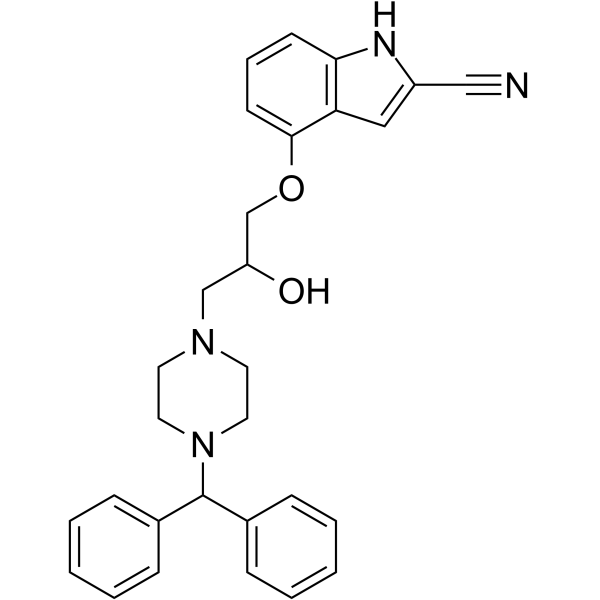
    Ro 363 hydrochloride, an effective inotropic stimulant, is a potent and highly selective β1-adrenoceptor agonist. Ro 363 hydrochloride is a cardiovascular modulator that reduces diastolic blood pressure and pronounces increases in myocardial contractility .
    Ro 363 hydrochloride
  • HY-123268

    Adrenergic Receptor Cardiovascular Disease
    Ro 363, an effective inotropic stimulant, is a potent and highly selective β1-adrenoceptor agonist. RO 363 is a cardiovascular modulator that reduces diastolic blood pressure and pronounces increases in myocardial contractility .
    Ro 363
  • HY-W017764

    Drug Derivative Cardiovascular Disease
    7,8-Dihydro-2,5(1H,6H)-quinolinedione (compound SF32) is a positive inotropic agent .
    7,8-Dihydro-2,5(1H,6H)-quinolinedione
  • HY-153168

    Phosphodiesterase (PDE) Cardiovascular Disease
    Bemoradan (compound 10a) is an orally active and selective canine Phosphodiesterase (PDE) fraction III inhibitor. Bemoradan is a long-acting, potent, inotropic vasodilator and a novel cardiotonic agent, and can be used in congestive heart failure research .
    Bemoradan
  • HY-120577

    Others Cardiovascular Disease
    BA 41899 is a purely calcium-sensitizing agent. BA 41899 is completely devoid of phosphodiesterase (PDE) III inhibitory activity or any other known inotropic mechanism. BA 41899 can be used for the research of cardiovascular diseases, such as congestive heart failure (CHF) .
    BA 41899
  • HY-106844

    Phosphodiesterase (PDE) Cardiovascular Disease
    EMD 53998 is a cardiotonic agent that increases myocardial contractility as an inhibitor for phosphodiesterase III (PDE III) and a calcium sensitizer. EMD 53998 increases myocardial contractility, reduces energy consumption and the risk of inducing arrhythmias .
    EMD 53998
  • HY-118643
    Cimlanod
    1 Publications Verification

    BMS-986231; CXL-1427

    Drug Intermediate Cardiovascular Disease
    Cimlanod (BMS-986231) is a second-generation Nitroxyl (HNO) donor for heart failure. Cimlanod (BMS-986231) delivers HNO via pH-dependent chemical breakdown when exposed to the neutral pH environment of the bloodstream. Cimlanod (BMS-986231) possesses positive lusitropic and inotropic as well as vasodilatory effects. Cimlanod is the prodrug of CXL-1020 (HY-147384) .
    Cimlanod
  • HY-163120

    Myosin Cardiovascular Disease
    Myosin-IN-1 (compound F10) is a Myosin inhibitor that specifically targets cardiac myosin. Myosin-IN-1 stabilizes the biochemical and structural closed state of the cardiac myosin motor domain and reduces myocardial force production and calcium sensitivity in vitro. Myosin-IN-1 acts as a negative inotropic agent in isolated Langendroff-perfused rat hearts, reducing stress in isolated myofilaments and left ventricular pressure development. Myosin-IN-1 can be used in heart failure research .
    Myosin-IN-1
  • HY-105057

    Phosphodiesterase (PDE) Cardiovascular Disease
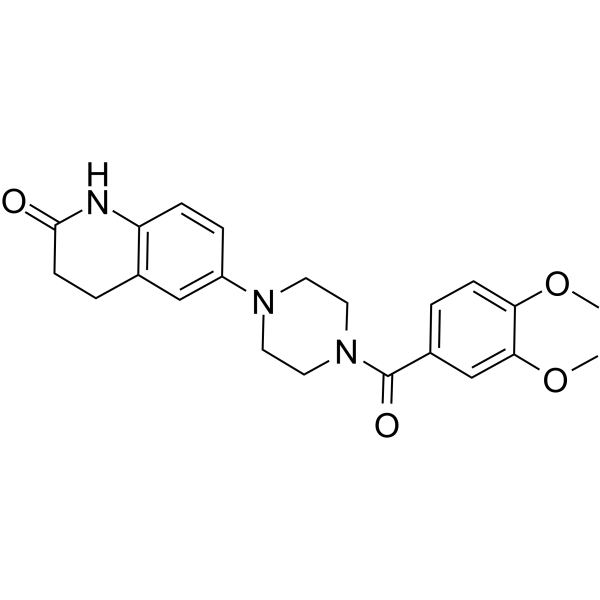
    MDL 19205 is a cardiotonic agent with inotropic effect. MDL 19205 can be used for the research of cardiovascular disease, such as heart failure .
    MDL 19205
  • HY-105431

    Na+/K+ ATPase Cardiovascular Disease
    ASI-222 is an aminosugar cardiac glycoside. ASI-222 can inhibit Na+/K+ ATPase and show positive inotropic effect. ASI-222 can be used for the research of cardiovascular disease .
    ASI-222
  • HY-165436

    Phosphodiesterase (PDE) Cardiovascular Disease
    Toborinone is an inotropic agent. Toborinone increases cAMP and intracellular calcium levels through inhibiting PDE. Toborinone inhibits thrombin-induced platelet aggregation with an IC50 of 9.7 μM .
    Toborinone
  • HY-109128S

    MYK-491-d6

    Isotope-Labeled Compounds Myosin Cardiovascular Disease
    Danicamtiv-d6 (MYK-491-d6) is a deuterated labeled Danicamtiv (HY-109128). Danicamtiv (MYK-491), an inotropic agent, is a selective allosteric activator of cardiac myosin. Danicamtiv increases cardiac systolic function and preserves mechanical efficiency .
    Danicamtiv-d6
  • HY-112072

    SB 7505 hydrochloride; SKF 100168 hydrochloride

    Dopamine Receptor Adrenergic Receptor Cardiovascular Disease
    Ibopamine (SB 7505) hydrochloride is an orally active dopamine derivative. Ibopamine hydrochloride exerts agonistic effects on α, β adrenergic receptors and dopaminergic receptors. Ibopamine hydrochloride can be hydrolyzed to produce the active metabolite Epinine. Ibopamine hydrochloride possesses positive inotropic and vasodilatory effects, which can improve hemodynamics and renal function in heart failure models. Ibopamine hydrochloride has good safety profile and can be used in the research of diseases such as congestive heart failure .
    Ibopamine hydrochloride
  • HY-129733

    Na+/K+ ATPase Cardiovascular Disease
    LND 623 is an inotropic aminosteroid with positive inotropic properties. LND 623 inhibits Na +/K + ATPase activity. The LD50 of LND 623 infused i.v. is around 45 mg/kg, a value ten times higher than the LD50 for Ouabain (HY-B1457) .
    LND 623
  • HY-167079A

    Drug Isomer Cardiovascular Disease
    OPC-18750 hydrochloride has positive inotropic and coronary vasodilatory effects .
    OPC-18750 hydrochloride
  • HY-167079

    Drug Derivative Cardiovascular Disease
    OPC-18750 is a novel positive inotropic agent and 2(lH)-quinolinone derivative. OPC-18750 displays positive inotropic and coronary vasodilating effects .
    OPC-18750
  • HY-113547

    UK 61260

    Phosphodiesterase (PDE) Cardiovascular Disease
    Nanterinone (UK 61260) is a positive inotropic and arterial vasodilating agent. Nanterinone is a phosphodiesterase inhibitor .
    Nanterinone
  • HY-P5824

    Sodium Channel Neurological Disease
    Anthopleurin-C (APE 2-1) is a cardiotonic polypeptide that shows a powerful positive inotropic effect .
    Anthopleurin-C
  • HY-105269A

    Calcium Channel Cardiovascular Disease
    Org 30029 hydrochloride is a Ca 2+ sensitizer with positive inotropic effect. Org 30029 hydrochloride can be used for the research of cardiovascular disease .
    Org 30029 hydrochloride
  • HY-16256

    Phosphodiesterase (PDE) Cardiovascular Disease
    Amrinone lactate is a positive inotropic-vasodilator agent. Amrinone lactate is a selective phosphodiesterase III inhibitor that increases cyclic adenosine monophosphate by preventing its breakdown. Amrinone lactate is also an orally active, non-glycosidic and non-catecholamine cardiotonic agent .
    Amrinone lactate
  • HY-116119

    Sodium Channel Cardiovascular Disease
    BDF 9148 is a sodium-channel activator with antiarrhythmic properties that produces a significant CAMP-independent positive inotropic effect in left ventricular myocardium from failing hearts. BDF 9148 is promising for research of myocardial failure .
    BDF 9148
  • HY-B1294R

    Inamrinone (Standard)

    Reference Standards Phosphodiesterase (PDE) Cardiovascular Disease
    Amrinone (Standard) is the analytical standard of Amrinone. This product is intended for research and analytical applications. Amrinone (Inamrinone) is a positive inotropic-vasodilator agent. Amrinone is a selective phosphodiesterase III inhibitor that increases cyclic adenosine monophosphate by preventing its breakdown. Amrinone is also an orally active, non-glycosidic and non-catecholamine cardiotonic agent .
    Amrinone (Standard)
  • HY-12533B

    Dicorantil hydrochloride; SC-7031 hydrochloride

    Sodium Channel Potassium Channel Cardiovascular Disease
    Disopyramide hydrochloride is a class IA antiarrhythmic agent with efficacy in ventricular and atrial arrhythmias. Disopyramide hydrochloride blocks the fast inward sodium current of cardiac muscle and prolongs the duration of cardiac action potentials. Disopyramide hydrochloride inhibits HERG encoded potassium channels. Disopyramide hydrochloride also exhibits complex protein binding, and has a potent negative inotropic action .
    Disopyramide hydrochloride
  • HY-14254AR

    Loprinone (Standard)

    Phosphodiesterase (PDE) Reference Standards Cardiovascular Disease
    Olprinone (Standard) is the analytical standard of Olprinone. This product is intended for research and analytical applications. Olprinone (Loprinone) is a potent phosphodiesterase (PDE) 3 inhibitor, with IC50s of 150, 100, 0.35 and 14 μM for PDE1, PDE2, PDE3 and PDE4, respectively. Olprinone is used for the research of heart failure due to its positive inotropic and vasodilative effects. Anti-inflammatory activity .
    Olprinone (Standard)
  • HY-12533R

    Dicorantil (Standard); SC-7031 (Standard)

    Reference Standards Sodium Channel Potassium Channel Cardiovascular Disease
    Disopyramide (Standard) is the analytical standard of Disopyramide. This product is intended for research and analytical applications. Disopyramide (Dicorantil) is a class IA antiarrhythmic agent with efficacy in ventricular and atrial arrhythmias. Disopyramide blocks the fast inward sodium current of cardiac muscle and prolongs the duration of cardiac action potentials. Disopyramide inhibits HERG encoded potassium channels. Disopyramide also exhibits complex protein binding, and has a potent negative inotropic action .
    Disopyramide (Standard)

Inquiry Online

Your information is safe with us. * Required Fields.

Salutation


Country or Region *

Applicant Name *


Organization Name *

Department *


Email Address *


Product Name *

Cat. No.


Requested quantity *

Phone Number *


Remarks

Inquiry Online

Inquiry Information

Product Name:
Cat. No.:
Quantity:
MCE Japan Authorized Agent:

