
1. Search Result
Search Result
Results for "

intracellular cGMP

" in MedChemExpress (MCE) Product Catalog:

20

Inhibitors & Agonists

1

Peptides

5

Natural
Products

2

Isotope-Labeled Compounds

Cat. No. Product Name Target Research Areas Chemical Structure
  • HY-113469
    Cyclic GMP
    1 Publications Verification

    Endogenous Metabolite Infection Cardiovascular Disease Inflammation/Immunology
    Cyclic GMP (cGMP), an important second messenger, is a major intracellular mediator of extracellular signals such as nitric oxide (NO) and natriuretic peptides (NPs). Effects of Cyclic GMP occur through three main groups of cellular targets: cGMP-dependent protein kinases (PKGs), cGMP-gated cation channels, and PDEs. Cyclic GMP can inhibit both platelet adhesion and aggregation. cGAMP (Cyclic-GMP-AMP) (HY-12512), a conjugate of Cyclic GMP and AMP, can induce IRF3 phosphorylation and nuclear translocation, enhancing antiviral immune responses .
    Cyclic GMP
  • HY-B1639

    Phosphodiesterase (PDE) Cardiovascular Disease Inflammation/Immunology
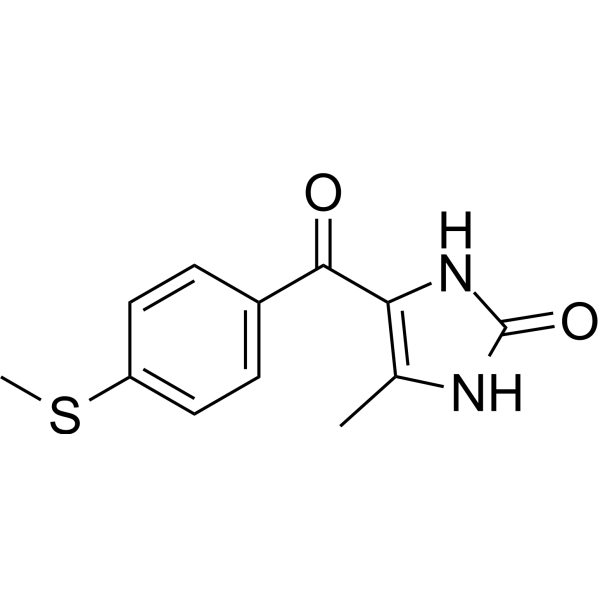
    Enoximone is an inotropic vasodilating agent and a selective and orally active phosphodiesterase III (PDE3) inhibitor with an IC50 of 5.9 μM. Enoximone induces vasodilatation and increases intracellular levels of cAMP by inhibiting cGMP-inhibited PDE. Enoximone also exhibits PDE4 inhibitory effect with an IC50 of 21.1 μM for myocardial PDE4A. Enoximone has the potential for congestive heart failure research and has bronchodilatory, antiasthma and anti-inflammatory effects .
    Enoximone
  • HY-18740A

    HL 725

    Phosphodiesterase (PDE) Neurological Disease Metabolic Disease Cancer
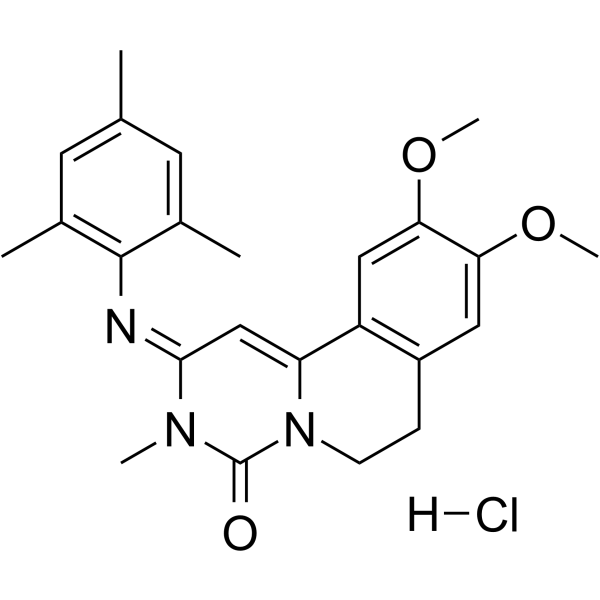
    Trequinsin hydrochloride (HL 725) is a PDE inhibitor, CatSper channel activator, and sperm potassium channel modulator. Trequinsin hydrochloride targets PDE3 with an IC50 of <1 nM. Trequinsin hydrochloride enhances currents and elevates intracellular calcium and cGMP levels via direct activation of the CatSper channel, while inhibiting the outward current conductance of sperm potassium channels. Without inducing premature acrosome reaction, Trequinsin hydrochloride significantly enhances sperm hyperactivated motility, forward motility, and the ability to penetrate viscous media. Trequinsin hydrochloride exerts age-specific positive inotropic and positive lusitropic effects on rabbit ventricular papillary muscles. Trequinsin hydrochloride has been used in studies on the mechanisms underlying male infertility (e.g., asthenozoospermia) .
    Trequinsin hydrochloride
  • HY-113469A
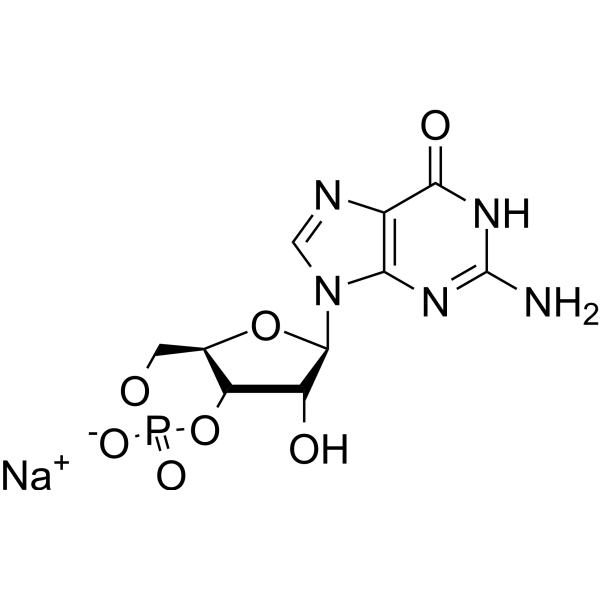
    Cyclic GMP sodium
    1 Publications Verification

    Endogenous Metabolite Infection Cardiovascular Disease Inflammation/Immunology
    Cyclic GMP (cGMP) sodium, an important second messenger, is a major intracellular mediator of extracellular signals such as nitric oxide (NO) and natriuretic peptides (NPs). Effects of Cyclic GMP sodium occur through three main groups of cellular targets: cGMP-dependent protein kinases (PKGs), cGMP-gated cation channels, and PDEs. Cyclic GMP can inhibit both platelet adhesion and aggregation. cGAMP (Cyclic-GMP-AMP) (HY-12512), a conjugate of Cyclic GMP and AMP, can induce IRF3 phosphorylation and nuclear translocation, enhancing antiviral immune responses .
    Cyclic GMP sodium
  • HY-N0097R

    DL-Guanosine (Standard); Vernine (Standard)

    Reference Standards HSV Endogenous Metabolite Infection
    Guanosine (Standard) is the analytical standard of Guanosine. This product is intended for research and analytical applications. Guanosine (DL-Guanosine) is a purine nucleoside comprising guanine attached to a ribose (ribofuranose) ring via a β-N9-glycosidic bond. Guanosine possesses anti-HSV activity. In Vitro: Guanosine can be phosphorylated to become guanosine monophosphate (GMP), cyclic guanosine monophosphate (cGMP), guanosine diphosphate (GDP), and guanosine triphosphate (GTP). These forms play important roles in various biochemical processes such as synthesis of nucleic acids and proteins, photosynthesis, muscle contraction, and intracellular signal transduction (cGMP).
    Guanosine (Standard)
  • HY-113469B

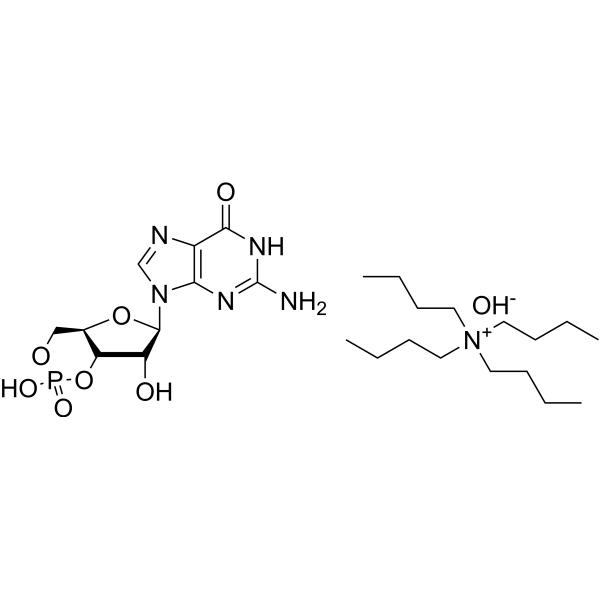
    Endogenous Metabolite Infection Cardiovascular Disease Inflammation/Immunology
    Cyclic GMP (cGMP) TBAOH, an important second messenger, is a major intracellular mediator of extracellular signals such as nitric oxide (NO) and natriuretic peptides (NPs). Effects of Cyclic GMP TBAOH occur through three main groups of cellular targets: cGMP-dependent protein kinases (PKGs), cGMP-gated cation channels, and PDEs. Cyclic GMP can inhibit both platelet adhesion and aggregation. cGAMP (Cyclic-GMP-AMP) (HY-12512), a conjugate of Cyclic GMP and AMP, can induce IRF3 phosphorylation and nuclear translocation, enhancing antiviral immune responses .
    Cyclic GMP (TBAOH)
  • HY-113469R

    Endogenous Metabolite Reference Standards Infection Cardiovascular Disease Inflammation/Immunology
    Cyclic GMP (Standard) is the analytical standard of Cyclic GMP (HY-113469). This product is intended for research and analytical applications. Cyclic GMP (cGMP), an important second messenger, is a major intracellular mediator of extracellular signals such as nitric oxide (NO) and natriuretic peptides (NPs). Effects of Cyclic GMP occur through three main groups of cellular targets: cGMP-dependent protein kinases (PKGs), cGMP-gated cation channels, and PDEs. Cyclic GMP can inhibit both platelet adhesion and aggregation. cGAMP (Cyclic-GMP-AMP) (HY-12512), a conjugate of Cyclic GMP and AMP, can induce IRF3 phosphorylation and nuclear translocation, enhancing antiviral immune responses .
    Cyclic GMP (Standard)
  • HY-P2867

    3′-Exonuclease

    Phosphodiesterase (PDE) Neurological Disease
    Phosphodiesterase II (EC 3.1.16.1), namely phosphodiesterase 2, is mainly involved in the hydrolysis of the important second messengers cyclic adenosine monophosphate (cAMP) and cyclic guanosine monophosphate (cGMP), and is often used in biochemical research. Phosphodiesterase II is expressed in a variety of tissues, such as the adrenal medulla, brain, heart, platelets, macrophages and endothelial cells, and is involved in the regulation of many different intracellular processes .
    Phosphodiesterase II, Bovine Spleen
  • HY-P11380

    Neurotensin Receptor Calcium Channel NO Synthase Guanylate Cyclase Neurological Disease Metabolic Disease
    Capa-2 is a neuropeptide. Capa-2 activates calcium ion influx, stimulates the production of NO, activates soluble guanylate cyclase (sGC), increases intracellular cGMP, and drives ion and fluid secretion. Capa-2 can be used in studies of diuresis .
    Capa-2
  • HY-W767865

    Isotope-Labeled Compounds Endogenous Metabolite Infection Cardiovascular Disease Inflammation/Immunology
    Cyclic GMP sodium- 13C5 is the 13C-labeled Cyclic GMP sodium (HY-113469A). Cyclic GMP (cGMP) sodium, an important second messenger, is a major intracellular mediator of extracellular signals such as nitric oxide (NO) and natriuretic peptides (NPs). Effects of Cyclic GMP sodium occur through three main groups of cellular targets: cGMP-dependent protein kinases (PKGs), cGMP-gated cation channels, and PDEs. Cyclic GMP can inhibit both platelet adhesion and aggregation. cGAMP (Cyclic-GMP-AMP) (HY-12512), a conjugate of Cyclic GMP and AMP, can induce IRF3 phosphorylation and nuclear translocation, enhancing antiviral immune responses .
    Cyclic GMP sodium-13C5
  • HY-122622

    Phosphodiesterase (PDE) Others
    PF-04471141 (hydrochloride) is a compound that regulates intracellular cAMP and cGMP concentrations. It is a PDE1 inhibitor and has different effects on different PDE enzymes in regulating intracellular signaling molecule concentrations and cell proliferation in vascular smooth muscle cells.
    PF-04471141 hydrochloride
  • HY-136781

    Guanylate Cyclase Others
    A-350619 is a novel sGC activator. A-350619 increases intracellular cGMP levels. A-350619 significantly induces penile erection .
    A-350619
  • HY-178478

    Phosphodiesterase (PDE) Metabolic Disease
    PDE1-IN-11 (Compound 5cc) is an orally active and highly selective PDE1A1 inhibitor. PDE1-IN-11 increases intracellular cAMP and cGMP levels, activating the PKA-CREB and NO-cGMP-PKG signaling pathways, promoting osteoblast differentiation and bone formation, while suppressing osteoclastogenesis and bone resorption. PDE1-IN-11 is promising for research of postmenopausal osteoporosis (PMO) and other bone metabolism disorders .
    PDE1-IN-11
  • HY-W654000

    Guanosine 3',5'-cyclic-13C,15N2 monophosphate

    Isotope-Labeled Compounds Endogenous Metabolite Infection Cardiovascular Disease Inflammation/Immunology
    Cyclic GMP- 13C, 15N2 is 13C and 15N labeled Cyclic GMP (HY-113469). Cyclic GMP (cGMP), an important second messenger, is a major intracellular mediator of extracellular signals such as nitric oxide (NO) and natriuretic peptides (NPs). Effects of Cyclic GMP occur through three main groups of cellular targets: cGMP-dependent protein kinases (PKGs), cGMP-gated cation channels, and PDEs. Cyclic GMP can inhibit both platelet adhesion and aggregation. cGAMP (Cyclic-GMP-AMP) (HY-12512), a conjugate of Cyclic GMP and AMP, can induce IRF3 phosphorylation and nuclear translocation, enhancing antiviral immune responses .
    Cyclic GMP-13C,15N2
  • HY-113469AR

    Reference Standards Endogenous Metabolite Infection Cardiovascular Disease Inflammation/Immunology
    Cyclic GMP sodium (Standard) is the analytical standard of Cyclic GMP sodium (HY-113469A). This product is intended for research and analytical applications. Cyclic GMP (cGMP) sodium, an important second messenger, is a major intracellular mediator of extracellular signals such as nitric oxide (NO) and natriuretic peptides (NPs). Effects of Cyclic GMP sodium occur through three main groups of cellular targets: cGMP-dependent protein kinases (PKGs), cGMP-gated cation channels, and PDEs. Cyclic GMP can inhibit both platelet adhesion and aggregation. cGAMP (Cyclic-GMP-AMP) (HY-12512), a conjugate of Cyclic GMP and AMP, can induce IRF3 phosphorylation and nuclear translocation, enhancing antiviral immune responses .
    Cyclic GMP sodium (Standard)
  • HY-173640

    Androgen Receptor Phosphodiesterase (PDE) Cancer
    ID11916 is an orally active androgen receptor (AR) antagonist and a phosphodiesterase 5 (PDE5) inhibitor. ID11916 blocks androgen binding to AR, nuclear translocation, and androgen-dependent transcriptional activity of AR, while increasing intracellular cGMP levels and activating PKG via inhibition. ID11916 shows potent anti-cancer effect in prostate cancer cell lines VCaP and 22Rv1 and in AR-positive breast cancer cell lines SK-BR-3 .
    ID11916
  • HY-18740

    HL 725 free base

    Phosphodiesterase (PDE) Endocrinology
    Trequinsin (HL 725 free base) is a PDE inhibitor, CatSper channel activator, and sperm potassium channel modulator. Trequinsin targets PDE3 with an IC50 of <1 nM. Trequinsin enhances currents and elevates intracellular calcium and cGMP levels via direct activation of the CatSper channel, while inhibiting the outward current conductance of sperm potassium channels. Without inducing premature acrosome reaction, Trequinsin significantly enhances sperm hyperactivated motility, forward motility, and the ability to penetrate viscous media. Trequinsin exerts age-specific positive inotropic and positive lusitropic effects on rabbit ventricular papillary muscles. Trequinsin has been used in studies on the mechanisms underlying male infertility (e.g., asthenozoospermia) .
    Trequinsin
  • HY-131691

    iGluR Calcium Channel Neurological Disease
    NMDAR blocker 1 is an NMDA receptor channel blocker with an IC50 of 5.0 μM. NMDAR blocker 1 exhibits fast on-off blockade kinetics and strong voltage dependence, and does not compete with glutamate or glycine. NMDAR blocker 1 prevents glutamate/NMDA-induced intracellular Ca 2+ overload, modulates the glutamate-nitric oxide-cGMP pathway. NMDAR blocker 1 prevents in vitro excitotoxic neurodegeneration of cultured cerebellar and hippocampal neurons. NMDAR blocker 1 attenuates excitotoxic insult in an mouse model of hyperammonemia-induced excitotoxicity. NMDAR blocker 1 can be used for the research of neurodegenerative diseases .
    NMDAR blocker 1
  • HY-180916

    Carbonic Anhydrase Reactive Oxygen Species (ROS) NOD-like Receptor (NLR) Apoptosis Neurological Disease
    CAII-IN-11 (Compound A1) is a dual-target compound that contains a hCA II inhibitor (IC₅₀ = 2 nM) portion and a NO donor portion. CAII-IN-11 also has inhibitory activity against hCA IX, hCA XII, and hCA I, with IC50 values of 6, 3, and 152 nM respectively. CAII-IN-11 significantly increases the intracellular cGMP level in human trabecular meshwork cells. CAII-IN-11 reduces the apoptosis of retinal ganglion cells by reducing oxidative stress (ROS levels), inhibiting astrocytes and the NLRP3 inflammasome activation. CAII-IN-11 has hypotensive activity in rabbit models and can be used for the study of glaucoma .
    CAII-IN-11
  • HY-180581

    Monoamine Oxidase Guanylate Cyclase Cardiovascular Disease
    LOXL2/sGC modulator-1 (Compound 11k) is a LOXL2 inhibitor (IC₅₀ = 0.13 μM) and an sGC activator. LOXL2/sGC modulator-1 shows good selectivity for LOX (IC₅₀ > 45.9 μM) and LOXL3 (IC₅₀ = 1.30 μM). LOXL2/sGC modulator-1 significantly increases intracellular cGMP levels in the presence of the gGC inhibitor ODQ (HY-101255). LOXL2/sGC modulator-1 significantly inhibits hypoxia-induced collagen deposition and cross-linking, while promoting vasodilation. LOXL2/sGC modulator-1 can be used for the study of pulmonary arterial hypertension .
    LOXL2/sGC modulator-1

Inquiry Online

Your information is safe with us. * Required Fields.

Salutation


Country or Region *

Applicant Name *


Organization Name *

Department *


Email Address *


Product Name *

Cat. No.


Requested quantity *

Phone Number *


Remarks

Inquiry Online

Inquiry Information

Product Name:
Cat. No.:
Quantity:
MCE Japan Authorized Agent:

