7 Results for "

long-chain saturated fatty acids

" in MedChemExpress (MCE) Product Catalog:
Products (7)

7 Results for "long-chain saturated fatty acids" in MCE Product Catalog:

Cat. No.: HY-113201
CAS No.: 25597-07-3
Purity:  ≥98.0%
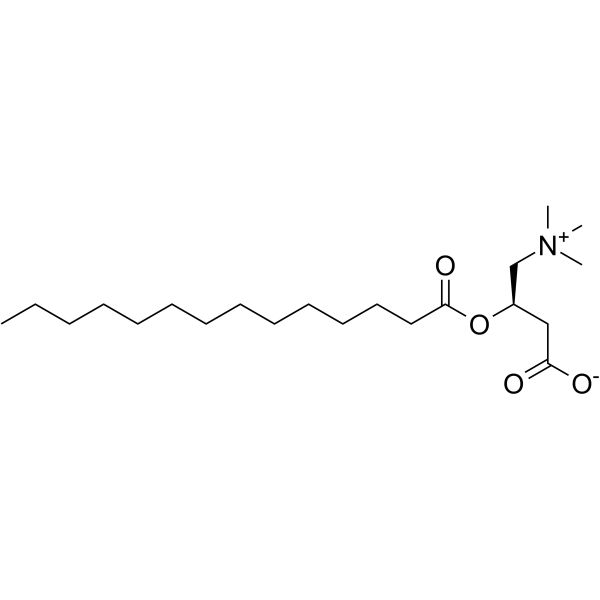
Tetradecanoylcarnitine is an acylcarnitine involved in mitochondrial β-oxidation of long-chain saturated fatty acids and fatty acid metabolism. Tetradecanoylcarnitine serves as a biomarker for very long-chain acyl-CoA dehydrogenase deficiency and MPTP (HY-15608)-induced Parkinson's disease. Tetradecanoylcarnitine exhibits a characteristic significant elevation in plasma levels in patients with sarcopenia, including those complicated with hypertension, and this elevation is closely associated with an increased risk of death. Tetradecanoylcarnitine is widely used in research on the pathological mechanisms of diseases such as Parkinson's disease and sarcopenia .
loading...
    loading...
Cat. No.: HY-W009081
CAS No.: 2433-96-7
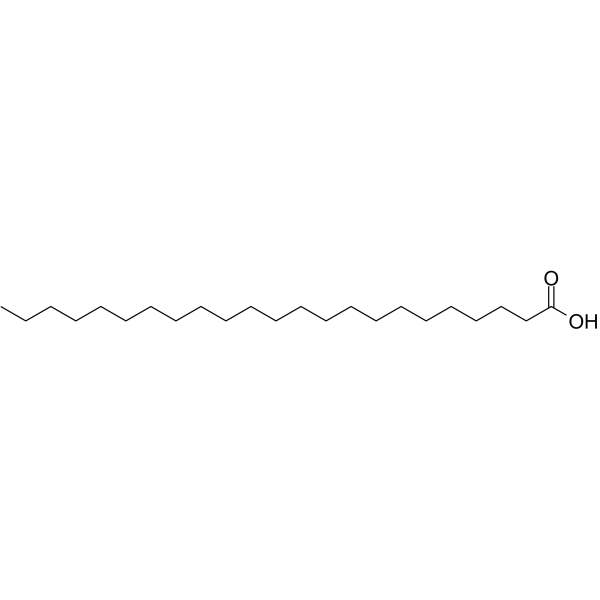
Tricosanoic acid is an endogenous agonist of long-chain saturated fatty acids and free fatty acid receptor FFAR1, which can activate hair growth. Tricosanoic acid (C23:0) has the activity of improving cognitive function by regulating neuronal membrane fluidity, inhibiting neuroinflammatory response, participating in myelination and neuronal energy metabolism. Tricosanoic acid expression levels are low in the prefrontal cortex of Alzheimer's disease (AD) models; while better cognitive performance corresponds to higher serum concentration levels. Tricosanoic acid can be used as a biomarker for diseases related to cognitive decline .
loading...
    loading...
Cat. No.: HY-N8425
CAS No.: 506-48-9
Synonyms: Montanic acid
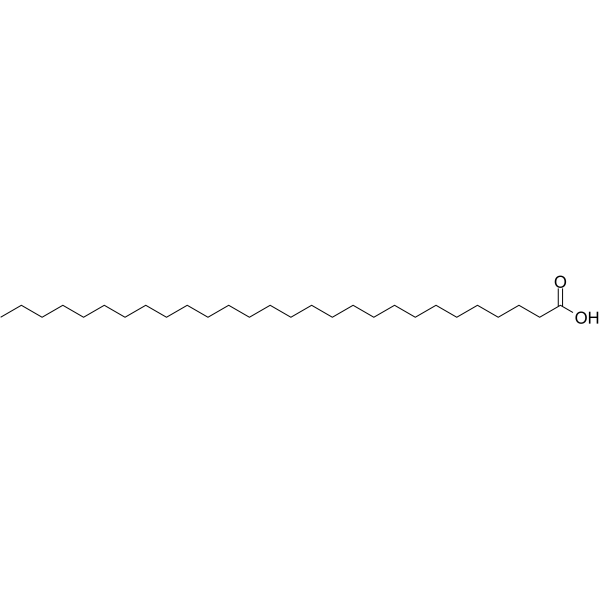
Octacosanoic acid is a very long-chain saturated fatty acid. It is the major component of D-003, a mixture of very long-chain aliphatic acids purified from sugar cane wax that has antiplatelet and cholesterol-lowering activities in animal models .
loading...
    loading...
Cat. No.: HY-N8451
CAS No.: 506-50-3
Synonyms: Triacontanoic acid
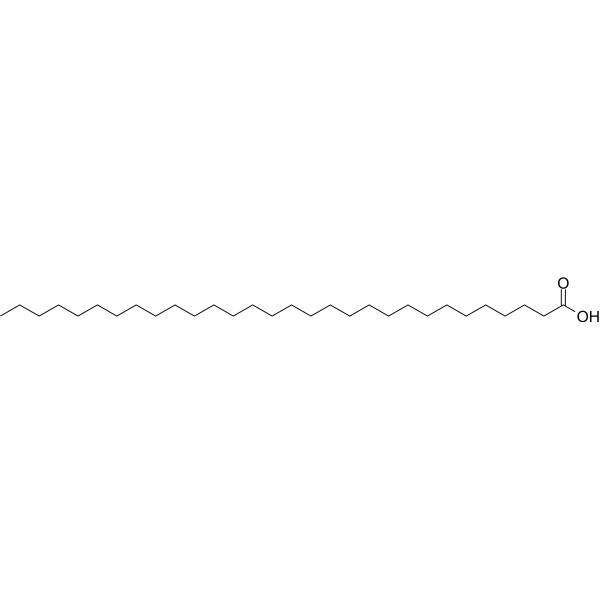
Melissic acid, which belongs to the category of long-chain saturated fatty acids. It is a 30-carbon straight-chain fatty acid found in a variety of natural sources, including beeswax and coconut oil. Due to its unique physical properties, such as high melting point and viscosity, Melissic acid has a variety of uses in industry. It can be used as a lubricant in the production of some plastics and rubber, and is also used in the manufacture of surfactants and detergents.
loading...
    loading...
Cat. No.: HY-N8425R
CAS No.: 506-48-9
Synonyms: Montanic acid (Standard)
Octacosanoic acid (Standard) is the analytical standard of Octacosanoic acid. This product is intended for research and analytical applications. Octacosanoic acid is a very long-chain saturated fatty acid. It is the major component of D-003, a mixture of very long-chain aliphatic acids purified from sugar cane wax that has antiplatelet and cholesterol-lowering activities in animal models .
loading...
    loading...
Cat. No.: HY-178395S
Tricosanoic acid-d45 is the deuterium labeled Tricosanoic acid (HY-W009081). Tricosanoic acid is an endogenous agonist of long-chain saturated fatty acids and free fatty acid receptor FFAR1, which can activate hair growth. Tricosanoic acid (C23:0) has the activity of improving cognitive function by regulating neuronal membrane fluidity, inhibiting neuroinflammatory response, participating in myelination and neuronal energy metabolism. Tricosanoic acid expression levels are low in the prefrontal cortex of Alzheimer's disease (AD) models; while better cognitive performance corresponds to higher serum concentration levels. Tricosanoic acid can be used as a biomarker for diseases related to cognitive decline .
loading...
    loading...
Cat. No.: HY-W746542
CAS No.: 2732915-45-4
Tricosanoic acid-d3 is the deuterium labeled Tricosanoic acid (HY-W009081). Tricosanoic acid is an endogenous agonist of long-chain saturated fatty acids and free fatty acid receptor FFAR1, which can activate hair growth. Tricosanoic acid (C23:0) has the activity of improving cognitive function by regulating neuronal membrane fluidity, inhibiting neuroinflammatory response, participating in myelination and neuronal energy metabolism. Tricosanoic acid expression levels are low in the prefrontal cortex of Alzheimer's disease (AD) models; while better cognitive performance corresponds to higher serum concentration levels. Tricosanoic acid can be used as a biomarker for diseases related to cognitive decline .
loading...
    loading...

