1. Search Result
Search Result
Pathways Recommended: Stem Cell/Wnt Cell Cycle/DNA Damage
Results for "

mouse retinal ganglion cells

" in MedChemExpress (MCE) Product Catalog:

4

Inhibitors & Agonists

1

Fluorescent Dyes

1

Peptides

Cat. No. Product Name Target Research Areas Chemical Structure
  • HY-107661
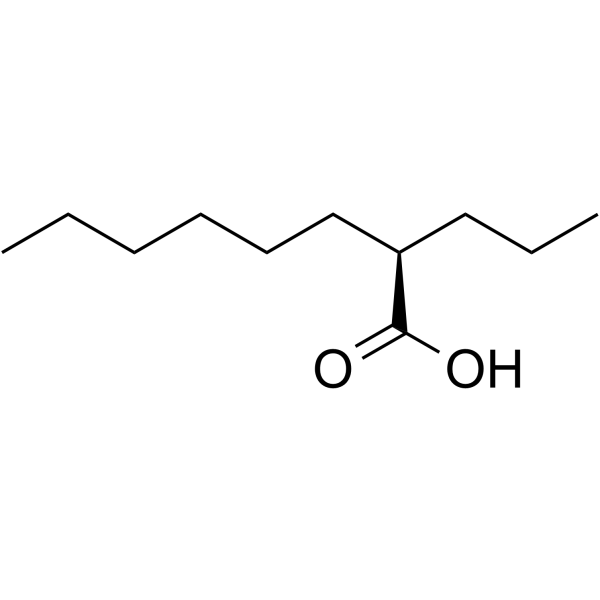
    Arundic Acid
    2 Publications Verification

    ONO-2506; (R)-2-Propyloctanoic acid

    ERK Akt NF-κB EAAT Cardiovascular Disease Neurological Disease
    Arundic Acid is an orally effective astrocyte function modulator and neuroprotective agent. Arundic Acid increases the expression and function of the astrocytic glutamate transporter EAAT1 by activating the ERK, Akt and NF-κB pathways. Arundic Acid attenuates retinal ganglion cell death in a normal-tension glaucoma model. Arundic Acid exerts neuroprotective effects in a mouse model of Parkinson's disease. Arundic Acid is a S100β protein synthesis inhibitor that prevents neurological deficits and brain tissue damage after intracerebral hemorrhage in rats. Arundic Acid downregulates neuroinflammation and astrocytic dysfunction after status epilepticus in immature rats. Arundic Acid is applicable to research related to Parkinson's disease, cerebral ischemia, glaucoma, intracerebral hemorrhage and epilepsy .
    Arundic Acid
  • HY-126195

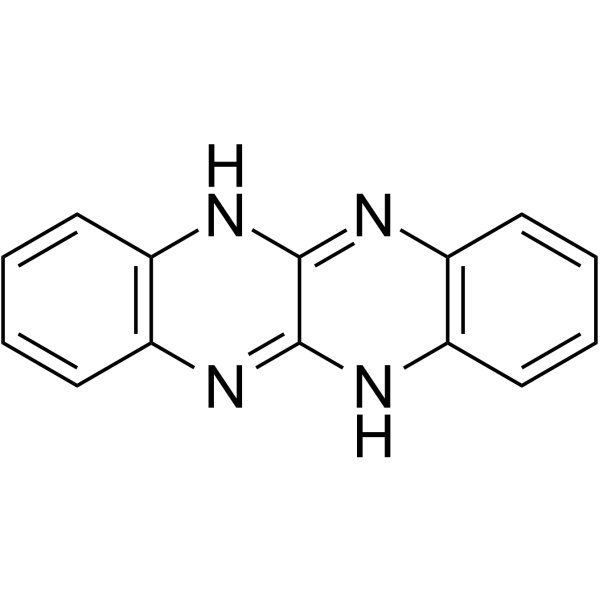
    ML-090

    NADPH Oxidase Neurological Disease
    Fluoflavine (ML-090) is a selective NOX1 inhibitor and reactive oxygen species inhibitor. Fluoflavine reduces reactive oxygen species production, NOX1-mediated downstream signaling events, and oxygen-glucose deprivation-induced retinal ganglion cell death. Fluoflavine inhibits NADPH oxidase activity and pathological retinal neovascularization induced by oxygen-induced retinopathy in the retinas of ischemic mice. Fluoflavine can be used in studies related to retinal ischemia-reperfusion injury and proliferative retinopathy .
    Fluoflavine
  • HY-P10019

    NLY01

    GCGR Neurological Disease Inflammation/Immunology
    Pegsebrenatide (NLY01) is a blood-brain barrier-penetrant GLP-1R agonist. Pegsebrenatide alleviates retinal inflammation and neuronal death secondary to ocular hypertension . Pegsebrenatide significantly delays onset and reduces disease severity in experimental autoimmune encephalomyelitis . Pegsebrenatide inhibits the formation of A1 reactive astrocytes in nerve cells and reduces the loss of retinal ganglion cells and dopaminergic neurons. Pegsebrenatide exerts neuroprotective effects in a mouse model of Parkinson's disease by directly preventing microglia-mediated conversion of astrocytes to the A1 neurotoxic phenotype. Pegsebrenatide can be used for research on glaucoma, Parkinson's disease, and multiple sclerosis .
    Pegsebrenatide
  • HY-D3419

    Fluorescent Dye Neurological Disease
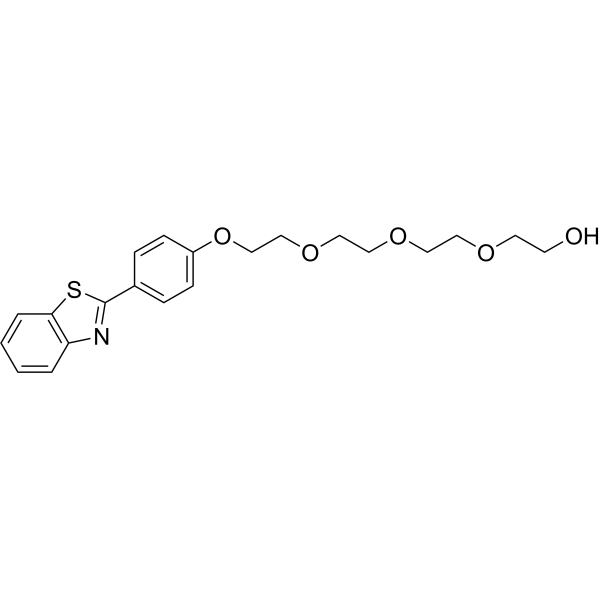
    Neuro-DiO 4-chlorobenzenesulfonate is a hydrophobic C18 alkyl chain carbocyanine dye with green fluorescence, commonly used as a vascular marker, cell internalizer and deposition agent. Neuro-DiO 4-chlorobenzenesulfonate inserts its alkyl chain into the endothelial plasma membrane via liposome-mediated perfusion to achieve vascular labeling. Neuro-DiO chlorobenzenesulfonate can also stain the cell membrane and cytoplasm of cancer cells to assist in confocal microscopy observations. Neuro-DiO chlorobenzenesulfonate can be released from nanosponges and accumulate on the surface of mouse retina, then internalize into retinal ganglion cells, which is applicable to researches related to glaucoma and other diseases. It should be noted that during liposome-mediated vascular staining in mice, Neuro-DiO 4-chlorobenzenesulfonate may cause leakage of airway lavage fluid .
    Neuro-DiO 4-chlorobenzenesulfonate

Inquiry Online

Your information is safe with us. * Required Fields.

Salutation


Country or Region *

Applicant Name *


Organization Name *

Department *


Email Address *


Product Name *

Cat. No.


Requested quantity *

Phone Number *


Remarks

Inquiry Online

Inquiry Information

Product Name:
Cat. No.:
Quantity:
MCE Japan Authorized Agent:

