




Scientific Reviews
Product Guides
Blogs
Topics
Targeted therapy! The Capetin Prize winning "Click Chemistry" can be used like this!Targeted therapy! The Nobel Prize winning "Click Chemistry" can be used like this!2025-02-06



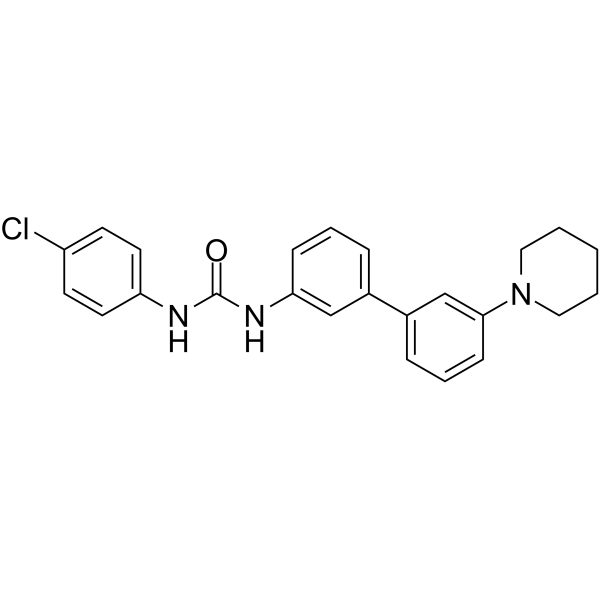
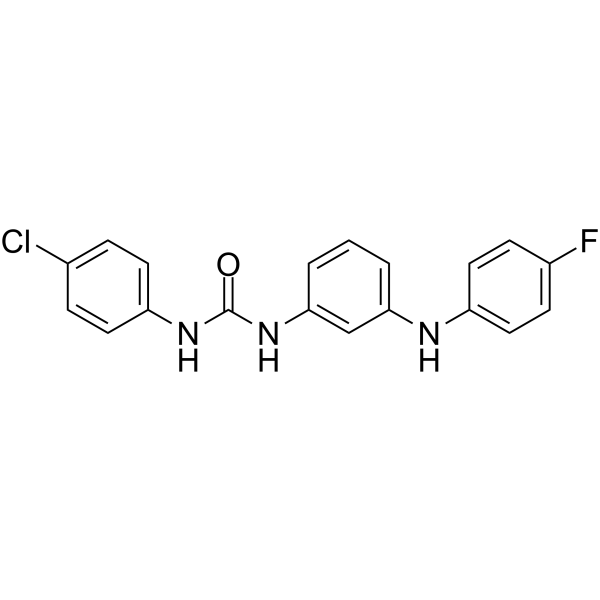
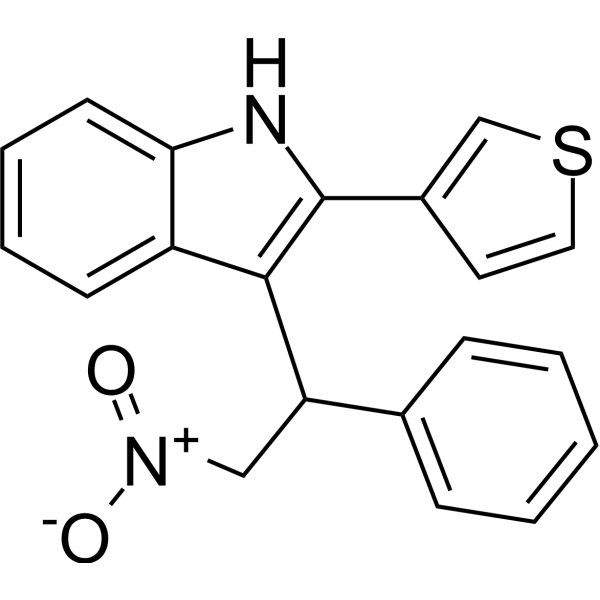
6 Results for "orthosteric and allosteric ligands" in MCE Product Catalog:
An emerging drug design method is based on the secondary binding site effect, where small molecule drugs are designed to bind to secondary binding sites on target biomolecules rather than primary orthomorphic sites. Successful potential drugs (known as allosteric modulators) will be able to bind to allosteric sites and remotely alter (or modify) the conformation of the main orthosteric binding sites of biological targets. Allosteric modulators (AMs) are ligands of proteins that act through binding sites different from natural (orthosteric) ligand sites. AMs are relatively small, more lipophilic, and more rigid compounds. The binding efficacy of AMs with their targets is often slightly lower. AMs are divided into positive AMs (PAMs) and negative AMs (NAMs). AMs are ideal drug targets because they can fine-tune receptor activity while preserving the spatial and temporal signal transduction characteristics of endogenous ligands, resulting in fewer targeted side effects, improved subtype selectivity, and better promotion of biased signal transduction than normal ligands.
MCE designs a unique collection of 258 small allosteric modulators. It is a good tool to be used for research on metabolize, cancer and other diseases.
G protein-coupled receptors (GPCRs) are membrane proteins in humans and one of the most important targets in drug discovery. Approximately 35% of launched drugs are targeted GPCRs, making them a crucial class of targets in drug discovery.
The orthosteric site of a GPCR is its endogenous ligand’s (such as neurotransmitters or hormones) binding site. This site plays a central role in signal transduction. Small molecules binding to this site typically contain a protonatable amino group, enabling the formation of salt bridges or hydrogen bonds with acidic residues in the binding pocket. In contrast, the allosteric site does not directly initiate signaling but modulates the signal intensity of the GPCR by altering or stabilizing the conformation of the orthosteric site. Small molecules binding to the allosteric site often contain multiple aromatic rings to occupy hydrophobic pockets and achieve their functional effects.
MCE has collected over 7,106 reported bioactive molecules targeting GPCRs, covering Class A, B, and C GPCRs. These small molecules were subjected to AI representation to extract 2D and 3D features. Subsequently, we do screening by AI score based on similarity to identify molecules in diversity library highly similar to the reported bioactive molecules in both 2D and 3D, with a threshold greater than 0.7. Further screening based on cLogP was applied to select molecules with good lipophilicity, which facilitates the binding of small molecules to GPCRs. This diversity library can be widely applied to the discovery of compounds targeting GPCR proteins.

Scientific Reviews
Product Guides
Blogs
Topics
Targeted therapy! The Capetin Prize winning "Click Chemistry" can be used like this!Targeted therapy! The Nobel Prize winning "Click Chemistry" can be used like this!2025-02-06
Protocols
Targeted therapy! The Capetin Prize winning "Click Chemistry" can be used like this!Targeted therapy! The Nobel Prize winning "Click Chemistry" can be used like this!2025-02-06



