1. Search Result
Search Result
Pathways Recommended: Immunology/Inflammation
Results for "

paw inflammation

" in MedChemExpress (MCE) Product Catalog:

30

Inhibitors & Agonists

1

Peptides

7

Natural
Products

1

Isotope-Labeled Compounds

Cat. No. Product Name Target Research Areas Chemical Structure
  • HY-14648A
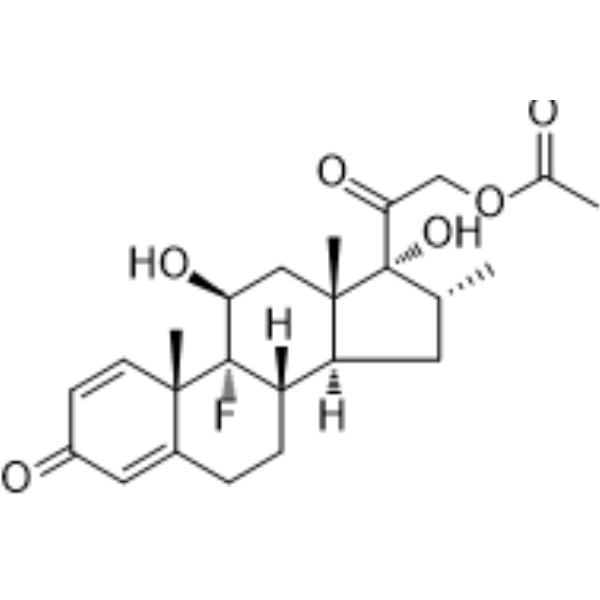
    Dexamethasone acetate
    Maximum Cited Publications
    6 Publications Verification

    Dexamethasone 21-acetate; Hexadecadrol acetate

    Glucocorticoid Receptor Inflammation/Immunology
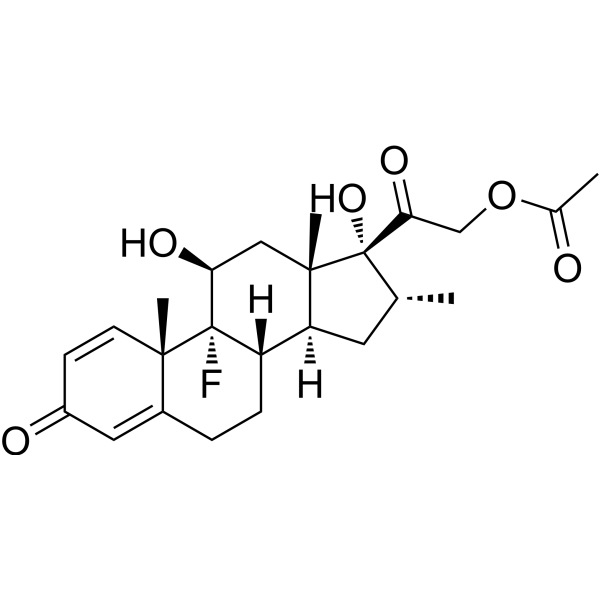
    Dexamethasone acetate (Dexamethasone 21-acetate) is the acetate form of the glucocorticoid Dexamethasone (HY-14648). Dexamethasone acetate has a longer duration of action than Dexamethasone. Dexamethasone acetate can accumulate at inflammatory sites, in mouse liver and mouse lung via nanostructured lipid carriers. Dexamethasone acetate can be used to prepare topical formulations for studies related to sensorineural hearing loss, γ-carrageenan-induced paw edema, chronic active hepatitis, pulmonary diseases, and inflammation after vitreoretinal surgery .
    Dexamethasone acetate
  • HY-134820

    MALT1 Inflammation/Immunology
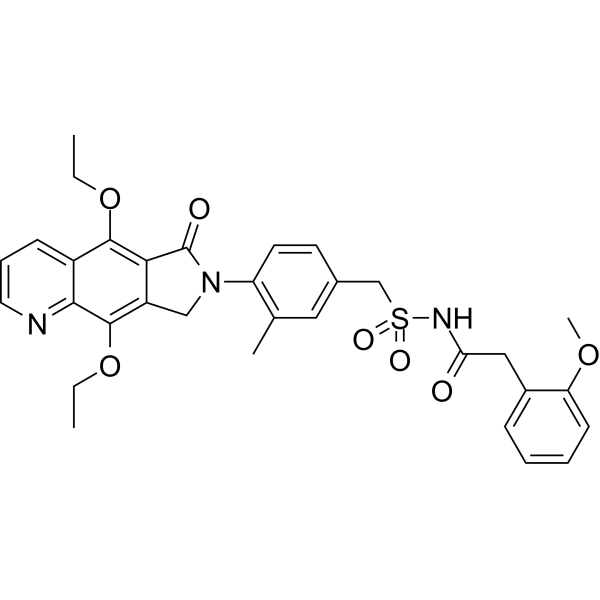
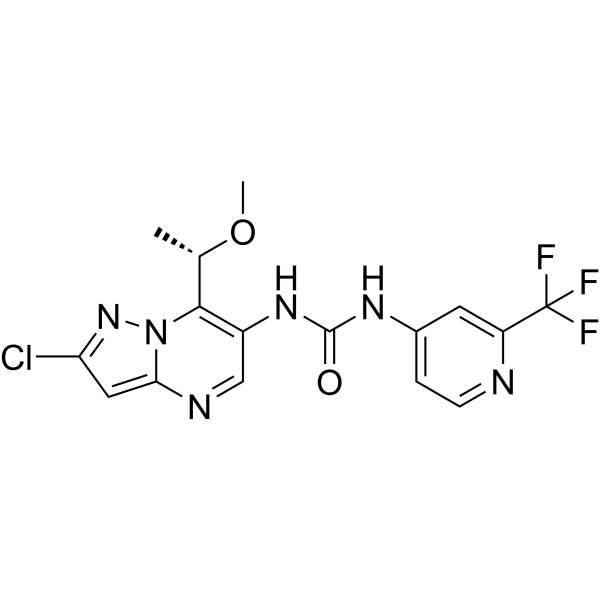
    MLT-943 is a potent, selective and orally active MALT1 protease inhibitor. MLT-943 inhibits stimulated-IL-2 secretion in PBMC or in whole blood with a similar IC50 across species (0.07-0.09 μM in PBMC, 0.6-0.8 μM in whole blood). MLT-943 has anti-inflammatory activities and can be used for FcgR-mediated inflammation research .
    MLT-943
  • HY-14648AR

    Dexamethasone 21-acetate (Standard); Hexadecadrol acetate (Standard)

    Reference Standards Glucocorticoid Receptor Inflammation/Immunology
    Dexamethasone acetate (Standard) (Dexamethasone 21-acetate (Standard)) is the analytical standard of Dexamethasone acetate (HY-14648A). This product is intended for research and analytical applications. Dexamethasone acetate (Dexamethasone 21-acetate) is the acetate form of the glucocorticoid Dexamethasone (HY-14648). Dexamethasone acetate has a longer duration of action than Dexamethasone. Dexamethasone acetate can accumulate at inflammatory sites, in mouse liver and mouse lung via nanostructured lipid carriers. Dexamethasone acetate can be used to prepare topical formulations for studies related to sensorineural hearing loss, γ-carrageenan-induced paw edema, chronic active hepatitis, pulmonary diseases, and inflammation after vitreoretinal surgery.
    Dexamethasone acetate (Standard)
  • HY-10794
    MF498
    1 Publications Verification

    Prostaglandin Receptor Metabolic Disease Inflammation/Immunology Cancer
    MF498 is a selective and orally active E prostanoid Receptor 4 (EP4) antagonist with a Ki value of 0.7 nM. MF498 can be used in the research of inflammation, such as rheumatoid and osteoarthritis .
    MF498
  • HY-177435

    FAP Inflammation/Immunology
    FAPI-800CW is a near-infrared (NIR) fluorescent-labeled fibroblast activation protein (FAP) inhibitor. FAPI-800CW shows specific uptake in inflamed paws in collagen-induced arthritis (CIA) model mice. FAPI-800CW can be used for in vivo molecular imaging of FAP expression in inflammatory diseases such as rheumatoid arthritis (RA) to monitor joint inflammation and disease activity .
    FAPI-800CW
  • HY-17484
    Ampiroxicam
    2 Publications Verification

    CP 65703

    Drug Derivative Inflammation/Immunology
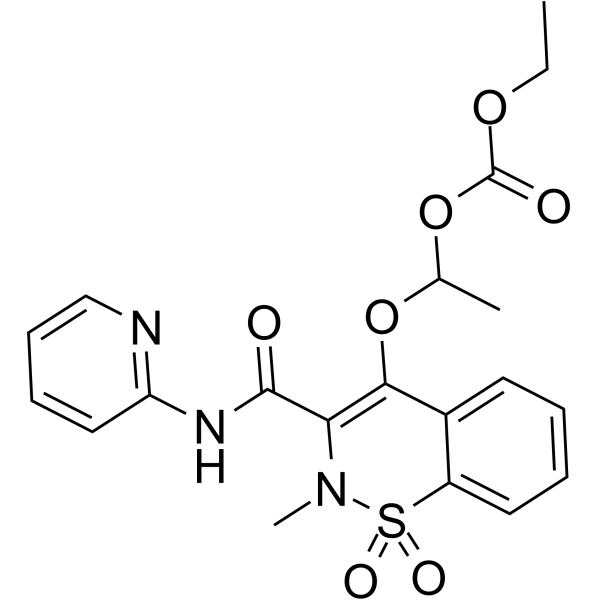
    Ampiroxicam is an orally active prodrug of non-steroidal anti-inflammatory drug (NSAID). Ampiroxicam inhibits paw swelling in adjuvant-induced arthritis and acute inflammation models, and suppresses phenylbenzoquinone-induced stretching responses in mice. Ampiroxicam is rapidly and completely converted to Piroxicam (HY-B0253) via non-specific esterases and first-pass metabolism. Ampiroxicam induces contact hypersensitivity and photosensitivity reactions through photoproducts generated by UVA. Ampiroxicam can be used in research related to photosensitivity, adjuvant-induced arthritis, rheumatism, osteoarthritis and other inflammatory diseases .
    Ampiroxicam
  • HY-N7694
    Isotoosendanin
    1 Publications Verification

    TGF-β Receptor JAK STAT Apoptosis Inflammation/Immunology Cancer
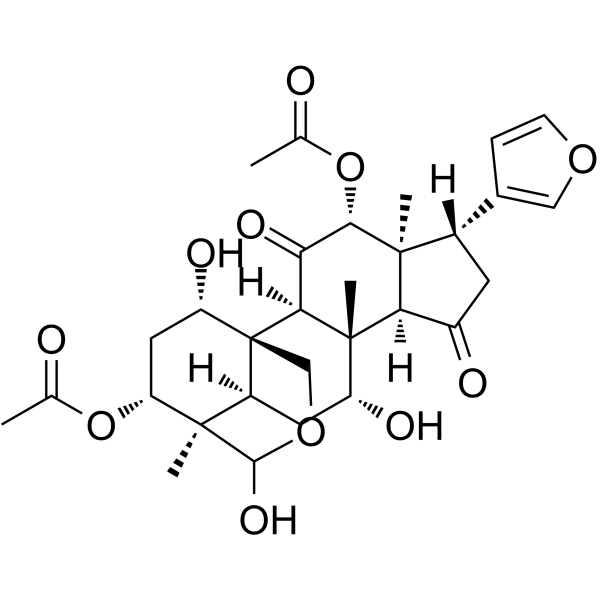
    Isotoosendanin is an orally active TGFβR1 inhibitor and abrogating its kinase activity (IC50 = 6732 nM). Isotoosendanin inhibits the JAK/STAT3 signaling pathway by directly targeting SHP-2, enhancing its stability, and reducing its ubiquitination. Isotoosendanin inhibits TGF-β-induced reduces the migration, invasion, and metastasis in triple-negative breast cancer (TNBC) cells. Isotoosendanin exhibits anti-tumor efficacy in TNBC xenograft models and A549 xenograft tumors. Isotoosendanin exhibits significant anti-inflammatory effects in acetic acid-induced vascular permeability and λ-carrageenan-induced hind paw edema tests. Isotoosendanin can be used for the study of non-small cell lung cancer (NSCLC), TNBC and inflammation .
    Isotoosendanin
  • HY-A0259

    COX Inflammation/Immunology
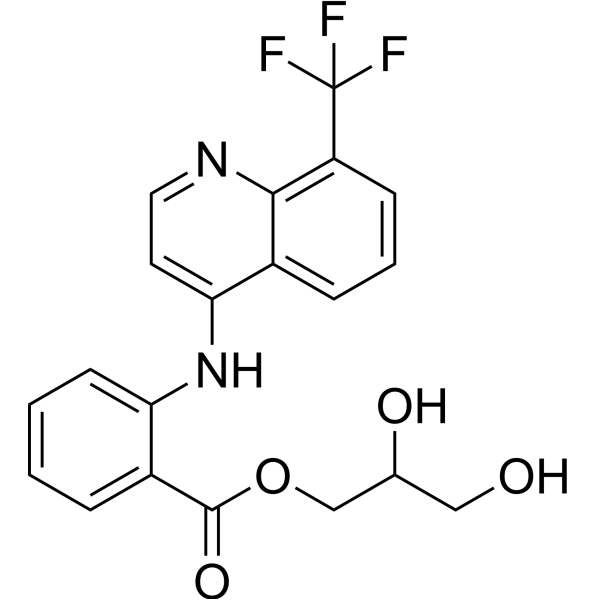
    Floctafenine, a nonsteroidal anti-inflammatory agent (NSAID), acts as an effective analgesic agent . Floctafenine is an inhibitor of COX-1 and COX-2 activities in vitro,showing a slightly higher potency towards COX-I. Floctafenine is used for the research of short term pain research .
    Floctafenine
  • HY-14840A

    MRZ 9547

    Dopamine Transporter Neurological Disease Inflammation/Immunology
    (R)-Phenylpiracetam (MRZ 9547) is a dopamine transporter (DAT) inhibitor (Ki: 14.8 μM; IC50: 65.5 μM). (R)-Phenylpiracetam can be used for the research of the neurological or neuropsychiatric disorders .
    (R)-Phenylpiracetam
  • HY-N11072

    Lipoxygenase Leukotriene Receptor Reactive Oxygen Species (ROS) MMP Inflammation/Immunology
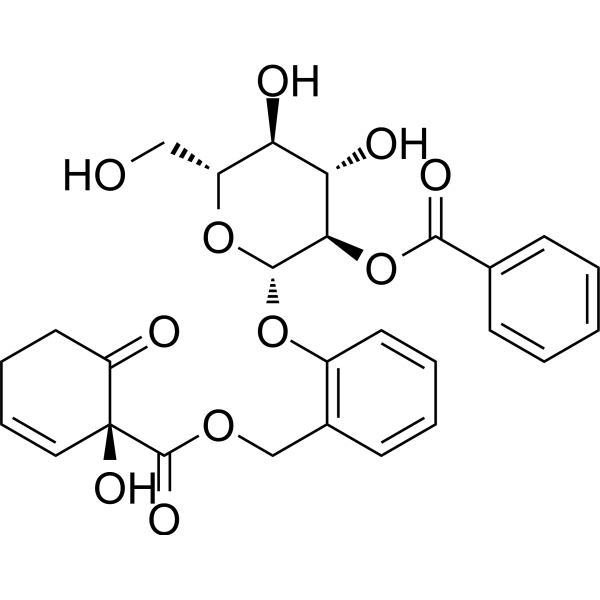
    Tremulacin is a 5-LOX inhibitor. Tremulacin reduces the biosynthesis of LTB4 and slow-reacting substances of anaphylaxis. Tremulacin alleviates carrageenan-induced paw edema in rats, croton oil-induced ear edema in mice, and acetic acid-induced writhing response in mice. Tremulacin inhibits TNF-α-stimulated ROS production and MMP-1 expression, and promotes collagen secretion in human dermal fibroblasts. Tremulacin is investigated for studies on inflammation-related diseases .
    Tremulacin
  • HY-N2478

    Autophagy Parasite Inflammation/Immunology
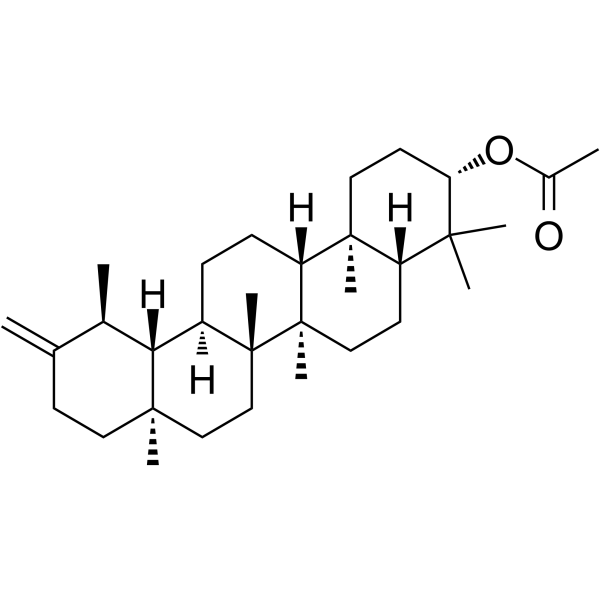
    Taraxasteryl acetate is isolated from P. sagittalis,and has a broad spectrum of anti-inflammatory activity. Taraxasterol acetate promotes RNF31 degradation by activating autophagy. Taraxasteryl acetate relieves dextran, zymosan and arachidonic acid induced rat hind-paw edema. Taraxasteryl acetate can be used for the topical inflammation treatment [1] [2] .
    Taraxasteryl acetate
  • HY-N2196

    Others Inflammation/Immunology
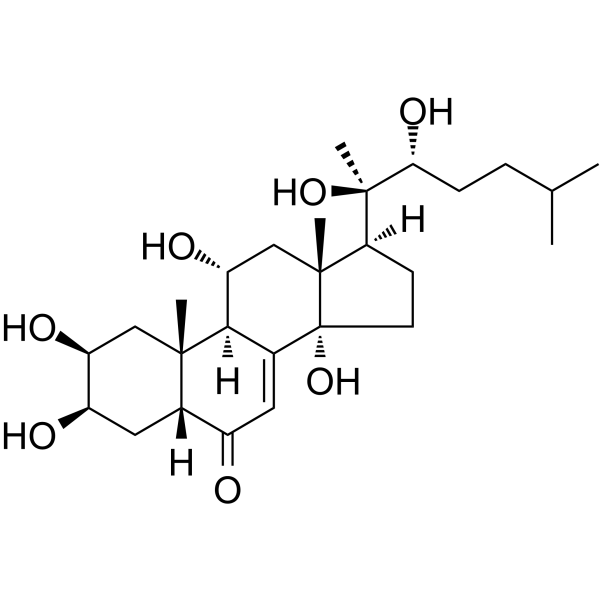
    Ajugasterone C is an ecdysteroid isolated from Leuzea carthamoides. Ajugasterone C shows significant inhibitory effect at 100 mg/kg dose on rat paw oedema development due to Carrageenan-induced inflammation in Sprague Dawley rats .
    Ajugasterone C
  • HY-N8160

    Keap1-Nrf2 Reactive Oxygen Species (ROS) Inflammation/Immunology
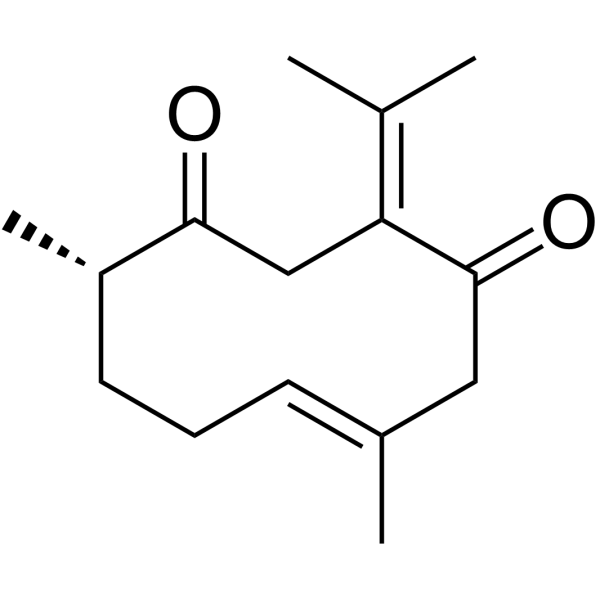
    Dehydrocurdione, a zedoary-derived sesquiterpene, induces heme oxygenase (HO)-1, an antioxidative enzyme, in RAW 264.7 macrophages. Dehydrocurdione interacts with Keap1, resulting in Nrf2 translocation followed by activation of the HO-1 E2 enhancer. Dehydrocurdione suppresses lipopolysaccharide-induced NO release, a marker of inflammation. Anti-inflammatory activity .
    Dehydrocurdione
  • HY-179429

    NOD-like Receptor (NLR) TNF Receptor Interleukin Related Inflammation/Immunology
    NLRP3-IN-85 (compound 5d) is a potent NLRP3 inhibitor that targets mitochondria in a ΔΨm-independent manner. NLRP3-IN-85 protects mitochondria from oxidative stress and inflammation damage and suppresses key inflammatory factors (NO, TNF-α, IL-6). NLRP3-IN-85 relives acute lung injury in mice and inhibits paw edema in rats. NLRP3-IN-85 can be used for acute lung injury (ALI) research .
    NLRP3-IN-85
  • HY-15616

    Melanocortin Receptor Cancer
    BMS-470539 is a synthetic MC-1R agonist with potent anti-inflammatory properties. BMS-470539 selectively activates human and murine MC-1R with EC50 values ??of 16.8 nM and 11.6 nM, respectively. In vitro studies have shown that BMS-470539 is able to dose-dependently inhibit TNF-alpha-induced NF-kB activation in human melanoma cells expressing MC-1R. In vivo, subcutaneous injection of BMS-470539 into BALB/c mice effectively inhibited LPS-induced TNF-alpha production with an ED50 of approximately 10 μmol/kg and a pharmacodynamic half-life of approximately 8 hours. It also significantly reduced leukocyte infiltration in a lung inflammation model and attenuated paw swelling in a delayed-type hypersensitivity model, highlighting its efficacy as an anti-inflammatory agent through MC-1R modulation .
    BMS-470539
  • HY-N2478R

    Autophagy Reference Standards Inflammation/Immunology
    Taraxasteryl acetate (Standard) is the analytical standard of Taraxasteryl acetate. This product is intended for research and analytical applications. Taraxasteryl acetate is isolated from P. sagittalis,and has a broad spectrum of anti-inflammatory activity. Taraxasterol acetate promotes RNF31 degradation by activating autophagy. Taraxasteryl acetate relieves dextran, zymosan and arachidonic acid induced rat hind-paw edema. Taraxasteryl acetate can be used for the topical inflammation treatment .
    Taraxasteryl acetate (Standard)
  • HY-P5875

    Protease Activated Receptor (PAR) Cardiovascular Disease Inflammation/Immunology
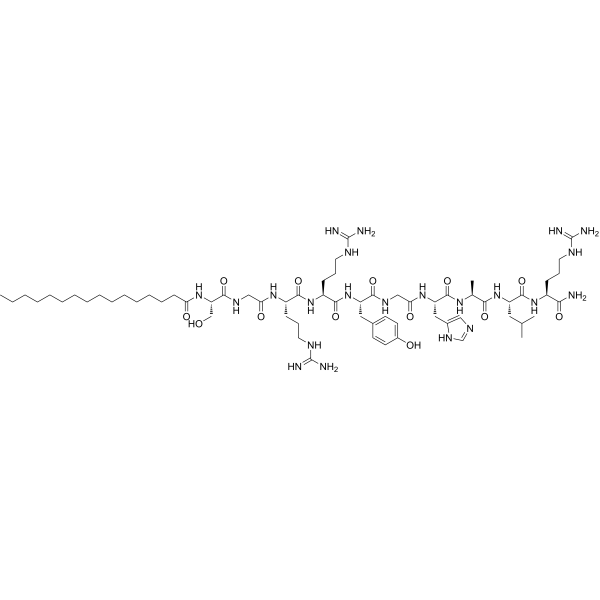
    P4pal10 is an antagonist for protease-activated receptor 4 (PAR4). P4pal10 inhibits the platelet aggregation, inhibits tissue factor (TF)-induced thrombin generation, and exhibits anticoagulant and antithrombotic activities. P4pal10 reduces the oedema and the granulocyte infiltration induced by Carrageenan (HY-125474). P4pal10 ameliorates the injury in mice myocardial ischemia/reperfusion (I/R) models .
    P4pal10
  • HY-155405

    ROS Kinase Interleukin Related Inflammation/Immunology
    Anti-inflammatory agent 64 (compound 4b) inhibits the secretion of IL-6 and TNF-α. Anti-inflammatory agent 64 has antioxidant and anti-inflammatory activity in vitro and in vivo. Anti-inflammatory agent 64 can effectively reduce paw edema .
    Anti-inflammatory agent 64
  • HY-W744577

    Dexamethasone 21-acetate-d5; Hexadecadrol acetate-d5

    Isotope-Labeled Compounds Glucocorticoid Receptor Inflammation/Immunology
    Dexamethasone acetate-d5 (Dexamethasone 21-acetate-d5; Hexadecadrol acetate-d5) is the deuterium labeled Dexamethasone acetate (HY-14648A). Dexamethasone acetate (Dexamethasone 21-acetate) is the acetate form of the glucocorticoid Dexamethasone (HY-14648). Dexamethasone acetate has a longer duration of action than Dexamethasone. Dexamethasone acetate can accumulate at inflammatory sites, in mouse liver and mouse lung via nanostructured lipid carriers. Dexamethasone acetate can be used to prepare topical formulations for studies related to sensorineural hearing loss, γ-carrageenan-induced paw edema, chronic active hepatitis, pulmonary diseases, and inflammation after vitreoretinal surgery.
    Dexamethasone acetate-d5
  • HY-17484R

    CP 65703 (Standard)

    Reference Standards Inflammation/Immunology
    Ampiroxicam (Standard) is the analytical standard of Ampiroxicam. This product is intended for research and analytical applications. Ampiroxicam is an orally active prodrug of non-steroidal anti-inflammatory drug (NSAID). Ampiroxicam inhibits paw swelling in adjuvant-induced arthritis and acute inflammation models, and suppresses phenylbenzoquinone-induced stretching responses in mice. Ampiroxicam is rapidly and completely converted to Piroxicam (HY-B0253) via non-specific esterases and first-pass metabolism. Ampiroxicam induces contact hypersensitivity and photosensitivity reactions through photoproducts generated by UVA. Ampiroxicam can be used in research related to photosensitivity, adjuvant-induced arthritis, rheumatism, osteoarthritis and other inflammatory diseases.
    Ampiroxicam (Standard)
  • HY-W778375

    Apoptosis Inflammation/Immunology Cancer
    Hesperetin triacetate is an active compound with anti-inflammatory and anti-tumor activities. Hesperetin triacetate inhibits bovine serum albumin denaturation in vitro. Hesperetin triacetate inhibits carrageenan-induced paw swelling in mice in vivo. Hesperetin triacetate exhibits anti-proliferative activity against breast cancer cells. Hesperetin triacetate induces DNA degradation and apoptosis in breast cancer cells. Hesperetin triacetate can be used in studies related to breast cancer and inflammation .
    Hesperetin triacetate
  • HY-N18124

    Others Neurological Disease
    1-O-Tigloyl-1-O-debenzoylohchinal is an orally active limonoid-type triterpenoid anti-inflammatory and peripheral analgesic agent isolated from the fruits of Melia toosendan. 1-O-Tigloyl-1-O-debenzoylohchinal significantly inhibits acetic acid (HY-Y0319)-induced increase in vascular permeability, λ-Carrageenan (HY-N9470)-induced paw edema, and acetic acid-induced writhing response in mice. 1-O-Tigloyl-1-O-debenzoylohchinal shows no significant analgesic effect in the hot-plate test, and acts mainly on the peripheral rather than the central nervous system. 1-O-Tigloyl-1-O-debenzoylohchinal can be widely used in the research of acute or chronic inflammation, stomachache and other related diseases .
    1-O-Tigloyl-1-O-debenzoylohchinal
  • HY-179700

    COX Inflammation/Immunology
    COX-2-IN-61 is an orally active COX-2 inhibitor with an IC50 of 22 µM, also inhibits COX-1 with an IC50 of 43 µM. COX-2-IN-61 exhibits anti-inflammation effects in a Carrageenan (HY-125474) induced rat paw edema model, with promising safety profiles. COX-2-IN-61 can be used for the research of inflammation .
    COX-2-IN-61
  • HY-175643

    COX Inflammation/Immunology
    COX-2-IN-58 is a COX-2 inhibitor. COX-2-IN-58 exhibits remarkable anti-inflammatory activity in Carrageenan (HY-125474)-induced paw edema model of Balb/C mice. COX-2-IN-58 can be used for the research of inflammation .
    COX-2-IN-58
  • HY-10794R

    Reference Standards Prostaglandin Receptor Metabolic Disease Inflammation/Immunology Cancer
    MF498 (Standard) is the analytical standard of MF498 (HY-10794). This product is intended for research and analytical applications. MF498 is a selective and orally active E prostanoid Receptor 4 (EP4) antagonist with a Ki value of 0.7 nM. MF498 can be used in the research of inflammation, such as rheumatoid and osteoarthritis .
    MF498 (Standard)
  • HY-181235

    COX Cytochrome P450 Inflammation/Immunology Cancer
    COX-2/Aromatase-IN-1 is a potent dual inhibitor of COX-2 and aromatase. COX-2/Aromatase-IN-1 can simultaneously inhibit COX-2 and aromatase, significantly suppress inflammation and induce proliferation inhibition of breast cancer cells. COX-2/Aromatase-IN-1 exerts anti-breast cancer and anti-inflammatory effects in the MCF-7 breast cancer cell and carrageenan-induced rat paw edema model. COX-2/Aromatase-IN-1 can be used for the study of inflammation and breast cancer .
    COX-2/Aromatase-IN-1
  • HY-181236

    COX Cytochrome P450 Inflammation/Immunology Cancer
    COX-2/Aromatase-IN-2 is a potent dual inhibitor of COX-2 and aromatase. COX-2/Aromatase-IN-2 can simultaneously inhibit COX-2 and aromatase, suppress inflammation and induce proliferation inhibition of breast cancer cells. COX-2/Aromatase-IN-2 exerts anti-breast cancer and anti-inflammatory effects in the MCF-7 breast cancer cell and carrageenan-induced rat paw edema model. COX-2/Aromatase-IN-2 can be used for the study of inflammation and breast cancer .
    COX-2/Aromatase-IN-2
  • HY-19086

    COX Lipoxygenase Inflammation/Immunology
    SKF-105809 is a dual-action inhibitor of lipoxygenase and COX. SKF-105809 inhibits edema and inflammatory cell infiltration in mouse models of ear, paw, and peritoneum inflammation. SKF-105809 inhibits the production of relevant acute-phase reactive proteins in a mouse model of arthritis. SKF-105809 exhibits analgesic activity in a mouse abdominal contraction test and inhibits ulceration. SKF-105809 can be used in research on inflammatory and immune system diseases such as peritonitis and arthritis .
    SKF-105809
  • HY-180822

    COX TNF Receptor Interleukin Related Inflammation/Immunology
    COX-2-IN-63 (Compound 6k) is an orally active COX-2 inhibitor with an IC50 of 0.89 μM. COX-2-IN-63 reduces the levels of inflammatory mediators PGE2, TNF-α, and IL-6. COX-2-IN-63 can effectively alleviate acute inflammation in a rat paw edema model and has a lower risk of gastrointestinal side effects. COX-2-IN-63 can be used in anti-inflammatory research .
    COX-2-IN-63
  • HY-107387

    PI3K Metabolic Disease Inflammation/Immunology
    PF-376304 is an orally active non-specific class I phosphoinositide 3-kinase (PI3K) inhibitor with an IC50 of 0.197 μM against PI3Kγ. PF-376304 induces dose-dependent glucose and lipid metabolic disorders in rats, causes rapid death at high doses, and leads to metabolic abnormalities that are self-reversible at low doses. PF-376304 is applicable to the research of metabolic and inflammatory diseases .
    PF-376304

Inquiry Online

Your information is safe with us. * Required Fields.

Salutation


Country or Region *

Applicant Name *


Organization Name *

Department *


Email Address *


Product Name *

Cat. No.


Requested quantity *

Phone Number *


Remarks

Inquiry Online

Inquiry Information

Product Name:
Cat. No.:
Quantity:
MCE Japan Authorized Agent:

