
Search Result
Results for "
phospholipase C Inhibitor
" in MedChemExpress (MCE) Product Catalog:
5
Biochemical Assay Reagents
1
Isotope-Labeled Compounds
| Cat. No. |
Product Name |
Target |
Research Areas |
Chemical Structure |
-
- HY-B0470
-
|
|
Environmental Pollutants
Antibiotic
Phospholipase
Bacterial
|
Infection
Metabolic Disease
Cancer
|
|
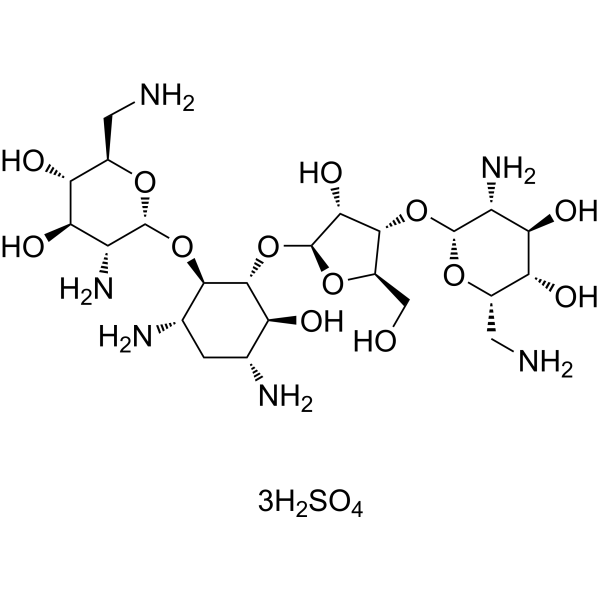
Neomycin sulfate, an aminoglycoside antibiotic, exerts antibacterial activity through irreversible binding of the nuclear 30S ribosomal subunit, thereby blocking bacterial protein synthesis. Neomycin sulfate is a known phospholipase C (PLC) inhibitor. Neomycin sulfate potently inhibits both the nuclear translocation of angiogenin and angiogenin-induced cell proliferation and angiogenesis. Neomycin sulfate inhibits IP3-mediated Ca 2+ release, MgATP-dependent Ca 2+ uptake, and electrical excitation-evoked skeletal muscle Ca 2+ transients. Neomycin sulfate depletes gut microbiota in specific mouse models, causes hearing impairment, and kidney damage with prolonged exposure. Neomycin sulfate can be used for the research of cancer .
|
-
-
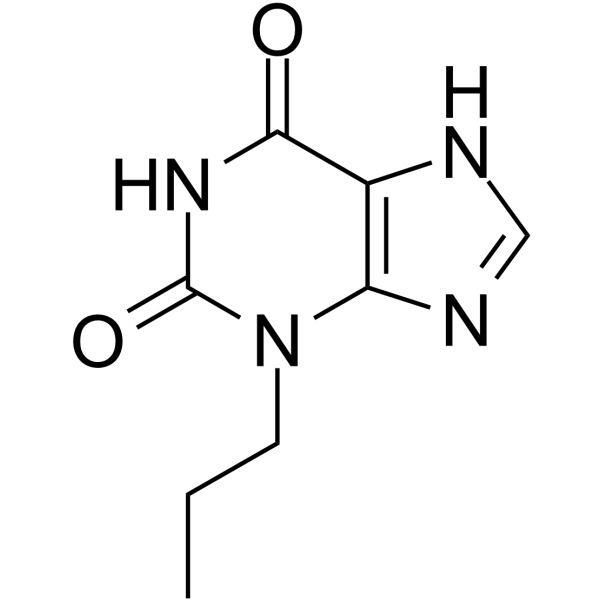
- HY-13419
-
-
-
- HY-100168
-
|
|
Phospholipase
|
Others
|
|
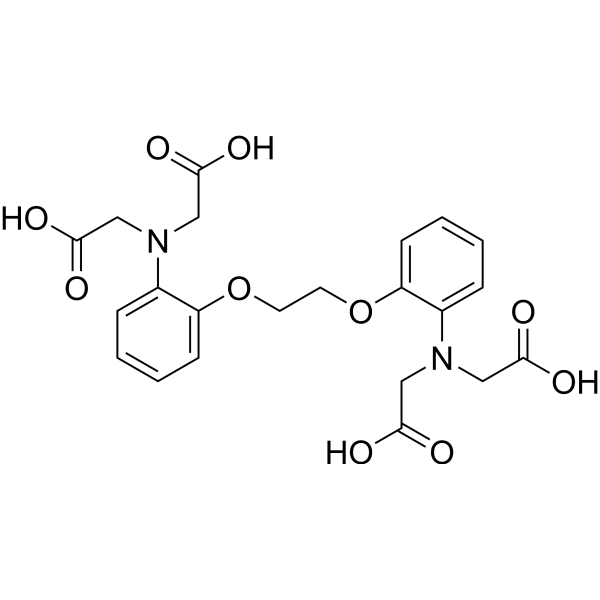
BAPTA is a selective and cell-impermeant chelator for calcium. BAPTA has high selectivity against magnesium and calcium. BAPTA can also inhibit phospholipase C activity independently of their role as Ca 2+ chelators .
|
-
-
- HY-70072
-
|
|
Phospholipase
|
Infection
Inflammation/Immunology
Cancer
|
|
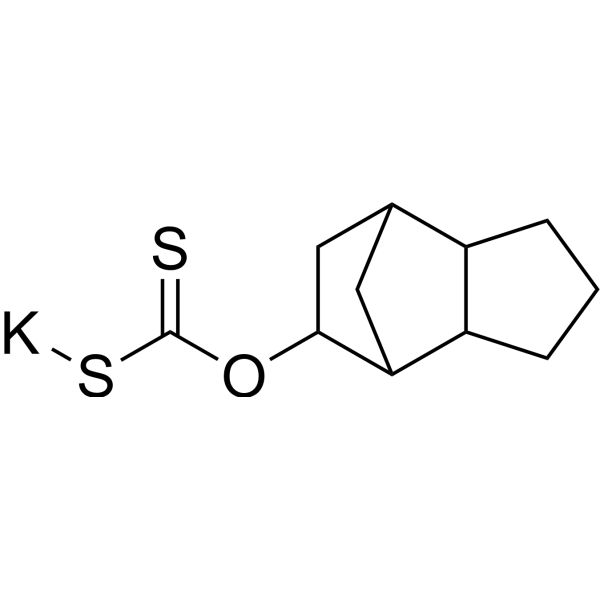
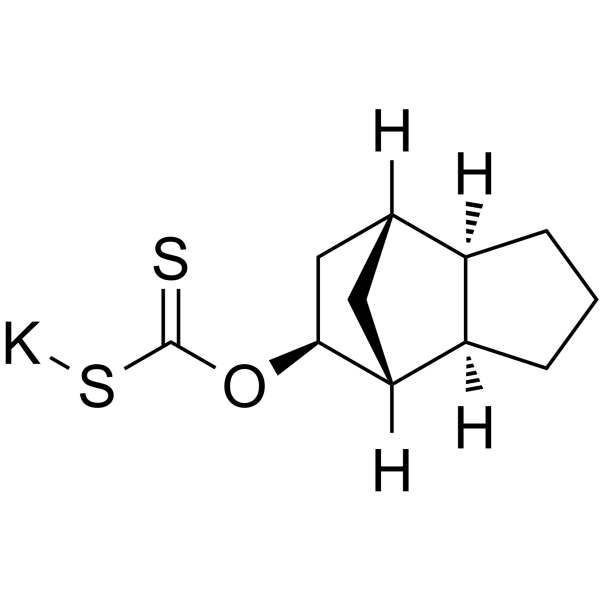
D609, an antitumoural xanthate, is a specific and competitive phosphatidyl choline-specific phospholipase C (PC-PLC) inhibitor with a Ki of 6.4 μM. D609 is an antioxidative protector and has antiviral and anti-inflammatory activity .
|
-
-
- HY-130592
-
|
C48/80 trihydrochloride
|
Phospholipase
|
Neurological Disease
|
|
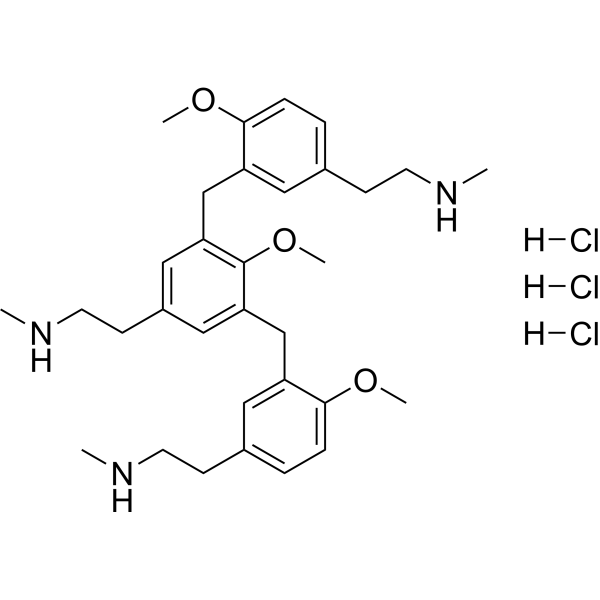
Compound 48/80 trihydrochloride (C48/80 trihydrochloride) is a mixture of condensation products of N-methyl-p-methoxyphenethylamine with formaldehyde. Compound 48/80 trihydrochloride is also a histamine releaser and a mast cell degranulator. Compound 48/80 inhibits phosphatidylinositol-specific phospholipase C activity from human platelets .
|
-
-
- HY-N9480
-
|
SM-345431
|
Phospholipase
Bacterial
|
Infection
Cancer
|
|
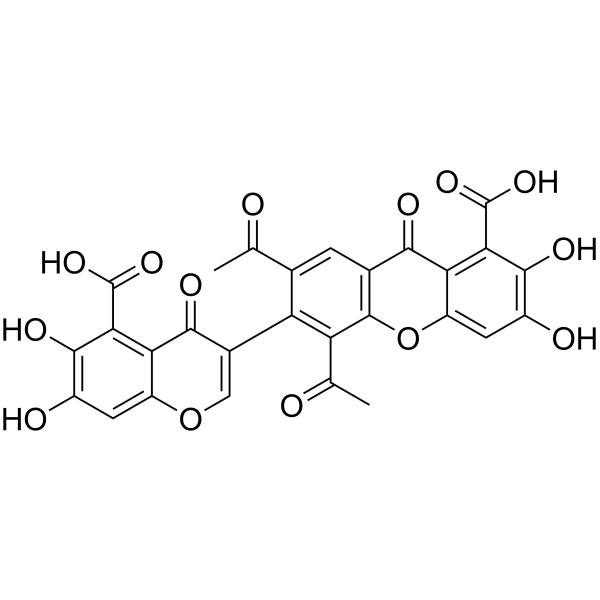
Vinaxanthone (SM-345431) is a potent and selective semaphorin3A, phospholipase C (PLC) and FabI inhibitor, with IC50s of 0.1-0.2 μM and 0.9 mM for semaphorin3A and FabI. Vinaxanthone inhibits the substrate (t-o-NAC thioester) and the cofactor (NADPH) with Kis of 3.1 μM and 1.0 μM, respectively. Vinaxanthone can be used to handle infections caused by multidrug-resistant pathogens .
|
-
-
- HY-100168A
-
|
|
Phospholipase
|
Others
|
|
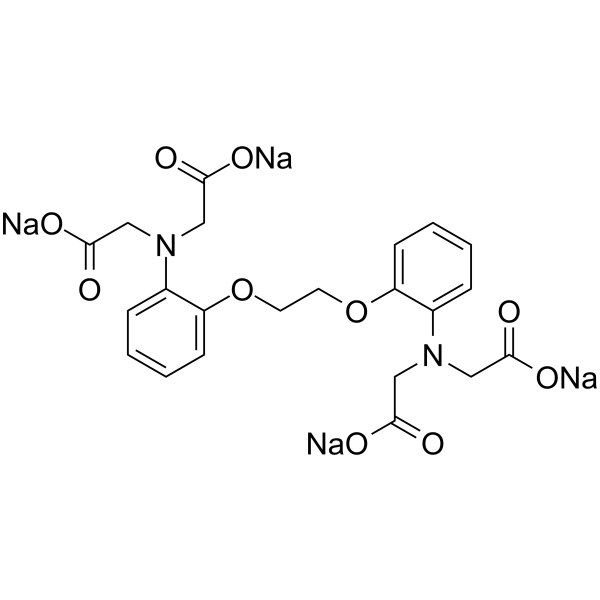
BAPTA tetrasodium is a selective and cell-impermeant chelator for calcium. BAPTA tetrasodium has high selectivity against magnesium and calcium. BAPTA can also inhibit phospholipase C activity independently of their role as Ca 2+ chelators .
|
-
-
- HY-108630
-
|
|
Phospholipase
|
Others
|
|
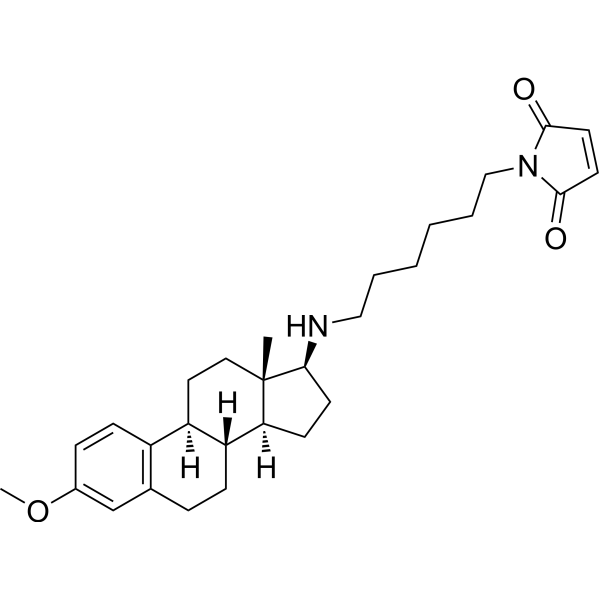
U-73343, works as a protonophore, is an inactive analog of U-73122 and can be used as a negative control. U-73343 dose-dependently inhibits acid secretion irrespective of the stimulant. U-73122 is a phospholipase C (PLC) and 5-LO (5-lipoxygenase) inhibitor with an IC50 of 1-2.1 μM for PLC .
|
-
-
- HY-150520
-
|
|
Antibiotic
Phospholipase
|
Infection
Cancer
|
|
Neomycin, an aminoglycoside antibiotic, exerts antibacterial activity through irreversible binding of the nuclear 30S ribosomal subunit, thereby blocking bacterial protein synthesis. Neomycin is a known phospholipase C (PLC) inhibitor. Neomycin potently inhibits both the nuclear translocation of angiogenin and angiogenin-induced cell proliferation and angiogenesis. Neomycin inhibits IP3-mediated Ca 2+ release, MgATP-dependent Ca 2+ uptake, and electrical excitation-evoked skeletal muscle Ca 2+ transients. Neomycin depletes gut microbiota in specific mouse models, causes hearing impairment, and kidney damage with prolonged exposure. Neomycin can be used for the research of cancer .
|
-
-
- HY-111919
-
|
|
Phospholipase
Fungal
|
Infection
|
|
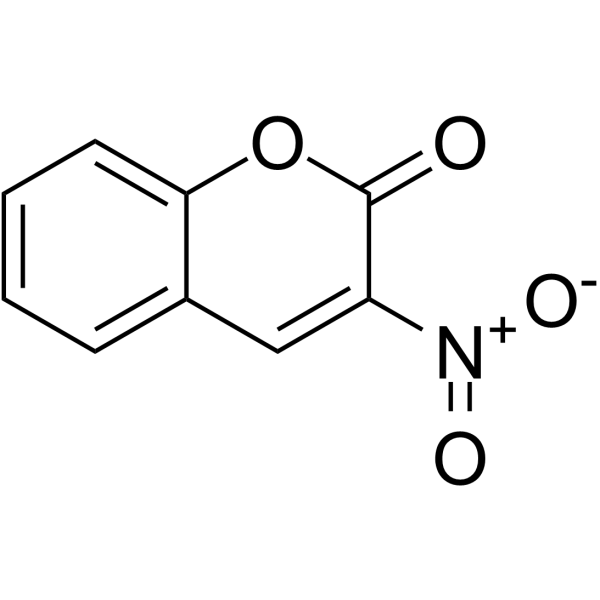
3-Nitrocoumarin is an inhibitor for phospholipase C that blocks the generation of inositol triphosphate (IP3), thereby affecting the calcium signaling pathway .
|
-
-
- HY-111208
-
|
|
Phospholipase
|
Cancer
|
|
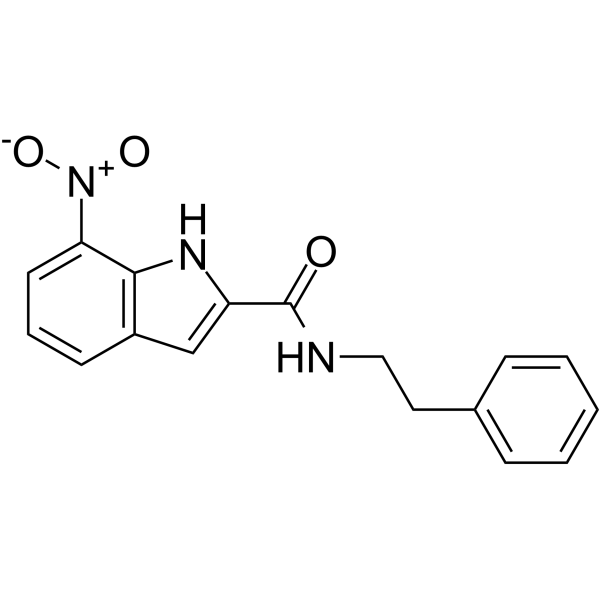
CCT129957 is an indole derivative and a potent phospholipase C-γ (PLC-γ) inhibitor with an IC50 of ~3 μM and a GC50 of 15 μM. CCT129957 inhibits Ca 2+ release in squamous carcinoma cells at ~15 μM .
|
-
-
- HY-100983
-
|
|
PKC
|
Cancer
|
|
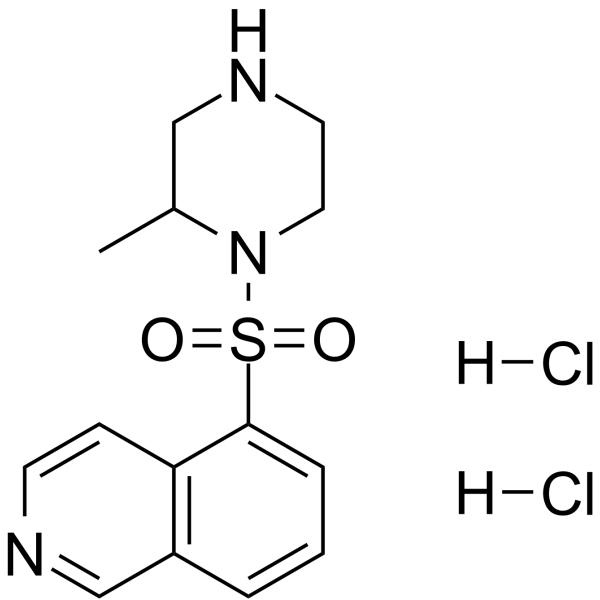
Protein kinase inhibitor H-7 dihydrochloride is a potent PKC (protein kinase C) inhibitor. At 100 μM, Protein kinase inhibitor H-7 dihydrochloride completely inhibits both TPA (skin tumour promoter, 12-O-tetradecanoylphorbol-13-acetate) and phospholipase C-induced ODC (ornithine decarboxylase) .
|
-
-
- HY-100168B
-
|
|
Phospholipase
|
Others
|
|
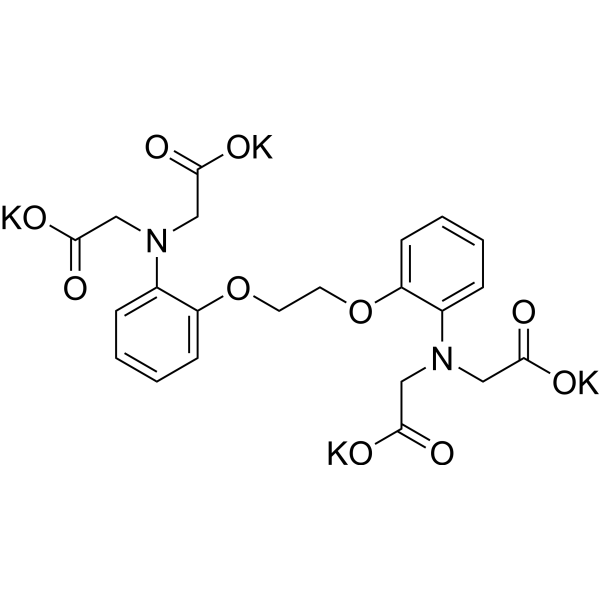
BAPTA tetrapotassium is a selective and cell-impermeant chelator for calcium. BAPTA has high selectivity against magnesium and calcium. BAPTA tetrapotassium can also inhibit phospholipase C activity independently of their role as Ca 2+ chelators .
|
-
-
- HY-14117
-
-
-
- HY-N1773
-
|
|
Others
|
Cancer
|
|
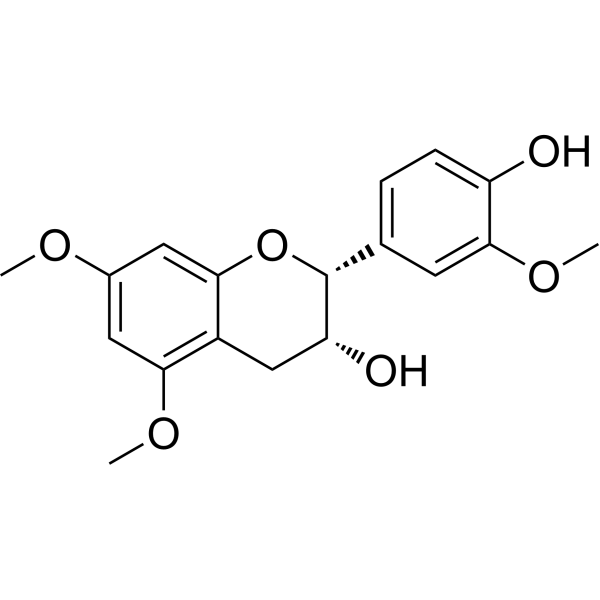
5,7,3' -tri-O-Methyl (-)-epicatechin (Compound 13) is a phospholipase Cγ1 (PLCγ1) inhibitor. 5,7,3' -tri-o-methyl (-)-epicatechin has a methylene dioxy benzene ring and can express inhibitory activity against PLCγ1. 5,7,3' -tri-O-Methyl (-)-epicatechin can be used in the study of chemotherapy and chemopexic agents for cancer .
|
-
-
- HY-W100403
-
|
Choline p-toluenesulfonate
|
Phospholipase
|
Others
|
|
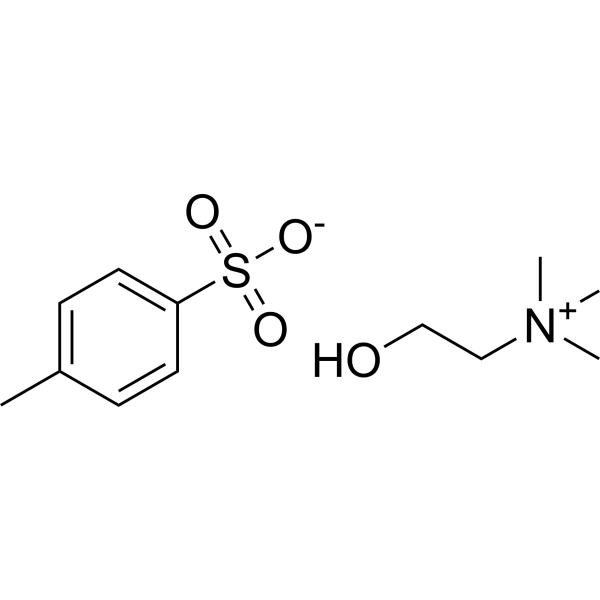
Choline tosylate (Choline p-toluenesulfonate) is an intermediate and also a substrate of choline acetyltransferase (CHAT). Choline tosylate inhibits phospholipase A2 and phospholipase C .
|
-
-
- HY-70083
-
-
-
- HY-153213A
-
|
|
TSH Receptor
|
Endocrinology
|
|
Org 274178-0 is a selective thyroid-stimulating hormone receptor (TSHR) antagonist with a pIC50 value for TSHR is 5.03. Org 274178-0 inhibits the activation of cAMP signaling pathway and phospholipase C (PLC) signaling pathway mediated by thyroid-stimulating hormone (TSH) and TSH receptor-stimulating immunoglobulins (TSIs). Org 274178-0 is promising for research of Graves’ disease and Graves’ ophthalmopathy .
|
-
-
- HY-B0470R
-
|
|
Reference Standards
Bacterial
Antibiotic
Phospholipase
|
Infection
Cancer
|
|
Neomycin (sulfate) (Standard) is the analytical standard of Neomycin (sulfate). This product is intended for research and analytical applications. Neomycin sulfate, an aminoglycoside antibiotic, exerts antibacterial activity through irreversible binding of the nuclear 30S ribosomal subunit, thereby blocking bacterial protein synthesis. Neomycin sulfate is a known phospholipase C (PLC) inhibitor. Neomycin sulfate potently inhibits both nuclear translocation of angiogenin and angiogenin-induced cell proliferation and angiogenesis .
|
-
-
- HY-P10053
-
|
|
Phospholipase
|
Metabolic Disease
|
|
sPLA2-IIA Inhibitor is a cyclic pentapeptide analog of FLSYK (cyclic 2-Nal-Leu-Ser-2-Nal-Arg (c2)), that binds to hGIIA (human IIA phospholipase A2) and inhibits its hydrolytic ability. sPLA2 is a member of the esterase superfamily that catalyzes the hydrolysis of the ester bond at the sn-2 position of glycerophospholipids, releasing free fatty acids such as arachidonic acid and lysophospholipids .
|
-
-
- HY-148388
-
|
N-Stearoyl-D-sphingomyelin
|
Phospholipase
|
Cancer
|
|
N-Stearoylsphingomyelin (N-Stearoyl-D-sphingomyelin) is a sphingolipid, which can inhibit Phospholipase Cδ1 (PLCδ1) .
|
-
-
- HY-N1450
-
|
|
Phospholipase
|
Cancer
|
|
Aristolochic acid C is a derivative of Aristolochic acid. Aristolochic acid is a phospholipase A2 (PLA2) inhibitor, which disrupts cortical microtubule arrays and root growth in Arabidopsis .
|
-
-
- HY-175982
-
|
|
Aurora Kinase
|
Cancer
|
|
AURKA-IN-3 (Compound AL8) is an irreversible covalent Aurora kinase A (AURKA) inhibitor with an IC50 value of 23.0 nM. AURKA-IN-3 inhibits the activation of cAMP signaling pathway and phospholipase C (PLC) signaling pathway mediated by AURKA, and reduces the autophosphorylation level of AURKA. AURKA-IN-3 is promising for research of malignant tumors associated with high AURKA expression (e.g., leukemia, lymphoma) .
|
-
-
- HY-N14103
-
|
|
Phospholipase
|
Others
|
|
Cinatrin C1 is a phospholipase A2 (PLA2) inhibitor that can be extracted from Circinotrichum falcatisporum RF-641 .
|
-
-
- HY-N1450R
-
|
|
Reference Standards
Phospholipase
|
Cancer
|
|
Aristolochic acid C (Standard) is the analytical standard of Aristolochic acid C. This product is intended for research and analytical applications. Aristolochic acid C is a derivative of Aristolochic acid. Aristolochic acid is a phospholipase A2 (PLA2) inhibitor, which disrupts cortical microtubule arrays and root growth in Arabidopsis .
|
-
-
- HY-N14104
-
|
|
Phospholipase
|
Others
|
|
Cinatrin C2 is a phospholipase A2 (PLA2) inhibitor with an IC50 of 800 μM and can be extracted from Circinotrichum falcatisporum RF-641 .
|
-
-
- HY-N14105
-
|
|
Phospholipase
|
Others
|
|
Cinatrin C3 is a phospholipase A2 (PLA2) inhibitor with an IC50 of 70 μM and can be extracted from Circinotrichum falcatisporum RF-641 .
|
-
-
- HY-P10658
-
|
|
Phospholipase
|
Others
|
|
ARF1 (2-17) inhibits both ARF-independent (PLC-β) and ARF-dependent (PLD) pathways. ARF1 (2-17) inhibits GTP-γ-S-stimulated PLD activity, phospholipase C-β (PLC-β), and exocytosis .
|
-
-
- HY-176008
-
|
|
Drug Derivative
|
Inflammation/Immunology
|
|
Lauric acid leelamide is the lauric acid (C-12) amide analog of Leelamine (HY-W005629). Leelamine exhibits inhibitory activity against pyruvate dehydrogenase kinase (PDHK) with an IC50 value of 9.5 µM. Leelamine derivatives possess anti-inflammatory effects and can inhibit phospholipase A2 activity from various sources .
|
-
-
- HY-100983R
-
|
|
Reference Standards
PKC
|
Cancer
|
|
Protein kinase inhibitor H-7 (dihydrochloride) (Standard) is the analytical standard of Protein kinase inhibitor H-7 (dihydrochloride). This product is intended for research and analytical applications. Protein kinase inhibitor H-7 dihydrochloride is a potent PKC (protein kinase C) inhibitor. At 100 μM, Protein kinase inhibitor H-7 dihydrochloride completely inhibits both TPA (skin tumour promoter, 12-O-tetradecanoylphorbol-13-acetate) and phospholipase C-induced ODC (ornithine decarboxylase) .
|
-
-
- HY-150135B
-
|
Inositol 1,4,5-trisphosphate tripotassium; Ins(1,4,5)-P3 tripotassium
|
Calcium Channel
|
Neurological Disease
|
|
D-myo-Inositol 1,4,5-trisphosphate tripotassium, a second messenger, elicits Ca 2+ mobilization. D-myo-Inositol 1,4,5-trisphosphate tripotassium inhibits the binding of phosphoinositide-specific phospholipase C-delta 1 (PLC-delta 1) to bilayer membranes composed of phosphatidylcholine (PC) and phosphatidylinositol 4,5-bisphosphate (PIP2) .
|
-
-
- HY-131688R
-
|
|
PARP
Caspase
Reference Standards
|
Inflammation/Immunology
|
|
Neomycin (sulfate) (Standard) is the analytical standard of Neomycin (sulfate). This product is intended for research and analytical applications. Neomycin sulfate, an aminoglycoside antibiotic, exerts antibacterial activity through irreversible binding of the nuclear 30S ribosomal subunit, thereby blocking bacterial protein synthesis. Neomycin sulfate is a known phospholipase C (PLC) inhibitor. Neomycin sulfate potently inhibits both nuclear translocation of angiogenin and angiogenin-induced cell proliferation and angiogenesis .
|
-
-
- HY-100168R
-
|
|
Reference Standards
Phospholipase
|
Others
|
|
BAPTA (Standard) is the analytical standard of BAPTA. This product is intended for research and analytical applications. BBAPTA is a selective and cell-impermeant chelator for calcium. BAPTA, as calcium indicator, has high selectivity against magnesium and calcium. BAPTA is widely used as an intracellular buffer for investigating the effects of Ca 2+ release from intracellular stores or influx via Ca 2+-permeable channels in the plasma membrane. BAPTA can also inhibit phospholipase C activity independently of their role as Ca 2+ chelators .
|
-
-
- HY-W403046A
-
|
|
Drug Metabolite
Calcium Channel
|
Neurological Disease
|
|
D-myo-Inositol-4-phosphate monoammonium is a metabolite of D-myo-Inositol 1,4,5-trisphosphate. D-myo-Inositol 1,4,5-trisphosphate, a second messenger, elicits Ca 2+ mobilization. D-myo-Inositol 1,4,5-trisphosphate inhibits the binding of phosphoinositide-specific phospholipase C-delta 1 (PLC-delta 1) to bilayer membranes composed of phosphatidylcholine (PC) and phosphatidylinositol 4,5-bisphosphate (PIP2) .
|
-
-
- HY-N1393S
-
|
NSC 3778-13C6; O-Methylsalicylic acid-13C6; Salicylic acid methyl ether-13C6
|
Isotope-Labeled Compounds
Carbonic Anhydrase
Phospholipase
|
Cardiovascular Disease
|
|
2-Methoxybenzoic acid (NSC 3778; O-Methylsalicylic acid; Salicylic acid methyl ether)- 13C6 is the 13C-labeled 2-Methoxybenzoic acid (HY-N1393). 2-Methoxybenzoic acid is a natural compound with potential salicylate-like effect. 2-Methoxybenzoic acid inhibits carbonic anhydrase activity, elevates intraplatelet cyclic guanosine monophosphate level, and suppresses cytosolic phospholipase A2 phosphorylation. 2-Methoxybenzoic acid suppresses platelet reactivity, including decreased spreading, retraction, and aggregation in platelets. 2-Methoxybenzoic acid ameliorates arterial thrombosis in a dose-dependent manner without affecting normal hemostasis in mice. 2-Methoxybenzoic acid can be used for the research of arterial thrombosis .
|
-
-
- HY-100168AR
-
|
|
Reference Standards
Phospholipase
|
Others
|
|
BAPTA tetrasodium (Standard) is the analytical standard of BAPTA tetrasodium. This product is intended for research and analytical applications. BAPTA tetrasodium is a selective and cell-impermeant chelator for calcium. BAPTA tetrasodium, as calcium indicator, has high selectivity against magnesium and calcium. BAPTA tetrasodium is widely used as an intracellular buffer for investigating the effects of Ca 2+ release from intracellular stores or influx via Ca 2+-permeable channels in the plasma membrane. BAPTA tetrasodium can also inhibit phospholipase C activity independently of their role as Ca 2+ chelators .
|
-
-
- HY-P2139
-
|
|
Neurokinin Receptor
Phospholipase
|
Others
|
|
Ranakinin is a NK1R agonist. Ranakinin inhibits the binding of selective NK1 radioligands to NK1 receptors. Ranakinin activates phospholipase C (Phospholipase C), thereby enhancing polyphosphoinositide hydrolysis. Ranakinin stimulates inositol phosphate production and reduces membrane polyphosphoinositide levels. Ranakinin stimulates corticosterone and aldosterone secretion .
|
-
-
- HY-182452
-
|
|
Phosphodiesterase (PDE)
Phospholipase
|
Cardiovascular Disease
|
|
U 84569 is a potent low-Km cAMP-dependent Phosphodiesterase inhibitor, with an IC50 value of 300 nM in platelet cytosol. By inhibiting phosphodiesterase and elevating cAMP levels, U 84569 indirectly blocks receptor-mediated Phospholipase C activation, thereby inhibiting platelet aggregation .
|
-
-
- HY-W778574
-
|
|
Phospholipase
|
Cardiovascular Disease
Others
Neurological Disease
|
|
BAPTA tetracesium is a selective and cell-impermeant chelator for calcium. BAPTA tetracesium has high selectivity against magnesium and calcium. BAPTA tetracesium can also inhibit phospholipase C activity independently of their role as Ca 2+ chelators .
|
-
-
- HY-N16865
-
|
|
COX
Prostaglandin Receptor
Fungal
|
Infection
Inflammation/Immunology
|
|
Myristinin B/C is a mixture of Myristinin B and Myristinin C. Myristinin B/C is a flavan compound found in Horsfieldia amygdaline and Myristica cinnamomea. Myristinin B/C can selectively inhibit COX-2 activity with an IC50 of 2.1 μg/mL. Myristinin B/C can reduce the production of prostaglandin E2 (PGE2) and inhibit phospholipase A2 (PLA2), thereby blocking the release of inflammatory mediators. Myristinin B/C can inhibit Candida albicans with an IC50 of 6 μg/mL. Myristinin B/C can be used for the research of inflammation and infection, such as rheumatoid arthritis .
|
-
-
- HY-108630R
-
|
|
Reference Standards
Phospholipase
|
Others
|
|
U-73343 (Standard) is the analytical standard of U-73343 (HY-108630). This product is intended for research and analytical applications. U-73343, works as a protonophore, is an inactive analog of U-73122 and can be used as a negative control. U-73343 dose-dependently inhibits acid secretion irrespective of the stimulant. U-73122 is a phospholipase C (PLC) and 5-LO (5-lipoxygenase) inhibitor with an IC50 of 1-2.1 μM for PLC .
|
-
-
- HY-P991964
-
|
Rendomab-B49
|
Endothelin Receptor
|
Cancer
|
|
Rendomab B4 (Rendomab-B49) is a monoclonal antibody targeting ETB. Rendomab B4 preferentially binds to ETB in the active conformational state and exhibits selectivity for ETB on melanoma cells. Rendomab B4 inhibits the G protein-dependent phospholipase C (PLC) pathway, blocks ET-3-induced Gαi/o-mediated inhibition of adenylate cyclase, and does not affect the activation of the ERK1/2 pathway. Rendomab B4 is applicable to melanoma-related research .
|
-
-
- HY-100168BR
-
|
|
Reference Standards
Phospholipase
|
Others
|
|
BAPTA tetrapotassium (Standard) is the analytical standard of BAPTA tetrapotassium (HY-100168B). This product is intended for research and analytical applications. BAPTA tetrapotassium is a selective and cell-impermeant chelator for calcium. BAPTA tetrapotassium, as calcium indicator, has high selectivity against magnesium and calcium. BAPTA tetrapotassium is widely used as an intracellular buffer for investigating the effects of Ca 2+ release from intracellular stores or influx via Ca 2+-permeable channels in the plasma membrane. BAPTA tetrapotassium can also inhibit phospholipase C activity independently of their role as Ca 2+ chelators .
|
-
| Cat. No. |
Product Name |
Type |
-
- HY-100168
-
|
|
Biochemical Assay Reagents
|
|
BAPTA is a selective and cell-impermeant chelator for calcium. BAPTA has high selectivity against magnesium and calcium. BAPTA can also inhibit phospholipase C activity independently of their role as Ca 2+ chelators .
|
-
- HY-100168B
-
|
|
Biochemical Assay Reagents
|
|
BAPTA tetrapotassium is a selective and cell-impermeant chelator for calcium. BAPTA has high selectivity against magnesium and calcium. BAPTA tetrapotassium can also inhibit phospholipase C activity independently of their role as Ca 2+ chelators .
|
-
- HY-W100403
-
|
Choline p-toluenesulfonate
|
Biochemical Assay Reagents
|
|
Choline tosylate (Choline p-toluenesulfonate) is an intermediate and also a substrate of choline acetyltransferase (CHAT). Choline tosylate inhibits phospholipase A2 and phospholipase C .
|
-
- HY-100168R
-
|
|
Biochemical Assay Reagents
|
|
BAPTA (Standard) is the analytical standard of BAPTA. This product is intended for research and analytical applications. BBAPTA is a selective and cell-impermeant chelator for calcium. BAPTA, as calcium indicator, has high selectivity against magnesium and calcium. BAPTA is widely used as an intracellular buffer for investigating the effects of Ca 2+ release from intracellular stores or influx via Ca 2+-permeable channels in the plasma membrane. BAPTA can also inhibit phospholipase C activity independently of their role as Ca 2+ chelators .
|
-
- HY-100168BR
-
|
|
Biochemical Assay Reagents
|
|
BAPTA tetrapotassium (Standard) is the analytical standard of BAPTA tetrapotassium (HY-100168B). This product is intended for research and analytical applications. BAPTA tetrapotassium is a selective and cell-impermeant chelator for calcium. BAPTA tetrapotassium, as calcium indicator, has high selectivity against magnesium and calcium. BAPTA tetrapotassium is widely used as an intracellular buffer for investigating the effects of Ca 2+ release from intracellular stores or influx via Ca 2+-permeable channels in the plasma membrane. BAPTA tetrapotassium can also inhibit phospholipase C activity independently of their role as Ca 2+ chelators .
|
| Cat. No. |
Product Name |
Target |
Research Area |
-
- HY-P10053
-
|
|
Phospholipase
|
Metabolic Disease
|
|
sPLA2-IIA Inhibitor is a cyclic pentapeptide analog of FLSYK (cyclic 2-Nal-Leu-Ser-2-Nal-Arg (c2)), that binds to hGIIA (human IIA phospholipase A2) and inhibits its hydrolytic ability. sPLA2 is a member of the esterase superfamily that catalyzes the hydrolysis of the ester bond at the sn-2 position of glycerophospholipids, releasing free fatty acids such as arachidonic acid and lysophospholipids .
|
-
- HY-P10658
-
|
|
Phospholipase
|
Others
|
|
ARF1 (2-17) inhibits both ARF-independent (PLC-β) and ARF-dependent (PLD) pathways. ARF1 (2-17) inhibits GTP-γ-S-stimulated PLD activity, phospholipase C-β (PLC-β), and exocytosis .
|
-
- HY-P2139
-
|
|
Neurokinin Receptor
Phospholipase
|
Others
|
|
Ranakinin is a NK1R agonist. Ranakinin inhibits the binding of selective NK1 radioligands to NK1 receptors. Ranakinin activates phospholipase C (Phospholipase C), thereby enhancing polyphosphoinositide hydrolysis. Ranakinin stimulates inositol phosphate production and reduces membrane polyphosphoinositide levels. Ranakinin stimulates corticosterone and aldosterone secretion .
|
| Cat. No. |
Product Name |
Target |
Research Area |
Image |
-
- HY-P991964
-
|
Rendomab-B49
|
Endothelin Receptor
|
Cancer
|
|
Rendomab B4 (Rendomab-B49) is a monoclonal antibody targeting ETB. Rendomab B4 preferentially binds to ETB in the active conformational state and exhibits selectivity for ETB on melanoma cells. Rendomab B4 inhibits the G protein-dependent phospholipase C (PLC) pathway, blocks ET-3-induced Gαi/o-mediated inhibition of adenylate cyclase, and does not affect the activation of the ERK1/2 pathway. Rendomab B4 is applicable to melanoma-related research .
|
-
(5)
| Cat. No. |
Product Name |
Category |
Target |
Chemical Structure |
| Cat. No. |
Product Name |
Chemical Structure |
-
- HY-N1393S
-
|
|
|
2-Methoxybenzoic acid (NSC 3778; O-Methylsalicylic acid; Salicylic acid methyl ether)- 13C6 is the 13C-labeled 2-Methoxybenzoic acid (HY-N1393). 2-Methoxybenzoic acid is a natural compound with potential salicylate-like effect. 2-Methoxybenzoic acid inhibits carbonic anhydrase activity, elevates intraplatelet cyclic guanosine monophosphate level, and suppresses cytosolic phospholipase A2 phosphorylation. 2-Methoxybenzoic acid suppresses platelet reactivity, including decreased spreading, retraction, and aggregation in platelets. 2-Methoxybenzoic acid ameliorates arterial thrombosis in a dose-dependent manner without affecting normal hemostasis in mice. 2-Methoxybenzoic acid can be used for the research of arterial thrombosis .
|
-
Your information is safe with us. * Required Fields.
Inquiry Information
- Product Name:
- Cat. No.:
- Quantity:
- MCE Japan Authorized Agent:

