1. Search Result
Search Result
Results for "

photodamage

" in MedChemExpress (MCE) Product Catalog:

13

Inhibitors & Agonists

1

Natural
Products

Cat. No. Product Name Target Research Areas Chemical Structure
  • HY-164159

    Reactive Oxygen Species (ROS) MMP Inflammation/Immunology
    α-Glucosylrutin, a flavonoid, is a potent antioxidant with free radical scavenging activity. α-Glucosylrutin reduces MMP-1 gene expression, protein expression, and enzyme activity, and reduces MMP-2 protein expression and enzyme activity in UVA-irradiated human dermal fibroblasts. α-Glucosylrutin prevents oxidative stress-induced intracellular tyrosine residue phosphorylation and counteracts intracellular thiol level depletion in human skin cells. α-Glucosylrutin is effective in the prevention of dermatologic diseases in which oxidative stress is of pathogenetic relevance, e.g. in polymorphous light eruption (PLE). α-Glucosylrutin can be used for the research of UV-induced skin photodamage/photoaging .
    α-Glucosylrutin
  • HY-A0169A
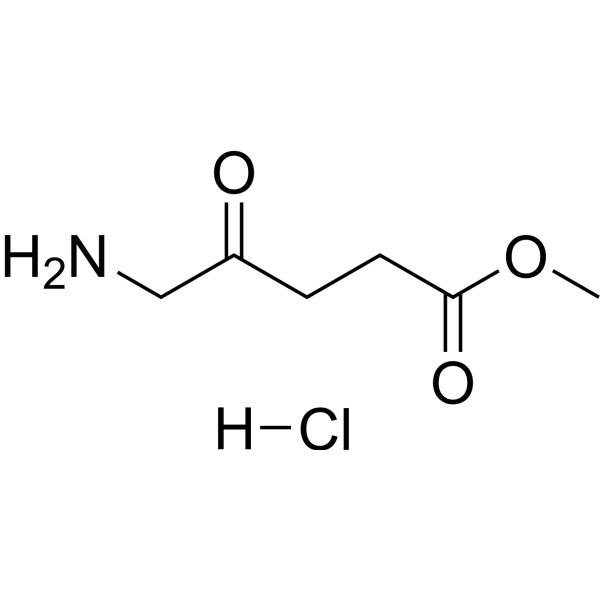
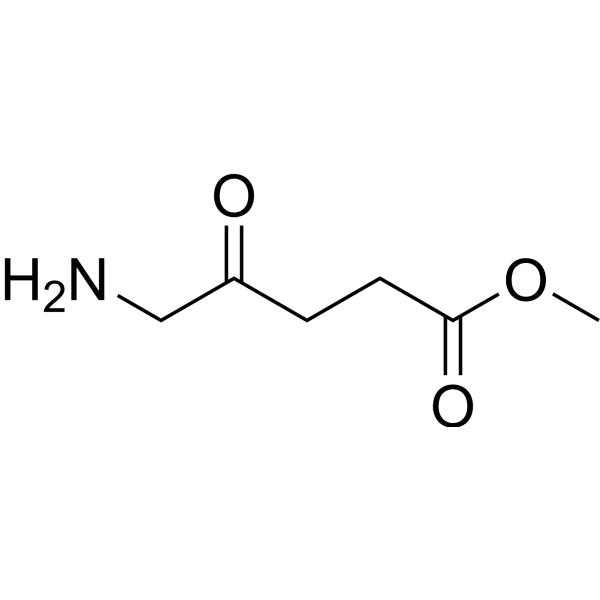
    Methyl aminolevulinate hydrochloride
    1 Publications Verification

    Reactive Oxygen Species (ROS) Photosensitizer Cancer
    Methyl aminolevulinate hydrochloride is a sensitizer used in photodynamic therapy (PDT). Methyl aminolevulinate hydrochloride penetrates the skin and induces the production of photoactive porphyrins including protoporphyrin IX in cells; upon exposure to appropriate light, it generates ROS, which triggers cellular oxidation and cell death. Methyl aminolevulinate hydrochloride acts as a photo-damage reversing agent through epidermal reconstruction, cytokine-mediated activation of dermal fibroblasts, elastin breakdown, new collagen formation, and compression of dilated capillaries. Methyl aminolevulinate hydrochloride reduces the expression of the proliferation marker Ki-67 and the early skin carcinogenesis marker TP53. Methyl aminolevulinate hydrochloride delays the onset of ultraviolet-induced skin tumors and reduces tumor burden in hairless mice. Methyl aminolevulinate hydrochloride is applicable to research related to actinic keratosis and basal cell carcinoma .
    Methyl aminolevulinate hydrochloride
  • HY-126861
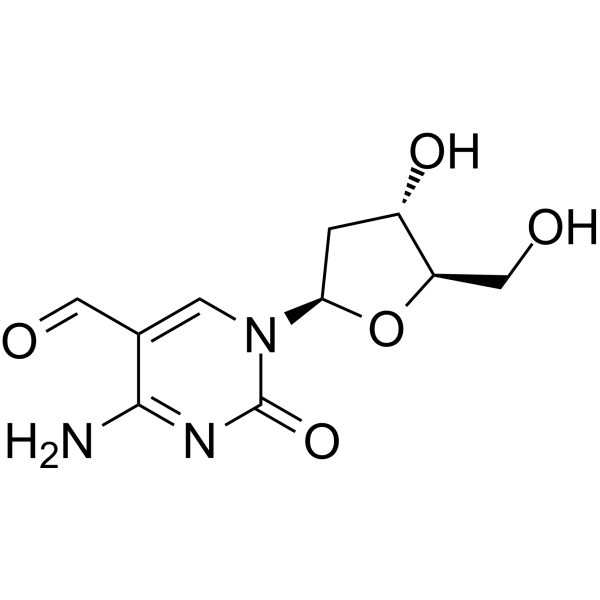
    2'-Deoxy-5-formylcytidine
    1 Publications Verification

    Reactive Oxygen Species (ROS) Others
    2'-Deoxy-5-formylcytidine is an effective internal triplet photosensitizer in DNA. 2'-Deoxy-5-formylcytidine could act as a new hot spot in DNA photodamage .
    2'-Deoxy-5-formylcytidine
  • HY-N4096

    Others Inflammation/Immunology
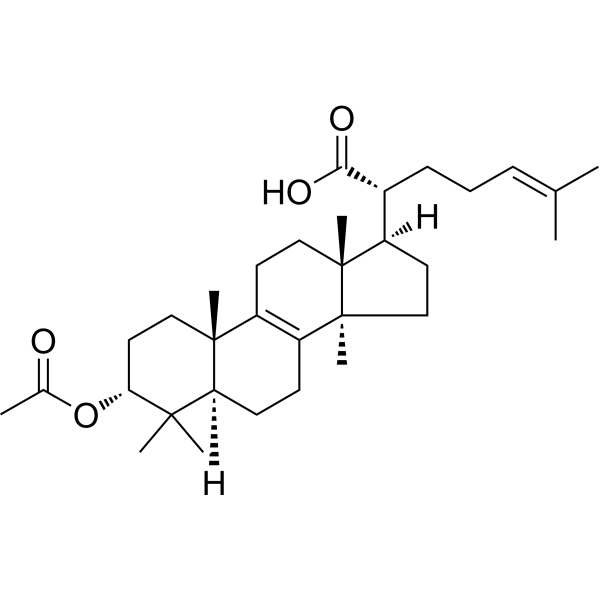
    Tsugaric acid A can significantly inhibit superoxide anion formation. Tsugaric acid A also protects human keratinocytes against damage induced by ultraviolet B (UV B) light. Tsugaric acid A can protect keratinocytes from photodamage.
    Tsugaric acid A
  • HY-W010417

    Reactive Oxygen Species (ROS) Others
    4-Thiouracil is a thionucleobase with cytostatic properties. 4-Thiouracil can be used as biological photoprobes to detect RNA structures and nucleic acid-nucleic acid contacts. 4-Thiouracil can also act as a strong ultraviolet A (UVA) photosensitizer, providing a source of the reactive oxygen species of O2. 4-Thiouracil is promising for research of photocross linking, photodamage, as well as photodynamic therapy .
    4-Thiouracil
  • HY-133027

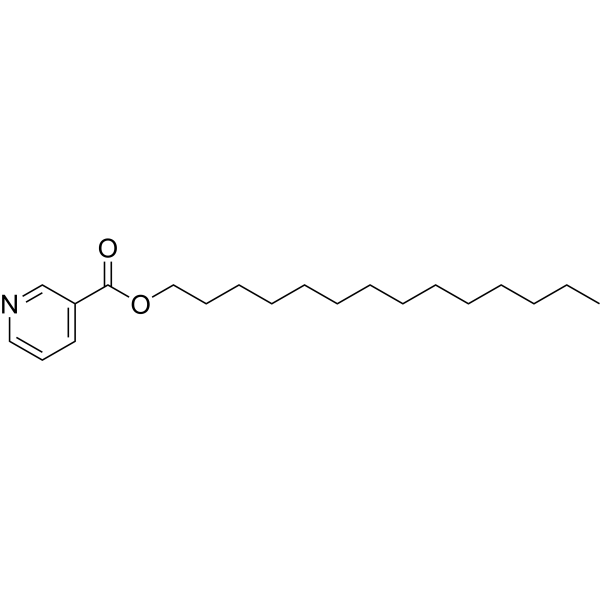
    Tetradecyl nicotinate

    Biochemical Assay Reagents Cancer
    Myristyl nicotinate (Tetradecyl nicotinate) is an ester proagent and a lipophilic derivative of Nicotinic acid. Myristyl nicotinate is being developed for delivery of Nicotinic acid into the skin for prevention of actinic keratosis and its progression to skin cancer. Myristyl nicotinate shows to stimulate epidermal differentiation in photodamaged skin, increasing skin NAD content and strengthening the skin barrier .
    Myristyl nicotinate
  • HY-148400

    TXC hydrochloride

    Ser/Thr Protease Drug Derivative Metabolic Disease
    Cetyl tranexamate (TXC) hydrochloride is an ester derivative of Tranexamic acid (HY-B0149). Cetyl tranexamate hydrochloride is an inhibitor of fibrinogen activation and can reduce the production of fibrinogen in keratinocytes induced by ultraviolet rays or damage, indirectly inhibiting the melanin production pathway. Cetyl tranexamate hydrochloride also targets melanin (dark spots) and hemoglobin (red spots), reducing vascular dilation and pigmentation by inhibiting inflammatory mediators (such as prostaglandins, platelet activating factors). Cetyl tranexamate hydrochloride can be used as a cosmetic ingredient and is suitable for epidermal pigment disorders such as photoaging, post-inflammatory hyperpigmentation (PIH), and melasma .
    Cetyl tranexamate hydrochloride
  • HY-U00265

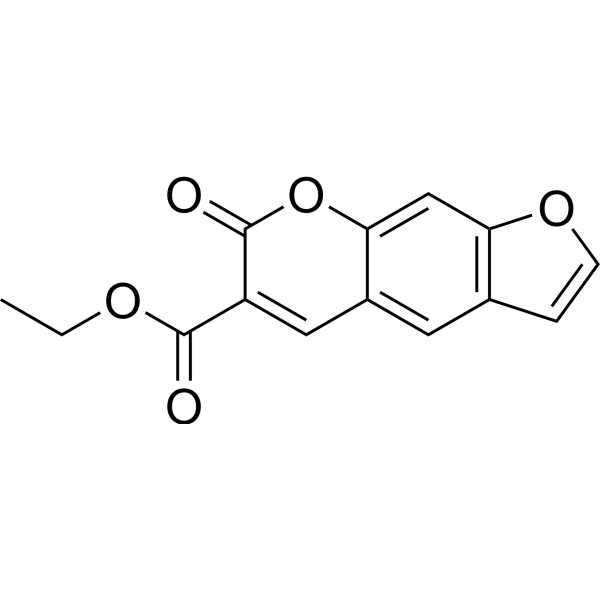
    3-Carbethoxypsoralen; 3-Ethoxycarbonylpsoralen

    Bacterial Infection
    3-CPs is a monofunctional furanocoumarin and a photoprotective agent targeting Staphylococcus aureus DNA, possessesing anti-UVB lethal activity. 3-CPs competitively intercalates into DNA, forming exclusively 4',5'-furan-side mono-adducts upon UVB irradiation, and irreversibly inhibits the formation of cyclobutane pyrimidine dimers. 3-CPs prevents UVB-induced DNA damage by preferentially binding to strong (AT)n sites within the DNA, without inducing lethal interstrand DNA cross-links; the limited number of mono-adducts it induces can be efficiently repaired by bacteria. 3-CPs holds potential for use in the development of photoprotective formulations for skin diseases, as well as in studies investigating bacterial DNA photodamage repair mechanisms and the optimization of photochemotherapy safety .
    3-CPs
  • HY-113840

    Ro 14-9706

    Drug Derivative Metabolic Disease Inflammation/Immunology
    Sumarotene (Ro 14-9706), an arotinoid methyl sulfone, is a potent dermatologic agent for the repair of photodamage, antikeratinization, and antiproliferation. Sumarotene exhibits in rats a prolactin-suppressive activity which affects lactation .
    Sumarotene
  • HY-133027R

    Tetradecyl nicotinate (Standard)

    Biochemical Assay Reagents Reference Standards Cancer
    Myristyl nicotinate (Standard) is the analytical standard of Myristyl nicotinate. This product is intended for research and analytical applications. Myristyl nicotinate (Tetradecyl nicotinate) is an ester proagent and a lipophilic derivative of Nicotinic acid. Myristyl nicotinate is being developed for delivery of Nicotinic acid into the skin for prevention of actinic keratosis and its progression to skin cancer. Myristyl nicotinate shows to stimulate epidermal differentiation in photodamaged skin, increasing skin NAD content and strengthening the skin barrier .
    Myristyl nicotinate (Standard)
  • HY-A0169

    Reactive Oxygen Species (ROS) Photosensitizer Cancer
    Methyl aminolevulinate is a sensitizer used in photodynamic therapy (PDT). Methyl aminolevulinate penetrates the skin and induces the production of photoactive porphyrins including protoporphyrin IX in cells; upon exposure to appropriate light, it generates ROS, which triggers cellular oxidation and cell death. Methyl aminolevulinate acts as a photo-damage reversing agent through epidermal reconstruction, cytokine-mediated activation of dermal fibroblasts, elastin breakdown, new collagen formation, and compression of dilated capillaries. Methyl aminolevulinate reduces the expression of the proliferation marker Ki-67 and the early skin carcinogenesis marker TP53. Methyl aminolevulinate delays the onset of ultraviolet-induced skin tumors and reduces tumor burden in hairless mice. Methyl aminolevulinate is applicable to research related to actinic keratosis and basal cell carcinoma .
    Methyl aminolevulinate
  • HY-118720A

    U-23 TFA

    Reactive Oxygen Species (ROS) Others
    Ovothiol A TFA (U-23 TFA) is an antioxidant. Ovothiol A TFA can be isolated from the tissues of marine invertebrates, algae and fish. Ovothiol A acts synergistically with glutathione to actively scavenge ROS and free radicals, and quench the triplet state of Kynurenic acid (HY-100806), thereby inhibiting oxidative stress and photodamage. OSH is expected to serve as an excellent photoprotective agent to inhibit the harmful effects caused by solar ultraviolet radiation .
    Ovothiol A TFA
  • HY-A0169AR

    Reactive Oxygen Species (ROS) Reference Standards Photosensitizer Inflammation/Immunology Cancer
    Methyl aminolevulinate hydrochloride (Standard) is the analytical standard of Methyl aminolevulinate hydrochloride. This product is intended for research and analytical applications. Methyl aminolevulinate hydrochloride is a sensitizer used in photodynamic therapy (PDT). Methyl aminolevulinate hydrochloride penetrates the skin and induces the production of photoactive porphyrins including protoporphyrin IX in cells; upon exposure to appropriate light, it generates ROS, which triggers cellular oxidation and cell death. Methyl aminolevulinate hydrochloride acts as a photo-damage reversing agent through epidermal reconstruction, cytokine-mediated activation of dermal fibroblasts, elastin breakdown, new collagen formation, and compression of dilated capillaries. Methyl aminolevulinate hydrochloride reduces the expression of the proliferation marker Ki-67 and the early skin carcinogenesis marker TP53. Methyl aminolevulinate hydrochloride delays the onset of ultraviolet-induced skin tumors and reduces tumor burden in hairless mice. Methyl aminolevulinate hydrochloride is applicable to research related to actinic keratosis and basal cell carcinoma .
    Methyl aminolevulinate hydrochloride (Standard)

Inquiry Online

Your information is safe with us. * Required Fields.

Salutation


Country or Region *

Applicant Name *


Organization Name *

Department *


Email Address *


Product Name *

Cat. No.


Requested quantity *

Phone Number *


Remarks

Inquiry Online

Inquiry Information

Product Name:
Cat. No.:
Quantity:
MCE Japan Authorized Agent:

