6 Results for "

plasma cell differentiation

" in MedChemExpress (MCE) Product Catalog:
Products (6)

6 Results for "plasma cell differentiation" in MCE Product Catalog:

Cat. No.: HY-D1602
CAS No.: 217075-07-5
Target:  

Fluorescent Dye

Research Areas:  

Others

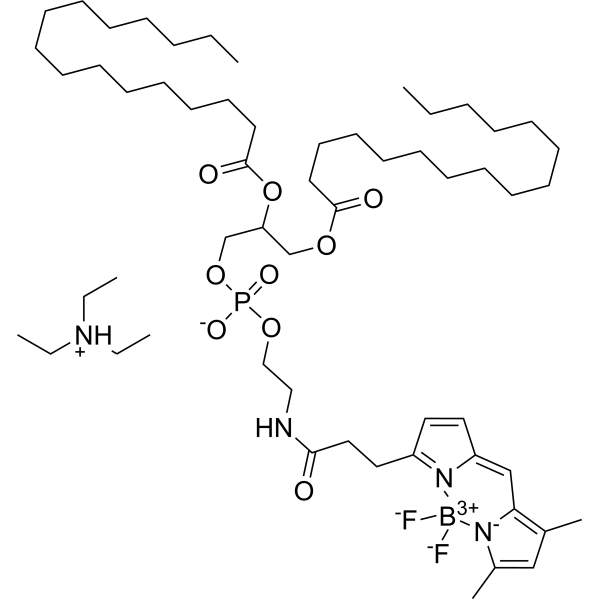
BODIPY FL-DHPE is a fluorescent lipid probe composed of phosphatidylethanolamine (DHPE) labeled with a BODIPY FL fluorophore, which is used for fluorescent labeling of cell membranes, differentiation between liposome membrane fusion and endocytic pathways, and studies of membrane dynamics. The two C16 alkyl chains of BODIPY FL-DHPE insert into the lipid bilayer of membranes, and its fluorescence exhibits concentration dependence: it exists as monomers and emits green fluorescence at low mole fractions; it forms dimers with a red-shifted emission peak at high mole fractions; this spectral change is independent of enzymes, pH, and membrane potential. When liposomes enter the plasma membrane via membrane fusion, the dye is diluted, leading to attenuation of the dimer peak and enhancement of the monomer peak; when entry occurs via endocytosis, the dye remains in endosomes at high concentration with no change in the dimer peak, allowing differentiation between the two uptake pathways. Ex = 488 nm; monomer Em = 515 nm, dimer Em ≈ 620 nm .
loading...
    loading...
Cat. No.: HY-116461
CAS No.: 794572-10-4
Purity:  99.57%
Synonyms: CID2440433
Target:  

GPR55

Research Areas:  

Neurological Disease

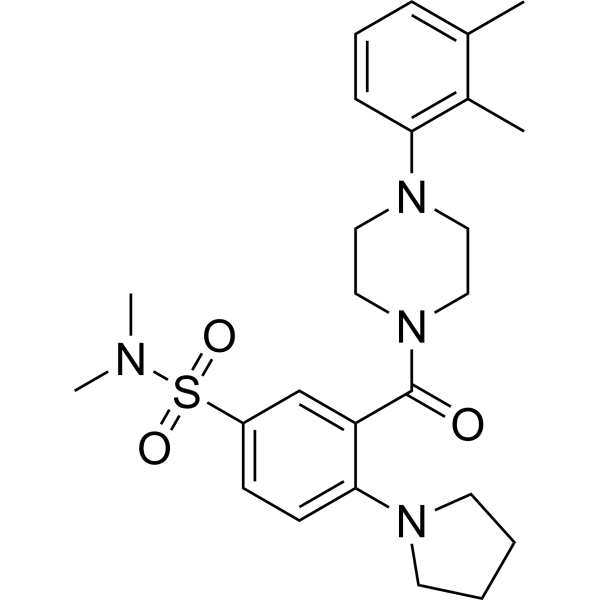
ML-184 (CID244033) is a selective GPR55 agonist with an EC50 of 250 nM, more than 100-fold selectivity for GPR55 over GPR35, CB1, and CB2. ML-184 induces ERK1/2 phosphorylation and PKCβII translocation to the plasma membrane via activation of GPR55. ML-184 (CID2440433) increases the proliferation of neural stem cells and promotes neuronal differentiation in vitro .
loading...
    loading...
Cat. No.: HY-145425
CAS No.: 2771006-54-1
Target:  

IRE1 Apoptosis FGFR

Research Areas:  

Inflammation/Immunology

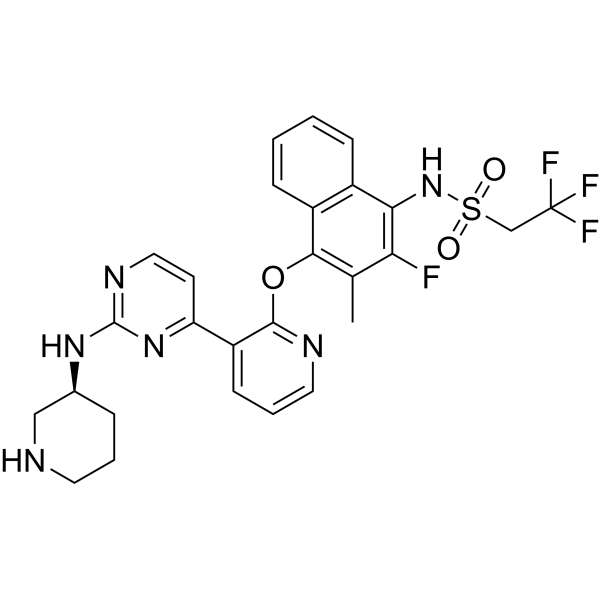
PAIR2 is a highly selective inhibitor targeting the kinase domain of human IRE1α, with a Ki value of 8.8 nM against human IRE1α. PAIR2 fully occupies the ATP-binding site of the IRE1α kinase domain, partially antagonizes the ribonuclease activity of IRE1α, specifically inhibits regulated IRE1α-dependent decay (RIDD) and its mediated substrate cleavage, while preserving the splicing function of Xbp1 mRNA. PAIR2 also promotes the differentiation of B cells into plasma cells, blocks IRE1α-induced cell apoptosis, and restores the expression of Fgfr2 mRNA in AT2 cells. PAIR2 effectively reaches a steady-state concentration in the lung tissues of Mus musculus, and serves as an important tool for investigating the function of the IRE1α signaling pathway in diseases such as pulmonary fibrosis .
loading...
    loading...
Cat. No.: HY-P990175
Anti-Mouse OX40L/CD134L Antibody (RM134L) is an anti-mouse OX40L/CD134L IgG2b monoclonal antibody. Anti-Mouse OX40L/CD134L Antibody (RM134L) reduces immune response by inhibiting the OX40/OX40L signaling pathway. Anti-Mouse OX40L/CD134L Antibody (RM134L) can inhibit plasma cell differentiation and antibody secretion. Anti-Mouse OX40L/CD134L Antibody (RM134L) can prolong the survival time of cell transplantation by inhibiting CD4 + T cells. Anti-Mouse OX40L/CD134L Antibody (RM134L) can be used for researches on inflammation and cancer such as graft versus host disease (GVHD), allergic reaction, lupus nephritis and hepatocellular carcinoma (HCC) .
loading...
    loading...
Cat. No.: HY-106435
CAS No.: 79955-36-5
Research Areas:  

Cancer

Cystemustine is a DNA inhibitor (a chloroethyl nitrosourea, CENU). Cystemustine can cause DNA cross-linking, thereby inhibiting the proliferation of tumor cells. Cystemustine can also exert cytotoxic effects by interfering with the cell cycle, inducing cell re-differentiation, and altering phospholipid metabolism. Cystemustine exhibits high anti-tumor activity and a relatively short plasma half-life in mice. Cystemustine can be used for the study of various malignant tumors, including melanoma, glioma, renal cancer, head and neck cancer, and colorectal cancer, etc .
loading...
    loading...
Cat. No.: HY-171936
CAS No.: 1329115-44-7
Synonyms: GM1 (d18:1/C18:0) ammonium; C18 Ganglioside GM1 (d18:1/18:0) ammonium
Target:  

Endogenous Metabolite

Research Areas:  

Neurological Disease

Ganglioside GM1 (ammonium) is a monosialylated ganglioside and the prototypic ganglioside for those containing one sialic acid residue. Ganglioside GM1 (ammonium) is one of the most abundant gangliosides in the brain which provides neuroprotection. Ganglioside GM1 (ammonium) exhibits anti-inflammatory property. Ganglioside GM1 (ammonium) has a well-balanced amphiphilic behavior. Ganglioside GM1 (ammonium) can reduce the fluidity of the plasma membrane that implies a retention and enrichment of the ganglioside in specific membrane domains that are called lipid rafts. Ganglioside GM1 (ammonium) can modify the process of differentiation, amplifies responses to neurotrophic factors, protects against excitatory amino acid-related neurotoxicity. Ganglioside GM1 (ammonium) can alleviate acute nerve cell damage through blocking cytotoxicity and potentiating neurotophic factors. Ganglioside GM1 (ammonium) can be studied in neurodegenerative diseases such as Alzheimer’s disease .
loading...
    loading...

