

1. Search Result
Search Result
Pathways Recommended: Stem Cell/Wnt Cell Cycle/DNA Damage
Results for "

retinal endothelial cells

" in MedChemExpress (MCE) Product Catalog:

22

Inhibitors & Agonists

1

Fluorescent Dyes

1

Biochemical Assay Reagents

1

Inhibitory Antibodies

2

Natural
Products

1

Isotope-Labeled Compounds

Cat. No. Product Name Target Research Areas Chemical Structure
  • HY-B0636
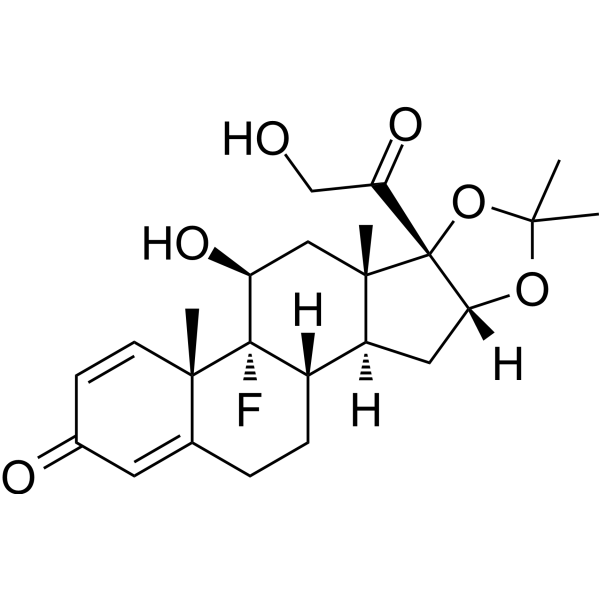
    Triamcinolone acetonide
    Maximum Cited Publications
    6 Publications Verification

    Glucocorticoid Receptor FGFR Cardiovascular Disease Inflammation/Immunology Endocrinology Cancer
    Triamcinolone acetonide inhibits basic fibroblast growth factor (bFGF) induced proliferation of retinal endothelial cells. Triamcinolone acetonide reduces chondrocyte viability and leads to cartilage destruction. Triamcinolone acetonide activates macrophage with anti-inflammatory characteristics. Triamcinolone acetonide can be used in the study of diseases such as atopic dermatitis .
    Triamcinolone acetonide
  • HY-B1670A
    (-)-Isoproterenol hydrochloride
    1 Publications Verification

    Levisoprenaline hydrochloride; Proternol L hydrochloride

    Caspase TNF Receptor Metabolic Disease
    (-)-Isoproterenol (Levisoprenalinel) hydrochloride is the R-isomer of Isoproterenol. (-)-Isoproterenol hydrochloride can reduce the cleavage of caspase 3 and TNFα levels in retinal endothelial cells (REC). (-)-Isoproterenol hydrochloride can be used for the study of diabetic retinopathy .
    (-)-Isoproterenol hydrochloride
  • HY-107543
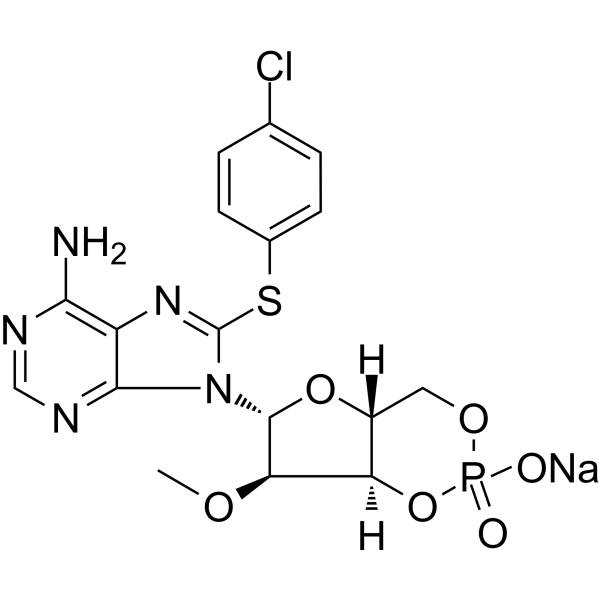
    8-pCPT-2′-O-Me-cAMP sodium
    1 Publications Verification

    8-CPT-2'-O-Me-cAMP sodium

    Ras Cardiovascular Disease
    8-pCPT-2′-O-Me-cAMP (8-CPT-2'-O-Me-cAMP) sodium, an analog of cAMP, is an activator of exchange proteins activated by cAMP (Epac). 8-pCPT-2′-O-Me-cAMP sodium activates Epac1 (EC50 = 2.2 μM), but not PKA (EC50 >10 μM). 8-pCPT-2′-O-Me-cAMP sodium stimulates Epac-mediated Ca 2+ release in pancreatic β-cells in vitro. 8-pCPT-2′-O-Me-cAMP sodium is a Rap1 activator. 8-pCPT-2′-O-Me-cAMP sodium enhances the retinal pigment epithelium barrier against the pathological choroidal endothelial cell invasion that occurs in macular degeneration .
    8-pCPT-2′-O-Me-cAMP sodium
  • HY-Y0669
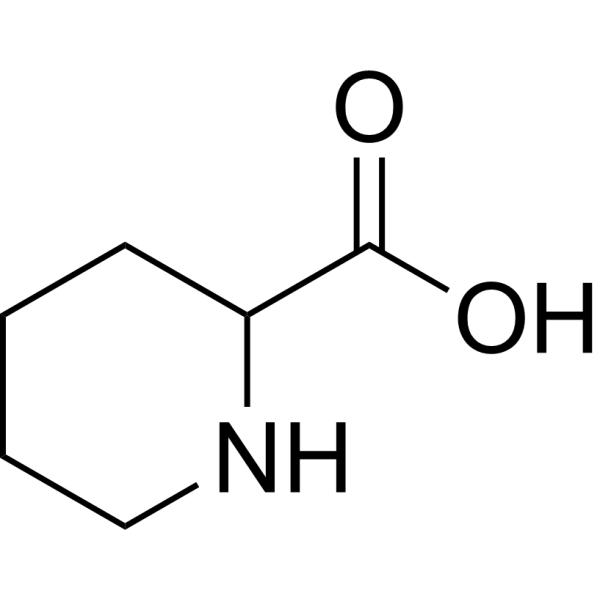
    Pipecolic acid
    2 Publications Verification

    Endogenous Metabolite YAP Glutathione Peroxidase Ferroptosis Neurological Disease Metabolic Disease Inflammation/Immunology
    Pipecolic acid is an orally bioavailable, blood-brain barrier-permeable metabolite of lysine with antioxidant, inhibitor, and inducer activity. Pipecolic acid modulates the YAP-GPX4 signaling pathway, reduces retinal vascular tube formation, and mitigates ferroptosis. Pipecolic acid potentiates voltage-sensitive Ca 2+ channel currents and induces neuronal apoptosis. Pipecolic acid can be used for the research of diabetic retinopathy .
    Pipecolic acid
  • HY-P99116

    RG7716; RO-6867461

    VEGFR Cardiovascular Disease Metabolic Disease Inflammation/Immunology
    Faricimab, an overall good safety and tolerability profile, is a bispecific antibody targeting Angiopoietin-2 (Ang-2) and vascular endothelial growth factor-A (VEGF-A). Faricimab prevents retinal vascular leakage, cell death and inflammation in retinal ischemia/reperfusion (I/R) injury and sCNV mouse models. Faricimab demonstrates statistically superior visual acuity gains versus Ranibizumab (HY-P9951). Faricimab can be used for retinal diseases, such as age-related macular degeneration (w-AMD), diabetic macular edema (DME) and macular edema following retinal vein occlusion (RVO) .
    Faricimab
  • HY-N3677

    OGT Akt mTOR GSK-3 Reactive Oxygen Species (ROS) Apoptosis PARP MDM-2/p53 Inflammation/Immunology Cancer
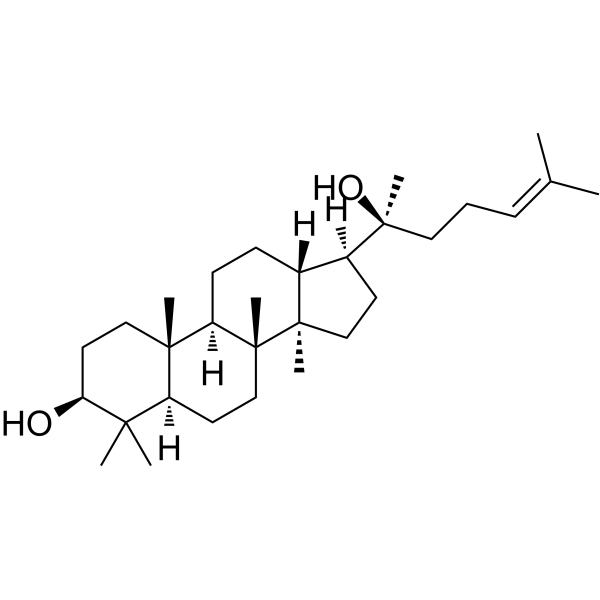
    Dammarenediol II is a ginsenoside precursor . Dammarenediol II reduces the activity of O-GlcNAc transferase (OGT) and downregulates the global O-GlcNAcylation level. Dammarenediol II inhibits the phosphorylation of Akt, mTOR and GSK3β. Dammarenediol II inhibits human carboxylesterase activity, VEGF-induced ROS production, stress fiber formation and vascular endothelial cadherin disruption. Dammarenediol II promotes cell apoptosis (apoptosis), increases the levels of cleaved PARP1 and p53, and inhibits retinal microvascular leakage. Dammarenediol II can be used in studies related to liver cancer and diabetic retinopathy .
    Dammarenediol II
  • HY-126195

    ML-090

    NADPH Oxidase Neurological Disease
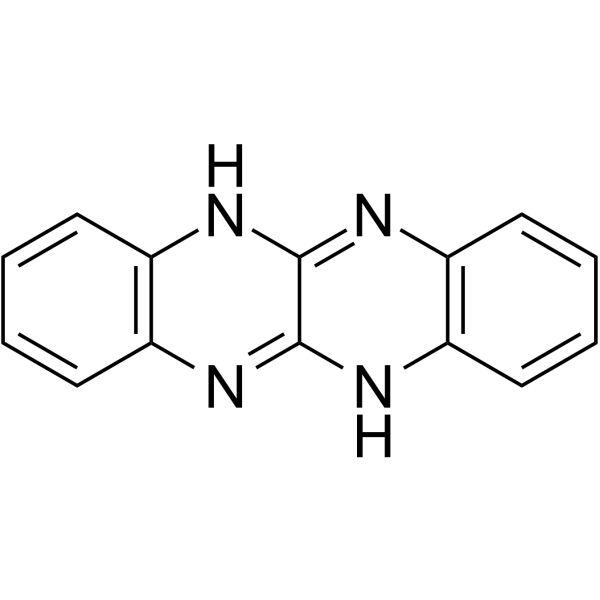
    Fluoflavine (ML-090) is a selective NOX1 inhibitor and reactive oxygen species inhibitor. Fluoflavine reduces reactive oxygen species production, NOX1-mediated downstream signaling events, and oxygen-glucose deprivation-induced retinal ganglion cell death. Fluoflavine inhibits NADPH oxidase activity and pathological retinal neovascularization induced by oxygen-induced retinopathy in the retinas of ischemic mice. Fluoflavine can be used in studies related to retinal ischemia-reperfusion injury and proliferative retinopathy .
    Fluoflavine
  • HY-120417

    Src FAK Cardiovascular Disease
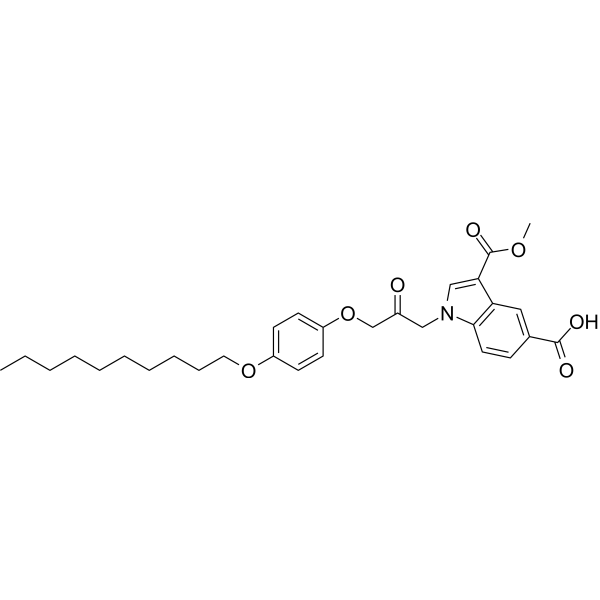
    JP-153 is the Src-FAK-Paxillin signaling inhibitor. JP-153 inhibits Src-dependent phosphorylation of paxillin (Y118) and downstream activation of Akt (S473). JP-153 reduces VEGF-induced migration and proliferation in retinal endothelial cells. JP-153 can be uesd for the study of neovascular eye disease .
    JP-153
  • HY-116301

    Phospholipase Inflammation/Immunology
    CAY10502 is a potent, calcium-dependent cytosolic phospholipase A2 α (cPLA2α) inhibitor with an IC50 of 4.3 nM for isolated enzyme. CAY10502 can be used in the research of retinopathy and inflammatory diseases .
    CAY10502
  • HY-113127

    Apoptosis Others
    L-Tryptophanamide is a compound discovered in wet age-related macular degeneration research, which has activities related to affecting retinal cell proliferation, apoptosis, necrosis and angiogenesis. In in vitro experiments, L-Tryptophanamide affects the proliferation, apoptosis and necrosis of human retinal pigment epithelial cells, and promotes tube formation and migration of human retinal endothelial cells.
    L-Tryptophanamide
  • HY-116312

    8-CPT-2'-O-Me-cAMP

    Ras Cardiovascular Disease
    8-pCPT-2′-O-Me-cAMP (8-CPT-2'-O-Me-cAMP), an analog of cAMP, is an activator of exchange proteins activated by cAMP (Epac). 8-pCPT-2′-O-Me-cAMP activates Epac1 (EC50 = 2.2 μM), but not PKA (EC50 >10 μM). 8-pCPT-2′-O-Me-cAMP stimulates Epac-mediated Ca 2+ release in pancreatic β-cells in vitro. 8-pCPT-2′-O-Me-cAMP is a Rap1 activator. 8-pCPT-2′-O-Me-cAMP enhances the retinal pigment epithelium barrier against the pathological choroidal endothelial cell invasion that occurs in macular degeneration .
    8-pCPT-2′-O-Me-cAMP
  • HY-B1670

    Levisoprenalinel; Proternol L

    Caspase TNF Receptor Metabolic Disease
    (-)-Isoproterenol (Levisoprenalinel) is the R-isomer of Isoproterenol. (-)-Isoproterenol can reduce the cleavage of caspase 3 and TNFα levels in retinal endothelial cells (REC). (-)-Isoproterenol can be used for the study of diabetic retinopathy .
    (-)-Isoproterenol
  • HY-136903

    Calcium Channel Proteasome Reactive Oxygen Species (ROS) Cardiovascular Disease Neurological Disease Inflammation/Immunology
    SNJ-1945 is an orally active Calpain inhibitor that can cross the blood-brain barrier. SNJ-1945 protects rat hearts against cardiac arrest-reperfusion injury by inhibiting the hydrolysis of α-fodrin. SNJ-1945 inhibits VEGF-induced angiogenesis in retinal endothelial cells. SNJ-1945 also protects SH-SY5Y cells from damage induced by MPP+ (HY-W008719) and Rotenone (HY-B1756). SNJ-1945 exhibits anti-inflammatory and neuroprotective activities in a mouse model of multiple sclerosis. SNJ-1945 can be used for the research of cardiovascular, nervous system and inflammatory diseases .
    SNJ-1945
  • HY-119112A

    PKC Neurological Disease
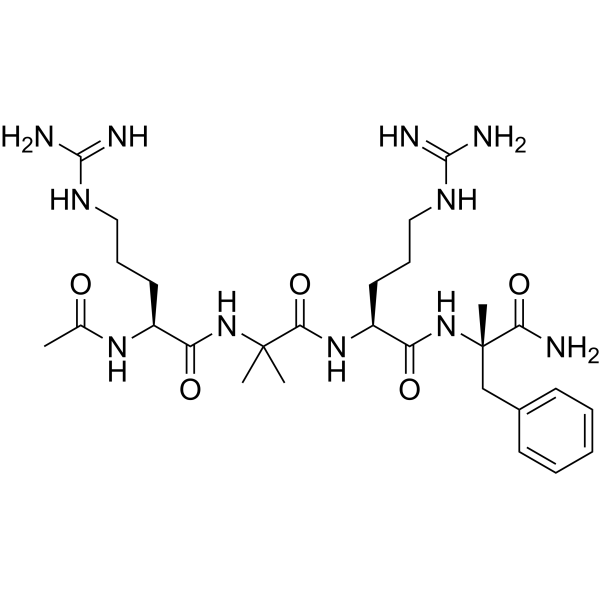
    LY 379196 is a PKC-β inhibitor (IC50: 50 nM and 30 nM for PKC βI and βII respectively). LY 379196 inhibits the VEGF, IGF-1 and bFGF-induced proliferation of bovine retinal microvascular endothelial cells (BREC). LY 379196 is an antiproliferatory agentfor proliferative retinopathy .
    LY 379196
  • HY-N8178

    Others Cardiovascular Disease
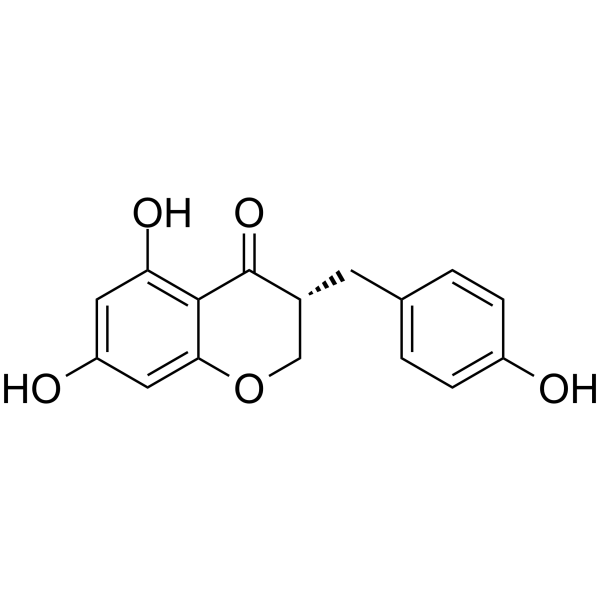
    (R)-(4′-Hydroxy)-5,7-dihydroxy-4-chromanone, a homoisoflavonoid, has antiangiogenic activity against human retinal microvascular endothelial cells .
    (R)-(4′-Hydroxy)-5,7-dihydroxy-4-chromanone
  • HY-159962

    Glutaminase Metabolic Disease
    TGase2-IN-1 (Compound 22) is an orally active inhibitor for TGase2 with an IC50 of 1.12 μM. TGase2-IN-1 inhibits TGase2 in human retinal microvascular endothelial cells with an IC50 of 0.07 μM. TGase2-IN-1 exhibits 74.6% oral bioavailability. TGase2-IN-1 inhibits retinal vascular leakage in mouse Streptozotocin (HY-13753)-induced diabetic model .
    TGase2-IN-1
  • HY-Z8648

    Drug Intermediate Inflammation/Immunology Endocrinology Cancer
    Δ14-Triamcinolone acetonide is a potential impurity. Triamcinolone acetonide inhibits basic fibroblast growth factor (bFGF) induced proliferation of retinal endothelial cells. Triamcinolone acetonide reduces chondrocyte viability and leads to cartilage destruction. Triamcinolone acetonide can be used in the study of diseases such as atopic dermatitis .
    Δ14-Triamcinolone acetonide
  • HY-B0636S1

    Isotope-Labeled Compounds Glucocorticoid Receptor FGFR Cardiovascular Disease Inflammation/Immunology Endocrinology Cancer
    Triamcinolone acetonide- 13C3 is the 13C-labeled Triamcinolone acetonide (HY-B0636). Triamcinolone acetonide inhibits basic fibroblast growth factor (bFGF) induced proliferation of retinal endothelial cells. Triamcinolone acetonide reduces chondrocyte viability and leads to cartilage destruction. Triamcinolone acetonide activates macrophage with anti-inflammatory characteristics. Triamcinolone acetonide can be used in the study of diseases such as atopic dermatitis .
    Triamcinolone acetonide-13C3
  • HY-120267

    Casein Kinase Cardiovascular Disease
    TID43 is a CK2 inhibitor, with an IC50 of 0.3 μM. TID43 can be used for anti-angiogenic research .
    TID43
  • HY-182372

    Epoxide Hydrolase Neurological Disease
    SH-11037 is a potent inhibitor of soluble epoxide hydrolase (sEH) and docks to the substrate binding cleft in the sEH hydrolase domain. SH-11037 dose-dependently suppresses angiogenesis in the choroidal sprouting assay ex vivo and inhibited ocular developmental angiogenesis in zebrafish larvae. SH-11037 reduces choroidal neovascularisation lesion volume in the laser-induced CNV mouse model. SH-11037 synergises with anti-VEGF treatments in vitro and in vivo. SH-11037 induces G2/M phase blockade and retains retinal endothelial cell viability at active concentrations without overt toxicity. SH-11037 can be used for the research of retinal neovascularization and ocular neovascularization .
    SH-11037
  • HY-D3419

    Fluorescent Dye Neurological Disease
    Neuro-DiO 4-chlorobenzenesulfonate is a hydrophobic C18 alkyl chain carbocyanine dye with green fluorescence, commonly used as a vascular marker, cell internalizer and deposition agent. Neuro-DiO 4-chlorobenzenesulfonate inserts its alkyl chain into the endothelial plasma membrane via liposome-mediated perfusion to achieve vascular labeling. Neuro-DiO chlorobenzenesulfonate can also stain the cell membrane and cytoplasm of cancer cells to assist in confocal microscopy observations. Neuro-DiO chlorobenzenesulfonate can be released from nanosponges and accumulate on the surface of mouse retina, then internalize into retinal ganglion cells, which is applicable to researches related to glaucoma and other diseases. It should be noted that during liposome-mediated vascular staining in mice, Neuro-DiO 4-chlorobenzenesulfonate may cause leakage of airway lavage fluid .
    Neuro-DiO 4-chlorobenzenesulfonate
  • HY-107543R

    8-CPT-2'-O-Me-cAMP sodium (Standard)

    Reference Standards Ras Cardiovascular Disease
    8-pCPT-2′-O-Me-cAMP sodium (Standard) is the analytical standard of 8-pCPT-2′-O-Me-cAMP (sodium) (HY-107543). This product is intended for research and analytical applications. 8-pCPT-2′-O-Me-cAMP (8-CPT-2'-O-Me-cAMP) sodium, an analog of cAMP, is an activator of exchange proteins activated by cAMP (Epac). 8-pCPT-2′-O-Me-cAMP sodium activates Epac1 (EC50 = 2.2 μM), but not PKA (EC50 >10 μM). 8-pCPT-2′-O-Me-cAMP sodium stimulates Epac-mediated Ca2+ release in pancreatic β-cells in vitro. 8-pCPT-2′-O-Me-cAMP sodium is a Rap1 activator. 8-pCPT-2′-O-Me-cAMP sodium enhances the retinal pigment epithelium barrier against the pathological choroidal endothelial cell invasion that occurs in macular degeneration .
    8-pCPT-2′-O-Me-cAMP sodium (Standard)

Inquiry Online

Your information is safe with us. * Required Fields.

Salutation


Country or Region *

Applicant Name *


Organization Name *

Department *


Email Address *


Product Name *

Cat. No.


Requested quantity *

Phone Number *


Remarks

Inquiry Online

Inquiry Information

Product Name:
Cat. No.:
Quantity:
MCE Japan Authorized Agent:

