



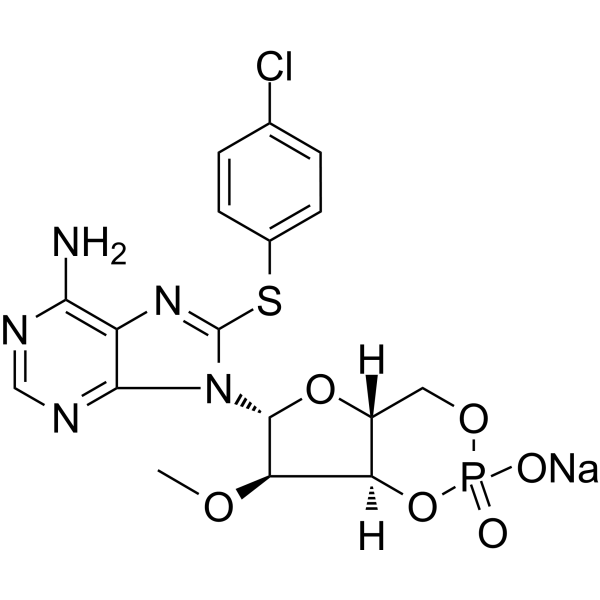
8-pCPT-2′-O-Me-cAMP sodium
Based on 1 publication(s) in Google Scholar
8-pCPT-2′-O-Me-cAMP (8-CPT-2'-O-Me-cAMP) sodium, an analog of cAMP, is an activator of exchange proteins activated by cAMP (Epac). 8-pCPT-2′-O-Me-cAMP sodium activates Epac1 (EC50 = 2.2 μM), but not PKA (EC50 >10 μM). 8-pCPT-2′-O-Me-cAMP sodium stimulates Epac-mediated Ca2+ release in pancreatic β-cells in vitro. 8-pCPT-2′-O-Me-cAMP sodium is a Rap1 activator. 8-pCPT-2′-O-Me-cAMP sodium enhances the retinal pigment epithelium barrier against the pathological choroidal endothelial cell invasion that occurs in macular degeneration.
For research use only. We do not sell to patients.
- Purity : 99.81%
- CAS No.: 634207-53-7
- Formula: C17H16ClN5NaO6PS
- Molecular Weight:507.82
-
Storage:
-20°C, sealed storage, away from moisture
* In solvent : -80°C, 6 months; -20°C, 1 month (sealed storage, away from moisture)

To place orders, for customer services and technical support, please contact: MedChemExpress USA
Tel: 609-228-6898 E-mail: [email protected] [email protected]


-
 Biological Activity
-
Chemical Information
-
Solvent & Solubility
- Purity & Documentation
- References
-
 Help & FAQs


-
HY-12306
8-Bromo-cAMP sodium salt -
HY-15871
GGTI298 Trifluoroacetate -
HY-B0764
Bucladesine sodium -
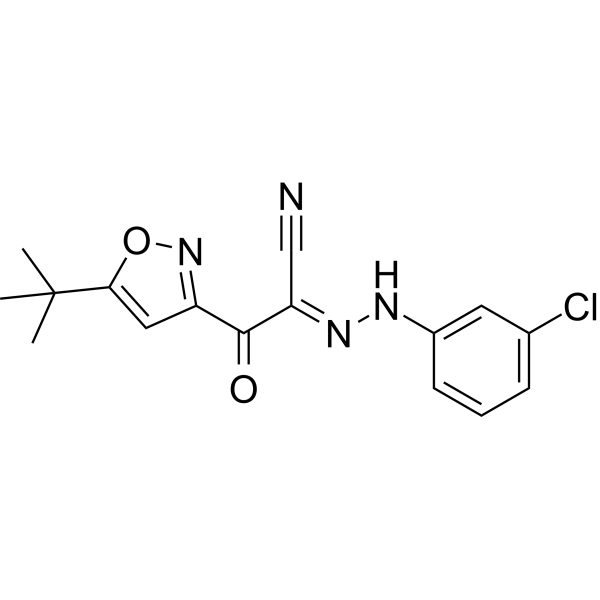
HY-16704
ESI-09 -
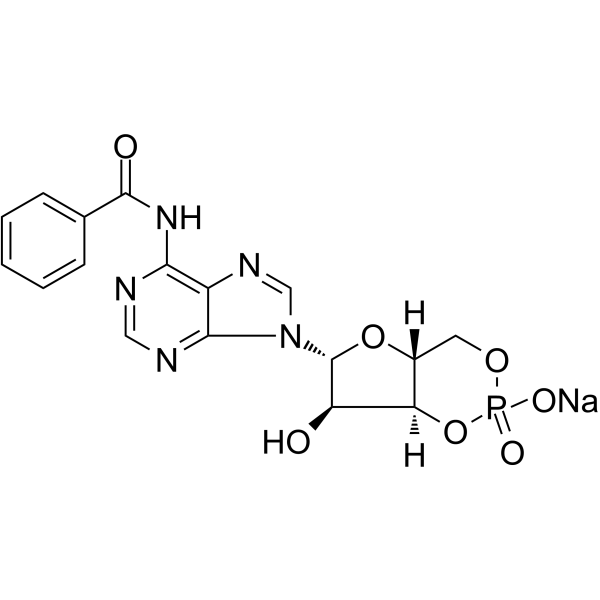
HY-103322
6-Bnz-cAMP sodium salt -
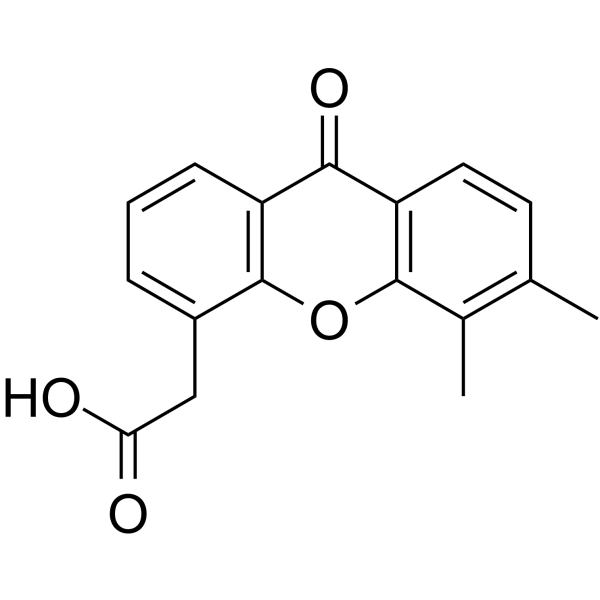
HY-10964
Vadimezan -
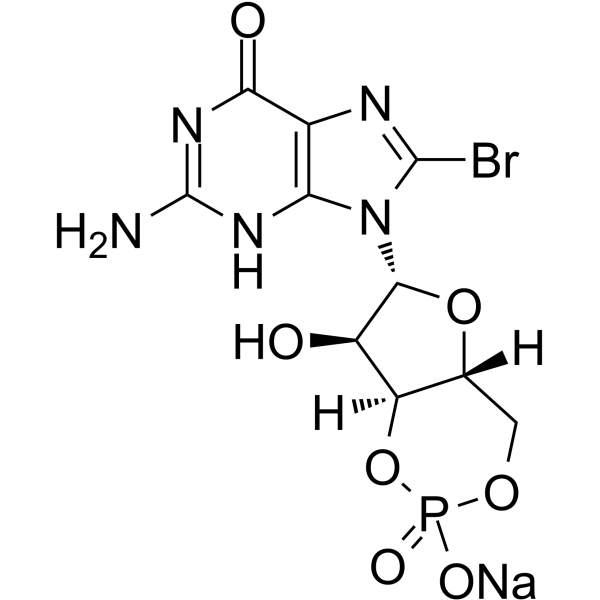
HY-101379A
8-Bromo-cGMP sodium -
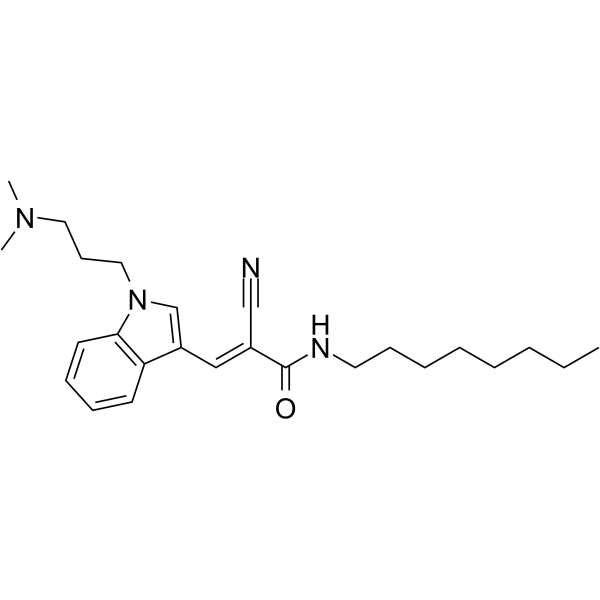
HY-107545
Dynole 34-2 -

HY-107543R
8-pCPT-2′-O-Me-cAMP sodium (Standard) -
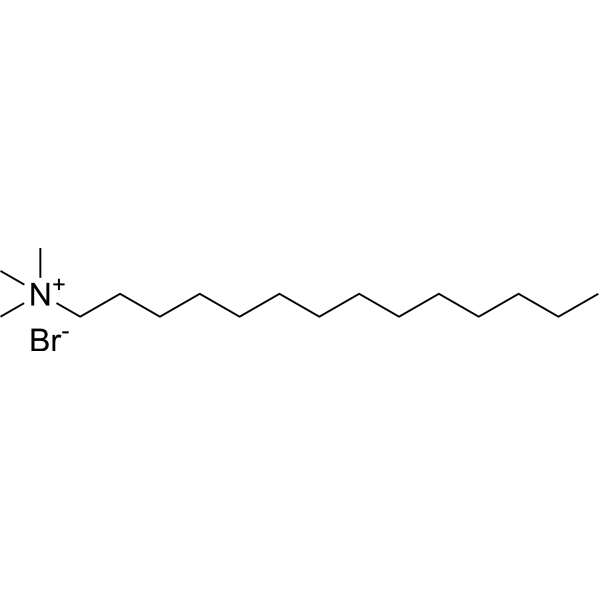
HY-D0839
Tetradecyltrimethylammonium bromide -
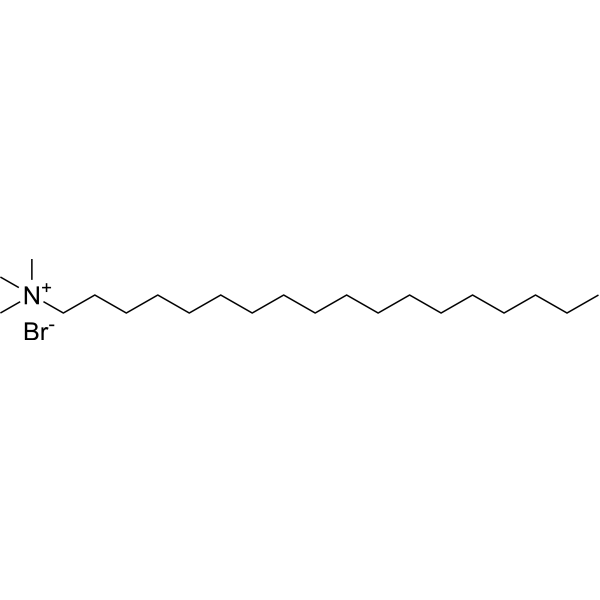
HY-W013158
Trimethyloctadecylammonium bromide -
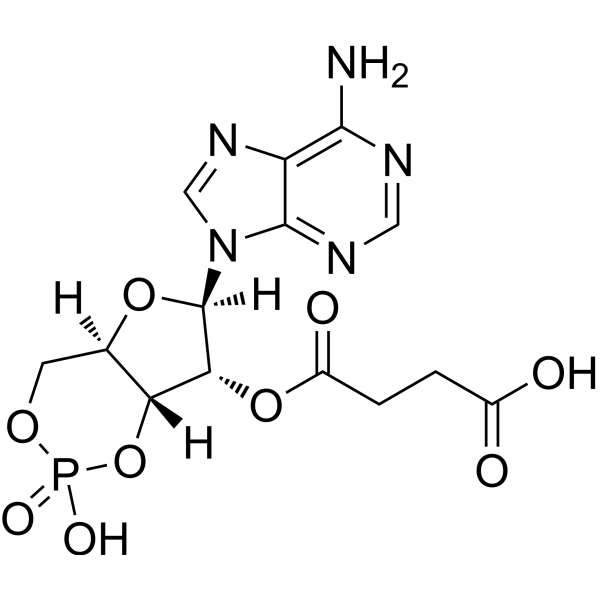
HY-131768
2'-O-Succinyl-cAMP
Publications Citing Use of MedChemExpress (MCE) 8-pCPT-2′-O-Me-cAMP sodium
More

Biological Activity
Description
In Vitro
8-CPT-2'-O-Me-cAMP (250 µM; 1 h) sodium induces Rap1 activation and enhances recruitment of junctional proteins and cortical F-actin in retinal pigment epithelium cells[1].
MedChemExpress (MCE) has not independently confirmed the accuracy of these methods. They are for reference only.
In Vivo
MedChemExpress (MCE) has not independently confirmed the accuracy of these methods. They are for reference only.
-
Animal Model:Wild type (WT) C57/Bl6 mice (choroidal neovascularization (CNV) model)[1].
-
Dosage:2.05 µM; 1 µL
-
Administration:Intravitreal injection
-
Result:Induced a slight increase in F-actin localization to the cell periphery, and reorganized cell junctions to a more linear shape, dose-dependent decreased in CNV volume, increased Rap1 activity in isolated RPE/choroids.


Chemical Information
-
CAS No. 634207-53-7
-
Appearance Solid
-
Molecular Weight 507.82
-
Formula C17H16ClN5NaO6PS
-
Color White to off-white
-
SMILES
NC1=C2C(N([C@H]3[C@@H]([C@@](O4)([H])[C@](COP4(O[Na])=O)([H])O3)OC)C(SC5=CC=C(Cl)C=C5)=N2)=NC=N1
-
Synonyms
8-CPT-2'-O-Me-cAMP sodium
-
Shipping
Room temperature in continental US; may vary elsewhere.
-
Storage
-20°C, sealed storage, away from moisture
* In solvent : -80°C, 6 months; -20°C, 1 month (sealed storage, away from moisture)


Publications (1)
-
Journal Impact Factor
-
Most Recent
-
Cell Signal
D-Ala2-GIP (1-30) promotes angiogenesis by facilitating endothelial cell migration via the Epac/Rap1/Cdc42 signaling pathway. [Abstract]2025 Mar:127:111615. PMID: 39855534


Solvent & Solubility
In Vitro:
DMSO : 125 mg/mL (246.15 mM; ultrasonic and warming and heat to 60°C; Hygroscopic DMSO has a significant impact on the solubility of product, please use newly opened DMSO)
Please refer to the solubility information to select the appropriate solvent. Once prepared, please aliquot and store the solution to prevent product inactivation from repeated freeze-thaw cycles.
Storage method and period of stock solution: -80°C, 6 months; -20°C, 1 month (sealed storage, away from moisture). When stored at -80°C, please use it within 6 months. When stored at -20°C, please use it within 1 month.
Please refer to the solubility information to select the appropriate solvent. Once prepared, please aliquot and store the solution to prevent product inactivation from repeated freeze-thaw cycles.
Storage method and period of stock solution: -80°C, 6 months; -20°C, 1 month (sealed storage, away from moisture). When stored at -80°C, please use it within 6 months. When stored at -20°C, please use it within 1 month.
Concentration (start) × Volume (start) = Concentration (final) × Volume (final)
In Vivo:
Select the appropriate dissolution method based on your experimental animal and administration route.
- For the following dissolution methods, please ensure to first prepare a clear stock solution using an In Vitro approach and then sequentially add co-solvents:
- To ensure reliable experimental results, the clarified stock solution can be appropriately stored based on storage conditions. As for the working solution for In Vivo experiments, it is recommended to prepare freshly and use it on the same day.
- The percentages shown for the solvents indicate their volumetric ratio in the final prepared solution. If precipitation or phase separation occurs during preparation, heat and/or sonication can be used to aid dissolution.
Add each solvent one by one: 10% DMSO 40% PEG300 5% Tween-80 45% Saline
Solubility: ≥ 2.08 mg/mL (4.10 mM); Clear solution
This protocol yields a clear solution of ≥ 2.08 mg/mL (saturation unknown).
Taking 1 mL working solution as an example, add 100 μL DMSO stock solution (20.8 mg/mL) to 400 μL PEG300, and mix evenly; then add 50 μL Tween-80 and mix evenly; then add 450 μL Saline to adjust the volume to 1 mL.
Preparation of Saline: Dissolve 0.9 g sodium chloride in ddH₂O and dilute to 100 mL to obtain a clear Saline solution.
Add each solvent one by one: 10% DMSO 90% (20% SBE-β-CD in Saline)
Solubility: ≥ 2.08 mg/mL (4.10 mM); Clear solution
This protocol yields a clear solution of ≥ 2.08 mg/mL (saturation unknown).
Taking 1 mL working solution as an example, add 100 μL DMSO stock solution (20.8 mg/mL) to 900 μL 20% SBE-β-CD in Saline, and mix evenly.
Preparation of 20% SBE-β-CD in Saline (4°C, storage for one week): 2 g SBE-β-CD powder is dissolved in 10 mL Saline, completely dissolve until clear.
In Vivo Dissolution Calculator
Please enter the basic information of animal experiments:
-
-
-
-
Recommended: Prepare an additional quantity of animals to account for potential losses during experiments.
Please enter your animal formula composition:
-
%DMSO +
Recommended: Keep the proportion of DMSO in working solution below 2% if your animal is weak.
-
%+
-
+%Tween-80 + +
-
%Saline +
The co-solvents required include: DMSO, . All of co-solvents are available by MedChemExpress (MCE). , Tween 80. All of co-solvents are available by MedChemExpress (MCE).
Working solution concentration: 0.22 mg/mL
Method for preparing stock solution: mg drug dissolved in μL DMSO. Stock solution concentration: mg/mL. * In solvent : -80°C, 6 months; -20°C, 1 month (sealed storage, away from moisture)
1. Take μL DMSO stock solution;
2. Add μL .
μL , mix evenly;
3. Then add μL Tween 80, mix evenly;
4. Then add μL
Please ensure that the stock solution in the first step is dissolved to a clear state, and add co-solvents in sequence. You can use ultrasonic heating (ultrasonic cleaner, recommended frequency 20-40 kHz), vortexing, etc. to assist dissolution.


Purity & Documentation
-
Data Sheet (280 KB)
-
SDS (252 KB)
- English - EN (252 KB)
- Français - FR (252 KB)
- Deutsch - DE (252 KB)
- Norwegian - NO (252 KB)
- Español - ES (252 KB)
- Swedish - SV (252 KB)
- Italian - IT (252 KB)
- Korean - KR (252 KB)
- Portuguese - PT (252 KB)
-
Handling Instructions (2659 KB)
References
[1]. Wittchen ES, et al. Rap1 GTPase activation and barrier enhancement in rpe inhibits choroidal neovascularization in vivo. PLoS One. 2013 Sep 10;8(9):e73070. [Content Brief]
[2]. Enserink JM, Christensen AE, de Rooij J, van Triest M, Schwede F, Genieser HG, Døskeland SO, Blank JL, Bos JL. A novel Epac-specific cAMP analogue demonstrates independent regulation of Rap1 and ERK. Nat Cell Biol. 2002 Nov;4(11):901-6. [Content Brief]
[3]. Kang G, Joseph JW, Chepurny OG, Monaco M, Wheeler MB, Bos JL, Schwede F, Genieser HG, Holz GG. Epac-selective cAMP analog 8-pCPT-2'-O-Me-cAMP as a stimulus for Ca2+-induced Ca2+ release and exocytosis in pancreatic beta-cells. J Biol Chem. 2003 Mar 7;278. [Content Brief]


Complete Stock Solution Preparation Table
Please refer to the solubility information to select the appropriate solvent. Once prepared, please aliquot and store the solution to prevent product inactivation from repeated freeze-thaw cycles.
Storage method and period of stock solution: -80°C, 6 months; -20°C, 1 month (sealed storage, away from moisture). When stored at -80°C, please use it within 6 months. When stored at -20°C, please use it within 1 month.
| Optional Solvent | Concentration Solvent Mass | 1 mg | 5 mg | 10 mg | 25 mg |
|---|---|---|---|---|---|
| DMSO | 1 mM | 1.9692 mL | 9.8460 mL | 19.6920 mL | 49.2300 mL |
| 5 mM | 0.3938 mL | 1.9692 mL | 3.9384 mL | 9.8460 mL | |
| 10 mM | 0.1969 mL | 0.9846 mL | 1.9692 mL | 4.9230 mL | |
| 15 mM | 0.1313 mL | 0.6564 mL | 1.3128 mL | 3.2820 mL | |
| 20 mM | 0.0985 mL | 0.4923 mL | 0.9846 mL | 2.4615 mL | |
| 25 mM | 0.0788 mL | 0.3938 mL | 0.7877 mL | 1.9692 mL | |
| 30 mM | 0.0656 mL | 0.3282 mL | 0.6564 mL | 1.6410 mL | |
| 40 mM | 0.0492 mL | 0.2462 mL | 0.4923 mL | 1.2308 mL | |
| 50 mM | 0.0394 mL | 0.1969 mL | 0.3938 mL | 0.9846 mL | |
| 60 mM | 0.0328 mL | 0.1641 mL | 0.3282 mL | 0.8205 mL | |
| 80 mM | 0.0246 mL | 0.1231 mL | 0.2462 mL | 0.6154 mL | |
| 100 mM | 0.0197 mL | 0.0985 mL | 0.1969 mL | 0.4923 mL |


8-pCPT-2′-O-Me-cAMP sodium Related Classifications
HY-107543 Related Classifications
 Powered by Bioz