
17 Results for "

skeletal myoblasts

" in MedChemExpress (MCE) Product Catalog:
Products (17)

17 Results for "skeletal myoblasts" in MCE Product Catalog:

1
1 Cited Publications
Cat. No.: HY-P99388
CAS No.: 1429201-24-0
Synonyms: REGN-1033; SAR391786

Target:  

TGF-beta/Smad

Research Areas:  

Inflammation/Immunology

Trevogrumab (REGN-1033) is a monoclonal antibody targeting GDF8 (growth differentiation factor 8, also known as myostatin). Trevogrumab is used in research on muscle wasting conditions, including disuse atrophy, chronic diseases, and changes in food and nutrient intake .
loading...
    loading...
1
1 Cited Publications
Cat. No.: HY-N2230
CAS No.: 36417-86-4
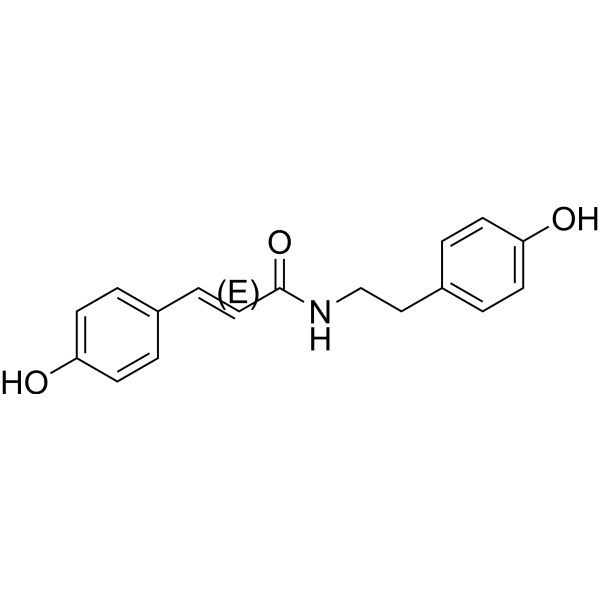
N-p-trans-Coumaroyltyramine is a natural phenolic amide compound and an inhibitor of AChE (IC50: 122 μM) and α-glucosidase (IC50: 2.7 μM). N-p-trans-Coumaroyltyramine also has anti-trypanosomal activity, with an IC50 of 13.3 µM against T. brucei rhodesiense. N-p-trans-Coumaroyltyramine can be used in the research of diseases such as Alzheimer's disease .
loading...
    loading...
Cat. No.: HY-P10646
CAS No.: 2896181-32-9
Target:  

Peptides

Research Areas:  

Others

Muscle homing peptide M12 is a muscle-homing peptide with high affinity for skeletal muscle and cardiac muscle. Muscle homing peptide M12 can mediate the targeted delivery of loaded drugs to skeletal muscle and cardiac muscle tissues .
loading...
    loading...
Cat. No.: HY-N1677
CAS No.: 530-55-2
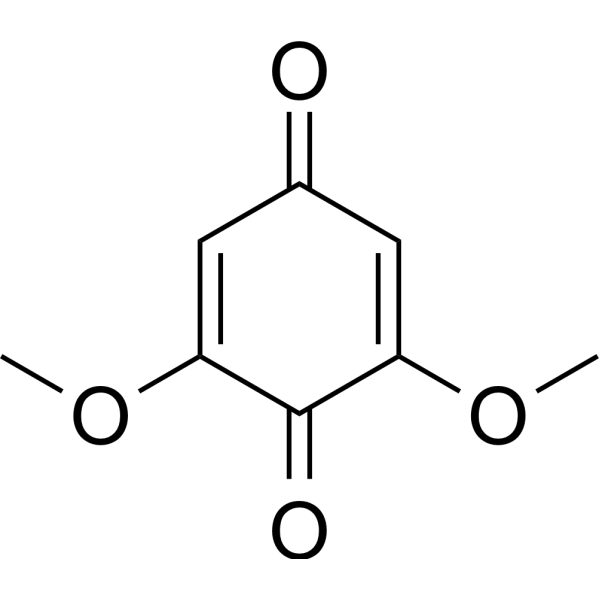
2,6-Dimethoxy-1,4-benzoquinone is a 1,4-benzoquinone derivative. 2,6-Dimethoxy-1,4-benzoquinone promotes phosphorylation of AKT, S6K, mTOR, 4E-BP1, and AMPK, and attenuates mTORC1 activity as part of the AKT/mTOR pathway. 2,6-Dimethoxy-1,4-benzoquinone stimulates myoblast differentiation, increases myotube size, elevates MHC protein expression, enhances mitochondrial biogenesis, respiration, and DNA content, and increases skeletal muscle weights, fiber size, grip strength, and treadmill performance. 2,6-Dimethoxy-1,4-benzoquinone exerts anti-cancer, anti-inflammatory, anti-adipogenic, antibacterial, and antimutagenic effects, inhibits adipogenic transcription factors, nitric oxide production, skin tumor development, Magnaporthe oryzae growth, spore germination, appressorium formation, and growth of select bacterial species, induces H2O2 generation and rice defense gene expression, and reduces rice blast lesion formation. 2,6-Dimethoxy-1,4-benzoquinone can be used for the research of obesity, skin tumorigenesis, rice blast disease, and food-borne illness .
loading...
    loading...
Cat. No.: HY-148009
CAS No.: 2260669-35-8
Synonyms: 16:0-18:1 Cardiolipin sodium
Research Areas:  

Others

Cardiolipin (16:0/18:1/16:0/18:1) (16:0-18:1 Cardiolipin) sodium is a di-saturated mitochondrial-specific anionic phospholipid sodium salt containing the long-chain fatty acid palmitic acid (HY-N0830) and the monounsaturated fatty acid oleic acid (HY-N1446). Cardiolipin (16:0/18:1/16:0/18:1) sodium undergoes in-source fragmentation via diglyceride (DG)-H2O fragment formation and (DG-H2O) fragment loss pathways. Cardiolipin (16:0/18:1/16:0/18:1) sodium can be used in the synthesis of lipid nanodiscs for application in in situ mass spectrometry .
loading...
    loading...
Cat. No.: HY-115767
CAS No.: 2442-61-7
Synonyms: 1,2-Dioleoyl-rac-glycerol
Target:  

PKC

Research Areas:  

Others

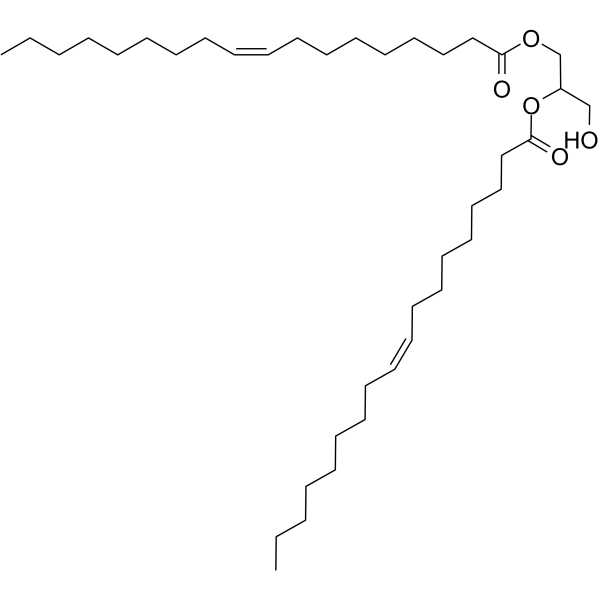
(±)-1,2-Diolein (1,2-Dioleoyl-rac-glycerol) is a PKC activator. (±)-1,2-Diolein increases myotubes Ca 2+ influx .
loading...
    loading...
Cat. No.: HY-Q40175
CAS No.: 438474-67-0
Target:  

Parasite

Research Areas:  

Infection

Antitrypanosomal agent 9 (compound 1) is a potent antitrypanosomal agent. Antitrypanosomal agent 9 shows inhibitory activity against T. b. brucei, with an IC50 of 1.15 μM. Antitrypanosomal agent 9 can be used for human African trypanosomiasis (HAT) research .
loading...
    loading...
Cat. No.: HY-122610
CAS No.: 1313491-22-3
Purity:  99.57%
VUT-MK142 is a cardiomyogenic small molecule. VUT-MK142 upregulates the expression of the myocardial marker ANF and other myocardial markers. VUT-MK142 promotes the development of cardiovascular progenitor cells into beating cardiomyocytes, and facilitates the differentiation of cardiac anterior mesoderm into cardiomyocytes. VUT-MK142 can be used in the research of heart failure .
loading...
    loading...
Cat. No.: HY-N7897
CAS No.: 183551-83-9
Myrrhone is a terpenoid compound with antiplasmodial effects .
loading...
    loading...
Cat. No.: HY-P10870
Research Areas:  

Cancer

Pep1-DNP conjugate 9 is a functionalized peptide which is composed of the DNP-Hapten and the FGFR1 binding peptide. Pep1-DNP conjugate 9 exhibits good affinity to FGFR1 with KD of 5.01 μM. Pep1-DNP conjugate 9 recruits anti-DNP antibodies to the surface of FGFR1-positive cells, inhibits the FGF2-induced proliferation in rat skeletal myoblast cells, and induces apoptosis. Pep1-DNP conjugate 9 exhibits antitumor efficacy in mouse models .
loading...
    loading...
Cat. No.: HY-N1677R
CAS No.: 530-55-2
2,6-Dimethoxy-1,4-benzoquinone (Standard) is the analytical standard of 2,6-Dimethoxy-1,4-benzoquinone (HY-N1677). This product is intended for research and analytical applications. 2,6-Dimethoxy-1,4-benzoquinone is a 1,4-benzoquinone derivative. 2,6-Dimethoxy-1,4-benzoquinone promotes phosphorylation of AKT, S6K, mTOR, 4E-BP1, and AMPK, and attenuates mTORC1 activity as part of the AKT/mTOR pathway. 2,6-Dimethoxy-1,4-benzoquinone stimulates myoblast differentiation, increases myotube size, elevates MHC protein expression, enhances mitochondrial biogenesis, respiration, and DNA content, and increases skeletal muscle weights, fiber size, grip strength, and treadmill performance. 2,6-Dimethoxy-1,4-benzoquinone exerts anti-cancer, anti-inflammatory, anti-adipogenic, antibacterial, and antimutagenic effects, inhibits adipogenic transcription factors, nitric oxide production, skin tumor development, Magnaporthe oryzae growth, spore germination, appressorium formation, and growth of select bacterial species, induces H2O2 generation and rice defense gene expression, and reduces rice blast lesion formation. 2,6-Dimethoxy-1,4-benzoquinone can be used for the research of obesity, skin tumorigenesis, rice blast disease, and food-borne illness.
loading...
    loading...
Cat. No.: HY-N20724
CAS No.: 93124-90-4
Ageconyflavone C is a natural pentamethoxyflavonoid found in the aerial parts of Ageratum conyzoides L. Ageconyflavone C inhibits Trypanosoma brucei rhodesiense, Leishmania donovani, and Chloroquine (HY-17589A)- and Pyrimethamine (HY-18062)-resistant Plasmodium falciparum K1, with IC50 values of 7.8, 9.2, and 9.25 μM, respectively. Ageconyflavone C can be used in studies related to anti-protozoal and parasitic infection research .
loading...
    loading...
Cat. No.: HY-N17326
CAS No.: 242794-72-5
Ilekudinol B is an inhibitor of ACAT and PTP1B, with an IC50 of 5.3 μM and a Ki of 11.6 μM against human PTP1B. Ilekudinol B inhibits the classical pathway of the complement system, with an IC50 of 51 μM. Ilekudinol B inhibits TNF-α-induced cellular IL-8 secretion, promotes glucose uptake in skeletal muscle myotubes, and acts as an insulin mimetic and insulin sensitizer. Ilekudinol B can be used in research related to type 2 diabetes, obesity, and inflammatory diseases .
loading...
    loading...
Cat. No.: HY-P11741
Research Areas:  

Neurological Disease

BV2 is a delivery peptide that binds to BVES, with a Ka of 2.03 μM for the BVES target. BV2 specifically binds to the extracellular domain of BVES, achieving muscle homing and cellular internalization via caveolae-mediated endocytosis. When BV2 is modified on the surface of exosomes by PMO, it enhances dystrophin restoration in the peripheral muscles and myocardium of dystrophin-deficient mice. BV2 is applicable to research related to Duchenne muscular dystrophy and muscle atrophy .
loading...
    loading...
Cat. No.: HY-W054427
CAS No.: 70842-04-5
Target:  

Parasite

Research Areas:  

Infection Metabolic Disease

Ro 13-3978 is an orally active antischistosomal agent. Ro 13-3978 exhibits excellent in vivo antischistosomal activity against juvenile and adult Schistosoma mansoni infections. Ro 13-3978 shows no in vivo activity against E. caproni and F. hepatica. Ro 13-3978 blocks dihydrotestosterone-induced proliferation of androgen-dependent cells. Ro 13-3978 can be used in research related to schistosomiasis .
loading...
    loading...
Cat. No.: HY-N21521
CAS No.: 24696-05-7
Dihydromelilotoside is an insecticide present in the stems of Dendrobium aurantiacum var. denneanum, sugarcane juice, and the aerial parts of Ajuga lupulina. Dihydromelilotoside can be used in studies related to Chagas disease (American trypanosomiasis) .
loading...
    loading...
Cat. No.: HY-185724
Target:  

PROTACs G-quadruplex

Research Areas:  

Others

rG4 mut_AHPC_PEG2 is a structure-disruptive negative control PROTAC. rG4 mut_AHPC_PEG2 demonstrates that the RNA G-quadruplex conformation is an absolute prerequisite for the recruitment and degradation of DHX36 by retaining the E3-recruiting moiety (AHPC-PEG2) while disrupting the secondary structure of the nucleic acid moiety (mutated RNA G-quadruplex), .
loading...
    loading...
  • 1

