29 Results for "

skin conditions

" in MedChemExpress (MCE) Product Catalog:
Products (29)

29 Results for "skin conditions" in MCE Product Catalog:

6
6 Cited Publications
Cat. No.: HY-B1360
CAS No.: 72-80-0
Synonyms: Chloquinan
Research Areas:  

Infection Cancer

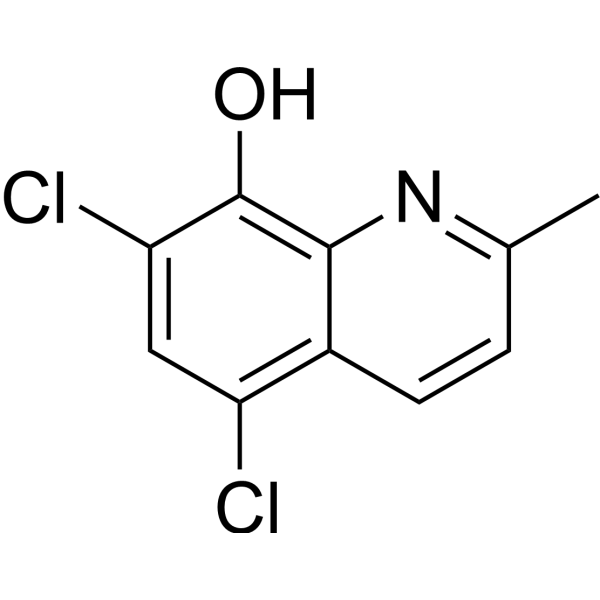
Chlorquinaldol (Chloquinan) is an antibacterial agent with the potential use in topical skin conditions and vaginal infections. Chlorquinaldol is a β-catenin/TCF4 inhibitor, showing anti-proliferation, anti-migration, and apoptosis-inducing activity in cancer cells .
loading...
    loading...
1
1 Cited Publications
Cat. No.: HY-B0935S1
CAS No.: 352431-26-6
Synonyms: Benzoic acid benzyl ester-d12
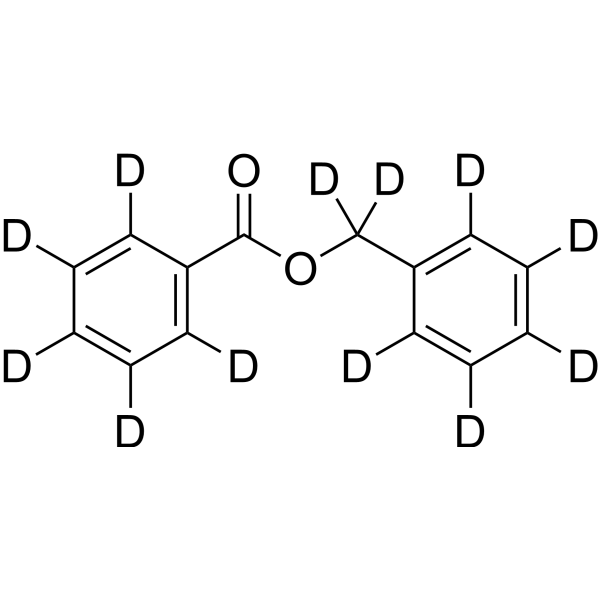
Benzyl benzoate-d12 is the deuterium labeled Benzyl benzoate . Benzyl benzoate (Benzoic acid benzyl ester) is a fragrance ingredient in cosmetic products. Benzyl benzoate can be used for the research of Scabies and Demodex-associated inflammatory skin conditions .
loading...
    loading...
Cat. No.: HY-107784
CAS No.: 96702-03-3
Purity:  99.34%
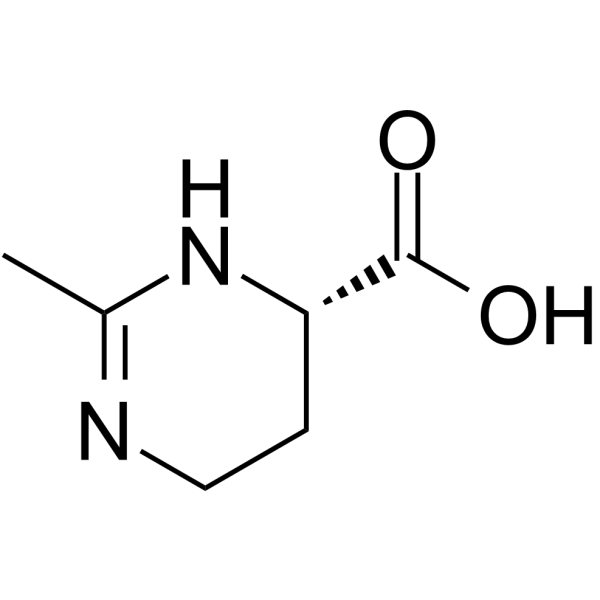
Ectoine is a natural cell protectant, an amino acid derivate produced by bacteria living under extremely harsh environmental conditions. Ectoine serves as an osmoregulatory compatible solute, increasing the hydration of the skin surface and stabilizing lipid layers, which is useful in skincare. Ectoine demonstrates a good safety profile for the treatment of allergic rhinitis .
loading...
    loading...
Cat. No.: HY-111355B
CAS No.: 2864-50-8
Purity:  98.22%
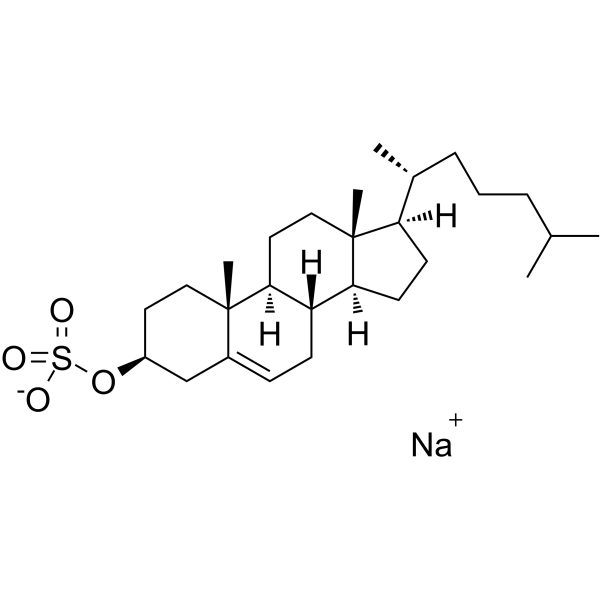
Cholesterol sulfate sodium is a naturally occurring, orally active cholesterol derivative that is widely distributed in various tissues and body fluids. Cholesterol sulfate sodium acts as a DOCK2 inhibitor, with IC50 values of 2 μM and 2.9 μM against mouse and human targets, respectively. Cholesterol sulfate sodium restricts excessive neutrophil infiltration and alleviates intestinal inflammation and damage. Cholesterol sulfate sodium serves as an activator of protein kinase C (PKC), which promotes squamous cell differentiation and inhibits skin carcinogenesis. Cholesterol sulfate sodium regulates cholesterol homeostasis and cellular metabolism by activating the AMPK-Sirt1 pathway. Cholesterol sulfate sodium can be used in research related to actinic keratitis, ulcerative colitis, skin cancer, and other conditions .
loading...
    loading...
Cat. No.: HY-N6821
CAS No.: 129499-78-1
Target:  

Drug Derivative

Research Areas:  

Inflammation/Immunology Cancer

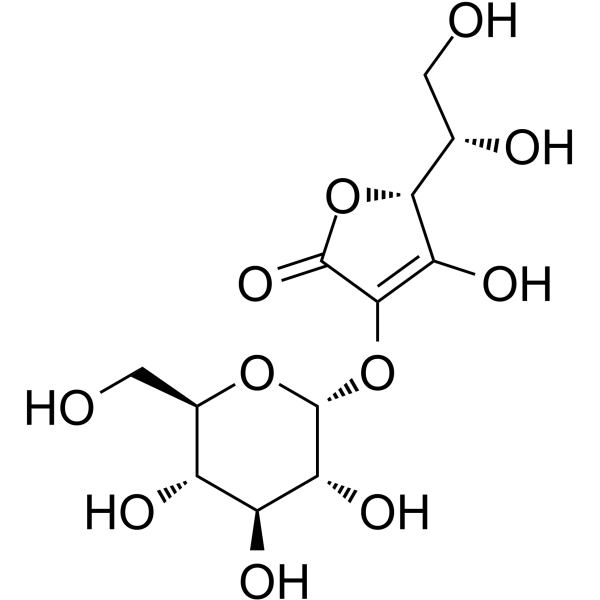
2-O-α-D-Glucopyranosyl-L-ascorbic Acid is an orally active glucoside derivative of ascorbic acid. 2-O-α-D-Glucopyranosyl-L-ascorbic Acid can be hydrolyzed by α-glucosidase to release ascorbic acid. 2-O-α-D-Glucopyranosyl-L-ascorbic Acid inhibits melanin synthesis, prevents UV-induced cell damage, and promotes collagen synthesis in skin fibroblasts. 2-O-α-D-Glucopyranosyl-L-ascorbic Acid also induces oxidative stress to inhibit tumor growth. 2-O-α-D-Glucopyranosyl-L-ascorbic Acid can be used in research related to tumors, inflammation, and other conditions .
loading...
    loading...
Cat. No.: HY-156619
CAS No.: 1426449-01-5
Purity:  99.32%
Synonyms: EVT-8565072; THB335
Target:  

c-Kit PDGFR

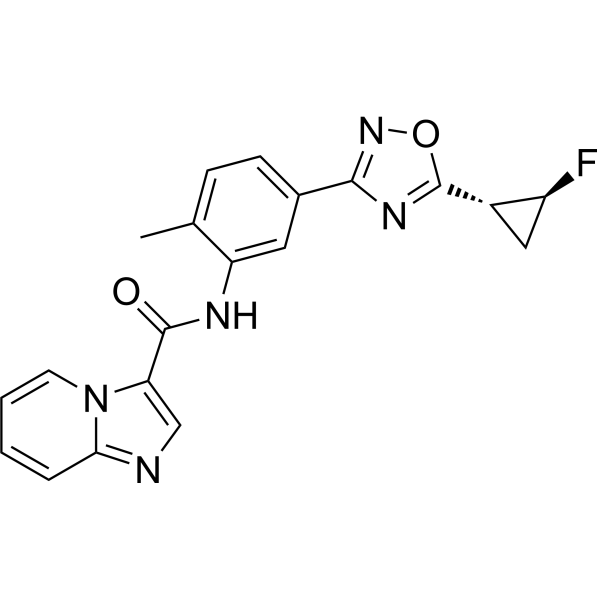
Labuxtinib (EVT-8565072; THB335) is a potent dual inhibitor of c-Kit and PDGFR. Labuxtinib exhibits potent inhibitory activity against wild-type c-Kit (IC50 = 0.005 μM). Labuxtinib inhibits SCF-dependent and PDGF-dependent cell proliferation, and blocks the proliferation of cells dependent on c-Kit or PDGFR signaling pathways. In animal models of skin allergy, Labuxtinib depletes skin mast cells and significantly alleviates anaphylactic shock responses. Labuxtinib can be used in research on mast cell-related diseases, respiratory diseases, inflammatory diseases, fibrotic diseases, metabolic diseases, and other related conditions .
loading...
    loading...
Cat. No.: HY-111355
CAS No.: 1256-86-6
Cholesterol sulfate is a naturally occurring, orally active cholesterol derivative that is widely distributed in various tissues and body fluids. Cholesterol sulfate acts as a DOCK2 inhibitor, with IC50 values of 2 μM and 2.9 μM against mouse and human targets, respectively. Cholesterol sulfate restricts excessive neutrophil infiltration and alleviates intestinal inflammation and damage. Cholesterol sulfate serves as an activator of protein kinase C (PKC), which promotes squamous cell differentiation and inhibits skin carcinogenesis. Cholesterol sulfate regulates cholesterol homeostasis and cellular metabolism by activating the AMPK-Sirt1 pathway. Cholesterol sulfate can be used in research related to actinic keratitis, ulcerative colitis, skin cancer, and other conditions .
loading...
    loading...
Cat. No.: HY-B0970
CAS No.: 132-18-3
Synonyms: 4-Diphenylmethoxy-1-methylpiperidine hydrochloride
Target:  

Histamine Receptor

Research Areas:  

Neurological Disease Endocrinology

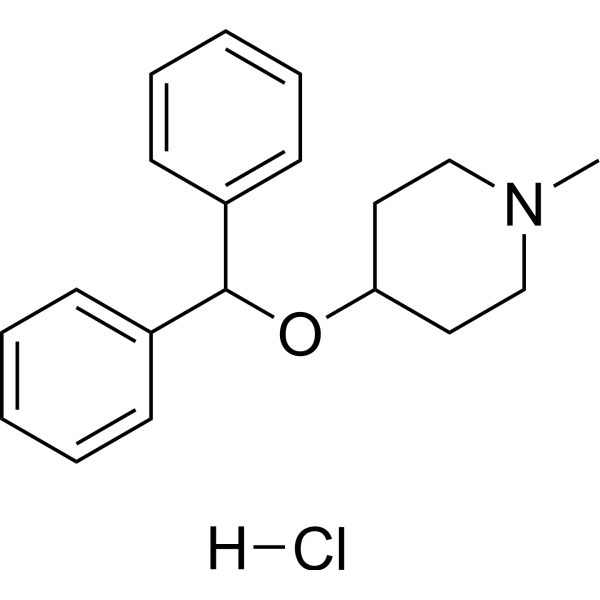
Diphenylpyraline hydrochloride is a potent histamine H1?receptor antagonist. Diphenylpyraline hydrochloride acts as an orally active antihistamine agent?with antimuscarinic and antiallergic effects. Diphenylpyraline hydrochloride can be used for the relief of allergic conditions including rhinitis and hay fever, and in pruritic skin disorders in vivo.
loading...
    loading...
Cat. No.: HY-Y0286
CAS No.: 506-87-6
Synonyms: Hartshorn salt, 99%
Ammonium carbonate (Ammonium carbonate), 99% is a solid amino compound that functions as a buffer, pH regulator, pore-forming agent, and electrocatalytic oxidation substrate. Ammonium carbonate, 99% is a GRAS-grade direct food additive with no restricted daily intake specified by FAO/WHO, and it shows no acute skin toxicity, clinical signs of toxicity, or effects on body weight in rats. Ammonium carbonate, 99% undergoes electrocatalytic oxidation in alkaline solutions with a Pt/C catalyst (carbonate adsorption interferes with activity). Ammonium carbonate, 99% can serve as a fuel for low-temperature polymer fuel cells and anion exchange membrane fuel cells (with performance superior to pure ammonia), and can also form pores in the carrier-free Pt cathode catalyst layer after low-temperature decomposition, thereby enhancing catalyst activity under low-humidity conditions and the performance of proton exchange membrane fuel cells .
loading...
    loading...
Cat. No.: HY-B0935S
CAS No.: 347840-01-1
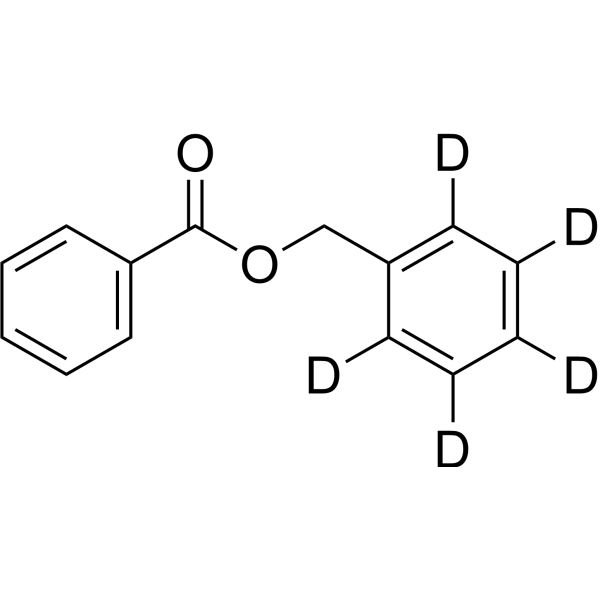
Benzyl benzoate-d5 is the deuterium labeled Benzyl benzoate . Benzyl benzoate (Benzoic acid benzyl ester) is a fragrance ingredient in cosmetic products. Benzyl benzoate can be used for the research of Scabies and Demodex-associated inflammatory skin conditions .
loading...
    loading...
Cat. No.: HY-P990150

Target:  

Interleukin Related

Research Areas:  

Inflammation/Immunology

Anti-Mouse TSLP Antibody (28F12) is an anti-mouse TSLP IgG2a monoclonal antibody. Anti-Mouse TSLP Antibody (28F12) weakens skin inflammation and allergic reactions by reducing Treg cells and lymph node cells. Anti-Mouse TSLP Antibody (28F12) can be used for research on allergic conditions .
loading...
    loading...
Cat. No.: HY-107784R
CAS No.: 96702-03-3
Ectoine (Standard) is the analytical standard of Ectoine. This product is intended for research and analytical applications. Ectoine is a natural cell protectant, an amino acid derivate produced by bacteria living under extremely harsh environmental conditions. Ectoine serves as an osmoregulatory compatible solute, increasing the hydration of the skin surface and stabilizing lipid layers, which is useful in skincare. Ectoine demonstrates a good safety profile for the treatment of allergic rhinitis .
loading...
    loading...
Cat. No.: HY-111355S
CAS No.: 2687961-01-7
Purity:  ≥98.0%
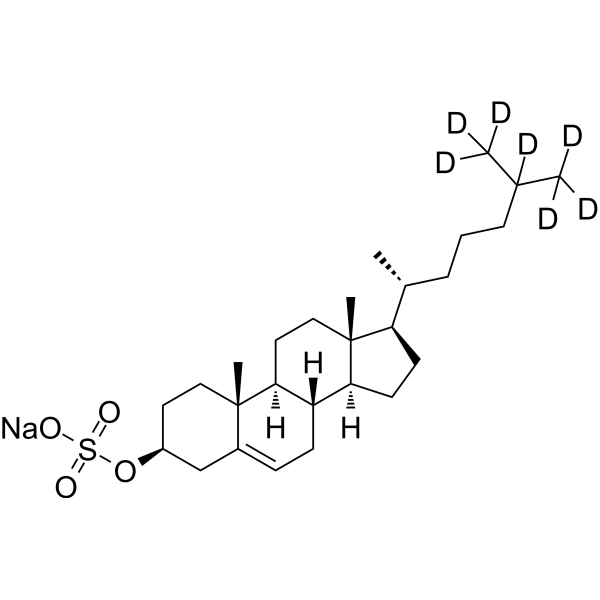
Cholesterol sulfate sodium-d7 is the deuterium labeled Cholesterol sulfate sodium. Cholesterol sulfate sodium is a naturally occurring, orally active cholesterol derivative that is widely distributed in various tissues and body fluids. Cholesterol sulfate sodium acts as a DOCK2 inhibitor, with IC50 values of 2 μM and 2.9 μM against mouse and human targets, respectively. Cholesterol sulfate sodium restricts excessive neutrophil infiltration and alleviates intestinal inflammation and damage. Cholesterol sulfate sodium serves as an activator of protein kinase C (PKC), which promotes squamous cell differentiation and inhibits skin carcinogenesis. Cholesterol sulfate sodium regulates cholesterol homeostasis and cellular metabolism by activating the AMPK-Sirt1 pathway. Cholesterol sulfate sodium can be used in research related to actinic keratitis, ulcerative colitis, skin cancer, and other conditions.
loading...
    loading...
Cat. No.: HY-P990250

Target:  

Wnt

Research Areas:  

Inflammation/Immunology

Anti-Mouse DKK3 Antibody (DKK3-4.22) is an anti-mouse DKK3 IgG1 monoclonal antibody. Anti-Mouse DKK3 Antibody (DKK3-4.22) can improve kidney function and increases T cell infiltration. Anti-Mouse DKK3 Antibody (DKK3-4.22) can reduce skin inflammation by blocking the immunosuppressive function of DKK3. Anti-Mouse DKK3 Antibody (DKK3-4.22) can be used for researches on inflammation conditions such as unilateral ureteral obstruction (UUO) and experimental autoimmune encephalomyelitis (EAE) .
loading...
    loading...
Cat. No.: HY-19443
CAS No.: 299460-62-1
Research Areas:  

Inflammation/Immunology

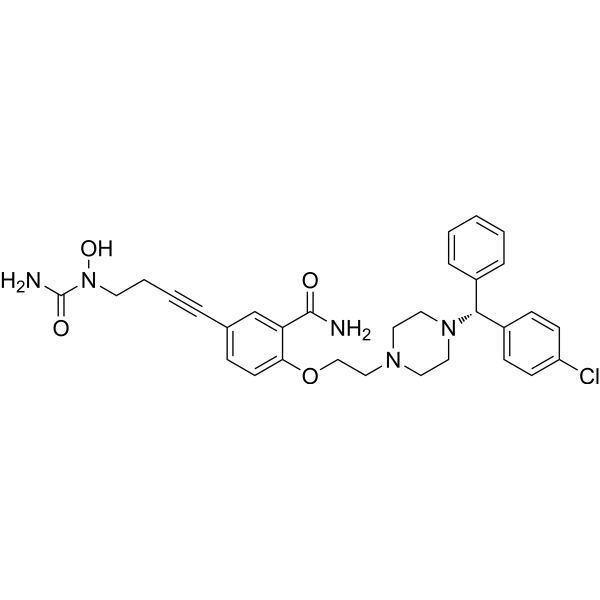
UCB-35440 is an orally active histamine H1 receptor antagonist and 5-lipoxygenase inhibitor. UCB-35440 can be used for the research of dermatologic inflammatory conditions .
loading...
    loading...
Cat. No.: HY-B0877R
CAS No.: 3093-35-4
Synonyms: SQ-18566 (Standard)
Target:  

Reference Standards Smo

Research Areas:  

Others

Halcinonide (Standard) is the analytical standard of Halcinonide. This product is intended for research and analytical applications. Halcinonide (SQ-18566) is a high potency corticosteroid used topically in the treatment of certain skin conditions.
loading...
    loading...
Cat. No.: HY-B1360R
CAS No.: 72-80-0
Synonyms: Chloquinan (Standard)
Chlorquinaldol (Standard) is the analytical standard of Chlorquinaldol. This product is intended for research and analytical applications. Chlorquinaldol (Chloquinan) is an antibacterial agent with the potential use in topical skin conditions and vaginal infections. Chlorquinaldol is a β-catenin/TCF4 inhibitor, showing anti-proliferation, anti-migration, and apoptosis-inducing activity in cancer cells .
loading...
    loading...
Cat. No.: HY-W267446
CAS No.: 6295-35-8
6-Methoxy-4-methylcoumarin is a 4-methylcoumarin derivative with an antitumor activity. 6-Methoxy-4-methylcoumarin activates melanin synthesis in B16F10 melanoma cells. 6-Methoxy-4-methylcoumarin is a pigmentation stimulator, and can be used for the study of skin conditions such as vitiligo .
loading...
    loading...
Cat. No.: HY-120714
CAS No.: 13993-65-2
Synonyms: 16091 RP
Target:  

Drug Derivative

Research Areas:  

Inflammation/Immunology

Metiazinic acid (16091 RP) is an orally active and brain-penetrant phenothiazine derivative and a non-steroidal anti-inflammatory drug (NSAID). Metiazinic acid can be used for the research of inflammatory conditions .
loading...
    loading...
Cat. No.: HY-181430
CAS No.: 798546-78-8
Target:  

TGF-beta/Smad

PXS 25 is a cation-independent mannose 6-phosphate receptor (CI-M6PR) inhibitor that inhibits CI-M6PR-mediated activation of latent TGF-β1. PXS 25 inhibits conversion of high glucose-induced latent TGF-β1 to active TGF-β1 in proximal tubule cells under normoxic conditions. PXS 25 suppresses high glucose-induced fibronectin, collagen IV production, and phosphorylated Smad 2 in proximal tubule cells under normoxic conditions. PXS 25 has antifibrotic properties in skin fibroblasts. PXS 25 can be used for the research of diabetic nephropathy .
loading...
    loading...

