
1. Search Result
Search Result
Results for "

somatostatin release

" in MedChemExpress (MCE) Product Catalog:

22

Inhibitors & Agonists

18

Peptides

Cat. No. Product Name Target Research Areas Chemical Structure
  • HY-P0084

    SRIF-14; somatostatin-14

    Endogenous Metabolite Cardiovascular Disease Neurological Disease
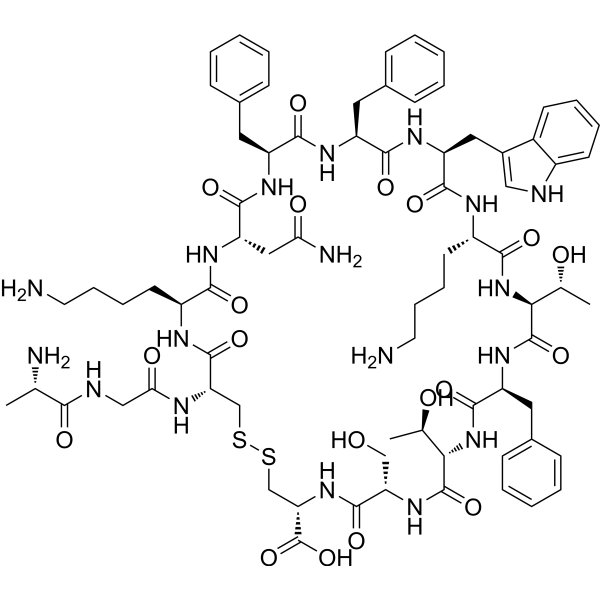
    Cyclic somatostatin (SRIF-14) is a growth hormone-release inhibiting factor used in the research of severe, acute hemorrhages of gastroduodenal ulcers. Cyclic somatostatin is a neuropeptide co-stored with acetylcholine in the cardiac parasympathetic innervation, exerts influences directly on contraction of ventricular cardiomyocytes. Cyclic somatostatin inhibits the contractile response of isoprenaline with an IC50 value of 13 nM. Cyclic somatostatin can be used for the research of cardiovascular disease .
    Cyclic somatostatin
  • HY-P1782

    Amylin Receptor Metabolic Disease
    Calcitonin (8-32), salmon is a highly selective Amylin receptor antagonist. Calcitonin (8-32), salmon reverses the Amylin-mediated inhibition of glucose-induced insulin release, but has no effect on either glucagon release or somatostatin release. Calcitonin (8-32), salmon can be used for studies related to β-cell amylin .
    Calcitonin (8-32), salmon
  • HY-P3579

    GIP (1-42), porcine

    Insulin Receptor Metabolic Disease
    Gastric Inhibitory Peptide (GIP (1-42)), porcine is a porcine glucose-dependent insulinotropic polypeptide and inhibitor of pentagastrin-stimulated gastric acid secretion. Gastric Inhibitory Peptide, porcine stimulates endogenous somatostatin release. Gastric Inhibitory Peptide, porcine acts in a dose- and time-dependent manner in conscious, chronic gastric fistula-equipped rats .
    Gastric Inhibitory Peptide, porcine
  • HY-W008024

    Amino Acid Derivatives Others
    Fmoc-Dab(Boc)-OH is an amino acid derivative with an Fmoc protecting group that can be used to synthesize somatostatin analogs that inhibit neointima formation induced by balloon injury in rats without altering growth hormone release. Fmoc-Dab(Boc)-OH can be used for the synthesis of peptides .
    Fmoc-Dab(Boc)-OH
  • HY-P0039

    Bombesin Receptor Cancer
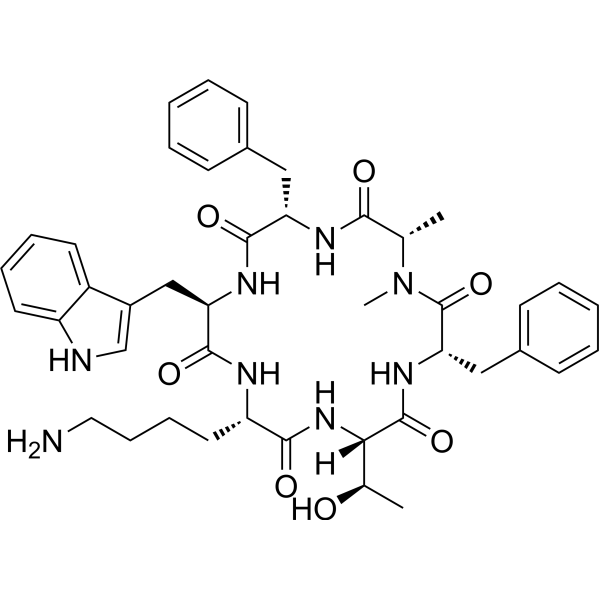
    BIM-26226 is a selective gastrin-releasing peptide receptor (GRPR) (IC50 = 6 nM) and bombesin receptor (BN receptor) antagonist. BIM-26226 antagonizes BN- or GRP-stimulated amylase release with IC50 values of 0.3 nM and 0.2 nM, respectively. BIM-26226 is specific for the GRP-preferring BN receptor subtype with no interference with GRP receptor system. BIM-26226 can induce the synthesis of somatostatin receptor but has no significant effect on tumor growth .
    BIM-26226
  • HY-P3019

    CRFR Cardiovascular Disease Neurological Disease Endocrinology
    Urocortin III (human) is a corticotropin-releasing factor (CRF)-related peptide. Urocortin III (human) preferentially binds and activates CRF-R2 and has a discrete central nervous system and peripheral distribution. Urocortin III (human) potently binds to type 2 CRF receptors, specifically mCRF (Ki = 13.5 nM) and rCRF (Ki = 21.7 nM), while demonstrating negligible affinity for hCRF1 (Ki >100 nM). Urocortin III (human) mediates somatostatin-dependent negative feedback control of Insulin (human) (HY-P0035) secretion [1][2].
    Urocortin III (human)
  • HY-133025

    Somatostatin Receptor Neurological Disease
    FK962 is an enhancer of somatostatin release, exerts cognitive-enhancing actions. Anti-dementia properties .
    FK962
  • HY-137273

    Somatostatin Receptor MMP Inflammation/Immunology
    Sucrose octasulfate sodium, a derivative of sulfated oligosaccharides, is a matrix metalloproteinase (MMP) inhibitor. Sucrose octasulfate sodium stimulates the release of somatostatin-like immunoreactivity (SLI) from the stomach by acting directly on D cells in the gastric mucosa. Sucrose octasulfate sodium exerts its ulcer-healing effect by releasing endogenous gastric somatostatin. Sucrose octasulfate sodium can be used as a pharmaceutical excipient and significantly improves wound closure in diabetic foot ulcers caused by nerve ischemia and venous leg ulcers. Sucrose octasulfate sodium can be used in the study of chronic wound healing .
    Sucrose octasulfate sodium
  • HY-103277A
    BIM 23042 TFA
    1 Publications Verification

    Bombesin Receptor Neurological Disease Metabolic Disease
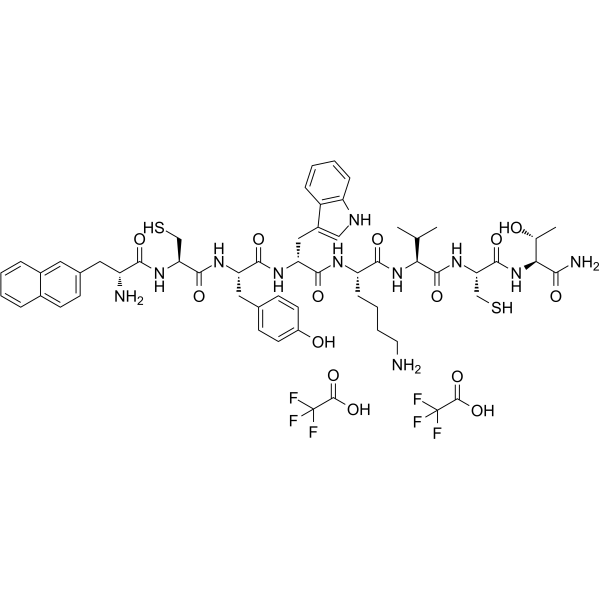
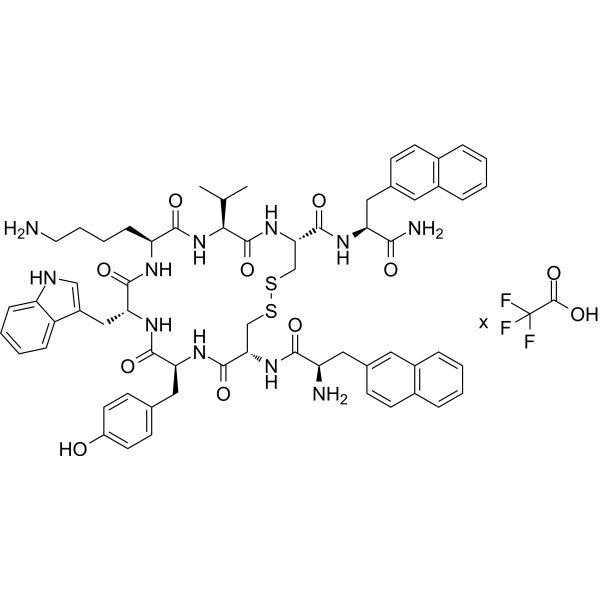
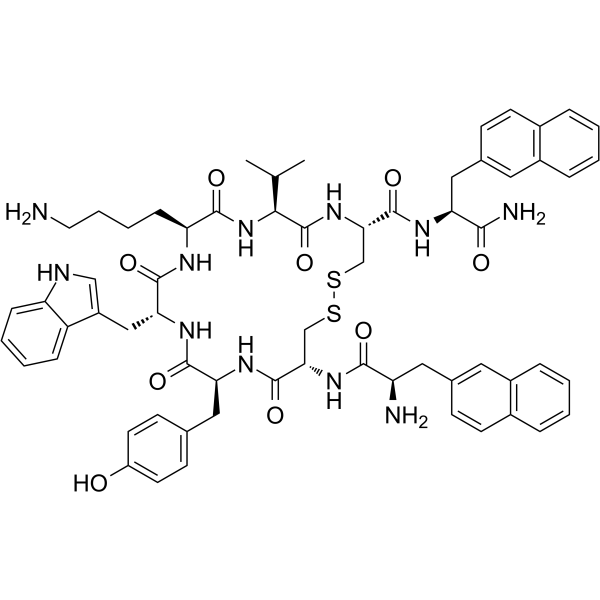
    BIM 23042 TFA, a certain somatostatin (SS) octapeptide analogue, is a selective neuropeptide neuromedin B receptor (NMB-R, BB1) antagonist. BIM 23042 has 100-fold lower affinity for gastrin-releasing peptide (GRP) receptor (BB2). BIM 23042 inhibits Neuromedin?B?(HY-P0241), ICI 216140 and DPDM-bombesin ethylamide-induced Ca 2+ release .
    BIM 23042 TFA
  • HY-103277

    Bombesin Receptor Neurological Disease Metabolic Disease
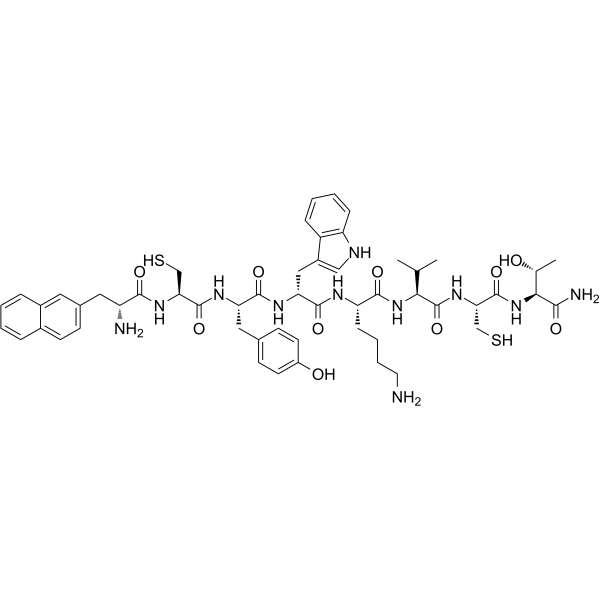
    BIM 23042, a certain somatostatin (SS) octapeptide analogue, is a selective neuropeptide neuromedin B receptor (NMB-R, BB1) antagonist. BIM 23042 has 100-fold lower affinity for gastrin-releasing peptide (GRP) receptor (BB2). BIM 23042 inhibits Neuromedin?B?(HY-P0241), ICI 216140 and DPDM-bombesin ethylamide-induced Ca 2+ release .
    BIM 23042
  • HY-P3019A

    CRFR Cardiovascular Disease Neurological Disease Metabolic Disease
    Urocortin III (human) TFA is a corticotropin-releasing factor (CRF)-related peptide. Urocortin III (human) TFA preferentially binds and activates CRF-R2 and has a discrete central nervous system and peripheral distribution. Urocortin III (human) TFA potently binds to type 2 CRF receptors, specifically mCRF (Ki = 13.5 nM) and rCRF (Ki = 21.7 nM), while demonstrating negligible affinity for hCRF1 (Ki >100 nM). Urocortin III (human) TFA mediates somatostatin-dependent negative feedback control of Insulin (human) (HY-P0035) secretion .
    Urocortin III (human) TFA
  • HY-P3899A

    Somatostatin Receptor Metabolic Disease
    [Nle8] Somatostatin (1-28) TFA is a derivative of somatosttin (1-28) with norleucine replacing methionine in position 8. [Nle8] Somatostatin (1-28) TFA increases the amylase release.[Nle8] Somatostatin (1-28) TFA increases the cyclic AMP in pancreatic acini .
    [Nle8] Somatostatin (1-28) TFA
  • HY-P2090A

    Somatostatin Receptor Adenylate Cyclase Cardiovascular Disease
    Angiopeptin TFA, a cyclic octapeptide analogue of somatostatin, is a weak sst2/sst5 receptor partial agonist with IC50 values of 0.26 nM and 6.92 nM, respectively. Angiopeptin TFA is a potent inhibitor of growth hormone release and insulin-like growth factor-1 (IGF-1) production. Angiopeptin TFA inhibits adenylate cyclase or stimulates extracellular acidification. Angiopeptin TFA has the potential for coronary atherosclerosis research .
    Angiopeptin TFA
  • HY-P0084A

    SRIF-14 acetate; somatostatin-14 acetate

    Endogenous Metabolite Cardiovascular Disease Metabolic Disease
    Cyclic somatostatin (SRIF-14) acetate is a growth hormone-release inhibiting factor used in the research of severe, acute hemorrhages of gastroduodenal ulcers. Cyclic somatostatin acetate is a neuropeptide co-stored with acetylcholine in the cardiac parasympathetic innervation, exerts influences directly on contraction of ventricular cardiomyocytes. Cyclic somatostatin acetate inhibits the contractile response of isoprenaline with an IC50 value of 13 nM. Cyclic somatostatin acetate can be used for the research of cardiovascular disease .
    Cyclic somatostatin acetate
  • HY-120287

    Somatostatin Receptor Endocrinology
    L-054522 is an agonist for somatostatin receptor subtype 2 with Kd of 0.01 nM. L-054522 inhibits growth hormone release from rat primary pituitary cell (IC50=0.05 nM) and glucagon and insulin release from isolated mouse pancreatic islet cell (IC50=0.05 nM and 12 nM) .
    L-054522
  • HY-P3958

    Somatostatin Receptor Dopamine Receptor Neurological Disease
    BIM-23027 is a selective agonist of sst2 receptor (EC50=0.32 nM), with similar effect to somatostatin (SRIF), a cyclic tetradecapeptide. BIM-23027 stimulates dopamine release, which is mediated by a Glu-dependent mechanism .
    BIM-23027
  • HY-P2229

    SDZ CO 611

    Somatostatin Receptor Cancer
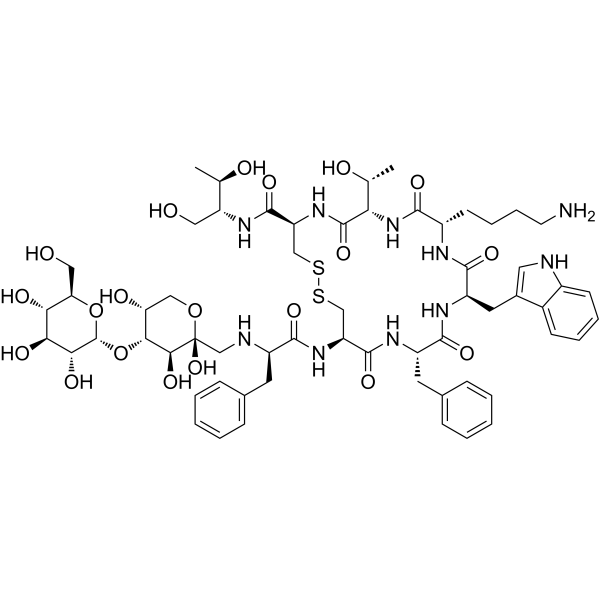
    Ilatreotide (SDZ CO61), glycated somatostatin derivative, is a highly potent glycated analog of somatostatin with improved oral activity. Ilatreotide can suppress the fasting level and postprandial release of several gastrointestinal and pancreatic hormones. Ilatreotide can be used for the research of gastroenteropancreatic tumors .
    Ilatreotide
  • HY-P3899

    Somatostatin Receptor Metabolic Disease
    [Nle8] Somatostatin (1-28) is a derivative of somatosttin (1-28) with norleucine replacing methionine in position 8. [Nle8] Somatostatin (1-28) increases the amylase release.[Nle8] Somatostatin (1-28) increases the cyclic AMP in pancreatic acini .
    [Nle8] Somatostatin (1-28)
  • HY-P3578

    Insulin Receptor Endocrinology
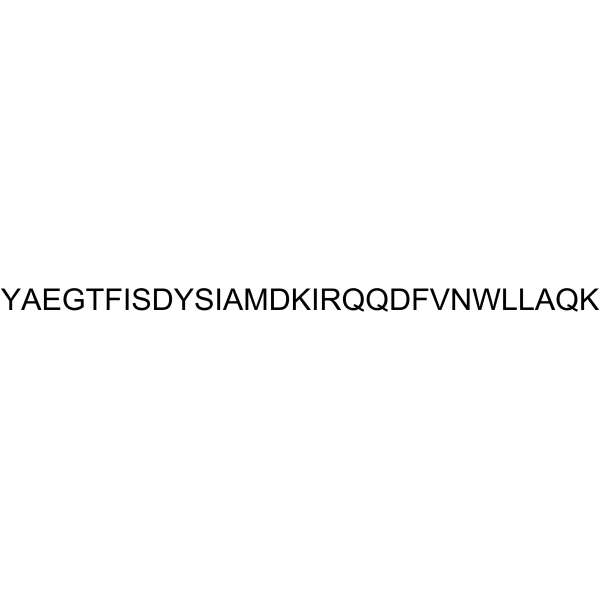
    Gastric Inhibitory Polypeptide (1-30), porcine lacks the C-terminal 12 amino acid residues of natural gastric inhibitory polypeptide (GIP), exhibits biologic activity by potentiating the release of insulin and somatostatin .
    Gastric Inhibitory Polypeptide (1-30), porcine
  • HY-P0221B

    PACAP Receptor Endocrinology
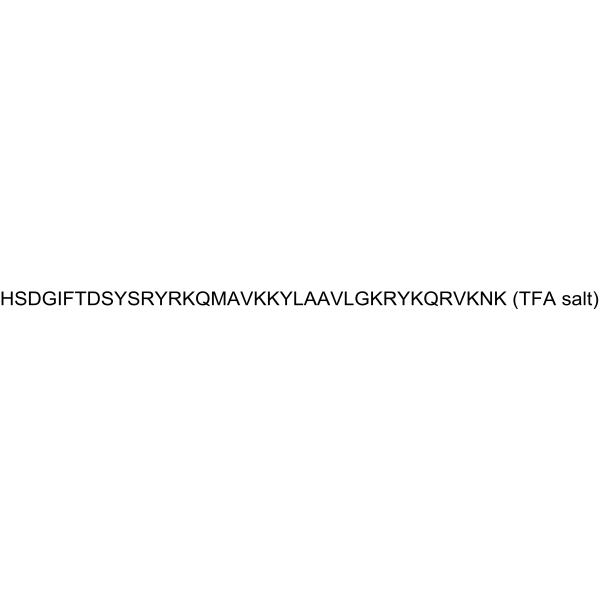
    PACAP (1-38) free acid TFA is an endogenous neuropeptide. PACAP (1-38) free acid TFA potently stimulates antral motility and somatostatin secretion, inhibits the secretion of gastrin and stimulates the release of vasoactive intestinal polypeptide, gastrin releasing peptide and substance P. PACAP (1-38) free acid TFA also enhances N-methyl-D-aspartate receptor function and expression of brain-derived neurotrophic factor through RACK1 .
    PACAP (1-38) free acid TFA
  • HY-P2090

    Somatostatin Receptor Adenylate Cyclase Cardiovascular Disease
    Angiopeptin, a cyclic octapeptide analogue of somatostatin, is a weak sst2/sst5 receptor partial agonist with IC50 values of 0.26 nM and 6.92 nM, respectively. Angiopeptin is a potent inhibitor of growth hormone release and insulin-like growth factor-1 (IGF-1) production. Angiopeptin inhibits adenylate cyclase or stimulates extracellular acidification. Angiopeptin has the potential for coronary atherosclerosis research .
    Angiopeptin
  • HY-137273A

    MMP Somatostatin Receptor Inflammation/Immunology
    Sucrose octasulfate, a derivative of sulfated oligosaccharides, is a matrix metalloproteinase (MMP) inhibitor. Sucrose octasulfate stimulates the release of somatostatin-like immunoreactivity (SLI) from the stomach by acting directly on D cells in the gastric mucosa. Sucrose octasulfate exerts its ulcer-healing effect by releasing endogenous gastric somatostatin. Sucrose octasulfate can be used as a pharmaceutical excipient and significantly improves wound closure in diabetic foot ulcers caused by nerve ischemia and venous leg ulcers. Sucrose octasulfate can be used in the study of chronic wound healing .
    Sucrose octasulfate

Inquiry Online

Your information is safe with us. * Required Fields.

Salutation


Country or Region *

Applicant Name *


Organization Name *

Department *


Email Address *


Product Name *

Cat. No.


Requested quantity *

Phone Number *


Remarks

Inquiry Online

Inquiry Information

Product Name:
Cat. No.:
Quantity:
MCE Japan Authorized Agent: