1. Search Result
Search Result
Results for "

thermal stability enhancer

" in MedChemExpress (MCE) Product Catalog:

14

Inhibitors & Agonists

3

Biochemical Assay Reagents

1

Oligonucleotides

Cat. No. Product Name Target Research Areas Chemical Structure
  • HY-W020780

    mPEG5000-Maleimide

    Biochemical Assay Reagents Cancer
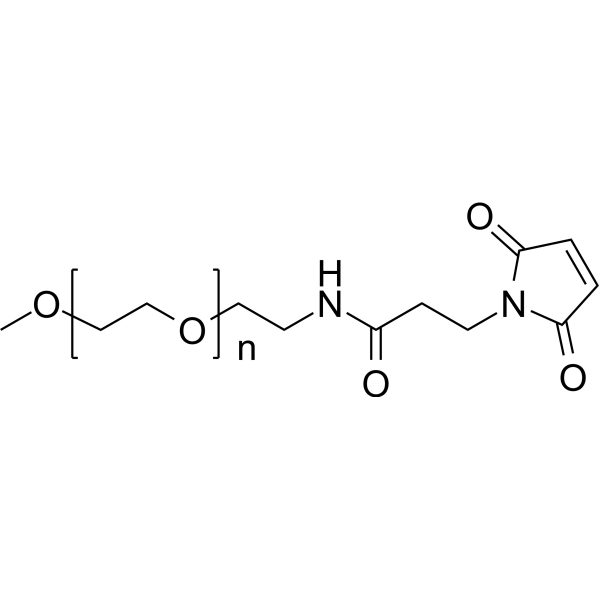
    mPEG5000-Mal (mPEG5000-Maleimide) is a PEG-derived selective covalent binding agent for sulfhydryl groups (RSGs), which can form irreversible thioether bonds with sulfhydryl groups under near-neutral conditions via the maleimide group. The mechanism of action of mPEG5000-Mal can be divided into two categories: firstly, as an enzyme modifier, it binds to target proteins through hydrophobic interactions, hydrogen bonds, and van der Waals forces, altering the protein's secondary structure; secondly, as a nanoparticle surface modifier, it covalently binds to sulfhydryl groups on the surface of red blood cells, changing the surface properties and morphology of the red blood cells, leading to their phagocytosis by macrophages of the reticuloendothelial system. mPEG5000-Mal can react with free cysteine in proteins, increasing the apparent molecular weight of the modified protein by 10-15 kDa for detection purposes. mPEG5000-Mal can enhance the thermal stability and catalytic activity of enzymes, and improve the macrophage targeting of nanoparticles, enabling targeted drug delivery. mPEG5000-Mal can be applied in enzyme engineering research in the food industry and in oncology, assisting radiotherapy by inhibiting tumor-associated macrophage infiltration and enhancing anti-tumor immune responses .
    mPEG5000-Mal
  • HY-168534

    SF3B1 Apoptosis Cancer
    WX-02-23 is a small-molecule probe that stereoselectively and site-specifically binds to C258 of FOXA1 and C1111 of SF3B1. WX-02-23 remodels FOXA1's chromatin binding and pioneer activity in a DNA-dependent manner, disrupts spliceosome assembly, and enhances the thermal stability of SF3B1. WX-02-23 inhibits tumor cell proliferation and induces apoptosis. WX-02-23 can be used for research on cancers such as prostate cancer .
    WX-02-23
  • HY-111772A

    (R)-VX-445

    Drug Isomer CFTR Inflammation/Immunology
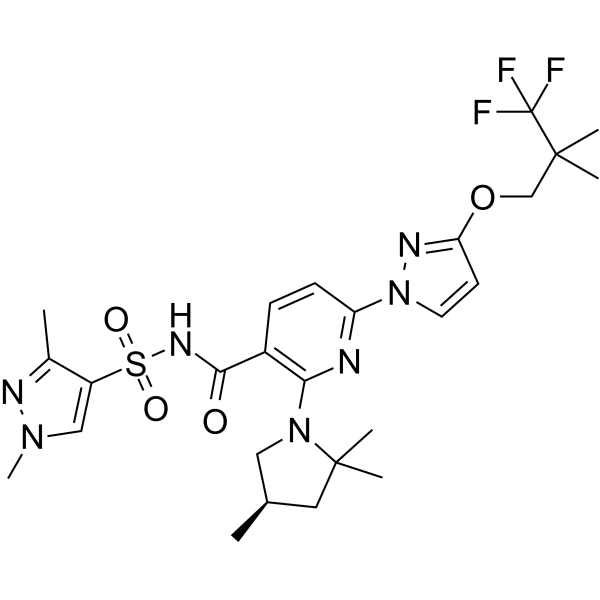
    (R)-Elexacaftor ((R)-VX-445) is the enantiomer of Elexacaftor (HY-111772). Elexacaftor is an orally active CFTR modulator that targets nucleotide-binding domain 1. Elexacaftor stabilizes misfolded F508del-CFTR protein, enhances its trafficking to the plasma membrane, and significantly improves metabolic stability, thermal stability and ion conductivity. Elexacaftor not only restores chloride transport function in nasal epithelial cells and rescues multiple CFTR mutation subtypes, but also exerts multiplicative synergistic effects with Ivacaftor (HY-13017), and is often used in a triple combination therapy with Tezacaftor (HY-15448). Elexacaftor is widely used in basic and clinical translational research on cystic fibrosis .
    (R)-Elexacaftor
  • HY-15929
    TBHBA
    1 Publications Verification

    2,4,6-Tribromo-3-hydroxybenzoic acid

    Biochemical Assay Reagents Others
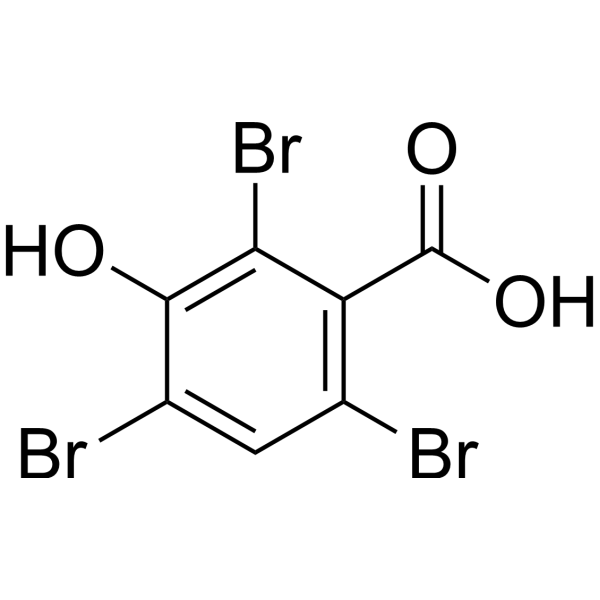
    TBHBA (2,4,6-Tribromo-3-hydroxybenzoic acid) is a chemical colorimetric agent and nanomaterial surface modifier. TBHBA can react with some oxidants (such as H2O2) to generate high-absorbance quinoneimine dyes, which enhance the sensitivity of HDL cholesterol enzymatic determination. TBHBA can be used as a bromine-containing coupling agent to modify the surface of silica nanoparticles through esterification reaction. Thereby, organic flame retardant groups are introduced to improve the thermal stability and flame retardant properties of nanocomposites. TBHBA can be used in clinical biochemical testing (such as serum lipoprotein analysis) and the preparation of flame-retardant polymer nanocomposites .
    TBHBA
  • HY-Y1219E

    Biochemical Assay Reagents Others
    Silica gel, high-purity grade, 130-270 mesh is a low-density, high-surface-area, high-purity inert additive that can be used to prepare chromatographic column sieve plates based on the sol-gel method. Silica gel, high-purity grade prevents DNA degradation by absorbing water from plant leaves, and is suitable for the preservation of field-collected samples for subsequent DNA extraction, restriction endonuclease digestion, PCR amplification and gene sequencing. It can also be reused after being saturated with water. Silica gel, high-purity grade can provide a non-toxic, inert aquatic environment for embedded cells, allowing nutrients, oxygen and metabolic waste to diffuse freely and blocking external pollution, thereby maintaining the activity of fibroblasts and epithelial cells .
    Silica gel, high-purity grade, 130-270 mesh
  • HY-161321

    Phosphatase Insulin Receptor Akt Metabolic Disease
    PTP1B-IN-24 (Compound 9) is a reversible PTP1B inhibitor with an IC50 value of 1.4 μM, and PTP1B-IN-24 can enhance the thermal stability of PTP1B. PTP1B-IN-24 can restore PA- (HY-N0830) induced insulin resistance by increasing the phosphorylation levels of IRS1 and AKT .
    PTP1B-IN-24
  • HY-W570886

    DNA/RNA Synthesis Cancer
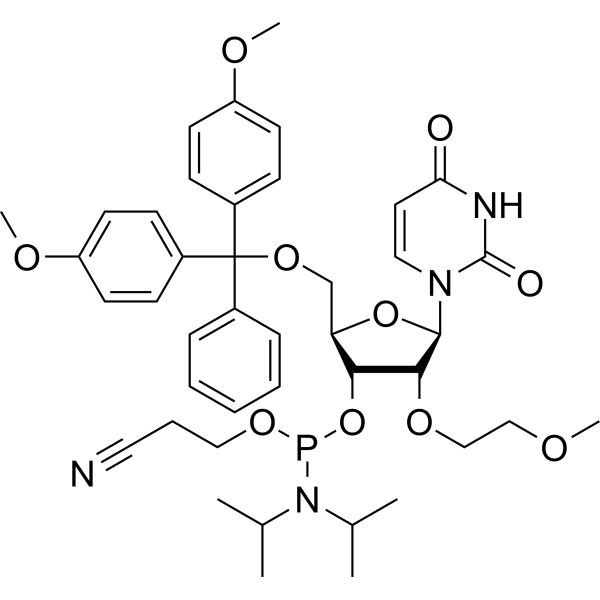
    2'-O-MOE-U is a nucleic acid modification group (Phosphoramidite) with 3'-exonuclease inhibitory activity. 2'-O-MOE-U also exhibits gene silencing activity and double-stranded oligonucleotide stability. By forming steric interactions with 3'-exonuclease residues, 2'-O-MOE-U anchors the 3'-end of the siRNA guide strand in the hAgo2 PAZ domain, thereby regulating double-stranded thermal stability and enhancing base-pairing specificity. 2'-O-MOE-U does not induce IFNα production, can be incorporated at multiple sites of siRNA to enhance RNAi activity, and produces a synergistic effect with 2'-F modification. 2'-O-MOE-U has been widely used in studies related to breast cancer and other diseases .
    2'-O-MOE-U
  • HY-168737

    NOD-like Receptor (NLR) NEKs Inflammation/Immunology
    NEK7-IN-2 (compound 23) is a potent inhibitor of NLRP3-NEK7 interaction. NEK7-IN-2 can enhance the thermal stability of NEK7 and regulatie NLRP3 inflammasome assembly. NEK7-IN-2 inhibits IL-1β releases .
    NEK7-IN-2
  • HY-137294

    Y6

    Endogenous Metabolite Others
    BTPTT-4F (Y6) is a non-fullerene acceptor-donor-acceptor (A-D-A) type small molecular acceptor (SMA) characterized by its flexible alkyl chains and centrally fused ring structure. Featuring a ladder-type electron-deficient core, BTPTT-4F can be effectively blended with PM6, showcasing significant potential for enhancing the performance of organic photovoltaic applications. Its tailored optical properties and adjustable electronic energy levels contribute to improved thermal and photochemical stability, making it a promising candidate for next-generation high-performance organic solar cells.
    BTPTT-4F
  • HY-152469

    Epigenetic Reader Domain Cancer
    Eleven-Nineteen-Leukemia Protein IN-1 is an inhibitor of ENL YEATS domain with an IC50 value of 14.5 nM. Eleven-Nineteen-Leukemia Protein IN-1 interacts with ENL protein and enhances the thermal stability of ENL protein in vitro .
    Eleven-Nineteen-Leukemia Protein IN-1
  • HY-152471

    Epigenetic Reader Domain Cancer
    Eleven-Nineteen-Leukemia Protein IN-3 is an orally active inhibitor of ENL YEATS domain with an IC50 value of 15.4 nM. Eleven-Nineteen-Leukemia Protein IN-3 down-regulates MYC expression through ENL in cells and can enhances the thermal stability of ENL protein in vitro .
    Eleven-Nineteen-Leukemia Protein IN-3
  • HY-162600

    CDK Inflammation/Immunology
    CDK8-IN-15 (Compound 46) is a potent CDK8 inhibitors with an IC50 value of 57 nM. It can enhance the thermal stability of CDK8 along with inhibition against NF-κB and have favourable selectivity across the CDK family and tyrosine kinase. Additionally, it also demostrates a positive effect in vitro psoriasis model induced by TNF-α and alleviats the inflammatory response enhancing the expression of Foxp3 and IL-10, which is promising for research of psoriasis diseases .
    CDK8-IN-15
  • HY-182744

    MDM-2/p53 Cancer
    LLQ-45 is a covalent p53 Y220C mutant protein agonist with an EC50 of 24.97 μM. LLQ-45 activates the anti-tumor function of p53 Y220C through covalent modification, restores its DNA-binding ability and enhances its thermal stability. LLQ-45 selectively inhibits the proliferation of p53 Y220C mutant tumor cells, suppresses cell growth and upregulates the expression of CDKN1A. LLQ-45 can be used in studies related to p53 Y220C mutant cancers .
    LLQ-45
  • HY-181165

    PKC SARS-CoV IFNAR Infection
    SB2960 is a receptor for activated protein C kinase 1 (RACK1) binder with a human KD of 5.65 μM. SB2960 can promote stress granule (SG) formation and exhibit potent antiviral activity across diverse viral species. SB2960 suppresses viral replication with minimal cytotoxicity by modulating host antiviral immune responses. SB2960 increases the thermal stability of RACK1 and reduces SARS-CoV-2 N protein levels. SB2960 enhances type I interferon (IFN-β) expression and inhibits RIG-I, ISG56, and RANTES expression. SB2960 can be used for the research of virus infection .
    SB2960

Inquiry Online

Your information is safe with us. * Required Fields.

Salutation


Country or Region *

Applicant Name *


Organization Name *

Department *


Email Address *


Product Name *

Cat. No.


Requested quantity *

Phone Number *


Remarks

Inquiry Online

Inquiry Information

Product Name:
Cat. No.:
Quantity:
MCE Japan Authorized Agent:

