



12 Results for "

transfection activity

" in MedChemExpress (MCE) Product Catalog:
Products (12)

12 Results for "transfection activity" in MCE Product Catalog:

1
1 Cited Publications
Cat. No.: HY-142118
CAS No.: 925681-61-4
Synonyms: AP 12009
Target:  

TGF-beta/Smad

Research Areas:  

Cancer

Trabedersen (AP 12009) is an orally active synthetic antisense phosphorothioate oligodeoxynucleotide that selectively targets human TGFβ2 mRNA. Trabedersen blocks TGFβ2 protein production, enters the nucleus without a transfection vector, and exerts dose-dependent antitumor effects. By reversing TGFβ2-induced immunosuppression and enhancing immune cytotoxicity, Trabedersen exhibits significant antiproliferative, antimigratory, and antimetastatic activities, with favorable safety profiles. Trabedersen is widely used in research related to various solid tumors, including anaplastic astrocytoma, glioblastoma, colorectal tumor, and melanoma .
loading...
    loading...
1
1 Cited Publications
Cat. No.: HY-142118A
Purity:  92.09%
Synonyms: AP 12009 sodium
Target:  

TGF-beta/Smad

Research Areas:  

Cancer

Trabedersen (AP 12009) sodium is an orally active synthetic antisense phosphorothioate oligodeoxynucleotide that selectively targets human TGFβ2 mRNA. Trabedersen sodium blocks TGFβ2 protein production, enters the nucleus without a transfection vector, and exerts dose-dependent antitumor effects. By reversing TGFβ2-induced immunosuppression and enhancing immune cytotoxicity, Trabedersen sodium exhibits significant antiproliferative, antimigratory, and antimetastatic activities, with favorable safety profiles. Trabedersen sodium is widely used in research related to various solid tumors, including anaplastic astrocytoma, glioblastoma, colorectal tumor, and melanoma .
loading...
    loading...
Cat. No.: HY-P0311
CAS No.: 184776-51-0
Target:  

Bacterial

Research Areas:  

Infection

LAH4, an alpha-helix of the designed amphipathic peptide antibiotic, exhibits potent antimicrobial, nucleic acid transfection and cell penetration activities. LAH4 possesses high plasmid DNA delivery capacities. LAH4 has a strong affinity for anionic lipids found in the outer membrane of bacterial membranes .
loading...
    loading...
Cat. No.: HY-W590549
CAS No.: 7212-69-3
Synonyms: DODAC
Target:  

Liposome

Research Areas:  

Cancer

Dioleyldimethylammonium chloride (DODAC) is a positively charged lipid promoter with membrane-disrupting activity, which is often formulated into cationic liposomes with dioleoylphosphatidylethanolamine. Dioleyldimethylammonium chloride is used in gene transfection research; through electrostatic interactions, it effectively promotes the binding of programmable fusion vesicles to cells and induces membrane disruption. Dioleyldimethylammonium chloride is also applied in studies on L1210 leukemia and LS180 human colon cancer .
loading...
    loading...
Cat. No.: HY-150229
CAS No.: 2803699-70-7
Purity:  98.84%
Target:  

Liposome

Research Areas:  

Cancer

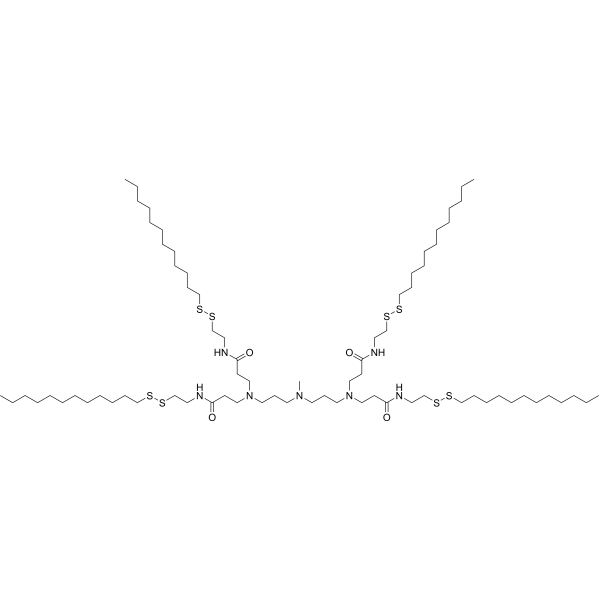
306-N16B is a selective lung-targeted lipid nanoparticle that reversibly targets lung endothelial cells and specific immune cells through selective adsorption of a protein corona mediated by differences in tail structure (such as fibrinogen β/γ chain). 306-N16B binds to specific plasma proteins in the blood to form a protein corona, which guides the particles to be enriched in the lungs, releases mRNA and promotes target cell gene expression, exerts efficient lung cell transfection activity, and can precisely regulate gene delivery of different cell types in the lungs (such as endothelial cells and macrophages). 306-N16B can be used in gene therapy technologies for hereditary lung diseases including pulmonary lymphangioleiomyomatosis (LAM), restoring tumor suppressor function by delivering Tsc2 mRNA, and can also be used for lung-specific mRNA vaccines and gene editing therapies .
loading...
    loading...
Cat. No.: HY-P0311A
Target:  

Bacterial

Research Areas:  

Infection

LAH4 TFA, an alpha-helix of the designed amphipathic peptide antibiotic, exhibits potent antimicrobial, nucleic acid transfection and cell penetration activities. LAH4 TFA possesses high plasmid DNA delivery capacities. LAH4 TFA has a strong affinity for anionic lipids found in the outer membrane of bacterial membranes .
loading...
    loading...
Cat. No.: HY-W800782
CAS No.: 107086-76-0
Target:  

Liposome

Research Areas:  

Others

DC-6-14 is a cationic lipid with gene transfection activity, which can be used for the synthesis of liposomes .
loading...
    loading...
Cat. No.: HY-34595
CAS No.: 2380-63-4
Target:  

RET

Research Areas:  

Cancer

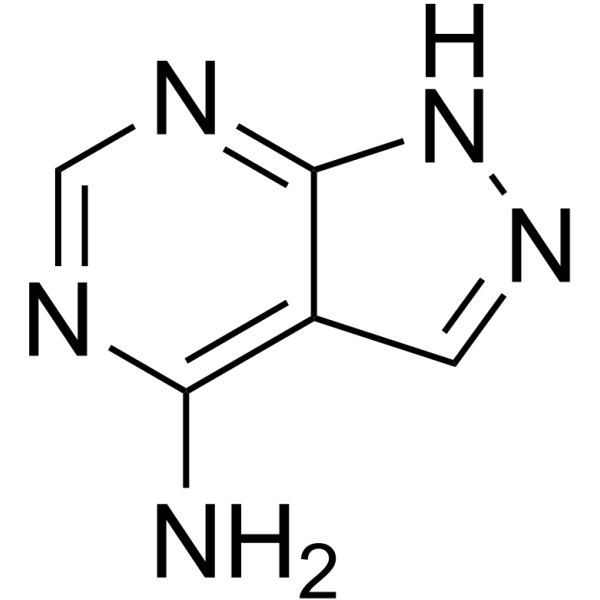
Pyrazoloadenine is a potent RET (REarranged during Transfection) lung cancer oncoprotein inhibitor. Pyrazoloadenine shows anticancer activity .
loading...
    loading...
Cat. No.: HY-158705
CAS No.: 187587-97-9
Target:  

Liposome

Research Areas:  

Others

SAINT-2 is a cationic lipid with gene transfection activity and is a pyridyl lipid analog. Molecular membranes prepared by SAINT-2 can interact with plasmids to form lipid complexes. After the complex is taken up by cells, the plasmid dissociates from the lipid complex under the action of DOPE and the plasmid translocates across the endosome and/or nuclear membrane. Thus, SAINT-2 effectively transfers small oligonucleotides into cells .
loading...
    loading...
Cat. No.: HY-34595R
CAS No.: 2380-63-4
Target:  

RET

Research Areas:  

Cancer

Pyrazoloadenine (Standard) is the analytical standard of Pyrazoloadenine. This product is intended for research and analytical applications. Pyrazoloadenine is a potent RET (REarranged during Transfection) lung cancer oncoprotein inhibitor. Pyrazoloadenine shows anticancer activity .
loading...
    loading...
Cat. No.: HY-144015
CAS No.: 1246304-44-8
Target:  

Liposome

Research Areas:  

Others

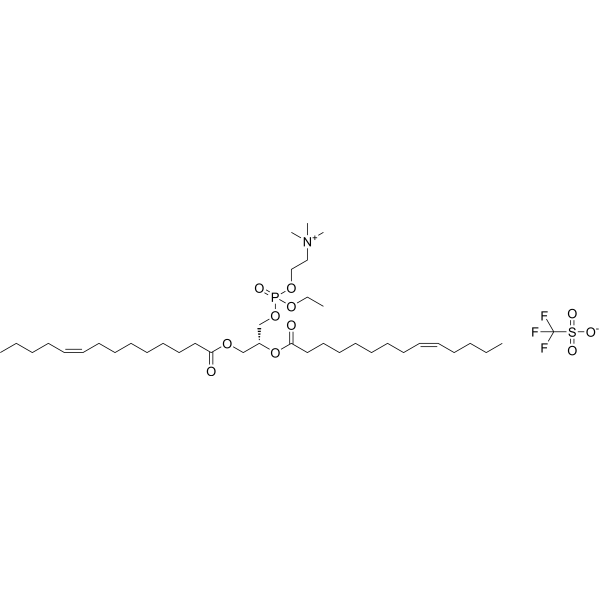
14:1 EPC trifluoromethanesulfonate is ethyl-phosphatidylcholine (EPC) with monounsaturated 14:1 chains. 14:1 EPC trifluoromethanesulfonate shows transfection activity. 14:1 EPC trifluoromethanesulfonate can be used for drug delivery .
loading...
    loading...
Cat. No.: HY-L214
227 compounds

Liposomes are spherical or multilayered spherical vesicles formed by the self-assembly of diacyl chain phospholipids (lipid bilayers) in aqueous solutions, which can be made from natural or synthetic phospholipids and exhibit good biocompatibility and low toxicity. They can serve as delivery carriers for various bioactive substances (such as drugs, proteins, nucleic acids, etc.) and are widely used in biomedical and chemical research. The main advantages of liposomes include 1) Protective effect: Their bilayer structure can protect encapsulated molecules from enzymatic degradation, oxidation, and other influences, extending stability and activity; 2) Active targeting: Surface modifications enable active targeting, enhancing the concentration of drugs or molecules in specific tissues or cells; 3) Customizability: The composition and structure of liposomes can be adjusted according to needs, such as altering phospholipid types or adding targeting ligands. These properties make liposomes highly valuable in developing novel drug delivery systems, serving as nucleic acid carriers for gene transfection, studying cellular uptake mechanisms and drug release kinetics, as well as developing functional food additives to improve the bioavailability of nutritional components.

MCE contains 227 liposome compounds, which is a good tool for drug delivery-related studies.

  • 1

