

1. Search Result
Search Result
Results for "

transpeptidase

" in MedChemExpress (MCE) Product Catalog:

25

Inhibitors & Agonists

6

Fluorescent Dyes

3

Peptides

8

Natural
Products

2

Recombinant Proteins

1

Isotope-Labeled Compounds

1

Click Chemistry

Cat. No. Product Name Target Research Areas Chemical Structure
  • HY-113110

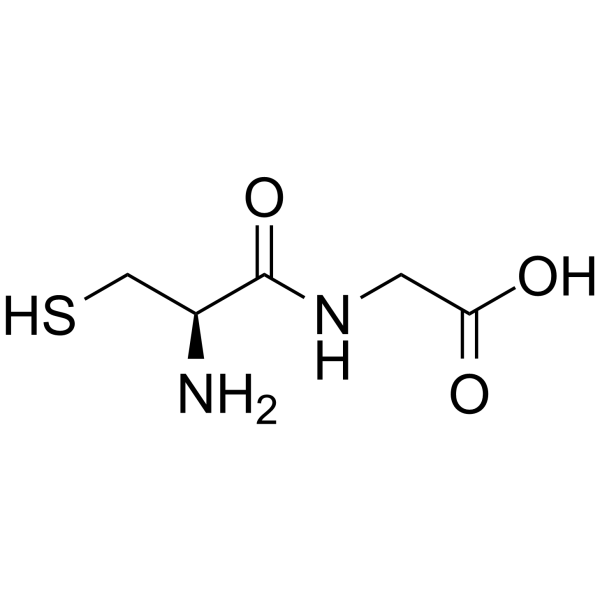
    L-Cysteinylglycine; Cys-Gly; H-Cys-Gly-OH

    Endogenous Metabolite Reactive Oxygen Species (ROS) DNA/RNA Synthesis Cardiovascular Disease Cancer
    Cysteinylglycine (L-Cysteinylglycine; Cys-Gly) is a dipeptide formed by the peptide bond linkage between cysteine (Cysteine) and glycine (Glycine). Cysteinylglycine is an important metabolic intermediate in the human body, mainly derived from the degradation of glutathione (GSH). Cysteinylglycine reduces ferric iron to ferrous iron, drives the redox cycle of iron, generates reactive oxygen species (ROS), stimulates oxidative reactions, induces lipid peroxidation of human plasma LDL lipoproteins, and causes oxidative damage to DNA bases. Cysteinylglycine can be used as a biomarker to evaluate ischemic heart disease, breast cancer and other conditions .
    Cysteinylglycine
  • HY-114336
    Enocyanin
    3 Publications Verification

    Phosphatase Inflammation/Immunology
    Enocyanin is an anthocyanin extracted from grapes. Enocyanin shows inhibitory effect on the leucine aminopeptidase, acid phosphatase, γ-glutamyl transpeptidase and esterase activity .
    Enocyanin
  • HY-E70234
    Sortase A, S. aureus
    1 Publications Verification

    SrtA

    Bacterial Others
    Sortase A, S. aureus (SrtA), a transpeptidase enzyme is present in many Gram-positive bacteria and helps in the recruitment of the cell surface proteins. Sortase A, S. aureus plays an important part in ligation of various molecules on the cell surfaces .
    Sortase A, S. aureus
  • HY-W016586
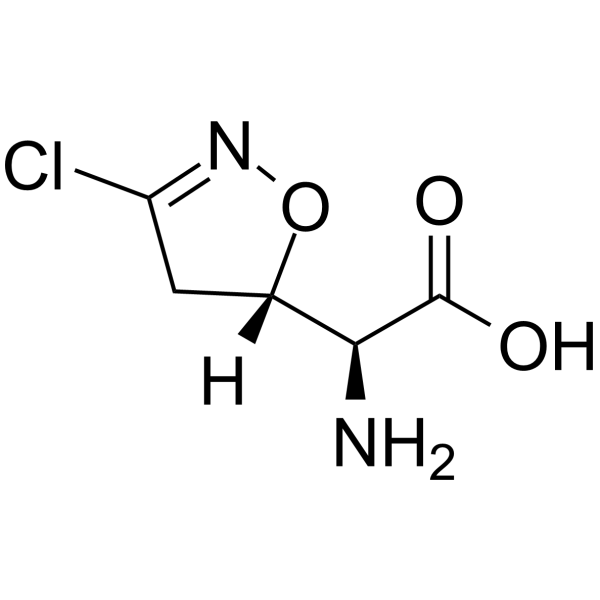
    Acivicin
    2 Publications Verification

    AT-125; U-42126

    Parasite γ-Glutamyl Transferase (GGT) Infection Cancer
    Acivicin (AT-125), a natural product produced by Streptomyces sviceus is a γ-glutamyl transpeptidase (GGT) inhibitor. Acivicin can across the blood-brain barrier and has anti-cancer, anti-parasitic properties .
    Acivicin
  • HY-W016586A
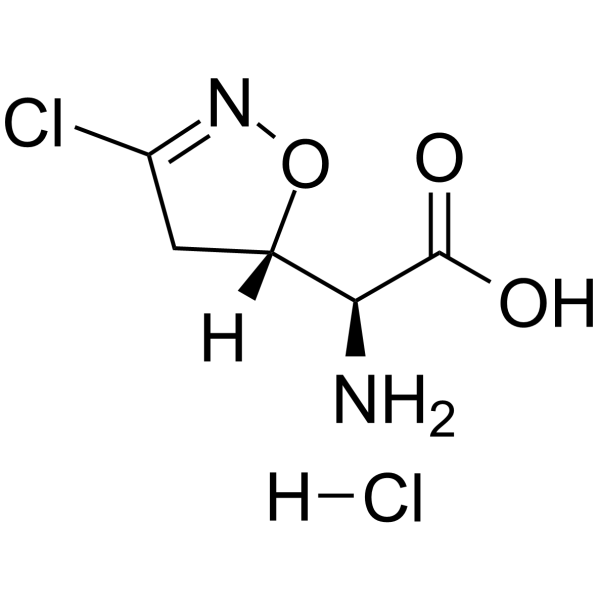
    Acivicin hydrochloride
    2 Publications Verification

    AT-125 hydrochloride; U-42126 hydrochloride

    Parasite Infection Cancer
    Acivicin hydrochloride (AT-125 hydrochloride), a natural product produced by Streptomyces sviceus, is a γ-glutamyl transpeptidase (GGT) inhibitor. Acivicin hydrochloride can across the blood-brain barrier and has anti-cancer, anti-parasitic properties .
    Acivicin hydrochloride
  • HY-W009749A

    Drug Intermediate Others
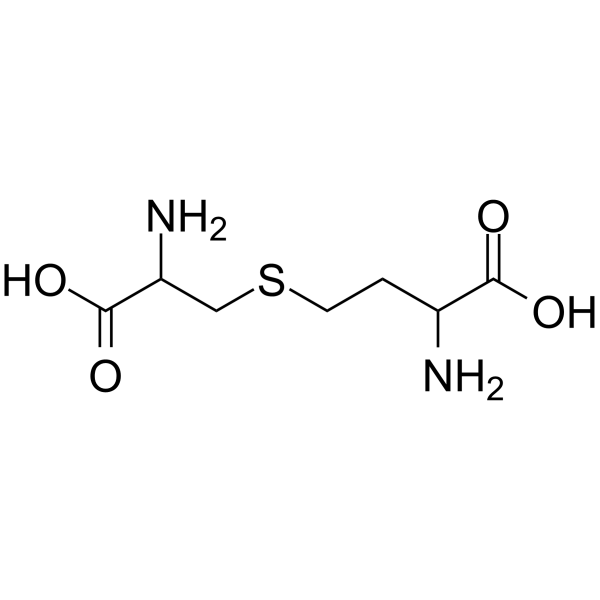
    DL-Cystathionine is a mixture of 4 isomers of cystathionine and allocystathionine. DL-Cystathionine also is an intermediate in the biosynthesis of amino acid cysteine. DL-Cystathionine serves as a standard for quantifying tissue cystathionine .
    DL-Cystathionine
  • HY-N13356

    gamma-Glutamylthreonine; H-γ-Glu-Thr-OH; γ-Glu-Thr

    Bacterial Peptide-Drug Conjugates (PDCs) Drug Metabolite Infection Inflammation/Immunology
    L-gamma-Glutamyl-L-threonine (gamma-Glutamylthreonine; H-γ-Glu-Thr-OH; γ-Glu-Thr) is a dipeptide obtained through the formal condensation of the L-glutamic acid side chain carboxyl group and the L-threonine amino group. L-gamma-Glutamyl-L-threonine is present in high concentrations in human urine and exhibits antibacterial activity against Gram-negative bacterial. L-gamma-Glutamyl-L-threonine is also a flavor compound. Gamma-Glutamylthreonine is a metabolite catalyzed by γ-glutamyl transpeptidase and is associated with immune regulation. Gamma-Glutamylthreonine can be used in research on inflammation and bacterial infections .
    L-gamma-Glutamyl-L-threonine
  • HY-E70234A

    Bacterial Infection Inflammation/Immunology
    Sortase A, S. aureus (non-Ca 2+-dependent), a transpeptidase enzyme is present in many Gram-positive bacteria and helps in the recruitment of the cell surface proteins. Sortase A, S. aureus (non-Ca 2+-dependent) plays an important part in ligation of various molecules on the cell surfaces .
    Sortase A, S. aureus (non-Ca<sup>2+</sup>-dependent)
  • HY-171995

    Rotor NO.4 TFA

    Fluorescent Dye Bacterial Infection
    Rf470 (Rotor NO.4) TFA is a FMR-probe-D-lysine conjugate (Max Ex: 470 nM; Max Em: 640 nM) that can be covalently incorporated into peptidoglycan by bacteria. Rf470 TFA has extremely weak fluorescence in the free state, but its fluorescence is significantly enhanced when it is catalytically incorporated into peptidoglycan by transpeptidases. Through fluorescence changes, Rf470 TFA can be used for real-time monitoring of peptidoglycan biosynthesis, detection of transpeptidase activity, and screening of antibiotics, etc .
    Rf470 TFA
  • HY-126710

    γ-Glutamyl Transferase (GGT) Cancer
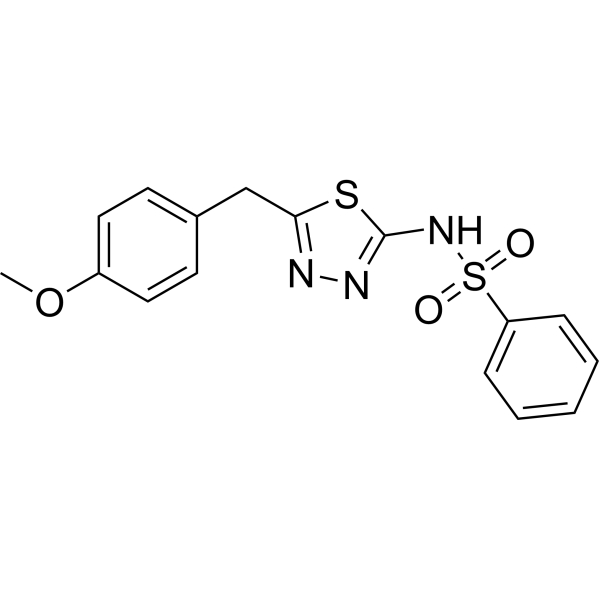
    OU749 is a potent γ-glutamyl transpeptidase (GGT) inhibitor with a Ki value of 17.6 µM. OU749 shows cytotoxicity .
    OU749
  • HY-N0241

    Cholinesterase (ChE) Lipase Bacterial Cytochrome P450 Infection Metabolic Disease
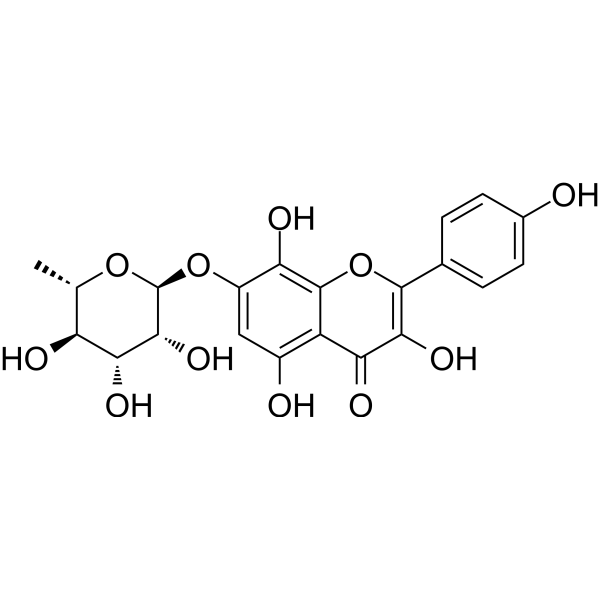
    Rhodionin is an orally active, multifunctional antivirulence and cytoprotective agent that targets and inhibits Lipase, sortase A (SrtA), CYP2D6 (IC50=0.761 μM), AChE (IC50=2.43-57.5 μM), and DPPH free radicals (IC50=19.49 μM). Rhodionin is isolable from the roots of Rhodiola crenulata. Rhodionin reduces postprandial serum triglyceride levels in mice by inhibiting lipase activity. Rhodionin also binds directly to SrtA to inhibit its transpeptidase activity, thereby reducing the fibrinogen adhesion and surface protein A levels of MRSA, effectively inhibiting biofilm formation and protecting against MRSA-induced cell damage. Rhodionin improves the survival rate of infected mice without affecting MRSA growth, and finds wide application in studies related to hyperlipidemia, exogenous obesity, and pneumonia induced by methicillin-resistant Staphylococcus aureus (MRSA) .
    Rhodionin
  • HY-113456S

    Drug Metabolite Endogenous Metabolite Cardiovascular Disease Inflammation/Immunology
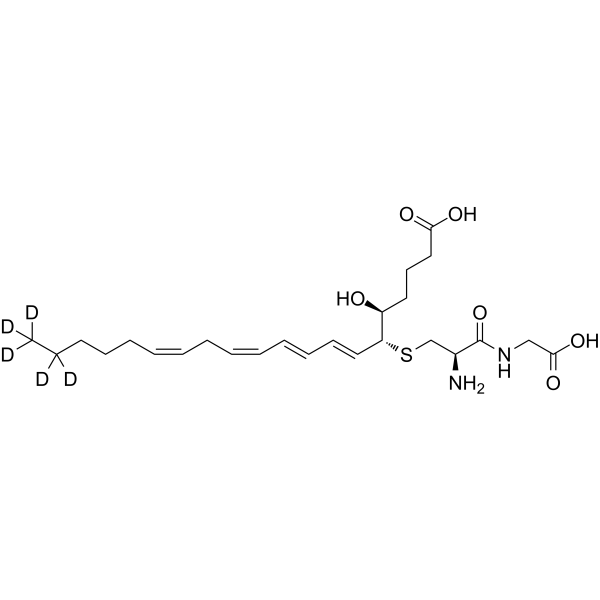
    Leukotriene D4-d5 is the deuterium labeled Leukotriene D4. Leukotriene D4 is one of the constituents of slow-reacting substance of anaphylaxis (SRS-A) produced by the metabolism of LTC4 by γ-glutamyl transpeptidase. Leukotriene D4 is the first cysteinyl-leukotriene metabolite of LTC4. Leukotriene D4-induced bronchoconstriction and enhanced vascular permeability contribute to the pathogenesis of asthma and acute hypersensitivity.
    Leukotriene D4-d5
  • HY-146343

    Fluorescent Dye γ-Glutamyl Transferase (GGT) Inflammation/Immunology Cancer
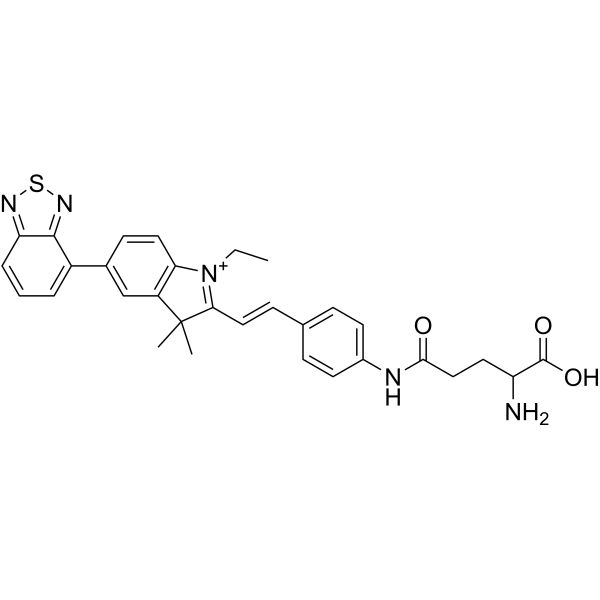
    BMI-Glu is a selective γ-glutamyl transpeptidase (GGT) fluorescent probe with a Km of 69.63 µM. BMI-Glu has high sensitivity, good water solubility and biocompatibility .
    BMI-Glu
  • HY-W016586AR

    AT-125 hydrochloride (Standard); U-42126 hydrochloride (Standard)

    Reference Standards Parasite γ-Glutamyl Transferase (GGT) Infection Cancer
    Acivicin (hydrochloride) (Standard) is the analytical standard of Acivicin (hydrochloride). This product is intended for research and analytical applications. Acivicin hydrochloride (AT-125 hydrochloride), a natural product produced by Streptomyces sviceus, is a γ-glutamyl transpeptidase (GGT) inhibitor. Acivicin hydrochloride can across the blood-brain barrier and has anti-cancer, anti-parasitic properties[1][2].
    Acivicin hydrochloride (Standard)
  • HY-100500

    KBT 1585 hydrochloride

    Penicillin-binding protein (PBP) Bacterial Infection Cancer
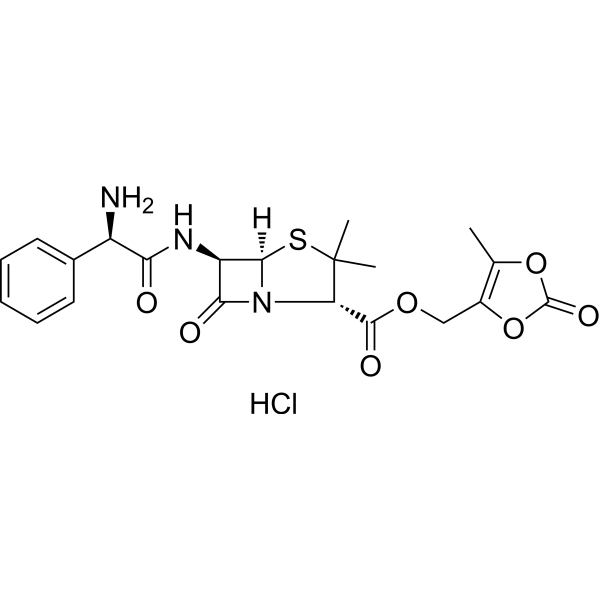
    Lenampicillin hydrochloride (KBT 1585 hydrochloride) is an orally active proagent of Ampicillin and is an effective beta-lactam antibacterial agent that inhibits bacterial penicillin-binding proteins (transpeptidase). Lenampicillin hydrochloride has improved absorption and decreased side effects compares to Ampicillin and is applied in the investigation of the suppurative skin and soft tissue infection .
    Lenampicillin hydrochloride
  • HY-W016586R

    AT-125 (Standard); U-42126 (Standard)

    Reference Standards Parasite γ-Glutamyl Transferase (GGT) Infection Cancer
    Articaine (Standard) is the analytical standard of Articaine. This product is intended for research and analytical applications. Articaine (Hoe-045 free base) is an amide agent that can suppress or relieve pain. containing an ester group, reversibly binding to the α-subunit of the voltage-gated sodium channels within the inner cavity of the nerve, can provide effective pain relief. Articaine ameliorates LPS-induced acute kidney injury via inhibition of NF-κB activation and the NLRP3 inflammasome pathway .
    Acivicin (Standard)
  • HY-207462

    Bacterial Infection
    CBA-4 is an L,D-transpeptidase inhibitor. CBA-4 covalently acylates the active site of L,D-transpeptidase to form a stable acylenzyme adduct. CBA-4 can be used for research on bacterial resistance .
    CBA-4
  • HY-N17582

    Bacterial Infection
    (7S,8S)-Dihydrodehydrodiconiferyl alcohol 9’-β-D-glucopyranoside is a Streptococcus mutans Sortase A inhibitor with an IC50 of 37.3 μM. (7S,8S)-Dihydrodehydrodiconiferyl alcohol 9’-β-D-glucopyranoside inhibits transpeptidase activity linked to Gram-positive bacterial surface protein anchoring. (7S,8S)-Dihydrodehydrodiconiferyl alcohol 9’-β-D-glucopyranoside can be used for the research of dental caries .
    (7S,8S)-Dihydrodehydrodiconiferyl alcohol 9’-β-D-glucopyranoside
  • HY-D3170

    Fluorescent Dye γ-Glutamyl Transferase (GGT) Inflammation/Immunology
    C-HBrO-GGT is a sequence-activated two-photon fluorescent probe. C-HBrO-GGT exhibits sequential fluorescence activation properties: it generates fluorescence in response to hypobromous acid only after being hydrolytically activated by γ-glutamyl transpeptidase. C-HBrO-GGT enables verification of the voltage-gated chloride channel (CLC-1)-HBrO-catalase (CAT)-GGT signaling pathway at the cellular level. C-HBrO-GGT can serve as a tool to indicate the precise location of mature atherosclerotic plaques and provide early warning of plaque formation. C-HBrO-GGT is applicable to relevant research on atherosclerosis .
    C-HBrO-GGT
  • HY-D3389

    Fluorescent Dye Bacterial Infection
    sCy5DL-amide is an amidated fluorescent D-amino acid conjugated to Sulfo-Cyanine 5, and a peptidoglycan labeling agent. sCy5DL-amide incorporates into bacterial peptidoglycan cell wall via transpeptidase-mediated reactions, replacing the fourth or fifth D-amino acid of the peptidoglycan stem peptide for visualization of nascent peptidoglycan biosynthesis. sCy5DL-amide produces clear cell outline, septum labeling, and high localization density in Bacillus subtilis, including a 'V-shape' pattern at cell-cell contact areas. sCy5DL-amide exhibits robust incorporation into Gram-positive bacteria and mycobacteria, with reduced incorporation into Gram-negative bacteria (Ex/Em = 646/666 nm) .
    sCy5DL-amide
  • HY-169854

    Biochemical Assay Reagents Others
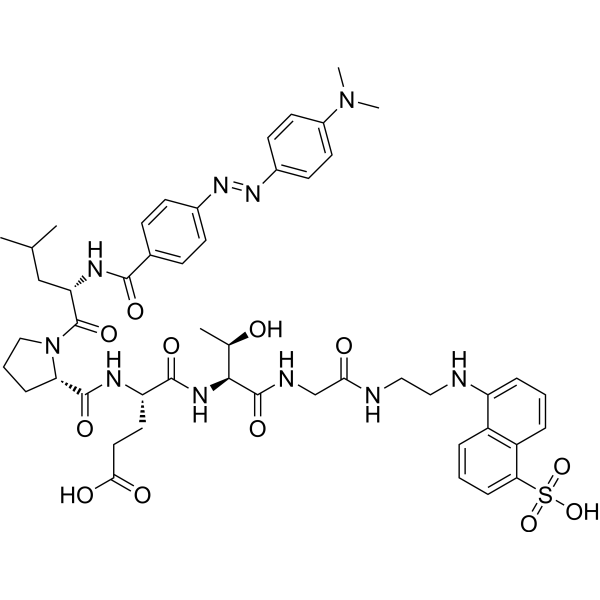
    N-γ-L-Glutamyl-4-aminobutyric acid (compound 8) is a substrate of γ-glutamyl transpeptidase (γ-GT). It can be used to study drug latency induced by γ-GT .
    N-γ-L-Glutamyl-4-aminobutyric acid
  • HY-D3390

    Fluorescent Dye Bacterial Infection
    sCy5DA is a is a fluorescent D-amino acid . sCy5DA incorporates into bacterial peptidoglycan layers and cross-links via transpeptidase action, replacing peptidoglycan stem peptide D-amino acids. sCy5DA labels live bacterial cell walls, nascent peptidoglycan biosynthesis sites, and diverse bacterial species including Gram-negative, Gram-positive, and mycobacteria (Ex/Em = 646/665 nm) .
    sCy5DA
  • HY-D3188

    Fluorescent Dye Cancer
    gGlu-2OMe SiR600 is a γ-glutamyl transpeptidase (GGT) responsive fluorescent probe. gGlu-2OMe SiR600 can be converted into a highly fluorescent molecule via reaction with GGT, and its initial fluorescence is quenched through a photoinduced electron transfer (PeT) mechanism. gGlu-2OMe SiR600 exhibits fluorescence activation in malignant breast cancer and benign breast fibroadenoma tissues, enabling lesion visualization. gGlu-2OMe SiR600 can be used for research related to breast cancer and fibroadenoma .
    gGlu-2OMe SiR600
  • HY-D1737

    Bacterial Infection
    RADA is a fluorescent D-amino acid (FDAA) with high photostability and thermostability, which emits yellow-to-orange fluorescence. RADA shows low outer membrane permeability in wild-type Gram-negative Escherichia coli, but it targets penicillin-binding proteins and L,D-transpeptidases, mimics the interaction between acyl acceptors and enzyme intermediates, and integrates into peptidoglycan during biosynthesis. As a peptidoglycan labeling reagent, RADA metabolically integrates into the nascent peptidoglycan of live bacterial cells, labels the peptidoglycan at the poles and lateral walls of mycobacteria, and enables visualization of peptidoglycan synthesis and remodeling processes. RADA serves as a non-specific stain for fixed cells, is non-toxic to bacterial cells, and its red-shifted excitation/emission spectra reduce phototoxicity. RADA also supports virtual pulse-chase labeling experiments and stochastic optical reconstruction microscopy for sub-diffraction-limited imaging of bacterial cell walls .
    RADA
  • HY-D3187

    Fluorescent Dye Glycosidase Infection Cancer
    HMRef-αMan is a substrate-based green fluorescent probe (Ex/Em=465 nm/515 nm) targeting MAN2C1 (α-mannosidase). HMRef-αMan can be specifically cleaved by MAN2C1 to generate a highly fluorescent product, which thus gets activated to produce green fluorescence in malignant breast tissues, benign lesions and living cancer cells. The signal intensity of HMRef-αMan is directly correlated with MAN2C1 activity, and it can effectively detect tiny breast cancer lesions with a diameter of less than 1 mm. When used in combination with the red-emitting γ-glutamyl transpeptidase (GGT) probe gGlu-2OMe SiR600 (HY-D3188), HMRef-αMan enables precise optical differentiation of breast tissue types via a dual-color imaging strategy. HMRef-αMan has been widely used in the research of breast diseases such as breast cancer, fibroadenoma, phyllodes tumor and various types of papilloma .
    HMRef-αMan

Inquiry Online

Your information is safe with us. * Required Fields.

Salutation


Country or Region *

Applicant Name *


Organization Name *

Department *


Email Address *


Product Name *

Cat. No.


Requested quantity *

Phone Number *


Remarks

Inquiry Online

Inquiry Information

Product Name:
Cat. No.:
Quantity:
MCE Japan Authorized Agent:

