




1. Search Result
Search Result
Results for "

tumor targeting

" in MedChemExpress (MCE) Product Catalog:

1173

Inhibitors & Agonists

30

Screening Libraries

22

Fluorescent Dyes

85

Biochemical Assay Reagents

127

Peptides

316

Inhibitory Antibodies

43

Natural
Products

13

Isotope-Labeled Compounds

22

Click Chemistry

56

Oligonucleotides

4

GMP Molecules

Cat. No. Product Name Target Research Areas Chemical Structure
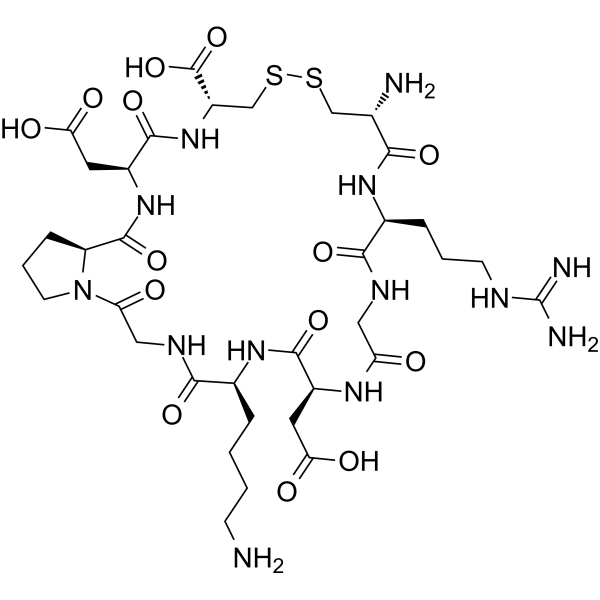
  • HY-P0122
    iRGD peptide
    5+ Cited Publications

    c(CRGDKGPDC)

    Integrin Cancer
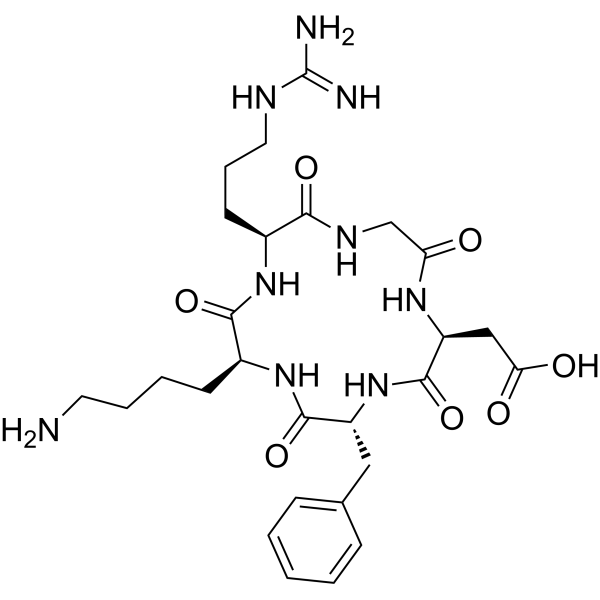
    iRGD peptide is a 9-amino acid cyclic peptide, triggers tissue penetration of agents by first binding to αv-integrins, then proteolytically cleaved in the tumor to produce CRGDK/R to interact with neuropilin-1, and has tumor-targeting and tumor-penetrating properties.
    iRGD peptide
  • HY-137331
    FAPI-46
    2 Publications Verification

    FAP Cancer
    FAPI-46 is a quinoline-based fibroblast activation protein (FAP)-targeted tracer. Use radioactivity FAPI-46 labeled with 68Ga or 177Lu can be used for tumor imaging in a variety of cancers and has higher tumor uptake rates and longer tumor accumulation .
    FAPI-46
  • HY-D1711

    IR-808

    Fluorescent Dye Cancer
    MHI-148 is a near-infrared heptamethine cyanine dye with tumor-targeting properties for cancer detection, diagnosis and research. MHI-148 is immediately taken up and accumulated by lysosomes and mitochondria of tumor cells, but not in lysosomes and mitochondria of normal cells .
    MHI-148
  • HY-145938

    FAP Cancer
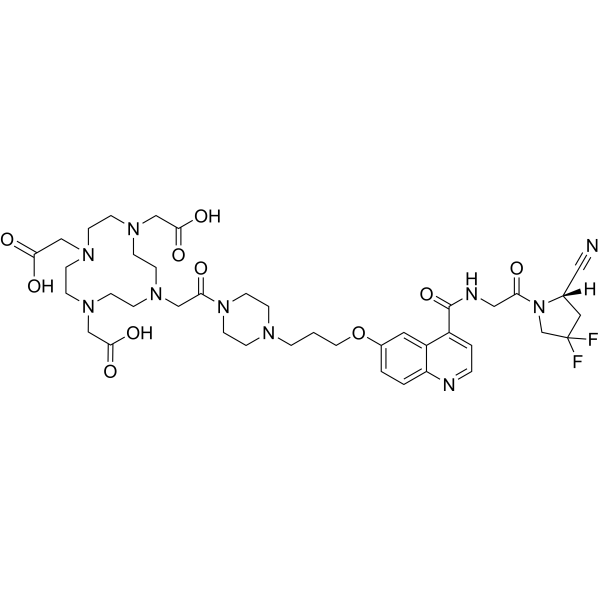
    OncoFAP is an ultra-high-affinity ligand of fibroblast activation protein (FAP) for targeting applications with pan-tumoral potential.
    OncoFAP
  • HY-13674

    NSC 153858

    Microtubule/Tubulin Cancer
    Maytansine is a highly potent microtubule-targeted compound that induces mitotic arrest and kills tumor cells at subnanomolar concentrations .
    Maytansine
  • HY-W440911

    Liposome Fluorescent Dye Cancer
    DSPE-PEG2000-Cy5 is a Cy5 (HY-D0821) fluorophore-labeled conjugate of distearoylphosphatidylethanolamine and polyethylene glycol, as well as a liposome component. The Cy5 fluorophore is commonly used for labeling proteins and nucleic acids in imaging, flow cytometry and genomic applications. DSPE-PEG2000-Cy5 supports cell membrane modification, in vivo tumor targeting research and long-term in vivo circulation of its liposomal formulations (Ex/Em=633/670 nm) .
    DSPE-PEG2000-Cy5
  • HY-P99547

    (vic)-Trastuzumab duocarmazine

    Antibody-Drug Conjugates (ADCs) Cancer
    Trastuzumab duocarmazine ((vic)-Trastuzumab duocarmazine) is a HER2-targeting ADC that is recognized and cleaved by histone B in tumor cells and selectively targets tumor cells. Trastuzumab duocarmazine has anti-tumor activity and can be used in cancer research related to uterine and ovarian sarcomas .
    Trastuzumab duocarmazine
  • HY-106033
    Edotreotide
    2 Publications Verification

    DOTATOC; SDZ-SMT 487; SMT 487

    Radionuclide-Drug Conjugates (RDCs) Cancer
    Edotreotide is a ligand that selectively targets SSTR2 and can competitively bind to the receptor. Edotreotide mediates the targeted delivery, while modificated with radionuclides (such as 90Y, 177Lu, and 68Ga) to SSTR-positive tumors and induces tumor cell apoptosis by releasing β rays. Edotreotide has strong tumor targeting and precise killing activity. Edotreotide is used in the synthesis of radionuclide-drug conjugates (RDCs) and is widely used in the field of neuroendocrine tumors (such as metastatic carcinoids, lung and thymus NETs) .
    Edotreotide
  • HY-172494

    Liposome Integrin Drug Intermediate Complement System Cancer
    DSPE-PEG2000-iRGD is a PEG compound which composed of DSPE and an αv-integrins targeting peptide (iRGD). iRGD peptide binds to αv-integrins, and then proteolytically cleaved in the tumor to produce CRGDK/R to interact with neuropilin-1, and has tumor-targeting and tumor-penetrating properties. DSPE-PEG2000-iRGD can be used for agent delivery .
    DSPE-PEG2000-iRGD
  • HY-176786

    PROTACs Ras Apoptosis PERK p38 MAPK Caspase TNF Receptor Cancer
    MCB-36 is a VHL-recruiting pan-KRAS PROTAC degrader without affecting KRAS transcription. MCB-36 exhibits minimal effects on HRAS and NRAS protein levels. MCB-36 binds to the GDP-loaded state of G12D, G12C, G12V, and wild-type KRAS with high affinities Kd ≈ 1 pM). MCB-36 decreases p-ERK levels, leading to cell apoptosis. MCB-36 effectively suppress KRAS G12C inhibitor-resistant cancer cells and remodel the tumor immune microenvironment. MCB-36 can be used for the study of colorectal cancer and lung cancer (Pink: Target protein ligand; Blue: E3 ligand (HY-112078); Black: Linker (HY-W091879)) .
    MCB-36
  • HY-165740

    Disialoganglioside GD2

    Apoptosis Cancer
    Ganglioside GD2 (Disialoganglioside GD2) is a tumor-associated antigen. Ganglioside GD2 shows limited expression in normal tissues but is overexpressed in multiple tumor types, and thus can serve as a target in cancer. Ganglioside GD2 is associated with tumor development and malignant phenotypes, and its mechanism of action relies on enhancing cell proliferation, motility, migration, adhesion and invasion, with specific effects depending on the tumor type .
    Ganglioside GD2
  • HY-172429

    ORIC-114

    EGFR Neurological Disease Cancer
    Enozertinib (ORIC-114) is an orally active, CNS-penetrant, highly selective and irreversible dual EGFR/HER2 inhibitor that exhibits potent and targeted inhibition of exon 20 insertion mutations. Enozertinib exhibits high kinome selectivity for the EGFR family of receptors to reduce off-target kinase liabilities. Enozertinib induces tumor regression and demonstrates antitumor activity in central nervous system and non-small cell lung cancer (NSCLC) tumor models. Enozertinib can be used for the research of solid tumors and NSCLC .
    Enozertinib
  • HY-136538

    Survivin Cancer
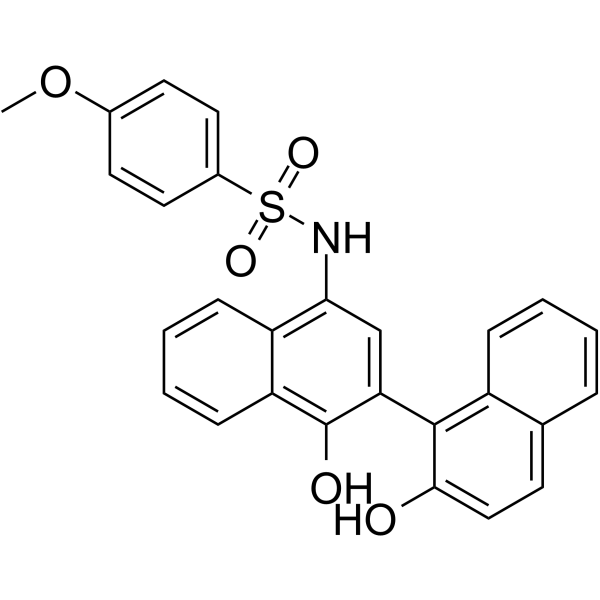
    LQZ-7I is a survivin-targeting inhibitor. LQZ-7I inhibits survivin dimerization. LQZ-7I orally effectively inhibits xenograft tumor growth and induces survivin loss in tumors .
    LQZ-7I
  • HY-P10131

    Radionuclide-Drug Conjugates (RDCs) FAP Cancer
    3BP-3940 is a highly potent and selective peptide inhibitor of FAP that targets cancer-associated fibroblasts (CAFs) in the tumor microenvironment. 3BP-3940 can be labeled with radionuclides (such as Ga-68) for precise tumor imaging or Lu-177 for the development of targeted anticancer technologies. 3BP-3940 accumulates in tumor lesions and can be used to diagnose and inhibit various solid cancers and CAFs-related diseases .
    3BP-3940
  • HY-172429A

    ORIC-114 hemihydrate

    EGFR Neurological Disease Cancer
    Enozertinib (ORIC-114) hemihydrate is an orally active, CNS-penetrant, highly selective and irreversible dual EGFR/HER2 inhibitor that exhibits potent and targeted inhibition of exon 20 insertion mutations. Enozertinib hemihydrate exhibits high kinome selectivity for the EGFR family of receptors to reduce off-target kinase liabilities. Enozertinib hemihydrate induces tumor regression and demonstrates antitumor activity in central nervous system and non-small cell lung cancer (NSCLC) tumor models. Enozertinib hemihydrate can be used for the research of solid tumors and NSCLC .
    Enozertinib hemihydrate
  • HY-P3441A

    FAP Cancer
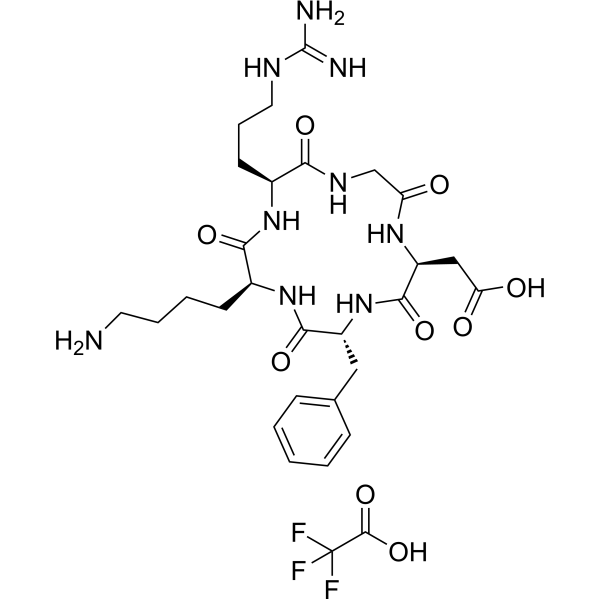
    3BP-4089 TFA is a highly efficient fibroblast activation protein (FAP) targeting peptide. 3BP-4089 TFA is often conjugated with radionuclides for tumor diagnosis and research .
    3BP-4089 TFA
  • HY-P11294

    Ras Cancer
    KLVVVGADGVGKSALTI is a KRAS G12D targeting peptide that can be used in tumor research .
    KLVVVGADGVGKSALTI
  • HY-P10501A

    Antifolate Cancer
    FRα-targeting peptide C7 TFA is a selective peptide ligand for folate receptor α (FRα) that has specific binding to FRα expressing cells and in vivo tumor targeting ability. FRα-targeting peptide C7 TFA can be used in the research of tumor diagnosis and treatment .
    FRα-targeting peptide C7 TFA
  • HY-155887

    DSPE-PEG-NH2, MW 3400 ammonium

    Liposome Cancer
    DSPE-PEG-Amine (DSPE-PEG-NH2), MW 3400 ammonium is an amino-functionalized PEGylated phospholipid. It serves not only as a key component for preparing σ receptor-targeted liposomes (such as anisamide-modified lipids) but also as a starting material for synthesizing click chemistry- and tumor-targeted lipids including DSPE-PEG-DBCO (HY-155788) and DSPE-PEG2000-TCO (HY-170704). DSPE-PEG-Amine, MW 3400 ammonium effectively modulates the ζ potential of nanoparticles, enables complexation with nucleic acids or proteins to protect DNA from nuclease degradation, and supports ligand conjugation on the nanoparticle surface. It is used in studies related to DU-145 tumors, breast cancer, and other relevant research .
    DSPE-PEG-Amine, MW 3400 ammonium
  • HY-P4091

    Biochemical Assay Reagents Cancer
    LSD is a peptide. LSD can specifically recognize the lymphatics of C8161 melanoma, but it does not bind to the lymphatics of normal tissues or tumor blood vessels. When conjugated with a proapoptotic peptide, LSD can reduce the number of tumor lymphatics. LSD can be used in the research of targeted therapy and diagnosis of tumor lymphatics .
    LSD
  • HY-P10792

    EGFR Cancer
    HER2-targeted peptide H6F is a HER2 targeting peptide that binds to HER2 to target breast cancer cells, with the amino acid sequence YLFFVFER. The HER2-targeted peptide H6F can be conjugated with the bifunctional chelating agent hydrazinonicotinamide (HYNIC) for radiolabeling with 99mTc. Single-photon emission computed tomography (SPECT) imaging shows that the labeled HER2-targeted peptide H6F specifically accumulates in HER2-positive MDA-MBA-453 tumor-bearing mice models. The HER2-targeted peptide H6F can be used for tumor molecular imaging studies .
    HER2-targeted peptide H6F
  • HY-19916

    BAL-101553

    Microtubule/Tubulin Checkpoint Kinase (Chk) Cancer
    Lisavanbulin (BAL-101553) is the prodrug of the microtubule targeting agent Avanbulin (BAL 27862) (HY-106008). Lisavanbulin is a BBB-penetrant and orally active antitumor agent, especially in tumors that express high levels of end-binding protein 1. Lisavanbulin has ability to target tumor cell proliferation and affects the tumor microenvironment by reducing tumor microvasculature. Lisavanbulin is also a spindle assembly checkpoint activator. Lisavanbulin induces cell cycle arrest and subsequent death or aberrant chromosome segregation. Lisavanbulin can be studied in research for diffuse large B cell lymphoma (DLBCL) and glioblastoma .
    Lisavanbulin
  • HY-156871

    CaMK Cancer
    CAMK1D-IN-1 (compound I) is an inhibitor of CAMK1D, targeting cytotoxic T lymphocyte (CTL)-resistant tumor cells. CAMK1D impairs CTL-induced death receptor signaling and apoptosis by inhibiting caspases, making it a key and effective target for PD-L1-refractory tumors .
    CAMK1D-IN-1
  • HY-139852

    Phosphatase Cancer
    PLAP-IN-1 is a selective PLAP inhibitor with an IC50 of 0.032 μM. PLAP-IN-1 acts as a tumor-targeting agent; its fluorescein-conjugated derivative specifically binds to PLAP-positive tumor cells in vitro and targets cervical cancer in mouse xenograft models. PLAP-IN-1 can be used in the research of cervical cancer and ovarian cancer .
    PLAP-IN-1
  • HY-P3441

    FAP Cancer
    3BP-4089 is a highly efficient fibroblast activation protein (FAP) targeting peptide. 3BP-4089 is often conjugated with radionuclides for tumor diagnosis and research .
    3BP-4089
  • HY-P10679

    MMP Cancer
    GPLGLAGGWGERDGS is a peptide with MMP enzyme responsiveness and tumor targeting function, which can be used to monitor enzyme-guided nanoparticle assembly in tumors .
    GPLGLAGGWGERDGS
  • HY-P1828A

    EGFR Cancer
    EGFRvIII peptide (PEPvIII) TFA is a tumor-specific mutation that is widely expressed in glioblastoma multiforme (GBM) and other neoplasms and its expression enhances tumorigenicity. EGFRvIII peptide TFA represents a truly tumor-specific target for antitumor immunotherapy .
    EGFRvIII peptide (PEPvIII) TFA
  • HY-164429

    Integrin Elastase Cancer
    VIP236 is a small-molecule drug conjugate targeting αvβ3 integrin. VIP236 achieves tumor homing via specific binding to αvβ3 integrin and delivers its payload to the tumor microenvironment. The linker of VIP236 is cleavable by neutrophil elastase, which is highly expressed in the tumor microenvironment, to release the payload 7-ethylcamptothecin. This payload induces DNA damage by inhibiting topoisomerase 1, thereby exerting anti-tumor effects. VIP236 exhibits excellent plasma stability and tumor targeting property, with a tumor/plasma payload ratio 10-fold higher than that of the single administration. It effectively induces tumor regression, reduces metastasis formation, and shows good tolerance in mouse models. VIP236 has been used in studies related to non-small cell lung cancer, clear cell renal cell carcinoma, colon cancer, triple-negative breast cancer, small cell lung cancer, and metastatic solid tumors .
    VIP236
  • HY-P10894

    Epigenetic Reader Domain Cancer
    mUNO is a tumor-homing peptide (mUNO, sequence: "CSPGAK") that specifically binds to mouse CD206, targeting tumor-associated macrophages that express CD206/MRC1. mUNO can interact with human recombinant CD206 .
    mUNO
  • HY-175551

    Target Protein Ligand-Linker Conjugates MAP4K Cancer
    HPK1 ligand-Linker Conjugate 1 is a synthesized target protein ligand-linker conjugate that can be used for synthesis of PROTACs, such as PROTAC HPK1 Degrader-5 (HY-175547). PROTAC HPK1 Degrader-5 is a potent and orally active HPK1 PROTAC degrader with anti-tumor activity .
    HPK1 ligand-Linker Conjugate 1
  • HY-106168

    NB1011

    Thymidylate Synthase Cancer
    Thymectacin (NB1011) is an agent selectively targeting tumor cells that have a high expression of thymidylate synthase (TS). Thymectacin is an aryloxy phosphoramidate derivative of BVdU (brivudin) .
    Thymectacin
  • HY-P11026

    DOTA-PEG4-TMVP1446

    VEGFR Cancer
    DOTA-TMVP1446 is a VEGFR-3 targeting peptide. DOTA-TMVP1446 labeled with 68Ga accurately detectes the status of lymph node metastasis, even in micrometastatic tumors, in the B16-F10 tumor mice model. DOTA-TMVP1446 can be used as a radiotracer for cancer-metastatic sentinel lymph nodes (m-SLN) imaging .
    DOTA-TMVP1446
  • HY-174421

    FAP Cancer
    FAPI-JNU is a molecule targeting fibroblast activation protein (FAP). FAPI-JNU specifically binds to FAP highly expressed in the tumor microenvironment, and uses radionuclides [ 68Ga]Ga or [ 177Lu]Lu to achieve tumor imaging diagnosis. [177Lu]Lu−FAPI−JNU can effectively target and inhibit tumor growth in tumor-bearing mice. FAPI-JNU is promising for research of FAP-positive tumors (such as various solid tumors) .
    FAPI-JNU
  • HY-19916A

    BAL-101553 dihydrochloride

    Microtubule/Tubulin Checkpoint Kinase (Chk) Cancer
    Lisavanbulin (BAL-101553) dihydrochloride is the prodrug of the microtubule targeting agent Avanbulin (BAL 27862) (HY-106008). Lisavanbulin dihydrochloride exhibits antitumor activity, especially in tumors that express high levels of end-binding protein 1. Lisavanbulin dihydrochloride has ability to target tumor cell proliferation and affects the tumor microenvironment by reducing tumor microvasculature. Lisavanbulin dihydrochloride is also a spindle assembly checkpoint activator. Lisavanbulin dihydrochloride induces cell cycle arrest and subsequent death or aberrant chromosome segregation. Lisavanbulin dihydrochloride can be studied in research for diffuse large B cell lymphoma (DLBCL) and glioblastoma .
    Lisavanbulin dihydrochloride
  • HY-P1828

    EGFR Cancer
    EGFRvIII peptide (PEPvIII) is a tumor-specific mutation that is widely expressed in glioblastoma multiforme (GBM) and other neoplasms and its expression enhances tumorigenicity. EGFRvIII peptide represents a truly tumor-specific target for antitumor immunotherapy .
    EGFRvIII peptide (PEPvIII)
  • HY-D2281

    FAP Cancer
    FAP Ligand 2, a FAPI-46 derivative, is a specific fibroblast activation protein (FAP)-targeted tracer. FAP Ligand 2 exhibits good tumor uptake and acts as a promising molecular tracer for FAP tumor imaging .
    FAP Ligand 2
  • HY-P11286

    Complement System Cancer
    A7RC is a multifunctional peptide used in tumor-targeted therapy, with Cysteine added to the C-terminal of the A7R peptide (sequence: ATWLPPR). A7R (HY-P1663) is a ligand of the NRP-1 receptor, regulating intracellular signal transduction related to tumor vascularization and tumor growth .
    A7RC
  • HY-P10501

    Antifolate Cancer
    FRα-targeting peptide C7 is a selective peptide ligand for folate receptor α (FRα) that has specific binding to FRα expressing cells and in vivo tumor targeting ability. FRα-targeting peptide C7 can be used in the research of tumor diagnosis and treatment .
    FRα-targeting peptide C7
  • HY-160045

    Cholecystokinin Receptor Cancer
    AP1153 aptamer sodium is a DNA aptamer that specifically binds to the cholecystokinin receptor CCKBR (Kd: ~15 pM), but does not activate CCKBR-related signaling pathways. AP1153 aptamer sodium is internalized by pancreatic ductal adenocarcinoma (PDAC) cells in a receptor-mediated manner. AP1153 aptamer sodium can bioconjugate to the surface of fluorescent nanoparticles to facilitate nanoparticle delivery to PDAC tumors in vivo .
    AP1153 aptamer sodium
  • HY-W520748

    FKBP Cancer
    MJC13 is an FKBP52-targeted agent with anti-tumor activity that can be used in prostate cancer research .
    MJC13
  • HY-172494A

    Liposome Integrin Cancer
    DSPE-PEG3400-iRGD is a PEG compound which composed of DSPE and an αv-integrins targeting peptide (iRGD). iRGD peptide binds to αv-integrins, and then proteolytically cleaved in the tumor to produce CRGDK/R to interact with neuropilin-1, and has tumor-targeting and tumor-penetrating properties. DSPE-PEG3400-iRGD can be used for drug delivery .
    DSPE-PEG3400-iRGD
  • HY-172497

    Liposome Cancer
    DSPE-PEG2000-CREKA is a PEG compound which composed of DSPE and a fibrin-targeting peptide (CREKA). CREKA peptide can be used to target tumor cells and tumor vasculature, exhibiting antitumor activity. DSPE-PEG2000-CREKA can be used for drug delivery .
    DSPE-PEG2000-Mal-Cys-REKA
  • HY-159771

    FAP Cancer
    FAP6-19 is a fibroblast activation protein (FAP) targeting radioligand with a Kd of 18.2 nM. FAP6-19 selectively delivers therapeutic radioactive nuclides (such as 177Lu) to the tumor site by targeting the overexpressed FAP protein in the tumor microenvironment, achieving precise killing of cancer cells while minimizing radiation damage to healthy tissues. FAP6-19 exhibits extremely high total cellular uptake and good intracellular retention ability in HT1080 cells. After being labeled with 111In, FAP6-19 produced extremely high tumor/kidney and tumor/liver dose ratios in the mouse model with 4T1 tumors. FAP6-19 can be used in the research of solid tumors expressing FAP.
    FAP6-19
  • HY-P991330

    CD73 Cancer
    BMS-986179 is a human monoclonal antibody (mAb) targeting NT5E/CD73. BMS-986179 inhibits CD73 enzymatic activity in tumor vasculature and tumor cells. BMS-986179 can be used in advanced solid tumors research .
    BMS-986179
  • HY-N0093A

    Cyclocytidine; Cyclo-CMP

    DNA/RNA Synthesis CMV Autophagy Cancer
    Ancitabine is the precursor of the anticancer agent Cytarabine (HY-13605), which targets targets related to cell metabolism and proliferation. Ancitabine can inhibit tumor cell proliferation, interfere with the DNA synthesis process of tumor cells, and prevent cell division. Under alkaline pH conditions, Ancitabine can be quantitatively converted into Cytarabine and can be used in the study of cancers such as colorectal cancer .
    Ancitabine
  • HY-P5520

    Bombesin Receptor Radionuclide-Drug Conjugates (RDCs) Cancer
    GB-6 is a short linear peptide that targets the gastrin releasing peptide receptor (GRPR). GRPR is overexpressed in pancreatic cancer. Based on the tumor selectivity and tumor-specific accumulation properties of GB-6, GB-6 labeled with near infrared (NIR) fluorescent dyes or radionuclide netium-99m (99mTc) can be used as a high-contrast imaging probe. GB-6 has excellent in vivo stability, with tumor to pancreatic and intestinal fluorescence signal ratios of 5.2 and 6.3, respectively, in SW199 0 subcutaneous xenograft models. GB-6 can rapidly target tumors and accurately delineate tumor boundaries, which has broad application prospects .
    GB-6
  • HY-P991476

    Fc Receptor (FcR) Cancer
    MDX-220 is a human monoclonal antibody (mAb) targeting FcRn. MDX-220 has anti-tumor activity .
    MDX-220
  • HY-163545

    Drug Derivative Cancer
    Tc-Me2P is a 99MTC-labeled acrylamide (PnAO) derivative that contains two 4-methyl-2-nitroimidazole groups. The primary activity of Tc-Me2P is as an imaging agent for tumor hypoxia. By specifically binding to hypoxic regions in tumor tissue, it can be used for single photon emission computed tomography (SPECT) and positron emission tomography (PET) imaging to detect hypoxia in tumors. Tc-Me2P can be used to study the targeting of different chemical structures in tumors and normal tissues .
    Tc-Me2P
  • HY-P10052

    VEGFR Cancer
    CBO-P11 specifically binds to receptor of VEGFR-2 and is used as targeting ligand for tumor angiogenesis. CBO-P11 is modified with a nearinfrared cyanine dye bearing an alkyne function, allowing both “click” coupling on azido-modified nanoparticles and fluorescence labelling .
    CBO-P11
  • HY-144424

    Trk Receptor Cancer
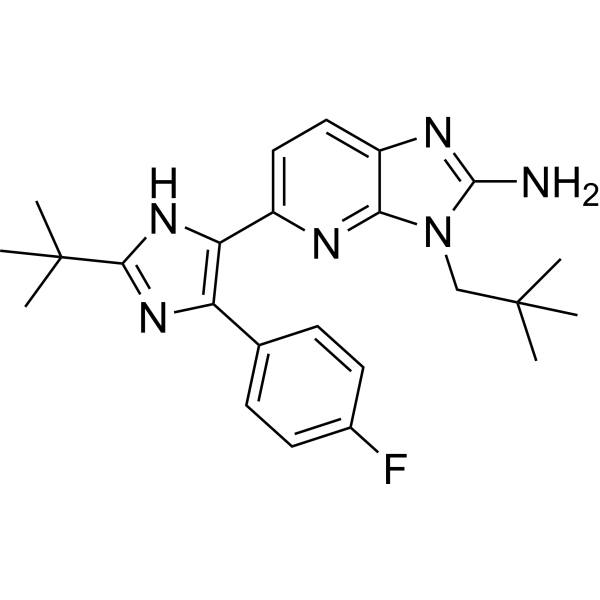
    Trk-IN-11 (Compound 14h) is a potent inhibitor of TRK (IC50 = 1.4, 1.8 nM, against TrkA, TrkA G595R, respectively). As a receptor tyrosine kinase (RTK), tropomyosin receptor kinase (Trk) is a key agent target in solid tumors. Trk-IN-11 has the potential for the research of cancer disease .
    Trk-IN-11

Inquiry Online

Your information is safe with us. * Required Fields.

Salutation


Country or Region *

Applicant Name *


Organization Name *

Department *


Email Address *


Product Name *

Cat. No.


Requested quantity *

Phone Number *


Remarks

Inquiry Online

Inquiry Information

Product Name:
Cat. No.:
Quantity:
MCE Japan Authorized Agent:

