

37 Results for "

tyrosine residue

" in MedChemExpress (MCE) Product Catalog:
Products (37)

37 Results for "tyrosine residue" in MCE Product Catalog:

12
12 Publications Verification
Cat. No.: HY-19730
CAS No.: 1353550-13-6
Synonyms: HM61713; BI 1482694
Target:  

EGFR

Research Areas:  

Cancer

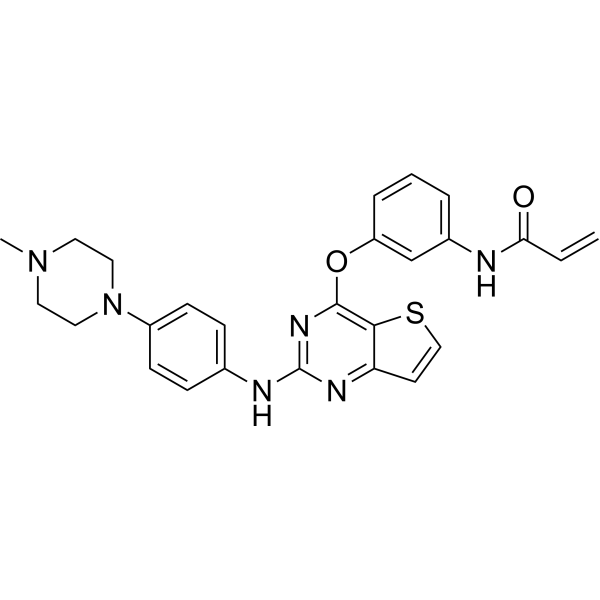
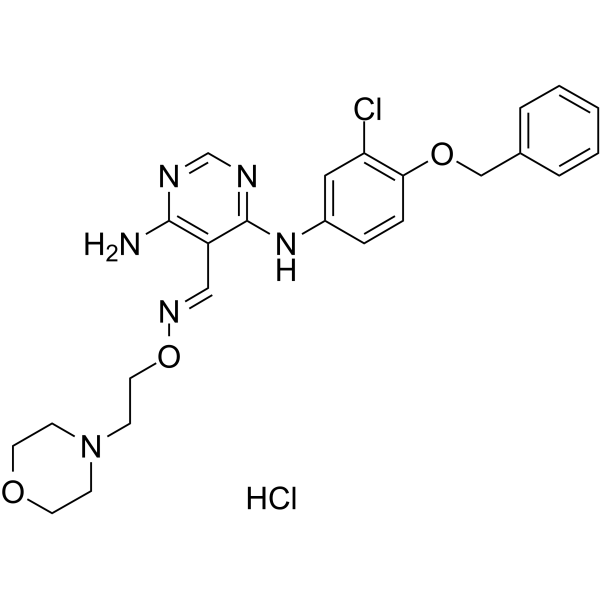
Olmutinib (HM61713; BI-1482694) is an orally active and irreversible third EGFR tyrosine kinase inhibitor that binds to a cysteine residue near the kinase domain. Olmutinib is used for NSCLC .
loading...
    loading...
2
2 Cited Publications
Cat. No.: HY-B0558
CAS No.: 22232-54-8
Target:  

p38 MAPK

Research Areas:  

Neurological Disease Endocrinology

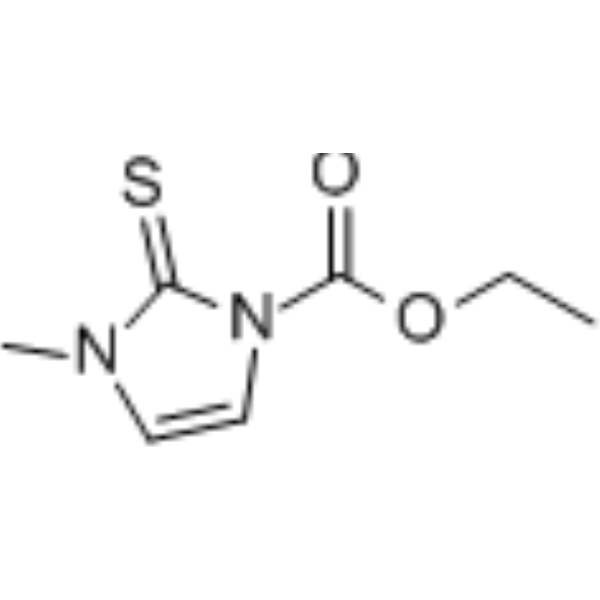
Carbimazole is an orally active antithyroid agent which rapidly converts to Methimazole after absorption and prevents thyroid peroxidase enzyme from iodinating and coupling the tyrosine residues on thyroglobulin, hence reducing the production of thyroxine. Carbimazole also displays anti-inflammatory and neuronal-protective activities, suggesting its application for hyperthyroidism and neurological research .
loading...
    loading...
1
1 Cited Publications
Cat. No.: HY-110208
CAS No.: 32703-82-5
Purity:  98.82%
Research Areas:  

Cancer

BRD9876 is the “rigor” inhibitor that locks kinesin-5 (Eg5) in a state with enhanced microtubules (MTs) binding, leading to bundling and stabilization of MTs. BRD9876 interacts with the tyrosine 104 residue that is part of the α4-α6 allosteric binding pocket. BRD9876 specifically targets microtubule-bound Eg5 and selectively inhibits myeloma over CD34 cells. BRD9876 has the potential for multiple myeloma (MM) research .
loading...
    loading...
1
1 Cited Publications
Cat. No.: HY-P4106A
Research Areas:  

Neurological Disease

Tat-GluR23Y, scrambled TFA is the scrambled peptide of Tat-GluR23Y (HY-P2259). Tat-GluR23Y is a synthetic peptide containing tyrosine residues that inhibit AMPAR endocytosis and is effective in the research of long-term depression (LTD) .
loading...
    loading...
Cat. No.: HY-141898
CAS No.: 901770-40-9
Purity:  99.45%
Target:  

Fluorescent Dye

Research Areas:  

Others

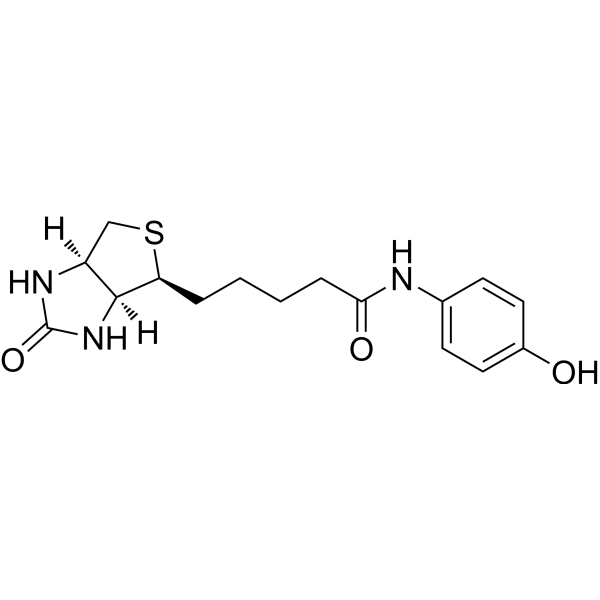
Biotin-4-aminophenol is a biotin-phenol analog. Biotin-4-aminophenol generates free radicals and conjugates to tyrosine residues in proteins more efficiently and selectively than the previously reported BP1 .
loading...
    loading...
Cat. No.: HY-118380
CAS No.: 39628-94-9
Purity:  98.78%
Synonyms: 4-Nitrobenzyl mesylate; para-Nitrobenzyl mesylate; PNBM
p-Nitrobenzyl mesylate (4-Nitrobenzyl mesylate) is an alkylating reagent. p-Nitrobenzyl mesylate alkylates thiophosphorylated serine, threonine, tyrosine residues and cysteine thiols, without modifying hydroxyl, amino or carboxylic acid functional groups. p-Nitrobenzyl mesylate generates thiophosphate epitopes on thiophosphorylated substrate proteins for recognition by thiophosphate-specific antibodies. p-Nitrobenzyl mesylate facilitates the identification and purification of kinase substrates. p-Nitrobenzyl mesylate is applicable to studies related to cerebral ischemia-reperfusion injury .
loading...
    loading...
Cat. No.: HY-W009486
CAS No.: 730-08-5
Synonyms: Tyr-Ala
Research Areas:  

Others

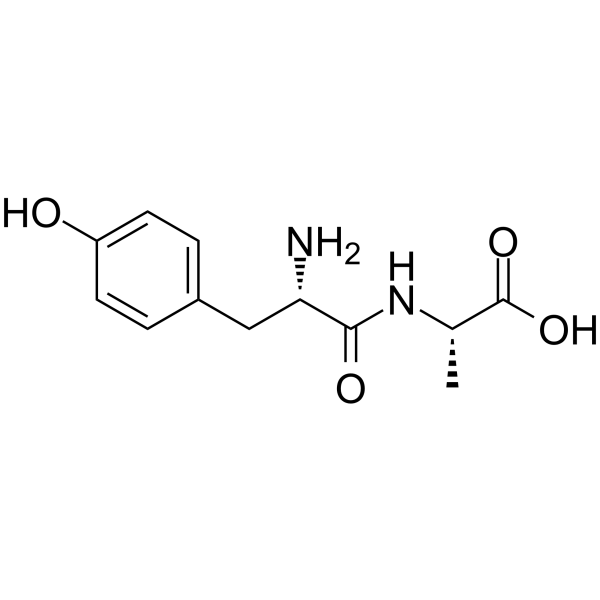
H-Tyr-Ala-OH (Tyr-Ala) is a dipeptide containing tyrosine and alanine .
loading...
    loading...
Cat. No.: HY-164159
CAS No.: 130603-71-3
α-Glucosylrutin, a flavonoid, is a potent antioxidant with free radical scavenging activity. α-Glucosylrutin reduces MMP-1 gene expression, protein expression, and enzyme activity, and reduces MMP-2 protein expression and enzyme activity in UVA-irradiated human dermal fibroblasts. α-Glucosylrutin prevents oxidative stress-induced intracellular tyrosine residue phosphorylation and counteracts intracellular thiol level depletion in human skin cells. α-Glucosylrutin is effective in the prevention of dermatologic diseases in which oxidative stress is of pathogenetic relevance, e.g. in polymorphous light eruption (PLE). α-Glucosylrutin can be used for the research of UV-induced skin photodamage/photoaging .
loading...
    loading...
Cat. No.: HY-138993A
CAS No.: 3031756-18-7
Purity:  98.21%
Research Areas:  

Cancer

NNMT-IN-6 hydrochloride is a selective nicotinamide N-methyltransferase (NNMT) inhibitor with an IC50 of 1.41 μM and a Kd of 5.55 μM. NNMT-IN-6 hydrochloride exhibits selectivity over PRMT1 and NSD2. NNMT-IN-6 hydrochloride inhibits cancer cell proliferation and reduces cellular N-methylnicotinamide (MNA) production. NNMT-IN-6 hydrochloride can be used for the research of oral cancer .
loading...
    loading...
Cat. No.: HY-NP143
CAS No.: 93928-24-6
Nerve Growth Factor 2.5S,murine submaxillary gland is a neurotrophic polypeptide and protein growth factor isolated from murine submaxillary glands. Nerve Growth Factor 2.5S,murine submaxillary gland increases the survival rate, phagocytic capacity and superoxide anion production level of mouse cells. Nerve Growth Factor 2.5S,murine submaxillary gland acts through cell membrane surface receptors to mediate the differentiation and maintenance of adrenergic neurons in the sympathetic nervous system. Nerve Growth Factor 2.5S,murine submaxillary gland loses its activity and undergoes dimer dissociation due to oxidation; it remains active after modification of specific tryptophan residues, while its tyrosine residues are not essential for activity. Nerve Growth Factor 2.5S,murine submaxillary gland may play a role in the inflammatory process .
loading...
    loading...
Cat. No.: HY-176892
CAS No.: 574-77-6
Research Areas:  

Neurological Disease

Papaveroline is a Fyn tyrosine kinase inhibitor, Na +,K +-ATPase inhibitor with an IC50 of 0.20 mM, Mg 2+-ATPase inhibitor, K +-activated pNPPase inhibitor with an IC50 of 1.51 mM, and apoptosis inducer . Papaveroline binds to the active site of Fyn tyrosine kinase and forms stable interactions with pocket amino acid residues . Papaveroline induces cell apoptosis, produces pycnotic and fragmented cell nuclei, and does not reduce intracellular ATP levels . Papaveroline is a dopamine-derived neurotoxin candidate associated with the pathogenesis of Parkinson's disease . Papaveroline can be used in the research of Alzheimer's disease and Parkinson's disease .
loading...
    loading...
Cat. No.: HY-138993
CAS No.: 2368247-39-4
Research Areas:  

Cancer

NNMT-IN-6 is a selective nicotinamide N-methyltransferase (NNMT) inhibitor with an IC50 of 1.41 μM and a Kd of 5.55 μM. NNMT-IN-6 hydrochloride exhibits selectivity over PRMT1 and NSD2. NNMT-IN-6 inhibits cancer cell proliferation and reduces cellular N-methylnicotinamide (MNA) production. NNMT-IN-6 can be used for the research of oral cancer .
loading...
    loading...
Cat. No.: HY-103441
CAS No.: 944342-90-9
Purity:  98.36%
Target:  

EGFR

Research Areas:  

Cancer

JNJ28871063 hydrochloride is an orally active, highly selective and ATP competitive pan-ErbB kinase inhibitor with IC50 values of 22 nM, 38 nM, and 21 nM for ErbB1, ErbB2, and ErbB4, respectively. JNJ28871063 hydrochloride inhibits phosphorylation of functionally important tyrosine residues in both EGFR and ErbB2. JNJ28871063 hydrochloride crosses the blood-brain barrier and has antitumor activity in human tumor xenograft models that overexpress EGFR and ErbB2 .
loading...
    loading...
Cat. No.: HY-130255
CAS No.: 2376726-26-8
Target:  

Btk

Research Areas:  

Inflammation/Immunology

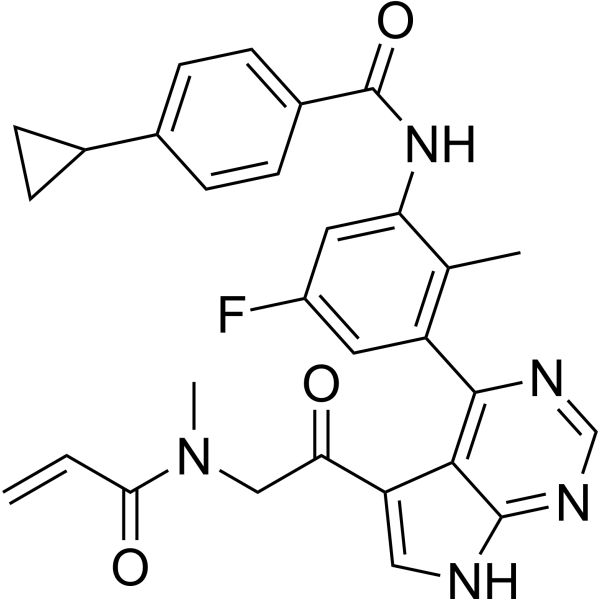
BTK inhibitor 13 is an orally active Bruton's tyrosine kinase (BTK) inhibitor, with an IC50 value of 1.2 nM against human BTK. BTK inhibitor 13 covalently modifies the Cys481 residue of BTK when binding to the inactive conformation of BTK. BTK inhibitor 13 is used for the research of autoimmune diseases .
loading...
    loading...
Cat. No.: HY-19730A
CAS No.: 1842366-97-5
Synonyms: HM61713 hydrochloride; BI 1482694 hydrochloride
Target:  

EGFR

Research Areas:  

Cancer

Olmutinib hydrochloride is an orally active and irreversible third EGFR tyrosine kinase inhibitor that binds to a cysteine residue near the kinase domain. Olmutinib hydrochloride is used for NSCLC .
loading...
    loading...
Cat. No.: HY-P10609
Target:  

Btk

Research Areas:  

Others

Btk substrate peptide is a peptide substrate corresponding to residues 217-229 of human Bruton’s tyrosine kinase (Btk), of which the tyrosine at residue 223 is the major autophosphorylation site of Btk. Btk substrate peptide is used as a substrate in in vitro kinase assays to evaluate the activity of Btk or other tyrosine kinases .
loading...
    loading...
Cat. No.: HY-P2676
CAS No.: 21778-69-8
Synonyms: Tyr-Gly-Gly
Research Areas:  

Others

Enkephalin(1-3) (Tyr-Gly-Gly) is a tripeptide containing one L-tyrosine and two glycine residues .
loading...
    loading...
Cat. No.: HY-E70691
Target:  

CDK

Research Areas:  

Cancer

CLK1 is one of the dual specificity kinases and is the founding member of the 'LAMMER' family of kinases. CLK1 activity is positively regulated by phosphorylation on either tyrosine residues or serine/threonine residues, and is negatively regulated by steric constraints mediated by the N-terminal domain, as well as, by phosphorylation on a subset of serine/threonine residues within the catalytic domain. CLK1 Recombinant Human Active Protein Kinase is a recombinant CLK1 protein that can be used to study CLK1-related functions .
loading...
    loading...
Cat. No.: HY-P4106
CAS No.: 1404188-94-8
Research Areas:  

Neurological Disease

Tat-GluR23Y, scrambled is the scrambled peptide of Tat-GluR23Y (HY-P2259). Tat-GluR23Y is a synthetic peptide containing tyrosine residues that inhibit AMPAR endocytosis and is effective in the research of long-term depression (LTD) .
loading...
    loading...
Cat. No.: HY-116870
CAS No.: 2275-23-2
Target:  

Parasite

Research Areas:  

Infection

Vamidothion is a polar organophosphorus insecticide and acaricide with biological activity against insects and mites. Vamidothion is degraded by human serum albumin (HSA) and promotes adduct formation with tyrosine residues. The phosphate amino acid adducts formed after the reaction of vamidothion with HSA are detected by liquid chromatography quadrupole-Orbitrap mass spectrometry. The metabolites of vamidothion can be used in forensic toxicology to help determine deaths caused by organophosphorus poisoning .
loading...
    loading...

