



KT109
Based on 1 publication(s) in Google Scholar
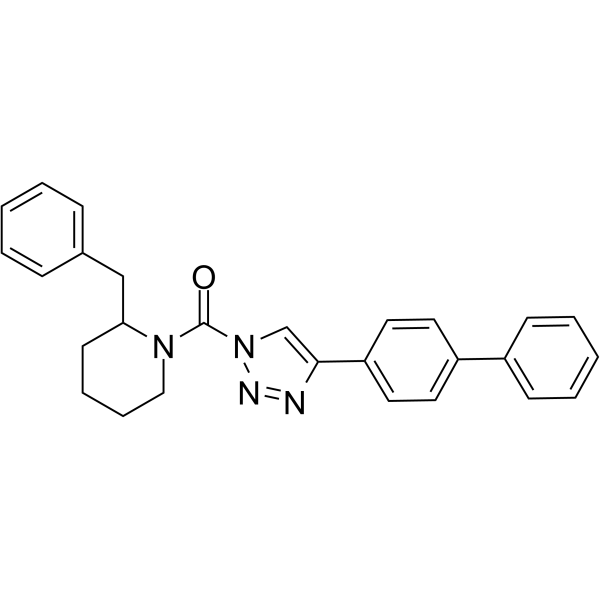
KT109 is a potent and an isoform-selective inhibitor of diacylglycerol lipase-β (DAGLβ) with an IC50 of 42 nM. KT109 has ~60-fold selectivity for DAGLβ over DAGLα. KT109 shows inhibitory activity against PLA2G7 (IC50=1 µM). KT109 shows negligible activity against FAAH, MGLL, ABHD11, and cytosolic phospholipase A2 (cPLA2 or PLA2G4A). KT109 perturbs a lipid network involved in macrophage inflammatory responses and lowers 2-Arachidonoylglycerol (HY-W011051), Arachidonic acid (HY-109590) and eicosanoids in mouse peritoneal macrophages.
For research use only. We do not sell to patients.
- Purity : 99.86%
- CAS No.: 1402612-55-8
- Formula: C27H26N4O
- Molecular Weight:422.52
-
Storage:Powder -20°C, 3 years , 4°C, 2 years ; In solvent -80°C, 6 months , -20°C, 1 month

To place orders, for customer services and technical support, please contact: MedChemExpress USA
Tel: 609-228-6898 E-mail: [email protected] [email protected]


-
 Biological Activity
-
Chemical Information
-
Solvent & Solubility
- Protocols
- Purity & Documentation
- References
-
 Help & FAQs


-
HY-117771
DO34DAGL Inhibitor -
HY-124314
LEI-106ABHD6/DAGL-α Inhibitor -
HY-18541
KT172DAGLβ Inhibitor -
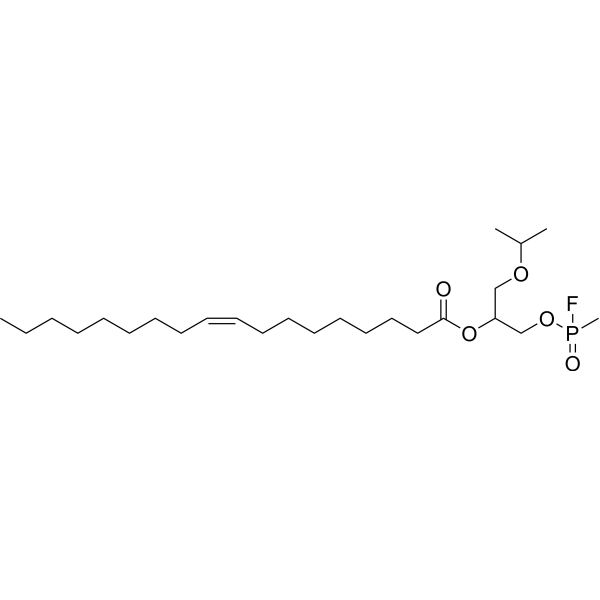
HY-120851
O-7460DAGLα Inhibitor -
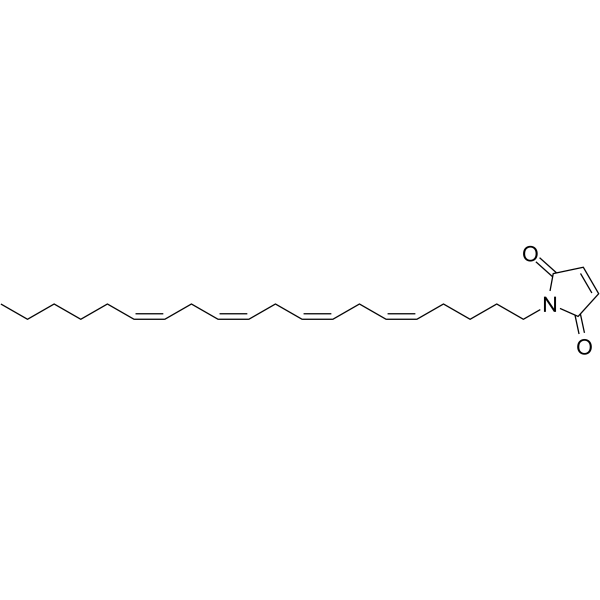
HY-136562
N-Arachidonyl maleimideMAGL Inhibitor -
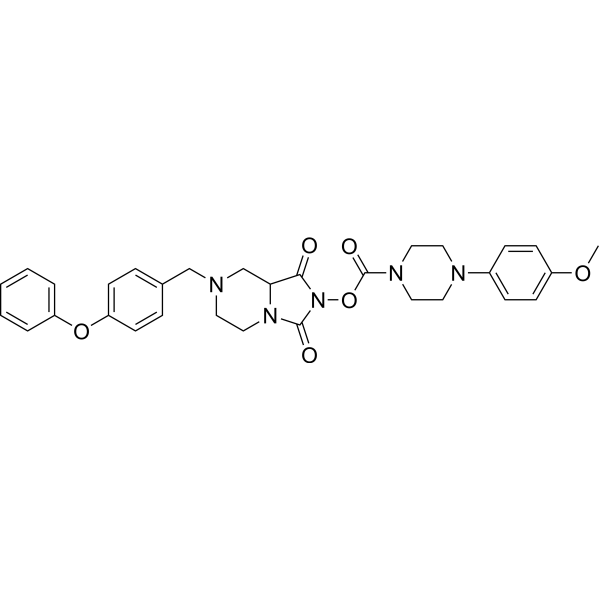
HY-125143
ABC34Inactive Control of JJH260 -
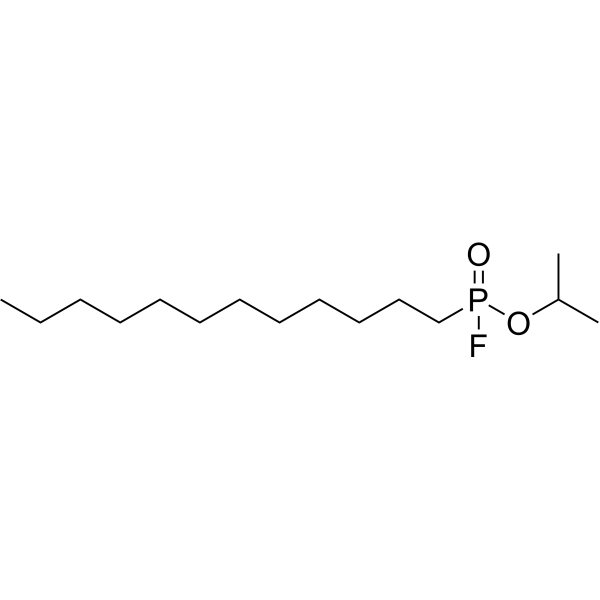
HY-121637
IDFPCB1 Receptor Probe -

HY-138969
(±)10(11)-EDP ethanolamide -
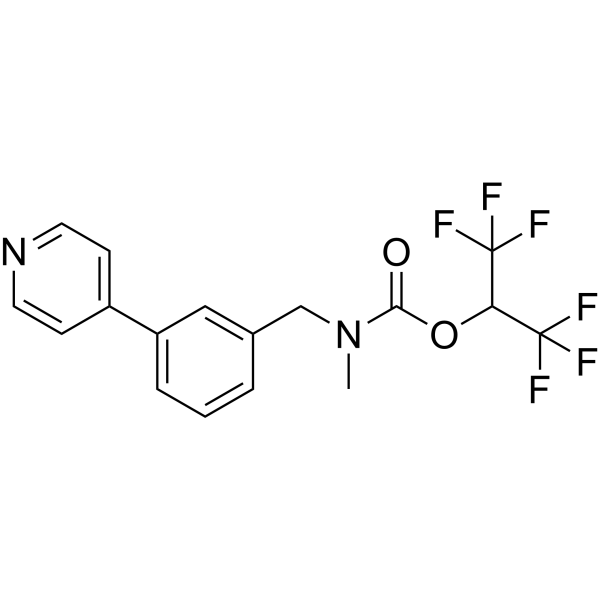
HY-117722
JW 618ABHD6 Inhibitor -

HY-126031A
(S)-KT109 -

HY-126031
(R)-KT109Serine Hydrolase Inhibitor -

HY-124576
ABD-1970MAGL Inhibitor
Publications Citing Use of MedChemExpress (MCE) KT109
More

Biological Activity
Description
IC50 & Target
|
DAGLβ |
Cellular Effect
|
Cell Line

|
Type | Value | Description | References |
|---|---|---|---|---|
| HEK-293T | IC50 |
2.3 μM
Compound: 1 racemic mixture 1:1; KT109
|
Inhibition of HT-01 probe binding to recombinant human DAGLalpha expressed in HEK293T cell membrane proteomes preincubated for 30 mins followed by HT-01 probe addition measured after 30 mins by gel-based competitive activity based protein profiling assay
Inhibition of HT-01 probe binding to recombinant human DAGLalpha expressed in HEK293T cell membrane proteomes preincubated for 30 mins followed by HT-01 probe addition measured after 30 mins by gel-based competitive activity based protein profiling assay
|
[PMID: 27992221] |
In Vitro
KT109 (0.1-100 nM in Neuro 2A, 0.001-10 μM in PC3; 4 h) inactivates DAGLβ in Neuro2A and PC3 cells with IC50 values of 14 nM and 0.58 μM, respectively[1].
KT109 (50 nM in Neuro 2A, 100 nM in PC3, 4 h) shows a marked reduction in cellular 2-AG (~90%), and arachidonic acid (AA), and increases SAG in Neuro2A and PC3 cells[1].
MedChemExpress (MCE) has not independently confirmed the accuracy of these methods. They are for reference only.
In Vivo
KT109 (5 mg/kg; i.p.; 4 h) lowers 2-AG, as well as Arachidonic acid (HY-109590) and eicosanoids, in mice peritoneal macrophages. KT109 reduces secreted TNF-α levels in lipopolysaccharide-stimulated macrophages[1].
KT109 (1.6-40 mg/kg; i.p.) reverses the allodynic responses of Lipopolysaccharides (HY-D1056) (LPS)-treated paw, but i.c.v. or i.t. administration of KT109 do not alter LPS-induced allodynia in C57BL/6J mice[2].
Repeated KT109 (40 mg/kg; i.p.; once daily for 6 days) administration prevents the expression of LPS-induced allodynia, without evidence of tolerance in C57BL/6J mice[2].
KT109 reverses allodynia in the chronic constrictive injury (CCI) (40 mg/kg) and chemotherapy-induced neuropathic pain (CINP) (1.6-40 mg/kg) models and lacks discernible side effects in C57BL/6J mice[2].
MedChemExpress (MCE) has not independently confirmed the accuracy of these methods. They are for reference only.
-
Animal Model:DAGL-β (-/-) and (+/+) on C57BL/6J mice (23-40 g) (injected with 2.5 μg LPS into the plantar surface of the right hind paw after the 5th dose.)[2]
-
Dosage:40 mg/kg
-
Administration:Intraperitoneal injection (i.p.). once daily for 6 days
-
Result:Repeated administration prevented the expression of LPS-induced allodynia, without evidence of tolerance.
-
Animal Model:Daglb+/+, Daglb+/- and Daglb-/- mice on C57BI/6 and 129/SvEv mixture background were first treated intraperitoneally (i.p.) with 4% (w/v) thioglycollate 4 d before to induce recruitment of macrophages to the peritoneal cavity[1]
-
Dosage:0.1, 0.5, 1, 5, 10 mg/kg
-
Administration:Intraperitoneal injection (i.p.). 4 h
-
Result:Completely inactivated DAGLβ at doses as low as 0.5 mg/kg body weight. Also inhibited ABHD6.
Time-course studies revealed that produced complete inhibition of macrophage DAGLβ by 1 h after in vivo treatment, and this inhibition was maintained for > 16 h.
-
Animal Model:Pla2g4a+/+ and Pla2g4a-/- mice on a BALB/c background and Daglb+/+, Daglb+/- and Daglb-/- mice on C57BI/6 and 129/SvEv mixture background were first treated intraperitoneally (i.p.) with 4% (w/v) thioglycollate 4 d before to induce recruitment of macrophages to the peritoneal cavity[1]
-
Dosage:5 mg/kg
-
Administration:Intraperitoneal injection (i.p.). 4 h
-
Result:Marked decreases in 2-AG content in macrophages.
Significant increases in the DAGLβ substrate SAG, and reductions in arachidonic acid and in the arachidonic acid-derived prostaglandins PGE2 and PGD2.
Significantly reduced secreted TNF-α levels in lipopolysaccharide-stimulated macrophages, and this suppressive effect was also observed in macrophages from Daglb−/− mice.
-
Animal Model:DAGL-β (-/-) and (+/+) on C57BL/6J mice (23-40 g)[2]
-
Dosage:1.6, 2.5, 5, 20, 40 mg/kg
-
Administration:Intraperitoneal injection (i.p.).
-
Result:Reversed LPS-induced allodynia in wild-type mice in a dose-dependent manner, but does not further alter the anti-allodynic phenotype in DAGL-β (-/-) mice.


Chemical Information
-
CAS No. 1402612-55-8
-
Appearance Solid
-
Molecular Weight 422.52
-
Formula C27H26N4O
-
Color White to off-white
-
SMILES
O=C(N1N=NC(C2=CC=C(C3=CC=CC=C3)C=C2)=C1)N4CCCCC4CC5=CC=CC=C5
-
Shipping
Room temperature in continental US; may vary elsewhere.
-
Storage
Powder -20°C 3 years 4°C 2 years In solvent -80°C 6 months -20°C 1 month


Publications (1)
-
Journal Impact Factor
-
Most Recent


Solvent & Solubility
In Vitro:
DMSO : 20 mg/mL (47.34 mM; ultrasonic and warming and heat to 60°C; Hygroscopic DMSO has a significant impact on the solubility of product, please use newly opened DMSO)
Please refer to the solubility information to select the appropriate solvent. Once prepared, please aliquot and store the solution to prevent product inactivation from repeated freeze-thaw cycles.
Storage method and period of stock solution: -80°C, 6 months; -20°C, 1 month. When stored at -80°C, please use it within 6 months. When stored at -20°C, please use it within 1 month.
Please refer to the solubility information to select the appropriate solvent. Once prepared, please aliquot and store the solution to prevent product inactivation from repeated freeze-thaw cycles.
Storage method and period of stock solution: -80°C, 6 months; -20°C, 1 month. When stored at -80°C, please use it within 6 months. When stored at -20°C, please use it within 1 month.
Concentration (start) × Volume (start) = Concentration (final) × Volume (final)
In Vivo:
Select the appropriate dissolution method based on your experimental animal and administration route.
- For the following dissolution methods, please ensure to first prepare a clear stock solution using an In Vitro approach and then sequentially add co-solvents:
- To ensure reliable experimental results, the clarified stock solution can be appropriately stored based on storage conditions. As for the working solution for In Vivo experiments, it is recommended to prepare freshly and use it on the same day.
- The percentages shown for the solvents indicate their volumetric ratio in the final prepared solution. If precipitation or phase separation occurs during preparation, heat and/or sonication can be used to aid dissolution.
In Vivo Dissolution Calculator
Please enter the basic information of animal experiments:
-
-
-
-
Recommended: Prepare an additional quantity of animals to account for potential losses during experiments.
Please enter your animal formula composition:
-
%DMSO +
Recommended: Keep the proportion of DMSO in working solution below 2% if your animal is weak.
-
%+
-
+%Tween-80 + +
-
%Saline +
The co-solvents required include: DMSO, . All of co-solvents are available by MedChemExpress (MCE). , Tween 80. All of co-solvents are available by MedChemExpress (MCE).
Working solution concentration: 0.22 mg/mL
Method for preparing stock solution: mg drug dissolved in μL DMSO. Stock solution concentration: mg/mL.
1. Take μL DMSO stock solution;
2. Add μL .
μL , mix evenly;
3. Then add μL Tween 80, mix evenly;
4. Then add μL
Please ensure that the stock solution in the first step is dissolved to a clear state, and add co-solvents in sequence. You can use ultrasonic heating (ultrasonic cleaner, recommended frequency 20-40 kHz), vortexing, etc. to assist dissolution.


Purity & Documentation
-
Data Sheet (279 KB)
-
SDS (392 KB)
- English - EN (392 KB)
- Français - FR (392 KB)
- Deutsch - DE (392 KB)
- Norwegian - NO (392 KB)
- Español - ES (392 KB)
- Swedish - SV (392 KB)
- Italian - IT (392 KB)
- Korean - KR (392 KB)
- Portuguese - PT (392 KB)
-
Handling Instructions (2659 KB)
References


Complete Stock Solution Preparation Table
Please refer to the solubility information to select the appropriate solvent. Once prepared, please aliquot and store the solution to prevent product inactivation from repeated freeze-thaw cycles.
Storage method and period of stock solution: -80°C, 6 months; -20°C, 1 month. When stored at -80°C, please use it within 6 months. When stored at -20°C, please use it within 1 month.
| Optional Solvent | Concentration Solvent Mass | 1 mg | 5 mg | 10 mg | 25 mg |
|---|---|---|---|---|---|
| DMSO | 1 mM | 2.3668 mL | 11.8338 mL | 23.6675 mL | 59.1688 mL |
| 5 mM | 0.4734 mL | 2.3668 mL | 4.7335 mL | 11.8338 mL | |
| 10 mM | 0.2367 mL | 1.1834 mL | 2.3668 mL | 5.9169 mL | |
| 15 mM | 0.1578 mL | 0.7889 mL | 1.5778 mL | 3.9446 mL | |
| 20 mM | 0.1183 mL | 0.5917 mL | 1.1834 mL | 2.9584 mL | |
| 25 mM | 0.0947 mL | 0.4734 mL | 0.9467 mL | 2.3668 mL | |
| 30 mM | 0.0789 mL | 0.3945 mL | 0.7889 mL | 1.9723 mL | |
| 40 mM | 0.0592 mL | 0.2958 mL | 0.5917 mL | 1.4792 mL |


KT109 Related Classifications
HY-18540 Related Classifications
 Powered by Bioz