



Zinc sulphate
Based on 1 publication(s) in Google Scholar
Zinc sulphate is an orally active inhibitor of tyrosinase and glutathione reductase. Zinc sulphate enhances the activity of dopachrome tautomerase. Zinc sulphate delays anagen-related eumelanin production, induces hair hypopigmentation in mice, and accelerates wound healing. Zinc sulphate can be used in research related to benign gastric ulcers. Zinc sulphate can be used in research related to rheumatoid arthritis.
For research use only. We do not sell to patients.
- Purity : 99.85%
- CAS No.: 7733-02-0
- Formula: ZnSO4
- Molecular Weight:161.44
-
Storage:
Store at room temperature, keep dry and cool.
In solvent -80°C, 1 year , -20°C, 6 months


To place orders, for customer services and technical support, please contact: MedChemExpress USA
Tel: 609-228-6898 E-mail: [email protected] [email protected]


-
 Biological Activity
-
Chemical Information
-
Solvent & Solubility
- Protocols
- Purity & Documentation
- References
-
 Help & FAQs


-
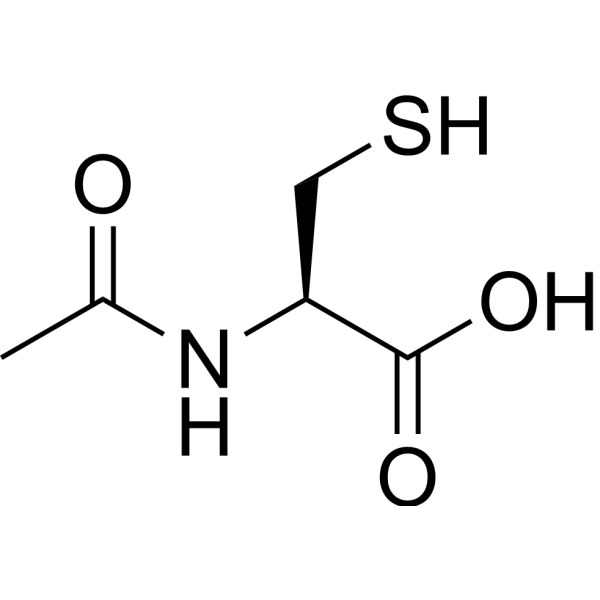
HY-B0215
AcetylcysteineMucolytic Agent -
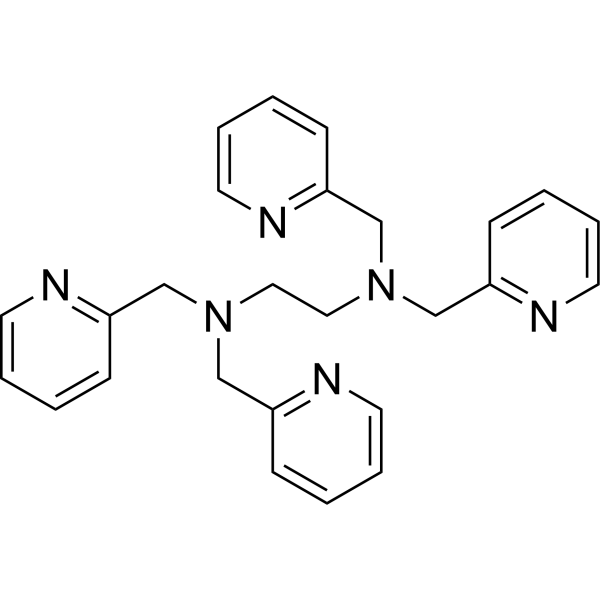
HY-100202
TPENHeavy Metal Chelator -
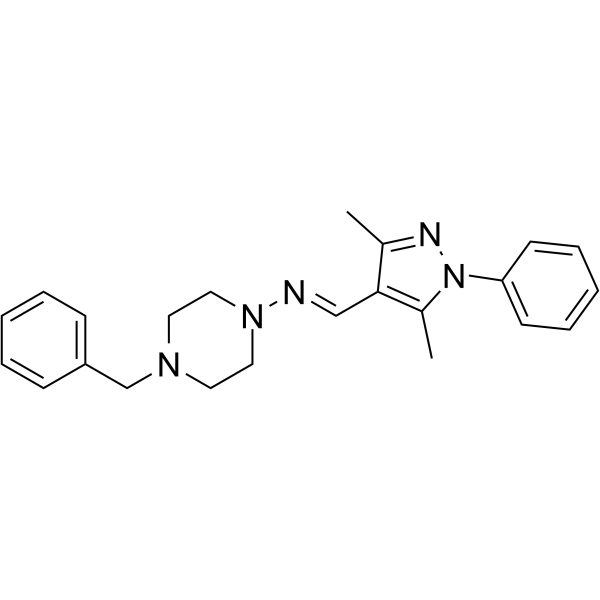
HY-100224
SANT-1Smo Antagonist -
HY-Y0406E
Calcium chloride anhydrous, for cell cultureCalcium Chloride -

HY-Y0537
Potassium chloride, AR, 99.5%Potassium Supplement -
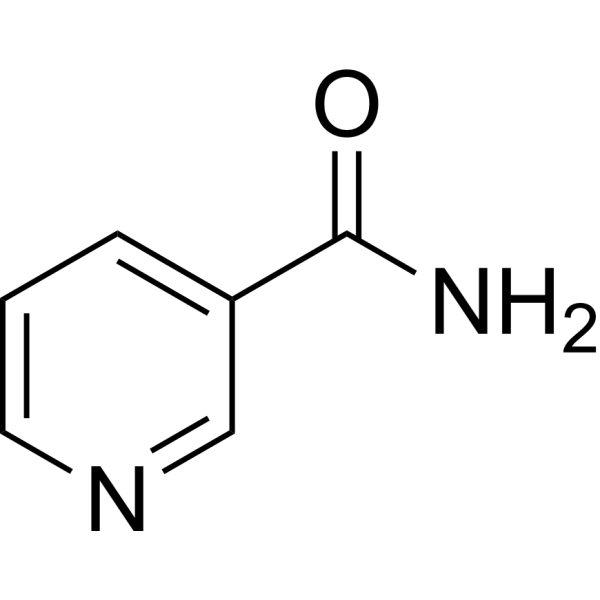
HY-B0150
NicotinamideSIRT Inhibitor -
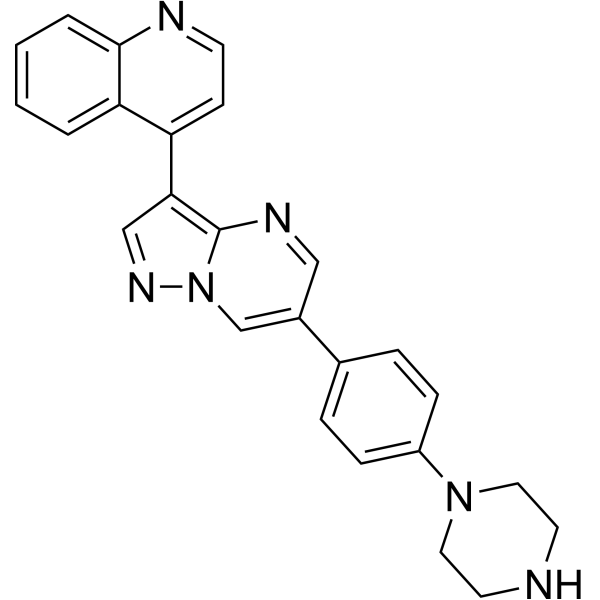
HY-12071
LDN193189ALK2/3 Inhibitor -

HY-Y0262B
Sodium oxalate,99.5%Dispersant/Coordination Agent -
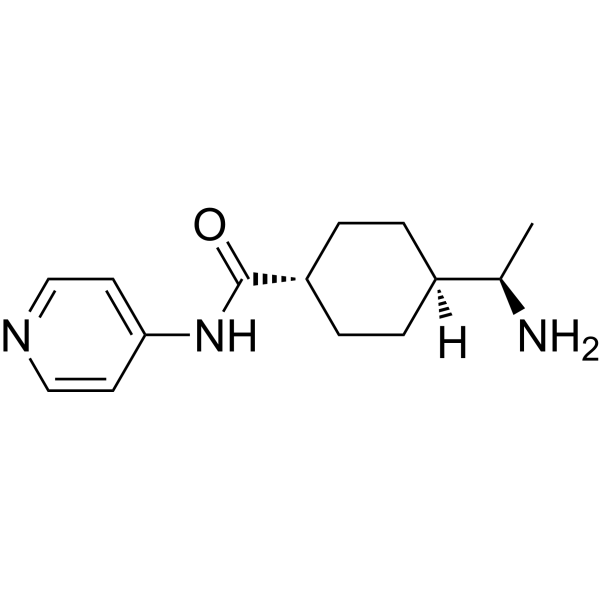
HY-10071
Y-27632ROCK Inhibitor -
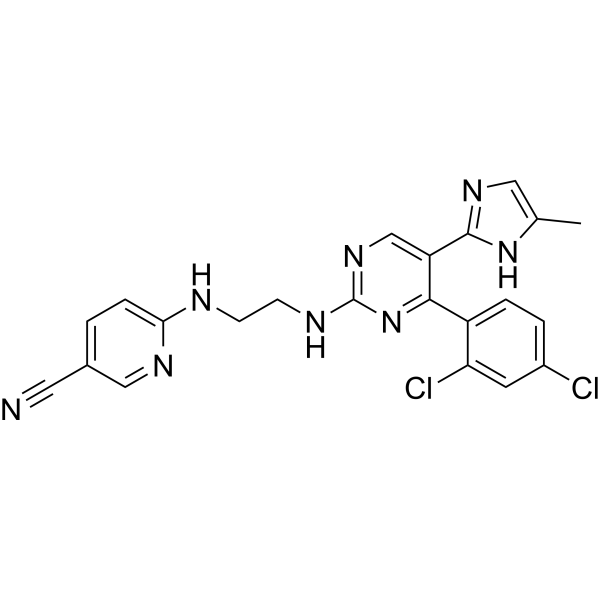
HY-10182
LaduviglusibGSK-3 Inhibitor -
HY-14649
Retinoic acidRAR Agonist -
HY-13012
RepSoxTGFβR-1/ALK5 Inhibitor
Publications Citing Use of MedChemExpress (MCE) Zinc sulphate
More Customer Validation & Images

-
Cell Proliferation/Viability Assay


Biological Activity
Description
In Vitro
Zinc inhibits tyrosinase and glutathione reductase in vitro, but also enhances the activity of dopachrome tautomerase and acts as an agonist of melanocortin receptor signaling[1].
MedChemExpress (MCE) has not independently confirmed the accuracy of these methods. They are for reference only.
In Vivo
MedChemExpress (MCE) has not independently confirmed the accuracy of these methods. They are for reference only.
-
Animal Model:C57BL/6 a/a (female, 6-8 weeks old)[1]
-
Dosage:20 mg/mL
-
Administration:oral; continuous; up to 11 months
-
Result:Observed macroscopic bright brown lightening of new hair shafts produced during anagen, with the effect maintained throughout the treatment period.
Confirmed no switch from eumelanogenesis to phaeomelanogenesis via EPR analysis.
Reduced and poorly pigmented melanin granules in precortical hair matrix keratinocytes, hair bulb melanocytes, and hair shafts compared with controls.
Maintained hair coat lightening usually persisted until the immediately consecutive anagen phase after treatment discontinuation.
Clinical Trial
| NCT Number | Sponsor | Condition | Start Date |
Phase

|
|---|---|---|---|---|
| NCT01329991 | 2011-05 | PHASE1 |


Chemical Information
-
CAS No. 7733-02-0
-
Appearance Solid
-
Molecular Weight 161.44
-
Formula ZnSO4
-
Color White to off-white
-
SMILES
O=S(=O)=[Zn](=O)=O
-
Shipping
Room temperature in continental US; may vary elsewhere.
-
Storage
Store at room temperature, keep dry and cool
In solvent -80°C 1 year -20°C 6 months


Publications (1)
-
Journal Impact Factor
-
Most Recent
-
Int Immunopharmacol
Colistin-induced acute kidney injury via zinc Dyshomeostasis-triggered GSDMD-executed Pyroptosis. [Abstract]2026 Jan 1;168(Pt 1):115768. PMID: 41176907
Zinc sulphate purchased from MedChemExpress. Usage Cited in: Int Immunopharmacol. 2026 Jan 1;168(Pt 1):115768. [Abstract]
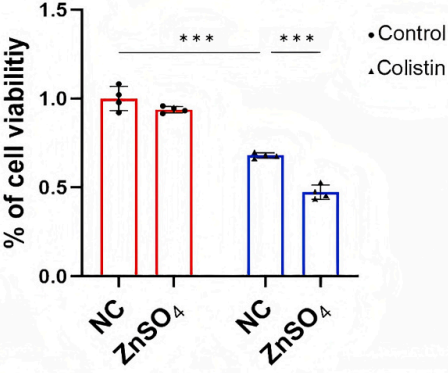
Viability assays demonstrating TPEN cytoprotection and ZnSO4 (Zinc sulphate; 115 μM; 24 h) -aggravated injury in colistin-exposed HK-2 cells.


Solvent & Solubility
In Vitro:
H2O : 50 mg/mL (309.71 mM; Need ultrasonic)
Please refer to the solubility information to select the appropriate solvent. Once prepared, please aliquot and store the solution to prevent product inactivation from repeated freeze-thaw cycles.
Storage method and period of stock solution: -80°C, 1 year; -20°C, 6 months. When stored at -80°C, please use it within 1 year. When stored at -20°C, please use it within 6 months.
* Note: If you choose water as the stock solution, please dilute it to the working solution, then filter and sterilize it with a 0.22 μm filter before use.
Please refer to the solubility information to select the appropriate solvent. Once prepared, please aliquot and store the solution to prevent product inactivation from repeated freeze-thaw cycles.
Storage method and period of stock solution: -80°C, 1 year; -20°C, 6 months. When stored at -80°C, please use it within 1 year. When stored at -20°C, please use it within 6 months.
* Note: If you choose water as the stock solution, please dilute it to the working solution, then filter and sterilize it with a 0.22 μm filter before use.
Concentration (start) × Volume (start) = Concentration (final) × Volume (final)


Purity & Documentation
-
Data Sheet (276 KB)
-
SDS (620 KB)
- English - EN (620 KB)
- Français - FR (620 KB)
- Deutsch - DE (620 KB)
- Norwegian - NO (620 KB)
- Español - ES (620 KB)
- Swedish - SV (620 KB)
- Italian - IT (620 KB)
- Korean - KR (620 KB)
- Portuguese - PT (620 KB)
-
Handling Instructions (2659 KB)
References
[1]. Plonka PM, et al. Oral zinc sulphate causes murine hair hypopigmentation and is a potent inhibitor of eumelanogenesis in vivo. Br J Dermatol. 2006;155(1):39-49. [Content Brief]
[2]. Frommer DJ, et al. The healing of gastric ulcers by zinc sulphate. Med J Aust. 1975;2(21):793-796. [Content Brief]
[3]. Simkin PA, et al. Oral zinc sulphate in rheumatoid arthritis. Lancet. 1976;2(7985):539-542. [Content Brief]


Complete Stock Solution Preparation Table
Please refer to the solubility information to select the appropriate solvent. Once prepared, please aliquot and store the solution to prevent product inactivation from repeated freeze-thaw cycles.
Storage method and period of stock solution: -80°C, 1 year; -20°C, 6 months. When stored at -80°C, please use it within 1 year. When stored at -20°C, please use it within 6 months.
| Optional Solvent | Concentration Solvent Mass | 1 mg | 5 mg | 10 mg | 25 mg |
|---|---|---|---|---|---|
| H2O | 1 mM | 6.1943 mL | 30.9713 mL | 61.9425 mL | 154.8563 mL |
| 5 mM | 1.2389 mL | 6.1943 mL | 12.3885 mL | 30.9713 mL | |
| 10 mM | 0.6194 mL | 3.0971 mL | 6.1943 mL | 15.4856 mL | |
| 15 mM | 0.4130 mL | 2.0648 mL | 4.1295 mL | 10.3238 mL | |
| 20 mM | 0.3097 mL | 1.5486 mL | 3.0971 mL | 7.7428 mL | |
| 25 mM | 0.2478 mL | 1.2389 mL | 2.4777 mL | 6.1943 mL | |
| 30 mM | 0.2065 mL | 1.0324 mL | 2.0648 mL | 5.1619 mL | |
| 40 mM | 0.1549 mL | 0.7743 mL | 1.5486 mL | 3.8714 mL | |
| 50 mM | 0.1239 mL | 0.6194 mL | 1.2389 mL | 3.0971 mL | |
| 60 mM | 0.1032 mL | 0.5162 mL | 1.0324 mL | 2.5809 mL | |
| 80 mM | 0.0774 mL | 0.3871 mL | 0.7743 mL | 1.9357 mL | |
| 100 mM | 0.0619 mL | 0.3097 mL | 0.6194 mL | 1.5486 mL |
* Note: If you choose water as the stock solution, please dilute it to the working solution, then filter and sterilize it with a 0.22 μm filter before use.


Zinc sulphate Related Classifications
HY-B1820 Related Classifications
 Powered by Bioz
Keywords
- Zinc sulphate
- 7733-02-0
- Environmental Pollutants
- Tyrosinase
- Glutathione Reductase (GR)
- Biochemical Assay Reagents
- eumelanogenesis
- melanocortin receptor 1
- hair follicle cycling
- tyrosinase
- glutathione reductase
- rheumatoid arthritis
- Cu,Zn-superoxide dismutase
- dopachrome tautomerase
- benign gastric ulcers
- melanocortin receptor 4
- Inhibitor
- inhibitor
- inhibit