



ω-Agatoxin TK

Based on 1 Customer Validation
ω-Agatoxin TK, a peptidyl toxin of the venom of Agelenopsis aperta, is a potent and selective P/Q type Ca2+ channel blocker. ω-Agatoxin TK inhibits the high K+ depolarisation-induced rise in internal Ca2+ in cerebral isolated nerve endings with an IC50 of of 60 nM. ω-Agatoxin TK has no effect on L-type, N-type, or T-type calcium channels.
For research use only. We do not sell to patients.
- Purity : 99%
- CAS No.: 158484-42-5
- Formula: C215H337N65O70S10
- Molecular Weight:5273.02
-
Storage:
Sealed storage, away from moisture.
Powder -80°C, 2 years , -20°C, 1 year* In solvent : -80°C, 6 months; -20°C, 1 month (sealed storage, away from moisture)

To place orders, for customer services and technical support, please contact: MedChemExpress USA
Tel: 609-228-6898 E-mail: [email protected] [email protected]


-
 Biological Activity
-
Chemical Information
-
Solvent & Solubility
- Protocols
- Purity & Documentation
- References
-
 Help & FAQs


-
HY-103319
Calmidazolium chlorideCalmodulin Antagonist -
HY-P1074
SNX-482CaV2.3 Channel Blocker -

HY-P1080
ω-Agatoxin IVAP/Q Type Ca2+ Channel Blocker -
HY-P1075
CALP3Ca2+ Channel Blocker -
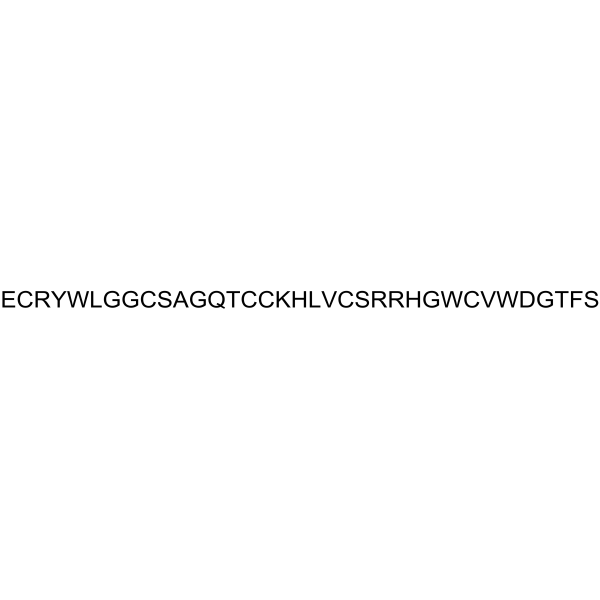
HY-P1073
ProTx-INaV/Cav Inhibitor -
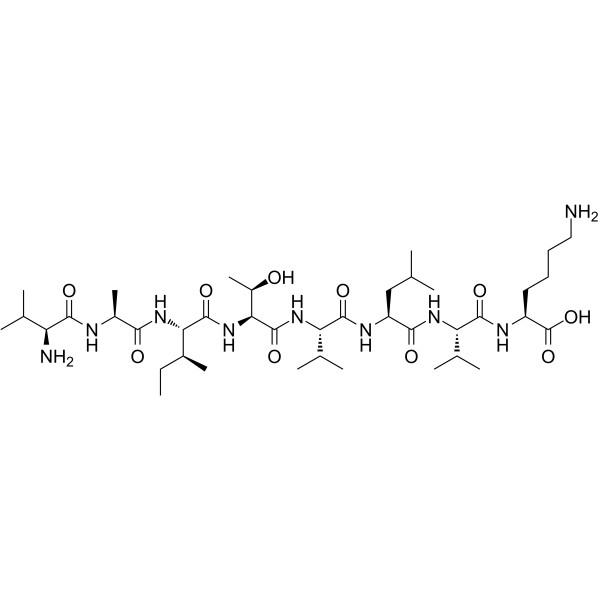
HY-P1077
CALP1Calmodulin Agonist -
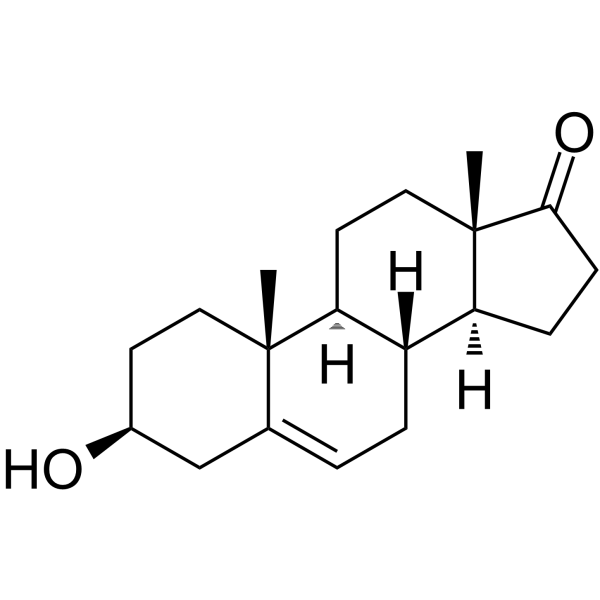
HY-14650
DHEASteroid Hormone -
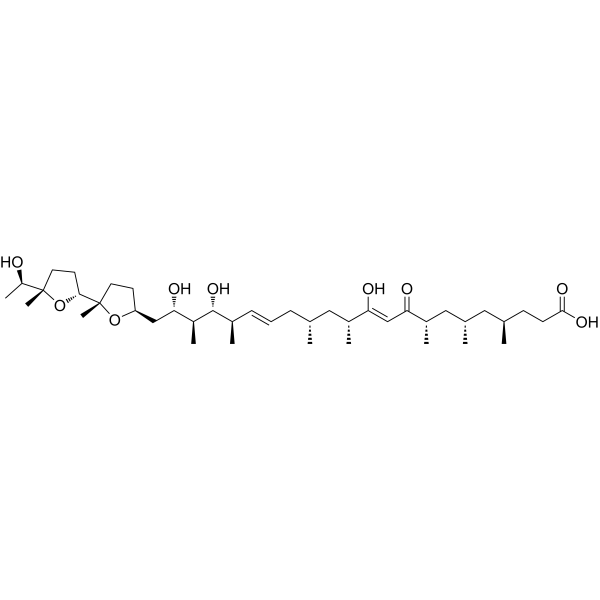
HY-13434
IonomycinCalcium Ionophore -
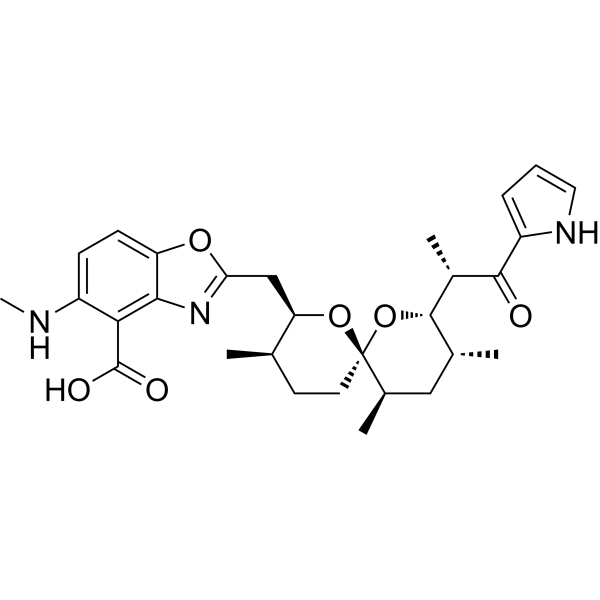
HY-N6687
CalcimycinCation Ionophore -
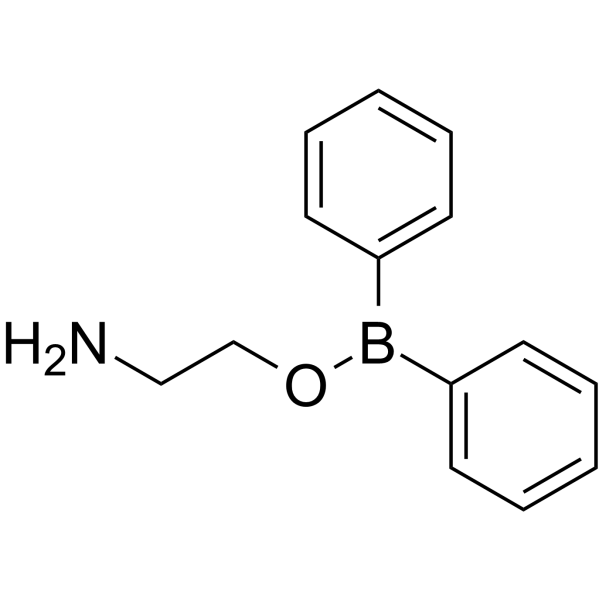
HY-W009724
2-Aminoethyl diphenylborinateIP3R Inhibitor -
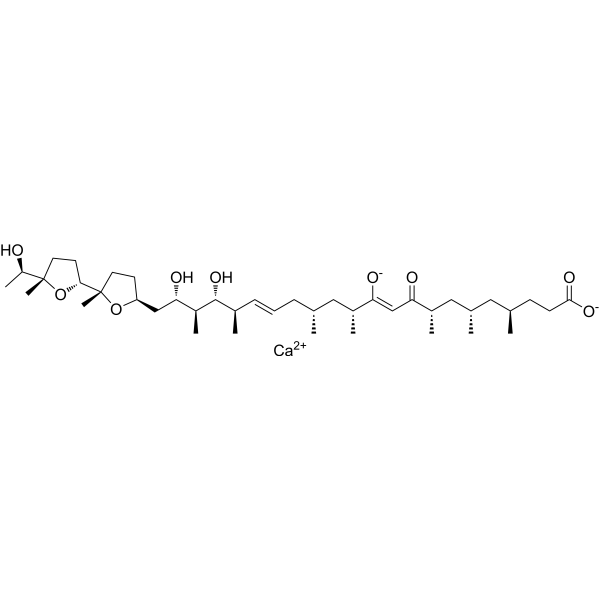
HY-13434A
Ionomycin calciumCalcium Ionophore
All Calcium Channel Isoforms
More

Biological Activity
Description
IC50 & Target
|
P/Q-type calcium channel |


Chemical Information
-
CAS No. 158484-42-5
-
Appearance Solid
-
Molecular Weight 5273.02
-
Formula C215H337N65O70S10
-
Color White to off-white
-
Sequence
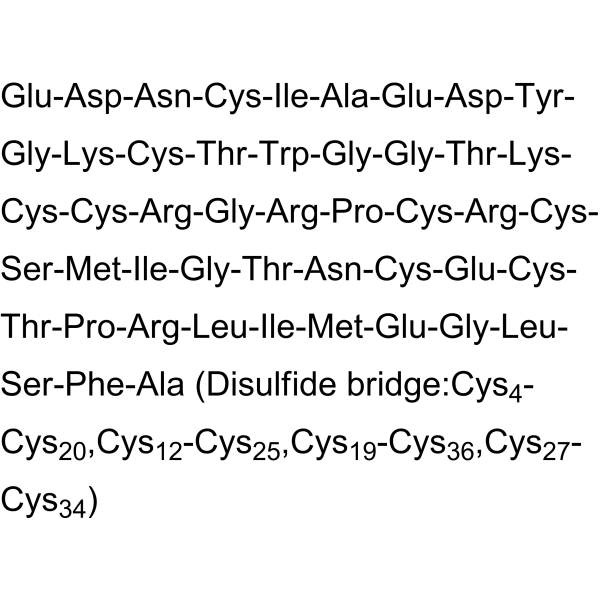
Glu-Asp-Asn-Cys-Ile-Ala-Glu-Asp-Tyr-Gly-Lys-Cys-Thr-Trp-Gly-Gly-Thr-Lys-Cys-Cys-Arg-Gly-Arg-Pro-Cys-Arg-Cys-Ser-Met-Ile-Gly-Thr-Asn-Cys-Glu-Cys-Thr-Pro-Arg-Leu-Ile-Met-Glu-Gly-Leu-Ser-Phe-Ala (Disulfide bridge:Cys4-Cys20,Cys12-Cys25,Cys19-Cys36,Cys27-Cys34)
-
Sequence Shortening
EDNCIAEDYGKCTWGGTKCCRGRPCRCSMIGTNCECTPRLIMEGLSFA (Disulfide bridge:Cys4-Cys20,Cys12-Cys25,Cys19-Cys36,Cys27-Cys34)
-
Shipping
Room temperature in continental US; may vary elsewhere.
-
Storage
Sealed storage, away from moisture
Powder -80°C 2 years -20°C 1 year * In solvent : -80°C, 6 months; -20°C, 1 month (sealed storage, away from moisture)


Solvent & Solubility
In Vitro
H2O
Peptide Solubility and Storage Guidelines:
1. Calculate the length of the peptide.
2. Calculate the overall charge of the entire peptide according to the following table:
| Contents | Assign value | |
|---|---|---|
| Acidic amino acid | Asp (D), Glu (E), and the C-terminal -COOH. | -1 |
| Basic amino acid | Arg (R), Lys (K), His (H), and the N-terminal -NH2 | +1 |
| Neutral amino acid | Gly (G), Ala (A), Leu (L), Ile (I), Val (V), Cys (C), Met (M), Thr (T), Ser (S), Phe (F), Tyr (Y), Trp (W), Pro (P), Asn (N), Gln (Q) | 0 |
3. Recommended solution:
| Overall charge of peptide | Details |
|---|---|
| Negative (<0) |
1. Try to dissolve the peptide in water first. 2. If water fails, add NH4OH (<50 μL). 3. If the peptide still does not dissolve, add DMSO (50-100 μL) to solubilize the peptide. |
| Positive (>0) |
1. Try to dissolve the peptide in water first. 2. If water fails, try dissolving the peptide in a 10%-30% acetic acid solution. 3. If the peptide still does not dissolve, try dissolving the peptide in a small amount of DMSO. |
| Zero (=0) |
1. Try to dissolve the peptide in organic solvent (acetonitrile, methanol, etc.) first. 2. For very hydrophobic peptides, try dissolving the peptide in a small amount of DMSO, and then dilute the solution with water to the desired concentration. |

Protocols
-
Cell Cytotoxicity Assay
Cytotoxicity assays are usually based on the assessment of cell membrane damage, which can also be indirectly detected by measuring cell viability. Detection methods include MTT assay, CKK-8 assay, LDH assay and ATP assay, etc.
-
Ca2+ Staining Technique
Ca2+ staining is an experimental technique that utilizes specific fluorescent probes (such as Fluo-4 AM, Fura-2, etc.) to qualitatively or quantitatively detect dynamic changes in intracellular Ca2+ concentrations; this is achieved by monitoring the changes in fluorescent signals generated when these probes bind to free intracellular calcium ions. The underlying principle relies primarily on the presence of chelating groups within the probe's molecular structure that possess high affinity for calcium ions.


Purity & Documentation
-
Data Sheet (262 KB)
-
SDS (252 KB)
- English - EN (252 KB)
- Français - FR (252 KB)
- Deutsch - DE (252 KB)
- Norwegian - NO (252 KB)
- Español - ES (252 KB)
- Swedish - SV (252 KB)
- Italian - IT (252 KB)
- Korean - KR (252 KB)
- Portuguese - PT (252 KB)
-
Handling Instructions (2659 KB)
References
[1]. María Sitges, et al. Omega-agatoxin-TK is a useful tool to study P-type Ca2+ channel-mediated changes in internal Ca2+ and glutamate release in depolarised brain nerve terminals. Neurochem Int. 2005 Jan;46(1):53-60. [Content Brief]
[2]. M Kimura, et al. Involvement of P-type calcium channels in high potassium-elicited release of neurotransmitters from rat brain slices. Neuroscience. 1995 Jun;66(3):609-15. [Content Brief]
[3]. M Kuwada, et al. Omega-agatoxin-TK containing D-serine at position 46, but not synthetic omega-[L-Ser46]agatoxin-TK, exerts blockade of P-type calcium channels in cerebellar Purkinje neurons. Mol Pharmacol. 1994 Oct;46(4):587-93. [Content Brief]

Calculators
Concentration (start) × Volume (start) = Concentration (final) × Volume (final)


ω-Agatoxin TK Related Classifications
HY-P1079 Related Classifications
 Powered by Bioz