



1,3-Diolein

Based on 1 Customer Validation
1,3-Diolein is a phospholipid compound that has the activity of regulating cell membrane fluidity and signal transduction. 1,3-Diolein is widely used in cell biology research to study lipid-mediated signal transduction pathways and membrane protein interactions. 1,3-Diolein can also serve as a functional carrier in compound delivery systems to help improve the bioavailability of compounds.
For research use only. We do not sell to patients.
- Purity : 99.95%
- CAS No.: 2465-32-9
- Formula: C39H72O5
- Molecular Weight:620.99
-
Storage:
-20°C, protect from light
* In solvent : -80°C, 6 months; -20°C, 1 month (protect from light)


To place orders, for customer services and technical support, please contact: MedChemExpress USA
Tel: 609-228-6898 E-mail: [email protected] [email protected]


-
 Biological Activity
-
Chemical Information
-
Solvent & Solubility
- Protocols
- Purity & Documentation
-
 Help & FAQs


-
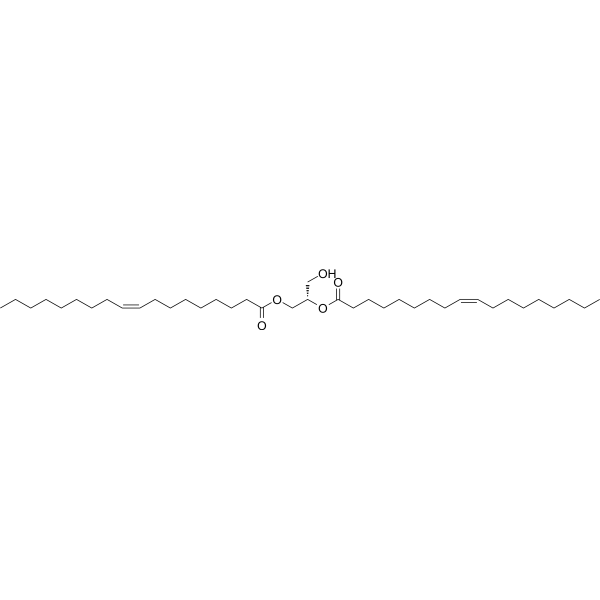
HY-141572
1,2-Dioleoyl-sn-glycerolDAG Analog -
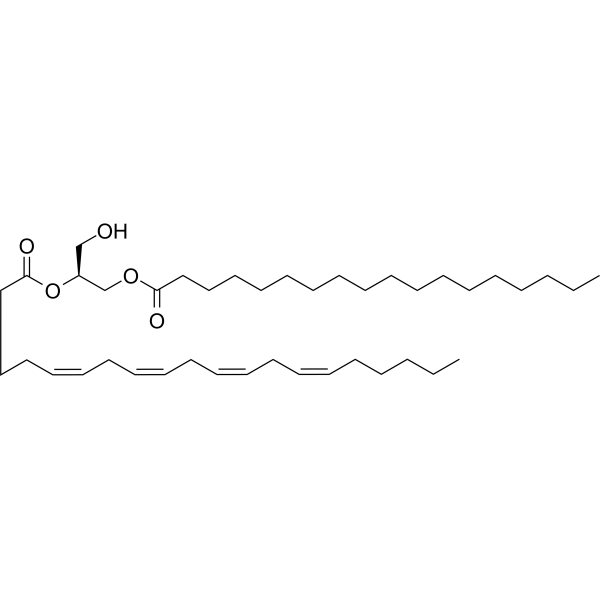
HY-131897
1-Stearoyl-2-arachidonoyl-sn-glycerolPKC Activator -
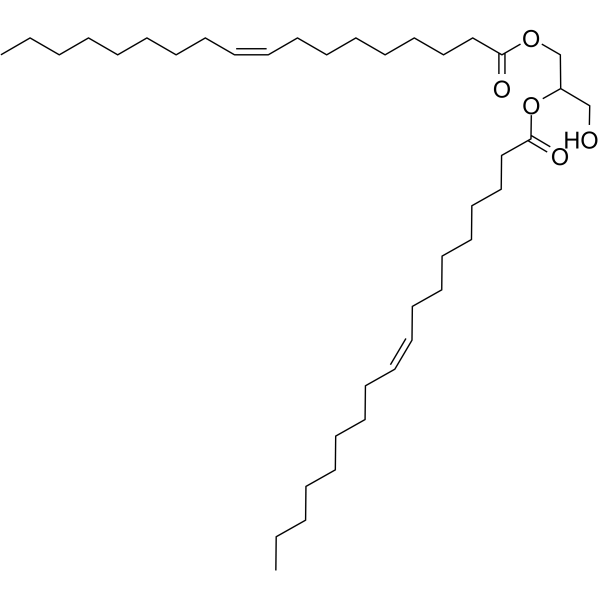
HY-115767
(±)-1,2-DioleinPKC activator -
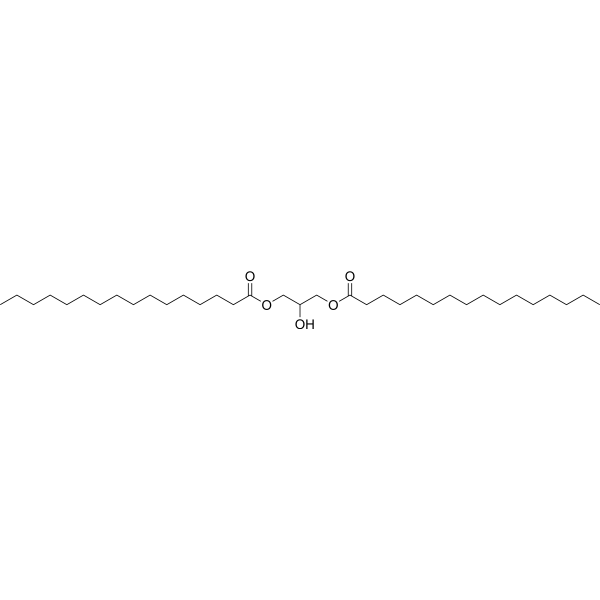
HY-128792
1,3-DipalmitinDiacylglycerol Compound -

HY-W336094
1,3-Glyceryl dilinoleateUnsaturated Diacylglycerol -

HY-W702781
1,3-DistearinDrug Intermediate -
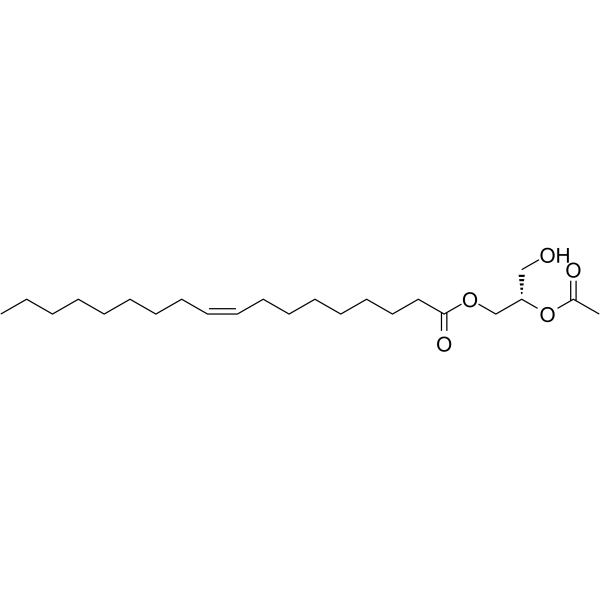
HY-131648
1-Oleoyl-2-acetyl-sn-glycerolDrug Analog -

HY-128792R
1,3-Dipalmitin (Standard)Standard -
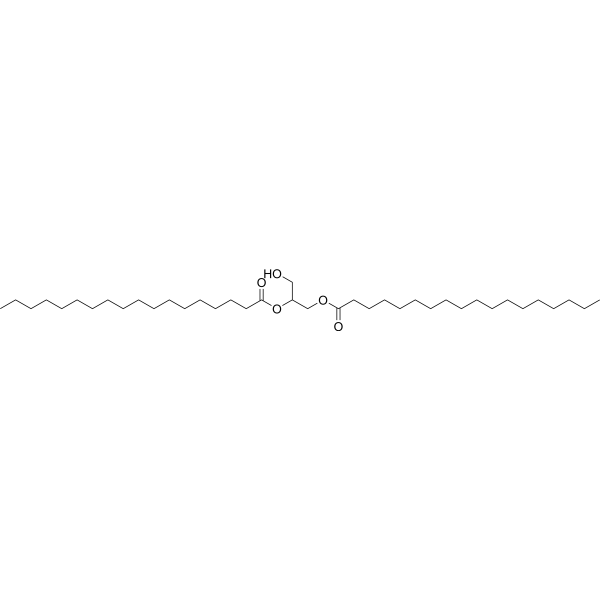
HY-W051298
DistearinDiacylglycerol -
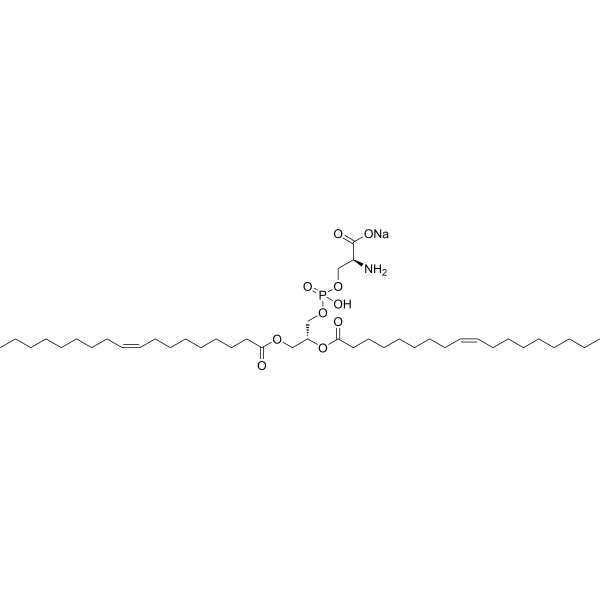
HY-141613
1,2-Dioleoyl-sn-glycero-3-phospho-L-serine sodiumPhosphoserine/Phosphatidylserine Ubstitute -
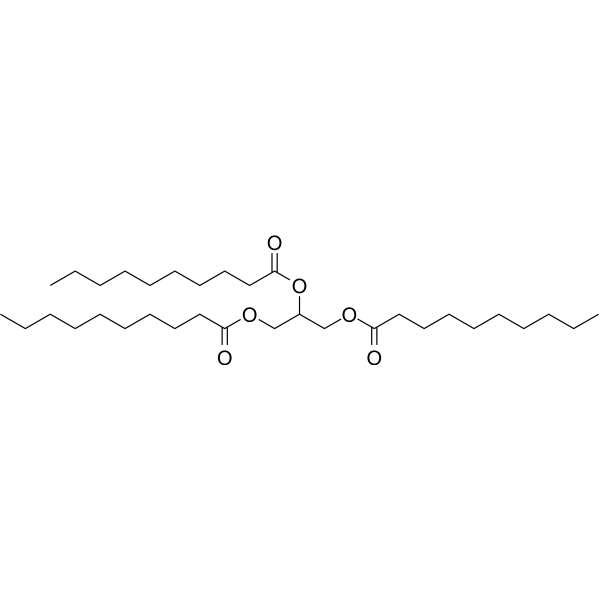
HY-N6660
TrisdecanoinDA Precursor -
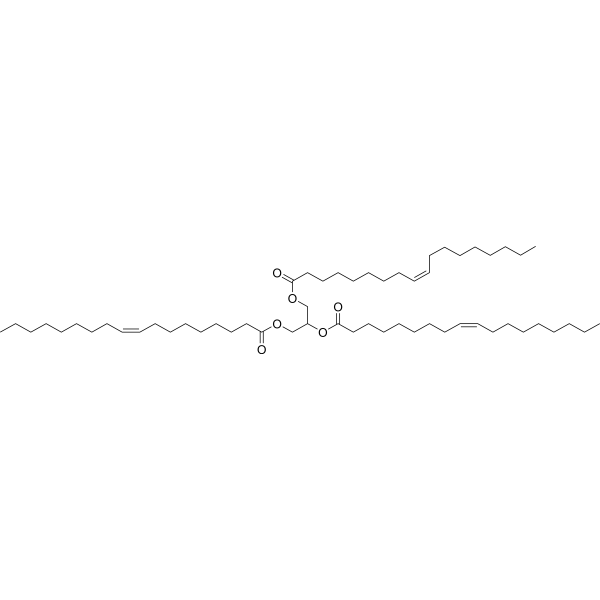
HY-N1981
TrioleinMonoacid Triglyceride
All Endogenous Metabolite Isoforms
More

Biological Activity
Description
Cellular Effect
|
Cell Line

|
Type | Value | Description | References |
|---|---|---|---|---|
| A549 | IC50 |
>10 μM
Compound: 7
|
Cytotoxicity against human A549 cells assessed as reduction in cell viability after 72 hrs by MTT assay
Cytotoxicity against human A549 cells assessed as reduction in cell viability after 72 hrs by MTT assay
|
[PMID: 28445049] |
| HepG2 | IC50 |
>10 μM
Compound: 7
|
Cytotoxicity against human HepG2 cells assessed as reduction in cell viability after 72 hrs by MTT assay
Cytotoxicity against human HepG2 cells assessed as reduction in cell viability after 72 hrs by MTT assay
|
[PMID: 28445049] |
| MDA-MB-231 | IC50 |
>10 μM
Compound: 7
|
Cytotoxicity against human MDA-MB-231 cells assessed as reduction in cell viability after 72 hrs by MTT assay
Cytotoxicity against human MDA-MB-231 cells assessed as reduction in cell viability after 72 hrs by MTT assay
|
[PMID: 28445049] |
| Neutrophil | IC50 |
>10 μM
Compound: 7
|
Anti-inflammatory activity in human neutrophils assessed as inhibition of fMLF/CB-induced elastase release by measuring degranulation of azurophilic granules using MeOSuc-Ala-Ala-ProVal-p-nitroanilide as substrate preincubated for 5 mins followed by CB/fM
Anti-inflammatory activity in human neutrophils assessed as inhibition of fMLF/CB-induced elastase release by measuring degranulation of azurophilic granules using MeOSuc-Ala-Ala-ProVal-p-nitroanilide as substrate preincubated for 5 mins followed by CB/fM
|
[PMID: 28445049] |
| Neutrophil | IC50 |
>10 μM
Compound: 7
|
Anti-inflammatory activity in human neutrophils assessed as inhibition of fMLF/CB-induced superoxide anion generation preincubated for 5 mins followed by CB stimulation for 3 mins and subsequent fMLF stimulation for 10 mins by spectrophotometric method
Anti-inflammatory activity in human neutrophils assessed as inhibition of fMLF/CB-induced superoxide anion generation preincubated for 5 mins followed by CB stimulation for 3 mins and subsequent fMLF stimulation for 10 mins by spectrophotometric method
|
[PMID: 28445049] |


Chemical Information
-
CAS No. 2465-32-9
-
Appearance Viscous liquid
-
Molecular Weight 620.99
-
Formula C39H72O5
-
Color Colorless to light yellow
-
SMILES
CCCCCCCC/C=C\CCCCCCCC(OCC(O)COC(CCCCCCC/C=C\CCCCCCCC)=O)=O
-
Shipping
Room temperature in continental US; may vary elsewhere.
-
Storage
-20°C, protect from light
* In solvent : -80°C, 6 months; -20°C, 1 month (protect from light)


Solvent & Solubility
In Vitro:
DMSO : 100 mg/mL (161.03 mM; Need ultrasonic; Hygroscopic DMSO has a significant impact on the solubility of product, please use newly opened DMSO)
Please refer to the solubility information to select the appropriate solvent. Once prepared, please aliquot and store the solution to prevent product inactivation from repeated freeze-thaw cycles.
Storage method and period of stock solution: -80°C, 6 months; -20°C, 1 month (protect from light). When stored at -80°C, please use it within 6 months. When stored at -20°C, please use it within 1 month.
Please refer to the solubility information to select the appropriate solvent. Once prepared, please aliquot and store the solution to prevent product inactivation from repeated freeze-thaw cycles.
Storage method and period of stock solution: -80°C, 6 months; -20°C, 1 month (protect from light). When stored at -80°C, please use it within 6 months. When stored at -20°C, please use it within 1 month.
Concentration (start) × Volume (start) = Concentration (final) × Volume (final)

Protocols
-
Membrane Protein Extraction Using Detergents and Chaotropes
Membrane protein extraction with detergents and chaotropes solubilizes lipid-bilayer-associated proteins by disrupting protein-lipid and protein-protein interactions while maintaining proteins in a soluble state for downstream electrophoresis, purification, or mass spectrometry. Chaotropes such as urea and thiourea improve solubilization of difficult proteins, while nonionic and zwitterionic detergents such as CHAPS, ASB-14, SB 3-10, MEGA-10, dodecyl maltoside, and Triton X-100 differ in extraction efficiency depending on sample type and membrane protein properties.
-
Protocol for Pharmacokinetic Study
Pharmacokinetic studies quantify how an organism handles a drug over time through absorption, distribution, metabolism, and excretion, and the core experimental readout is the concentration-time profile of parent drug and, when relevant, metabolites in biological matrices such as plasma, whole blood, urine, bile, or tissue. Pharmacokinetic analysis links dose, route, exposure, clearance, half-life, distribution, bioavailability, and systemic exposure to drug efficacy and toxicity hypotheses rather than measuring a signaling pathway directly. The literature links pharmacokinetics to drug-development phenotypes by showing that drug metabolism and pharmacokinetics influence compound progression, exposure-response interpretation, safety margins, dosing strategy, and failure risk during discovery and development. DMPK science contributes to compound optimization by integrating physicochemical properties, in vitro metabolism, transporter behavior, in vivo exposure, and pharmacodynamic contex
-
Directly Induced Neuron Culture
Directly induced neuron culture converts somatic cells, most commonly fibroblasts, into induced neurons without passing through a pluripotent or neural progenitor stage; classic evidence shows that mouse fibroblasts can be converted by Ascl1, Brn2/Pou3f2, and Myt1l, human fibroblasts can be converted by defined neuronal transcription factors, and human fibroblasts can also be converted by miR-9/9-124 with neurogenic or subtype-specifying transcription factors. The readout is acquisition of neuronal identity and function, assessed by neuronal morphology, neuronal markers such as Tuj1/βIII-tubulin, MAP2, synapsin, and subtype markers when relevant, together with functional assays such as action-potential firing, synaptic activity, and electrophysiology.


Purity & Documentation
-
Data Sheet (236 KB)
-
SDS (393 KB)
- English - EN (393 KB)
- Français - FR (393 KB)
- Deutsch - DE (393 KB)
- Norwegian - NO (393 KB)
- Español - ES (393 KB)
- Swedish - SV (393 KB)
- Italian - IT (393 KB)
- Korean - KR (393 KB)
- Portuguese - PT (393 KB)
-
Handling Instructions (2659 KB)


Complete Stock Solution Preparation Table
Please refer to the solubility information to select the appropriate solvent. Once prepared, please aliquot and store the solution to prevent product inactivation from repeated freeze-thaw cycles.
Storage method and period of stock solution: -80°C, 6 months; -20°C, 1 month (protect from light). When stored at -80°C, please use it within 6 months. When stored at -20°C, please use it within 1 month.
| Optional Solvent | Concentration Solvent Mass | 1 mg | 5 mg | 10 mg | 25 mg |
|---|---|---|---|---|---|
| DMSO | 1 mM | 1.6103 mL | 8.0517 mL | 16.1033 mL | 40.2583 mL |
| 5 mM | 0.3221 mL | 1.6103 mL | 3.2207 mL | 8.0517 mL | |
| 10 mM | 0.1610 mL | 0.8052 mL | 1.6103 mL | 4.0258 mL | |
| 15 mM | 0.1074 mL | 0.5368 mL | 1.0736 mL | 2.6839 mL | |
| 20 mM | 0.0805 mL | 0.4026 mL | 0.8052 mL | 2.0129 mL | |
| 25 mM | 0.0644 mL | 0.3221 mL | 0.6441 mL | 1.6103 mL | |
| 30 mM | 0.0537 mL | 0.2684 mL | 0.5368 mL | 1.3419 mL | |
| 40 mM | 0.0403 mL | 0.2013 mL | 0.4026 mL | 1.0065 mL | |
| 50 mM | 0.0322 mL | 0.1610 mL | 0.3221 mL | 0.8052 mL | |
| 60 mM | 0.0268 mL | 0.1342 mL | 0.2684 mL | 0.6710 mL | |
| 80 mM | 0.0201 mL | 0.1006 mL | 0.2013 mL | 0.5032 mL | |
| 100 mM | 0.0161 mL | 0.0805 mL | 0.1610 mL | 0.4026 mL |


1,3-Diolein Related Classifications
HY-W587552 Related Classifications
 Powered by Bioz