



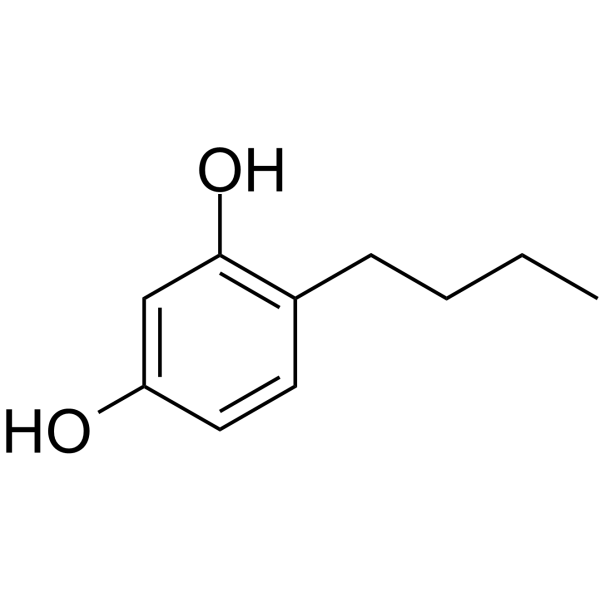
4-Butylresorcinol

Based on 1 Customer Validation
4-Butylresorcinol is a phenol derivative which can inhibit tyrosinase with IC50 of 11.27 μM.
Nur für Forschungszwecke. Wir verkaufen nicht an Patienten.
- Reinheit : 99.87%
- CAS. Nr.: 18979-61-8
- Formel: C10H14O2
- Molecular Weight:166.22
-
Speicherung:Powder -20°C, 3 years , 4°C, 2 years ; In solvent -80°C, 2 years , -20°C, 1 year

To place orders, for customer services and technical support, please contact: MedChemExpress USA
Tel: 609-228-6898 E-mail: [email protected] [email protected]


-
 Biologische Aktivität
-
Chemical Information
-
Lösungsmittel & Löslichkeit
- Reinheit & Dokumentation
- Verweise
-
 Help & FAQs


-
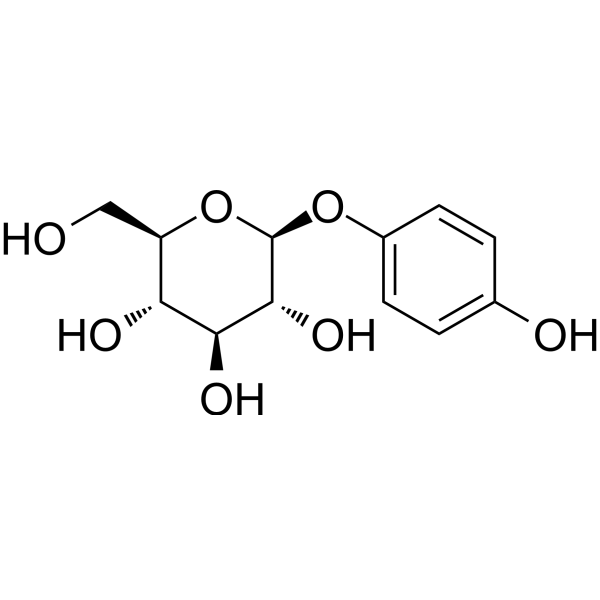
HY-N0192
ArbutinEndogenous Metabolite -
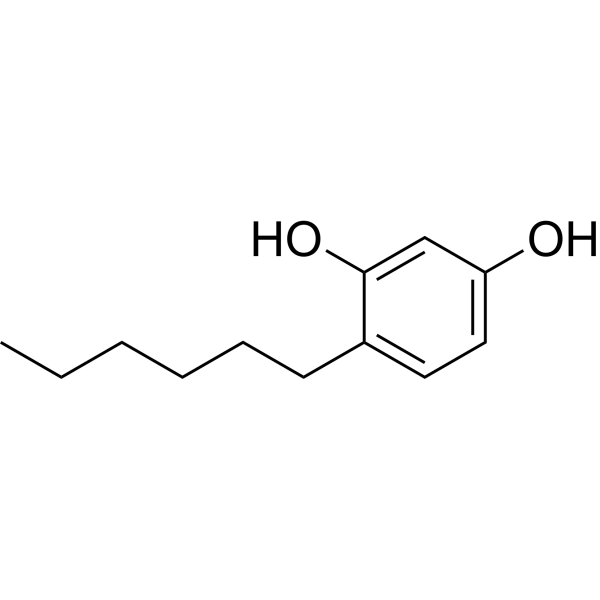
HY-B0986
HexylresorcinolAntimicrobial -
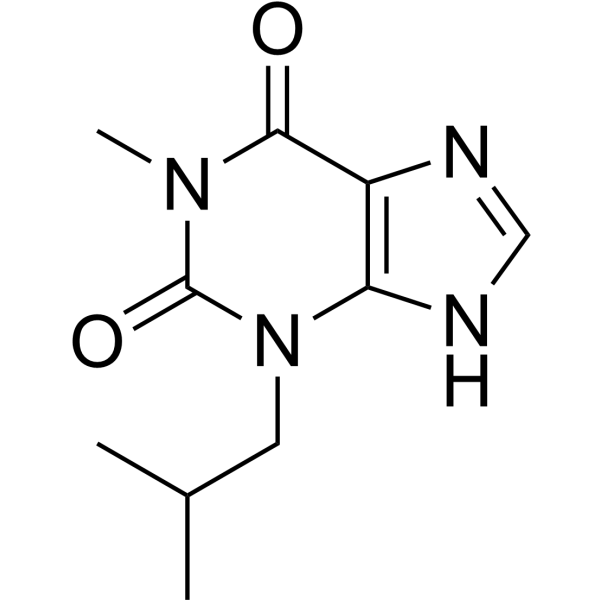
HY-12318
IBMXPDE Inhibitor -

HY-W251181
Isobutylamido thiazolyl resorcinolTyrosinase Inhibitor -
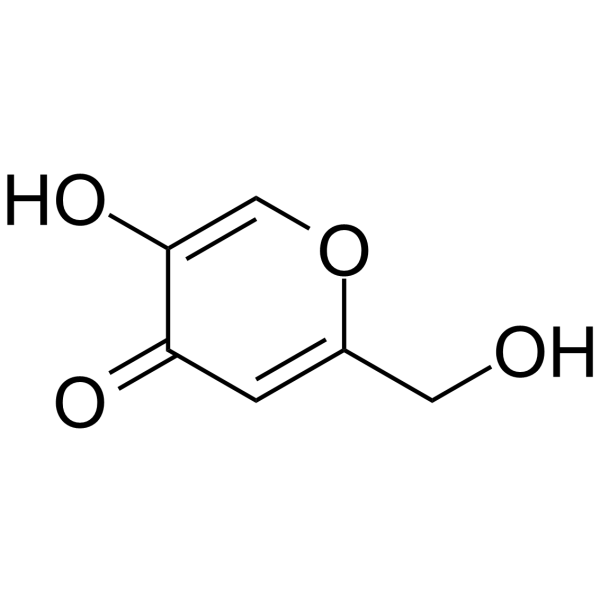
HY-W050154
Kojic acidTyrosinase Inhibitor -
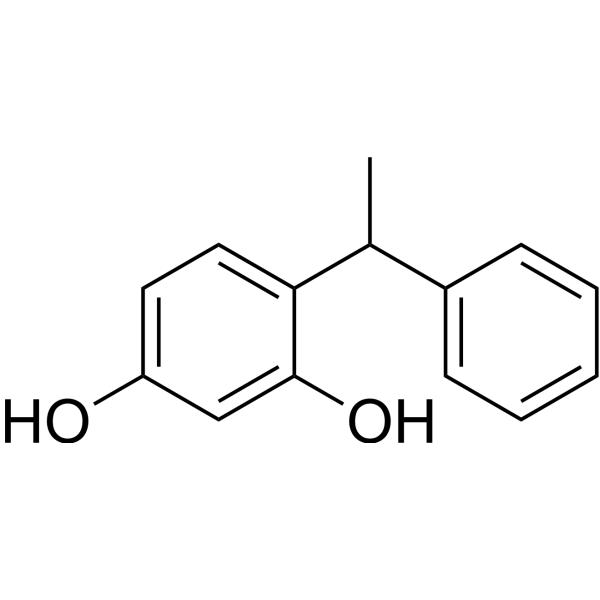
HY-125809
4-(1-Phenylethyl)resorcinolBiochemical Assay Reagent -

HY-107369R
4-Butylresorcinol (Standard)Tyrosinase Inhibitor -

HY-N0192R
Arbutin (Standard)Endogenous Metabolite -
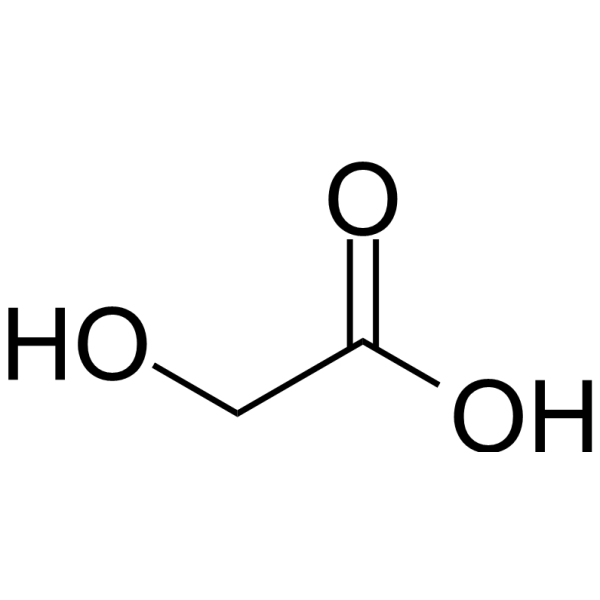
HY-W015967
Glycolic acid -
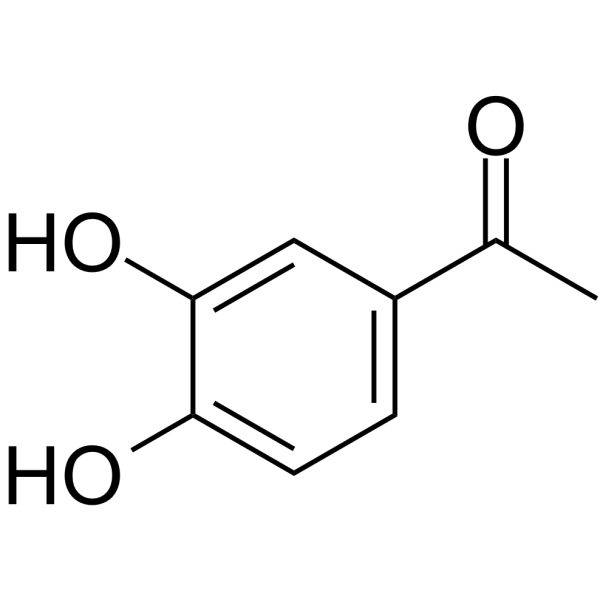
HY-N1775
3',4'-DihydroxyacetophenonePhenolic Compound -
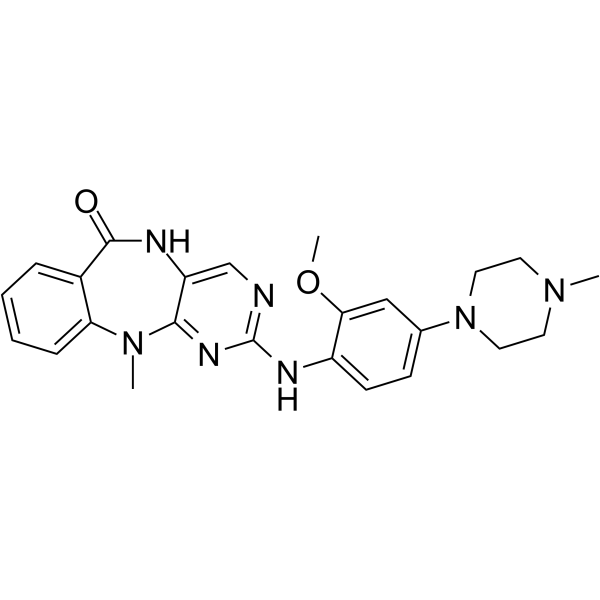
HY-15811
XMD8-87TNK2 Inhibitor -
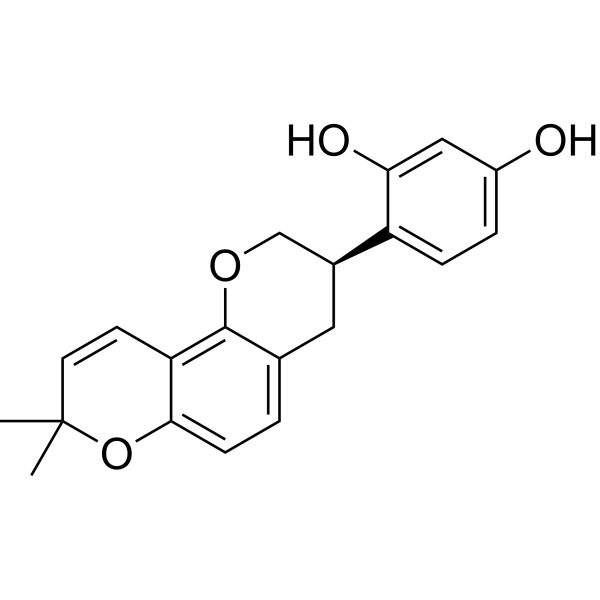
HY-N0393
GlabridinPPARγ Activator


Biologische Aktivität
Beschreibung
IC50 & Target
IC50: 11.27 μM (4-Butylresorcinol)[1]
Cellular Effect
|
Cell Line

|
Type | Value | Description | References |
|---|---|---|---|---|
| B16 | IC50 |
20 μM
Compound: rucinol
|
Antimelanogenic activity in mouse B16 cells assessed as inhibition of melanogenesis
Antimelanogenic activity in mouse B16 cells assessed as inhibition of melanogenesis
|
[PMID: 22300660] |
| Melan-a | IC50 |
21.64 μM
Compound: N-butylresorcinol
|
Inhibition of melanin formation in C57BL/6J mouse Melan-a cells
Inhibition of melanin formation in C57BL/6J mouse Melan-a cells
|
[PMID: 19181523] |
In Vitro
It shows that 4-Butylresorcinol (4-n-butylresorcinol) significantly inhibits melanin synthesis in a concentration-dependent manner. In addition, it is also found to inhibit the activity of tyrosinase, the rate-limiting melanogenic enzyme. 4-Butylresorcinol does not induce ERK, Akt activation, or MITF degradation, and has no effect on cAMP response element binding protein (CREB) phosphorylation, which stimulates MITF expression. 4-Butylresorcinol strongly reduces tyrosinase activity in a cell-free system. Moreover, 4-Butylresorcinol shows an additive effect in combination with hinokitiol, which reduces MITF expression[2].
MedChemExpress (MCE) has not independently confirmed the accuracy of these methods. They are for reference only. .


Chemical Information
-
CAS. Nr. 18979-61-8
-
Appearance Solid
-
Molecular Weight 166.22
-
Formel C10H14O2
-
Color White to off-white
-
SMILES
CCCCC1=C(C=C(O)C=C1)O
-
Synonyms
Butylresorcinol
-
Versand
Room temperature in continental US; may vary elsewhere.
-
Speicherung
Powder -20°C 3 years 4°C 2 years In solvent -80°C 2 years -20°C 1 year


Lösungsmittel & Löslichkeit
In Vitro:
DMSO : 100 mg/mL (601.61 mM; Need ultrasonic; Hygroscopic DMSO has a significant impact on the solubility of product, please use newly opened DMSO)
Please refer to the solubility information to select the appropriate solvent. Once prepared, please aliquot and store the solution to prevent product inactivation from repeated freeze-thaw cycles.
Storage method and period of stock solution: -80°C, 2 years; -20°C, 1 year. When stored at -80°C, please use it within 2 years. When stored at -20°C, please use it within 1 year.
Please refer to the solubility information to select the appropriate solvent. Once prepared, please aliquot and store the solution to prevent product inactivation from repeated freeze-thaw cycles.
Storage method and period of stock solution: -80°C, 2 years; -20°C, 1 year. When stored at -80°C, please use it within 2 years. When stored at -20°C, please use it within 1 year.
Konzentration (Stammlösung) × Volumen (Stammlösung) = Konzentration (Ziellösung) × Volumen (Ziellösung)
In Vivo:
Select the appropriate dissolution method based on your experimental animal and administration route.
- For the following dissolution methods, please ensure to first prepare a clear stock solution using an In Vitro approach and then sequentially add co-solvents:
- To ensure reliable experimental results, the clarified stock solution can be appropriately stored based on storage conditions. As for the working solution for In Vivo experiments, it is recommended to prepare freshly and use it on the same day.
- The percentages shown for the solvents indicate their volumetric ratio in the final prepared solution. If precipitation or phase separation occurs during preparation, heat and/or sonication can be used to aid dissolution.
Add each solvent one by one: 10% DMSO 40% PEG300 5% Tween-80 45% Saline
Solubility: ≥ 2.5 mg/mL (15.04 mM); Clear solution
This protocol yields a clear solution of ≥ 2.5 mg/mL (saturation unknown).
Taking 1 mL working solution as an example, add 100 μL DMSO stock solution (25.0 mg/mL) to 400 μL PEG300, and mix evenly; then add 50 μL Tween-80 and mix evenly; then add 450 μL Saline to adjust the volume to 1 mL.
Preparation of Saline: Dissolve 0.9 g sodium chloride in ddH₂O and dilute to 100 mL to obtain a clear Saline solution.
Add each solvent one by one: 10% DMSO 90% (20% SBE-β-CD in Saline)
Solubility: ≥ 2.5 mg/mL (15.04 mM); Clear solution
This protocol yields a clear solution of ≥ 2.5 mg/mL (saturation unknown).
Taking 1 mL working solution as an example, add 100 μL DMSO stock solution (25.0 mg/mL) to 900 μL 20% SBE-β-CD in Saline, and mix evenly.
Preparation of 20% SBE-β-CD in Saline (4°C, storage for one week): 2 g SBE-β-CD powder is dissolved in 10 mL Saline, completely dissolve until clear.
In Vivo Dissolution Calculator
Please enter the basic information of animal experiments:
-
-
-
-
Recommended: Prepare an additional quantity of animals to account for potential losses during experiments.
Please enter your animal formula composition:
-
%DMSO +
Recommended: Keep the proportion of DMSO in working solution below 2% if your animal is weak.
-
%+
-
+%Tween-80 + +
-
%Saline +
The co-solvents required include: DMSO, . All of co-solvents are available by MedChemExpress (MCE). , Tween 80. All of co-solvents are available by MedChemExpress (MCE).
Working solution concentration: 0.22 mg/mL
Method for preparing stock solution: mg drug dissolved in μL DMSO. Stock solution concentration: mg/mL.
1. Take μL DMSO stock solution;
2. Add μL .
μL , mix evenly;
3. Then add μL Tween 80, mix evenly;
4. Then add μL
Please ensure that the stock solution in the first step is dissolved to a clear state, and add co-solvents in sequence. You can use ultrasonic heating (ultrasonic cleaner, recommended frequency 20-40 kHz), vortexing, etc. to assist dissolution.


Reinheit & Dokumentation
-
Data Sheet (272 KB)
-
SDS (597 KB)
- English - EN (597 KB)
- Français - FR (597 KB)
- Deutsch - DE (597 KB)
- Norwegian - NO (597 KB)
- Español - ES (597 KB)
- Swedish - SV (597 KB)
- Italian - IT (597 KB)
- Korean - KR (597 KB)
- Portuguese - PT (597 KB)
-
Handling Instructions (2659 KB)
Verweise
[1]. Jiang Y, et al. Synthesis and biological evaluation of unsymmetrical curcumin analogues as tyrosinaseinhibitors. Molecules. 2013 Apr 3;18(4):3948-61. [Content Brief]
[2]. Kim DS, et al. Inhibitory effects of 4-n-butylresorcinol on tyrosinase activity and melanin synthesis. Biol Pharm Bull. 2005 Dec;28(12):2216-9. [Content Brief]


Complete Stock Solution Preparation Table
Please refer to the solubility information to select the appropriate solvent. Once prepared, please aliquot and store the solution to prevent product inactivation from repeated freeze-thaw cycles.
Storage method and period of stock solution: -80°C, 2 years; -20°C, 1 year. When stored at -80°C, please use it within 2 years. When stored at -20°C, please use it within 1 year.
| Optional Solvent | Concentration Solvent Mass | 1 mg | 5 mg | 10 mg | 25 mg |
|---|---|---|---|---|---|
| DMSO | 1 mM | 6.0161 mL | 30.0806 mL | 60.1612 mL | 150.4031 mL |
| 5 mM | 1.2032 mL | 6.0161 mL | 12.0322 mL | 30.0806 mL | |
| 10 mM | 0.6016 mL | 3.0081 mL | 6.0161 mL | 15.0403 mL | |
| 15 mM | 0.4011 mL | 2.0054 mL | 4.0107 mL | 10.0269 mL | |
| 20 mM | 0.3008 mL | 1.5040 mL | 3.0081 mL | 7.5202 mL | |
| 25 mM | 0.2406 mL | 1.2032 mL | 2.4064 mL | 6.0161 mL | |
| 30 mM | 0.2005 mL | 1.0027 mL | 2.0054 mL | 5.0134 mL | |
| 40 mM | 0.1504 mL | 0.7520 mL | 1.5040 mL | 3.7601 mL | |
| 50 mM | 0.1203 mL | 0.6016 mL | 1.2032 mL | 3.0081 mL | |
| 60 mM | 0.1003 mL | 0.5013 mL | 1.0027 mL | 2.5067 mL | |
| 80 mM | 0.0752 mL | 0.3760 mL | 0.7520 mL | 1.8800 mL | |
| 100 mM | 0.0602 mL | 0.3008 mL | 0.6016 mL | 1.5040 mL |


4-Butylresorcinol Related Classifications
HY-107369 Related Classifications
 Powered by Bioz