



4-Chlorophenoxyacetic acid (4-CPA)

Based on 1 Customer Validation
4-Chlorophenoxyacetic acid (4-CPA) is a widely used herbicide and plant growth regulator. 4-Chlorophenoxyacetic acid (4-CPA) mimics endogenous auxin and regulates plant cell division, differentiation and gene expression. 4-Chlorophenoxyacetic acid (4-CPA) is used to control weeds and promote fruit growth.
For research use only. We do not sell to patients.
- Purity : 99.93%
- CAS No.: 122-88-3
- Formula: C8H7ClO3
- Molecular Weight:186.59
-
Storage:Powder -20°C, 3 years , 4°C, 2 years ; In solvent -80°C, 6 months , -20°C, 1 month


To place orders, for customer services and technical support, please contact: MedChemExpress USA
Tel: 609-228-6898 E-mail: [email protected] [email protected]


-
 Biological Activity
-
Chemical Information
-
Solvent & Solubility
- Protocols
- Purity & Documentation
- References
-
 Help & FAQs


-
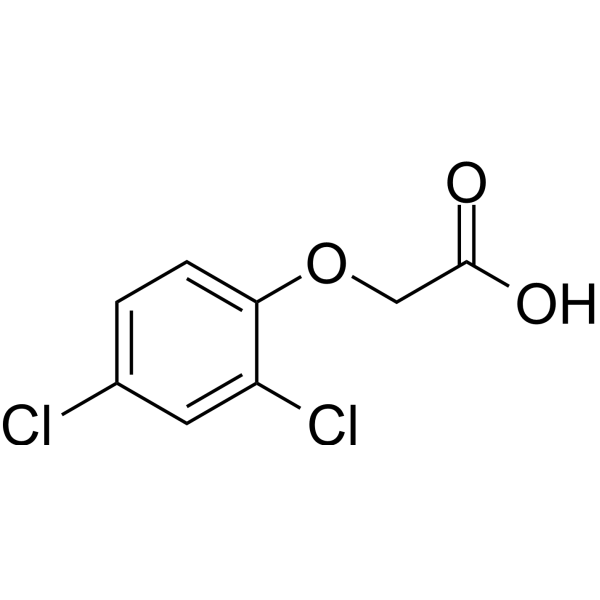
HY-18572
2,4-DHerbicide -
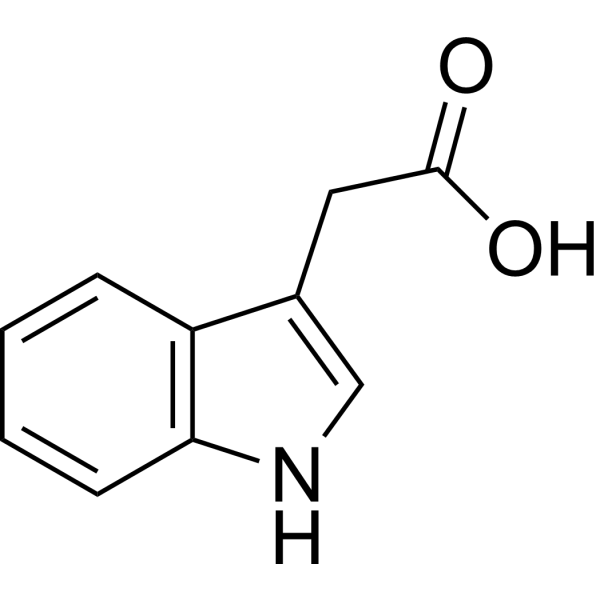
HY-18569
3-Indoleacetic acidPlant Growth Regulator -
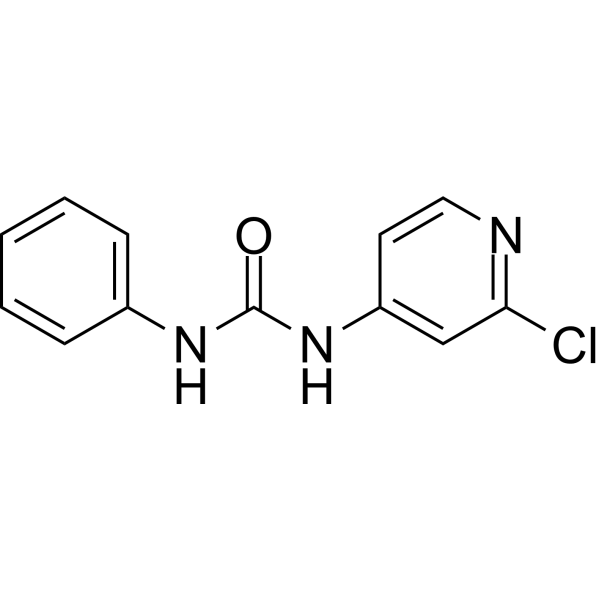
HY-B1841
ForchlorfenuronPlant Growth Regulator -

HY-19698R
4-Chlorophenoxyacetic acid (4-CPA) (Standard)Herbicide -
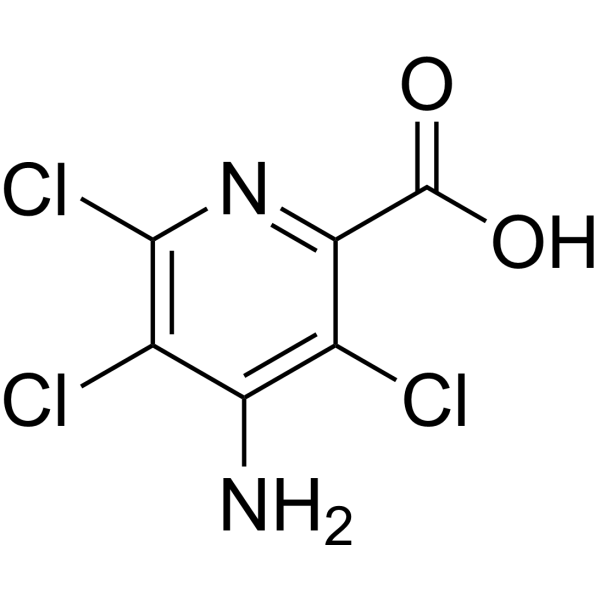
HY-B2034
PicloramHerbicide -
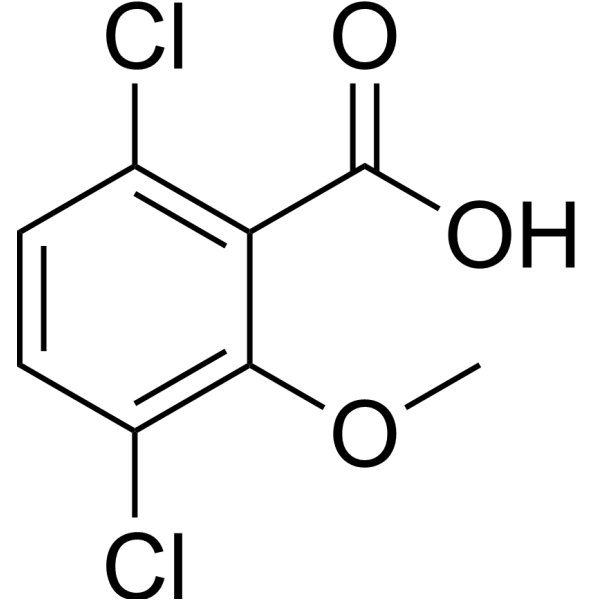
HY-121267
DicambaHerbicide -
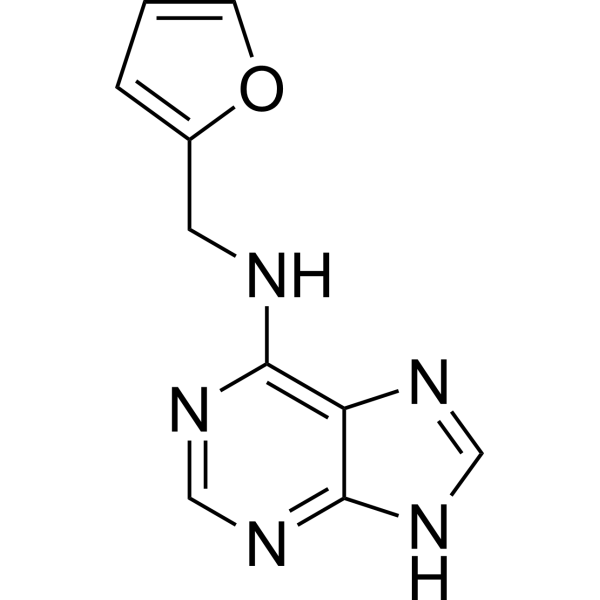
HY-N0160
KinetinPlant Hormone -

HY-18569B
3-Indoleacetic acid,suitable for plant cell culturePlant Growth-Promoting Hormone -

HY-18569R
3-Indoleacetic acid (standard)Reference Standard -
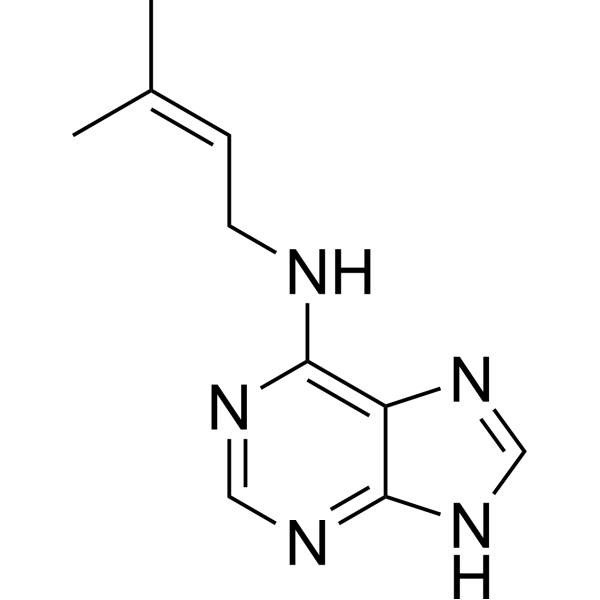
HY-112103
6-(γ,γ-Dimethylallylamino)purineNatural Product -
HY-N0186
Indole-3-butyric acidEndogenous Metabolite -
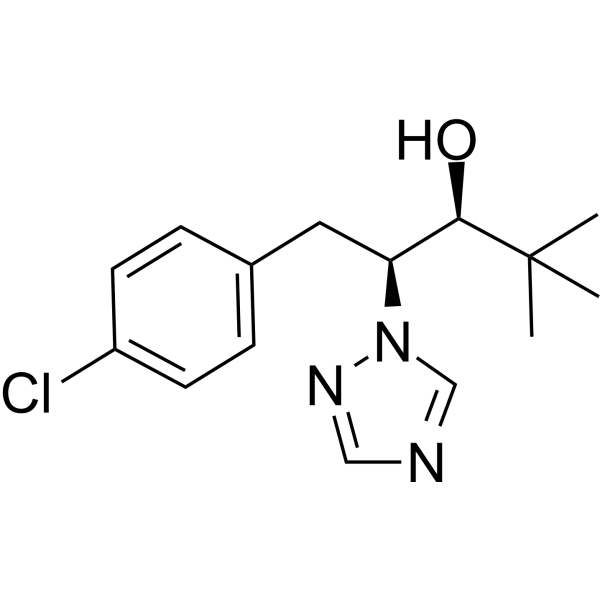
HY-B0853
PaclobutrazolFungal Inhibitor


Biological Activity
Description
In Vitro
4-Chlorophenoxyacetic acid (4-CPA) (100 ng per ovary) promotes wild-type tomato fruit growth by upregulating LeExp2 and SAUR expression[3].
MedChemExpress (MCE) has not independently confirmed the accuracy of these methods. They are for reference only. Further protocols information, click here.


Chemical Information
-
CAS No. 122-88-3
-
Appearance Solid
-
Molecular Weight 186.59
-
Formula C8H7ClO3
-
Color White to off-white
-
SMILES
O=C(O)COC1=CC=C(Cl)C=C1
-
Synonyms
4-CPA; p-Chlorophenoxyacetic acid
-
Shipping
Room temperature in continental US; may vary elsewhere.
-
Storage
Powder -20°C 3 years 4°C 2 years In solvent -80°C 6 months -20°C 1 month


Solvent & Solubility
In Vitro:
DMSO : 200 mg/mL (1071.87 mM; Need ultrasonic; Hygroscopic DMSO has a significant impact on the solubility of product, please use newly opened DMSO)
Please refer to the solubility information to select the appropriate solvent. Once prepared, please aliquot and store the solution to prevent product inactivation from repeated freeze-thaw cycles.
Storage method and period of stock solution: -80°C, 6 months; -20°C, 1 month. When stored at -80°C, please use it within 6 months. When stored at -20°C, please use it within 1 month.
Please refer to the solubility information to select the appropriate solvent. Once prepared, please aliquot and store the solution to prevent product inactivation from repeated freeze-thaw cycles.
Storage method and period of stock solution: -80°C, 6 months; -20°C, 1 month. When stored at -80°C, please use it within 6 months. When stored at -20°C, please use it within 1 month.
Concentration (start) × Volume (start) = Concentration (final) × Volume (final)

Protocols
-
RT-PCR
Reverse transcription technology uses RNA as a template to synthesize DNA. RT-PCR is simple, specific and sensitive, and can be used to detect gene expression levels and expression differences in cells; detect RNA virus content; clone cDNA sequences of specific genes.
-
RNA extraction experimental
By lysing cells, releasing RNA, and removing impurities such as proteins and DNA, high-purity RNA products are finally obtained. The commonly used traditional method is the guanidine isothiocyanate/phenol/chloroform method (Trizol), which is suitable for a variety of animal materials including animal tissues, microorganisms, cultured cells, etc., and most plant materials.
-
CFSE Dye Dilution Proliferation Assay
The CFSE (carboxyfluorescein diacetate succinimidyl ester) dye dilution proliferation assay is based on the covalent labeling of intracellular proteins by a cell-permeant fluorescent dye that becomes fluorescent upon intracellular ester cleavage and then is stably retained within cells. As labeled cells divide, the dye is partitioned equally between daughter cells, resulting in a stepwise halving of fluorescence intensity that can be quantified by flow cytometry to determine the number of cell divisions undergone by each cell population. This fluorescence dilution approach enables quantitative tracking of lymphocyte proliferation at the single-cell level over multiple rounds of division. CFSE-based proliferation analysis has been widely applied to measure antigen-driven lymphocyte expansion in vitro, where discrete fluorescence peaks correspond to successive cell divisions and allow reconstruction of proliferative history within heterogeneous populations.
-
Dye-dilution cell tracking and proliferation staining
Dye-dilution cell tracking assays quantify cell proliferation by covalently labeling intracellular proteins with a stable fluorescent dye that is equally partitioned between daughter cells during mitosis, resulting in stepwise halving of fluorescence intensity with each cell division as measured by flow cytometry histograms. Carboxyfluorescein diacetate succinimidyl ester (CFSE) is a prototypical dye that diffuses into cells, is enzymatically converted into a fluorescent compound, and then covalently binds intracellular amine groups, producing long-lived fluorescence suitable for tracking multiple rounds of division in vitro and in vivo. Successive generations of dividing cells form discrete peaks of decreasing fluorescence intensity, enabling estimation of proliferation history, precursor frequency, and division index within heterogeneous populations. Alternative dyes such as CellTrace Violet (CTV) and far-red membrane dyes (e. g. , PKH26) follow the same dilution principle but differ
-
Real Time qPCR (Q-PCR)
Real-time quantitative PCR (qPCR) quantifies an amplifiable nucleic-acid target by monitoring fluorescence during PCR cycling rather than measuring product only after amplification. The increase in fluorescence tracks accumulation of PCR product, and the quantification cycle (Cq; historically also Ct/CP) is related to the initial amount of target: samples containing more starting target generally reach the defined fluorescence threshold in fewer cycles.


Purity & Documentation
-
Data Sheet (271 KB)
-
SDS (393 KB)
- English - EN (393 KB)
- Français - FR (393 KB)
- Deutsch - DE (393 KB)
- Norwegian - NO (393 KB)
- Español - ES (393 KB)
- Swedish - SV (393 KB)
- Italian - IT (393 KB)
- Korean - KR (393 KB)
- Portuguese - PT (393 KB)
-
Handling Instructions (2659 KB)
References
[2]. Liu Z, et al. 4-CPA (4-Chlorophenoxyacetic Acid) Induces the Formation and Development of Defective "Fenghou" (Vitis vinifera × V. labrusca) Grape Seeds. Biomolecules. 2021 Mar 30;11(4):515. [Content Brief]
[3]. Mignolli F, et al. Tomato fruit development in the auxin-resistant dgt mutant is induced by pollination but not by auxin treatment. J Plant Physiol. 2012 Aug 15;169(12):1165-72. [Content Brief]


Complete Stock Solution Preparation Table
Please refer to the solubility information to select the appropriate solvent. Once prepared, please aliquot and store the solution to prevent product inactivation from repeated freeze-thaw cycles.
Storage method and period of stock solution: -80°C, 6 months; -20°C, 1 month. When stored at -80°C, please use it within 6 months. When stored at -20°C, please use it within 1 month.
| Optional Solvent | Concentration Solvent Mass | 1 mg | 5 mg | 10 mg | 25 mg |
|---|---|---|---|---|---|
| DMSO | 1 mM | 5.3593 mL | 26.7967 mL | 53.5934 mL | 133.9836 mL |
| 5 mM | 1.0719 mL | 5.3593 mL | 10.7187 mL | 26.7967 mL | |
| 10 mM | 0.5359 mL | 2.6797 mL | 5.3593 mL | 13.3984 mL | |
| 15 mM | 0.3573 mL | 1.7864 mL | 3.5729 mL | 8.9322 mL | |
| 20 mM | 0.2680 mL | 1.3398 mL | 2.6797 mL | 6.6992 mL | |
| 25 mM | 0.2144 mL | 1.0719 mL | 2.1437 mL | 5.3593 mL | |
| 30 mM | 0.1786 mL | 0.8932 mL | 1.7864 mL | 4.4661 mL | |
| 40 mM | 0.1340 mL | 0.6699 mL | 1.3398 mL | 3.3496 mL | |
| 50 mM | 0.1072 mL | 0.5359 mL | 1.0719 mL | 2.6797 mL | |
| 60 mM | 0.0893 mL | 0.4466 mL | 0.8932 mL | 2.2331 mL | |
| 80 mM | 0.0670 mL | 0.3350 mL | 0.6699 mL | 1.6748 mL | |
| 100 mM | 0.0536 mL | 0.2680 mL | 0.5359 mL | 1.3398 mL |


4-Chlorophenoxyacetic acid (4-CPA) Related Classifications
HY-19698 Related Classifications
 Powered by Bioz