



4-Glycidyloxycarbazole

Based on 1 Customer Validation
4-Glycidyloxycarbazole (compound 8) is an antimicrobial agent that disrupts bacterial biofilm formation.
For research use only. We do not sell to patients.
- Purity : 99.10%
- CAS No.: 51997-51-4
- Formula: C15H13NO2
- Molecular Weight:239.27
-
Storage:Powder -20°C, 3 years , 4°C, 2 years ; In solvent -80°C, 6 months , -20°C, 1 month


To place orders, for customer services and technical support, please contact: MedChemExpress USA
Tel: 609-228-6898 E-mail: [email protected] [email protected]


-
 Biological Activity
-
Chemical Information
-
Solvent & Solubility
- Protocols
- Purity & Documentation
- References
-
 Help & FAQs


-

HY-W016331
9H-Carbazol-4-olAromatic Heterocycle -
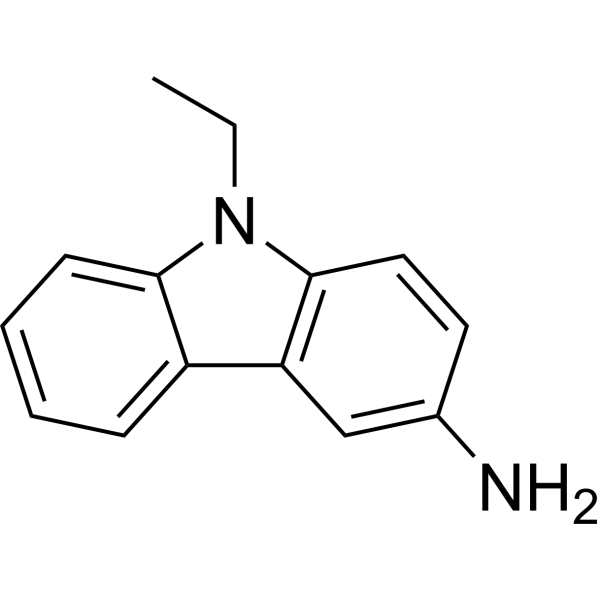
HY-W014386
3-Amino-9-ethylcarbazoleBiochemical Assay Reagent -
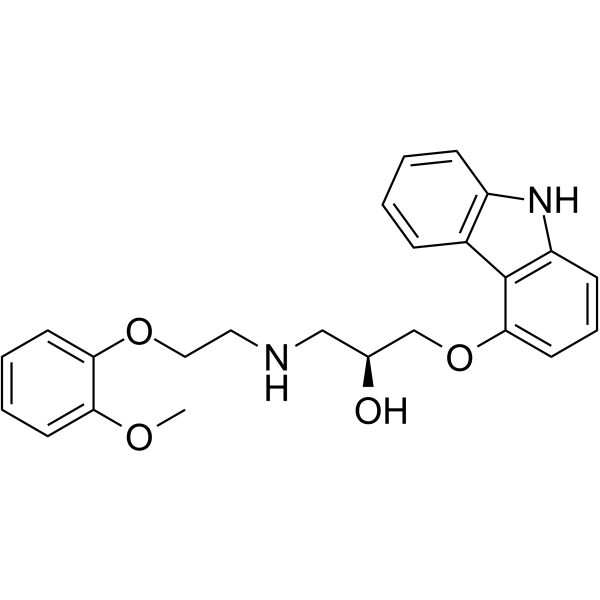
HY-B0006B
(S)-Carvedilolβ/α-1 Blocker -
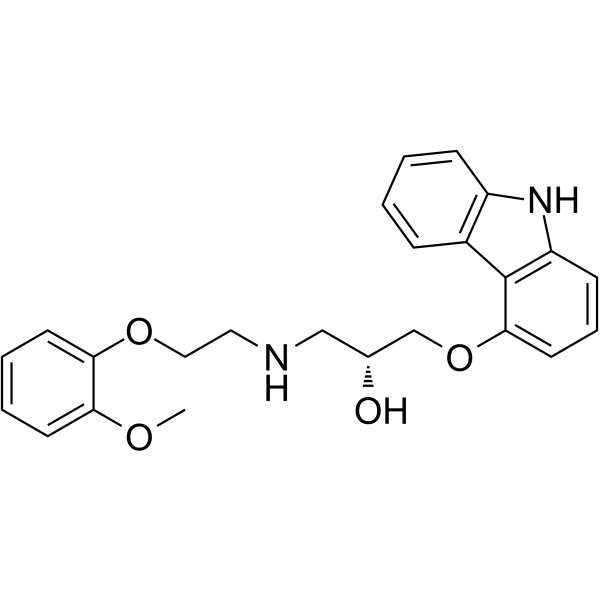
HY-B0006C
(R)-Carvedilolα Blocker -

HY-W100287
Murrayafoline AAnti-neuroinflammatory Agent -
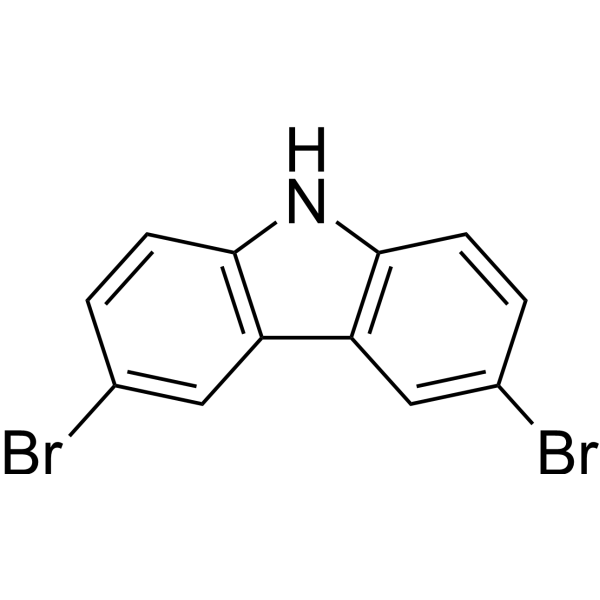
HY-W009154
3,6-DibromocarbazoleGlucocorticoid Receptor Inhibitor -
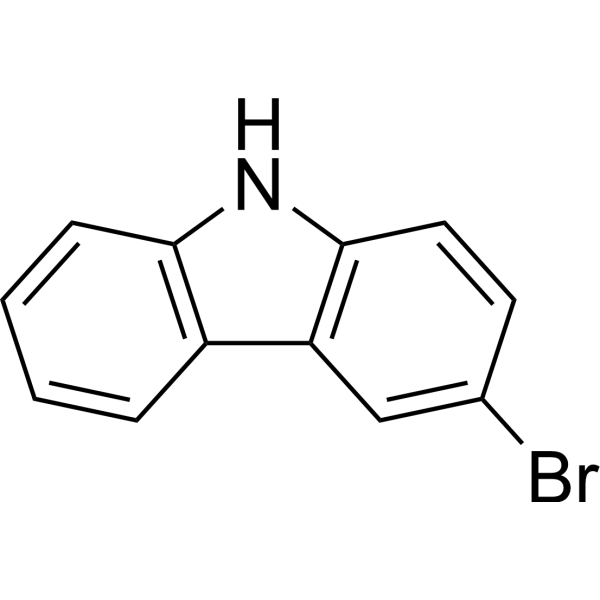
HY-33798
3-BromocarbazoleAHR Inhibitor -

HY-33672R
9-Phenylcarbazole (Standard) -

HY-W100287R
Murrayafoline A (Standard)Anti-neuroinflammatory Agent -

HY-B0006BR
(S)-Carvedilol (Standard)β/α-1 Blocker


Biological Activity
Description
Cellular Effect
|
Cell Line

|
Type | Value | Description | References |
|---|---|---|---|---|
| L02 | IC50 |
>160 μM
Compound: SYSU-20530S
|
Cytotoxicity against human LO2 cells assessed as reduction in cell viability after 48 hrs by CCK8 assay
Cytotoxicity against human LO2 cells assessed as reduction in cell viability after 48 hrs by CCK8 assay
|
10.1039/C3MD00397C |


Chemical Information
-
CAS No. 51997-51-4
-
Appearance Solid
-
Molecular Weight 239.27
-
Formula C15H13NO2
-
Color Off-white to light brown
-
SMILES
C1(COC2=CC=CC3=C2C4=CC=CC=C4N3)CO1
-
Shipping
Room temperature in continental US; may vary elsewhere.
-
Storage
Powder -20°C 3 years 4°C 2 years In solvent -80°C 6 months -20°C 1 month


Solvent & Solubility
In Vitro:
DMSO : 5.83 mg/mL (24.37 mM; Need ultrasonic; Hygroscopic DMSO has a significant impact on the solubility of product, please use newly opened DMSO)
Please refer to the solubility information to select the appropriate solvent. Once prepared, please aliquot and store the solution to prevent product inactivation from repeated freeze-thaw cycles.
Storage method and period of stock solution: -80°C, 6 months; -20°C, 1 month. When stored at -80°C, please use it within 6 months. When stored at -20°C, please use it within 1 month.
Please refer to the solubility information to select the appropriate solvent. Once prepared, please aliquot and store the solution to prevent product inactivation from repeated freeze-thaw cycles.
Storage method and period of stock solution: -80°C, 6 months; -20°C, 1 month. When stored at -80°C, please use it within 6 months. When stored at -20°C, please use it within 1 month.
Concentration (start) × Volume (start) = Concentration (final) × Volume (final)

Protocols
-
Research Protocol for Infectious Diseases
Infectious-disease experiments test how pathogens interact with host barriers, innate immune receptors, inflammatory signaling, pathogen replication, and tissue injury; pattern-recognition receptors such as TLRs, RIG-I-like receptors, NOD-like receptors, and inflammasomes detect microbial molecules and activate NF-κB, interferon, and cytokine responses. The central hypothesis is that infection severity reflects the balance between pathogen burden and host response: protective inflammation restricts pathogen growth, whereas excessive or mislocalized inflammation contributes to tissue damage and disease phenotype. Unresolved questions include which host pathways are protective versus pathogenic, why some infection models fail to translate to human disease, and which combined readouts best predict clinically relevant infection outcomes.
-
Fungal Biofilm Culture
Fungal biofilm culture is an in vitro method for growing surface-attached fungal communities, most commonly Candida albicans, on abiotic substrates such as polystyrene wells, silicone elastomer, or polymethylmethacrylate; the assay models adhesion, proliferation, filamentation, extracellular-matrix-associated maturation, and dispersion. Biofilm output can be read by optical density at 600 nm for adherent biomass, XTT reduction for metabolic activity, CFU recovery for viable attached or dispersed cells, and microscopy for architecture.


Purity & Documentation
-
Data Sheet (274 KB)
-
SDS (557 KB)
- English - EN (557 KB)
- Français - FR (557 KB)
- Deutsch - DE (557 KB)
- Norwegian - NO (557 KB)
- Español - ES (557 KB)
- Swedish - SV (557 KB)
- Italian - IT (557 KB)
- Korean - KR (557 KB)
- Portuguese - PT (557 KB)
-
Handling Instructions (2659 KB)
References


Complete Stock Solution Preparation Table
Please refer to the solubility information to select the appropriate solvent. Once prepared, please aliquot and store the solution to prevent product inactivation from repeated freeze-thaw cycles.
Storage method and period of stock solution: -80°C, 6 months; -20°C, 1 month. When stored at -80°C, please use it within 6 months. When stored at -20°C, please use it within 1 month.
| Optional Solvent | Concentration Solvent Mass | 1 mg | 5 mg | 10 mg | 25 mg |
|---|---|---|---|---|---|
| DMSO | 1 mM | 4.1794 mL | 20.8969 mL | 41.7938 mL | 104.4845 mL |
| 5 mM | 0.8359 mL | 4.1794 mL | 8.3588 mL | 20.8969 mL | |
| 10 mM | 0.4179 mL | 2.0897 mL | 4.1794 mL | 10.4484 mL | |
| 15 mM | 0.2786 mL | 1.3931 mL | 2.7863 mL | 6.9656 mL | |
| 20 mM | 0.2090 mL | 1.0448 mL | 2.0897 mL | 5.2242 mL |


4-Glycidyloxycarbazole Related Classifications
HY-W013429 Related Classifications
 Powered by Bioz