



6-Chlorooxindole

Based on 1 Customer Validation
6-Chlorooxindole (compound 2) is a selective chymase inhibitor with an IC50 of 470 μM. 6-Chlorooxindole shows >100-fold selectivity for chymase over cathepsin G. 6-Chlorooxindole can be used for the study of cardiovascular disease.
For research use only. We do not sell to patients.
- Purity : 99.31%
- CAS No.: 56341-37-8
- Formula: C8H6ClNO
- Molecular Weight:167.59
-
Storage:
Store at room temperature 3 years.
In solvent -80°C, 2 years , -20°C, 1 year


To place orders, for customer services and technical support, please contact: MedChemExpress USA
Tel: 609-228-6898 E-mail: [email protected] [email protected]


-
 Biological Activity
-
Chemical Information
- Protocols
- Purity & Documentation
- References
-
 Help & FAQs


-
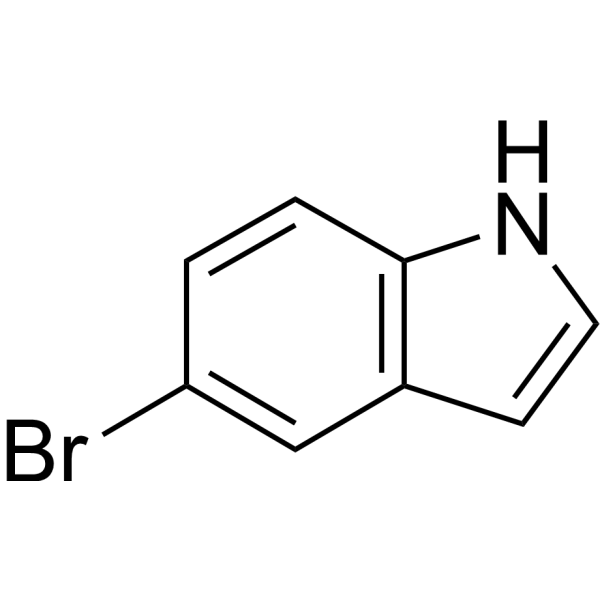
HY-30236
5-BromoindoleAntibacterial Agent -
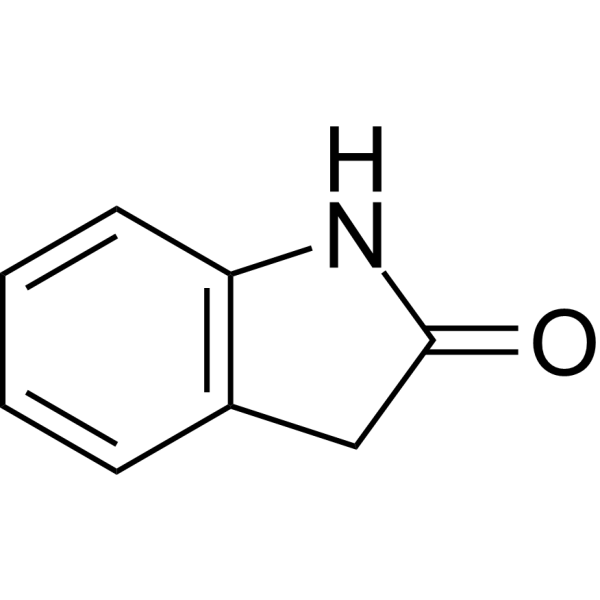
HY-Y0061
Oxindole -
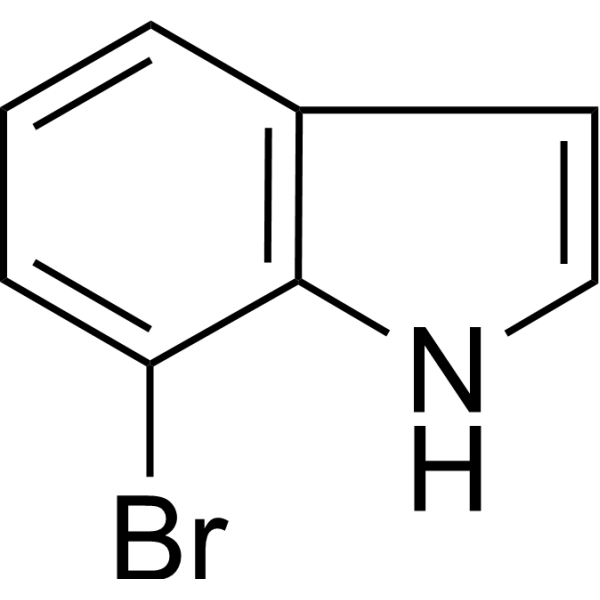
HY-W002687
7-Bromo-1H-indoleBiochemical Reagent -
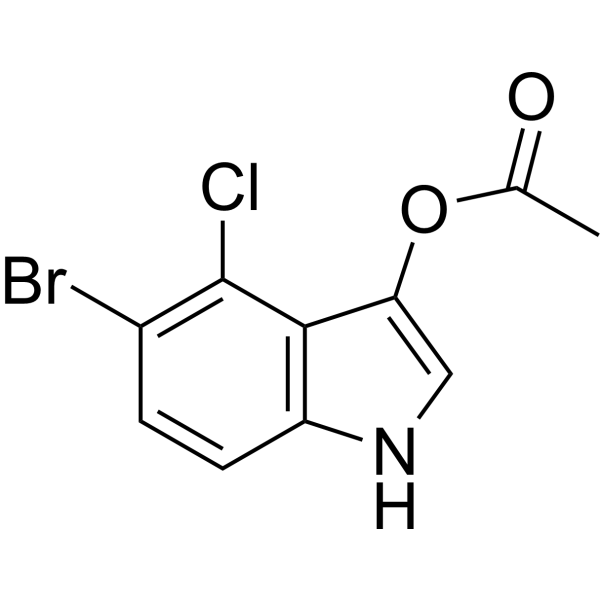
HY-52112
BCDAChromogenic Substrate -
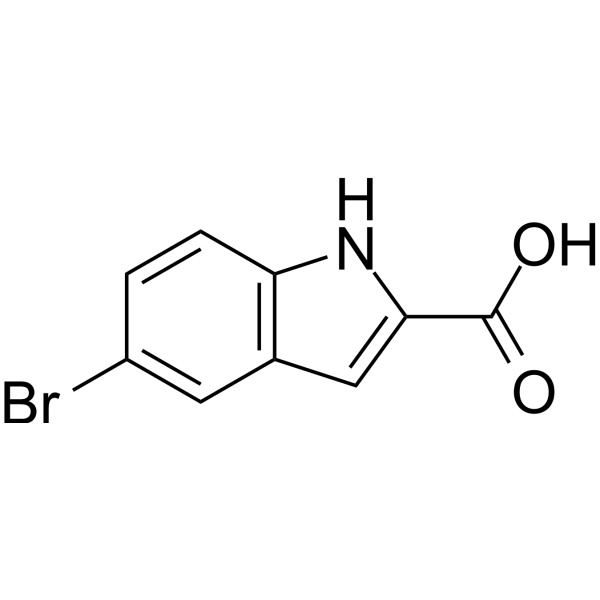
HY-W007593
5-Bromo-1H-indole-2-carboxylic acidIntermediate -
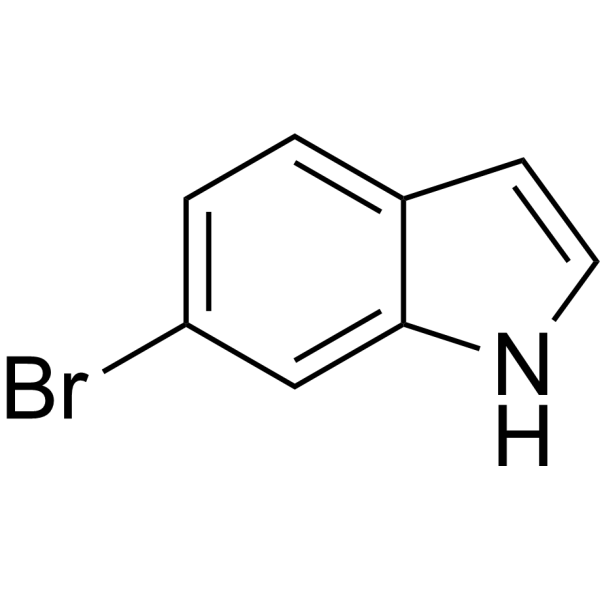
HY-59233
6-BromoindoleBiochemical Reagent -
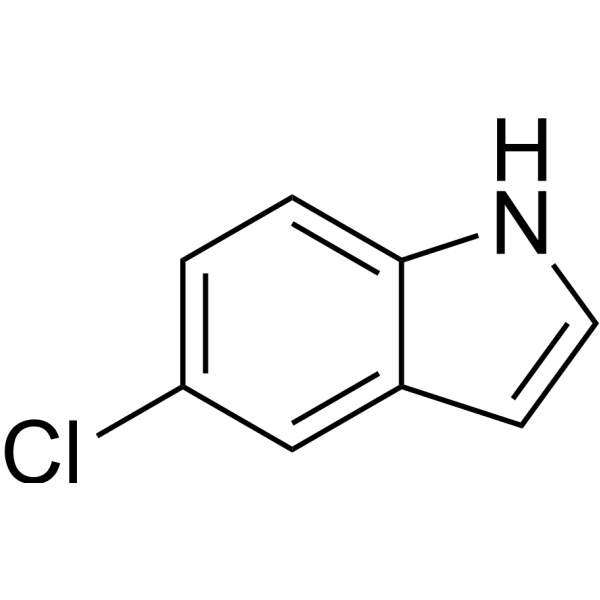
HY-W007384
5-ChloroindoleBiochemical Reagent -
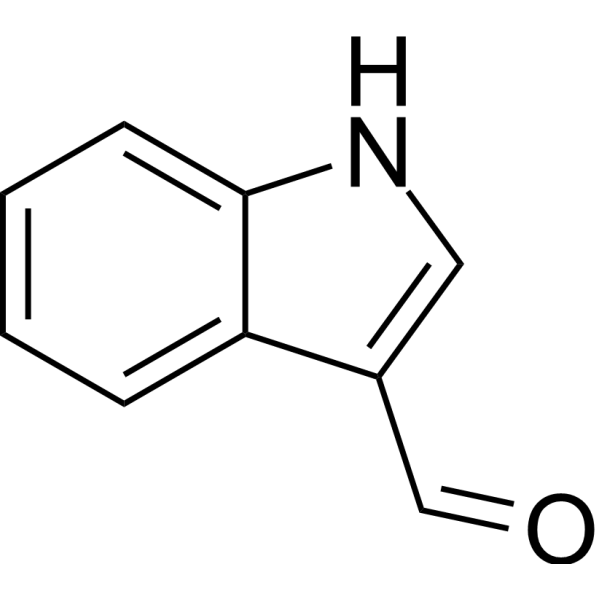
HY-W007376
Indole-3-carboxaldehydeEndogenous Metabolite -

HY-Y0061R
Oxindole (Standard) -
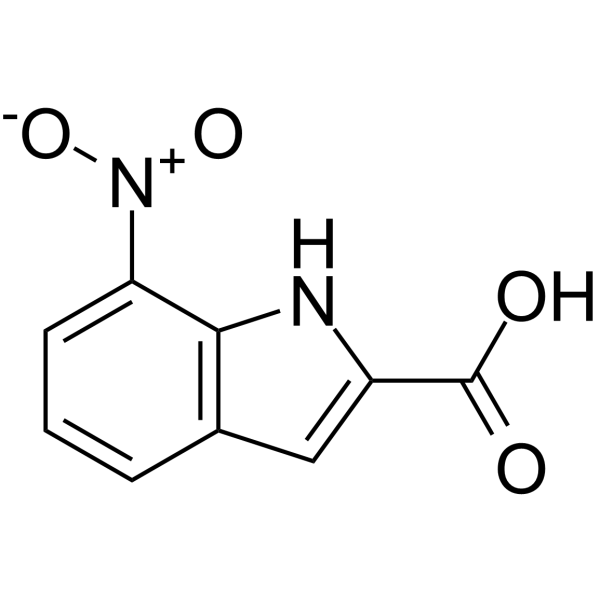
HY-W014622
CRT0044876APE1 Inhibitor -
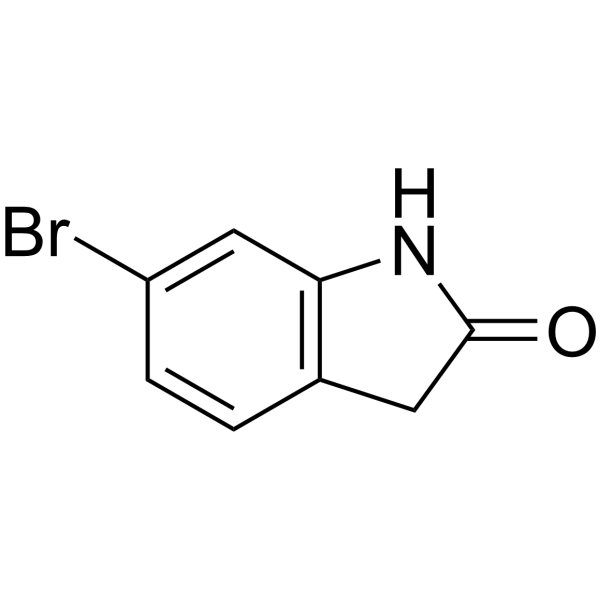
HY-59227
6-BromooxindoleBiochemical Reagent -
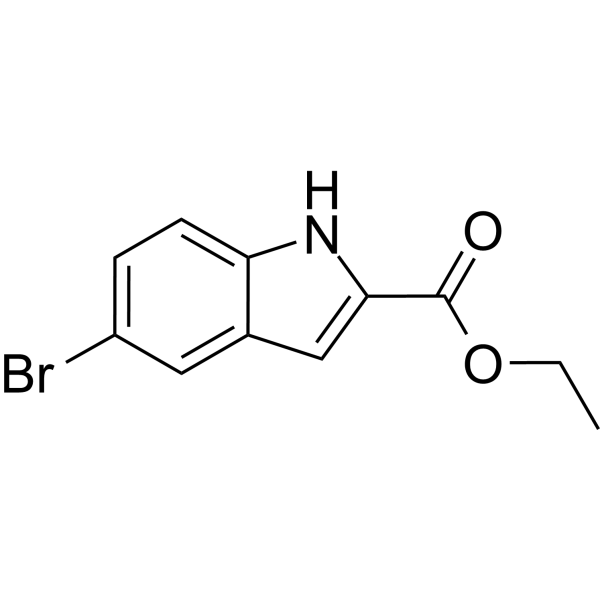
HY-W002128
2-(Ethoxycarbonyl)-5-bromo-indoleBiochemical Reagent


Biological Activity
Description
Cellular Effect
|
Cell Line

|
Type | Value | Description | References |
|---|---|---|---|---|
| LS180 | EC80 |
0.3 μM
Compound: 6-Cl-2-ox
|
Induction of CYP1A1 mRNA expression in human LS180 cells incubated for 4 hrs by chromatin immunoprecipitation assay
Induction of CYP1A1 mRNA expression in human LS180 cells incubated for 4 hrs by chromatin immunoprecipitation assay
|
[PMID: 39454560] |


Chemical Information
-
CAS No. 56341-37-8
-
Appearance Solid
-
Molecular Weight 167.59
-
Formula C8H6ClNO
-
SMILES
O=C1NC2=C(C=CC(Cl)=C2)C1
-
Shipping
Room temperature in continental US; may vary elsewhere.
-
Storage
Store at room temperature 3 years
In solvent -80°C 2 years -20°C 1 year

Protocols
-
Cell Cytotoxicity Assay
Cytotoxicity assays are usually based on the assessment of cell membrane damage, which can also be indirectly detected by measuring cell viability. Detection methods include MTT assay, CKK-8 assay, LDH assay and ATP assay, etc.
-
Research Protocol for Cardiovascular Diseases
Cardiovascular disease can be modeled as maladaptive cardiac remodeling, where ischemic injury or pressure overload activates inflammatory signaling, fibroblast activation, extracellular-matrix deposition, cardiomyocyte hypertrophy, vascular remodeling, and progressive ventricular dysfunction. The TGF-β/SMAD axis is a central profibrotic pathway after myocardial injury and pressure overload, while innate immune and cytokine pathways regulate leukocyte recruitment, scar formation, and adverse remodeling. Key unresolved questions include which inflammatory signals are reparative versus harmful, when fibrosis is protective versus maladaptive, and whether pathway inhibition improves function without weakening necessary infarct healing or compensatory remodeling.


Purity & Documentation
-
Data Sheet (265 KB)
-
SDS (394 KB)
- English - EN (394 KB)
- Français - FR (394 KB)
- Deutsch - DE (394 KB)
- Norwegian - NO (394 KB)
- Español - ES (394 KB)
- Swedish - SV (394 KB)
- Italian - IT (394 KB)
- Korean - KR (394 KB)
- Portuguese - PT (394 KB)
-
Handling Instructions (2659 KB)
References

Calculators
Concentration (start) × Volume (start) = Concentration (final) × Volume (final)


6-Chlorooxindole Related Classifications
HY-Y0370 Related Classifications
 Powered by Bioz