



Acarbose
Based on 15 publication(s) in Google Scholar
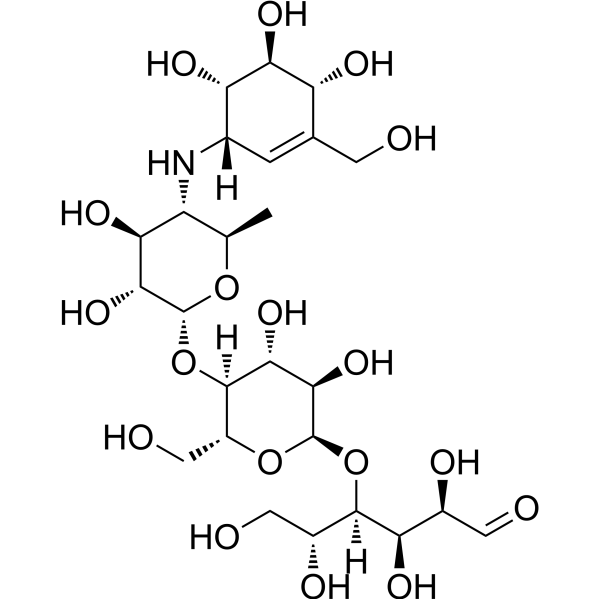
Acarbose (BAY g 5421), antihyperglycemic agent, is an orally active alpha-glucosidase inhibitor (IC50=11 nM). Acarbose can potentiate the hypoglycemic effects of sulfonylureas or insulin.
For research use only. We do not sell to patients.
- Purity : 99.97%
- CAS No.: 56180-94-0
- Formula: C25H43NO18
- Molecular Weight:645.60
-
Storage:Powder -20°C, 3 years , 4°C, 2 years ; In solvent -80°C, 2 years , -20°C, 1 year

To place orders, for customer services and technical support, please contact: MedChemExpress USA
Tel: 609-228-6898 E-mail: [email protected] [email protected]


-
 Biological Activity
-
Chemical Information
-
Solvent & Solubility
- Protocols
- Purity & Documentation
- References
-
 Help & FAQs


-
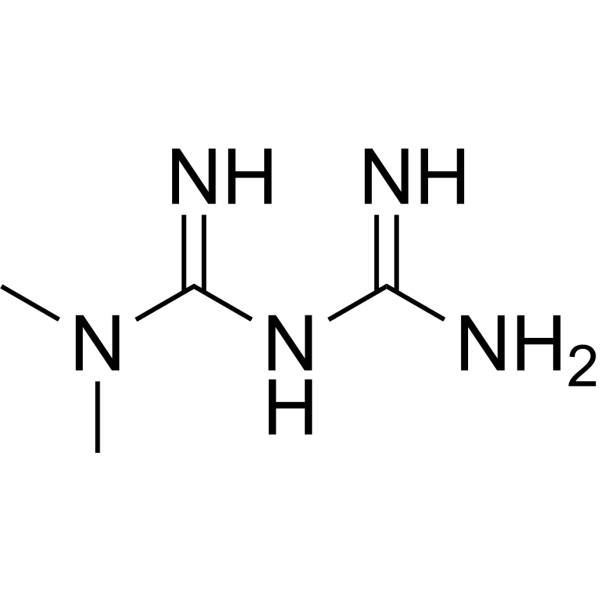
HY-B0627
MetforminAntihyperglycemic Agent -
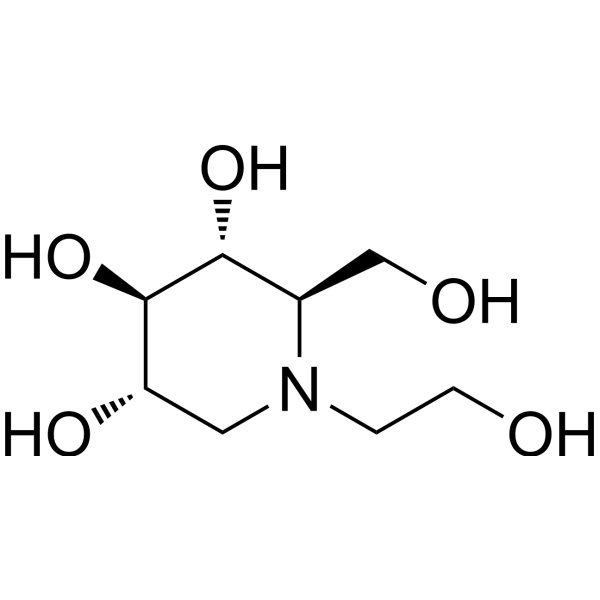
HY-B0481
MiglitolAnti-diabetic Agent -
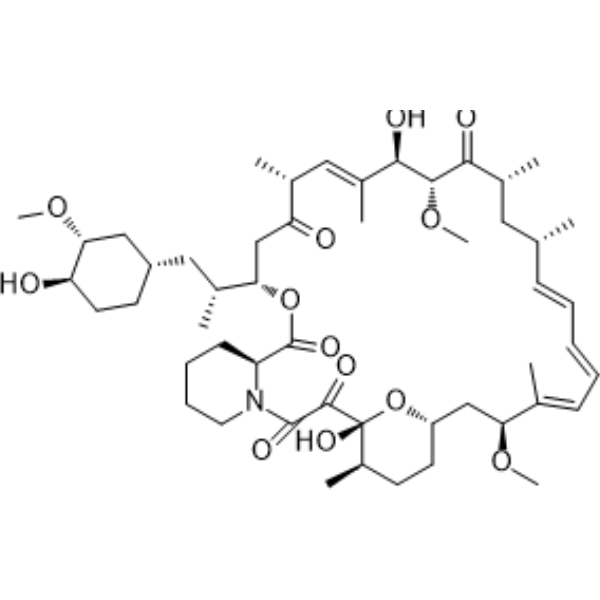
HY-10219
RapamycinmTOR Inhibitor -
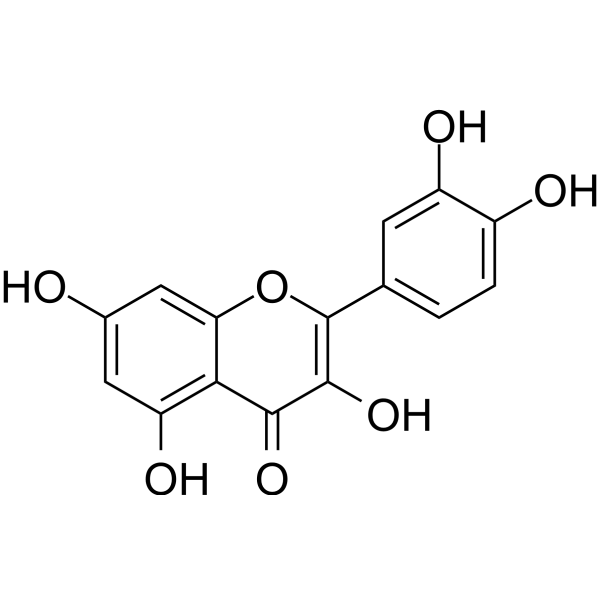
HY-18085
QuercetinFlavonoid Antioxidant -
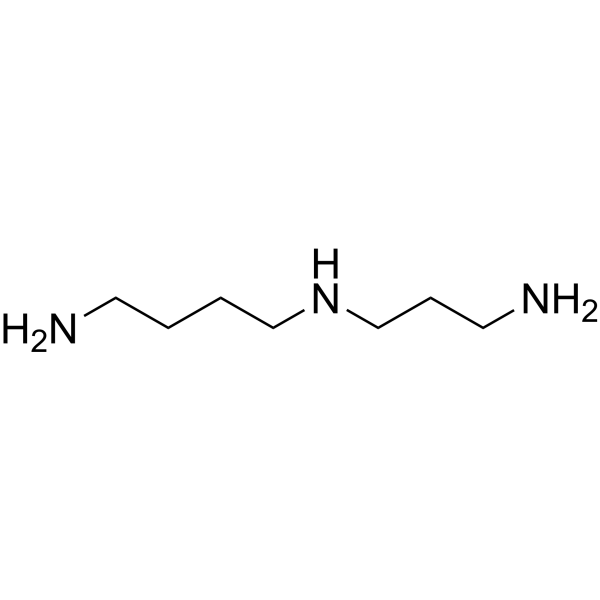
HY-B1776
SpermidinePolyamine Compound -
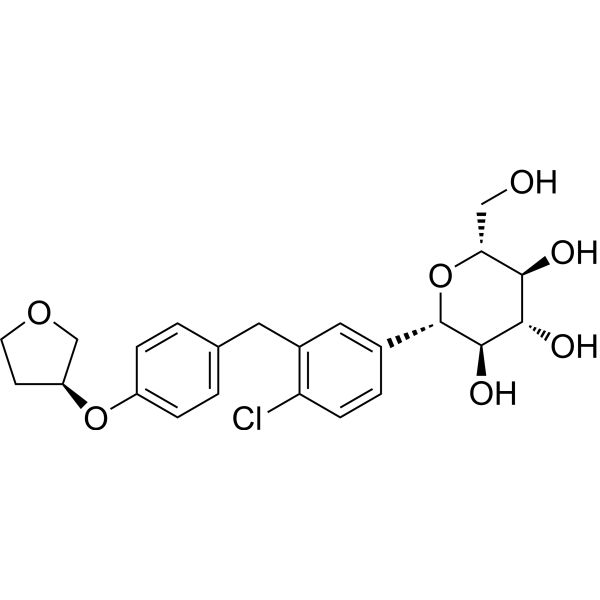
HY-15409
EmpagliflozinSGLT2 Inhibitor -
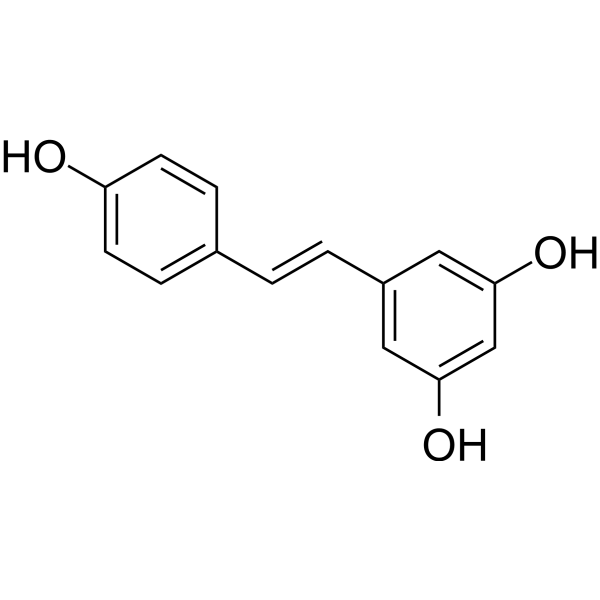
HY-16561
ResveratrolPolyphenolic Phytoalexin -
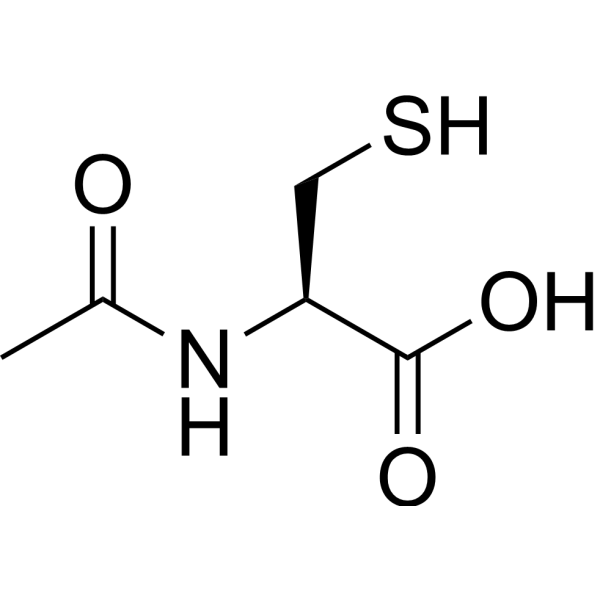
HY-B0215
AcetylcysteineMucolytic Agent -
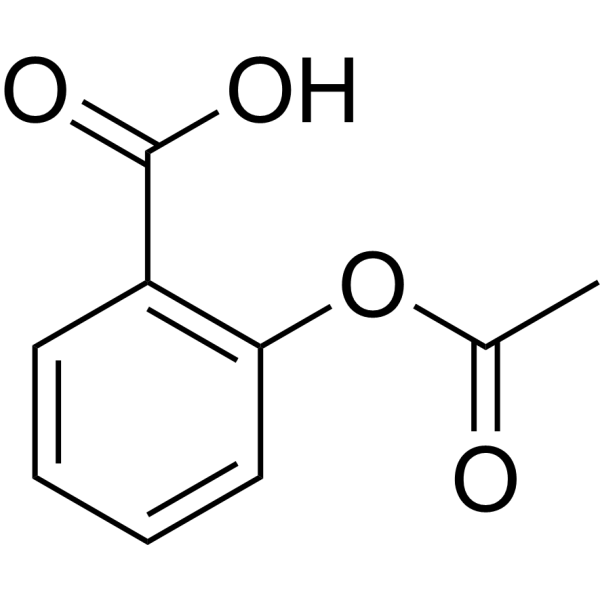
HY-14654
AspirinCOX Inhibitor -
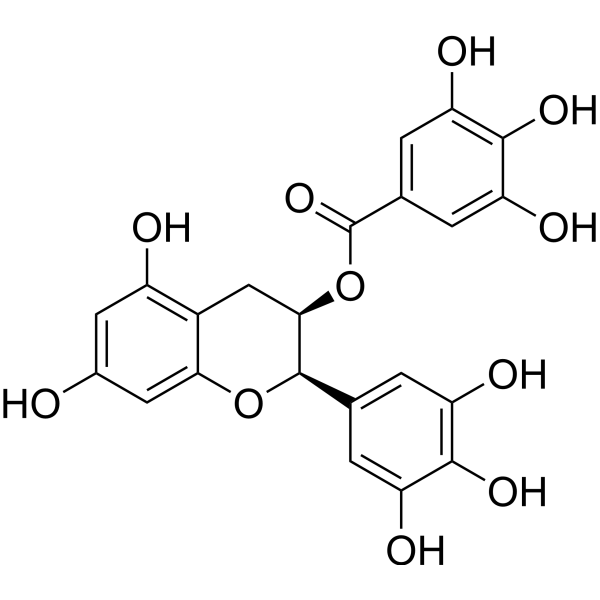
HY-13653
(-)-Epigallocatechin GallateAnticancer Agent -
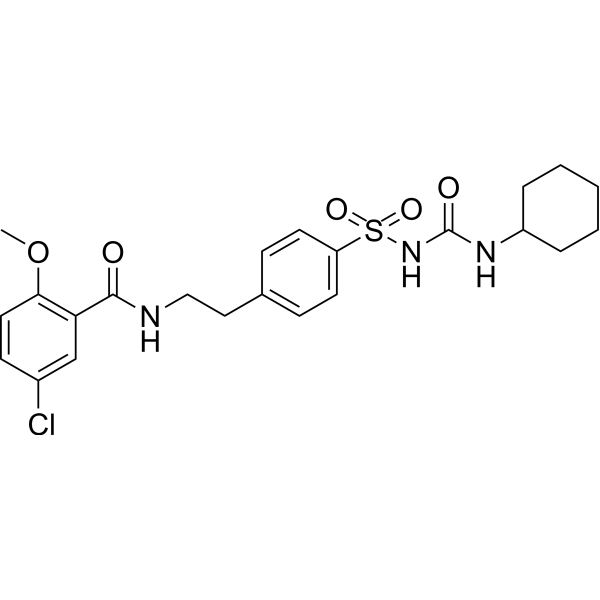
HY-15206
GlibenclamideKATP Inhibitor -
HY-13956
PioglitazonePPARγ Agonist
Publications Citing Use of MedChemExpress (MCE) Acarbose
More- Cancer Res. 2026 Jul 17.
- Research (Wash D C). 2026 Feb 25:9:1161. [Abstract]
- J Neuroinflammation. 2026 May 2;23(1):206. [Abstract]
- Phytomedicine. 2026 Oct:160:158619.
- Antioxidants (Basel). 2026 May 29;15(6):688. [Abstract]
- Aging Cell. 2026 Jan 20;25(2):e70352.
- Nat Prod Bioprospect. 2023 Jan 9;13(1):2. [Abstract]
- Int J Mol Sci. 2025 Feb 6;26(3):1381. [Abstract]
- Front Pharmacol. 2025 Apr 30:16:1573032. [Abstract]
- Pest Manag Sci. 2021 Nov;77(11):5294-5303. [Abstract]
- J Infect Dis. 2025 Nov 12:jiaf567. [Abstract]
- Phytochemistry. 2022 Apr:196:113083. [Abstract]
- Biochem Syst Ecol. 2025 Oct.
- Bratisl Lek Listy. 2026 Jun 17.
- SSRN. 2025 Jul 25.
 Customer Validation & Images

-
Bio/Physico-chemical Assay


Biological Activity
Description
Cellular Effect
|
Cell Line

|
Type | Value | Description | References |
|---|---|---|---|---|
| Caco-2 | IC50 |
5 μM
Compound: 11
|
Inhibition of maltase in human Caco-2 cell model system after 2 hrs
Inhibition of maltase in human Caco-2 cell model system after 2 hrs
|
[PMID: 18595718] |
In Vitro
Acarbose (1, 2, and 3 μM) dose- and time-dependently inhibits TNF-α-induced VSMC proliferation and migration. Acarbose (1, 2, and 3 μM) dose-dependently decreases β-galactosidase, Ras expression and increased p-AMPK expression in TNF-α pre-treated A7r5 cells[5].
MedChemExpress (MCE) has not independently confirmed the accuracy of these methods. They are for reference only. Further protocols information, click here.
In Vivo
Acarbose (2.5 and 5.0 mg/kg) significantly and dose-dependently decreases the intensity of neointimal IL-6, TNF-α, and iNOS staining, and significantly increases the intensity of neointimal p-AMPK staining. Acarbose (2.5 and 5.0 mg/kg) significantly and dose-dependently decreases neointimal Ras and β-galactosidase expression in HCD-fed rabbits without body weight loss[5].
MedChemExpress (MCE) has not independently confirmed the accuracy of these methods. They are for reference only.
Clinical Trial
| NCT Number | Sponsor | Condition | Start Date |
Phase
|
|---|---|---|---|---|
| NCT01329991 | Plexxikon| | 2011-05 | PHASE1 |


Chemical Information
-
CAS No. 56180-94-0
-
Appearance Solid
-
Molecular Weight 645.60
-
Formula C25H43NO18
-
Color White to light yellow
-
SMILES
OC[C@H]([C@]1(O[C@@H]2[C@H](O)[C@@H](O)[C@@H]([C@H](O2)C)N[C@]3(C=C(CO)[C@H]([C@@H]([C@H]3O)O)O)[H])[H])O[C@@H]([C@@H]([C@H]1O)O)O[C@@]([H])([C@@H]([C@H](C=O)O)O)[C@@H](CO)O
-
Synonyms
BAY g 5421
-
Structure Classification
-
Initial Source
Actinoplanes sp
-
Shipping
Room temperature in continental US; may vary elsewhere.
-
Storage
Powder -20°C 3 years 4°C 2 years In solvent -80°C 2 years -20°C 1 year


Publications (15)
-
Journal Impact Factor
-
Most Recent
-
-
Research (Wash D C)
Repurposed Acarbose Targets Nidogen-1 to Remodel the Tumor Stroma and Suppress Portal Vein Tumor Thrombus in Hepatocellular Carcinoma. [Abstract]2026 Feb 25:9:1161. PMID: 41756725 -
J Neuroinflammation
Acarbose modulates microglial Pkm2 acetylation to reshape immunometabolism and preserve retinal neurons after ischemia-reperfusion. [Abstract]2026 May 2;23(1):206. PMID: 42069589 -
-
Antioxidants (Basel)
Bioactive Extracts and Constituents from Taraxacum mongolicum: Antioxidant, Anti-Inflammatory, Enzyme-Inhibitory, and Molecular Docking Studies. [Abstract]2026 May 29;15(6):688. PMID: 42351994 -
-
Nat Prod Bioprospect
2023 Jan 9;13(1):2. PMID: 36617588 -
Int J Mol Sci
Discovery of TRPV4-Targeting Small Molecules with Anti-Influenza Effects Through Machine Learning and Experimental Validation. [Abstract]2025 Feb 6;26(3):1381. PMID: 39941149 -
Front Pharmacol
Canagliflozin alleviates progestin resistance by suppressing RARβ/CRABP2 signaling in THRB knockout endometrial cancer cells. [Abstract]2025 Apr 30:16:1573032. PMID: 40371351 -
Pest Manag Sci
Suppression of Bta11975, an α-glucosidase, by RNA interference reduces transmission of tomato chlorosis virus by Bemisia tabaci. [Abstract]2021 Nov;77(11):5294-5303. PMID: 34310017
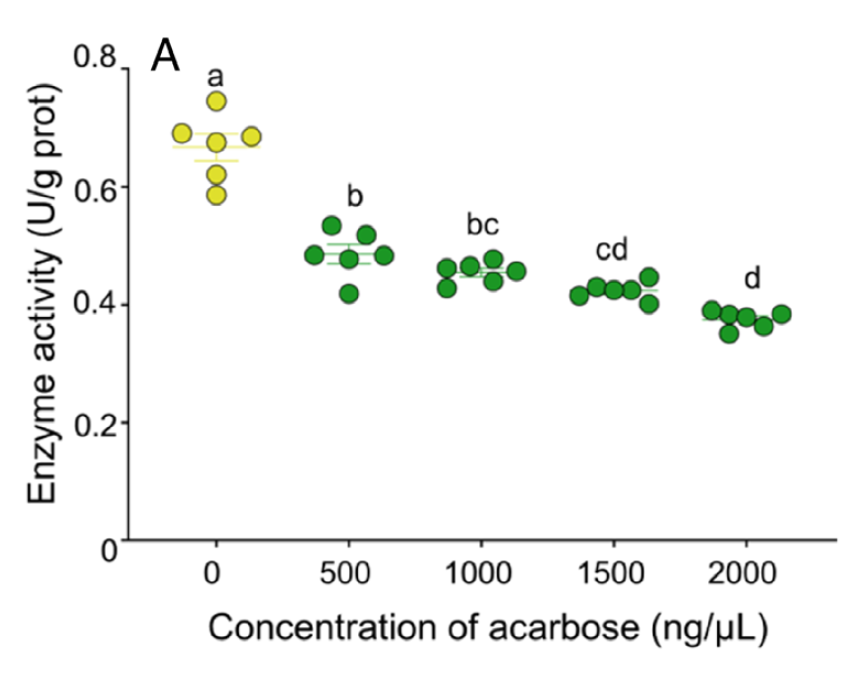
Acarbose purchased from MedChemExpress. Usage Cited in: Pest Manag Sci. 2021 Nov;77(11):5294-5303. [Abstract]
Effects of Acarbose (500-2000 ng/μL) concentration on AGLU activity in Bemisia tabaci MED. Addition of 750 ng/μL of Acarbose to the nutrient solution caused about 50% inhibition of AGLU activity in B. tabaci MED.
-
J Infect Dis
Ampicillin/Sulbactam in Combination with Ceftazidime/Avibactam against Metallo-β-Lactamase-Producing Carbapenem-Resistant Acinetobacter baumannii: A Genomics-Informed Mechanism-Based Model. [Abstract]2025 Nov 12:jiaf567. PMID: 41223187 -
Phytochemistry
2022 Apr:196:113083. PMID: 34999512 -
-
-


Solvent & Solubility
In Vitro:
H2O : 100 mg/mL (154.89 mM; Need ultrasonic)
Please refer to the solubility information to select the appropriate solvent. Once prepared, please aliquot and store the solution to prevent product inactivation from repeated freeze-thaw cycles.
Storage method and period of stock solution: -80°C, 2 years; -20°C, 1 year. When stored at -80°C, please use it within 2 years. When stored at -20°C, please use it within 1 year.
* Note: If you choose water as the stock solution, please dilute it to the working solution, then filter and sterilize it with a 0.22 μm filter before use.
Please refer to the solubility information to select the appropriate solvent. Once prepared, please aliquot and store the solution to prevent product inactivation from repeated freeze-thaw cycles.
Storage method and period of stock solution: -80°C, 2 years; -20°C, 1 year. When stored at -80°C, please use it within 2 years. When stored at -20°C, please use it within 1 year.
* Note: If you choose water as the stock solution, please dilute it to the working solution, then filter and sterilize it with a 0.22 μm filter before use.
Concentration (start) × Volume (start) = Concentration (final) × Volume (final)
In Vivo:
For the following dissolution methods, please prepare the working solution directly:
It is recommended to prepare fresh solutions and use them promptly within a short period of time.
The percentages shown for the solvents indicate their volumetric ratio in the final prepared solution. If precipitation or phase separation occurs during preparation, heat and/or sonication can be used to aid dissolution.
Add each solvent one by one: PBS
Solubility: 100 mg/mL (154.89 mM); Clear solution; Need ultrasonic and warming and heat to 60°C

Protocols
-
Cell Cytotoxicity Assay
Cytotoxicity assays are usually based on the assessment of cell membrane damage, which can also be indirectly detected by measuring cell viability. Detection methods include MTT assay, CKK-8 assay, LDH assay and ATP assay, etc.
-
Research Protocol for Endocrine Diseases
Endocrine diseases often arise from disrupted hormone production, hormone signaling, or target-tissue responsiveness; for diabetes-focused endocrine disease models, insulin signaling regulates glucose uptake, hepatic glucose output, lipid metabolism, and β-cell compensation. Type 2 diabetes develops through interacting defects in insulin resistance, β-cell dysfunction, adipose inflammation, hepatic glucose overproduction, altered incretin signaling, and ectopic lipid metabolism. A major unresolved question is whether endocrine dysfunction is driven primarily by target-tissue insulin resistance, intrinsic β-cell failure, immune/inflammatory stress, or combined multi-organ failure that differs by disease stage.


Purity & Documentation
-
Data Sheet (287 KB)
-
SDS (393 KB)
- English - EN (393 KB)
- Français - FR (393 KB)
- Deutsch - DE (393 KB)
- Norwegian - NO (393 KB)
- Español - ES (393 KB)
- Swedish - SV (393 KB)
- Italian - IT (393 KB)
- Korean - KR (393 KB)
- Portuguese - PT (393 KB)
-
Handling Instructions (2659 KB)
References
[1]. Yee HS, et al. A review of the safety and efficacy of acarbose in diabetes mellitus. Pharmacotherapy. 1996;16(5):792-805. [Content Brief]
[2]. Hanefeld M, et al. Acarbose: oral anti-diabetes drug with additional cardiovascular benefits [published correction appears in Expert Rev Cardiovasc Ther. 2009 Mar;7(3):330]. Expert Rev Cardiovasc Ther. 2008;6(2):153-163. [Content Brief]
[3]. Oki T, et al. Evaluation of alpha-glucosidase inhibition by using an immobilized assay system. Biol Pharm Bull. 2000;23(9):1084-1087. [Content Brief]
[4]. Zhang Q, et al. Acarbose Reduces Blood Glucose by Activating miR-10a-5p and miR-664 in Diabetic Rats. PLoS One. 2013 Nov 18;8(11):e79697. [Content Brief]
[5]. Chan KC, et al. Pleiotropic effects of acarbose on atherosclerosis development in rabbits are mediated via upregulating AMPK signals. Sci Rep. 2016 Dec 7;6:3864 [Content Brief]


Complete Stock Solution Preparation Table
Please refer to the solubility information to select the appropriate solvent. Once prepared, please aliquot and store the solution to prevent product inactivation from repeated freeze-thaw cycles.
Storage method and period of stock solution: -80°C, 2 years; -20°C, 1 year. When stored at -80°C, please use it within 2 years. When stored at -20°C, please use it within 1 year.
| Optional Solvent | Concentration Solvent Mass | 1 mg | 5 mg | 10 mg | 25 mg |
|---|---|---|---|---|---|
| H2O | 1 mM | 1.5489 mL | 7.7447 mL | 15.4895 mL | 38.7237 mL |
| 5 mM | 0.3098 mL | 1.5489 mL | 3.0979 mL | 7.7447 mL | |
| 10 mM | 0.1549 mL | 0.7745 mL | 1.5489 mL | 3.8724 mL | |
| 15 mM | 0.1033 mL | 0.5163 mL | 1.0326 mL | 2.5816 mL | |
| 20 mM | 0.0774 mL | 0.3872 mL | 0.7745 mL | 1.9362 mL | |
| 25 mM | 0.0620 mL | 0.3098 mL | 0.6196 mL | 1.5489 mL | |
| 30 mM | 0.0516 mL | 0.2582 mL | 0.5163 mL | 1.2908 mL | |
| 40 mM | 0.0387 mL | 0.1936 mL | 0.3872 mL | 0.9681 mL | |
| 50 mM | 0.0310 mL | 0.1549 mL | 0.3098 mL | 0.7745 mL | |
| 60 mM | 0.0258 mL | 0.1291 mL | 0.2582 mL | 0.6454 mL | |
| 80 mM | 0.0194 mL | 0.0968 mL | 0.1936 mL | 0.4840 mL | |
| 100 mM | 0.0155 mL | 0.0774 mL | 0.1549 mL | 0.3872 mL |
* Note: If you choose water as the stock solution, please dilute it to the working solution, then filter and sterilize it with a 0.22 μm filter before use.


Acarbose Related Classifications
HY-B0089 Related Classifications
 Powered by Bioz