



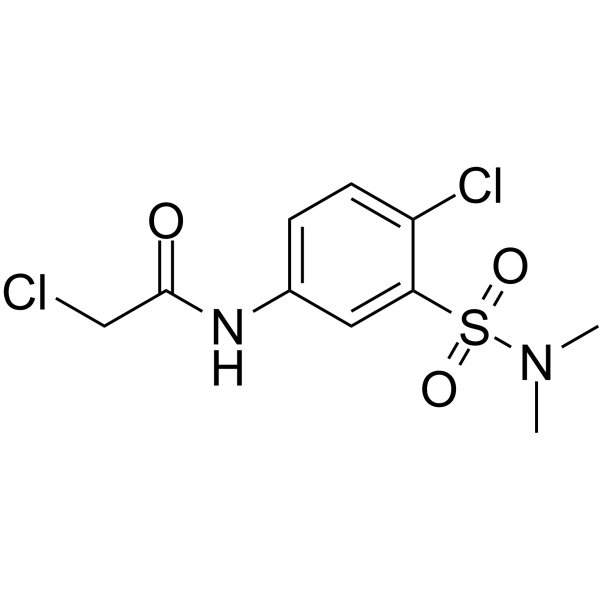
GSTO1-IN-1
Based on 4 publication(s) in Google Scholar
GSTO1-IN-1 is a potent glutathione S-transferase omega 1 (GSTO1) inhibitor with an IC50 of 31 nM.
For research use only. We do not sell to patients.
- Purity : 99.11%
- CAS No.: 568544-03-6
- Formula: C10H12Cl2N2O3S
- Molecular Weight:311.18
-
Storage:Powder -20°C, 3 years , 4°C, 2 years ; In solvent -80°C, 2 years , -20°C, 1 year

To place orders, for customer services and technical support, please contact: MedChemExpress USA
Tel: 609-228-6898 E-mail: [email protected] [email protected]


-
 Biological Activity
-
Chemical Information
-
Solvent & Solubility
- Protocols
- Purity & Documentation
- References
-
 Help & FAQs


-
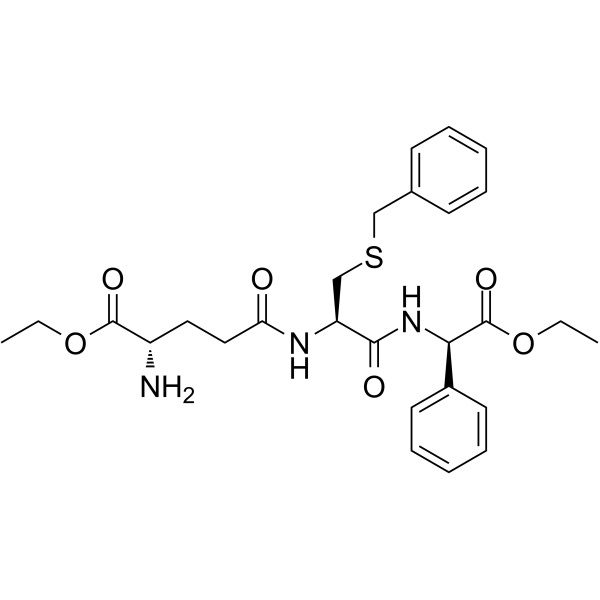
HY-13634A
EzatiostatGSTP1 Inhibitor -
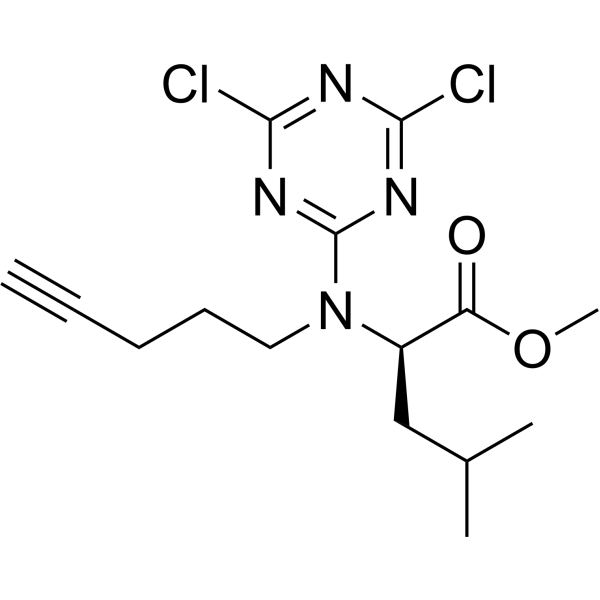
HY-115673
LAS17GSTP1 Inhibitor -
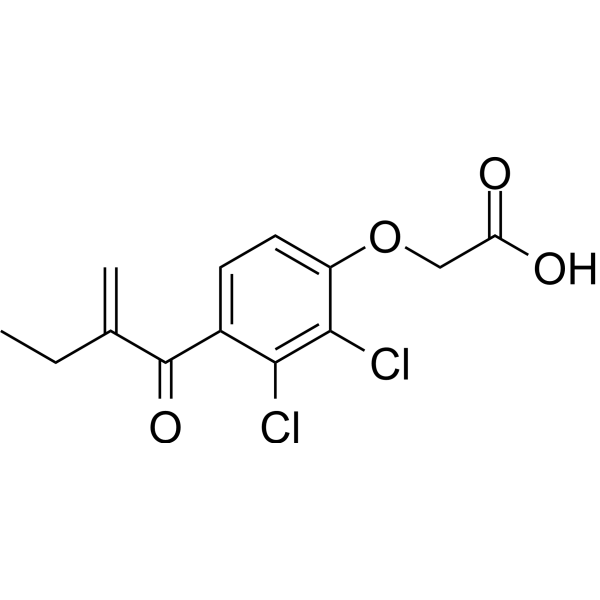
HY-B1640
Ethacrynic acidDiuretic, Win Inhibitor, GSTs Inhibitor, Radiosensitizer -
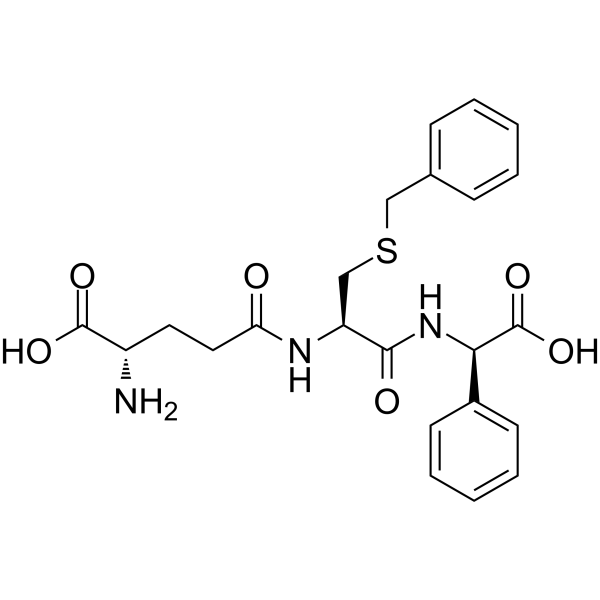
HY-13634B
TLK117GSTP1-1 Inhibitor -
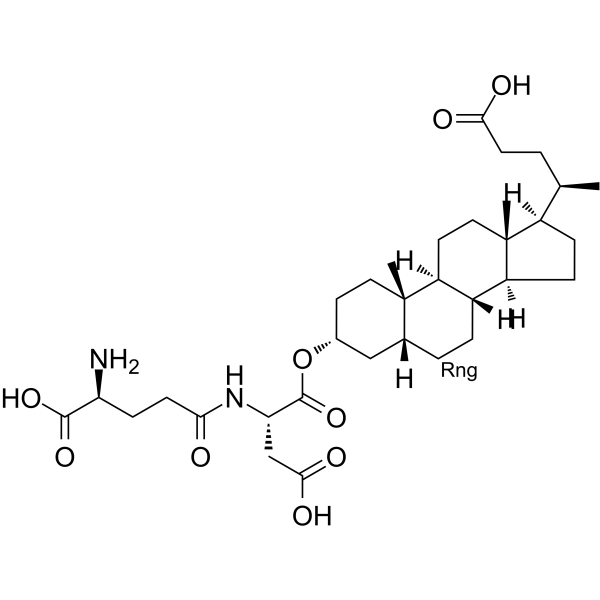
HY-112534
GSTO-IN-2Glutathione S-transferase Inhibitor -
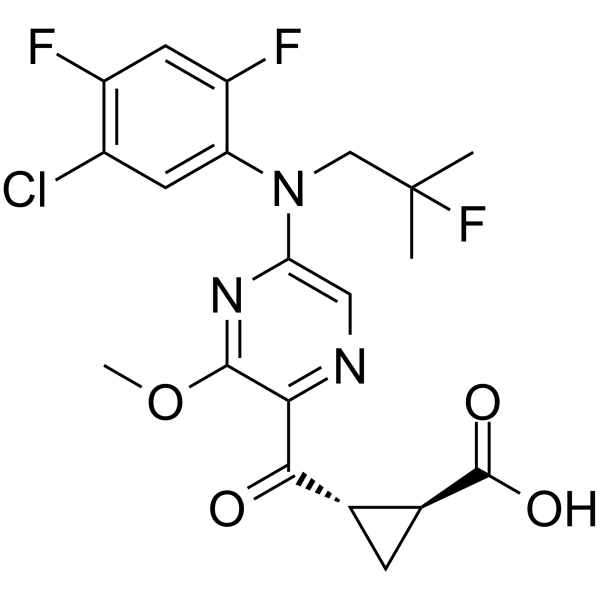
HY-126329
AZD9898Gutathione S-transferase Inhibitor -
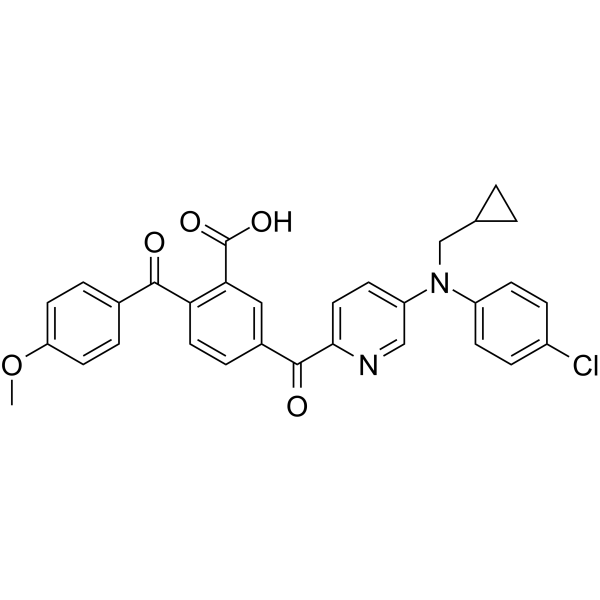
HY-117143
TK05LTC4S Inhibitor -
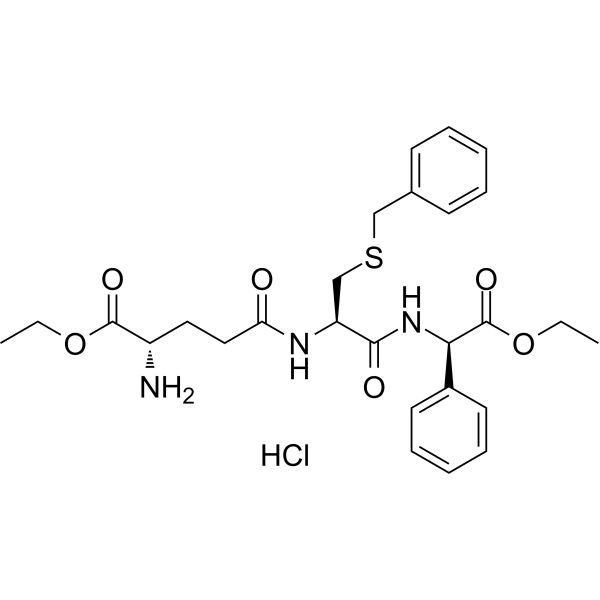
HY-13634
Ezatiostat hydrochlorideGSTP1 Inhibitor -
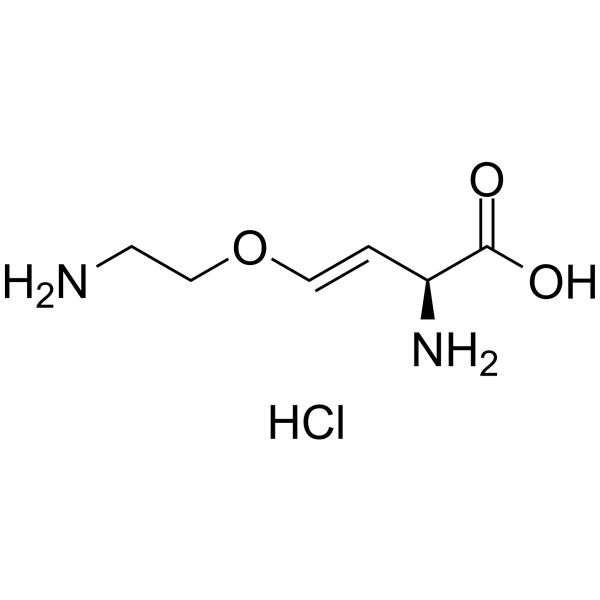
HY-W009861
Aviglycine hydrochlorideEthylene Biosynthesis Inhibitor -
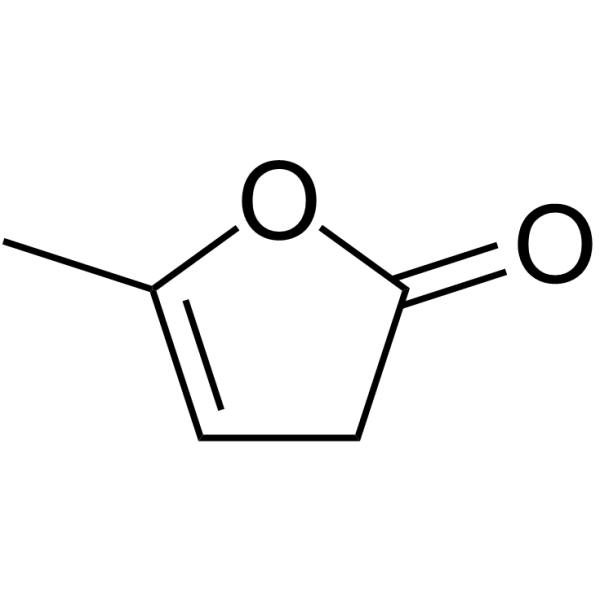
HY-N0548
α-Angelica lactoneChemopreventative Agent -
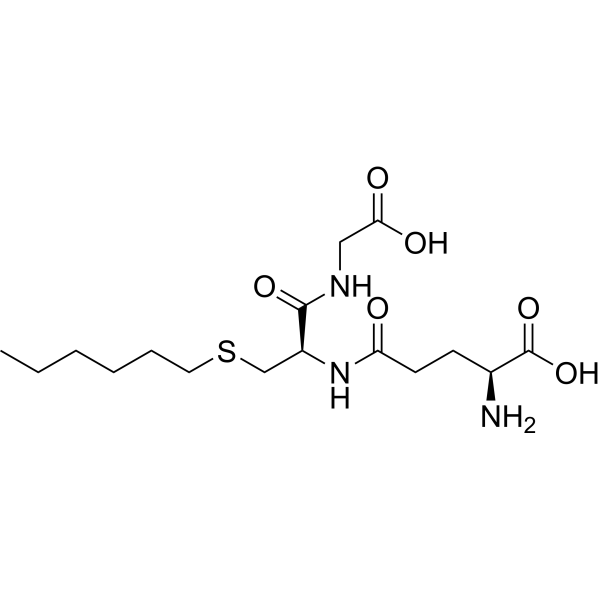
HY-W013754
S-HexylglutathioneGlutathione-S-transferase Inhibitor -
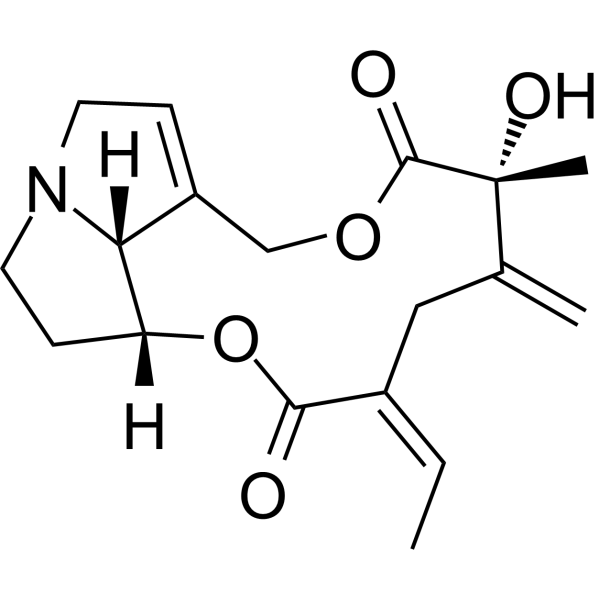
HY-N1282
SeneciphyllineHepatotoxic Inducer
Publications Citing Use of MedChemExpress (MCE) GSTO1-IN-1
More

Biological Activity
Description
IC50 & Target
IC50: 31 nM (GSTO1)[1]
Cellular Effect
|
Cell Line

|
Type | Value | Description | References |
|---|---|---|---|---|
| HCT-116 | IC50 |
1.2 μM
Compound: C1-27
|
Antiproliferative activity against human HCT116 cells after 72 hrs by MTT assay
Antiproliferative activity against human HCT116 cells after 72 hrs by MTT assay
|
[PMID: 30735370] |
| HT-29 | IC50 |
4.3 μM
Compound: C1-27
|
Antiproliferative activity against human HT-29 cells after 72 hrs by MTT assay
Antiproliferative activity against human HT-29 cells after 72 hrs by MTT assay
|
[PMID: 30735370] |
In Vitro
GSTO1-IN-1 (C1-27) potently inhibits GSTO1 enzyme activity with an IC50 value of 31 nM. GSTO1-IN-1 also potently competes with 5-chloromethylfluorescein diacetate (CMFDA) for binding to recombinant protein, as well as endogenous GSTO1 in the milieu of a soluble proteome. HCT116 cells treated with GSTO1-IN-1 also show a decrease in cell viability in a dose-dependent manner. GSTO1-IN-1 inhibits the clonogenic survival of HCT116 cells at sub-micromolar concentrations[1].
MedChemExpress (MCE) has not independently confirmed the accuracy of these methods. They are for reference only. Further protocols information, click here.
In Vivo
MedChemExpress (MCE) has not independently confirmed the accuracy of these methods. They are for reference only.


Chemical Information
-
CAS No. 568544-03-6
-
Appearance Solid
-
Molecular Weight 311.18
-
Formula C10H12Cl2N2O3S
-
Color Light yellow to yellow
-
SMILES
O=C(NC1=CC=C(Cl)C(S(=O)(N(C)C)=O)=C1)CCl
-
Shipping
Room temperature in continental US; may vary elsewhere.
-
Storage
Powder -20°C 3 years 4°C 2 years In solvent -80°C 2 years -20°C 1 year


Publications (4)
-
Journal Impact Factor
-
Most Recent
-
Sci Adv
The chloride intracellular channel 1 (CLIC1) is essential for microglial morphodynamics and neuroinflammation. [Abstract]2025 Oct 24;11(43):eads9181. PMID: 41124273 -
Cell Rep
Characterization of a small molecule inhibitor of disulfide reductases that induces oxidative stress and lethality in lung cancer cells. [Abstract]2022 Feb 8;38(6):110343. PMID: 35139387 -
J Agric Food Chem
Rattus norvegicus Glutathione Transferase Omega 1 Localization in Oral Tissues and Interactions with Food Phytochemicals. [Abstract]2024 Mar 20;72(11):5887-5897. PMID: 38441878 -


Solvent & Solubility
In Vitro:
DMSO : ≥ 300 mg/mL (964.07 mM; Hygroscopic DMSO has a significant impact on the solubility of product, please use newly opened DMSO)
* "≥" means soluble, but saturation unknown.
Please refer to the solubility information to select the appropriate solvent. Once prepared, please aliquot and store the solution to prevent product inactivation from repeated freeze-thaw cycles.
Storage method and period of stock solution: -80°C, 2 years; -20°C, 1 year. When stored at -80°C, please use it within 2 years. When stored at -20°C, please use it within 1 year.
Please refer to the solubility information to select the appropriate solvent. Once prepared, please aliquot and store the solution to prevent product inactivation from repeated freeze-thaw cycles.
Storage method and period of stock solution: -80°C, 2 years; -20°C, 1 year. When stored at -80°C, please use it within 2 years. When stored at -20°C, please use it within 1 year.
Concentration (start) × Volume (start) = Concentration (final) × Volume (final)
In Vivo:
Select the appropriate dissolution method based on your experimental animal and administration route.
- For the following dissolution methods, please ensure to first prepare a clear stock solution using an In Vitro approach and then sequentially add co-solvents:
- To ensure reliable experimental results, the clarified stock solution can be appropriately stored based on storage conditions. As for the working solution for In Vivo experiments, it is recommended to prepare freshly and use it on the same day.
- The percentages shown for the solvents indicate their volumetric ratio in the final prepared solution. If precipitation or phase separation occurs during preparation, heat and/or sonication can be used to aid dissolution.
Add each solvent one by one: 10% DMSO 40% PEG300 5% Tween-80 45% Saline
Solubility: ≥ 2.5 mg/mL (8.03 mM); Clear solution
This protocol yields a clear solution of ≥ 2.5 mg/mL (saturation unknown).
Taking 1 mL working solution as an example, add 100 μL DMSO stock solution (25.0 mg/mL) to 400 μL PEG300, and mix evenly; then add 50 μL Tween-80 and mix evenly; then add 450 μL Saline to adjust the volume to 1 mL.
Preparation of Saline: Dissolve 0.9 g sodium chloride in ddH₂O and dilute to 100 mL to obtain a clear Saline solution.
Add each solvent one by one: 10% DMSO 90% (20% SBE-β-CD in Saline)
Solubility: ≥ 2.5 mg/mL (8.03 mM); Clear solution
This protocol yields a clear solution of ≥ 2.5 mg/mL (saturation unknown).
Taking 1 mL working solution as an example, add 100 μL DMSO stock solution (25.0 mg/mL) to 900 μL 20% SBE-β-CD in Saline, and mix evenly.
Preparation of 20% SBE-β-CD in Saline (4°C, storage for one week): 2 g SBE-β-CD powder is dissolved in 10 mL Saline, completely dissolve until clear.
In Vivo Dissolution Calculator
Please enter the basic information of animal experiments:
-
-
-
-
Recommended: Prepare an additional quantity of animals to account for potential losses during experiments.
Please enter your animal formula composition:
-
%DMSO +
Recommended: Keep the proportion of DMSO in working solution below 2% if your animal is weak.
-
%+
-
+%Tween-80 + +
-
%Saline +
The co-solvents required include: DMSO, . All of co-solvents are available by MedChemExpress (MCE). , Tween 80. All of co-solvents are available by MedChemExpress (MCE).
Working solution concentration: 0.22 mg/mL
Method for preparing stock solution: mg drug dissolved in μL DMSO. Stock solution concentration: mg/mL.
1. Take μL DMSO stock solution;
2. Add μL .
μL , mix evenly;
3. Then add μL Tween 80, mix evenly;
4. Then add μL
Please ensure that the stock solution in the first step is dissolved to a clear state, and add co-solvents in sequence. You can use ultrasonic heating (ultrasonic cleaner, recommended frequency 20-40 kHz), vortexing, etc. to assist dissolution.

Protocols
-
Cell Cytotoxicity Assay
Cytotoxicity assays are usually based on the assessment of cell membrane damage, which can also be indirectly detected by measuring cell viability. Detection methods include MTT assay, CKK-8 assay, LDH assay and ATP assay, etc.


Purity & Documentation
-
Data Sheet (278 KB)
-
SDS (476 KB)
- English - EN (476 KB)
- Français - FR (476 KB)
- Deutsch - DE (476 KB)
- Norwegian - NO (476 KB)
- Español - ES (476 KB)
- Swedish - SV (476 KB)
- Italian - IT (476 KB)
- Korean - KR (476 KB)
- Portuguese - PT (476 KB)
-
Handling Instructions (2659 KB)
References


Complete Stock Solution Preparation Table
Please refer to the solubility information to select the appropriate solvent. Once prepared, please aliquot and store the solution to prevent product inactivation from repeated freeze-thaw cycles.
Storage method and period of stock solution: -80°C, 2 years; -20°C, 1 year. When stored at -80°C, please use it within 2 years. When stored at -20°C, please use it within 1 year.
| Optional Solvent | Concentration Solvent Mass | 1 mg | 5 mg | 10 mg | 25 mg |
|---|---|---|---|---|---|
| DMSO | 1 mM | 3.2136 mL | 16.0679 mL | 32.1357 mL | 80.3394 mL |
| 5 mM | 0.6427 mL | 3.2136 mL | 6.4271 mL | 16.0679 mL | |
| 10 mM | 0.3214 mL | 1.6068 mL | 3.2136 mL | 8.0339 mL | |
| 15 mM | 0.2142 mL | 1.0712 mL | 2.1424 mL | 5.3560 mL | |
| 20 mM | 0.1607 mL | 0.8034 mL | 1.6068 mL | 4.0170 mL | |
| 25 mM | 0.1285 mL | 0.6427 mL | 1.2854 mL | 3.2136 mL | |
| 30 mM | 0.1071 mL | 0.5356 mL | 1.0712 mL | 2.6780 mL | |
| 40 mM | 0.0803 mL | 0.4017 mL | 0.8034 mL | 2.0085 mL | |
| 50 mM | 0.0643 mL | 0.3214 mL | 0.6427 mL | 1.6068 mL | |
| 60 mM | 0.0536 mL | 0.2678 mL | 0.5356 mL | 1.3390 mL | |
| 80 mM | 0.0402 mL | 0.2008 mL | 0.4017 mL | 1.0042 mL | |
| 100 mM | 0.0321 mL | 0.1607 mL | 0.3214 mL | 0.8034 mL |


GSTO1-IN-1 Related Classifications
HY-111530 Related Classifications
 Powered by Bioz