



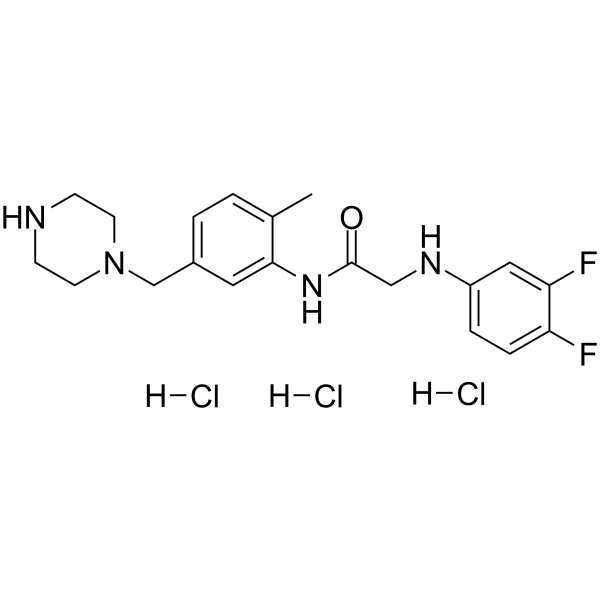
GW791343 trihydrochloride
Based on 1 publication(s) in Google Scholar
GW791343 trihydrochloride is a potent human P2X7 receptor negative allosteric modulator (exhibits species-specific activity), produces a non-competitive antagonist effect on human P2X7 receptor, with a pIC50 of 6.9-7.2. GW791343 trihydrochloride can enhance ATP rhythm. GW791343 trihydrochloride can be used in study of neurological disease.
For research use only. We do not sell to patients.
- CAS No.: 309712-55-8
- Formula: C20H27Cl3F2N4O
- Molecular Weight:483.81
-
Storage:
Please store the product under the recommended conditions in the Certificate of Analysis.

To place orders, for customer services and technical support, please contact: MedChemExpress USA
Tel: 609-228-6898 E-mail: [email protected] [email protected]


-
 Biological Activity
-
Chemical Information
- Protocols
- Purity & Documentation
- References
-
 Help & FAQs


-
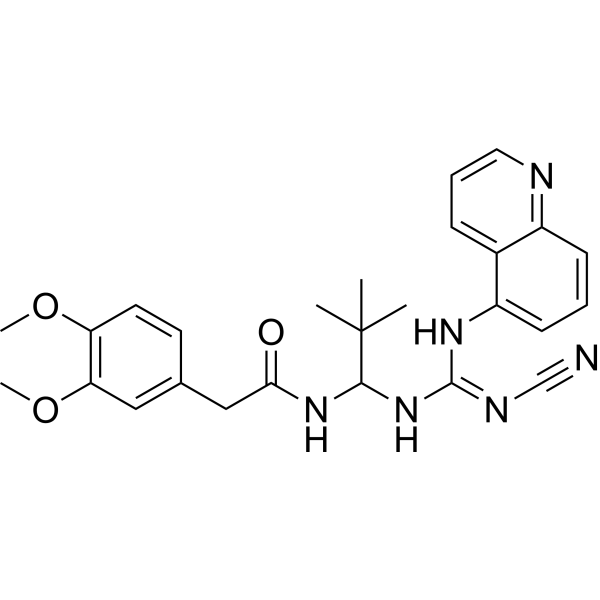
HY-50697
A-740003P2X Receptor Antagonist -
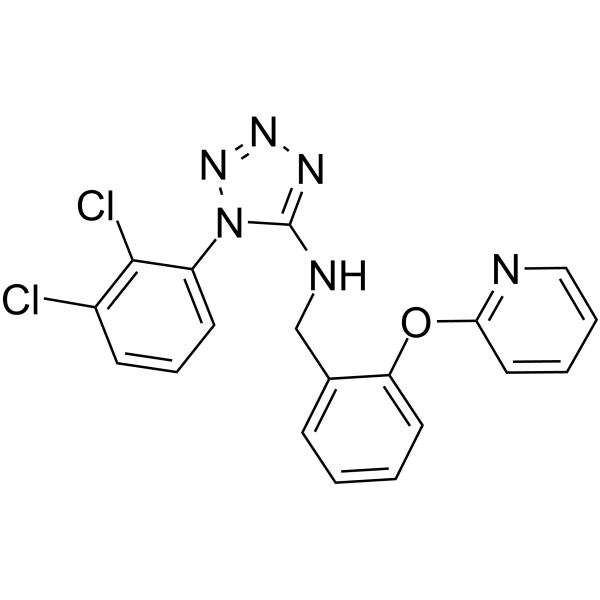
HY-13954
A 839977P2X7 Antagonist -
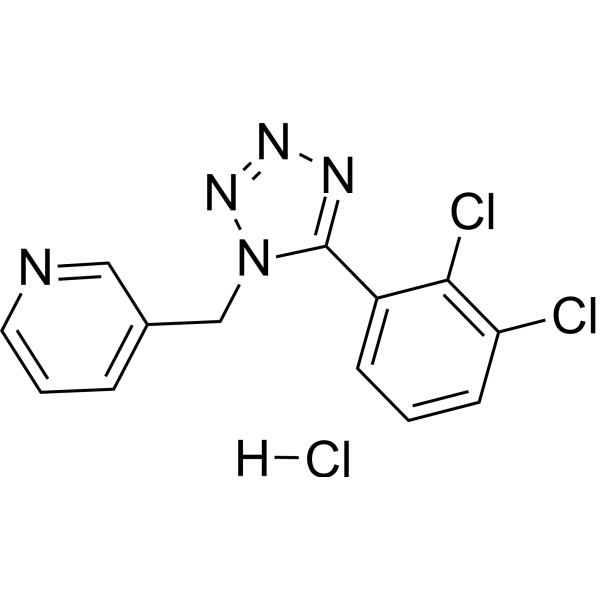
HY-15488A
A 438079 hydrochlorideP2X7 Receptor Antagonist -
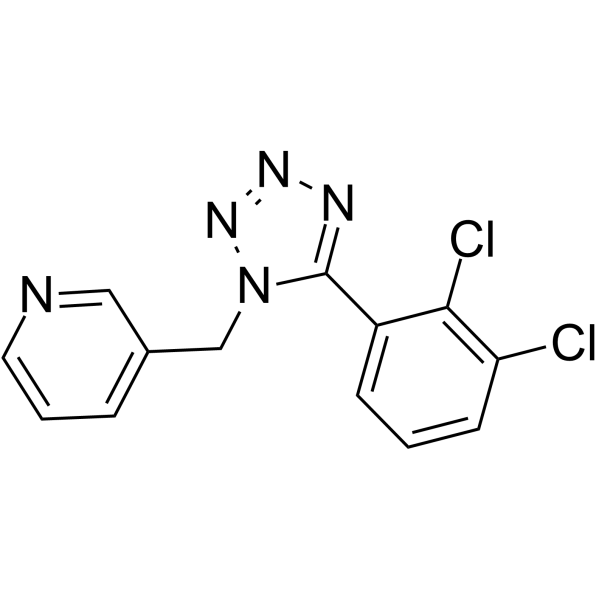
HY-15488
A 438079P2X Receptor Antagonist -
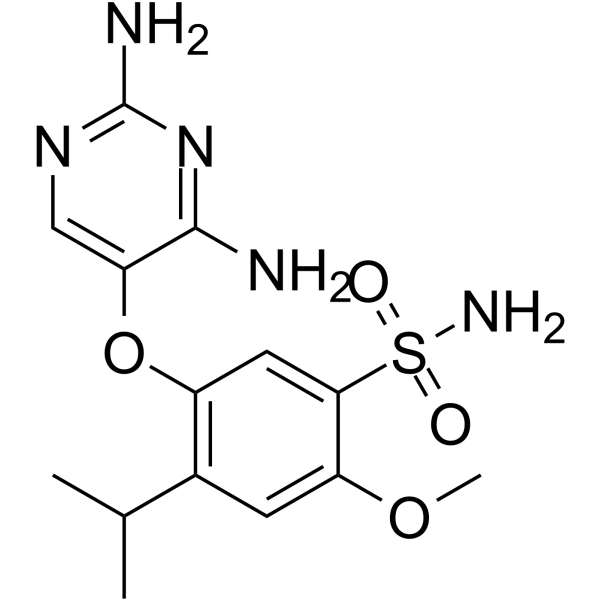
HY-101588
GefapixantP2X3 Antagonist -
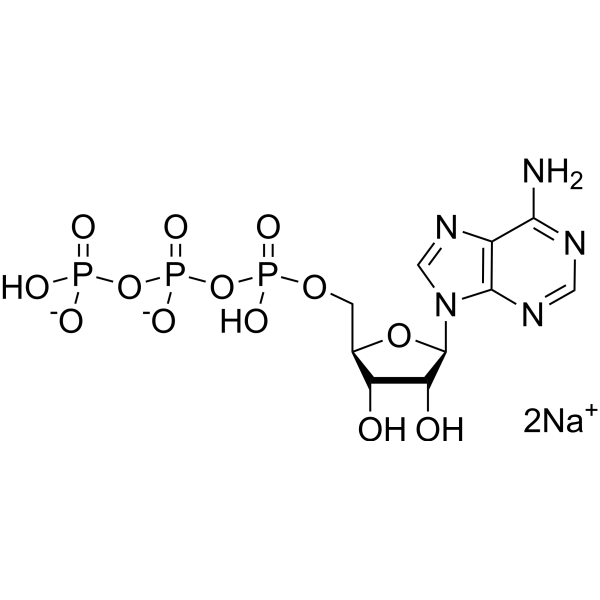
HY-B0345A
ATP disodium saltEndogenous Metabolite -
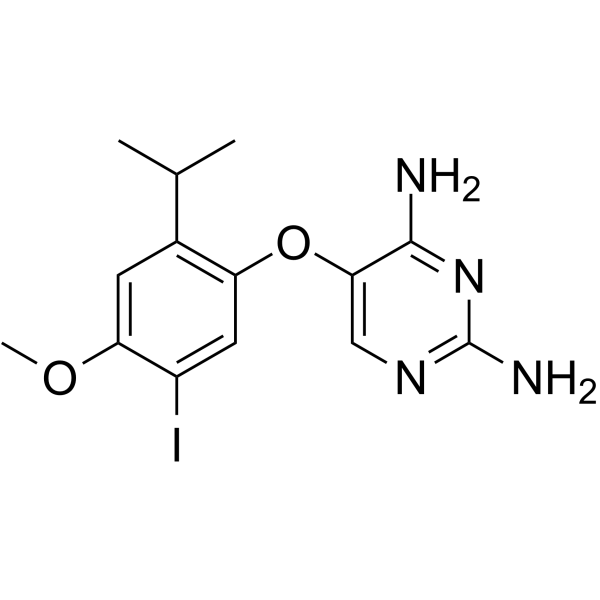
HY-14483
AF-353P2X Receptor Antagonist -

HY-B2176I
ATP disodium salt, 100 mM Solution, PCR GradeEndogenous Metabolite -
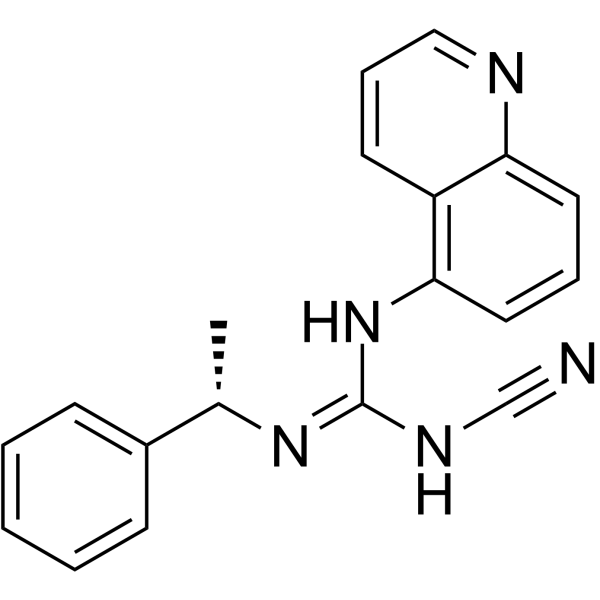
HY-100483
A-804598P2X7 Antagonist -
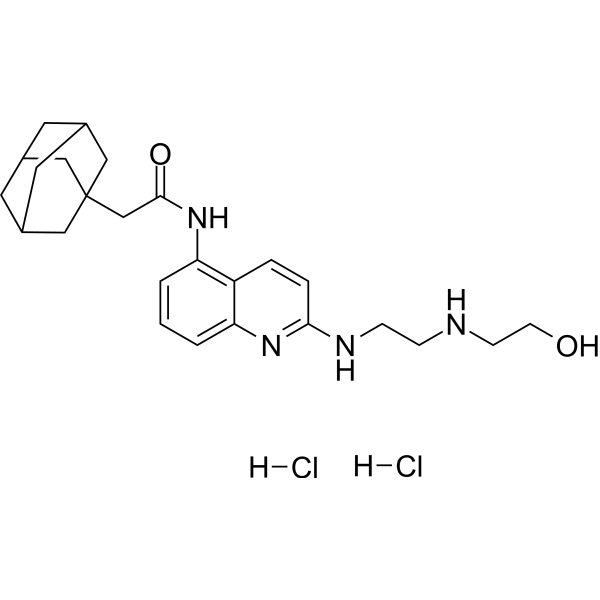
HY-108669
AZ10606120 dihydrochlorideP2X Receptor Antagonist -
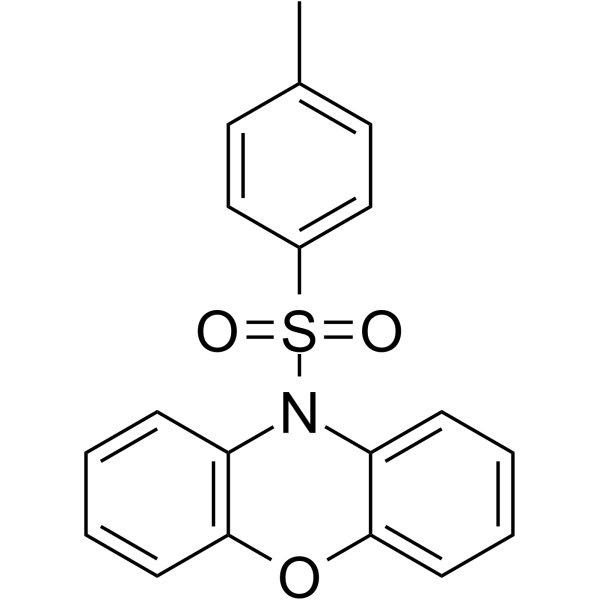
HY-101910
PSB-12062P2X4 antagonist -
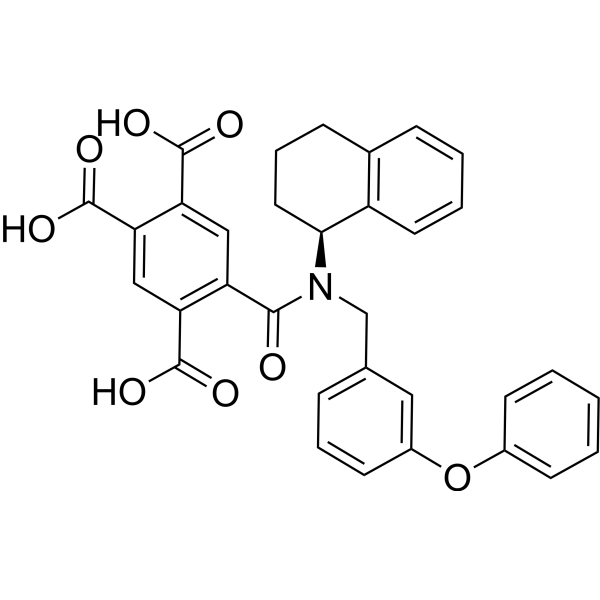
HY-15568
A-317491P2X3/P2X2/3 Antagonist
Publications Citing Use of MedChemExpress (MCE) GW791343 trihydrochloride
MoreAll P2X Receptor Isoforms
More

Biological Activity
Description
IC50 & Target
|
P2X7 Receptor 6.9-7.2 (pIC50) |
In Vitro
GW791343 trihydrochloride (0.01, 0.03, 0.1, 0.3, 1, 3, 10 µM; 40 min) shows a non-competitive antagonistic activity to the human P2X7 receptor[1].
GW791343 trihydrochloride (3, 10, 30 µM; 40 min) shows an anegative allosteric modulate activity to the human P2X7 receptor[1].
GW791343 trihydrochloride (5 µM; 24-48 h; ATP measured every 4 h) enhances ATP rhythm in SCN cells[2].
MedChemExpress (MCE) has not independently confirmed the accuracy of these methods. They are for reference only. Further protocols information, click here.
-
Cell Line:HEK293 cells (expressing human recombinant P2X7 receptors).
-
Concentration:0.01, 0.03, 0.1, 0.3, 1, 3, 10 µM.
-
Incubation Time:40 min (pre-incubate for 10 min and incubate with other P2X7 receptor antagonists for another 30 min).
-
Result:Inhibited agonist-stimulated ethidium accumulation in both sucrose and NaCl buffer.
Reduced maximal responses toATP and BzATP in sucrose buffer.
-
Cell Line:HEK293 cells (expressing human recombinant P2X7 receptors).
-
Concentration:3, 10, 30 µM.
-
Incubation Time:40 min (pre-incubate for 10 min and incubate with other P2X7 receptor antagonists for another 30 min).
-
Result:Showed slow reversal effects at the human P2X7 receptor (after 45 min had reversed sufficiently), and had a rapid dissociation rate.
-
Cell Line:SCN cells (from 16-to 21- day-old Wistar rats, which are kept under a controlled 12-12 h light-dark cycle from birth).
-
Concentration:5 µM (replace the medium with fresh drug-containing culture medium every 4 h).
-
Incubation Time:24-48 h (ATP measured every 4 h).
-
Result:Enhanced the amplitude of ATP release rhythm and extracellular ATP accumulation to 144 of control levels.


Chemical Information
-
CAS No. 309712-55-8
-
Molecular Weight 483.81
-
Formula C20H27Cl3F2N4O
-
SMILES
O=C(NC1=CC(CN2CCNCC2)=CC=C1C)CNC3=CC=C(F)C(F)=C3.[H]Cl.[H]Cl.[H]Cl
-
Shipping
Room temperature in continental US; may vary elsewhere.
-
Storage
Please store the product under the recommended conditions in the Certificate of Analysis.


Publications (1)
-
Journal Impact Factor
-
Most Recent
-
Neurol Res
Dl-3-n-Butylphthalide alleviates cerebral ischemia-reperfusion injury via the miR-20a-5p/XIAP axis. [Abstract]2026 May;48(5):658-673. PMID: 40888394

Protocols
-
Research Protocol for Neurological Diseases
PINK1/Parkin-mediated mitophagy pathway is a mitochondrial quality-control signaling axis in which mitochondrial depolarization stabilizes PINK1 on damaged mitochondria, activates Parkin recruitment and E3 ubiquitin ligase activity, promotes ubiquitination of outer mitochondrial membrane proteins, recruits selective autophagy adaptors, and drives lysosomal degradation of damaged mitochondria. In neurological disease research, this pathway is experimentally important because neurons, especially dopaminergic neurons, are highly dependent on mitochondrial integrity, and defective mitochondrial turnover can lead to mitochondrial dysfunction, oxidative stress, impaired neuronal survival, α-synuclein accumulation, and neuroinflammatory damage-associated signals. The genetic disease link is strongest in Parkinson’s disease because mutations in PRKN/parkin cause autosomal recessive juvenile parkinsonism, mutations in PINK1 cause hereditary early-onset Parkinson’s disease, and Drosophila studie


Purity & Documentation
References
[1]. Michel AD, et al. Negative and positive allosteric modulators of the P2X(7) receptor. Br J Pharmacol. 2008 Feb;153(4):737-50. [Content Brief]
[2]. Svobodova I, et al. Circadian ATP Release in Organotypic Cultures of the Rat Suprachiasmatic Nucleus Is Dependent on P2X7 and P2Y Receptors. Front Pharmacol. 2018 Mar 6;9:192. [Content Brief]

Calculators
Concentration (start) × Volume (start) = Concentration (final) × Volume (final)


GW791343 trihydrochloride Related Classifications
HY-15470 Related Classifications
 Powered by Bioz