



Indolicidin

Based on 1 Customer Validation
Indolicidin is a potent antimicrobial peptide purified from the cytoplasmic granules of bovine neutrophils.
For research use only. We do not sell to patients.
- Purity : 99.61%
- CAS No.: 140896-21-5
- Formula: C100H132N26O13
- Molecular Weight:1906.28
-
Storage:
Sealed storage, away from moisture and light.
Powder -80°C, 2 years , -20°C, 1 year* In solvent : -80°C, 6 months; -20°C, 1 month (sealed storage, away from moisture and light)

To place orders, for customer services and technical support, please contact: MedChemExpress USA
Tel: 609-228-6898 E-mail: [email protected] [email protected]


-
 Biological Activity
-
Chemical Information
- Protocols
- Purity & Documentation
- References
-
 Help & FAQs


-
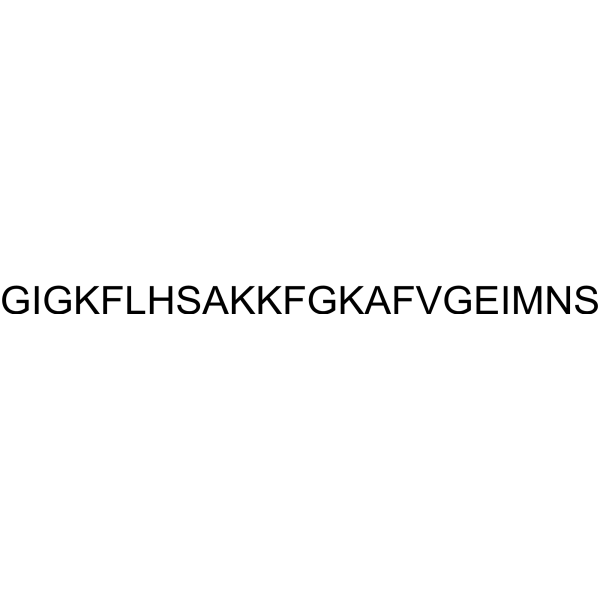
HY-P0270
Magainin 2Antimicrobial Peptide -
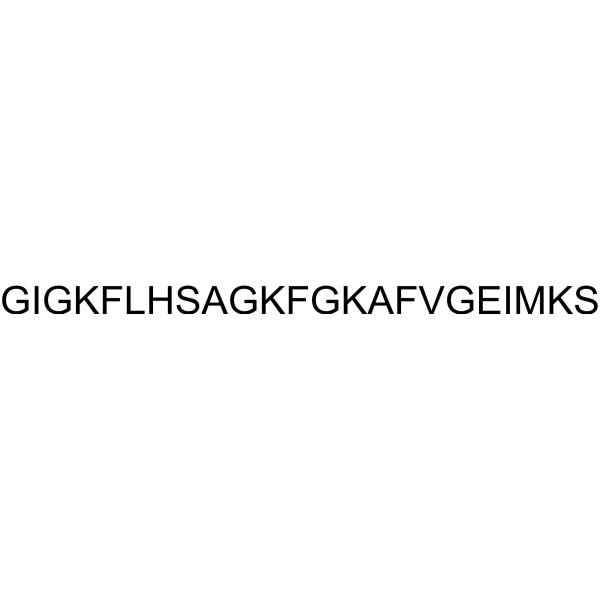
HY-P0269
Magainin 1Antimicrobial Peptide -

HY-P1568
Flagelin 22Plant Inducers -
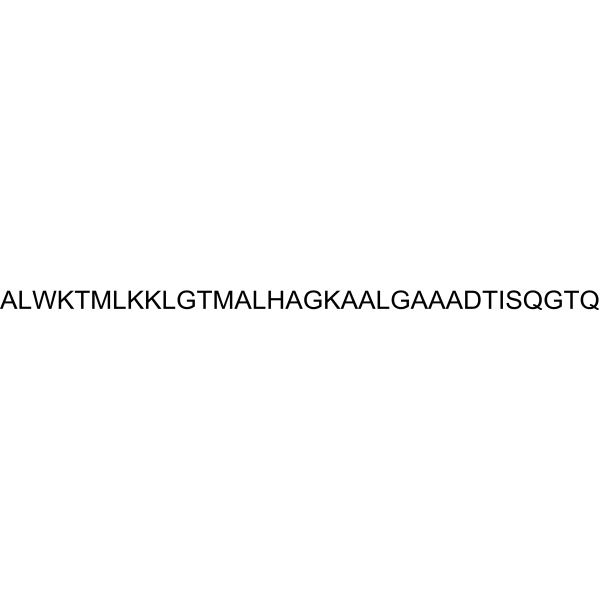
HY-P0263
DermaseptinAntimicrobial Agent -

HY-P0324
Parasin IBacterial Inhibitor -
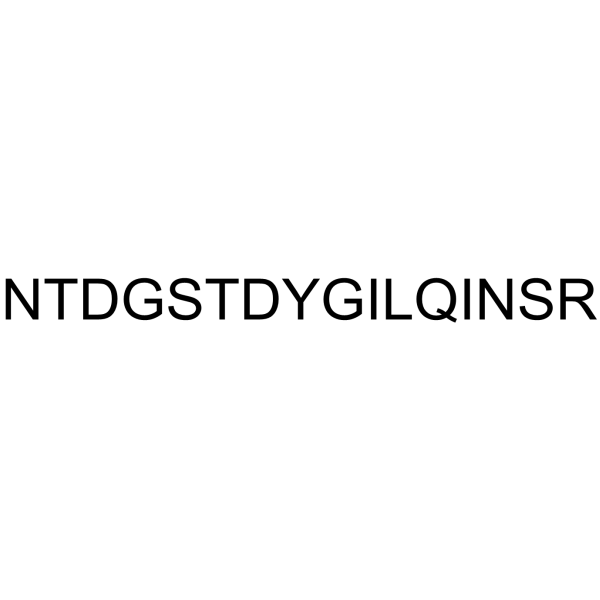
HY-P1560
Allergen Gal d 4 (46-61), chickenBacterial Inhibitor -

HY-P1872
OV-1, sheepBacterial Inhibitor -
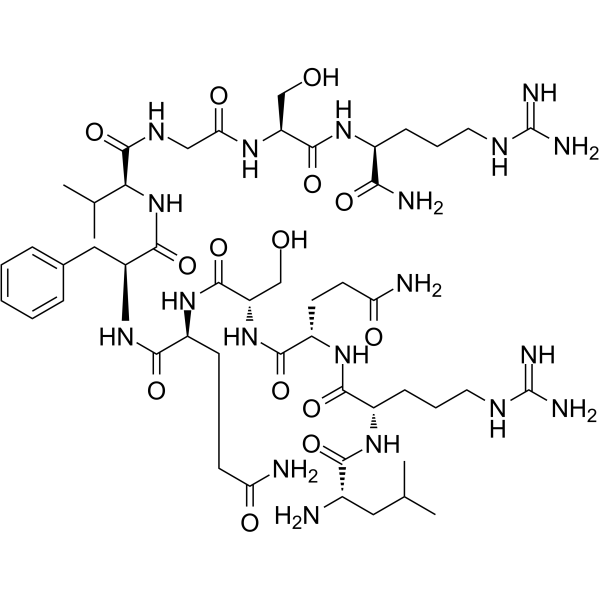
HY-P1768
Urechistachykinin I -
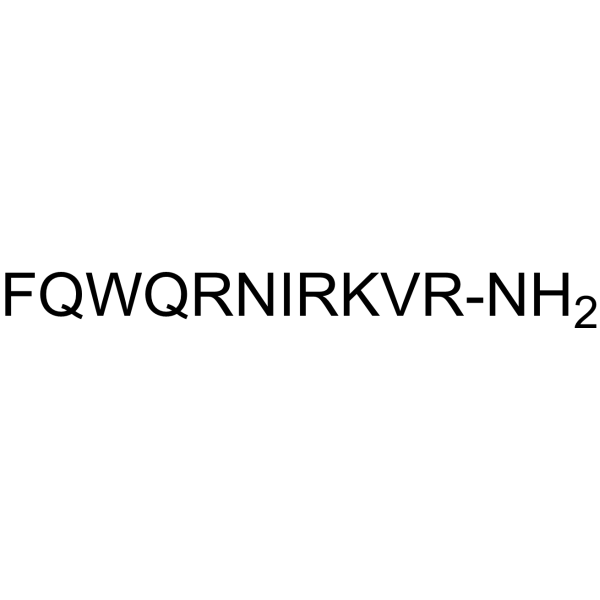
HY-P1063
LF11Bacterial Inhibitor


Biological Activity
Description
In Vitro
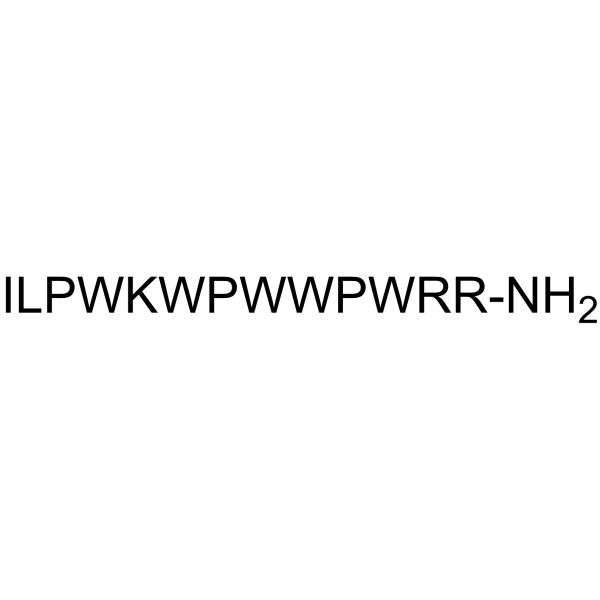
Indolicidin is comprised of 13 amino acids, 5 of which are tryptophan residues, and the carboxylterminal arginine is carboxamidated. Indolicidin has the highest tryptophan content of any known protein. The multiple tryptophan residues may play an important role in the function of this unique antibiotic peptide. Indolicidin is a tridecapeptide amide which possesses in vitro bactericidal activities comparable with the most active of the defensin or bactenecin peptides[1]. Indolicidin binds purified surface lipopolysaccharide with high affinity and permeabilized the outer membrane of Escherichia coli to the small hydrophobic molecule 1-N-phenylnapthylamine (Mr 200), results consistent with indolicidin crossing the outer membrane via the self-promoted uptake pathway. The methyl esterification of indolicidin's carboxyl terminus increases its activity for Gram-negative and Gram-positive bacteria. In Gram-negative bacteria this is associated with an increased binding to lipopolysaccharide and increased permeabilization of the outer membrane. The cytoplasmic membrane is the site of action of indolicidin as assayed in Escherichia coli by the unmasking of cytoplasmic beta-galactosidase due to membrane permeabilization[2].
MedChemExpress (MCE) has not independently confirmed the accuracy of these methods. They are for reference only. Further protocols information, click here.


Chemical Information
-
CAS No. 140896-21-5
-
Appearance Solid
-
Molecular Weight 1906.28
-
Formula C100H132N26O13
-
Color White to off-white
-
Sequence
Ile-Leu-Pro-Trp-Lys-Trp-Pro-Trp-Trp-Pro-Trp-Arg-Arg-NH2
-
Sequence Shortening
ILPWKWPWWPWRR-NH2
-
Structure Classification
-
Initial Source
bovine neutrophil
-
Shipping
Room temperature in continental US; may vary elsewhere.
-
Storage
Sealed storage, away from moisture and light
Powder -80°C 2 years -20°C 1 year * In solvent : -80°C, 6 months; -20°C, 1 month (sealed storage, away from moisture and light)

Protocols
-
Research Protocol for Infectious Diseases
Infectious-disease experiments test how pathogens interact with host barriers, innate immune receptors, inflammatory signaling, pathogen replication, and tissue injury; pattern-recognition receptors such as TLRs, RIG-I-like receptors, NOD-like receptors, and inflammasomes detect microbial molecules and activate NF-κB, interferon, and cytokine responses. The central hypothesis is that infection severity reflects the balance between pathogen burden and host response: protective inflammation restricts pathogen growth, whereas excessive or mislocalized inflammation contributes to tissue damage and disease phenotype. Unresolved questions include which host pathways are protective versus pathogenic, why some infection models fail to translate to human disease, and which combined readouts best predict clinically relevant infection outcomes.


Purity & Documentation
-
Data Sheet (262 KB)
-
SDS (251 KB)
- English - EN (251 KB)
- Français - FR (251 KB)
- Deutsch - DE (251 KB)
- Norwegian - NO (251 KB)
- Español - ES (251 KB)
- Swedish - SV (251 KB)
- Italian - IT (251 KB)
- Korean - KR (251 KB)
- Portuguese - PT (251 KB)
-
Handling Instructions (2659 KB)
References

Calculators
Concentration (start) × Volume (start) = Concentration (final) × Volume (final)


Indolicidin Related Classifications
HY-P0261 Related Classifications
 Powered by Bioz