



Omapatrilat
Based on 2 publication(s) in Google Scholar
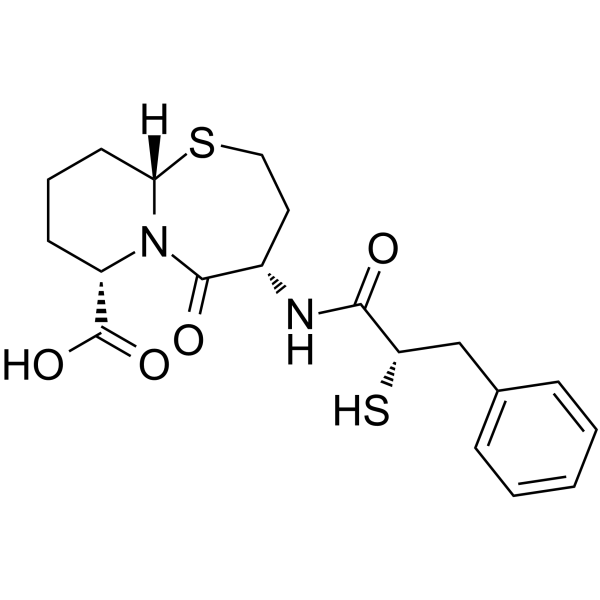
Omapatrilat is a dual inhibitor of the metalloproteases ACE and NEP with Ki values of 0.64 and 0.45 nM, respectively.
For research use only. We do not sell to patients.
- Purity : 98.57%
- CAS No.: 167305-00-2
- Formula: C19H24N2O4S2
- Molecular Weight:408.53
-
Storage:
-20°C, protect from light, stored under nitrogen
* In solvent : -80°C, 6 months; -20°C, 1 month (protect from light, stored under nitrogen)

To place orders, for customer services and technical support, please contact: MedChemExpress USA
Tel: 609-228-6898 E-mail: [email protected] [email protected]


-
 Biological Activity
-
Chemical Information
-
Solvent & Solubility
- Purity & Documentation
- References
-
 Help & FAQs


-
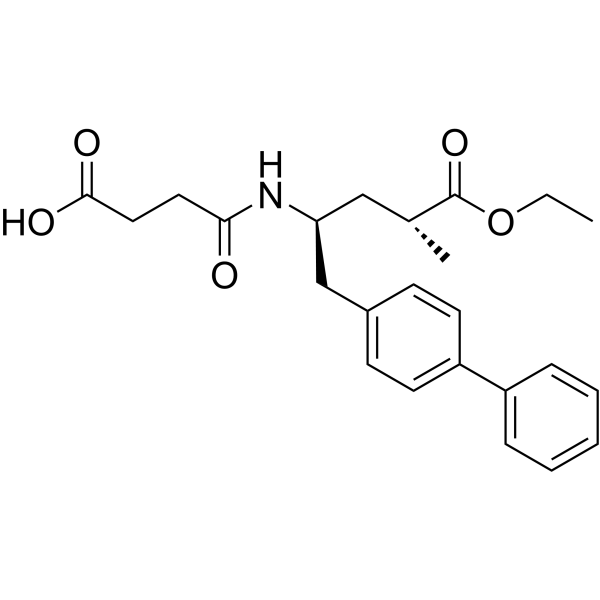
HY-15407
SacubitrilNEP Inhibitor -
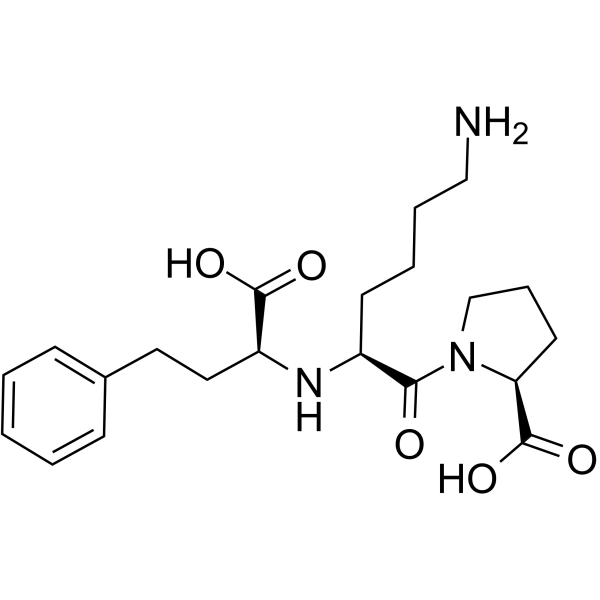
HY-18206
LisinoprilACE Inhibitor -
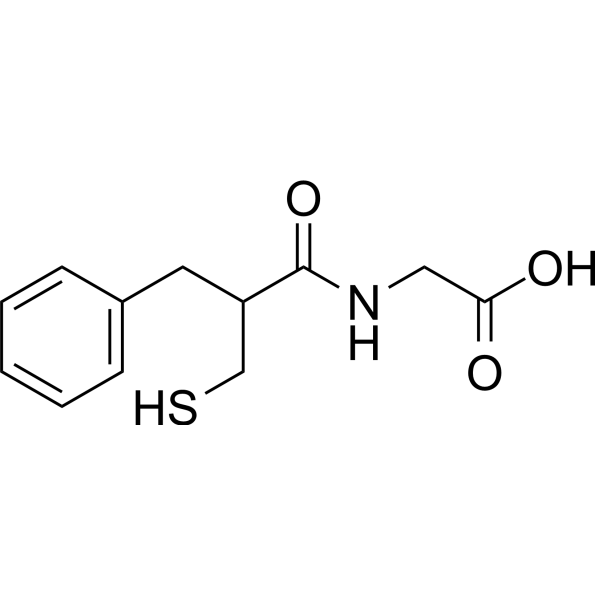
HY-W013375
ThiorphanNEP Inhibitor -
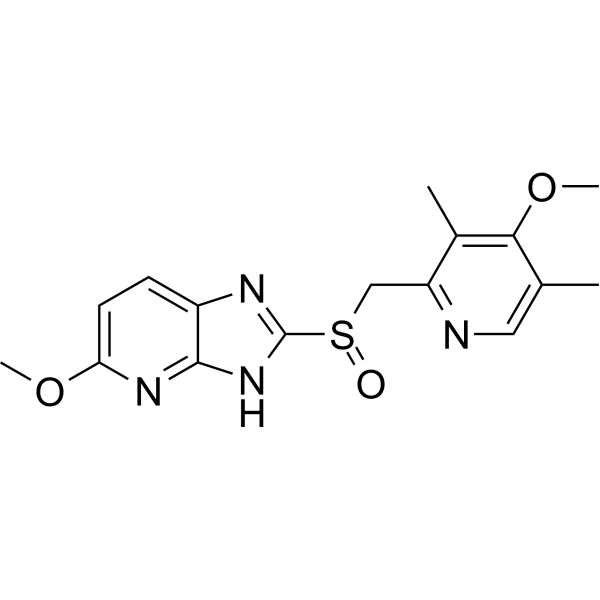
HY-17421
TenatoprazoleProton Pump Inhibitor -
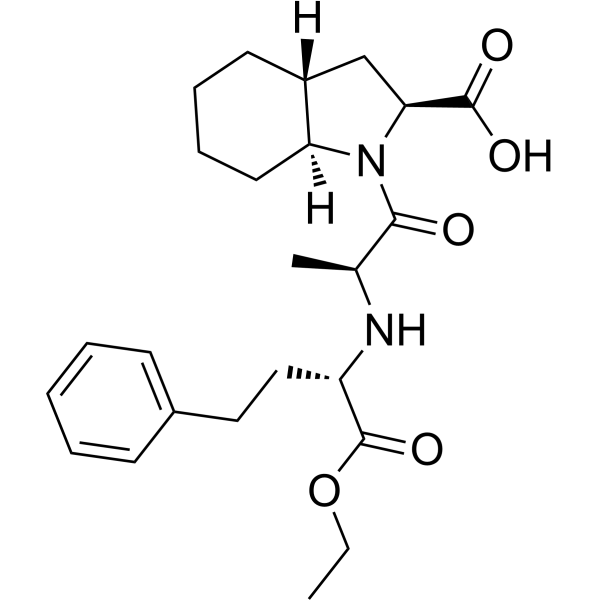
HY-B0592
TrandolaprilACE Inhibitor -
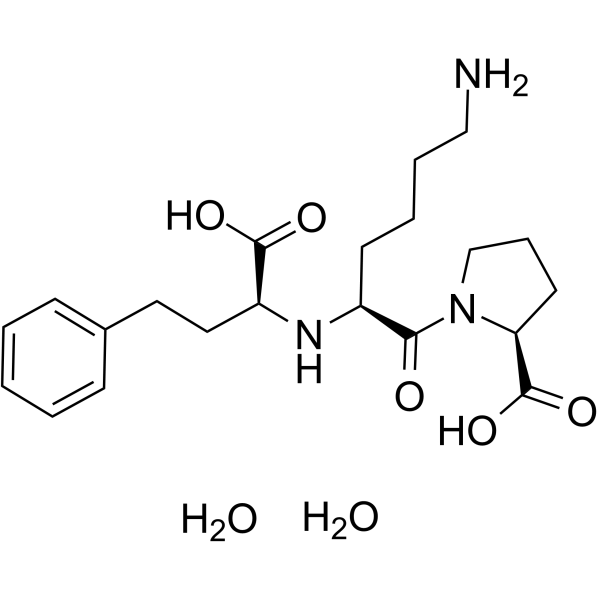
HY-18206A
Lisinopril dihydrateACE Inhibitor -
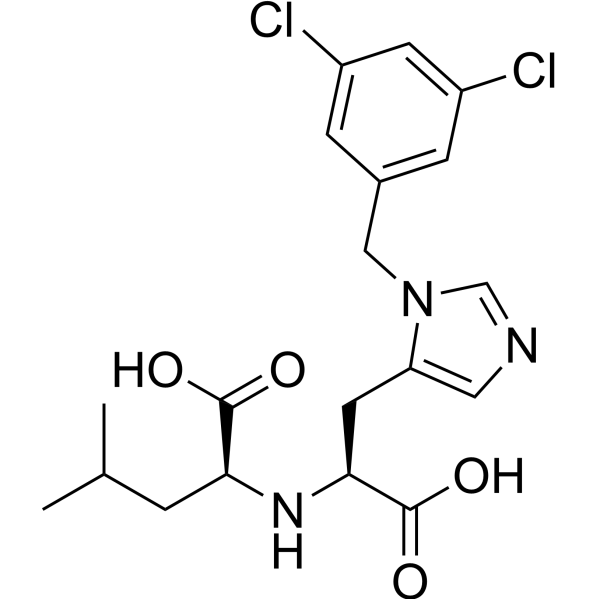
HY-19414
MLN-4760ACE2 Inhibitor -
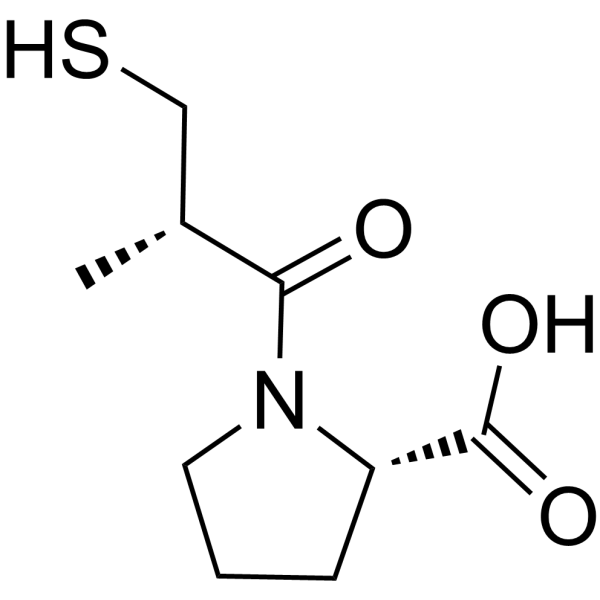
HY-B0368
CaptoprilACE Inhibitor -
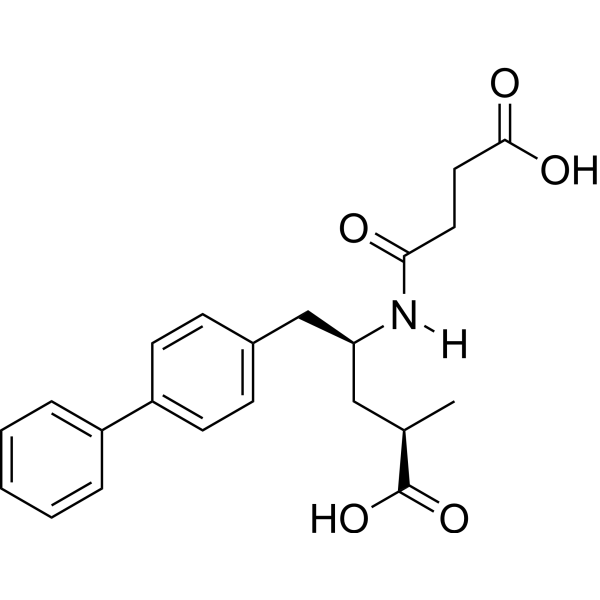
HY-17620
SacubitrilatNEP Inhibitor -

HY-B0592R
Trandolapril (Standard)ACE Inhibitor -
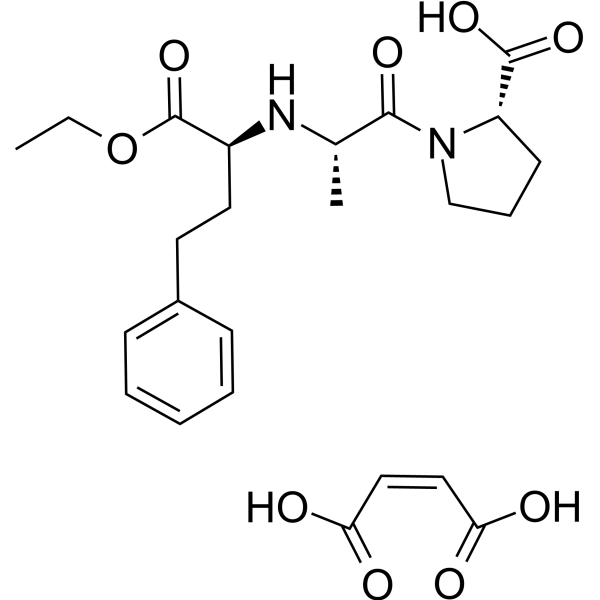
HY-B0331A
Enalapril maleateAngiotensin-Converting Enzyme Inhibitor -
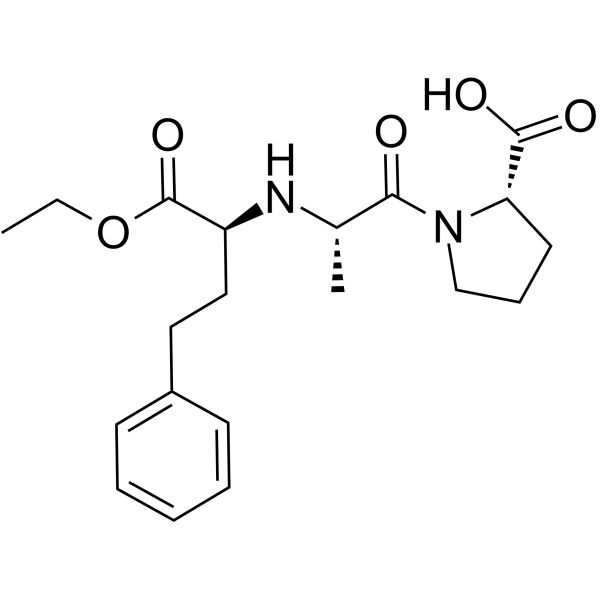
HY-B0331
EnalaprilAngiotensin-Converting Enzyme Inhibitor
Publications Citing Use of MedChemExpress (MCE) Omapatrilat
More

Biological Activity
Description
IC50 & Target
Ki: 0.45 nM (NEP), 0.64 nM (ACE)[1]; IC50: 8 nM (NEP), 5 nM (ACE)[2]
In Vitro
Omapatrilat exhibits high potency for NEP, NEP2 and ACE, moderate strong activity against APP, but low activity against ECE1 (Ki=0.45, 25, 0.64, 250 nM) [1]. In vitro autoradiography using the specific NEP inhibitor radioligand 125I-RB104 and the specific ACE inhibitor radioligand 125I-MK351A show omapatril at (10 mg/kg) causes rapid and potent inhibition of renal NEP and ACE, respectively, for 24 h[4].
MedChemExpress (MCE) has not independently confirmed the accuracy of these methods. They are for reference only. .
In Vivo
MedChemExpress (MCE) has not independently confirmed the accuracy of these methods. They are for reference only.


Chemical Information
-
CAS No. 167305-00-2
-
Appearance Solid
-
Molecular Weight 408.53
-
Formula C19H24N2O4S2
-
Color White to gray
-
SMILES
O=C([C@@H]1CCC[C@](N21)([H])SCC[C@H](NC([C@@H](S)CC3=CC=CC=C3)=O)C2=O)O
-
Synonyms
BMS-186716
-
Shipping
Room temperature in continental US; may vary elsewhere.
-
Storage
-20°C, protect from light, stored under nitrogen
* In solvent : -80°C, 6 months; -20°C, 1 month (protect from light, stored under nitrogen)


Publications (2)
-
Journal Impact Factor
-
Most Recent
-
ACS Environ Au
Machine Learning-Assisted Recognition of Environmental Sulfur-Containing Chemicals in Nontargeted Mass Spectrometry Analysis of Inadequate Mass Resolution. [Abstract]2025 Aug 5;5(6):573-582. PMID: 41277996 -
Anal Chem
Exposome-Scale Investigation of Cl-/Br-Containing Chemicals Using High-Resolution Mass Spectrometry, Multistage Machine Learning, and Cloud Computing. [Abstract]2025 Jun 3;97(21):11099-11109. PMID: 40401576


Solvent & Solubility
In Vitro:
DMSO : ≥ 31 mg/mL (75.88 mM; Hygroscopic DMSO has a significant impact on the solubility of product, please use newly opened DMSO)
* "≥" means soluble, but saturation unknown.
Please refer to the solubility information to select the appropriate solvent. Once prepared, please aliquot and store the solution to prevent product inactivation from repeated freeze-thaw cycles.
Storage method and period of stock solution: -80°C, 6 months; -20°C, 1 month (protect from light, stored under nitrogen). When stored at -80°C, please use it within 6 months. When stored at -20°C, please use it within 1 month.
Please refer to the solubility information to select the appropriate solvent. Once prepared, please aliquot and store the solution to prevent product inactivation from repeated freeze-thaw cycles.
Storage method and period of stock solution: -80°C, 6 months; -20°C, 1 month (protect from light, stored under nitrogen). When stored at -80°C, please use it within 6 months. When stored at -20°C, please use it within 1 month.
Concentration (start) × Volume (start) = Concentration (final) × Volume (final)
In Vivo:
Select the appropriate dissolution method based on your experimental animal and administration route.
- For the following dissolution methods, please ensure to first prepare a clear stock solution using an In Vitro approach and then sequentially add co-solvents:
- To ensure reliable experimental results, the clarified stock solution can be appropriately stored based on storage conditions. As for the working solution for In Vivo experiments, it is recommended to prepare freshly and use it on the same day.
- The percentages shown for the solvents indicate their volumetric ratio in the final prepared solution. If precipitation or phase separation occurs during preparation, heat and/or sonication can be used to aid dissolution.
Add each solvent one by one: 10% DMSO 40% PEG300 5% Tween-80 45% Saline
Solubility: ≥ 4.25 mg/mL (10.40 mM); Clear solution
This protocol yields a clear solution of ≥ 4.25 mg/mL (saturation unknown).
Taking 1 mL working solution as an example, add 100 μL DMSO stock solution (42.5 mg/mL) to 400 μL PEG300, and mix evenly; then add 50 μL Tween-80 and mix evenly; then add 450 μL Saline to adjust the volume to 1 mL.
Preparation of Saline: Dissolve 0.9 g sodium chloride in ddH₂O and dilute to 100 mL to obtain a clear Saline solution.
In Vivo Dissolution Calculator
Please enter the basic information of animal experiments:
-
-
-
-
Recommended: Prepare an additional quantity of animals to account for potential losses during experiments.
Please enter your animal formula composition:
-
%DMSO +
Recommended: Keep the proportion of DMSO in working solution below 2% if your animal is weak.
-
%+
-
+%Tween-80 + +
-
%Saline +
The co-solvents required include: DMSO, . All of co-solvents are available by MedChemExpress (MCE). , Tween 80. All of co-solvents are available by MedChemExpress (MCE).
Working solution concentration: 0.22 mg/mL
Method for preparing stock solution: mg drug dissolved in μL DMSO. Stock solution concentration: mg/mL. * In solvent : -80°C, 6 months; -20°C, 1 month (protect from light, stored under nitrogen)
1. Take μL DMSO stock solution;
2. Add μL .
μL , mix evenly;
3. Then add μL Tween 80, mix evenly;
4. Then add μL
Please ensure that the stock solution in the first step is dissolved to a clear state, and add co-solvents in sequence. You can use ultrasonic heating (ultrasonic cleaner, recommended frequency 20-40 kHz), vortexing, etc. to assist dissolution.


Purity & Documentation
-
Data Sheet (283 KB)
-
SDS (393 KB)
- English - EN (393 KB)
- Français - FR (393 KB)
- Deutsch - DE (393 KB)
- Norwegian - NO (393 KB)
- Español - ES (393 KB)
- Swedish - SV (393 KB)
- Italian - IT (393 KB)
- Korean - KR (393 KB)
- Portuguese - PT (393 KB)
-
Handling Instructions (2659 KB)
References
[1]. Fryer RM, et al. Effect of bradykinin metabolism inhibitors on evoked hypotension in rats: rank efficacy ofenzymes associated with bradykinin-mediated angioedema.Br J Pharmacol. 2008 Mar;153(5):947-55. [Content Brief]
[2]. Robl JA, et al. Dual metalloprotease inhibitors: mercaptoacetyl-based fused heterocyclic dipeptide mimetics asinhibitors of angiotensin-converting enzyme and neutral endopeptidase. J Med Chem. 1997 May 23;40(11):1570-7. [Content Brief]
[3]. Ichiki T, et al. Endothelial permeability in vitro and in vivo: protective actions of ANP and omapatrilat in experimental atherosclerosis. Peptides. 2013 Oct;48:21-6. [Content Brief]
[4]. Burrell LM, et al. Antihypertensive and antihypertrophic effects of omapatrilat in SHR. Am J Hypertens. 2000 Oct;13(10):1110-6. [Content Brief]


Complete Stock Solution Preparation Table
Please refer to the solubility information to select the appropriate solvent. Once prepared, please aliquot and store the solution to prevent product inactivation from repeated freeze-thaw cycles.
Storage method and period of stock solution: -80°C, 6 months; -20°C, 1 month (protect from light, stored under nitrogen). When stored at -80°C, please use it within 6 months. When stored at -20°C, please use it within 1 month.
| Optional Solvent | Concentration Solvent Mass | 1 mg | 5 mg | 10 mg | 25 mg |
|---|---|---|---|---|---|
| DMSO | 1 mM | 2.4478 mL | 12.2390 mL | 24.4780 mL | 61.1950 mL |
| 5 mM | 0.4896 mL | 2.4478 mL | 4.8956 mL | 12.2390 mL | |
| 10 mM | 0.2448 mL | 1.2239 mL | 2.4478 mL | 6.1195 mL | |
| 15 mM | 0.1632 mL | 0.8159 mL | 1.6319 mL | 4.0797 mL | |
| 20 mM | 0.1224 mL | 0.6120 mL | 1.2239 mL | 3.0598 mL | |
| 25 mM | 0.0979 mL | 0.4896 mL | 0.9791 mL | 2.4478 mL | |
| 30 mM | 0.0816 mL | 0.4080 mL | 0.8159 mL | 2.0398 mL | |
| 40 mM | 0.0612 mL | 0.3060 mL | 0.6120 mL | 1.5299 mL | |
| 50 mM | 0.0490 mL | 0.2448 mL | 0.4896 mL | 1.2239 mL | |
| 60 mM | 0.0408 mL | 0.2040 mL | 0.4080 mL | 1.0199 mL |


Omapatrilat Related Classifications
HY-18208 Related Classifications
 Powered by Bioz