



Parasin I
Parasin I is a 19-amino acid histone H2A-derived peptide isolated from the skin of the catfish, and shows antimicrobial activity.
For research use only. We do not sell to patients.
- CAS No.: 219552-69-9
- Formula: C82H154N34O24
- Molecular Weight:2000.31
-
Storage:
Please store the product under the recommended conditions in the Certificate of Analysis.


To place orders, for customer services and technical support, please contact: MedChemExpress USA
Tel: 609-228-6898 E-mail: [email protected] [email protected]


-
 Biological Activity
-
Chemical Information
- Protocols
- Purity & Documentation
- References
-
 Help & FAQs


-

HY-P1568
Flagelin 22Plant Inducers -
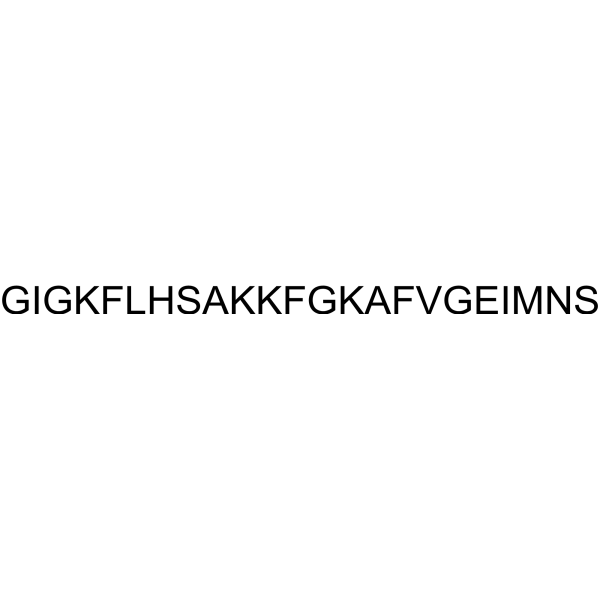
HY-P0270
Magainin 2Antimicrobial Peptide -
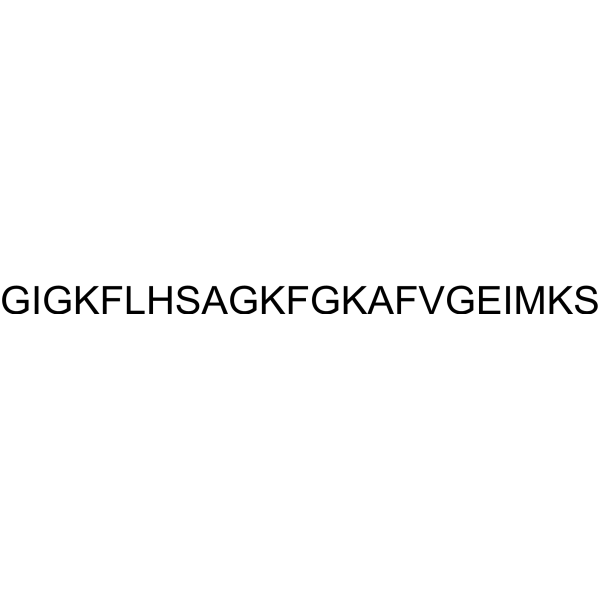
HY-P0269
Magainin 1Antimicrobial Peptide -
HY-P0261
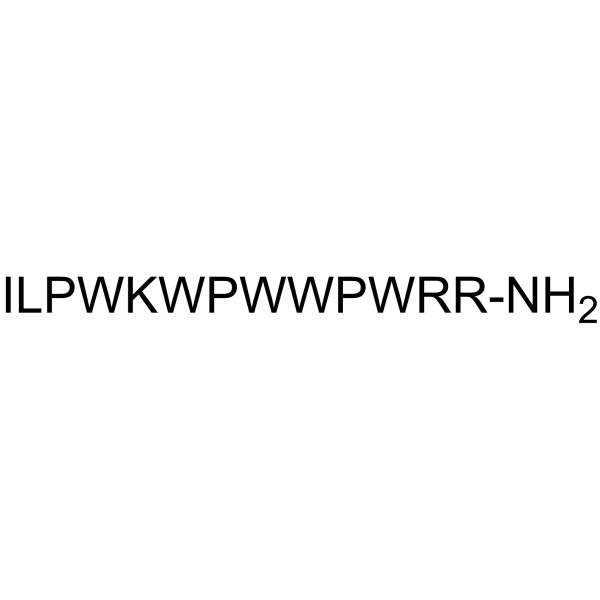
IndolicidinAntimicrobial Peptide -
HY-P1560
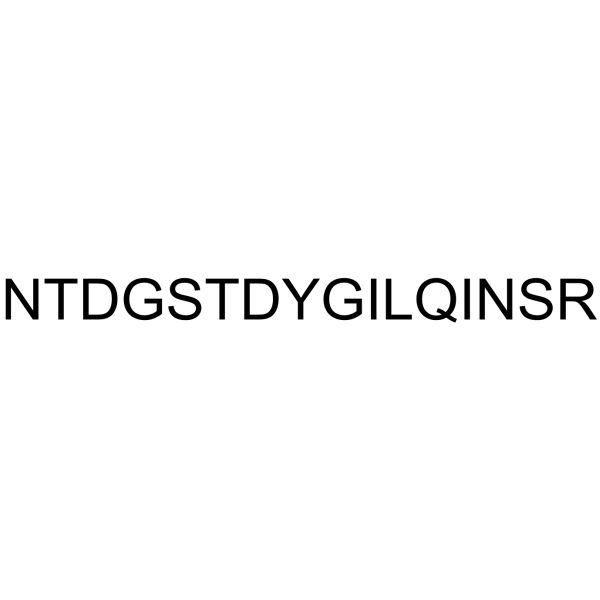
Allergen Gal d 4 (46-61), chickenBacterial Inhibitor -

HY-P1872
OV-1, sheepBacterial Inhibitor -
HY-P1768
Urechistachykinin I -
HY-P1063
LF11Bacterial Inhibitor


Biological Activity
Description
Cellular Effect
|
Cell Line

|
Type | Value | Description | References |
|---|---|---|---|---|
| CEM-SS | EC50 |
>50 μM
Compound: Parasin I
|
Antiviral activity against HIV1 3B infected in human CEM-SS cells assessed as inhibition of viral replication after 6 days by XTT assay
Antiviral activity against HIV1 3B infected in human CEM-SS cells assessed as inhibition of viral replication after 6 days by XTT assay
|
[PMID: 20086159] |
In Vitro
Parasin I with comparable antimicrobial activities localized to the cell membrane and subsequently permeabilized the outer and cytoplasmic membranes. Parasin I and its active analogs show strong cytoplasmic membrane permeabilizing activity[1]. Codon optimized parasin I fused with human lysozyme is expressed in Pichia pastoris, and has potent antibiotic activity[2].
MedChemExpress (MCE) has not independently confirmed the accuracy of these methods. They are for reference only. Further protocols information, click here.


Chemical Information
-
CAS No. 219552-69-9
-
Molecular Weight 2000.31
-
Formula C82H154N34O24
-
Sequence
Lys-Gly-Arg-Gly-Lys-Gln-Gly-Gly-Lys-Val-Arg-Ala-Lys-Ala-Lys-Thr-Arg-Ser-Ser
-
Sequence Shortening
KGRGKQGGKVRAKAKTRSS
-
Structure Classification
-
Initial Source
Parasilurus asotus
-
Shipping
Room temperature in continental US; may vary elsewhere.
-
Storage
Please store the product under the recommended conditions in the Certificate of Analysis.

Protocols
-
Research Protocol for Infectious Diseases
Infectious-disease experiments test how pathogens interact with host barriers, innate immune receptors, inflammatory signaling, pathogen replication, and tissue injury; pattern-recognition receptors such as TLRs, RIG-I-like receptors, NOD-like receptors, and inflammasomes detect microbial molecules and activate NF-κB, interferon, and cytokine responses. The central hypothesis is that infection severity reflects the balance between pathogen burden and host response: protective inflammation restricts pathogen growth, whereas excessive or mislocalized inflammation contributes to tissue damage and disease phenotype. Unresolved questions include which host pathways are protective versus pathogenic, why some infection models fail to translate to human disease, and which combined readouts best predict clinically relevant infection outcomes.


Purity & Documentation
References
[1]. Koo YS, et al. Structure-activity relations of parasin I, a histone H2A-derived antimicrobial peptide. Peptides. 2008 Jul;29(7):1102-8. [Content Brief]
[2]. Zhao H, et al. Characterization of bioactive recombinant antimicrobial peptide parasin I fused with human lysozyme expressed in the yeast Pichia pastoris system. Enzyme Microb Technol. 2015 Sep;77:61-7. [Content Brief]

Calculators
Concentration (start) × Volume (start) = Concentration (final) × Volume (final)


Parasin I Related Classifications
HY-P0324 Related Classifications
 Powered by Bioz