



Cancer Targeted Therapy
Cancer targeted therapy is the foundation of precision medicine; it uses drugs or other substances to target specific genes and proteins that control cancer cells’ growth, division and spreading. Compared to traditional chemotherapy drugs, targeted-drugs can specifically act on cancer cells with high efficacy without damaging normal cells. Drugs used in cancer targeted therapy mainly includes small molecules and macromolecules (e.g., monoclonal antibodies), which can target cancer cells and constituents in the tumor microenvironment to activate the immune system. Anti-angiogenesis drugs, such as those targeting vascular endothelial growth factor (VEGF), epidermal growth factor receptor (EGFR), transforming growth factor (TGF)-α, TGF-β, Tumor necrosis factor (TNF)-α, and platelet-derived endothelial growth factor (PDGFR) inhibit the proliferation and metastasis of cancer cells. In recent years, the proportion of antibody drugs in cancer treatment has gradually become prominent. Antibody-drug conjugates (ADCs) are a new type of targeted drugs that are composed of monoclonal antibody, cytotoxic drug and linker. ADCs can deliver drugs to tumor cells and minimize the toxicity to normal tissues. Proteolysis-targeting chimera (PROTAC) is a useful technology for targeted protein degradation. PROTAC exploits the ubiquitin-proteasome system and forms a ternary complex with a hijacked E3 ubiquitin ligase and target protein, leading to polyubiquitination and degradation of the target protein.
Targeted therapy is a useful strategy in treatment of cancer either alone or in combination with standard chemotherapy. At present, targeted therapy has proved significant clinical success in the treatment of many types of cancer, including breast cancer, colorectal cancer, leukemia, ovarian cancer and lung cancer.
-
TK-642
 0 ImagesCat. No.: HY-158762CAS No.: 2765183-10-4
TK-642 is a highly active, selective, orally activity SHP2 inhibitor based on pyrazole and pyrazine (IC50=2.7 nmol/L). TK-642 can effectively inhibit the proliferation of esophageal carcinoma cells and induce cell apoptosis. TK-642 can be used in the study of esophageal cancer.
-
Thalidomide-O-C4H4-N(Me)-piperidine-boc
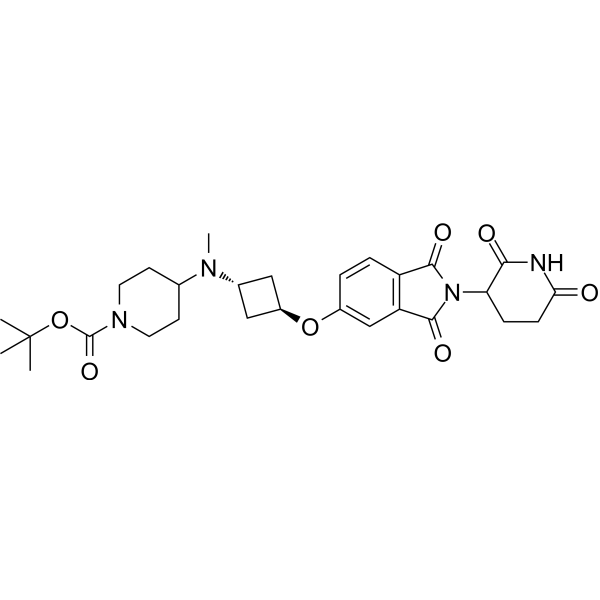 0 ImagesCat. No.: HY-161204
Thalidomide-O-C4H4-N(Me)-piperidine-boc is a conjugate of E3 ligase ligand and linker, consisting of Thalidomide (HY-14658) and the corresponding Linker. Thalidomide-O-C4H4-N(Me)-piperidine-boc can serve as a Cereblon ligand to recruit CRBN protein and serve as a key intermediate for the synthesis of complete PROTAC molecules.
-
hsa-miR-187-5p antagomir
 0 ImagesCat. No.: HY-RI00350A
hsa-miR-187-5p antagomirs are chemically-modified oligonucleotides that hybridize with mature miRNAs. The miRNA antagomirs have 2 phosphorothioates at the 5' end, 4 phosphorothioates at the 3' end, 1 cholesterol group at the 3' end, and full-length nucleotide 2'-methoxy modification. The miRNA antagomirs strongly compete with mature miRNAs to prevent the complementary pairing of miRNAs and their target genes, thereby inhibiting miRNAs from functioning. Stability of miRNA antagomirs appears to be significantly higher than miRNA inhibitors, they exhibits enhanced cellular uptake, stability and regulatory activity in vivo.
-
hsa-miR-4291 antagomir
 0 ImagesCat. No.: HY-RI00971A
hsa-miR-4291 antagomirs are chemically-modified oligonucleotides that hybridize with mature miRNAs. The miRNA antagomirs have 2 phosphorothioates at the 5' end, 4 phosphorothioates at the 3' end, 1 cholesterol group at the 3' end, and full-length nucleotide 2'-methoxy modification. The miRNA antagomirs strongly compete with mature miRNAs to prevent the complementary pairing of miRNAs and their target genes, thereby inhibiting miRNAs from functioning. Stability of miRNA antagomirs appears to be significantly higher than miRNA inhibitors, they exhibits enhanced cellular uptake, stability and regulatory activity in vivo.
-
hsa-miR-519d-5p inhibitor
 0 ImagesCat. No.: HY-RI01592
hsa-miR-519d-5p inhibitors are chemically-modified oligonucleotides that hybridize with mature miRNAs. The miRNA inhibitors have full-length nucleotide 2'-methoxy modification. The miRNA inhibitors strongly compete with mature miRNAs to prevent the complementary pairing of miRNAs and their target genes, thereby inhibiting miRNAs from functioning.
-
hsa-miR-6824-3p antagomir
 0 ImagesCat. No.: HY-RI02212A
hsa-miR-6824-3p antagomirs are chemically-modified oligonucleotides that hybridize with mature miRNAs. The miRNA antagomirs have 2 phosphorothioates at the 5' end, 4 phosphorothioates at the 3' end, 1 cholesterol group at the 3' end, and full-length nucleotide 2'-methoxy modification. The miRNA antagomirs strongly compete with mature miRNAs to prevent the complementary pairing of miRNAs and their target genes, thereby inhibiting miRNAs from functioning. Stability of miRNA antagomirs appears to be significantly higher than miRNA inhibitors, they exhibits enhanced cellular uptake, stability and regulatory activity in vivo.
-
mmu-miR-216c-5p antagomir
 0 ImagesCat. No.: HY-RI02834A
mmu-miR-216c-5p antagomirs are chemically-modified oligonucleotides that hybridize with mature miRNAs. The miRNA antagomirs have 2 phosphorothioates at the 5' end, 4 phosphorothioates at the 3' end, 1 cholesterol group at the 3' end, and full-length nucleotide 2'-methoxy modification. The miRNA antagomirs strongly compete with mature miRNAs to prevent the complementary pairing of miRNAs and their target genes, thereby inhibiting miRNAs from functioning. Stability of miRNA antagomirs appears to be significantly higher than miRNA inhibitors, they exhibits enhanced cellular uptake, stability and regulatory activity in vivo.
-
mmu-miR-669b-5p antagomir
 0 ImagesCat. No.: HY-RI03459A
mmu-miR-669b-5p antagomirs are chemically-modified oligonucleotides that hybridize with mature miRNAs. The miRNA antagomirs have 2 phosphorothioates at the 5' end, 4 phosphorothioates at the 3' end, 1 cholesterol group at the 3' end, and full-length nucleotide 2'-methoxy modification. The miRNA antagomirs strongly compete with mature miRNAs to prevent the complementary pairing of miRNAs and their target genes, thereby inhibiting miRNAs from functioning. Stability of miRNA antagomirs appears to be significantly higher than miRNA inhibitors, they exhibits enhanced cellular uptake, stability and regulatory activity in vivo.
-
mmu-miR-7665-5p antagomir
 0 ImagesCat. No.: HY-RI04080A
mmu-miR-7665-5p antagomirs are chemically-modified oligonucleotides that hybridize with mature miRNAs. The miRNA antagomirs have 2 phosphorothioates at the 5' end, 4 phosphorothioates at the 3' end, 1 cholesterol group at the 3' end, and full-length nucleotide 2'-methoxy modification. The miRNA antagomirs strongly compete with mature miRNAs to prevent the complementary pairing of miRNAs and their target genes, thereby inhibiting miRNAs from functioning. Stability of miRNA antagomirs appears to be significantly higher than miRNA inhibitors, they exhibits enhanced cellular uptake, stability and regulatory activity in vivo.
-
D-CopA3
 0 ImagesCat. No.: HY-P10914CAS No.: 1426227-11-3
D-CopA3 is the inhibitor for MDM2 and the activator for p53 signaling pathway. D-CopA3 exhibits cytotoxicity in colorectal cancer cells HCT-116, LoVo, and RKO (IC50=15-18 μM), induces JNK/Beclin-1 mediated autophagy. D-CopA3 downregulates the expression of cell cycle inhibitory protein p21Cip1/Waf1, enhances the mucosal barrier function and reduces penetration of inflammatory mediators. D-CopA3 exhibits anti-inflammtory activity in mouse C. difficile toxin A-induced acute enteritis models and DSS (HY-116282)-induced chronic colitis models. D-CopA3 exhibits antitumor efficacy in mouse HCT-116 xenograft models.
-
DSPE-PEG1000-SP94
 0 ImagesCat. No.: HY-172499
DSPE-PEG1000-Mal-CLPLIPTHIISFS is a PEG compound composed of DSPE and the liver cancer targeting peptide SP94 (HY-P11050A) (sequence SFSIIHTPILPL). SP94 exhibits specific binding to hepatocellular carcinoma (HCC) cells. DSPE-PEG1000-Mal-CLPLIPTHIISFS can be used to prepare lipid nanoparticles to form liver cancer-targeting nanocarriers.
-
Antitumor agent-213
 0 ImagesCat. No.: HY-181142
Antitumor agent-213 is an antitumor agent. Antitumor agent-213 binds to epidermal growth factor receptor (EGFR) and shows antitumor activity. Antitumor agent-213 can inhibit cancer cells proliferation, migration and induces apoptosis. Antitumor agent-213 can be used for the research of cancer, such as liver cancer.
-
MC-AcLys-GDEVD-PABC-Exatecan
 0 ImagesCat. No.: HY-185101
MC-AcLys-GDEVD-PABC-Exatecan (MC-AcLys-GDEVD-PABC-DX8951) is a agent-linker conjugate for ADC. MC-AcLys-GDEVD-PABC-Exatecan is a DX8951 (a DNA topoisomerase I inhibitor) derivative with a novel caspase-3 cleavable peptide linker MC-AcLys-GDEVD-PABC linker. MC-AcLys-GDEVD-PABC-Exatecan can be used to prepare DX8951 antibody conjugate (ADC), and it exhibites significant bystander effect mediated by the caspase-3-triggered extracellular cleavage of the linker, enhancing payload release into the tumor microenvironment.
-
Propargyl-PEG4-O-C1-NHS ester
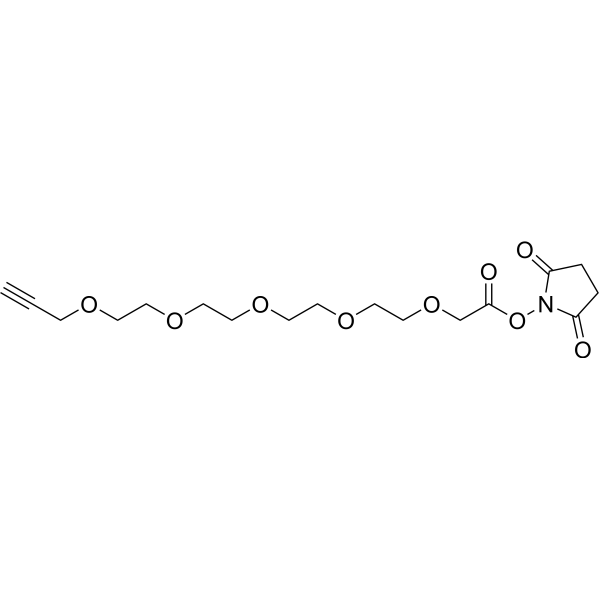 0 ImagesCat. No.: HY-130390CAS No.: 1161883-51-7
Propargyl-PEG4-O-C1-NHS ester (compound 8) is a PEG-based PROTAC linker can be used in the synthesis of PROTACs. Propargyl-PEG4-O-C1-NHS ester is a click chemistry reagent, it contains an Alkyne group and can undergo copper-catalyzed azide-alkyne cycloaddition (CuAAc) with molecules containing Azide groups.
-
EGFR C797S/L858R Recombinant Human Active Protein Kinase
 0 ImagesCat. No.: HY-E70696
EGFR is a driver of tumorigenesis. EGFR is mainly found in an auto-inhibited, dimerization-incompetent, state at the plasma membrane (PM). Ligand binding promotes receptor dimerization, which determines a series of structural rearrangements that are conveyed to the cytoplasmic domain allowing the formation of asymmetric dimers between the two juxtaposed catalytic domains. EGFR has multiple mutants. EGFR C797S/L858R Recombinant Human Active Protein Kinase is a recombinant EGFR C797S/L858R protein that can be used to study EGFR C797S/L858R-related functions.
-
CDK9-Cyclin T1 PPI-IN-1
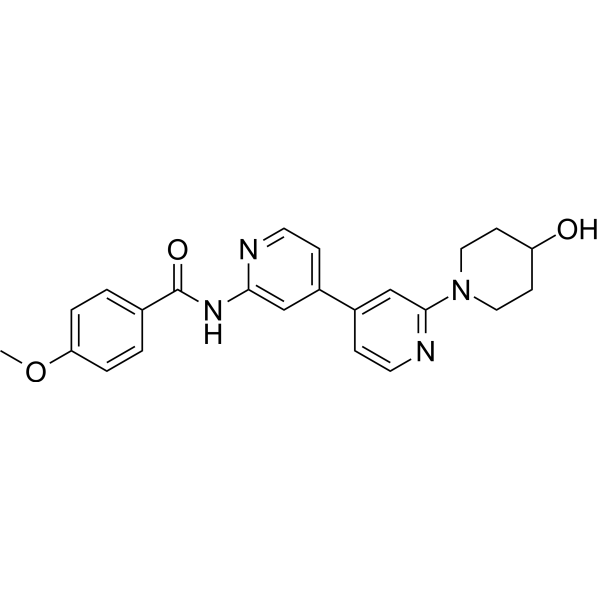 0 ImagesCat. No.: HY-156296CAS No.: 2995336-58-6
CDK9-Cyclin T1 PPI-IN-1 (Compound B19) is a selective CDK9-Cyclin T1 protein-protein interaction (PPI) inhibitor. CDK9-Cyclin T1 PPI-IN-1 inhibits cell proliferation in TNBC MDA-MB-231 cells (IC50: 0.044 μM), and induces apoptosis. CDK9-Cyclin T1 PPI-IN-1 inhibits CDK9 transcription activity, reduces the phosphorylation of RNA Pol II CTD ser2. CDK9-Cyclin T1 PPI-IN-1 inhibits tumor growth in a TNBC 4T1 mouse model.
-
Tubulin Polymerization-IN-1 prodrug
 0 ImagesCat. No.: HY-159921CAS No.: 3033099-32-7
Tubulin Polymerization-IN-1 prodrug (Compound 2b) is a palladium (Pd)-mediated tubulin polymerization inhibitor prodrug. Developed based on colchicine binding site inhibitors (CBSIs), it reduces toxicity and enhances targeted release properties. Compared to the parent compound, Tubulin Polymerization-IN-1 prodrug exhibited 68.3-fold lower cytotoxicity, which can be restored in situ in the presence of Pd resin. Mechanistic studies showed that its anticancer activity is consistent with CBSIs. In vivo, Tubulin Polymerization-IN-1 prodrug significantly inhibited tumor growth (63.2%) when activated by Pd resin. It holds promise for research in the field of anticancer therapy.
-
Dimethyl-SGD-1882
 0 ImagesCat. No.: HY-126678CAS No.: 3026416-27-0Synonyms: Dimethyl-PBD dimer
Dimethyl-SGD-1882 (Dimethyl-PBD dimer) is a highly potent DNA alkylator, and is used as an antibody-drug conjugate (ADC) cytotoxin. PBD Dimer is a DNA alkylator which inhibits DNA replication.

-
hsa-miR-4512 antagomir
 0 ImagesCat. No.: HY-RI01131A
hsa-miR-4512 antagomirs are chemically-modified oligonucleotides that hybridize with mature miRNAs. The miRNA antagomirs have 2 phosphorothioates at the 5' end, 4 phosphorothioates at the 3' end, 1 cholesterol group at the 3' end, and full-length nucleotide 2'-methoxy modification. The miRNA antagomirs strongly compete with mature miRNAs to prevent the complementary pairing of miRNAs and their target genes, thereby inhibiting miRNAs from functioning. Stability of miRNA antagomirs appears to be significantly higher than miRNA inhibitors, they exhibits enhanced cellular uptake, stability and regulatory activity in vivo.



