



Cancer Targeted Therapy
Cancer targeted therapy is the foundation of precision medicine; it uses drugs or other substances to target specific genes and proteins that control cancer cells’ growth, division and spreading. Compared to traditional chemotherapy drugs, targeted-drugs can specifically act on cancer cells with high efficacy without damaging normal cells. Drugs used in cancer targeted therapy mainly includes small molecules and macromolecules (e.g., monoclonal antibodies), which can target cancer cells and constituents in the tumor microenvironment to activate the immune system. Anti-angiogenesis drugs, such as those targeting vascular endothelial growth factor (VEGF), epidermal growth factor receptor (EGFR), transforming growth factor (TGF)-α, TGF-β, Tumor necrosis factor (TNF)-α, and platelet-derived endothelial growth factor (PDGFR) inhibit the proliferation and metastasis of cancer cells. In recent years, the proportion of antibody drugs in cancer treatment has gradually become prominent. Antibody-drug conjugates (ADCs) are a new type of targeted drugs that are composed of monoclonal antibody, cytotoxic drug and linker. ADCs can deliver drugs to tumor cells and minimize the toxicity to normal tissues. Proteolysis-targeting chimera (PROTAC) is a useful technology for targeted protein degradation. PROTAC exploits the ubiquitin-proteasome system and forms a ternary complex with a hijacked E3 ubiquitin ligase and target protein, leading to polyubiquitination and degradation of the target protein.
Targeted therapy is a useful strategy in treatment of cancer either alone or in combination with standard chemotherapy. At present, targeted therapy has proved significant clinical success in the treatment of many types of cancer, including breast cancer, colorectal cancer, leukemia, ovarian cancer and lung cancer.

-
α-Solanine (Standard)
 0 ImagesCat. No.: HY-N6602RCAS No.: 20562-02-1
α-Solanine (Standard) is the analytical standard of α-Solanine. This product is intended for research and analytical applications. α-solanine, a bioactive component and one of the major steroidal glycoalkaloids in Solanum nigrum, has been observed to inhibit growth and induce apoptosis in cancer cells.
-
DDR1-IN-11
 0 ImagesCat. No.: HY-173284CAS No.: 639089-54-6
DDR1-IN-11 (Compound 4) is an inhibitor of Discoidin domain receptor 1 (DDR1) with an IC50 of 46.16 nM. DDR1-IN-11 can achieve an inhibition rate of 99.86% against Z-138 cells at a concentration of 10 μM, and it can be used in the research of acute myeloid leukemia (AML).
-
Ch-319
 0 ImagesCat. No.: HY-122894CAS No.: 2589088-07-1
Ch-319 is a Triphenyltin (IV) carboxylate derivative. Ch-319 reduces androgen receptor expression, AKT and PRAS40 phosphorylation levels, and increases FOXO3a expression. Ch-319 increases Apoptosis. Ch-319 can be used in the research of prostate cancer.
-
hsa-miR-363-3p inhibitor
 0 ImagesCat. No.: HY-RI00751
hsa-miR-363-3p inhibitors are chemically-modified oligonucleotides that hybridize with mature miRNAs. The miRNA inhibitors have full-length nucleotide 2'-methoxy modification. The miRNA inhibitors strongly compete with mature miRNAs to prevent the complementary pairing of miRNAs and their target genes, thereby inhibiting miRNAs from functioning.
-
hsa-miR-4756-5p inhibitor
 0 ImagesCat. No.: HY-RI01372
hsa-miR-4756-5p inhibitors are chemically-modified oligonucleotides that hybridize with mature miRNAs. The miRNA inhibitors have full-length nucleotide 2'-methoxy modification. The miRNA inhibitors strongly compete with mature miRNAs to prevent the complementary pairing of miRNAs and their target genes, thereby inhibiting miRNAs from functioning.
-
hsa-miR-670-5p antagomir
 0 ImagesCat. No.: HY-RI01992A
hsa-miR-670-5p antagomirs are chemically-modified oligonucleotides that hybridize with mature miRNAs. The miRNA antagomirs have 2 phosphorothioates at the 5' end, 4 phosphorothioates at the 3' end, 1 cholesterol group at the 3' end, and full-length nucleotide 2'-methoxy modification. The miRNA antagomirs strongly compete with mature miRNAs to prevent the complementary pairing of miRNAs and their target genes, thereby inhibiting miRNAs from functioning. Stability of miRNA antagomirs appears to be significantly higher than miRNA inhibitors, they exhibits enhanced cellular uptake, stability and regulatory activity in vivo.
-
mmu-miR-12193-3p antagomir
 0 ImagesCat. No.: HY-RI02613A
mmu-miR-12193-3p antagomirs are chemically-modified oligonucleotides that hybridize with mature miRNAs. The miRNA antagomirs have 2 phosphorothioates at the 5' end, 4 phosphorothioates at the 3' end, 1 cholesterol group at the 3' end, and full-length nucleotide 2'-methoxy modification. The miRNA antagomirs strongly compete with mature miRNAs to prevent the complementary pairing of miRNAs and their target genes, thereby inhibiting miRNAs from functioning. Stability of miRNA antagomirs appears to be significantly higher than miRNA inhibitors, they exhibits enhanced cellular uptake, stability and regulatory activity in vivo.
-
mmu-miR-501-5p inhibitor
 0 ImagesCat. No.: HY-RI03235
mmu-miR-501-5p inhibitors are chemically-modified oligonucleotides that hybridize with mature miRNAs. The miRNA inhibitors have full-length nucleotide 2'-methoxy modification. The miRNA inhibitors strongly compete with mature miRNAs to prevent the complementary pairing of miRNAs and their target genes, thereby inhibiting miRNAs from functioning.
-
mmu-miR-7058-5p antagomir
 0 ImagesCat. No.: HY-RI03860A
mmu-miR-7058-5p antagomirs are chemically-modified oligonucleotides that hybridize with mature miRNAs. The miRNA antagomirs have 2 phosphorothioates at the 5' end, 4 phosphorothioates at the 3' end, 1 cholesterol group at the 3' end, and full-length nucleotide 2'-methoxy modification. The miRNA antagomirs strongly compete with mature miRNAs to prevent the complementary pairing of miRNAs and their target genes, thereby inhibiting miRNAs from functioning. Stability of miRNA antagomirs appears to be significantly higher than miRNA inhibitors, they exhibits enhanced cellular uptake, stability and regulatory activity in vivo.
-
rno-miR-466b-2-3p inhibitor
 0 ImagesCat. No.: HY-RI04481
rno-miR-466b-2-3p inhibitors are chemically-modified oligonucleotides that hybridize with mature miRNAs. The miRNA inhibitors have full-length nucleotide 2'-methoxy modification. The miRNA inhibitors strongly compete with mature miRNAs to prevent the complementary pairing of miRNAs and their target genes, thereby inhibiting miRNAs from functioning.
-
N-(Azido-PEG4)-N-Boc-PEG4-Boc
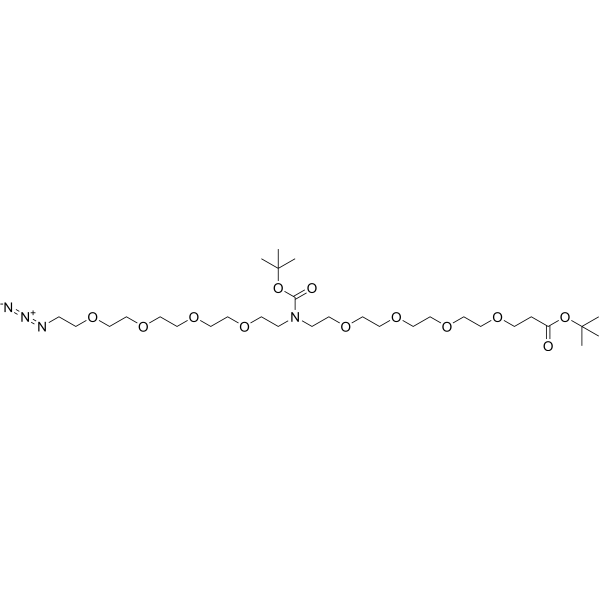 0 ImagesCat. No.: HY-140567CAS No.: 2112737-20-7
N-(Azido-PEG4)-N-Boc-PEG4-Boc is a PEG-based PROTAC linker that can be used in the synthesis of PROTACs. N-(Azido-PEG4)-N-Boc-PEG4-Boc is a click chemistry reagent, it contains an Azide group and can undergo copper-catalyzed azide-alkyne cycloaddition reaction (CuAAc) with molecules containing Alkyne groups. It can also undergo strain-promoted alkyne-azide cycloaddition (SPAAC) reactions with molecules containing DBCO or BCN groups.
-
Ulecaciclib
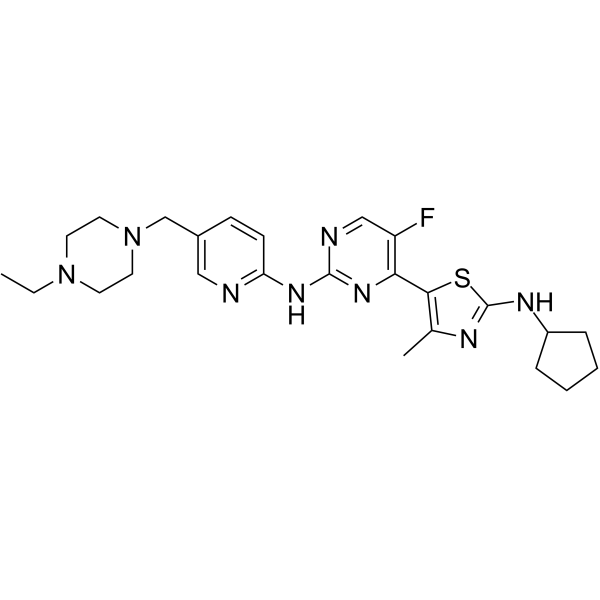 0 ImagesCat. No.: HY-147409CAS No.: 2075750-05-7
Ulecaciclib is an orally activitive inhibitor of cyclin-dependent kinase (CDK), with Ki values of 0.62 μM (CDK2/Cyclin A), 0.2 nM (CDK4/Cyclin D1), 3 nM (CDK6/Cyclin D3), and 0.63 μM (CDK7/Cyclin H), respectively. Ulecaciclib can cross blood brain barrier and has good pharmacokinetic characteristics.
-
PROTAC TTK degrader-2
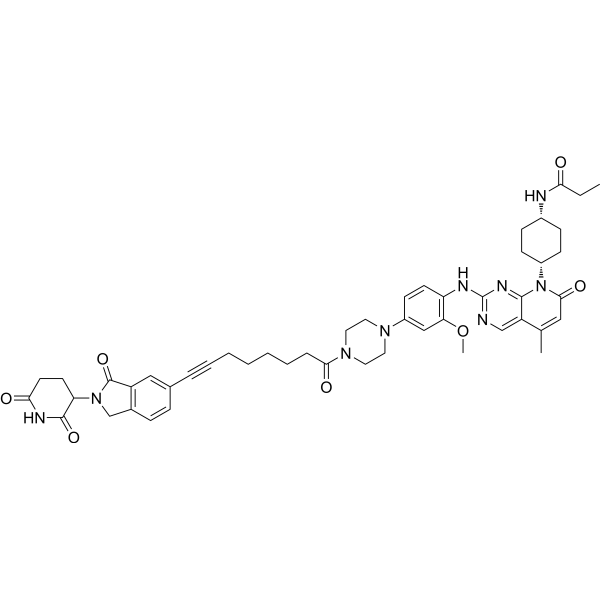 0 ImagesCat. No.: HY-143905CAS No.: 2953426-48-5
PROTAC TTK degrader-2 is a threonine tyrosine kinase (TTK) PROTAC degrader with a DC50 of 3.1 nM in COLO-205 cells. PROTAC TTK degrader-2 induces proteasome-mediated degradation of TTK. It inhibits the proliferation of colorectal cancer cells. In colorectal cancer xenograft mouse models, PROTAC TTK degrader-2 mediates target degradation and exerts anticancer activity. PROTAC TTK degrader-2 can be used in colorectal cancer-related research.
-
ALK5-IN-25
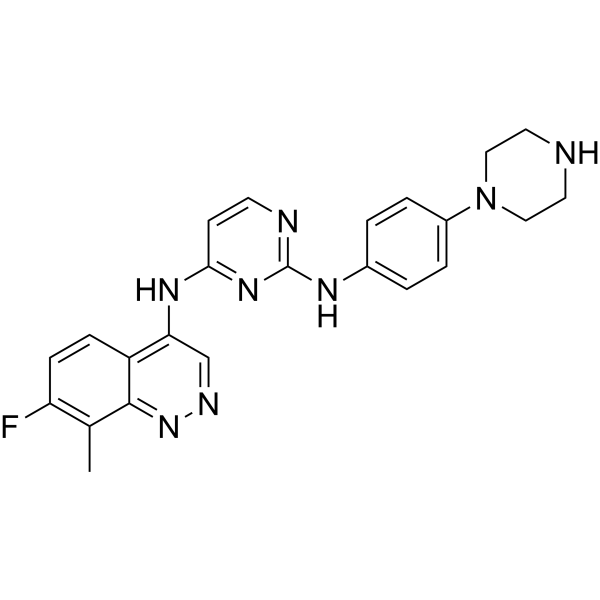 0 ImagesCat. No.: HY-151270CAS No.: 2785430-81-9
ALK5-IN-25 (compound EX-02) is a potent ALK-5 inhibitor with an IC50 ≤10 nM.ALK5-IN-25 also inhibits ALK-2 (selectivity ALK2/ALK5≤10). ALK5-IN-25 can be used for the research of cancer.
-
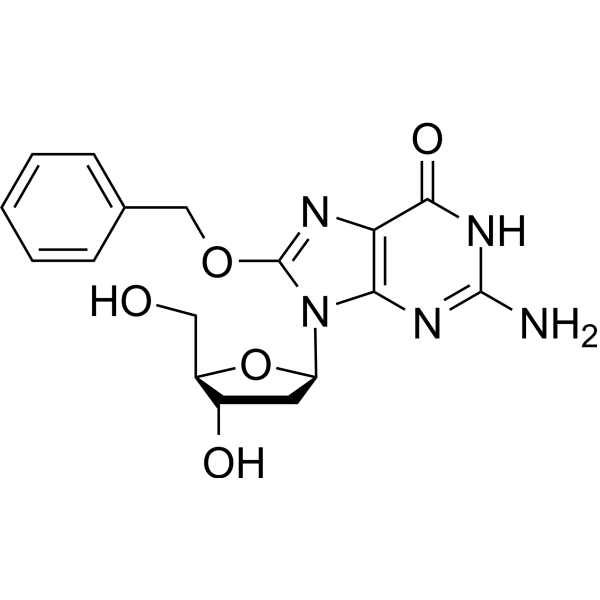
2′-Deoxy-8-(phenylmethoxy)guanosine
 0 ImagesCat. No.: HY-154333CAS No.: 96964-90-8
2′-Deoxy-8-(phenylmethoxy)guanosine is a purine nucleoside analog. Purine nucleoside analogs have broad antitumor activity targeting indolent lymphoid malignancies. Anticancer mechanisms in this process rely on inhibition of DNA synthesis, induction of apoptosis, etc.
-
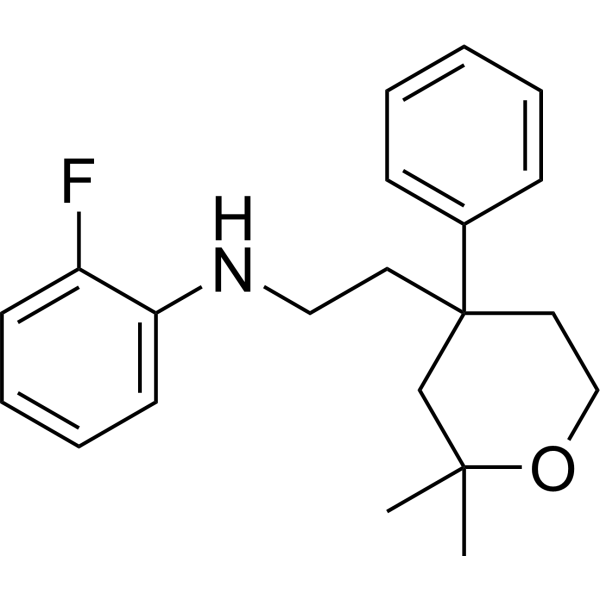
ICMT-IN-51
 0 ImagesCat. No.: HY-157119CAS No.: 1313602-89-9
ICMT-IN-51 (compound 43) is an inhibitor of ICMT (IC50=0.55 μM).
-
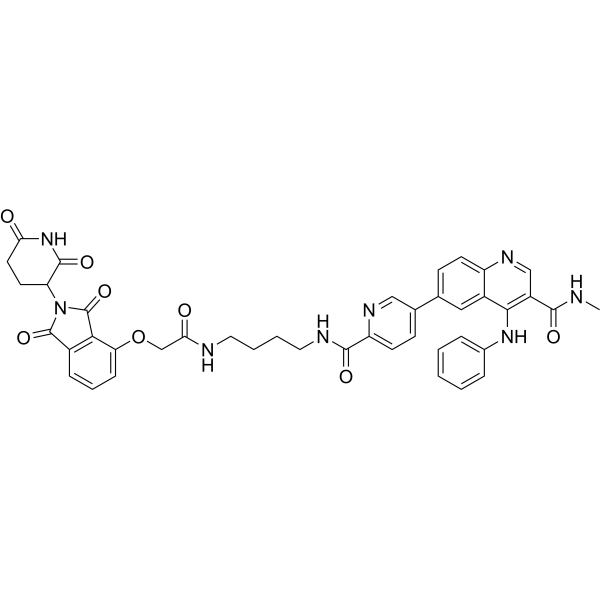
aTAG 2139
 0 ImagesCat. No.: HY-161162CAS No.: 2387510-81-6Synonyms: CFT-2139
-
Puquitinib
 0 ImagesCat. No.: HY-111137CAS No.: 916890-10-3Synonyms: XC-302 free base
Puquitinib (XC-302 free base) is a multi-target inhibitor with the activity of inducing autophagy in nasopharyngeal carcinoma cells by inhibiting the PI3K/AKT/mTOR signaling pathway. Puquitinib was able to inhibit the proliferation of CNE-2 cells, showing a dose-dependent antiproliferative effect. Puquitinib induced the formation of autophagosomes and autolysosomes in CNE-2 cells, which were observed by fluorescence microscopy and electron microscopy. Puquitinib promoted the formation of LC3-II and increased the expression of beclin 1, while reducing the level of p62. Puquitinib inhibited the PI3K/AKT/mTOR pathway by reducing the expression of p-AKT and p-mTOR. Puquitinib also induced apoptosis in CNE-2 cells, and when autophagy was inhibited, the apoptosis rate was reduced, which means that autophagy may interact with apoptosis to induce cell death.
-
hsa-miR-144-3p inhibitor
 0 ImagesCat. No.: HY-RI00279
hsa-miR-144-3p inhibitors are chemically-modified oligonucleotides that hybridize with mature miRNAs. The miRNA inhibitors have full-length nucleotide 2'-methoxy modification. The miRNA inhibitors strongly compete with mature miRNAs to prevent the complementary pairing of miRNAs and their target genes, thereby inhibiting miRNAs from functioning.



