



Cancer Targeted Therapy
Cancer targeted therapy is the foundation of precision medicine; it uses drugs or other substances to target specific genes and proteins that control cancer cells’ growth, division and spreading. Compared to traditional chemotherapy drugs, targeted-drugs can specifically act on cancer cells with high efficacy without damaging normal cells. Drugs used in cancer targeted therapy mainly includes small molecules and macromolecules (e.g., monoclonal antibodies), which can target cancer cells and constituents in the tumor microenvironment to activate the immune system. Anti-angiogenesis drugs, such as those targeting vascular endothelial growth factor (VEGF), epidermal growth factor receptor (EGFR), transforming growth factor (TGF)-α, TGF-β, Tumor necrosis factor (TNF)-α, and platelet-derived endothelial growth factor (PDGFR) inhibit the proliferation and metastasis of cancer cells. In recent years, the proportion of antibody drugs in cancer treatment has gradually become prominent. Antibody-drug conjugates (ADCs) are a new type of targeted drugs that are composed of monoclonal antibody, cytotoxic drug and linker. ADCs can deliver drugs to tumor cells and minimize the toxicity to normal tissues. Proteolysis-targeting chimera (PROTAC) is a useful technology for targeted protein degradation. PROTAC exploits the ubiquitin-proteasome system and forms a ternary complex with a hijacked E3 ubiquitin ligase and target protein, leading to polyubiquitination and degradation of the target protein.
Targeted therapy is a useful strategy in treatment of cancer either alone or in combination with standard chemotherapy. At present, targeted therapy has proved significant clinical success in the treatment of many types of cancer, including breast cancer, colorectal cancer, leukemia, ovarian cancer and lung cancer.
-
TK4g
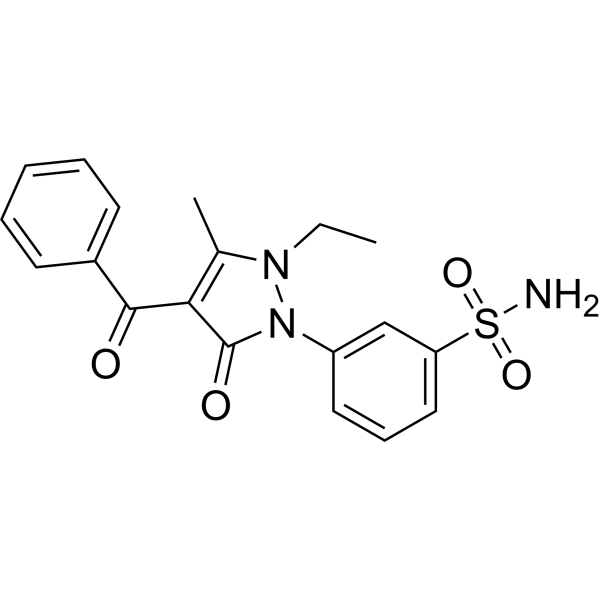 0 ImagesCat. No.: HY-151258CAS No.: 2232890-86-5
TK4g is a Janus kinase (JAK) inhibitor with the IC50 values of 12.61 nM and 15.80 nM for JAK2 and JAK3, respectively. TK4g can be used in lymphoid-derived diseases and leukemia cancer research.
-
1-(5-O-Methoxytrityl-2-deoxy-β-D-xylofuranosyl)uracil
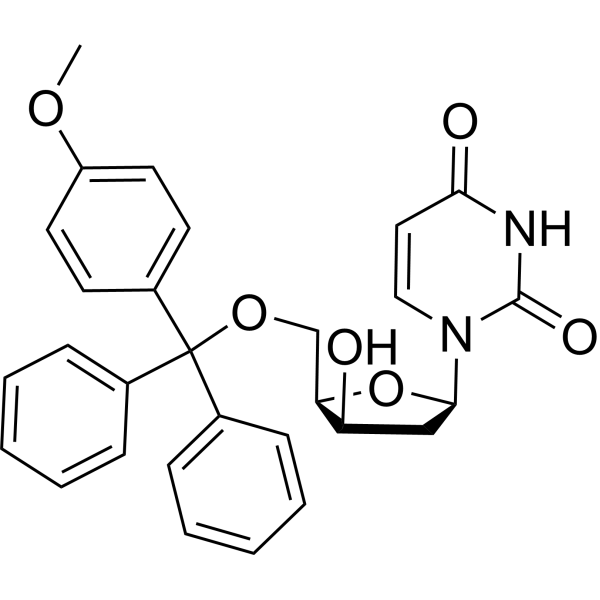 0 ImagesCat. No.: HY-154331CAS No.: 2072145-82-3
1-(5-O-Methoxytrityl-2-deoxy-β-D-xylofuranosyl)uracil is a purine nucleoside analog. Purine nucleoside analogs have broad antitumor activity targeting indolent lymphoid malignancies. Anticancer mechanisms in this process rely on inhibition of DNA synthesis, induction of apoptosis, etc.
-
ICMT-IN-49
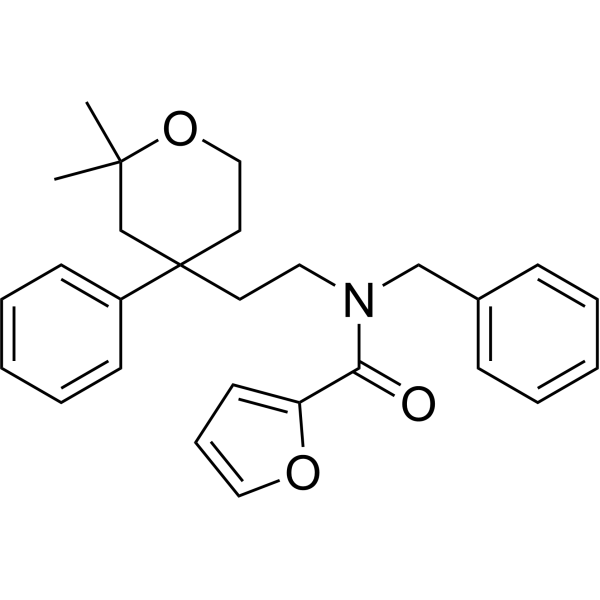 0 ImagesCat. No.: HY-157117CAS No.: 303728-92-9
ICMT-IN-49 (compound 2) is an inhibitor of ICMT (IC50=0.12 μM).
-
MIF-IN-5
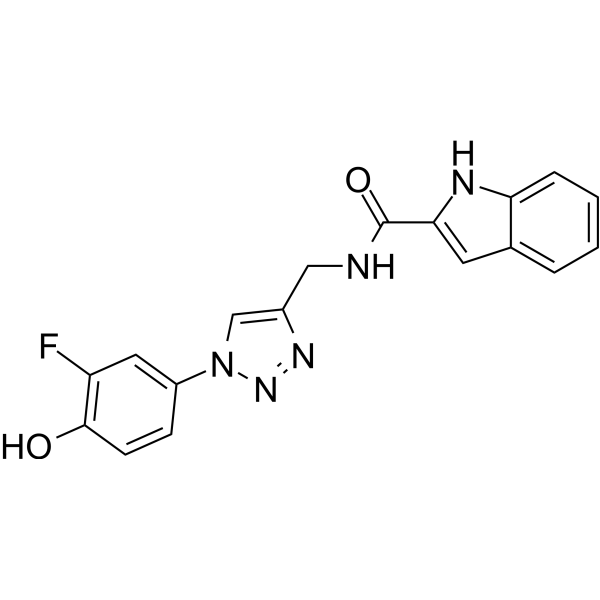 0 ImagesCat. No.: HY-146318CAS No.: 2582755-31-3
MIF-IN-5 (compound 1d) is a potent and reversible macrophage migration inhibitory factor (MIF) competitive inhibitor with an IC50 of 4.8 μM and a Ki value of 3.3 μM, respectively.
-
RGS2–Galpha-q PPI-IN-1
 0 ImagesCat. No.: HY-169282CAS No.: 338408-78-9
RGS2–Galpha-q interaction-IN-1 (Compound AJ-3) is an inhibitor of the RGS2-Galpha-q interaction. RGS2–Galpha-q interaction-IN-1 can inhibit the growth of cancer cell lines expressing RGS2 and exhibits anti-cell migration properties.
-
Mcl-1-IN-17
 0 ImagesCat. No.: HY-178010
Mcl-1-IN-17 (Compound 25) is an orally active Myeloid Cell Leukemia 1 (Mcl-1) inhibitor with a Ki < 0.08 nM. Mcl-1-IN-17 has a significant antiproliferative activity (GI50s of 39 and 105 nM for H929 and A427 cells, respectively) and inhibits cell apoptosis. Mcl-1-IN-17 can be used for hematological and solid cancers research.
-
DSPE-PEG2000-DHLASLWWGTEL
 0 ImagesCat. No.: HY-182099A
DSPE-PEG2000-DHLASLWWGTEL is a PEG compound which composed of DSPE and a GPC3 targeting peptide DHLASLWWGTEL. The DHLASLWWGTEL peptide partially and specifically binds to GPC3-positive cells, achieving precise targeting. DSPE-PEG2000-DHLASLWWGTEL can be used for drug delivery.
-
DOPE-PEG2000-K237
 0 ImagesCat. No.: HY-187474ASynonyms: DOPE-PEG2000-Mal-Cys-HTMYYHHYQHHL
DOPE-PEG2000-K237 (DOPE-PEG2000-Mal-Cys-HTMYYHHYQHHL) is an amphiphilic lipid-PEG-peptide conjugate composed of DOPE (1,2-dioleoyl-sn-glycero-3-phosphoethanolamine), PEG2000, and the K237 peptide (sequence: HTMYYHHYQHHL). K237 peptide is a tumor-homing peptide identified by phage display that specifically binds to vasculature in tumor tissues. DOPE-PEG2000-K237 is used for tumor-targeted drug delivery via functionalization of liposomes and nanoparticles.
-
POP-IN-3
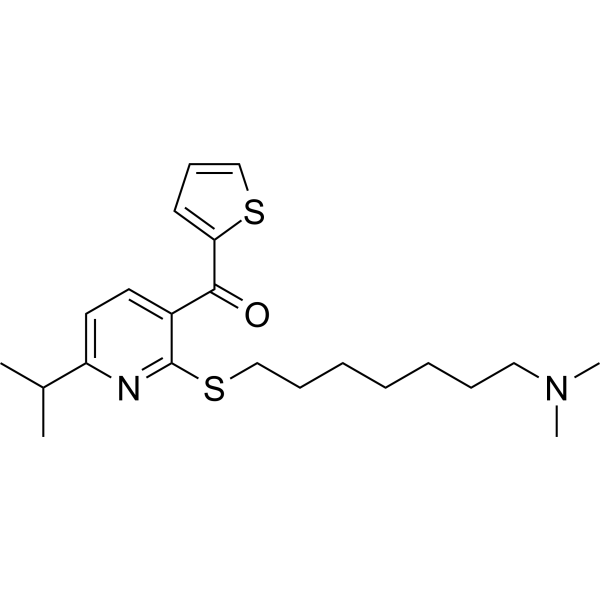 0 ImagesCat. No.: HY-143474CAS No.: 2554621-98-4
Y-29794 (Compound 2) is a potent, covalent prolyl oligopeptidase (POP) inhibitor with a Ki of 0.95 nM. Y-29794 can be used for studying neurodegenerative diseases and cancer.
-
CCT239065
 0 ImagesCat. No.: HY-14716CAS No.: 1163719-51-4
-
A-1155905
 0 ImagesCat. No.: HY-164452CAS No.: 2228052-37-5
-
ER ligand-6
 0 ImagesCat. No.: HY-170341CAS No.: 2504914-79-6
-
MRC-G-001
 0 ImagesCat. No.: HY-175009
MRC-G-001 is a Genipin (HY-17389) derivative with an IC50 of 117 μM against A549 cancer cells. MRC-G-001 inhibits the phosphorylation of EGFR, JAK1, and STAT3, and modulates epithelial-mesenchymal transition (EMT)-related protein expression, thereby attenuating cell migration and invasion. MRC-G-001 induces cell cycle arrest and cell apoptosis. MRC-G-001 can be used for the study of cancers such as non-small-cell lung cancer.
-
Anticancer agent 281 TFA
 0 ImagesCat. No.: HY-179070
Anticancer agent 280 TFA (Compound 65) is an anti-cancer agent targeting triple-negative breast cancer (TNBC). Anticancer agent 280 TFA exhibits IC50 values of Anticancer agent 280 TFA for MDA-MB-231, MDA-MB-231/LM2-4, Jurkat, and MCF-7 of 7.1, 11.65, 6.99, and 21.51 μM respectively. Anticancer agent 280 TFA can cause significant arrest of cells in the S phase and induce cell apoptosis. Anticancer agent 280 TFA can be used for the study of TNBC.
-
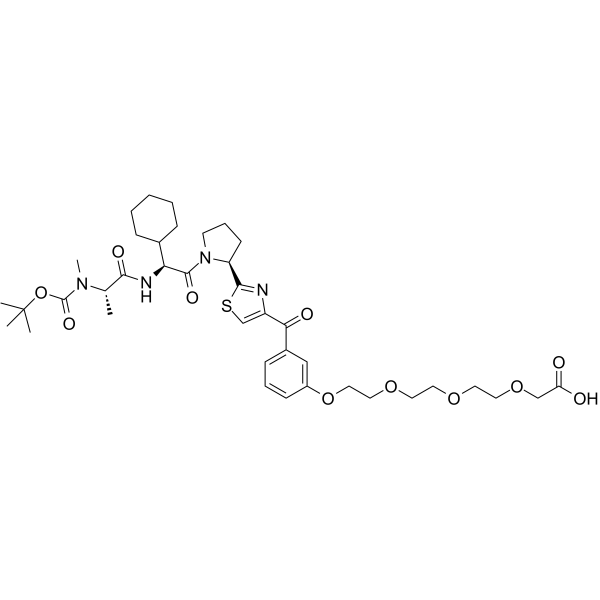
Fmoc-Val-Ala-Gly
 0 ImagesCat. No.: HY-W1050525CAS No.: 2377585-15-2
Fmoc-Val-Ala-Gly (compound 58a) is a cleavable ADC linker, can be conjugated to the antibody Trastuzumab (HY-P9907) to form an antibody-drug conjugate (ADC).
-
hsa-miR-1207-5p inhibitor
 0 ImagesCat. No.: HY-RI00087
hsa-miR-1207-5p inhibitors are chemically-modified oligonucleotides that hybridize with mature miRNAs. The miRNA inhibitors have full-length nucleotide 2'-methoxy modification. The miRNA inhibitors strongly compete with mature miRNAs to prevent the complementary pairing of miRNAs and their target genes, thereby inhibiting miRNAs from functioning.
-
hsa-miR-342-5p antagomir
 0 ImagesCat. No.: HY-RI00709A
hsa-miR-342-5p antagomirs are chemically-modified oligonucleotides that hybridize with mature miRNAs. The miRNA antagomirs have 2 phosphorothioates at the 5' end, 4 phosphorothioates at the 3' end, 1 cholesterol group at the 3' end, and full-length nucleotide 2'-methoxy modification. The miRNA antagomirs strongly compete with mature miRNAs to prevent the complementary pairing of miRNAs and their target genes, thereby inhibiting miRNAs from functioning. Stability of miRNA antagomirs appears to be significantly higher than miRNA inhibitors, they exhibits enhanced cellular uptake, stability and regulatory activity in vivo.
-
hsa-miR-4730 antagomir
 0 ImagesCat. No.: HY-RI01330A
hsa-miR-4730 antagomirs are chemically-modified oligonucleotides that hybridize with mature miRNAs. The miRNA antagomirs have 2 phosphorothioates at the 5' end, 4 phosphorothioates at the 3' end, 1 cholesterol group at the 3' end, and full-length nucleotide 2'-methoxy modification. The miRNA antagomirs strongly compete with mature miRNAs to prevent the complementary pairing of miRNAs and their target genes, thereby inhibiting miRNAs from functioning. Stability of miRNA antagomirs appears to be significantly higher than miRNA inhibitors, they exhibits enhanced cellular uptake, stability and regulatory activity in vivo.
-
mmu-miR-10b-3p antagomir
 0 ImagesCat. No.: HY-RI02571A
mmu-miR-10b-3p antagomirs are chemically-modified oligonucleotides that hybridize with mature miRNAs. The miRNA antagomirs have 2 phosphorothioates at the 5' end, 4 phosphorothioates at the 3' end, 1 cholesterol group at the 3' end, and full-length nucleotide 2'-methoxy modification. The miRNA antagomirs strongly compete with mature miRNAs to prevent the complementary pairing of miRNAs and their target genes, thereby inhibiting miRNAs from functioning. Stability of miRNA antagomirs appears to be significantly higher than miRNA inhibitors, they exhibits enhanced cellular uptake, stability and regulatory activity in vivo.



