Infection
-
Infection Related Products (18735)
Related Products (18735)

-
Antibodies (22)
-
Rhapontigenin (Standard)
 0 Images
Rhapontigenin (Standard) is the analytical standard of Rhapontigenin. This product is intended for research and analytical applications. Rhapontigenin is a natural analog of resveratrol with anticancer, antioxidant, antifungal and antibacterial activities. Rhapontigenin is amechanism-based, potent and selective cytochrome P450 1A1 inactivator (IC50 = 400 nM). Rhapontigenin exhibits 400-fold and 23-fold selectivity for P450 1A1 over P450 1A2 and P450 1B1, respectively.

-
Neuraminidase-IN-11
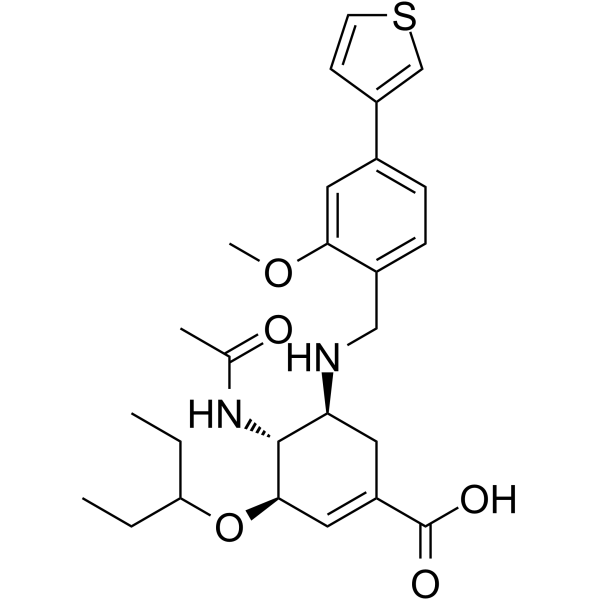 0 ImagesCat. No.: HY-151104CAS No.: 2685786-28-9
Neuraminidase-IN-11 (15e) is a potent and selective neuraminidase (NA) inhibitor with the IC50 values of 4.7 nM, 8.46 nM and 1.5 nM against H1N1, H5N1 and H5N8 NAs respectively.
-
Pyriproxyfen-d6
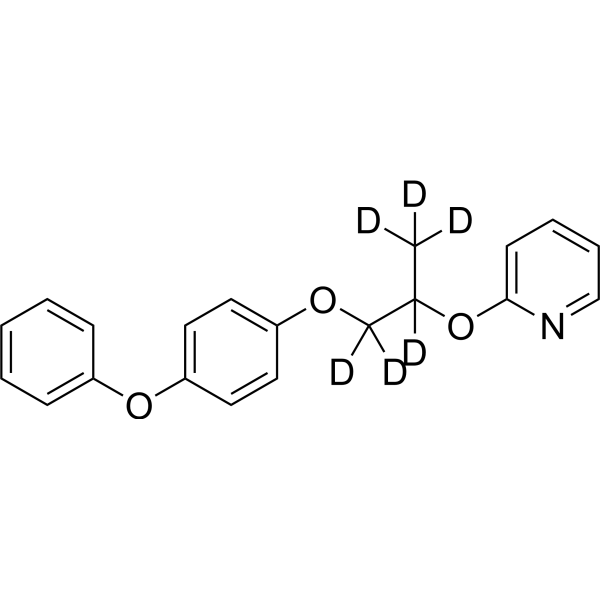 0 ImagesCat. No.: HY-B2031SCAS No.: 2673269-99-1Synonyms: S-31183-d6
Pyriproxyfen-d6 (S-31183-6) is the deuterium labeled Pyriproxyfen. Pyriproxyfen is a juvenile hormone analog and insect growth regulator. Pyriproxyfen is used in research related to dengue fever and malaria.
-
Acetyl-pepstatin
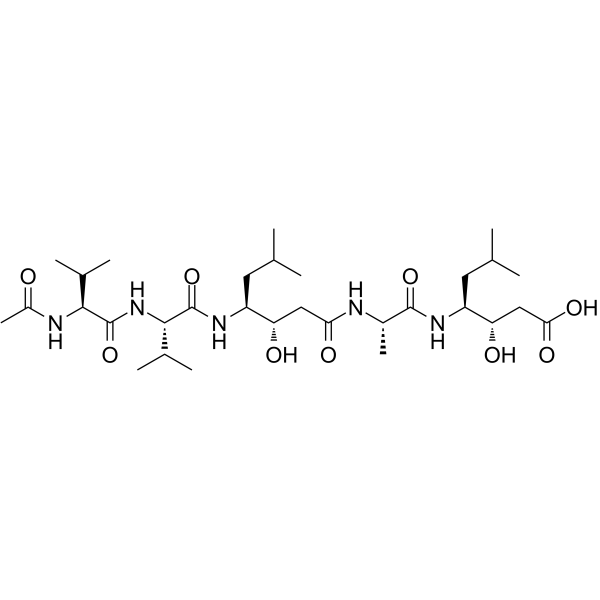 0 ImagesCat. No.: HY-P1436CAS No.: 11076-29-2
Acetyl-pepstatin is a potent classical inhibitor of aspartic proteases (PRs) with XMRV PR and HIV-1 PR Ki values of 712 nM and 13 nM.
-
CpCDPK1/TgCDPK1-IN-1
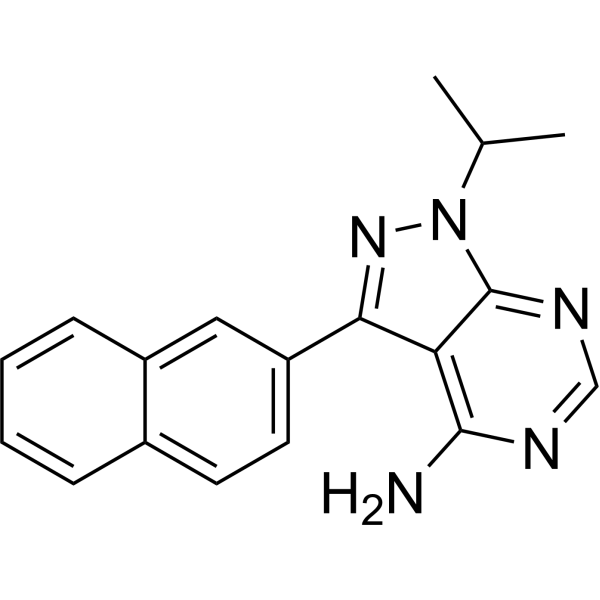 0 ImagesCat. No.: HY-128397CAS No.: 1092788-23-2
-
Neamine (Standard)
 0 Images
Neamine, a degradation product of Neomycin, is a broad-spectrum aminoglycoside antibiotic. Neamine is an anti-angiogenesis agent targeting angiogenin. Neamine has potent antibacterial, antitumor and neuroprotective activities.
-
CDy11
 0 ImagesCat. No.: HY-D3192CAS No.: 2028316-07-4
CDy11 is a fluorescent probe and amyloid-binding dye (λex=590 nm; λem=612 nm), with a Ka of 29 μM for Pseudomonas aeruginosa Fap. CDy11 specifically recognizes amyloid fibrils in bacterial biofilms and exhibits significantly enhanced fluorescence upon binding to the target. CDy11 shows no staining effect on amyloid-deficient mutant strains, planktonic cells or protein monomers. CDy11 supports in vivo imaging of Pseudomonas aeruginosa biofilms in mouse implant and corneal infection models. CDy11 is widely used in studies of Staphylococcus aureus biofilm infections, dental caries, and Pseudomonas aeruginosa-associated implant and corneal infections.
-
ddCTP trilithium
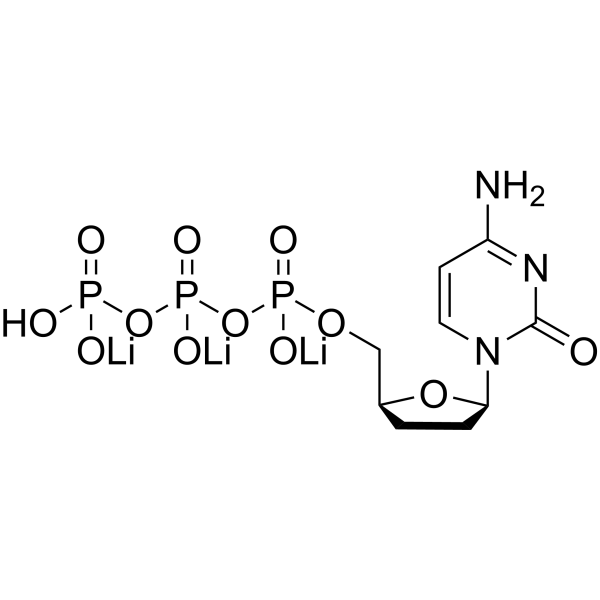 0 ImagesCat. No.: HY-137697BCAS No.: 93939-77-6
ddCTP trilithium is a type of chain-terminating deoxynucleotide. ddCTP trilithium can be incorporated into the extension primer chain that lacks the 3'-hydroxyl group, thereby terminating primer extension, viral genome replication, and DNA synthesis. ddCTP trilithium can distinguish almost identical RNA through distinguishable extension products in primer extension inhibition experiments. ddCTP trilithium is the active metabolite of Zalcitabine (HY-17392), which can competitively inhibit HIV reverse transcriptase, terminate the synthesis of viral DNA chains, and thereby inhibit HIV replication.
-
Antibacterial agent 44
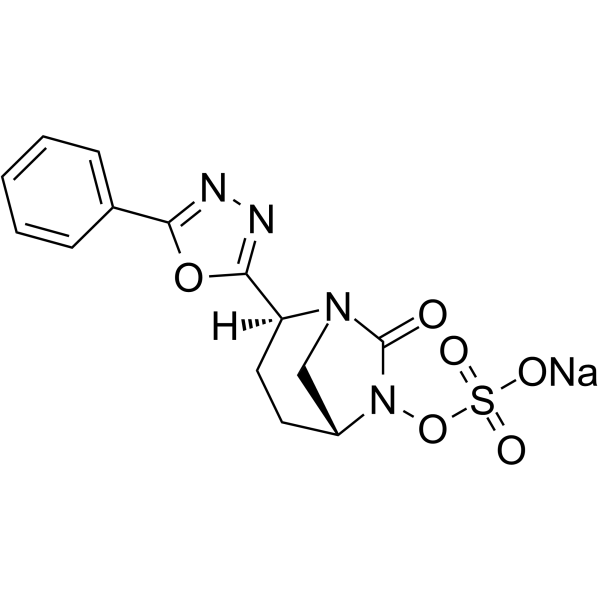 0 ImagesCat. No.: HY-139761CAS No.: 1426572-49-7
Antibacterial agent 44 is an antibacterial agent extracted from patent WO2013030735A1, example 7. Antibacterial agent 44 can be used for the research of bacterial infections.
-
STING agonist-24
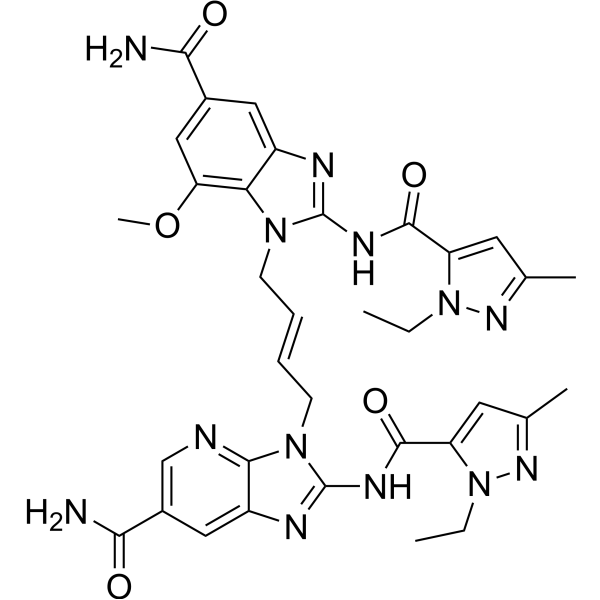 0 ImagesCat. No.: HY-152957CAS No.: 2408722-91-6
STING agonist-24 (CF504) is a non-nucleotide small-molecule STING agonist. STING agonist-23 activates STING, increases phosphorylation of STING, TBK1 and IRF3. STING agonist-23 promotes the levels of IFN-β, IL-6, CXCL-10, TNF-α, ISG-15, and CCL-5 in tumor cells. STING agonist-23 exhibits activity against SARS-CoV series strains.
-
Antimicrobialpeptide 6b
 0 ImagesCat. No.: HY-P11894
Antimicrobial peptide 6b is a cationic macrocyclic antimicrobial peptide. It exhibits broad-spectrum antibacterial and antifungal activities, with a MIC of 1.5-6.2 μg/mL against drug-resistant Gram-positive bacteria, a MIC of 4-25 μg/mL against Gram-negative bacteria, and also shows activity against pathogenic fungi. It acts through a membrane disruption mechanism, has a unique "sandwich" conformation, low hemolytic activity, and can rapidly kill bacteria and eliminate bacterial and fungal biofilms. Antimicrobial peptide 6b can be used in studies of drug-resistant bacterial infections and fungal infections.
-
Cefetamet hydrochloride
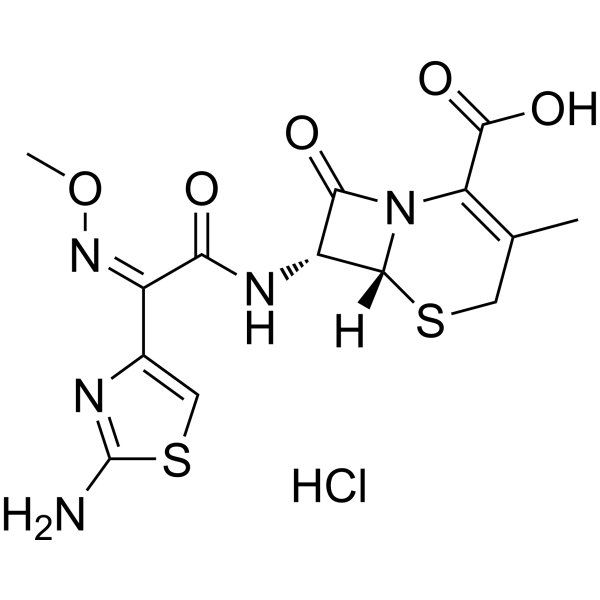 0 ImagesCat. No.: HY-A0111BCAS No.: 724438-16-8Synonyms: Ro 15-8074 hydrochloride; Deacetoxycefotaxime hydrochloride
Cefetamet (Ro 15-8074) hydrochloride is a cephalosporin antibiotic and the active metabolite of Cefetamet pivoxil (HY-B1894A). Cefetamet hydrochloride binds to bacterial penicillin-binding protein (PBP) (IC50 for PBP3 in Escherichia coli W3110 is 2.5 μg/mL). Cefetamet hydrochloride has significant activity against Gram-negative bacteria such as Enterobacteriaceae, Neisseria species, and Haemophilus influenzae, as well as Gram-positive bacteria such as Streptococcus. Cefetamet hydrochloride kills and lyses Treponema pallidum. Cefetamet hydrochloride can be used in the research of respiratory tract, urinary tract, ear, nose and throat infections, and syphilis.
-
HBV-IN-8
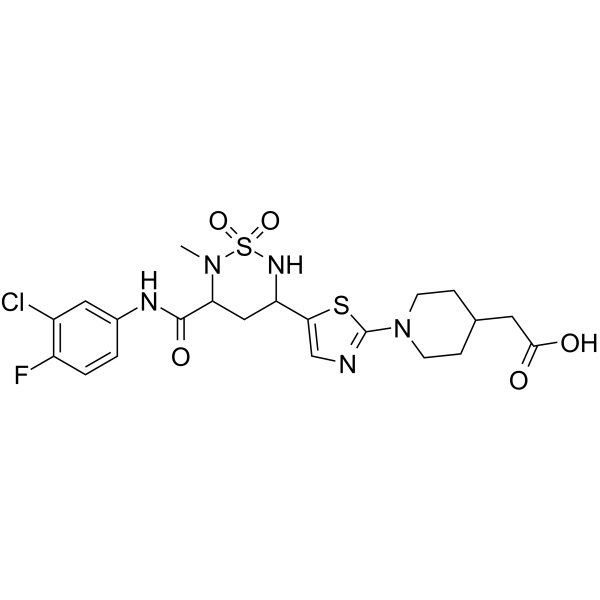 0 ImagesCat. No.: HY-145051CAS No.: 2724224-57-9
HBV-IN-8 is a potent HBV inhibitor with an EC50 of 287.9 nM (WO2021213445A1, compound 13).
-
GSK3532795 oxalate
 0 ImagesCat. No.: HY-112714ACAS No.: 2097784-79-5Synonyms: BMS-955176 oxalate
-
Sarecycline
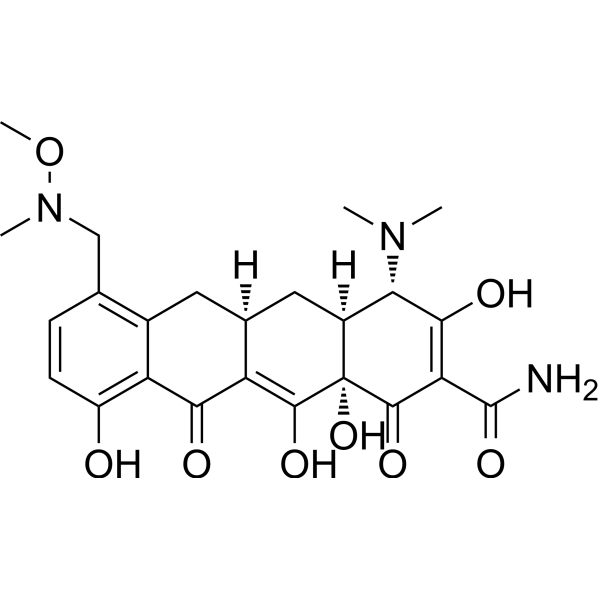 0 ImagesCat. No.: HY-16770CAS No.: 1035654-66-0Synonyms: P-005672
Sarecycline is an orally effective narrow-spectrum tetracycline derivative antibiotic. Sarecycline has anti-inflammatory activity. Sarecycline inhibits the activity of Gram-positive bacteria and several types of keratobacterium acnes. Sarecycline interferes with tRNA accommodation and tethers mRNA to the 70S ribosome. Sarecycline can be used to study moderate to severe acne.
-
Norharmane (Standard)
 0 ImagesCat. No.: HY-W008566RCAS No.: 244-63-3Synonyms: Norharman (Standard); β-Carboline (Standard)
Norharmane (Standard) is the analytical standard of Norharmane. This product is intended for research and analytical applications. Norharmane (Norharman), a β-carboline alkaloid, is a potent and reversible monoamine oxidase inhibitor, with IC50 values of 6.5 and 4.7 μM for MAO-A and MAO-B, respectively. Norharmane causes antidepressant responses. Norharmane is also a prospective anti-cancer photosensitizer. Norharmane alters polar auxin transport (PAT) by inhibiting PIN2, PIN3 and PIN7 transport proteins, thus causing a significant inhibitory effect on the growth of Arabidopsis thaliana seedlings.
-
Nef ligand-2
 0 ImagesCat. No.: HY-171862CAS No.: 3066896-28-1
Nef ligand-2 is a binder of Nef. Nef ligand-2 is Ligands for E3 Ligase. Nef ligand-2 is the Nef Binder portion of FC-14369 (HY-171860).
-
Rudolfomycin
 0 ImagesCat. No.: HY-126731CAS No.: 69245-38-1
Rudolfomycin is an anthracycline Antibiotic, composed of the aglycone ε-pyrromycinone and three glycosyl sugar units. Rudolfomycin inhibits the growth of mammalian tumors and exhibits antibacterial activity against Gram-positive bacteria. Rudolfomycin can be used in the research of leukemia and Gram-positive bacterial infections.