



Olesoxime
Based on 2 publication(s) in Google Scholar
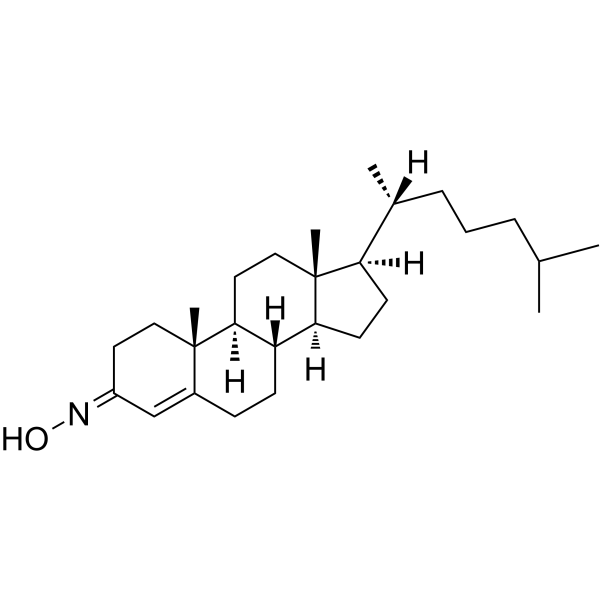
Olesoxime (TRO 19622) is a mitochondrial-targeted neuroprotective compound with mean EC50 value for increasing cell survival is 3.2±0.2 μM.
For research use only. We do not sell to patients.
- Purity : 99.04%
- CAS No.: 22033-87-0
- Formula: C27H45NO
- Molecular Weight:399.65
-
Storage:Powder -20°C, 3 years , 4°C, 2 years ; In solvent -80°C, 2 years , -20°C, 1 year

To place orders, for customer services and technical support, please contact: MedChemExpress USA
Tel: 609-228-6898 E-mail: [email protected] [email protected]


-
 Biological Activity
-
Chemical Information
-
Solvent & Solubility
- Protocols
- Purity & Documentation
- References
-
 Help & FAQs


-
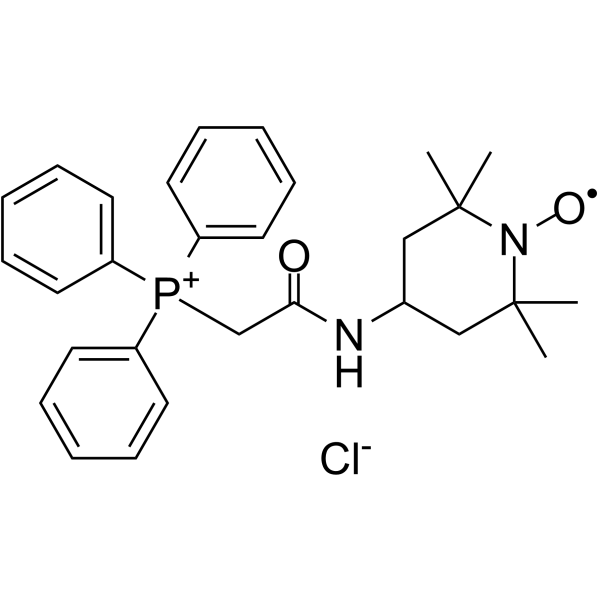
HY-112879
Mito-TEMPOAntioxidant -
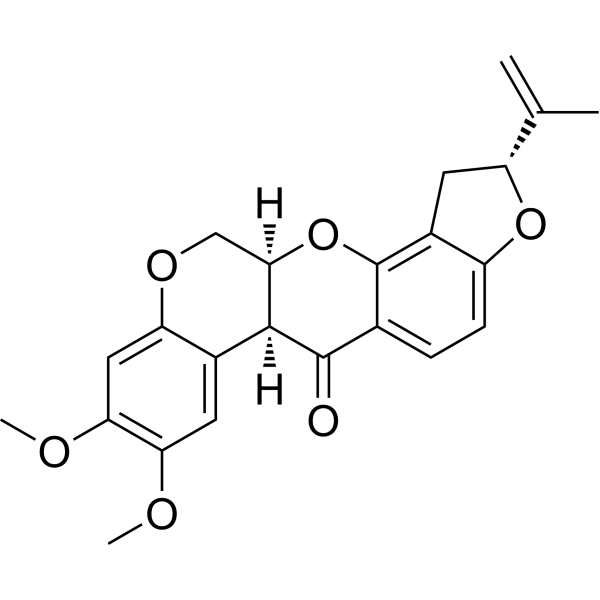
HY-B1756
RotenoneMitochondrial Complex I Inhibitor -
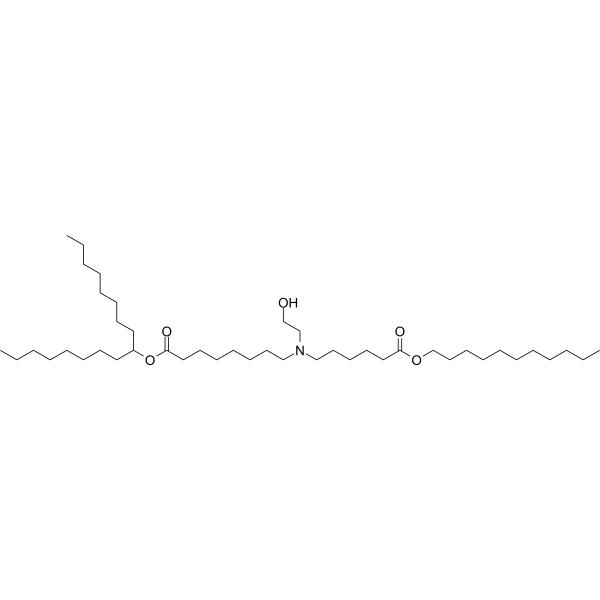
HY-134541
SM-102Ionizable Amino Lipid -
HY-12529
Ro-3306CDK1 Inhibitor -
HY-K1059
BM-Cyclin -
HY-100852
ER-000444793mPTP Opening Inhibitor -
HY-138620
MCU-i4Ca2+ Uptake Blocker -
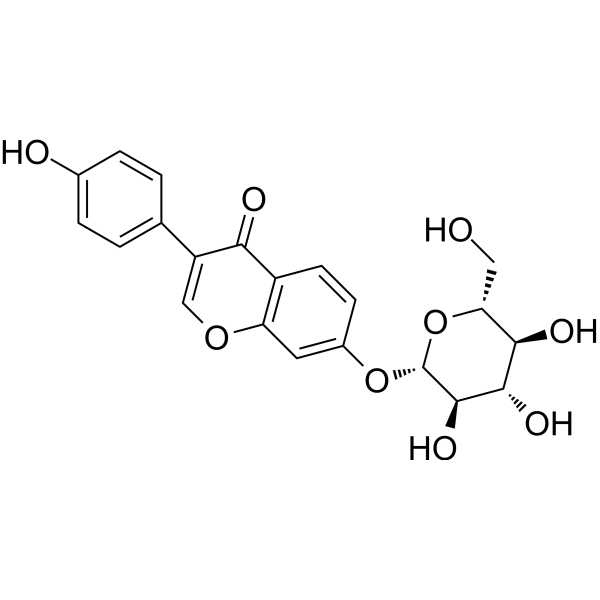
HY-N0018
DaidzinReverse Transcriptase Inhibitor -
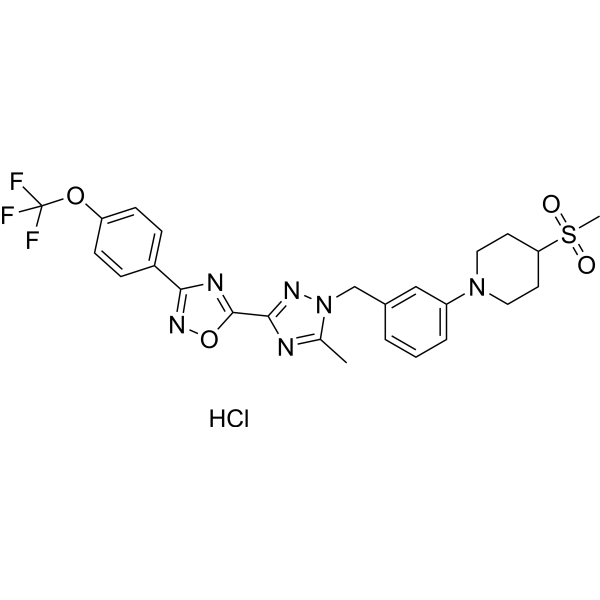
HY-112037A
IACS-010759 hydrochlorideOXPHOS Inhibitor -
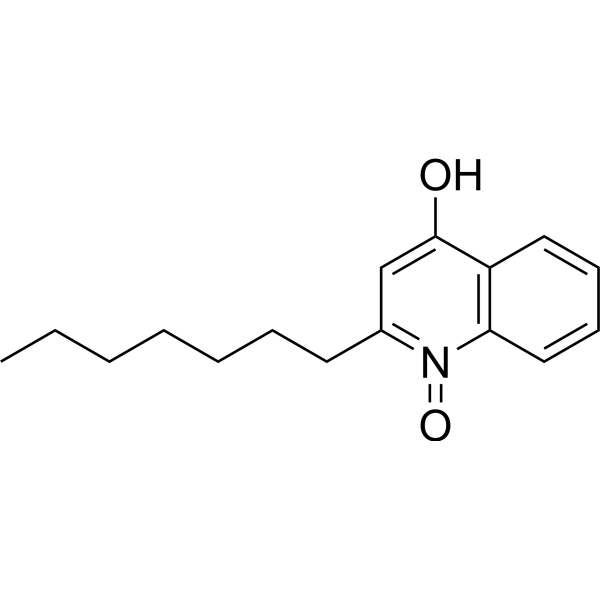
HY-130055
HQNONDH-2 Inhibitor -

HY-N0018R
Daidzin (Standard)Reverse Transcriptase Inhibitor -
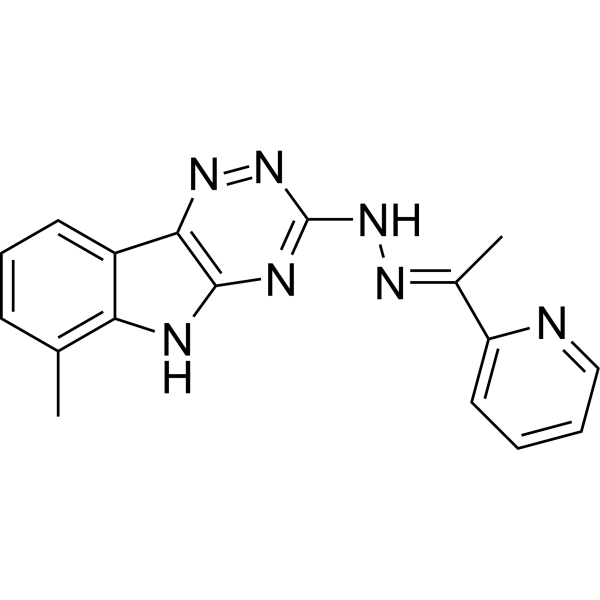
HY-12406
VLX600OXPHOS Inhibitor/Iron Chelator
Publications Citing Use of MedChemExpress (MCE) Olesoxime
More

Biological Activity
Description
IC50 & Target
Mitochondrial[1]
In Vitro
Exposure to Olesoxime (TRO 19622) (ranging from 0.1 to 10 μM) at 1 h after plating significantly protects primary embryonic rat spinal MNs (that had been cultured for 3 days without brain-derived, ciliary and glia-derived neurotrophic factors) from cell death. At a concentration of 10 μM, Olesoxime (TRO 19622) maintains survival of 74±10% of the neurons supported by a combination of neurotrophic factors (brain-derived, ciliary and glia-derived neurotrophic factors). The mean EC50 in this assay is 3.2±0.2 μM. In addition to preserving MN cell bodies, Olesoxime (TRO 19622) also promotes the outgrowth of neurites. At a concentration of 1 μM, which increases cell survival by only 38%, Olesoxime (TRO 19622) increases overall neurite outgrowth per cell by 54%[1]. Olesoxime (TRO 19622) belongs to a new family of cholesterol-oximes identified for its survival-promoting activity on purified motor neurons deprived of neurotrophic factors. Olesoxime (TRO 19622) targets proteins of the outer mitochondrial membrane, concentrates at the mitochondria and prevents permeability transition pore opening mediated by, among other things, oxidative stress[2].
MedChemExpress (MCE) has not independently confirmed the accuracy of these methods. They are for reference only. Further protocols information, click here.
In Vivo
MedChemExpress (MCE) has not independently confirmed the accuracy of these methods. They are for reference only.
Clinical Trial
| NCT Number | Sponsor | Condition | Start Date |
Phase

|
|---|---|---|---|---|
| NCT01329991 | Plexxikon| | 2011-05 | PHASE1 |


Chemical Information
-
CAS No. 22033-87-0
-
Appearance Solid
-
Molecular Weight 399.65
-
Formula C27H45NO
-
Color White to off-white
-
SMILES
C[C@@]12C(CC[C@]3([H])[C@]2([H])CC[C@@]4(C)[C@@]3([H])CC[C@@]4([C@]([H])(C)CCCC(C)C)[H])=CC(CC1)=NO
-
Synonyms
TRO 19622; NSC 21311
-
Shipping
Room temperature in continental US; may vary elsewhere.
-
Storage
Powder -20°C 3 years 4°C 2 years In solvent -80°C 2 years -20°C 1 year


Publications (2)
-
Journal Impact Factor
-
Most Recent
-
Biomed J
Olesoxime protects against cisplatin-induced acute kidney injury by attenuating mitochondrial dysfunction. [Abstract]2025 Feb;48(1):100730. PMID: 38643825 -


Solvent & Solubility
In Vitro:
DMSO : 50 mg/mL (125.11 mM; Need ultrasonic; Hygroscopic DMSO has a significant impact on the solubility of product, please use newly opened DMSO)
Please refer to the solubility information to select the appropriate solvent. Once prepared, please aliquot and store the solution to prevent product inactivation from repeated freeze-thaw cycles.
Storage method and period of stock solution: -80°C, 2 years; -20°C, 1 year. When stored at -80°C, please use it within 2 years. When stored at -20°C, please use it within 1 year.
Please refer to the solubility information to select the appropriate solvent. Once prepared, please aliquot and store the solution to prevent product inactivation from repeated freeze-thaw cycles.
Storage method and period of stock solution: -80°C, 2 years; -20°C, 1 year. When stored at -80°C, please use it within 2 years. When stored at -20°C, please use it within 1 year.
Concentration (start) × Volume (start) = Concentration (final) × Volume (final)
In Vivo:
Select the appropriate dissolution method based on your experimental animal and administration route.
- For the following dissolution methods, please ensure to first prepare a clear stock solution using an In Vitro approach and then sequentially add co-solvents:
- To ensure reliable experimental results, the clarified stock solution can be appropriately stored based on storage conditions. As for the working solution for In Vivo experiments, it is recommended to prepare freshly and use it on the same day.
- The percentages shown for the solvents indicate their volumetric ratio in the final prepared solution. If precipitation or phase separation occurs during preparation, heat and/or sonication can be used to aid dissolution.
Add each solvent one by one: 10% DMSO 40% PEG300 5% Tween-80 45% Saline
Solubility: ≥ 2.5 mg/mL (6.26 mM); Clear solution
This protocol yields a clear solution of ≥ 2.5 mg/mL (saturation unknown).
Taking 1 mL working solution as an example, add 100 μL DMSO stock solution (25.0 mg/mL) to 400 μL PEG300, and mix evenly; then add 50 μL Tween-80 and mix evenly; then add 450 μL Saline to adjust the volume to 1 mL.
Preparation of Saline: Dissolve 0.9 g sodium chloride in ddH₂O and dilute to 100 mL to obtain a clear Saline solution.
Add each solvent one by one: 10% DMSO 90% (20% SBE-β-CD in Saline)
Solubility: ≥ 2.5 mg/mL (6.26 mM); Clear solution
This protocol yields a clear solution of ≥ 2.5 mg/mL (saturation unknown).
Taking 1 mL working solution as an example, add 100 μL DMSO stock solution (25.0 mg/mL) to 900 μL 20% SBE-β-CD in Saline, and mix evenly.
Preparation of 20% SBE-β-CD in Saline (4°C, storage for one week): 2 g SBE-β-CD powder is dissolved in 10 mL Saline, completely dissolve until clear.
In Vivo Dissolution Calculator
Please enter the basic information of animal experiments:
-
-
-
-
Recommended: Prepare an additional quantity of animals to account for potential losses during experiments.
Please enter your animal formula composition:
-
%DMSO +
Recommended: Keep the proportion of DMSO in working solution below 2% if your animal is weak.
-
%+
-
+%Tween-80 + +
-
%Saline +
The co-solvents required include: DMSO, . All of co-solvents are available by MedChemExpress (MCE). , Tween 80. All of co-solvents are available by MedChemExpress (MCE).
Working solution concentration: 0.22 mg/mL
Method for preparing stock solution: mg drug dissolved in μL DMSO. Stock solution concentration: mg/mL.
1. Take μL DMSO stock solution;
2. Add μL .
μL , mix evenly;
3. Then add μL Tween 80, mix evenly;
4. Then add μL
Please ensure that the stock solution in the first step is dissolved to a clear state, and add co-solvents in sequence. You can use ultrasonic heating (ultrasonic cleaner, recommended frequency 20-40 kHz), vortexing, etc. to assist dissolution.

Protocols
-
Cell Cytotoxicity Assay
Cytotoxicity assays are usually based on the assessment of cell membrane damage, which can also be indirectly detected by measuring cell viability. Detection methods include MTT assay, CKK-8 assay, LDH assay and ATP assay, etc.
-
Mammalian live/dead viability and cytotoxicity staining
Live/dead viability and cytotoxicity staining assays are based on the simultaneous detection of intracellular esterase activity in metabolically active (viable) cells and membrane integrity loss in non-viable cells. In commonly used dual-staining approaches, membrane-permeant fluorogenic substrates are converted by intracellular esterases into fluorescent products in live cells, while impermeant DNA-binding dyes selectively enter cells with compromised plasma membranes and label nucleic acids in dead or dying cells, enabling discrimination between viable and non-viable populations by fluorescence microscopy or flow cytometry.
-
Cell Viability Determination by MTT Colorimetric Assay
The following protocol uses the MTT colorimetric assay as a classic literature-established method for assessing cell viability/metabolic activity in cultured mammalian cells. MTT[3-(4,5-dimethylthiazol-2-yl)-2,5-diphenyltetrazolium bromide] is reduced by metabolically active cells to a colored formazan product; the amount of formazan is quantified spectrophotometrically and provides an indirect measure of metabolically active viable cells. Importantly, MTT reduction reflects cellular oxidoreductase/metabolic activity rather than an absolute direct count of living cells, so changes in cellular metabolism can alter the signal independently of cell number.


Purity & Documentation
-
Data Sheet (279 KB)
-
SDS (393 KB)
- English - EN (393 KB)
- Français - FR (393 KB)
- Deutsch - DE (393 KB)
- Norwegian - NO (393 KB)
- Español - ES (393 KB)
- Swedish - SV (393 KB)
- Italian - IT (393 KB)
- Korean - KR (393 KB)
- Portuguese - PT (393 KB)
-
Handling Instructions (2659 KB)
References
[1]. Martin LJ, et al. Olesoxime, a cholesterol-like neuroprotectant for the potential treatment of amyotrophic lateral sclerosis. IDrugs. 2010 Aug;13(8):568-80. [Content Brief]
[2]. Bordet T, et al. Olesoxime (TRO19622): A Novel Mitochondrial-Targeted Neuroprotective Compound. Pharmaceuticals (Basel). 2010 Jan 28;3(2):345-368 [Content Brief]
[3]. Bordet T, et al. Identification and characterization of cholest-4-en-3-one, oxime (TRO19622), a novel drug candidate for amyotrophic lateral sclerosis. J Pharmacol Exp Ther. 2007 Aug;322(2):709-20. [Content Brief]
[4]. Xiao WH, et al. Olesoxime (cholest-4-en-3-one, oxime): analgesic and neuroprotective effects in a rat model of painful peripheral neuropathy produced by the chemotherapeutic agent, paclitaxel. Pain. 2009 Dec 15;147(1-3):202-9 [Content Brief]


Complete Stock Solution Preparation Table
Please refer to the solubility information to select the appropriate solvent. Once prepared, please aliquot and store the solution to prevent product inactivation from repeated freeze-thaw cycles.
Storage method and period of stock solution: -80°C, 2 years; -20°C, 1 year. When stored at -80°C, please use it within 2 years. When stored at -20°C, please use it within 1 year.
| Optional Solvent | Concentration Solvent Mass | 1 mg | 5 mg | 10 mg | 25 mg |
|---|---|---|---|---|---|
| DMSO | 1 mM | 2.5022 mL | 12.5109 mL | 25.0219 mL | 62.5547 mL |
| 5 mM | 0.5004 mL | 2.5022 mL | 5.0044 mL | 12.5109 mL | |
| 10 mM | 0.2502 mL | 1.2511 mL | 2.5022 mL | 6.2555 mL | |
| 15 mM | 0.1668 mL | 0.8341 mL | 1.6681 mL | 4.1703 mL | |
| 20 mM | 0.1251 mL | 0.6255 mL | 1.2511 mL | 3.1277 mL | |
| 25 mM | 0.1001 mL | 0.5004 mL | 1.0009 mL | 2.5022 mL | |
| 30 mM | 0.0834 mL | 0.4170 mL | 0.8341 mL | 2.0852 mL | |
| 40 mM | 0.0626 mL | 0.3128 mL | 0.6255 mL | 1.5639 mL | |
| 50 mM | 0.0500 mL | 0.2502 mL | 0.5004 mL | 1.2511 mL | |
| 60 mM | 0.0417 mL | 0.2085 mL | 0.4170 mL | 1.0426 mL | |
| 80 mM | 0.0313 mL | 0.1564 mL | 0.3128 mL | 0.7819 mL | |
| 100 mM | 0.0250 mL | 0.1251 mL | 0.2502 mL | 0.6255 mL |


Olesoxime Related Classifications
HY-14796 Related Classifications
 Powered by Bioz