



BCRP
Breast cancer resistance protein; ABCG2
Breast cancer resistance protein (BCRP/ABCG2/MXR/ABCP) is an ATP-dependent efflux transporter, which belongs to the large ATP-binding cassette (ABC) transporter family present on cell membranes, and it is classified into the G subfamily of these transporters. BCRP is expressed in a variety of normal cells and acts as a xenobiotic efflux transporter. BCRP is often associated with cancer chemotherapeutic resistance. BCRP confers multidrug resistance (MDR) to a series of antitumor agents such as Mitoxantrone, Daunorubicin, SN-38, and Topotecan, and often limits the efficacy of chemotherapy.
BCRP physiologically functions as a part of a self-defense mechanism for the organism. It enhances elimination of toxic xenobiotic substances and harmful agents in the gut and biliary tract, as well as through the blood-brain, placental, and possibly blood-testis barriers. BCRP recognizes and transports numerous anticancer drugs including conventional chemotherapeutic and targeted small therapeutic molecules relatively new in clinical use. Thus, BCRP expression in cancer cells directly causes MDR by active efflux of anticancer drugs. Because BCRP is also known to be a stem cell marker, its expression in cancer cells could be a manifestation of metabolic and signaling pathways that confer multiple mechanisms of drug resistance, self-renewal (stemness), and invasiveness (aggressiveness), and thereby impart a poor prognosis. Therefore, blocking BCRP-mediated active efflux may provide a therapeutic benefit for cancers.
All Product Categories
-
BCRP Related Products (84)
Related Products (84)

-
Antibodies (2)
-
Elacridar (Standard)
 0 ImagesCat. No.: HY-50879RCAS No.: 143664-11-3Synonyms: GF120918 (Standard); GW0918 (Standard); GG918 (Standard); GW120918 (Standard)Elacridar (Standard) is the analytical standard of Elacridar. This product is intended for research and analytical applications. Elacridar is an orally active P-glycoprotein (Pgp) and breast cancer resistance protein (BCRP) inhibitor. Elacridar can be used to examine the influence of efflux transporters on agent distribution to brain and the research of cancer.
-
LL-37(17-32)
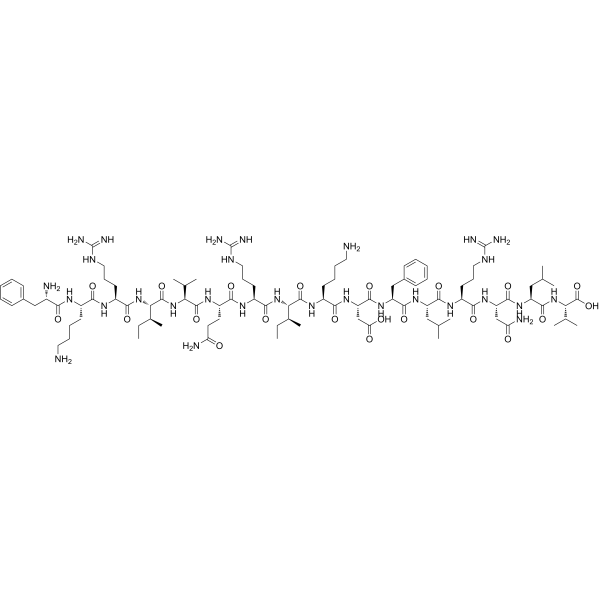 0 ImagesCat. No.: HY-P5391CAS No.: 717919-61-4LL-37 (17-32) is an ABCG2 inhibitor. LL-37 (17-32) binds to ABCG2, inhibits its transport activity in a non-competitive manner, and downregulates ABCG2 protein expression via lysosomal degradation. LL-37 (17-32) increases the accumulation of Mitoxantrone (HY-13502) in cancer cells overexpressing ABCG2, thereby reversing mitoxantrone resistance. LL-37 (17-32) can be used in the research of multidrug-resistant cancers.
-
Efflux inhibitor-1
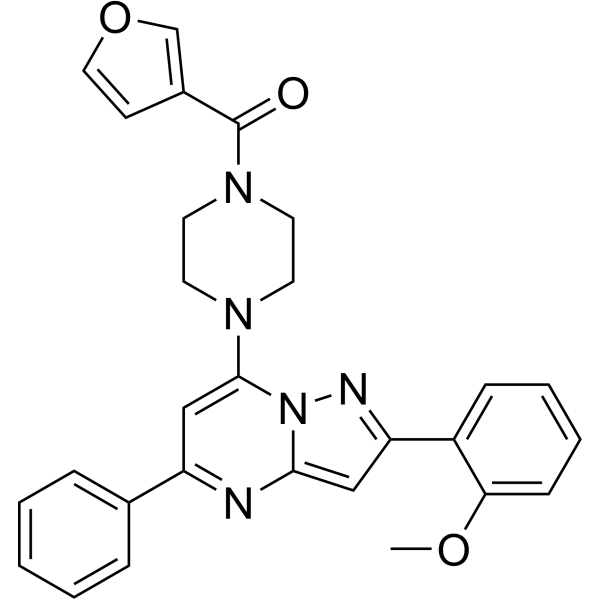 0 ImagesEfflux inhibitor-1 (compound 2) is a pyrazolo[1,5-a]pyrimidine efflux inhibitor. Efflux inhibitor-1 selectively targets toward ABCG2/BCRP over ABCB1 with IC50s of 0.45 μM and 2.17 μM, respectively.
-
ML753286
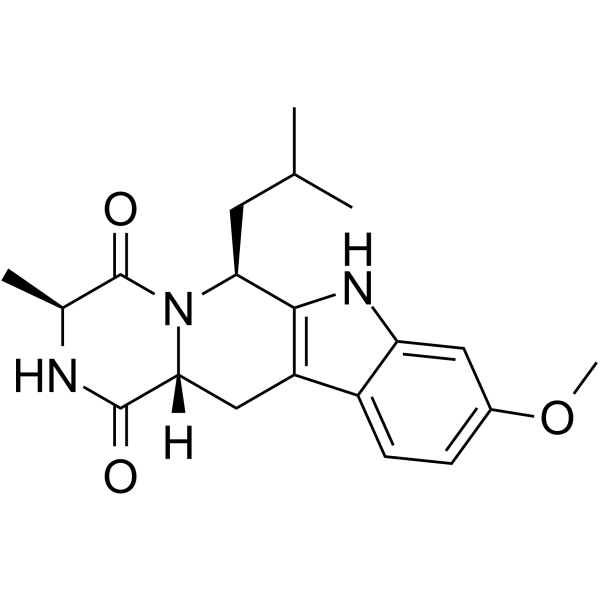 0 ImagesCat. No.: HY-116494CAS No.: 1699720-89-2
-
Elacridar-d4(Major)
 0 ImagesCat. No.: HY-W777317CAS No.: 1189481-51-3Elacridar-d4(Major) is the deuterium labeled Elacridar (HY-50879). Elacridar is an orally active P-glycoprotein (Pgp) and breast cancer resistance protein (BCRP) inhibitor. Elacridar can be used to examine the influence of efflux transporters on agent distribution to brain and the research of cancer.
-
FD 12-9
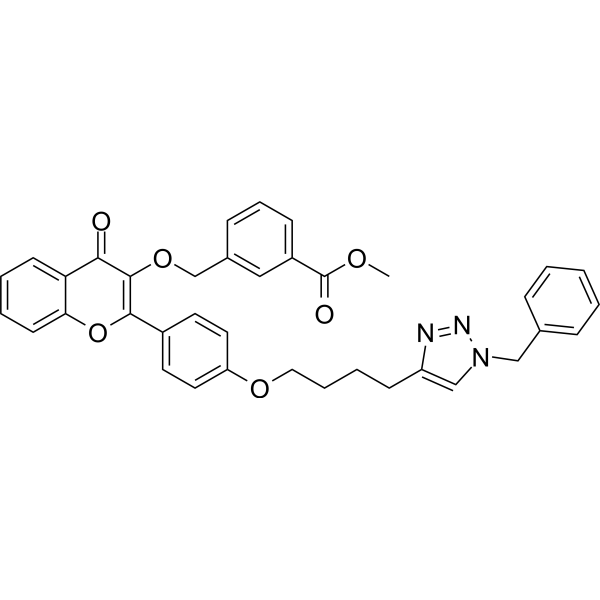
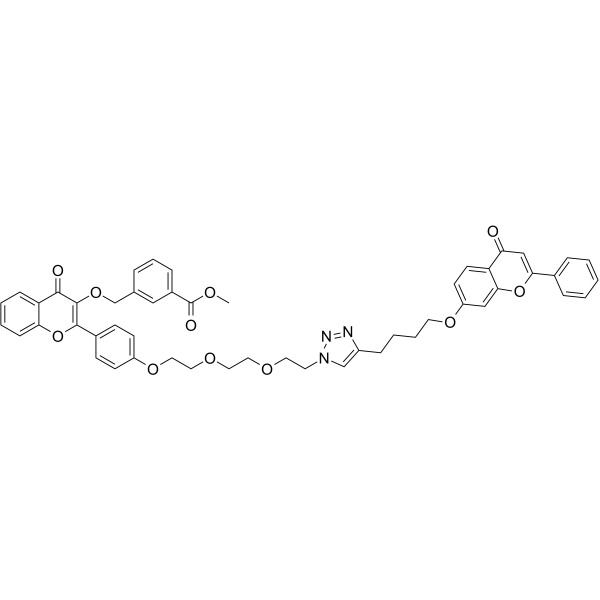 0 ImagesCat. No.: HY-128685CAS No.: 1451741-22-2Synonyms: Ac12Az9FD 12-9 is a flavonoid dimer, acts as a dual inhibitor of P-gp and BCRP, with EC50s of 285 nM and 0.9 nM, respectively. Anti-glioblastoma activity.
-
Triclabendazole sulfoxide-13C,d3
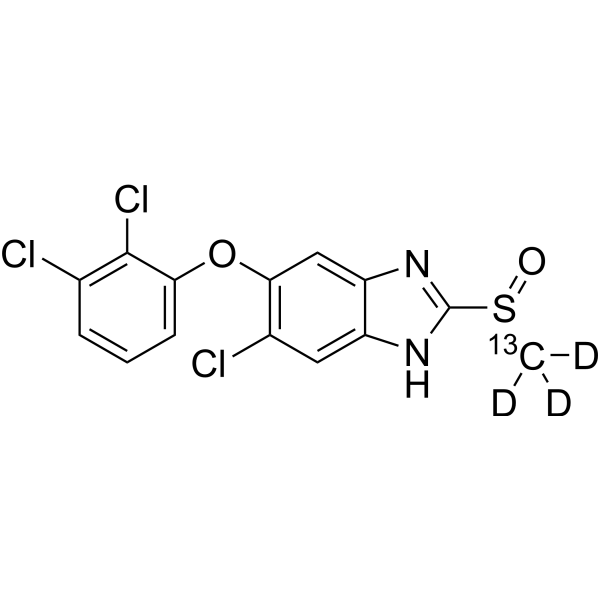 0 ImagesCat. No.: HY-136450S1Synonyms: TCBZ-SO-13C,d3Triclabendazole sulfoxide-13C,d3 is the 13C- and deuterium labeled Triclabendazole sulfoxide. Triclabendazole sulfoxide (TCBZ-SO) is an orally active ABCG2 inhibitor with antiparasitic activity. Triclabendazole sulfoxide inhibits ABCG2-mediated active efflux and ATPase activity. Triclabendazole sulfoxide increases the intracellular accumulation of Mitoxantrone (HY-13502). Triclabendazole sulfoxide reduces the apical-directed transepithelial transport of Nitrofurantoin and Danofloxacin, while increasing their basolateral-directed transepithelial transport. Triclabendazole sulfoxide elevates the plasma levels of sulfasalazine in wild-type mice. Triclabendazole sulfoxide decreases ABCG2-mediated secretion of Nitrofurantoin into milk in wild-type lactating mice. Triclabendazole sulfoxide can be used in the research of insecticidal agents and cancers such as breast cancer.
-
6,8-Diprenylnaringenin
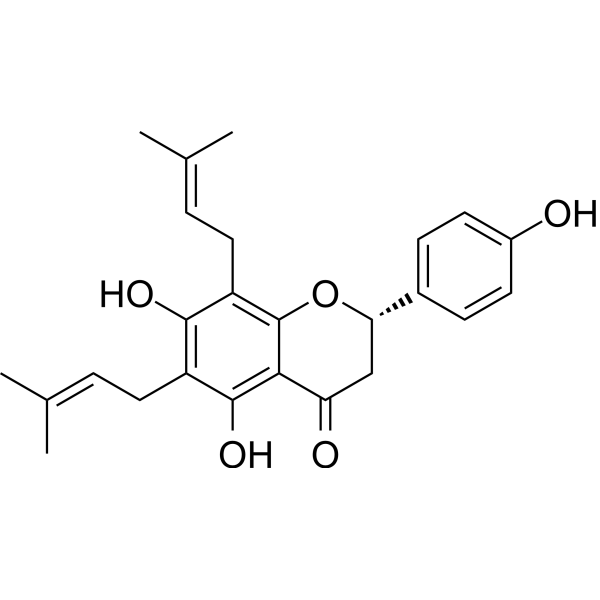 0 ImagesCat. No.: HY-122416CAS No.: 68236-11-3Synonyms: Lonchocarpol A; Senegalensin6,8-Diprenylnaringenin (Lonchocarpol A; Senegalensin), a hop prenylflavonoid, is a inhibitor of breast cancer resistance protein (BCRP/ABCG2). 6,8-Diprenylnaringenin inhibits ABCG2-mediated efflux of Mitoxantrone, and 3H-Methotrexate transport (IC50=0.41 μM) in HEK293 cells. 6,8-Diprenylnaringenin exhibits some estrogenicity, but its potency is less than 1% of that of 8-Prenylnaringenin.
-
Nedisertib (GMP)
 0 ImagesCat. No.: HY-101570GCAS No.: 1637542-33-6Synonyms: Peposertib (GMP); M3814 (GMP)Nedisertib (GMP) (Peposertib (GMP)) is Nedisertib (HY-101570) produced by using GMP guidelines. GMP small molecules works appropriately as an auxiliary reagent for cell therapy manufacture. Nedisertib is an orally active selective DNA-dependent protein kinase (DNA-PK) inhibitor with an IC50 value of less than 3 nM. Nedisertib also acts as a modulator of ABCG2, capable of reversing ABCG2-mediated multidrug resistance (MDR), thus providing new strategies for combination therapy. By inhibiting DNA double-strand break repair, Nedisertib can enhance the efficacy of chemotherapy and radiotherapy. Nedisertib exhibits antitumor activity.
-
Triclabendazole sulfoxide-d3
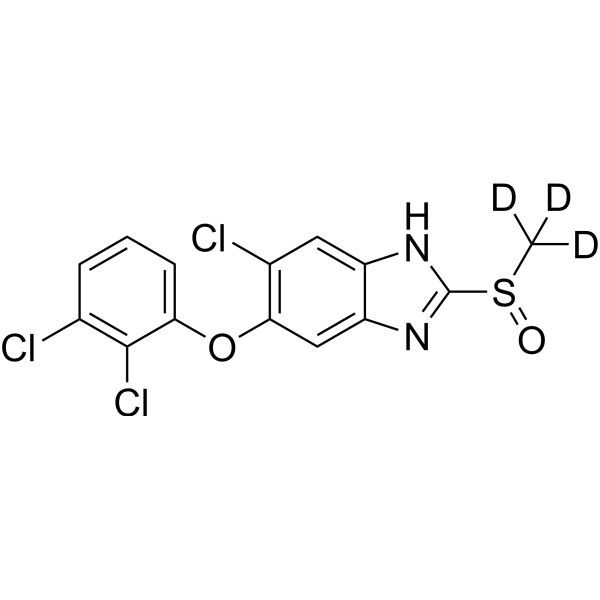 0 ImagesCat. No.: HY-136450SSynonyms: TCBZ-SO-d3Triclabendazole sulfoxide-d3 is the deuterium labeled Triclabendazole sulfoxide. Triclabendazole sulfoxide (TCBZ-SO) is an orally active ABCG2 inhibitor with antiparasitic activity. Triclabendazole sulfoxide inhibits ABCG2-mediated active efflux and ATPase activity. Triclabendazole sulfoxide increases the intracellular accumulation of Mitoxantrone (HY-13502). Triclabendazole sulfoxide reduces the apical-directed transepithelial transport of Nitrofurantoin and Danofloxacin, while increasing their basolateral-directed transepithelial transport. Triclabendazole sulfoxide elevates the plasma levels of sulfasalazine in wild-type mice. Triclabendazole sulfoxide decreases ABCG2-mediated secretion of Nitrofurantoin into milk in wild-type lactating mice. Triclabendazole sulfoxide can be used in the research of insecticidal agents and cancers such as breast cancer.
-
Xanthine oxidase-IN-23
 0 ImagesCat. No.: HY-182000CAS No.: 3055112-52-9Xanthine oxidase-IN-23 (Compound BPF) is an orally active, reversible, mixed-type Xanthine oxidase inhibitor with an IC50 of 3.33 μM. Xanthine oxidase-IN-23 directly binds to XOD in a reversible mixed-type manner to inhibit its catalytic activity. Xanthine oxidase-IN-23 upregulates ABCG2 and downregulates GLUT9 to promote renal urate excretion. Xanthine oxidase-IN-23 reduces serum urate levels and improves renal function in hyperuricemic mice. Xanthine oxidase-IN-23 can be used in the research of hyperuricemia.
-
PARP1-IN-45
 0 ImagesCat. No.: HY-178100PARP1-IN-45 (Compound 15) is a PARP1 inhibitor with an IC50 of 17 nM. PARP1-IN-45 effectively stimulates ATPase activity of ABCG2. PARP1-IN-45 can be used for cancers like ovarian cancer research.
-
WK-X-34
 0 ImagesCat. No.: HY-13774CAS No.: 908859-10-9WK-X-34 is a low-toxicity, highly effective multidrug resistance reversal agent. By potently inhibiting the transport functions of P-glycoprotein (P-gp, ABCB1) and breast cancer resistance protein (BCRP), WK-X-34 significantly increases the intracellular accumulation of anticancer drugs and radiotracers in drug-resistant cells. WK-X-34 exerts no significant effect on MRP transporters. WK-X-34 not only restores the chemosensitivity of multidrug-resistant ovarian cancer cells, but also significantly enhances the uptake of 99mTc-Sestamibi in P-gp-positive xenograft tumors, brain and intestinal tissues. WK-X-34 exhibits extremely low toxicity and favorable safety profiles both in vitro and in mice (at doses up to 50 mg/kg), and can be used for research on overcoming multidrug resistance in ovarian cancer.
-
ABCG2-IN-2
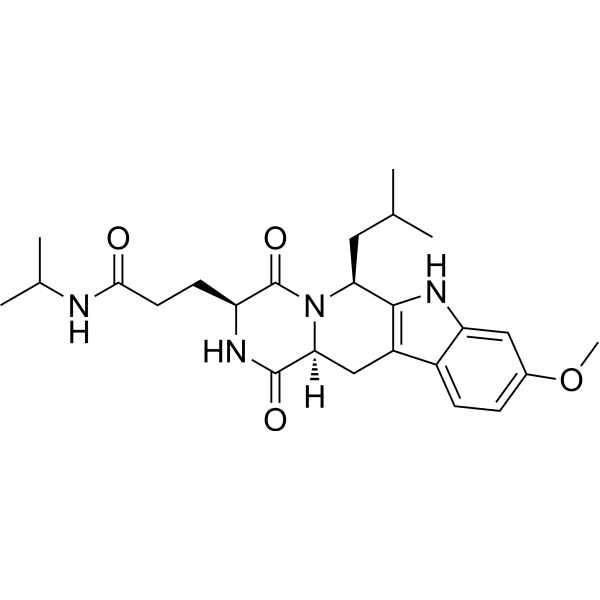 0 ImagesCat. No.: HY-155653CAS No.: 2559759-59-8ABCG2-IN-2 is a potent ABCG2 inhibitor with favorable oral pharmacokinetic profiles in mice. ABCG2-IN-2 can be used for the research of tumor multidrug resistance (MDR) and erythropoietic protoporphyria (EPP).
-
Ac22(Az8)2
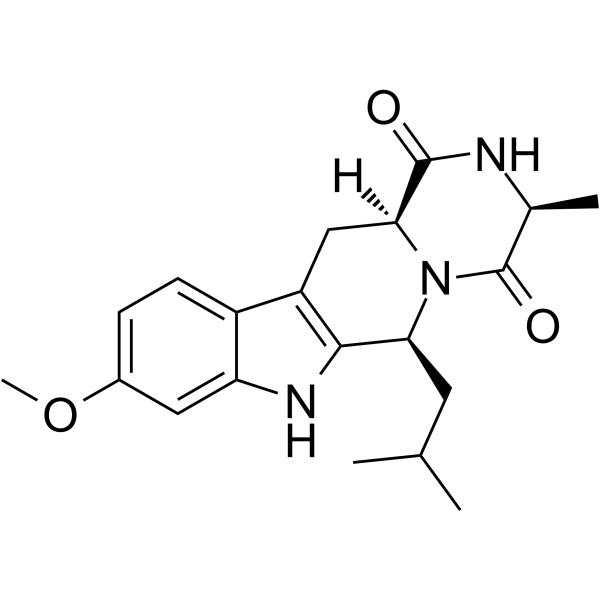
 0 ImagesCat. No.: HY-136940CAS No.: 2377858-65-4Ac22(Az8)2 is a selective BCRP inhibitor (EC50: 1-2 nM). Ac22(Az8)2 can restore the drug sensitivity of BCRP-overexpressing cells by inhibiting BCRP-ATPase activity, blocking drug efflux, and increasing intracellular drug accumulation. Ac22(Az8)2 can be used in the research of BCRP-mediated multidrug-resistant cancers.
-
MBL-II-141
 0 ImagesCat. No.: HY-17648CAS No.: 1353747-12-2MBL-II-141 is potent ABCG2 inhibitor with an IC50 of 0.11 μM. MBL-II-141 inhibits the transport function of ABCG2 in a non-competitive manner, preventing ABCG2 from pumping substrates (such as Irinotecan (HY-16562)) out of the cells, thereby increasing the accumulation of drugs within the cells. MBL-II-141 has no effect on ABCB1 (P-gp) and ABCC1 (MRP1) and has extremely low cytotoxicity (IG50 > 100 μM). MBL-II-141 can be used for the study of multidrug resistance (MDR) cancers.
-
Pradigastat sodium
 0 ImagesCat. No.: HY-16278ACAS No.: 956136-98-4Synonyms: LCQ 908 sodiumPradigastat sodium (LCQ 908 sodium) is a selective and orally effective diacylglyceryl acyltransferase 1 (DGAT1) inhibitor with IC50 at 0.157 µM. Pradigastat is primarily used to study diseases associated with abnormal triglyceride metabolism. Pradigastat has anti-obesity and anti-diabetic effects. Pradigastat inhibited BCRP, OATP1B1, OATP1B3 and OAT3 activities with IC50 of 5 µM, 1.66µM, 3.34µM and 0.973µM, respectively. In addition, Pradigastat has antiviral activity and can inhibit hepatitis C virus replication in vitro.




