Btk
Bruton tyrosine kinase
Bruton tyrosine kinase (Btk) is a member of the Tec family kinases with a well-characterized role in B-cell antigen receptor (BCR)-signaling and B-cell activation.
Btk plays a crucial role in B cell development and activation through the BCR signaling pathway and represents a new target for diseases characterized by inappropriate B cell activity. Btk is a kinase expressed exclusively in B cells and myeloid cells and has a well characterized, vital role in B cells highlighted by the human primary immune deficiency disease, X-linked agammaglobulinemia (XLA), which results from mutation in the Btk gene. Btk plays an essential role in the BCR signaling pathway. Antigen binding to the BCR results in B cell receptor oligomerization, Syk and Lyn kinase activation, followed by Btk kinase activation. Once activated, Btk forms a signaling complex with proteins such as BLNK, Lyn, and Syk and phosphorylates phospholipase C (PLC)γ2. This leads to downstream release of intracellular Ca2+ stores and propagation of the BCR signaling pathway through extracellular signal-regulated kinase and NF-κB signaling, ultimately resulting in transcriptional changes to foster B cell survival, proliferation, and/or differentiation.
All Product Categories
-
Btk Related Products (270)
Related Products (270)

-
Recombinant Proteins (19)
-
Antibodies (3)
-
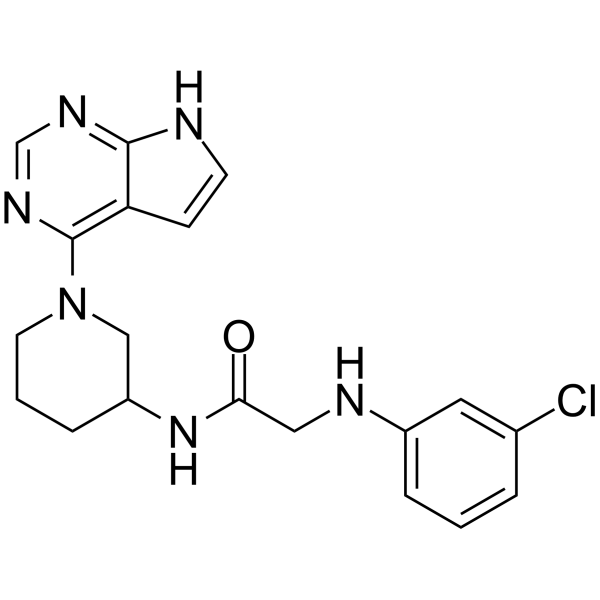
BIIB129
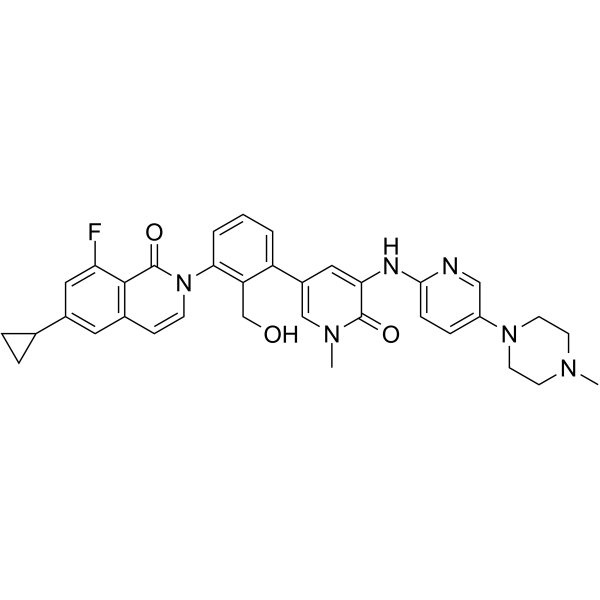
 0 ImagesBIIB129 is a covalent, selective, small molecule inhibitor of Bruton's tyrosine kinase (BTK) capable of penetrating the blood-brain barrier. BIIB129 inhibits the activity of BTK by covalently binding to Cys481 in BTK, thereby affecting the function of B cells and myeloid cells. BIIB129 can be used in multiple sclerosis (MS) research.
-
QL-X-138
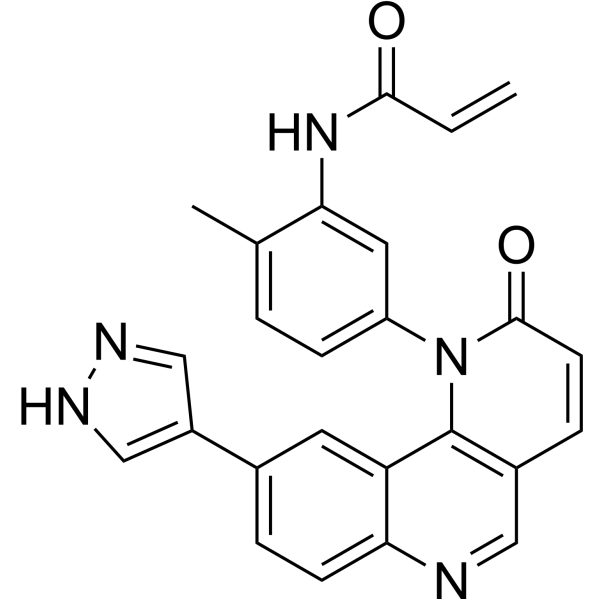 0 ImagesQL-X-138 is a potent and selective BTK/MNK dual kinase inhibitor, exhibits covalent binding to BTK and non-covalent binding to MNK. QL-X-138 shows IC50s of 9.4 nM, 107.4 nM and 26 nM for BTK, MNK1 and MNK2 kinases respectively. QL-X-138 also shows anti-dengue virus 2 activity, with an IC50 of 3.5 μM. QL-X-138 can be used for the research of B-cell malignancies.

-
(±)-Zanubrutinib
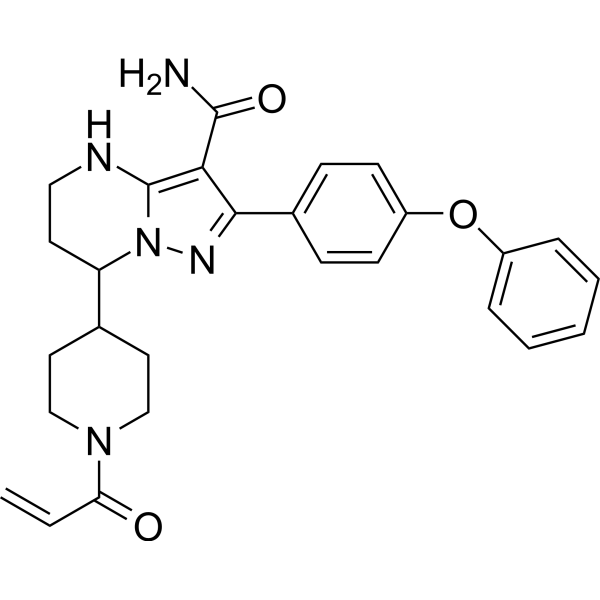 0 ImagesSynonyms: (±)-BGB-3111(±)-Zanubrutinib ((±)-BGB-3111) is the racemate of Zanubrutinib (HY-101474A). (±)-Zanubrutinib inhibits Bruton's tyrosine kinase (Btk) with an IC50 of 0.63 nM.
-
ACP-5862
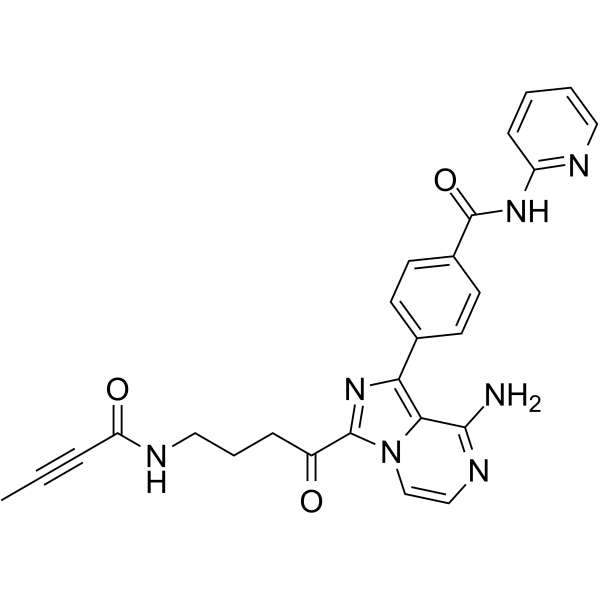 0 ImagesACP-5862 is a major active, circulating, pyrrolidine ring-opened metabolite of Acalabrutinib with an IC50 of 5.0 nM for Bruton tyrosine kinase (BTK). ACP‐5862 is a weak time‐dependent inactivator of CYP3A4 and CYP2C8. Acalabrutinib is an orally active, irreversible, and highly selective BTK inhibitor, with an IC50 of 3 nM and EC50 of 8 nM.
-
Ibrutinib-MPEA
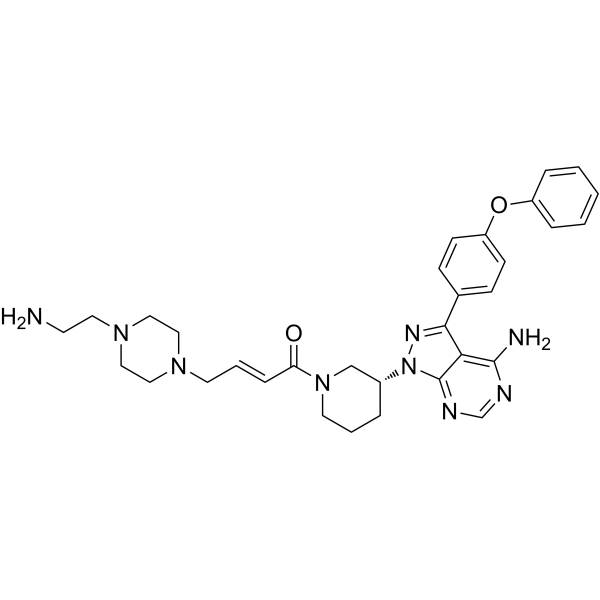 0 ImagesIbrutinib-MPEA is an orally active, blood-brain barrier permeable inhibitor of BTK and STAT5. As a derivative of Ibrutinib (HY-10997) conjugated with a PROTAC linker, Ibrutinib-MPEA allows the synthesis of a series of PROTAC molecules. Ibrutinib-MPEA significantly reduces the proliferation of neoplastic mast cells and primary mastocytoma cells by inducing apoptosis and inhibiting IgE-dependent histamine release. Ibrutinib-MPEA is applicable to the research of canine mast cell tumors, cerebral ischemia/reperfusion injury in diabetic mice, and neuroinflammation-related diseases.
-
PCI 29732
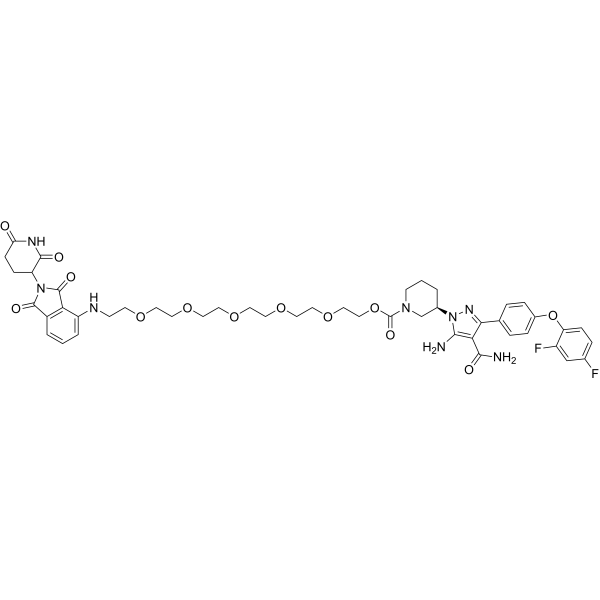
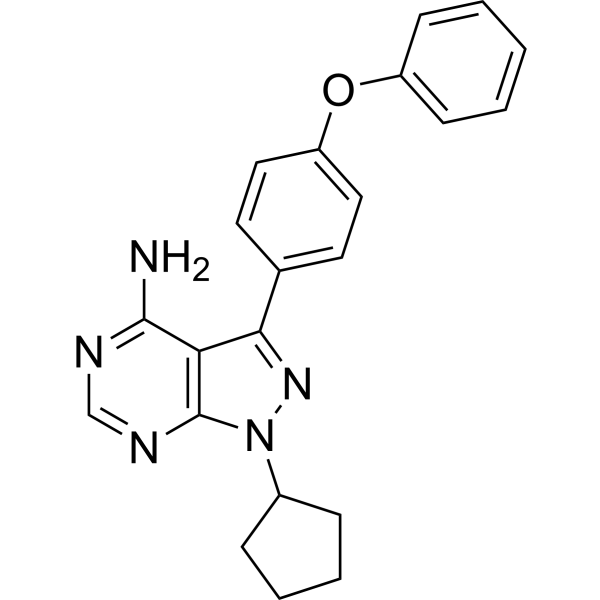 0 ImagesPCI 29732 is a potent, orally active, reversible BTK inhibitor with Kiapp values of 8.2, 4.6, and 2.5 nM for BTK, Lck and Lyn, respectively. PCI 29732 shows only modest inhibitory activity against Itk, another Tec family kinase. PCI 29732 inhibits the function of ABCG2 by competitively binding to the ATP-binding site of ABCG2.
-
(Rac)-Ibrutinib alkyne
 0 Images(Rac)-Ibrutinib alkyne (Compound 8) is a Btk inhibitor with an IC50 of 0.72 nM. (Rac)-Ibrutinib alkyne can effectively inhibit functions related to the B-cell receptor signaling pathway, with an IC50 of 9 nM for inhibiting Ca flux in Ramos cells. (Rac)-Ibrutinib alkyne can be used in the research of diseases such as rheumatoid arthritis.
-
(R)-Zanubrutinib
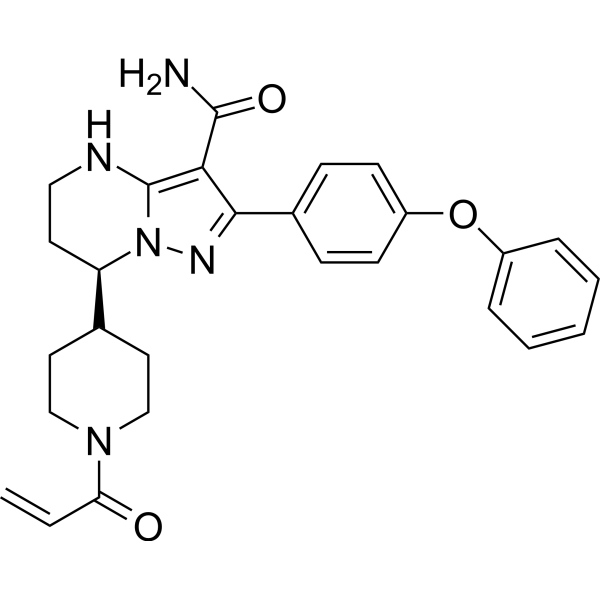 0 ImagesSynonyms: (R)-BGB-3111(R)-Zanubrutinib is the R enantiomer of Zanubrutinib (HY-101474A). (R)-Zanubrutinib inhibits Bruton's tyrosine kinase (Btk) with an IC50 of 11 nM.
-
Edralbrutinib
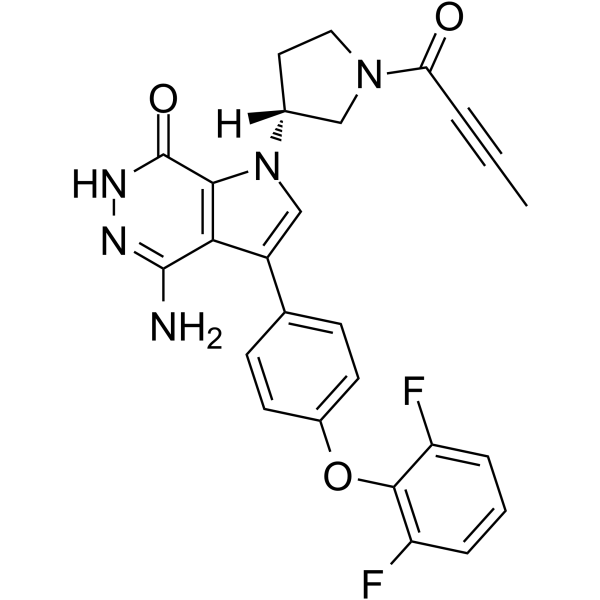 0 ImagesSynonyms: TG-1701Edralbrutinib (TG-1701) is a highly selective, orally available irreversible BTK inhibitor, with an EC50 of 6.70 nM and a Kd of 3 nM against human BTK. Edralbrutinib inhibits downstream signaling of the B cell receptor, induces dephosphorylation of Ikaros Ser442/445, promotes nuclear exclusion of Ikaros, attenuates Ikaros gene signatures, and exerts anti-tumor activity. Edralbrutinib can be used in research related to B-cell non-Hodgkin lymphoma, chronic lymphocytic leukemia, mantle cell lymphoma, follicular lymphoma, and diffuse large B-cell lymphoma.
-
(R)-Zelebrudomide
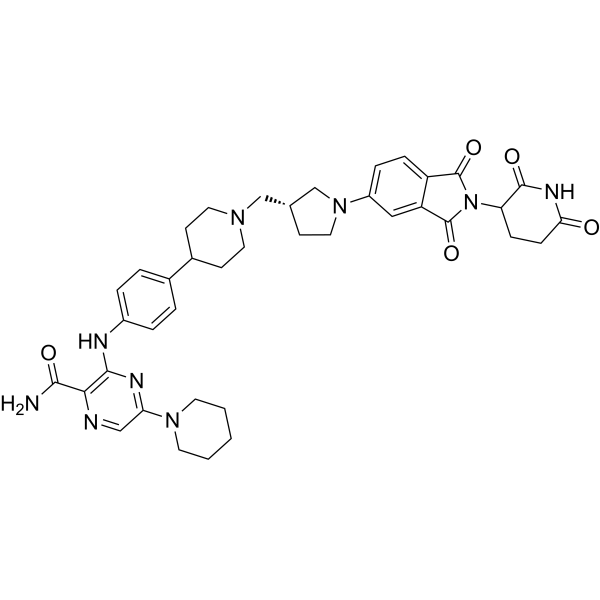 0 ImagesSynonyms: (R)-NX-2127(R)-Zelebrudomide ((R)-NX-2127) is an isomer of Zelebrudomide (HY-153220). Zelebrudomide is an orally active BTK-targeting PROTAC degrader, with DC50 values of 4.5 nM and 31 nM against wild-type BTK and BTKC481S mutant, respectively. Zelebrudomide recruits the cereblon E3 ubiquitin ligase complex to mediate the degradation of BTK. Zelebrudomide also acts as a molecular glue to bind the cereblon E3 ubiquitin ligase complex, mediating the degradation of IKZF1 and IKZF3. Zelebrudomide can be used in the research of B-cell malignancies.
-
BI-1622
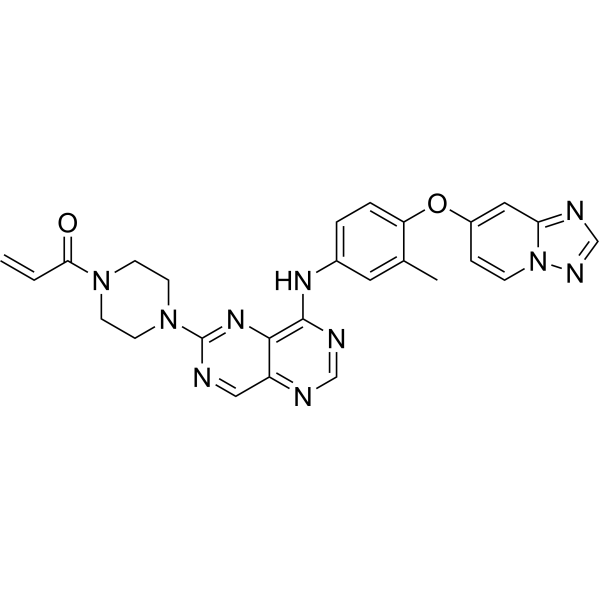 0 ImagesBI-1622 is an orally active, potent and highly selective HER2 (ERBB2) inhibitor, with an IC50 of 7 nM. BI-1622 shows greater than 25-fold selectivity over EGFR. BI-1622 shows high antitumor efficacy in vivo in xenograft mouse tumor models with engineered H2170 and PC9 cells and had a favorable agent metabolism and pharmacokinetics profile.
-
N-piperidine Ibrutinib hydrochloride
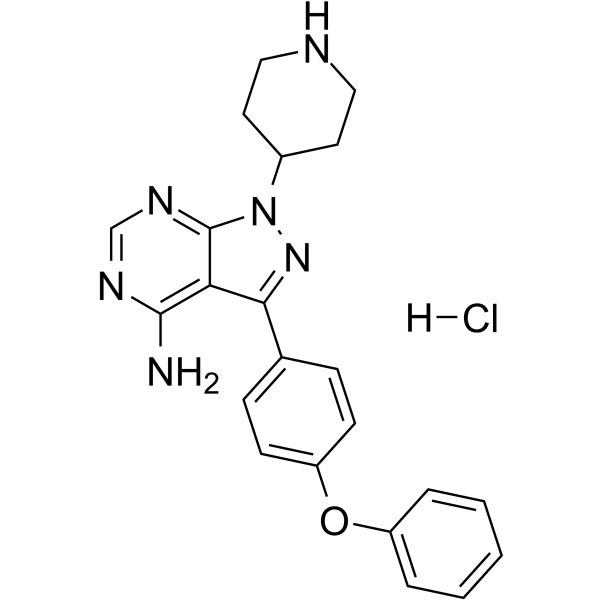 0 ImagesN-piperidine Ibrutinib hydrochloride (Compound 1) is a reversible Ibrutinib derivative. N-piperidine Ibrutinib hydrochloride is a potent BTK inhibitor with IC50s of 51.0 and 30.7 nM for WT BTK and C481S BTK, respectively. N-piperidine Ibrutinib hydrochloride can be used as a BTK ligand in the synthesis of a series of PROTACs, such as SJF620 (HY-133137). SJF620 is a potent PROTAC BTK degrader with a DC50 of 7.9 nM.
-
PROTAC BTK Degrader-6
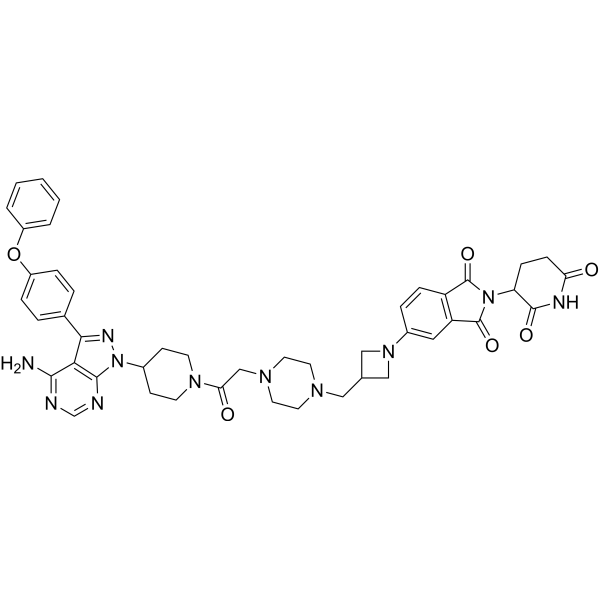 0 ImagesPROTAC BTK Degrader-6 is an orally active PROTAC-based BTK degrader with a DC50 of 3.18 nM. PROTAC BTK Degrader-6 induces BTK degradation via proteasomal degradation, ubiquitination, and CRBN ligase recruitment pathways. PROTAC BTK Degrader-6 inhibits NF-κB activation, mRNA expression of IL-1β and IL-6, as well as the secretion of pro-inflammatory cytokines. PROTAC BTK Degrader-6 reduces inflammatory responses in a zymosan-induced mouse model of peritonitis. PROTAC BTK Degrader-6 can be used in peritonitis-related research.