



CDK
Cyclin dependent kinase
CDKs (Cyclin-dependent kinases) are serine-threonine kinases first discovered for their role in regulating the cell cycle. They are also involved in regulating transcription, mRNA processing, and the differentiation of nerve cells. CDKs are relatively small proteins, with molecular weights ranging from 34 to 40 kDa, and contain little more than the kinase domain. In fact, yeast cells can proliferate normally when their CDK gene has been replaced with the homologous human gene. By definition, a CDK binds a regulatory protein called a cyclin. Without cyclin, CDK has little kinase activity; only the cyclin-CDK complex is an active kinase.
There are around 20 Cyclin-dependent kinases (CDK1-20) known till date. CDK1, 4 and 5 are involved in cell cycle, and CDK 7, 8, 9 and 11 are associated with transcription.
CDK levels remain relatively constant throughout the cell cycle and most regulation is post-translational. Most knowledge of CDK structure and function is based on CDKs of S. pombe (Cdc2), S. cerevisia (CDC28), and vertebrates (CDC2 and CDK2). The four major mechanisms of CDK regulation are cyclin binding, CAK phosphorylation, regulatory inhibitory phosphorylation, and binding of CDK inhibitory subunits (CKIs).
CDK Isoform Specific Products
-
CDK
(477)
View all products
-
CDK1
(179)
View all products
-
CDK2
(293)
View all products
-
CDK3
(21)
View all products
-
CDK4
(222)
View all products
-
CDK5
(95)
View all products
-
CDK6
(168)
View all products
-
CDK7
(114)
View all products
-
CDK8
(54)
View all products
-
CDK9
(198)
View all products
-
CDK11
(7)
View all products
-
CDK12
(49)
View all products
-
CDK13
(25)
View all products
-
CDK14
(6)
View all products
-
CDK16
(8)
View all products
-
CDK19
(24)
View all products
-
CDC
(21)
View all products
-
CLK
(31)
View all products
-
Pho85
(1)
View all products
-
CDK10
(1)
View all products
-
CDK15
(1)
View all products
-
CDK17
(2)
View all products
-
CDK18
(1)
View all products
-
CDK20
(1)
View all products
-
PITSLRE
(1)
View all products
All Product Categories
-
CDK Inhibitors
(1044)
View all products
-
CDK Agonists
(3)
View all products
-
CDK Antagonists
(2)
View all products
-
CDK Activators
(14)
View all products
-
CDK Modulators
(14)
View all products
-
CDK Degraders
(82)
View all products
-
CDK Controls
(4)
View all products
-
CDK Substrate
(1)
View all products
-
CDK Ligands
(15)
View all products
-
Cyclin-Dependent Kinases (CDKs) Proteins
(81)
View all products
-
Cyclin Dependent Kinase 1 (CDK1) Proteins
(9)
View all products
-
Cyclin-Dependent Kinase 2 (CDK2) Proteins
(11)
View all products
-
Cyclin-Dependent Kinase 3 (CDK3) Proteins
(6)
View all products
-
Cyclin-Dependent Kinase 4 (CDK4) Proteins
(5)
View all products
-
Cyclin-Dependent Kinase 5 (CDK5) Proteins
(5)
View all products
-
Cyclin-Dependent Kinase 6 (CDK6) Proteins
(6)
View all products
-
Cyclin-Dependent Kinase 7 (CDK7) Proteins
(4)
View all products
-
CDK Related Products (1290)
Related Products (1290)

-
Recombinant Proteins (82)
-
Antibodies (42)
-
CDK Isoform Comparison

-
CDK4/6-IN-9
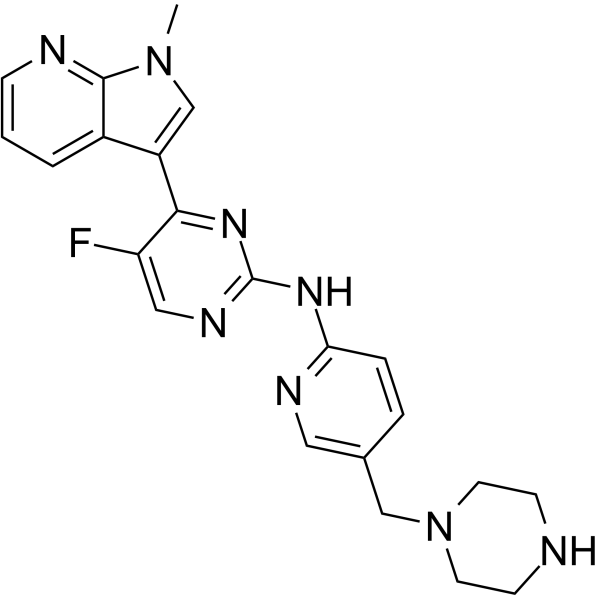 0 ImagesCDK4/6-IN-9 (compound 10) is a selective CDK4/6 inhibitor with an IC50 of 905 nM for CDK6/cyclin D1. CDK4/6-IN-9 has the potential for multiple myeloma (MM) research.
-
PP-C8
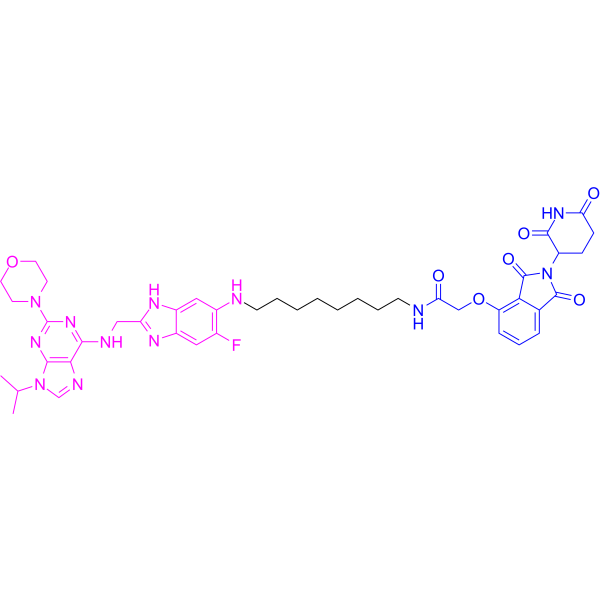 0 ImagesPP-C8 is a potent and selective PROTAC CDK12-Cyclin K degrader. PP-C8 induces CDK12-Cyclin K degradation with DC50s of 416 and 412 nM for CDK12 and Cyclin K, respectively. PP-C8 demonstrates profound synergistic antiproliferative effects with PARP inhibitor in triple-negative breast cancer (TNBC).
-
Diosbulbin B
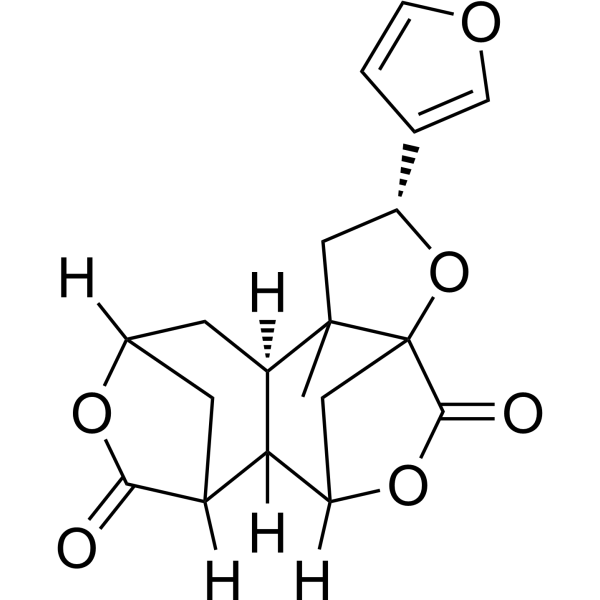 0 ImagesDiosbulbin B, a diterpene lactone, is an anticancer agent. Diosbulbin B is an orally active component of Dioscorea. bulbifera L. Diosbulbin B can inhibit cell proliferation, induce G0/G1 phase arrest and apoptosis. Diosbulbin B can induce autophagy and mitochondrial dysfunction. Diosbulbin B can induce liver injury. Diosbulbin B can be used for the research of cancer, such as non-small cell lung cancer (NSCLC).
-
LDC3140
 0 ImagesLDC3140 is a selective CDK7 inhibitor (IC50<5 nM). By inhibiting the activity of CDK7, LDC3140 affects the regulation of the cell cycle, leading to cell cycle arrest and thus inhibiting the proliferation of tumor cells. LDC3140 can be used in the research of cancer treatment.
-
LA-CB1
 0 ImagesLA-CB1 is an Abemaciclib (HY-16297A) derivative that targets CDK4/6 and promotes its degradation via the ubiquitin-proteasome pathway, thereby disrupting the CDK4/6-Cyclin D1-Rb-E2F axis and inducing G0/G1 cell cycle arrest and apoptosis. LA-CB1 exhibits antiproliferative activity against MDA-MB-231 cells, with an IC50 of 0.27 µM, and effectively inhibits epithelial-mesenchymal transition (EMT), cell migration, invasion, and angiogenesis. In highly aggressive models such as triple-negative breast cancer (TNBC), LA-CB1 significantly suppresses tumor growth in a dose-dependent manner. LA-CB1 holds potential for research in the field of breast cancer.
-
CDK6/PIM1-IN-1 hydrochloride
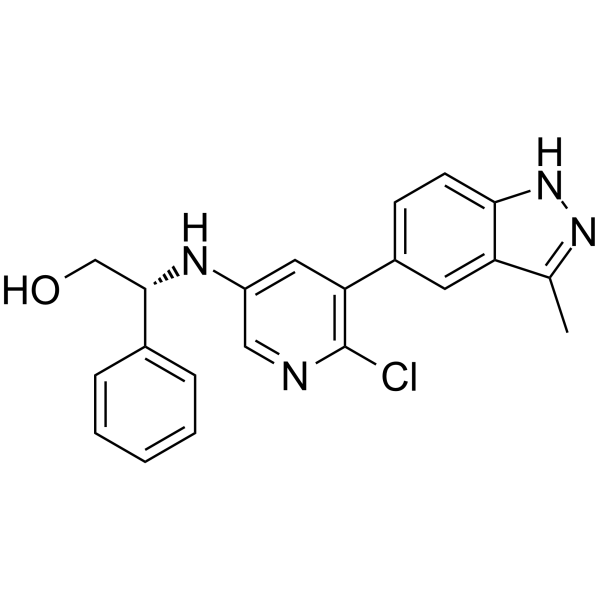
 0 ImagesCDK6/PIM1-IN-1 (Compound 51) hydrochloride is an orally active and potent dual CDK6/PIM1 inhibitor with IC50 values of 39 and 88 nM, respectively. CDK6/PIM1-IN-1 hydrochloride inhibits CDK4 (IC50=3.6 nM). CDK6/PIM1-IN-1 hydrochloride significantly inhibits acute myeloid leukemia (AML) cell proliferation, arrest cell cycle at the G1 phase, and promote cell apoptosis. CDK6/PIM1-IN-1 exhibits potent anti-AML activity.
-
Ribociclib hydrochloride (Standard)
 0 ImagesSynonyms: LEE011 hydrochloride (Standard)Ribociclib (Standard) (LEE011(Standard)) hydrochloride is the analytical standard of Ribociclib hydrochloride (HY-15777A). This product is intended for research and analytical applications. Ribociclib hydrochloride (LEE011 hydrochloride) is a highly specific CDK4/6 inhibitor with IC50 values of 10 nM and 39 nM, respectively, and is over 1,000-fold less potent against the cyclin B/CDK1 complex.
-
Rafutrombopag
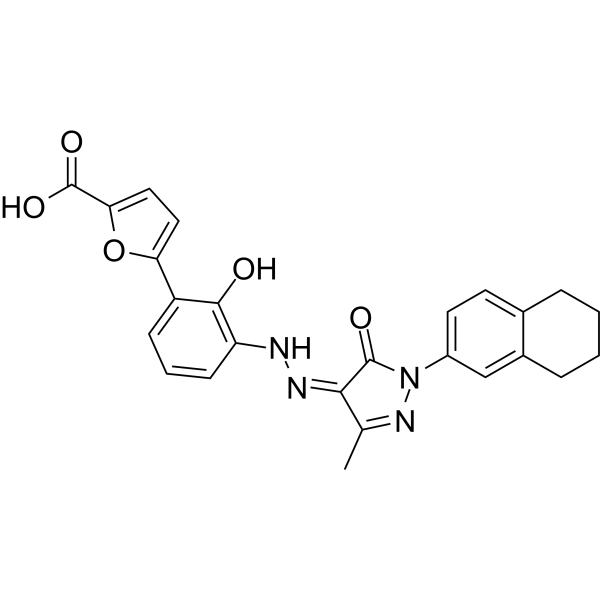 0 ImagesCat. No.: HY-145589CAS No.: 2600513-51-5Synonyms: Hetrombopag; SHR-8735Rafutrombopag (Hetrombopag) is an orally active nonpeptide thrombopoietin receptor (TPOR/MPL) agonist. Rafutrombopag can chelate iron and alleviate iron overload while promoting haematopoiesis. Rafutrombopag specifically stimulates proliferation and differentiation of human TPOR-expressing cells, including 32D-MPL and human hematopoietic stem cells through stimulation of STAT, PI3K and ERK signalling pathways. Rafutrombopag effectively up-regulates G1-phase-related proteins, including p-RB, Cyclin D1 and CDK4/6, normalizes progression of the cell cycle, and prevents apoptosis by modulating BCL-XL/BAK expression in 32D-MPL cells. Rafutrombopag protects cardiomyocyte survival from oxidative stress damage as an enhancer of stem cells. Rafutrombopag can be used for the study of immune thrombocytopenia and oxidative stress-related cardiovascular disease.
-
(2S,3R)-Voruciclib hydrochloride
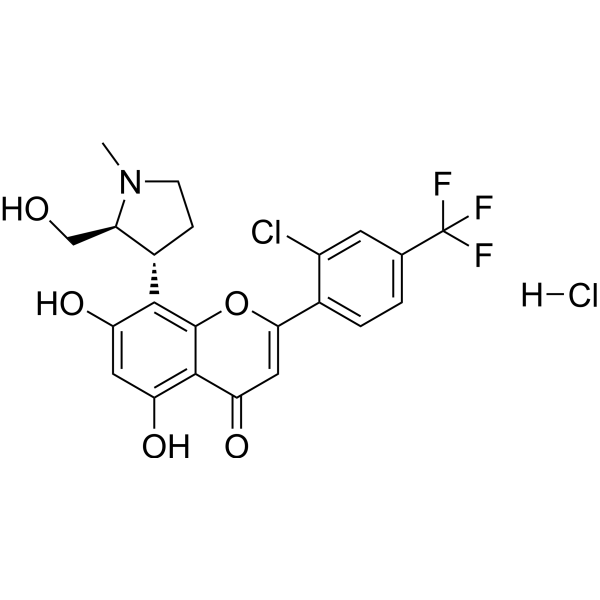 0 ImagesCat. No.: HY-12422BCAS No.: 2920469-94-7(2S,3R)-Voruciclib hydrochloride is the enantiomer of Voruciclib hydrochloride. Voruciclib is an orally active CDK inhibitor.
-
BS-181
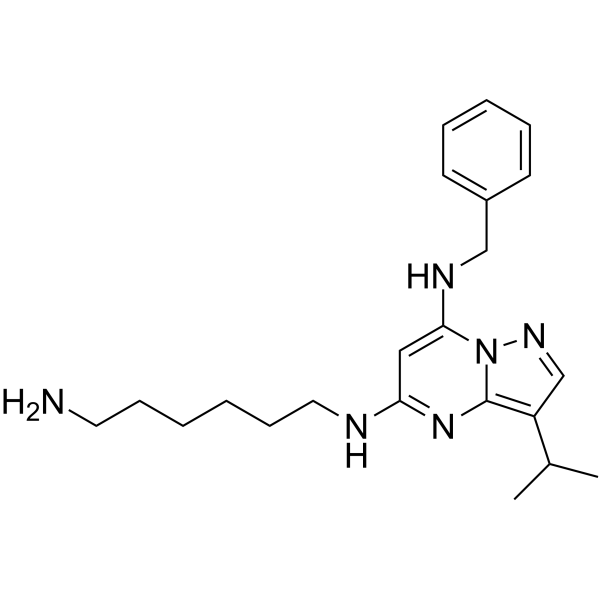 0 ImagesCat. No.: HY-13266CAS No.: 1092443-52-1BS-181 is a potent and selective CDK7 inhibitor (IC50=21 nM) than Seliciclib (HY-30237). BS-181 is also against CDK2, CDK5 and CDK9 with IC50 values of 880, 3000 and 4200 nM, respectively (fails to block CDK1, 4 and 6). BS-181 inhibits a panel of cancer cells growth (IC50=11.5 μM-37.3 μM) and induces cell apoptosis. BS-181 has the potential for the research of cancer therapy.
-
Tanuxiciclib
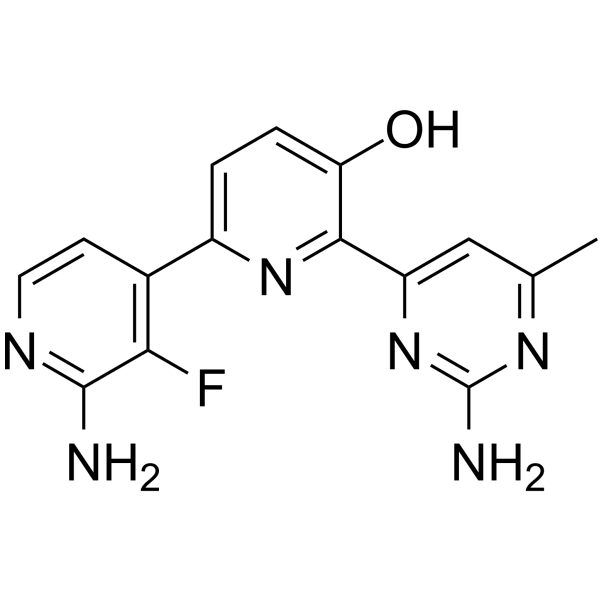 0 ImagesTanuxiciclib is a cyclin dependent kinase (CDK) inhibitor.
-
Tanuxiciclib trihydrochloride
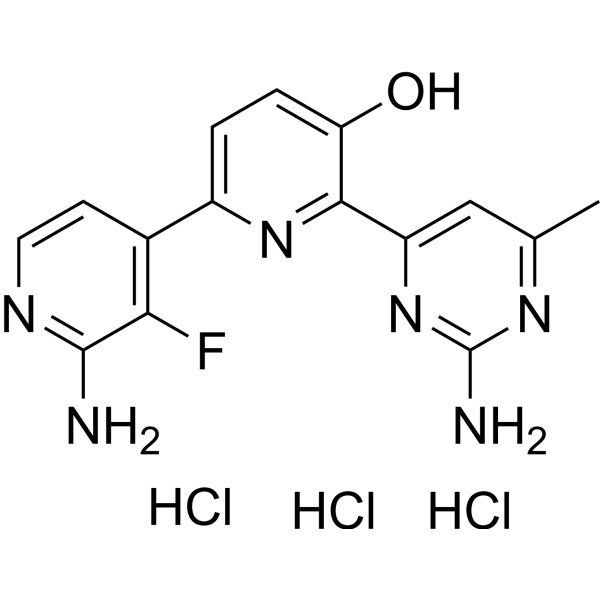 0 ImagesTanuxiciclib trihydrochloride is a cyclin dependent kinase (CDK) inhibitor.
-
(S)-Ebvaciclib
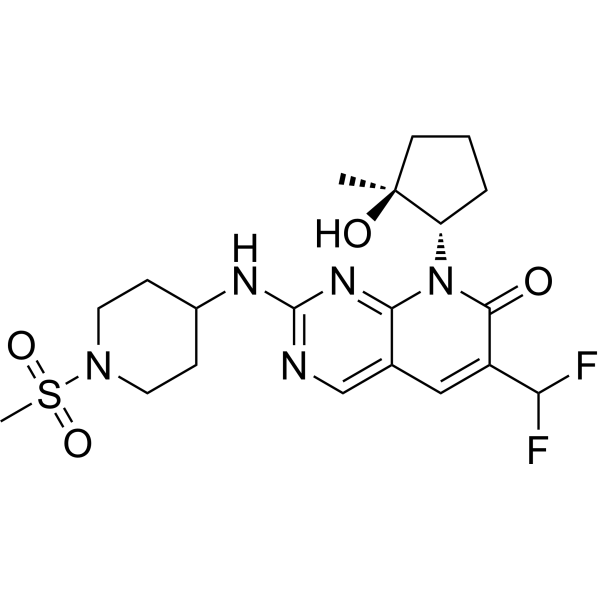 0 ImagesSynonyms: (S)-PF-06873600(S)-PF-06873600 it the S enantiomer of PF-06873600. PF-06873600 is a selective and orally bioavailable inhibitor of cyclin-dependent kinase (CDK).

-
Cardanol monoene
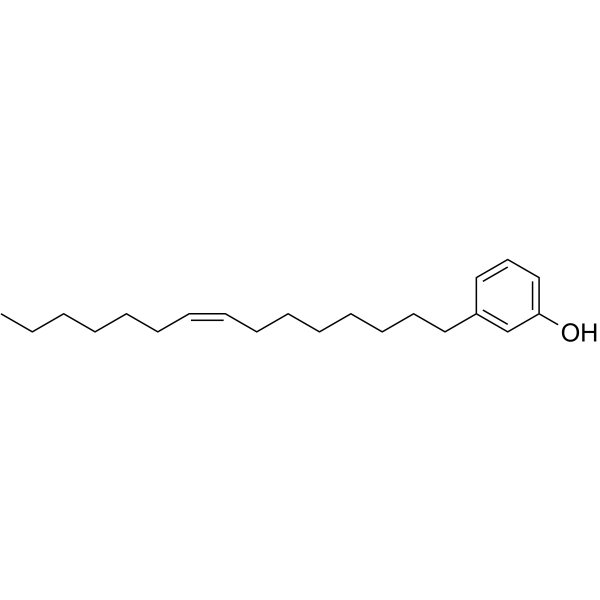 0 ImagesCardanol monoene (Cardanol C15:1) is a phenolic compound which can be found in cashew nut shell liquid. Cardanol monoene can inhibit cancer cells proliferation, migration, cause S phase arrest, induce apoptosis, ROS production and mitochondrial depolarization. Cardanol monoene downregulates MMP-2, MMP-9, cyclinA1 expression, regulates CDK2, p53, Bax, cytochrome c, cleaved caspase-3, cleaved PARP, Apaf-1 expression and Bax/Bcl-2 ratio. Cardanol monoene shows weak DPPH radical scavenging activity and AChE inhibition activity. Cardanol monoene is lethal to Artemia salina nauplii. Cardanol monoene. Cardanol monoene can be used for the research of cancer, infection and inflamation.
-
YJ9069
 0 ImagesCat. No.: HY-168556YJ9069 is a CDK12/CDK13 PROTAC degrader. YJ9069 induces proteasome-dependent degradation of CDK12 and CDK13, and inhibits serine 2 phosphorylation of RNA polymerase II (RNA polymerase II). YJ9069 triggers gene length-dependent transcription elongation defects, reduces the expression of DNA damage response genes, and induces DNA damage, cell cycle arrest and apoptosis. YJ9069 inhibits tumor growth in prostate cancer models. YJ9069 can be used for the research of prostate cancer, Ewing sarcoma and breast cancer.




