CDK
Cyclin dependent kinase
CDKs (Cyclin-dependent kinases) are serine-threonine kinases first discovered for their role in regulating the cell cycle. They are also involved in regulating transcription, mRNA processing, and the differentiation of nerve cells. CDKs are relatively small proteins, with molecular weights ranging from 34 to 40 kDa, and contain little more than the kinase domain. In fact, yeast cells can proliferate normally when their CDK gene has been replaced with the homologous human gene. By definition, a CDK binds a regulatory protein called a cyclin. Without cyclin, CDK has little kinase activity; only the cyclin-CDK complex is an active kinase.
There are around 20 Cyclin-dependent kinases (CDK1-20) known till date. CDK1, 4 and 5 are involved in cell cycle, and CDK 7, 8, 9 and 11 are associated with transcription.
CDK levels remain relatively constant throughout the cell cycle and most regulation is post-translational. Most knowledge of CDK structure and function is based on CDKs of S. pombe (Cdc2), S. cerevisia (CDC28), and vertebrates (CDC2 and CDK2). The four major mechanisms of CDK regulation are cyclin binding, CAK phosphorylation, regulatory inhibitory phosphorylation, and binding of CDK inhibitory subunits (CKIs).
CDK Isoform Specific Products
-
CDK
(477)
View all products
-
CDK1
(179)
View all products
-
CDK2
(293)
View all products
-
CDK3
(21)
View all products
-
CDK4
(222)
View all products
-
CDK5
(95)
View all products
-
CDK6
(168)
View all products
-
CDK7
(114)
View all products
-
CDK8
(54)
View all products
-
CDK9
(198)
View all products
-
CDK11
(7)
View all products
-
CDK12
(49)
View all products
-
CDK13
(25)
View all products
-
CDK14
(6)
View all products
-
CDK16
(8)
View all products
-
CDK19
(24)
View all products
-
CDC
(21)
View all products
-
CLK
(31)
View all products
-
Pho85
(1)
View all products
-
CDK10
(1)
View all products
-
CDK15
(1)
View all products
-
CDK17
(2)
View all products
-
CDK18
(1)
View all products
-
CDK20
(1)
View all products
-
PITSLRE
(1)
View all products
All Product Categories
-
CDK Inhibitors
(1044)
View all products
-
CDK Agonists
(3)
View all products
-
CDK Antagonists
(2)
View all products
-
CDK Activators
(14)
View all products
-
CDK Modulators
(14)
View all products
-
CDK Degraders
(82)
View all products
-
CDK Controls
(4)
View all products
-
CDK Substrate
(1)
View all products
-
CDK Ligands
(15)
View all products
-
Cyclin-Dependent Kinases (CDKs) Proteins
(81)
View all products
-
Cyclin Dependent Kinase 1 (CDK1) Proteins
(9)
View all products
-
Cyclin-Dependent Kinase 2 (CDK2) Proteins
(11)
View all products
-
Cyclin-Dependent Kinase 3 (CDK3) Proteins
(6)
View all products
-
Cyclin-Dependent Kinase 4 (CDK4) Proteins
(5)
View all products
-
Cyclin-Dependent Kinase 5 (CDK5) Proteins
(5)
View all products
-
Cyclin-Dependent Kinase 6 (CDK6) Proteins
(6)
View all products
-
Cyclin-Dependent Kinase 7 (CDK7) Proteins
(4)
View all products
-
CDK Produits associés (1290)
Produits associés (1290)

-
Protéines Recombinantes (82)
-
Anticorps (42)
-
CDK Isoform Comparison
-
Eriocalyxin B
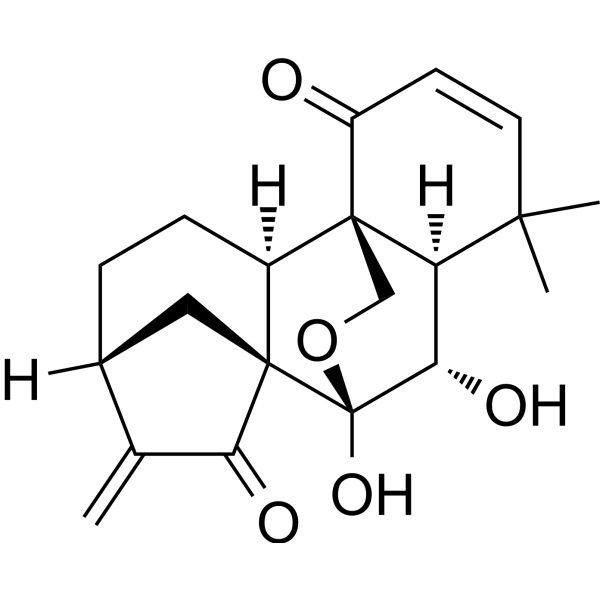 0 ImagesEriocalyxin B is a diterpenoid compound that can be isolated from Chinese herb Isodon eriocalyx. Eriocalyxin B exhibits multiple activities, such as anti-cancer, anti-inflammatory, and inhibition of adipogenesis. Eriocalyxin B is capable of inducing apoptosis and autophagy in tumor cells. Eriocalyxin B can be used in the research of cancers, autoimmune diseases, and other conditions.
-
DB0614
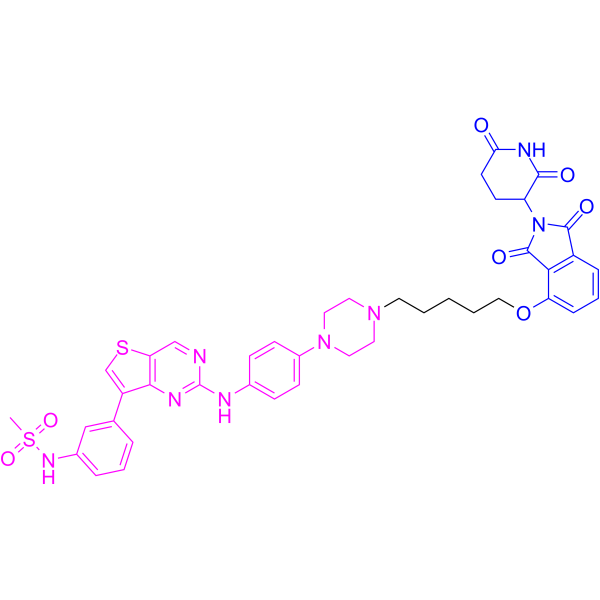 0 ImagesDB0614 is a PROTAC based on Cereblon ligand, which is a selective and potent targeted protein degrader of NEK9 inhibitor. DB0614 can degrade ABL1, ABL2, BLK, CDK11B, CDK4, CSK, EPHA3, FER, GAK, LIMK1, MAP3K20, MAP4K1, MAP4K2, MAP4K3, MAP4K5, MAPK14, MAPK7, MAPK8, MAPK9, MAPKAPK2, MAPKAPK3, NLK, PDIK1L, PTK2B, RIPK1, RPS6KA1, RPS6KA3, SIK2, SIK3, STK35, TNK2 and ULK1. DB0614 can be used for research of disease or disorder mediated by aberrant kinase activity.(Blue: Thalidomide-4-OH (HY-103596), Black: linker, Pink: FLT3-IN-17 (HY-148070))
-
N9-Isopropylolomoucine
 0 ImagesN9-Isopropylolomoucine is a mitotic cyclin dependent kinase (CDK) inhibitor. N9-Isopropylolomoucine targets CCNB 1/CDK1 and can be used for cancer research.
-
Zinc acetate, 99.99% trace metals basis
 0 ImagesSynonyms: Zinc(II) acetate, 99.99% trace metals basisZinc (Zinc (II)) acetate, 99.99% trace metals basis is a heme oxygenase 1 (HO-1) activator and apoptosis inducer with cytotoxic and anticancer activities. Zinc acetate, 99.99% trace metals basis enhances HO-1 expression, alters the microRNA profile, and increases the level of caspase-cleaved cytokeratin 18. Zinc acetate, 99.99% trace metals basis also regulates the expression of Cdk2/cyclin E and interferes with cell cycle progression. Zinc acetate, 99.99% trace metals basis effectively inhibits cancer cell proliferation and induces their rapid death, with no significant cytotoxicity to non-tumor tissues. Zinc acetate, 99.99% trace metals basis has been widely used in studies related to hepatocellular carcinoma, prostate cancer, and other conditions.
-
PROTAC CDK2/4 Degrader-1
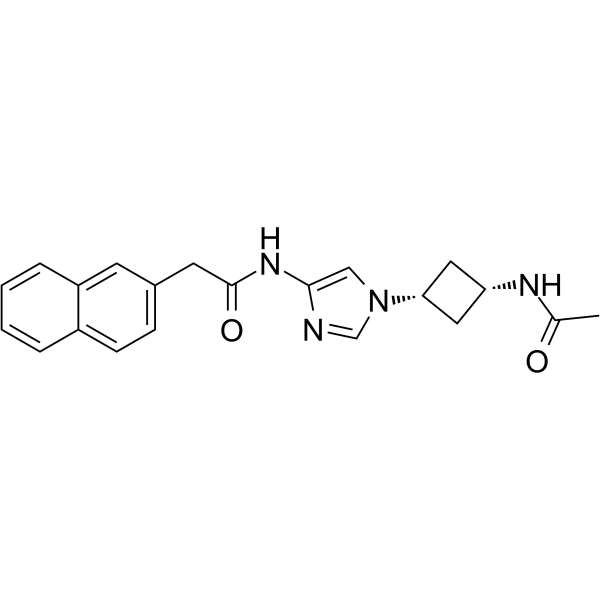
 0 ImagesCat. No.: HY-179688Pureté: 98.10%PROTAC CDK2/4 Degrader-1 is a PROTAC degrader of cyclin-dependent kinase 2 (CDK2) and cyclin-dependent kinase 4 (CDK4). PROTAC CDK2/4 Degrader-1 induces degradation via the ubiquitin-proteasome pathway. PROTAC CDK2/4 Degrader-1 can be used in cancer research.
-
CDK9/EZH2-IN-1
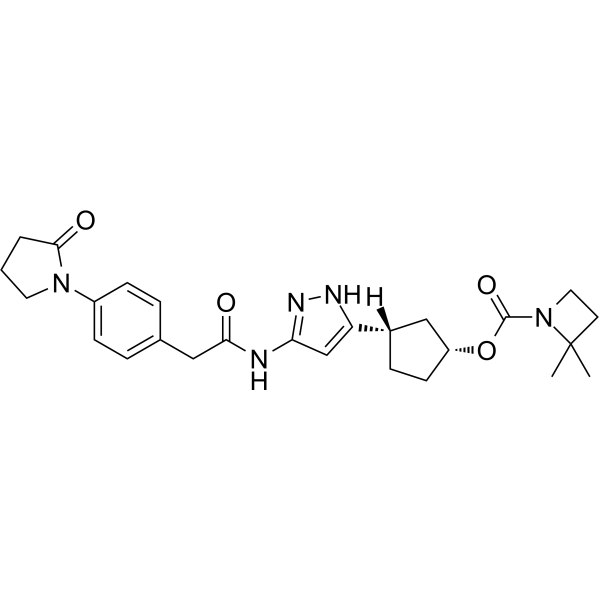
 0 ImagesCDK9/EZH2-IN-1 (Compound D16) is a CDK9/EZH2 dual-target inhibitor (IC50: 83.9/108.6 nM). CDK9/EZH2-IN-1 induces apoptosis and DNA double-strand breaks (DSBs). CDK9/EZH2-IN-1 inhibits the proliferation activity of MKN45, MDA-MB-453 and SW620 cancer cells (IC50 values are 136.3, 171.3 and 315.7 nM, respectively).
-
CDK4/6-IN-12
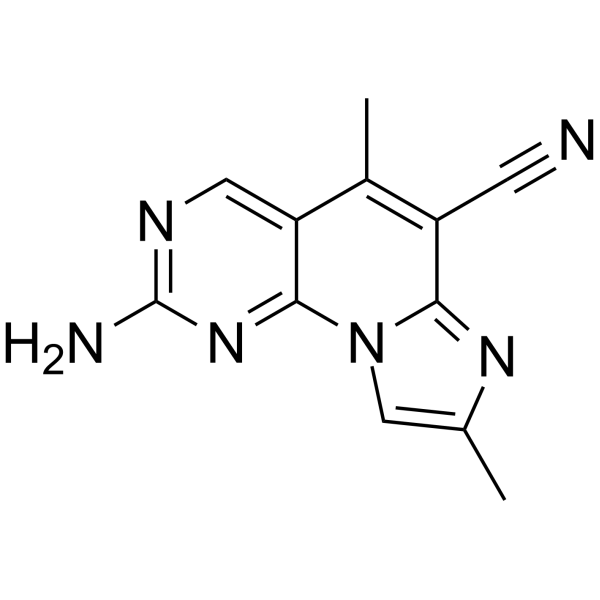 0 ImagesCDK4/6-IN-12 is a potent cyclin-dependent kinase 4/6 (CDK4/6) inhibitor. CDK4/6-IN-12 has enzymatic inhibitory activity for CDK4 and CDK6 with IC50 of 592.3 nM and 3090 nM, respectively. CDK4/6-IN-12 can be used for the research of cancer.

-
LL-K9-3
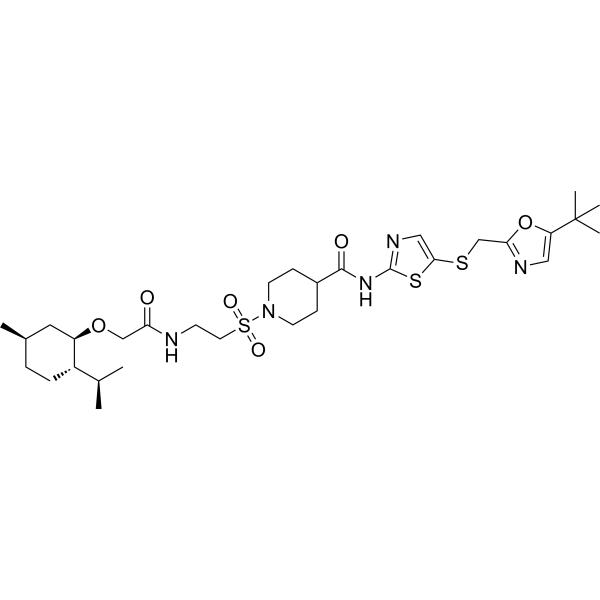 0 ImagesLL-K9-3 is a selective CDK9-cyclin T1 HyT degrader, with DC50 values of 0.662 μM and 0.589 μM for CDK9 and Cyclin T1, respectively. LL-K9-3 lacks an E3 ligand moiety and induces polyubiquitination and proteasome-mediated synchronous degradation of CDK9 and cyclin T1 via a hydrophobic tag-mediated mechanism. LL-K9-3 downregulates the protein levels of androgen receptor (AR) and c-Myc, and exhibits antiproliferative and pro-apoptotic (apoptosis) activity in prostate cancer cells. LL-K9-3 can be used in studies related to prostate cancer.
-
Bisindolylmaleimide III
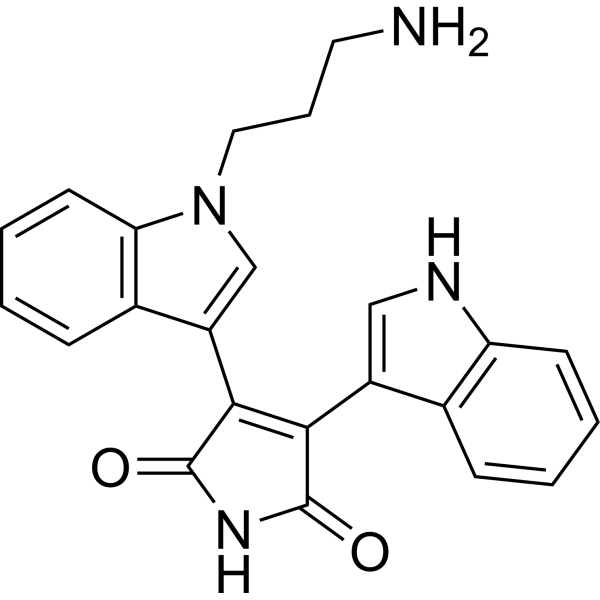 0 ImagesBisindolylmaleimide III is a protein kinase C (PKC) inhibitor with IC50 values of 0.26, 5.7, and 6 μM against PKCα, PKCδ, and PKCμ, respectively. Bisindolylmaleimide III also exhibits inhibitory activity against other off-targets, with IC50 values of 0.17, 1, and 2 μM against SLK, adenosine kinase (AK), and CDK2, respectively; its Ki for NQO2 is 16.5 μM. Bisindolylmaleimide III selectively binds to activated Rsk1 following EGF stimulation, and serves as a tool for detecting the activation status of intracellular Rsk1 and PKCα, as well as for functional analysis of SLK. Bisindolylmaleimide III can be used in studies of signal transduction and colorectal cancer.
-
CDK12-IN-5
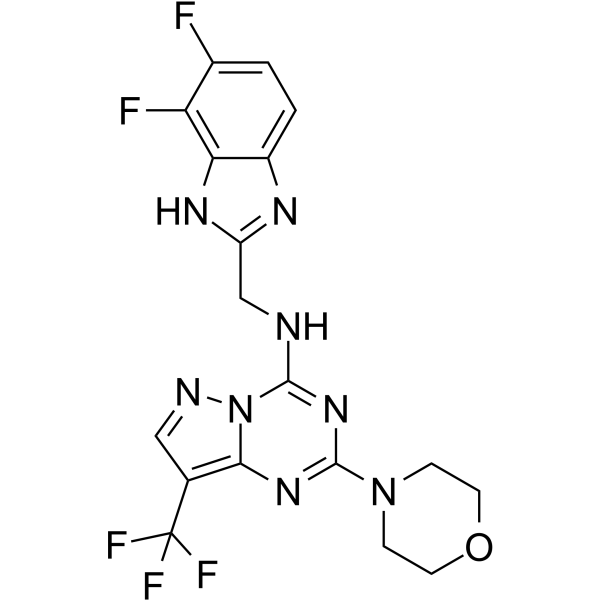 0 ImagesCDK12-IN-5, a pyrazolotriazine, is a potent CDK12 inhibitor with an IC50 of 23.9 nM at high ATP (2 mM). CDK12-IN-5 has no effect on CDK2/Cyclin E (IC50=173 μM) and CDK9/Cyclin T1 (IC50=127 μM) at high ATP (2 mM) (WO2021116178A1).
-
Fascaplysin
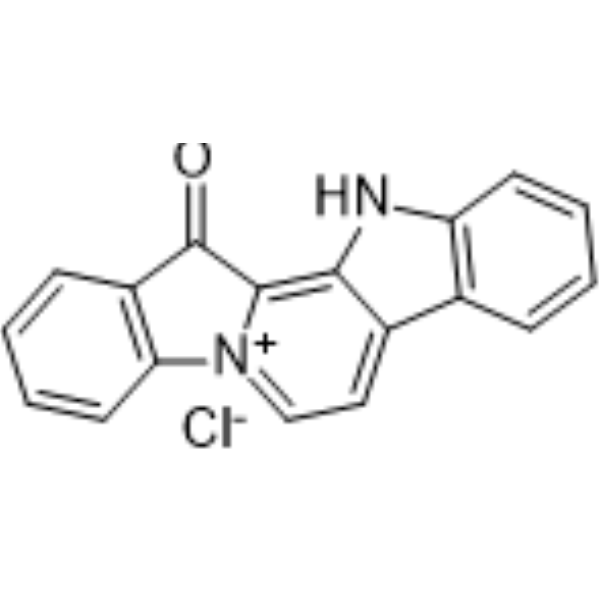 0 ImagesCat. No.: HY-112328CAS No.: 114719-57-2Fascaplysin is an antimicrobial and cytotoxic red pigment, that can come from the marine sponge (Fascaplysinopsis sp.). Fascaplysin has been synthesized in seven steps from indole (65% yield). Fascaplysin can induces apoptosis and autophagy in human leukemia HL-60 cells. Fascaplysin shows anti-tumor activity.
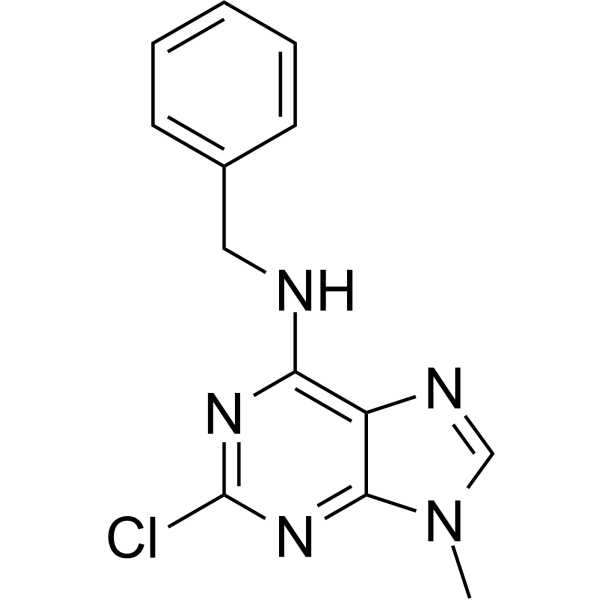
-
INK4C-IN-2
 0 ImagesINK4C-IN-2 is a p18INK4C inhibitor. NK4C-IN-2 promotes hematopoietic stem cells (HSCs) division by inhibiting INK4C and activating CDK4/6, with an ED50 of 5.21 nM. INK4C-IN-2 shows no cytotoxic to normal 32D cells, HSCs, leukemia cell lines and myeloma cell lines.
-
Tambiciclib dimaleate
 0 ImagesSynonyms: GFH009 dimaleate; JSH-009 dimaleate; SLS009 dimaleateTambiciclib (GFH009, JSH-009) dimaleate is an orally active, highly potent and selective CDK9 inhibitor (IC50 = 1 nM), demonstrating >200-fold selectivity over other CDKs, >100-fold selectivity over DYRK1A/B, and excellent selectivity over 468 kinases/mutants. Tambiciclib dimaleate demonstrates potent in vitro and in vivo antileukemic efficacy in acute myeloid leukemia (AML) mouse models by inhibiting RNA Pol II phosphorylation, downregulating MCL1 and MYC, and inducing apoptosis. Tambiciclib dimaleate can be used for AML research.
-
CK7
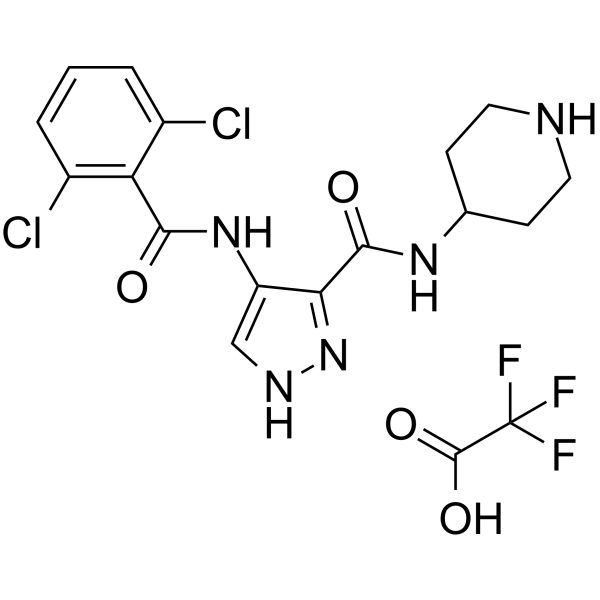
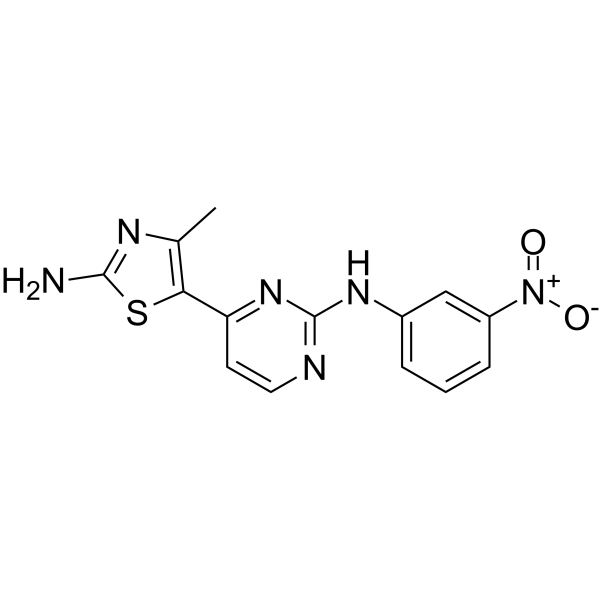 0 ImagesCK7, a Cdk2/9 inhibitor, can be used for the synthesis of Nek1 inhibitor BSc5231 and BSc5367.
-
CLK1/2-IN-1
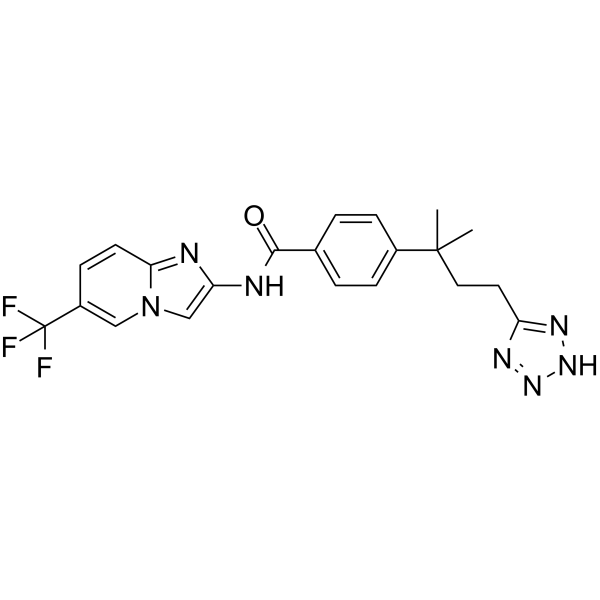 0 ImagesCLK1/2-IN-2 is CLK1 and CLK2 inhibitor with IC50 values of 16 nM and 45 nM, respectively. CLK1/2-IN-2 exhibits potent anti-cancer activities[1].