



CXCR
CXC chemokine receptors; C-X-C motif chemokine receptors
CXCRs (CXC chemokine receptors) are integral membrane proteins that specifically bind and respond to cytokines of the CXC chemokine family. They represent one subfamily of chemokine receptors, a large family of G protein-linked receptors that are known as seven transmembrane (7-TM) proteins, since they span thecell membrane seven times. There are currently seven known CXC chemokine receptors in mammals, named CXCR1 through CXCR7. CXCR1 and CXCR2 are closely related receptors that recognize CXC chemokines that possess an E-L-R amino acid motif immediately adjacent to their CXC motif. CXCR3 is expressed predominantly on T lymphocytes. CXCR4 is the receptor for a chemokine known as CXCL12 (or SDF-1) and, as with CCR5, is utilized by HIV-1 to gain entry into target cells. The chemokine receptor CXCR5 is selectively expressed on B cells and is involved in lymphocyte homing and the development of normal lymphoid tissue. CXCR6 was formerly called three different names (STRL33, BONZO, and TYMSTR) before being assigned CXCR6 based on its chromosomal location and its similarity to other chemokine receptors in its gene sequence. CXCR7 was originally called RDC-1 (an orphan receptor) but has since been shown to cause chemotaxis in T lymphocytes in response to CXCL12 (the ligand for CXCR4) prompting the renaming of this molecule as CXCR7.
CXCR Isoform Specific Products
All Product Categories
-
CXCR Inhibitors
(106)
View all products
-
CXCR Agonists
(25)
View all products
-
CXCR Antagonists
(128)
View all products
-
CXCR Activators
(12)
View all products
-
CXCR Modulators
(19)
View all products
-
CXCR Inducer
(1)
View all products
-
CXCR Degrader
(1)
View all products
-
CXCR Controls
(2)
View all products
-
CXCR Ligand
(1)
View all products
-
CXC Chemokines Proteins
(140)
View all products
-
CXC Chemokine Receptor Proteins
(13)
View all products
-
CXCR2 Proteins
(3)
View all products
-
CXCR3 Proteins
(3)
View all products
-
CXCR4 Proteins
(6)
View all products
-
CXCR Related Products (354)
Related Products (354)

-
Recombinant Proteins (153)
-
Antibodies (9)
-
Related Compound Screening Libraries (1)
-
CXCR Isoform Comparison
-
Baminercept
 0 ImagesSynonyms: BG 9924; TT-47Baminercept (BG 9924; TT-47) is an Ig fusion protein targeting the lymphotoxin β receptor (LTβR). Baminercept effectively regulates subsets of circulating immune cells by inhibiting LIGHT, LT-α1β2 and their receptors. Baminercept also increases blood lymphocyte counts and reduces plasma CXCL13 levels. Baminercept carries a high risk of hepatotoxicity. Baminercept can be used in research on rheumatoid arthritis and primary Sjögren's syndrome.
-
Anti-Mouse CXCR3/CD183 Antibody (CXCR3-173)
 0 ImagesCat. No.: HY-P990254Purity: 99%Anti-Mouse CXCR3/CD183 Antibody (CXCR3-173) is an anti-mouse CXCR3/CD183 IgG monoclonal antibody. Anti-Mouse CXCR3/CD183 Antibody (CXCR3-173) weakens the immune response by reducing the infiltration of CD4+ and CD8+ T cells. Anti-Mouse CXCR3/CD183 Antibody (CXCR3-173) significantly prolongs the survival time of heart or islet transplants in mice. Anti-Mouse CXCR3/CD183 Antibody (CXCR3-173) can be used for researches on immunology and cancer such as pancreatic cancer.
-
Eldelumab
 0 ImagesSynonyms: BMS-936557; MDX-1100Eldelumab (BMS-936557) is a human anti-CXCL10 (IP-10) monoclonal antibody (IgG1 type). Eldelumab selectively binds to CXCL10 and blocks CXCL10-induced calcium flux and cell migration. Eldelumab can be used in studies of autoimmune and auto-inflammatory diseases such as rheumatoid arthritis, ulcerative colitis and crohn's disease.
-
Anti-Mouse CXCL9/MIG Antibody (MIG-2F5.5)
 0 ImagesCat. No.: HY-P990255Purity: 99.47%Anti-Mouse CXCL9/MIG Antibody (MIG-2F5.5) is an anti-mouse CXCL9/MIG IgG monoclonal antibody. Anti-Mouse CXCL9/MIG Antibody (MIG-2F5.5) can reduce tumor infiltration of CD8+ cytotoxic T cells (CTLs). Anti-Mouse CXCL9/MIG Antibody (MIG-2F5.5) can prolong the survival of transplanted hearts. Anti-Mouse CXCL9/MIG Antibody (MIG-2F5.5) can be used for researches on immunology and cancer such as prostate cancer.
-
SDF-1α (human) TFA
 0 ImagesCat. No.: HY-P4911APurity: 98.89%SDF-1α (human) TFA is a mononuclear cells chemoattractant that can bind to CXCR4. SDF-1α plays a central role in stem cell homing, retention, survival, proliferation, cardiomyocyte repair, angiogenesis and ventricular remodelling following myocardial infarction. SDF-1α (human) TFA can be used in cardiovascular disease research.
-
PS372424 hydrochloride
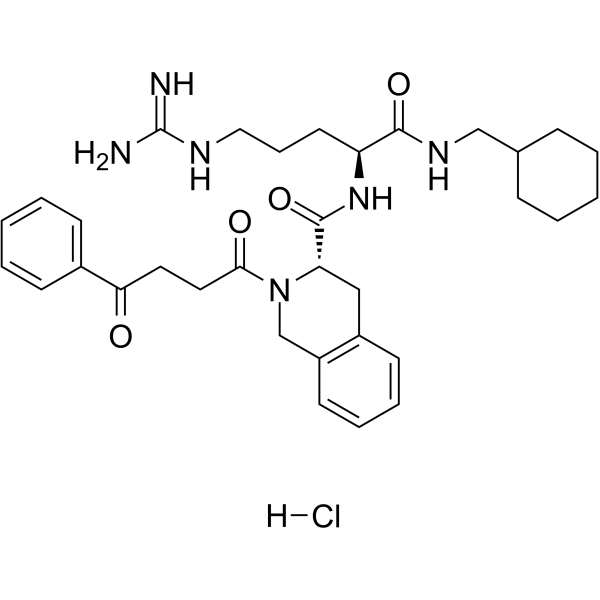 0 ImagesCat. No.: HY-111149ACAS No.: 1596362-29-6PS372424 hydrochloride, a three amino-acid fragment of CXCL10, is a specific human CXCR3 agonist with anti-inflammatory activity. PS372424 hydrochloride prevents human T-cell migration in a humanized model of arthritic inflammation.
-
Ac-Pro-Gly-Pro-OH
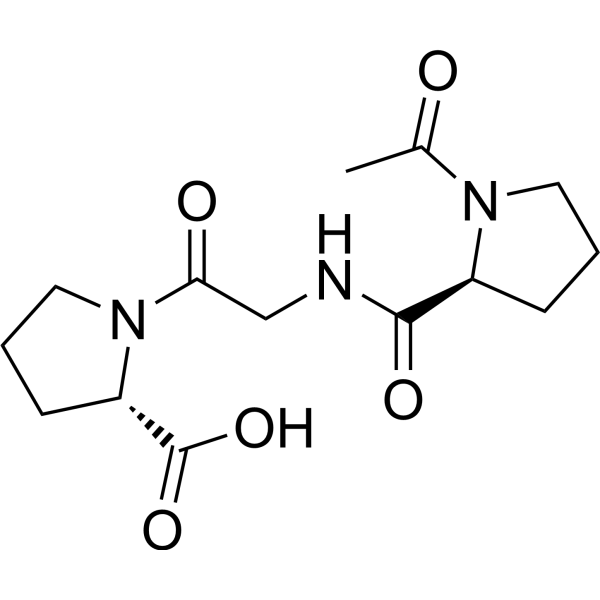 0 ImagesAc-Pro-Gly-Pro-OH is an endogenous degradation product of extracellular collagen and acts as a CXCR2 agonist. Ac-Pro-Gly-Pro-OH exerts bactericidal activity by generating hydrogen peroxide, inhibits pulmonary inflammation, and reduces immune cell apoptosis (apoptosis). Ac-Pro-Gly-Pro-OH promotes the production of IFN-γ and inhibits the production of TNF-α and IL-6 in leukocytes. Ac-Pro-Gly-Pro-OH increases the survival rate of mice in sepsis models, enhances the bactericidal activity of neutrophils, acts as a neutrophil chemoattractant, induces neutrophil polarization, and regulates inflammatory and repair processes. Ac-Pro-Gly-Pro-OH induces chronic inflammation and tissue remodeling through sustained action. Ac-Pro-Gly-Pro-OH is released via alkaline hydrolysis of corneal proteins in alkali-injured eyes, thereby driving the early infiltration of neutrophils into the cornea. Ac-Pro-Gly-Pro-OH is applicable to research related to sepsis, chronic obstructive pulmonary disease, cystic fibrosis, bronchiolitis obliterans syndrome, severe asthma, idiopathic pulmonary fibrosis, and corneal ulcer.
-
SB02024
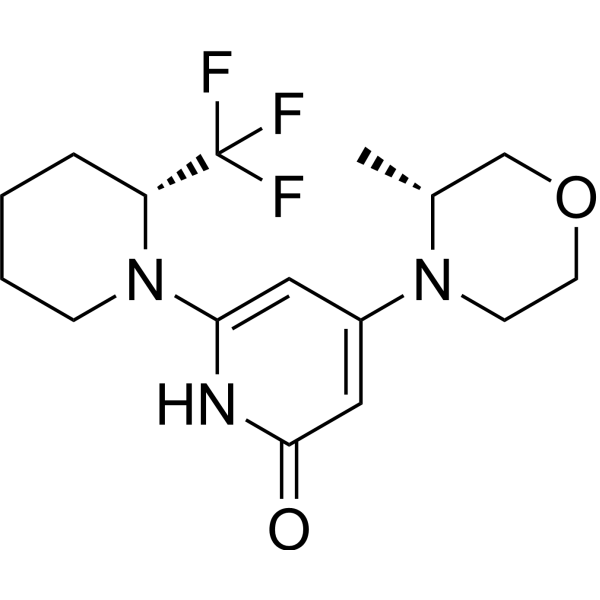 0 ImagesSB02024 is a potent and orally active VPS34 inhibitor. SB02024 inhibits Vps34 kinase activity. SB02024 induces CCL5 and CXCL10 via STAT1/IRF7. SB02024 shows anticancer activity.
-
Olopatadine hydrochloride
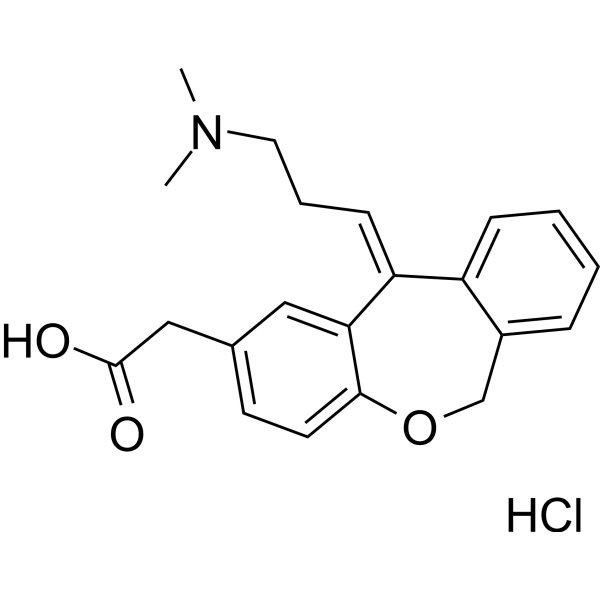 0 ImagesSynonyms: ALO4943A; KW4679Olopatadine hydrochloride (ALO4943A; KW4679) is an orally active histamine H1 receptor antagonist and mast cell stabilizer. Olopatadine hydrochloride exerts antiallergic effects by blocking histamine H1 receptor-mediated activities. Olopatadine hydrochloride inhibits exocytosis, chemokine release, F-actin polymerization, CXCL10-induced calcium influx, and T cell chemotactic activity. Olopatadine hydrochloride also reduces the expression levels of CXCR3 on the surface of CD4+ and CD8+ T cells. Olopatadine hydrochloride inhibits scratching behavior, improves dermatitis scores, and suppresses intraepidermal neurite outgrowth. Olopatadine hydrochloride simultaneously decreases the levels of inflammatory markers, growth factors, histamine, and specific IgE, while increasing the expression of ErbB3A/HER3A. Olopatadine hydrochloride can be used in research related to seasonal pollinosis, chronic rhinitis, urticaria, allergic conjunctivitis, alopecia areata, and atopic dermatitis.
-
Balixafortide TFA
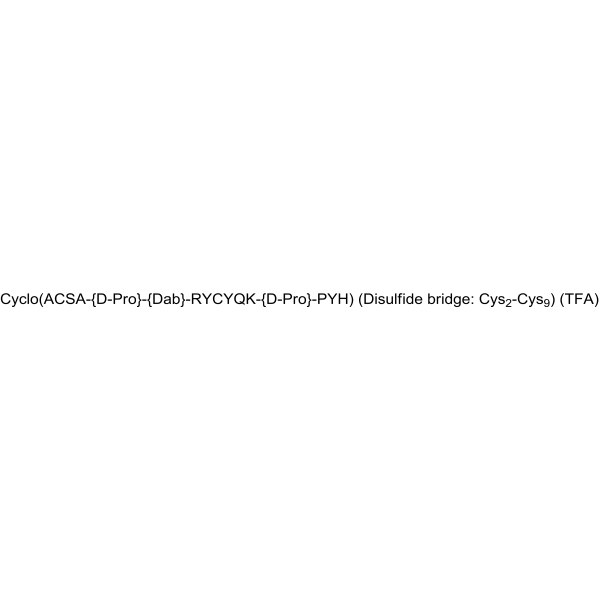 0 ImagesCat. No.: HY-P1682APurity: 99.89%Synonyms: POL6326 TFABalixafortide TFA (POL6326 TFA) is a potent, selective, well-tolerated peptidic CXCR4 antagonist with an IC50 < 10 nM. Balixafortide TFA shows 1000-fold selective for CXCR4 than a large panel of receptors including CXCR7. Balixafortide TFA blocks β-arrestin recruitment and calcium flux with IC50s < 10 nM. Balixafortide TFA is also a potent hematopoietic stem and progenitor cell (HSPC) mobilizing agent. Anti-cancer effects.
-
GSK699
 0 ImagesGSK699 is a KAT2A/B/PCAF/GCN5 PROTAC degrader. GSK699 induces proteasome-dependent degradation of KAT2A, KAT2B, PCAF and GCN5, regulates the histone acetyltransferase activity of the SAGA complex, and reduces the level of histone H3K9ac. GSK699 inhibits the growth of neuroblastoma, acute myeloid leukemia and small cell lung cancer cells. GSK699 reduces the production of inflammatory cytokines and chemokines, and impairs LPS-stimulated immune cell responses. GSK699 is applicable to research related to acute myeloid leukemia, small cell lung cancer, neuroblastoma and inflammatory diseases.
-
FC131 TFA
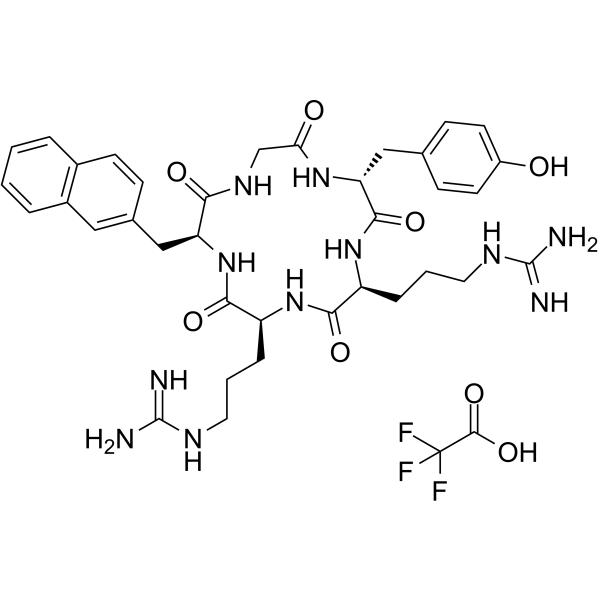 0 ImagesFC131 TFA is a CXCR4 antagonist that inhibits AKT kinase activity in AML OCI-AML3 cells. D-ArgFC131, a derivative of FC131 TFA, inhibits the phosphorylation of downstream ERK1/2 and Akt, induces caspase-3 pathway-mediated apoptosis, and causes cell cycle arrest. FC131 TFA exerts cytotoxic effects in cancer cells such as AML cells. FC131 TFA is applicable for cancer-related research.
-
Tanimilast
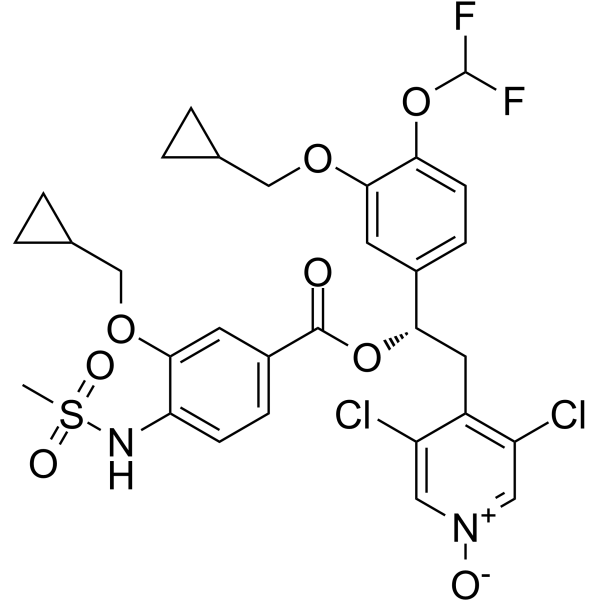 0 ImagesSynonyms: CHF-6001Tanimilast (CHF-6001) is an orally active and selective phosphodiesterase 4 inhibitor (IC50=0.026 nM) with robust anti-inflammatory activity and suitable for topical pulmonary administration. Tanimilast increases cellular cAMP levels, and inhibits NF-κB signaling pathway. Tanimilast is used for the research of obstructive lung diseases.




