



FXR
FXR; NR1H4
Farnesoid X receptor (FXR) is a ligand-activated transcription factor belonging to the nuclear receptor superfamily. FXR regulates the expression of various genes by binding to DNA either as a monomer or a heterodimer with the common partner for NRs, retinoid x receptor (RXR), to FXR response elements. Two known FXR genes exist, the FXRα and FXRβ.
FXR is mainly expressed in liver and small intestine, where it plays an important role in bile acid, lipid, and glucose metabolism. FXR affects several metabolic pathways through its specific target genes, regulating bile acid (BA) synthesis and homeostasis, glucose and lipid metabolism, also exhibiting a crucial role in intestinal bacterial growth and liver regeneration.
All Product Categories
-
FXR Related Products (183)
Related Products (183)

-
Antibodies (2)
-
Obeticholic acid (Standard)
 0 ImagesSynonyms: INT-747 (Standard); 6-ECDCA (Standard); 6-Ethylchenodeoxycholic acid (Standard)Obeticholic acid (Standard) is the analytical standard of Obeticholic acid. This product is intended for research and analytical applications. Obeticholic acid (INT-747) is a potent, selective and orally active FXR agonist with an EC50 of 99 nM. Obeticholic acid has anticholeretic and anti-inflammation effect. Obeticholic acid also induces autophagy.
-
Glycocholic acid-d5
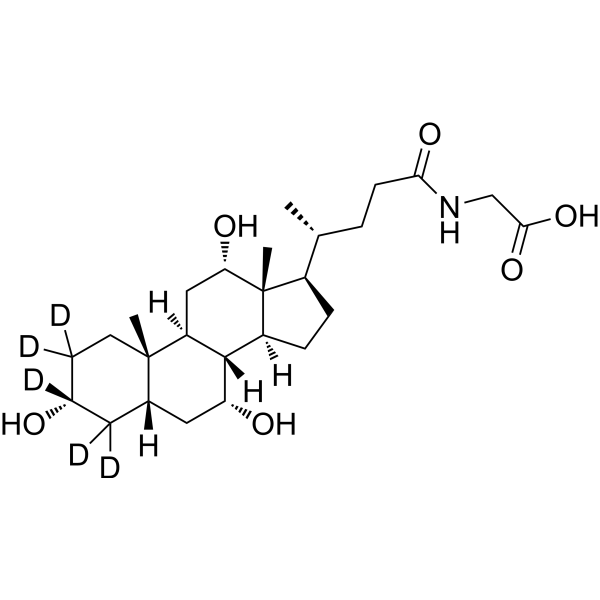 0 ImagesGlycocholic acid-d5 is the deuterium labeled Glycocholic acid (HY-N1423). Glycocholic acid is a bile acid derivative. Glycocholic acid downregulates MDR1, Bcl-2, MRP1, MRP2 and FXR, upregulates Bax, p53, caspase-9, caspase-3, TGR5 and S1PR2. Glycocholic acid inhibits multidrug resistance and efflux pumps, induces mitochondrial apoptosis, and enhances chemosensitivity. Glycocholic acid modulates related bile acid receptor signaling. Glycocholic acid suppresses growth and conjugation of Enterobacteriaceae and increases their antibiotic susceptibility. Glycocholic acid can be used for the research of colon adenocarcinoma and cholangiocarcinoma (CCA).
-
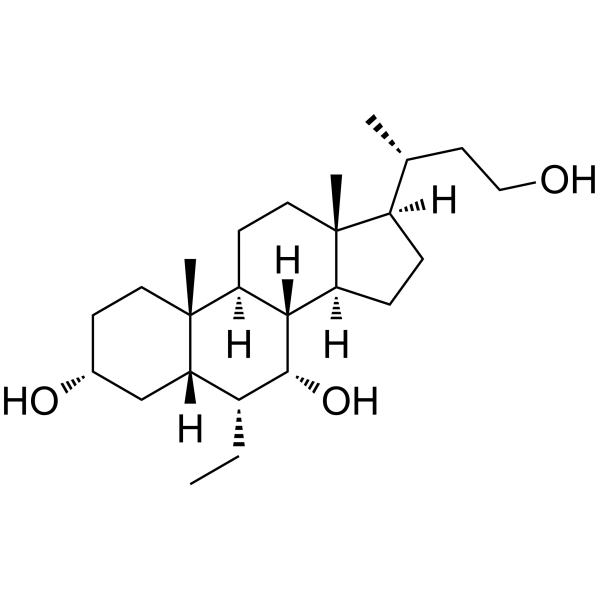
sEH/FXR-IN-1
 0 ImagesCat. No.: HY-W104814CAS No.: 59089-68-8sEH/FXR-IN-1 (compound 9) is a soluble epoxide hydrolase (sEH) and FXR ligand.
-
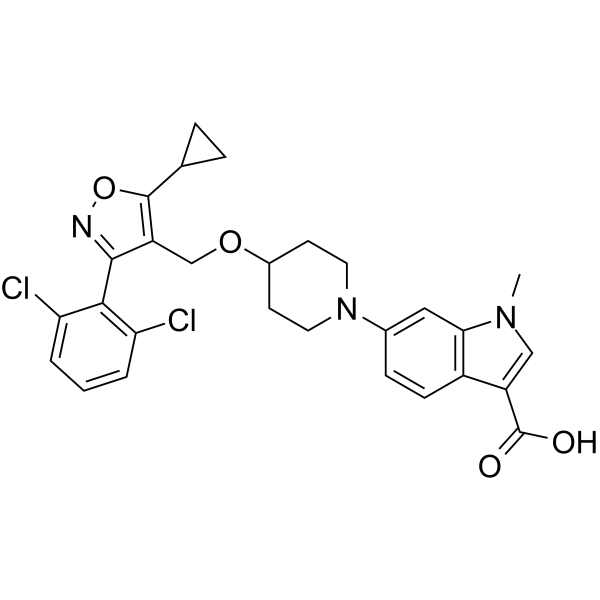
FXR/HSD17B13 modulator 1
 0 ImagesCat. No.: HY-172122CAS No.: 3067566-36-0FXR/HSD17B13 modulator 1 (compound 6) is a potent modulator of FXR/HSD17B13. FXR/HSD17B13 modulator 1 plays an important roel in metabolic dysfunction-associated steatohepatitis (MASH) research.
-
Teduglutide-Leu(13C6,15N) sodium
 0 ImagesCat. No.: HY-P1624S1Synonyms: ALX-0600-Leu(13C6,15N) sodiumTeduglutide-Leu(13C6,15N) (ALX-0600-Leu(13C6,15N)) sodium is the 13C- and 15N-labeled Teduglutide (HY-P1624). Teduglutide (ALX-0600) is an analog of human glucagon like peptide-2 (GLP-2). Teduglutide can activate the expression of nuclear receptor subfamily 4 group a member 1 (NR4a1)/nur77 and intestinal FXR signaling in human hepatic stellate cells, thereby improving liver inflammation and fibrosis in mice with sclerosing cholangitis. Teduglutide can alleviate intestinal dysfunction in mice, improve lung injury, alleviate obesity related neuroinflammation and cell apoptosis.
-
FXR agonist 4
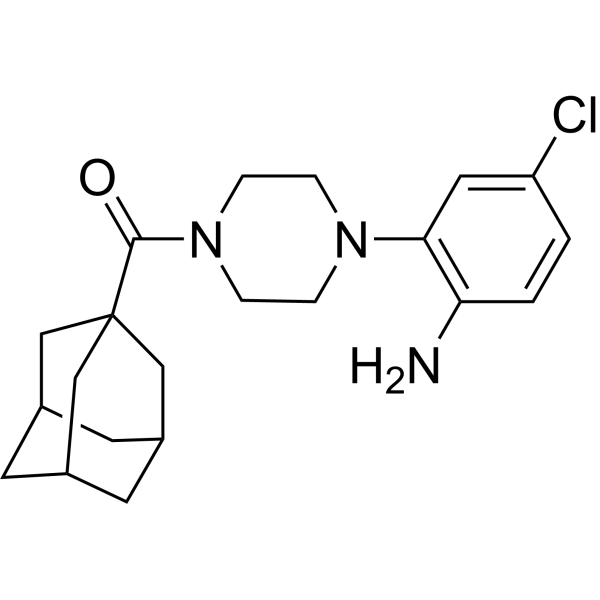 0 ImagesFXR agonist 4 (compound 10a) is an agonist of farnesoid X receptor (FXR) with an EC50 value of 1.05 μM. FXR agonist 4 effectively improves hyperlipidemia, hepatic steatosis, insulin resistance and hepatic inflammation in DIO mice. FXR agonist 4 can be used for the research of non-alcoholic fatty liver disease (NAFLD).
-
(R,R)-PX20606
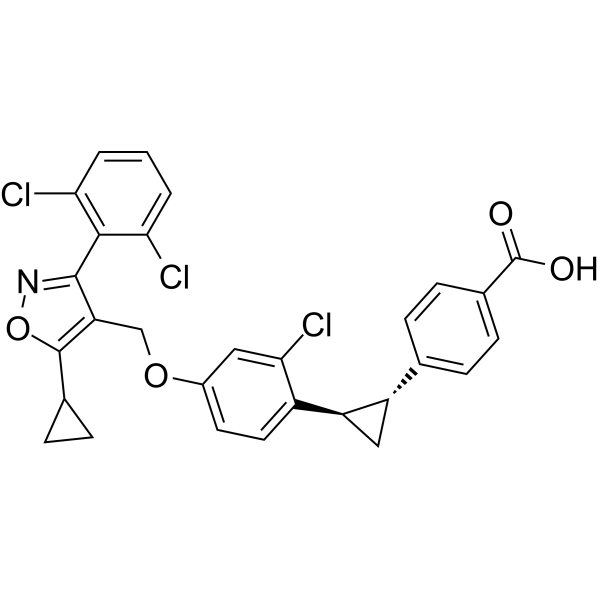 0 ImagesCat. No.: HY-100443BCAS No.: 1268244-88-7
-
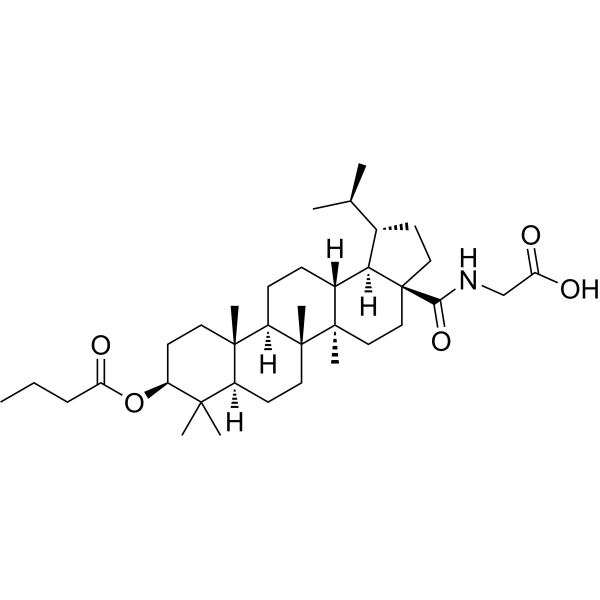
FXR antagonist 2 hydrochloride
 0 ImagesCat. No.: HY-148874APurity: 99.96%FXR antagonist 2 (compound A-26) hydrochloride is a diarylamide derivative, as well as a moderate FXR antagonist. FXR antagonist 2 hydrochloride can be used in the study of hyperlipidemia and type 2 diabetes.
-
Sevelamer
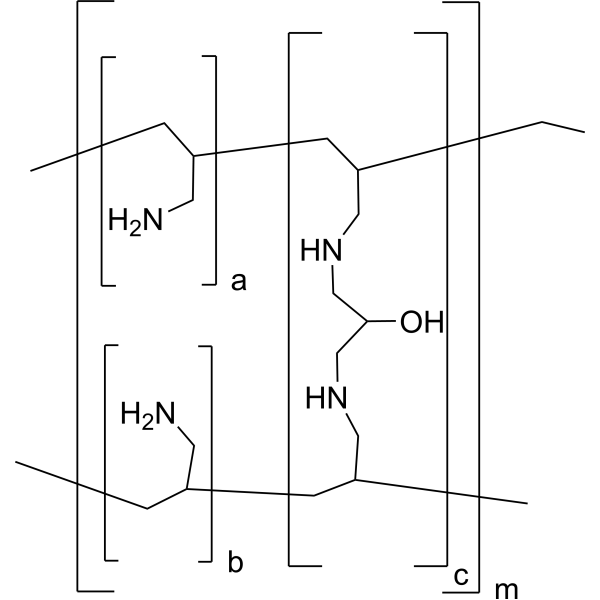 0 ImagesCat. No.: HY-13995CAS No.: 52757-95-6Sevelamer is an orally active polymeric phosphate binder and bile acid sequestrant. Sevelamer binds dietary phosphate in the gastrointestinal tract, reducing phosphate absorption and serum phosphorus levels, and reduces urinary phosphate excretion. Sevelamer binds polyanion bile acids, increases bile acid faecal excretion, and reduces total cholesterol and LDL cholesterol levels. Sevelamer can be used for the research of hyperphosphataemia, hyperparathyroidism, chronic renal failure, kidney disease, and type 2 diabetes.
-
Forskolin (GMP)
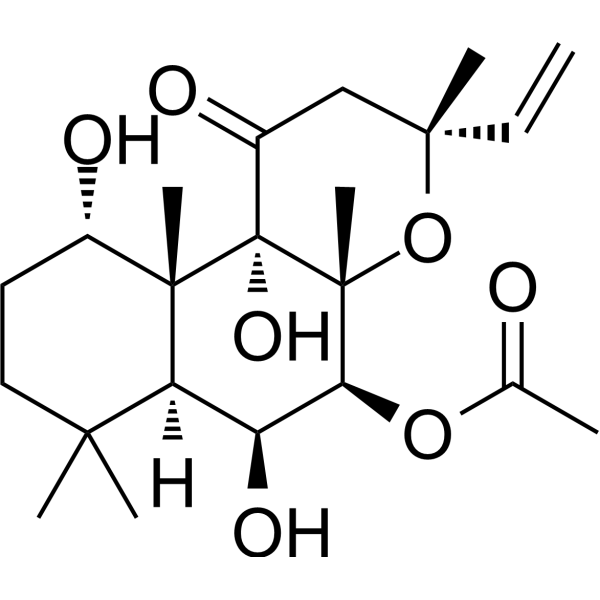 0 ImagesCat. No.: HY-15371GCAS No.: 66575-29-9Synonyms: Coleonol (GMP); Colforsin (GMP); HL 362 (GMP)Forskolin (Coleonol) (GMP) is a potent adenylate cyclase activator with an IC50 of 41 nM and an EC50 of 0.5 μM for type I adenylyl cyclase. Forskolin (GMP) is also an inducer of intracellular cAMP formation. Forskolin (GMP) induces differentiation of various cell types and activates pregnane X receptor (PXR) and FXR. Forskolin (GMP) exerts a inotropic effect on the heart, and has platelet antiaggregatory and antihypertensive actions. Forskolin (GMP) also induces autophagy.
-
Vidofludimus hemicalcium
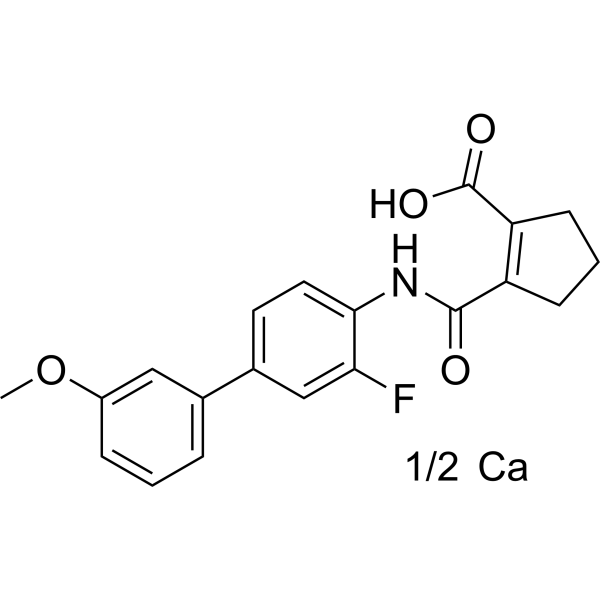 0 ImagesCat. No.: HY-14908ACAS No.: 1354012-90-0Synonyms: 4sc-101 hemicalcium; SC12267 hemicalciumVidofludimus (4sc-101; SC12267) hemicalcium is an orally active inhibitor for dihydroorotate dehydrogenase (DHODH) and also is a novel modulator for farnesoid X receptor (FXR). Vidofludimus hemicalcium, as an immunomodulatory agent, can be used for the research of autoimmune disorders such as inflammatory bowel disease (IBD). Vidofludimus hemicalcium also can be used for the research of fatty liver by targeting FXR.
-
PX20606
 0 ImagesCat. No.: HY-100443CAS No.: 1268245-19-7Synonyms: PX-102PX20606 is an orally active agonist for farnesoid X receptor (FXR), with EC50 220 nM (mFXR) and 50 nM (hFXR), measured by Gal4-FXR assay. PX20606 induces the expression of tumor suppressor gene NDRG2, inhibits the tumor growth and metastasis in mouse HCC model. PX20606 exhibits hepatoprotective efficacy.
-
BMS-986318
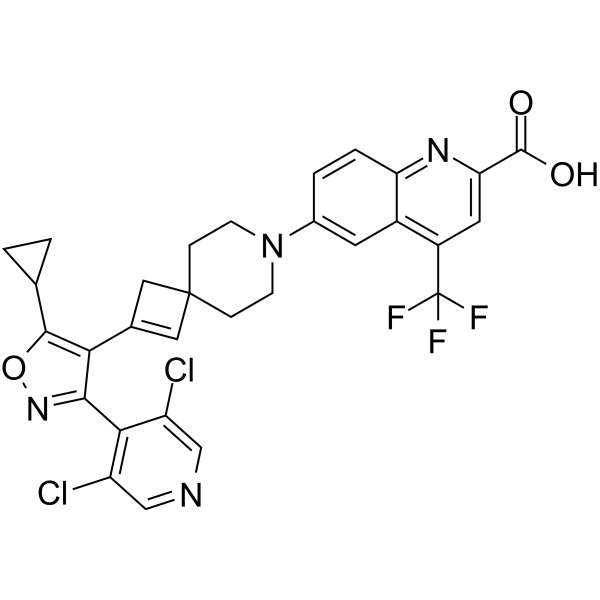 0 ImagesCat. No.: HY-139562CAS No.: 2314378-09-9BMS-986318 is a potent nonbile acid FXR agonist with EC50s of 53 and 350 nM in the FXR Gal4 and SRC-1 recruitment assays, respectively. BMS-986318 has a suitable ADME profile, and demonstrates efficacy in the mouse bile duct ligation model of liver cholestasis and fibrosis.BMS-986318 can be used for the research of nonalcoholic steatohepatitis.
-
NR1H4 activator 1
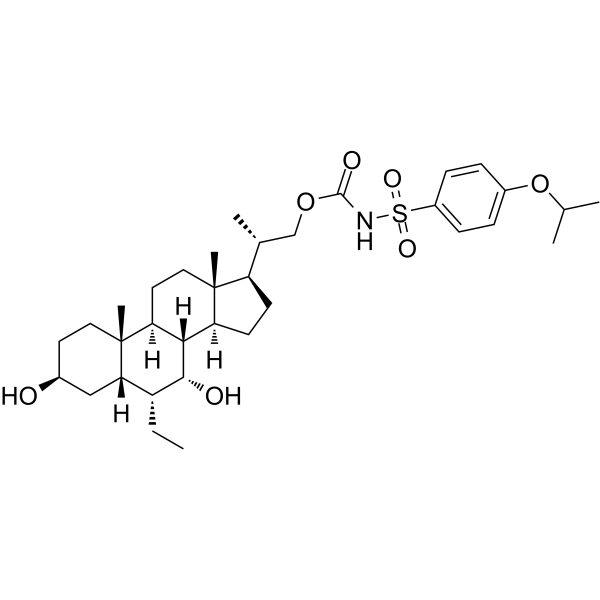 0 ImagesCat. No.: HY-125996CAS No.: 2242855-68-9NR1H4 activator 1 is a potent and selective Famesoid X Receptor (FXR) agonist, extracted from patent WO2018152171A1, example 4. NR1H4 activator 1 shows strong FXR agonistic potency with a EC50 value of 1 nM in a Human FXR (NR1H4) Assay. NR1H4 activator 1 has the potential for treatment of gastrointestinal disease.
-
Obeticholic acid-d5
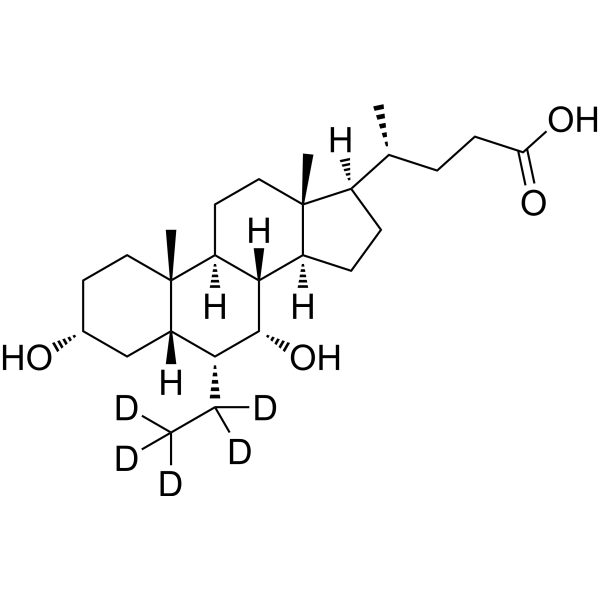 0 ImagesCat. No.: HY-12222SCAS No.: 1992000-80-2Synonyms: INT-747-d5; 6-ECDCA-d5; 6-Ethylchenodeoxycholic acid-d5
-
F44-S101
 0 ImagesCat. No.: HY-181876CAS No.: 3124701-00-1F44-S101 is an orally active, potent, and selective gut-restricted FXR antagonist with an IC50 of 0.48 μM and lipid-lowering activity. F44-S101 selectively antagonizes intestinal FXR, feedback-activates hepatic FXR, promotes cholesterol metabolism and reduces lipid accumulation. F44-S101 decreases total cholesterol, triglyceride and low-density lipoprotein cholesterol levels. F44-S101 can be used in studies related to hyperlipidemia.
-
Danifexor
 0 ImagesCat. No.: HY-172422CAS No.: 2648738-68-3Danifexor is the agonist for farnesoid X receptor.




