HDAC
Histone deacetylases
HDAC (Histone deacetylases) are a class of enzymes that remove acetyl groups (O=C-CH3) from an ε-N-acetyl lysine amino acid on ahistone, allowing the histones to wrap the DNA more tightly. This is important because DNA is wrapped around histones, and DNA expression is regulated by acetylation and de-acetylation. Its action is opposite to that of histone acetyltransferase. HDAC proteins are now also called lysine deacetylases (KDAC), to describe their function rather than their target, which also includes non-histone proteins. Together with the acetylpolyamine amidohydrolases and the acetoin utilization proteins, the histone deacetylases form an ancient protein superfamily known as the histone deacetylase superfamily.
Alle HDAC Isoform-spezifische Produkte anzeigen
-
HDAC
(381)
View all products
-
HDAC1
(308)
View all products
-
HDAC2
(205)
View all products
-
HDAC3
(197)
View all products
-
HDAC4
(72)
View all products
-
HDAC5
(57)
View all products
-
HDAC6
(318)
View all products
-
HDAC7
(54)
View all products
-
HDAC8
(182)
View all products
-
HDAC9
(42)
View all products
-
HDAC10
(63)
View all products
-
HDAC11
(70)
View all products
-
HD1
(3)
View all products
-
HD2
(4)
View all products
All Product Categories
-
HDAC Inhibitors
(755)
View all products
-
HDAC Antagonists
(3)
View all products
-
HDAC Activators
(14)
View all products
-
HDAC Modulators
(4)
View all products
-
HDAC MDM2 Inhibitor
(1)
View all products
-
HDAC Degraders
(40)
View all products
-
HDAC Controls
(3)
View all products
-
HDAC Substrates
(3)
View all products
-
HDAC Ligands
(9)
View all products
-
HDAC Verwandte Produkte (880)
Verwandte Produkte (880)

-
Antibodies (16)
-
HDAC Signalweg
-
HDAC Isoform Comparison
-
1-Naphthohydroxamic acid
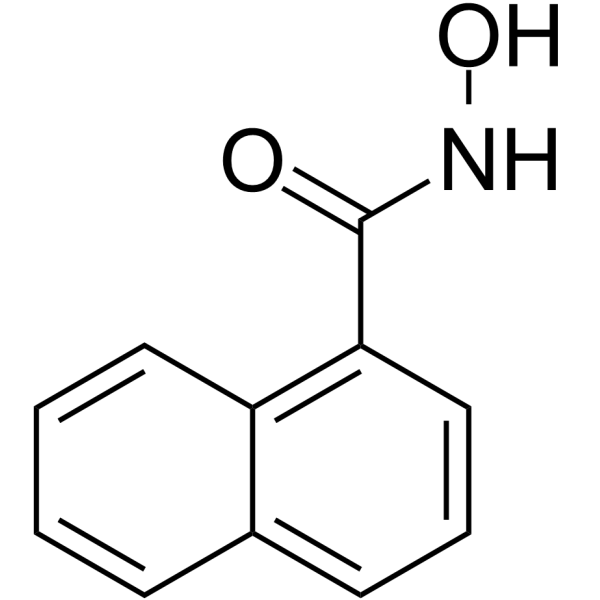 0 Images1-Naphthohydroxamic acid (Compound 2) is a potent and selective HDAC8 inhibitor with an IC50 of 14 μM. 1-Naphthohydroxamic acid is more selectively for HDAC8 than class I HDAC1 and class II HDAC6 (IC50 >100 μM). 1-Naphthohydroxamic acid does not increase global histone H4 acetylation and also does not reduce total intracellular HDAC activity.1-Naphthohydroxamic acid can induce tubulin acetylation.
-
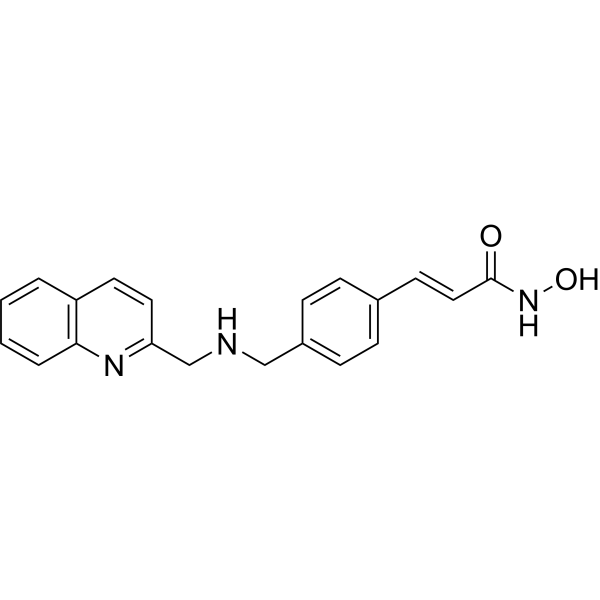
HDAC6-IN-46
 0 ImagesHDAC6-IN-46 (compound 12) is a selective histone deacetylase 6 (HDAC6) inhibitor with an IC50 value of 6.2 nM. HDAC6-IN-46 can be used in Alzheimer's disease research.

-
HDAC8-IN-8
 0 ImagesArt. -Nr.: HY-124782CAS. Nr.: 1884231-52-0HDAC8-IN-8 (15a) is an HDAC8 inhibitor, with IC50 values of 23.9 μM and 268.2 μM for hHDAC8 and smHDAC8 respectively. And for hHDAC1 and hHDAC6, the IC50 values are 12.1 μM and 2.9 μM respectively. HDAC8-IN-8 can be used in schistosomiasis-related research.
-
Sinapinic acid (Standard)
 0 ImagesSynonyms: Sinapic acid (Standard)Sinapinic acid (Sinapic acid) is a phenolic compound isolated from Hydnophytum formicarum Jack. Rhizome, acts as an inhibitor of HDAC, with an IC50 of 2.27 mM, and also inhibits ACE-I activity. Sinapinic acid posssess potent anti-tumor activity, induces apoptosis of tumor cells. Sinapinic acid shows antioxidant and antidiabetic activities. Sinapinic acid reduces total cholesterol, triglyceride, and HOMA-IR index, and also normalizes some serum parameters of antioxidative abilities and oxidative damage in ovariectomized rats.
-
Valproic acid sodium (Standard)
 0 ImagesSynonyms: Sodium Valproate (Standard); VPA sodium (Standard); 2-Propylpentanoic acid sodium (Standard)Valproic acid (sodium) (Standard) is the analytical standard of Valproic acid (sodium). This product is intended for research and analytical applications. Valproic acid (Sodium Valproate) sodium is an orally active HDAC inhibitor, with IC50 in the range of 0.5 and 2 mM, also inhibits HDAC1 (IC50, 400 μM), and induces proteasomal degradation of HDAC2. Valproic acid sodium activates Notch1 signaling and inhibits proliferation in small cell lung cancer (SCLC) cells. Valproic acid sodium is used in the treatment of epilepsy, bipolar disorder, metabolic disease, HIV infection and prevention of migraine headaches.
-
Ivaltinostat
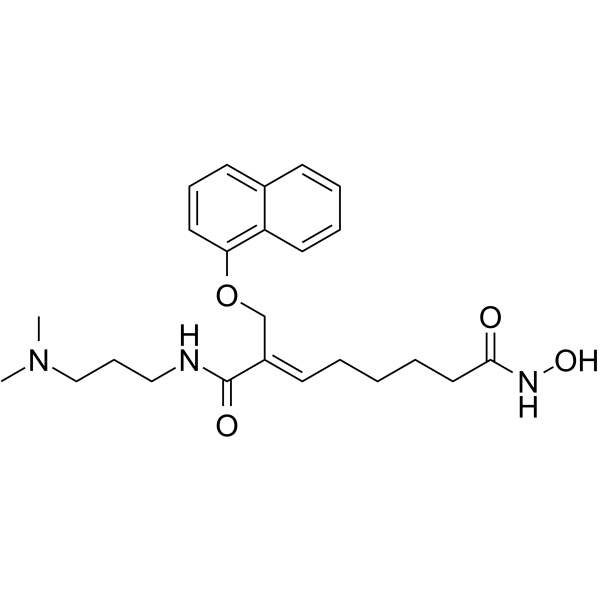 0 ImagesSynonyms: CG-200745Ivaltinostat (CG-200745) is an orally active, potent pan-HDAC inhibitor which has the hydroxamic acid moiety to bind zinc at the bottom of catalytic pocket. Ivaltinostat inhibits deacetylation of histone H3 and tubulin. Ivaltinostat induces the accumulation of p53, promotes p53-dependent transactivation, and enhances the expression of MDM2 and p21 (Waf1/Cip1) proteins. Ivaltinostat enhances the sensitivity of Gemcitabine-resistant cells to Gemcitabine (HY-16138) and 5-Fluorouracil (5-FU; HY-90006). Ivaltinostat induces apoptosis and has anti-tumour effects.
-
Valproic acid-d14 sodium
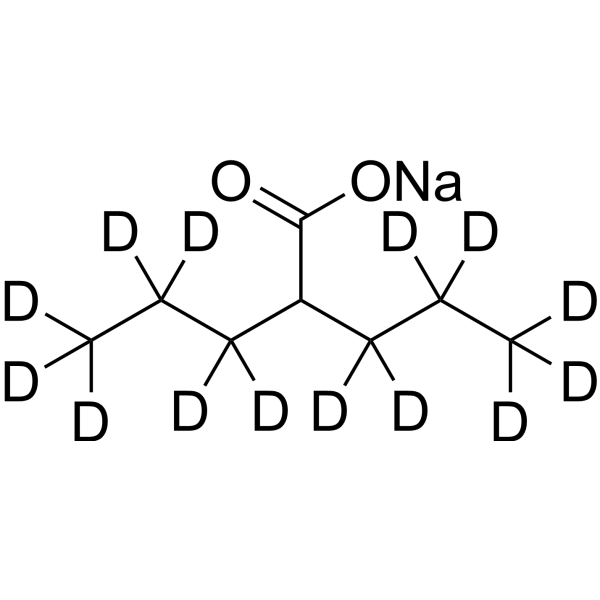 0 ImagesArt. -Nr.: HY-10585AS1Synonyms: Sodium Valproate-d14; VPA-d14 sodium; 2-Propylpentanoic acid-d14 sodiumValproic acid-d14 (sodium) is deuterium labeled Valproic acid (sodium). Valproic acid sodium salt (Sodium Valproate) is an HDAC inhibitor, with IC50 in the range of 0.5 and 2 mM, also inhibits HDAC1 (IC50, 400 μM), and induces proteasomal degradation of HDAC2. Valproic acid sodium salt activates Notch1 signaling and inhibits proliferation in small cell lung cancer (SCLC) cells. Valproic acid sodium salt is used in the treatment of epilepsy, bipolar disorder and prevention of migraine headaches.
-
4-Phenylbutyric acid-d5
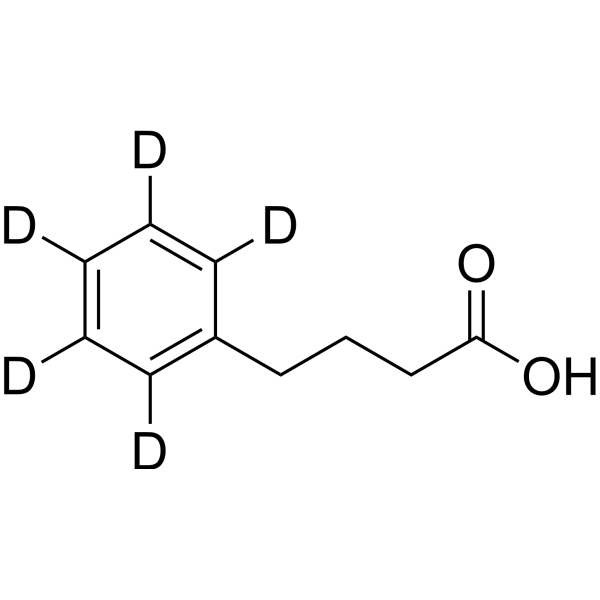 0 ImagesArt. -Nr.: HY-A0281S2CAS. Nr.: 64138-52-9Synonyms: 4-PBA-d5; Benzenebutyric acid-d5
-
AES-350
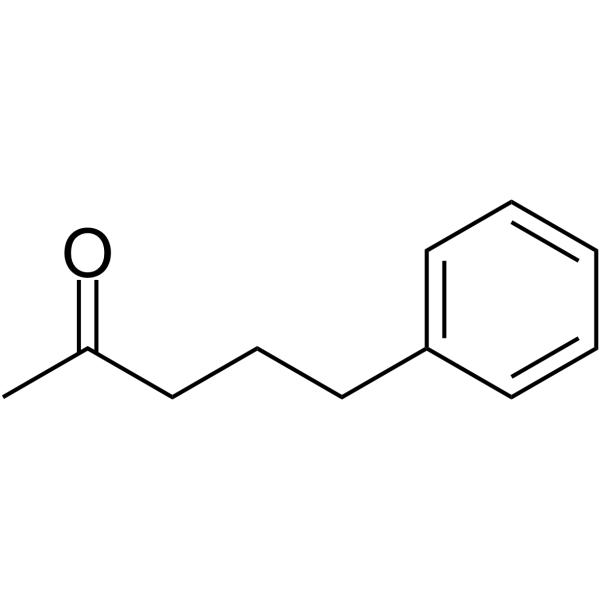
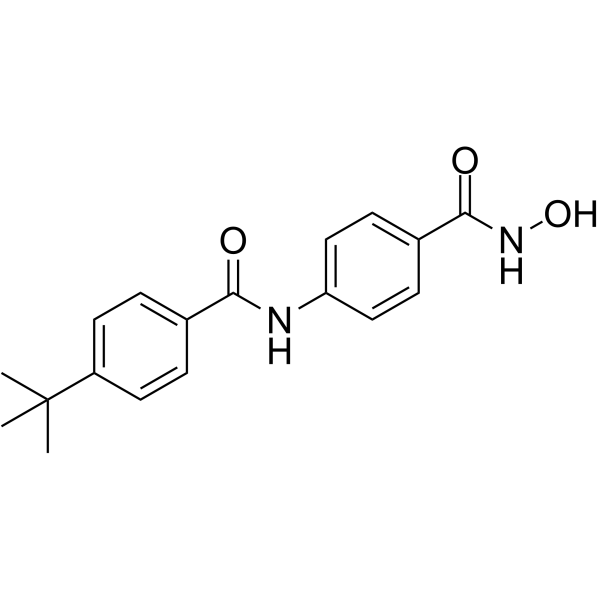 0 ImagesAES-350 is a potent and orally active HDAC6 inhibitor with an IC50 and a Ki of 0.0244 μM and 0.035 μM, respectively. AES-350 is also against HDAC3, HDAC8 in an enzymatic activity assay with IC50 values of 0.187 μM and 0.245 μM, respectively. AES-350 triggers apoptosis in AML cells through HDAC inhibition and can be used for acute myeloid leukemia (AML) research.
-
Vorinostat-d5
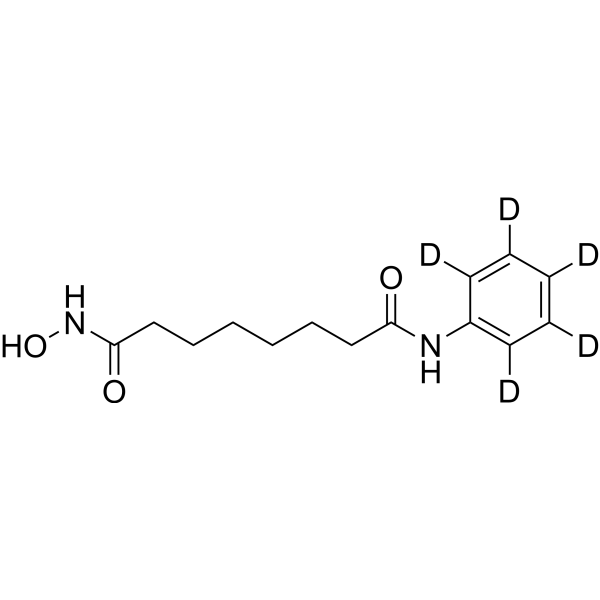 0 ImagesSynonyms: SAHA-d5; Suberoylanilide hydroxamic acid-d5Vorinostat-d5 (SAHA-d5) is the deuterium labeled Vorinostat. Vorinostat (SAHA) is a potent and orally active pan-inhibitor of HDAC1, HDAC2 and HDAC3 (Class I), HDAC7 (Class II) and HDAC11 (Class IV), with ID50 values of 10 nM and 20 nM for HDAC1 and HDAC3, respectively. Vorinostat induces cell apoptosis. Vorinostat is also an effective inhibitor of human papillomaviruse (HPV)-18 DNA amplification.
-
m-Carboxycinnamic acid bishydroxamide
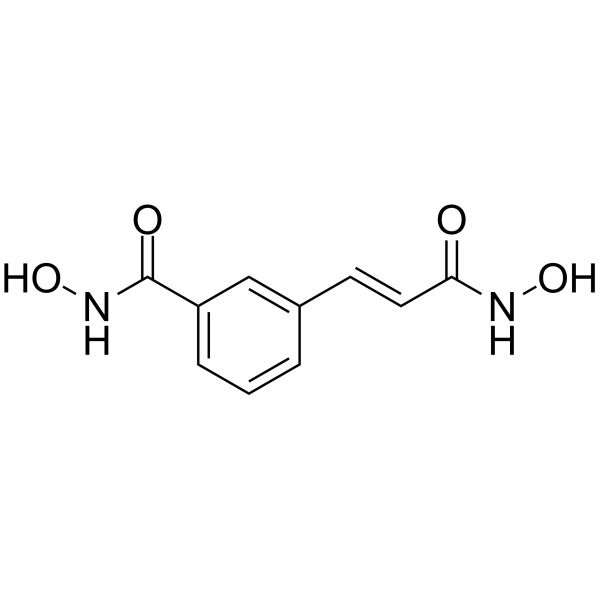 0 ImagesSynonyms: CBHAm-Carboxycinnamic acid bishydroxamide (CBHA) is a histone deacetylase inhibitor. m-Carboxycinnamic acid bishydroxamide modulates histone acetylation sites, alters DNA methylation and epigenetic status, increases global histone acetylation, alleviates transcription repression, and facilitates chromatin remodelling. m-Carboxycinnamic acid bishydroxamide can be used for the research of cloned embryo development and epigenetic regulation.

-
SAP15 acetate
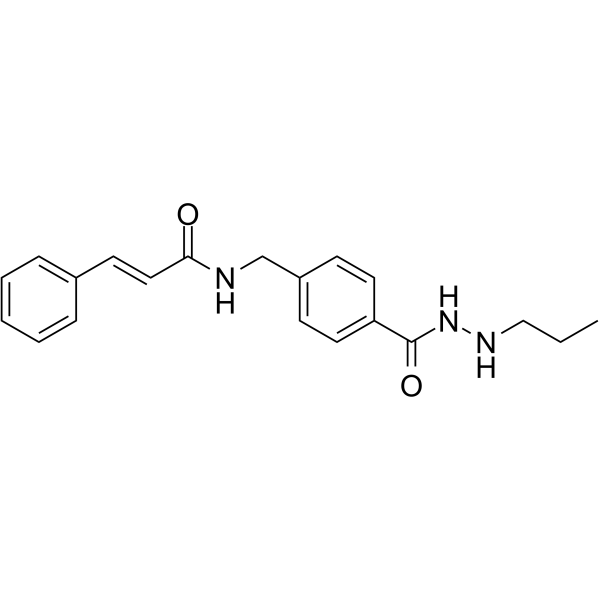
 0 ImagesArt. -Nr.: HY-P10462AReinheit: 98.04%Synonyms: Synthetic anti-inflammatory peptide 15 acetateSAP15 (Synthetic anti-inflammatory peptide 15) acetate is a synthetic anti-inflammatory peptide consisting of 15 amino acids designed from human beta-defensin 3. SAP15 acetate has the ability to penetrate cells and is able to induce downregulation of intracellular inflammation. SAP15 acetate inhibits inflammation by inhibiting the phosphorylation of HDAC5 and thereby reducing the phosphorylation of NF-κB p65. SAP15 acetate inhibits HDAC5 and NF-κB p65 phosphorylation in LPS (HY-D1056)-induced macrophages. SAP15 acetate increases the expression of aggrecan and type II collagen and decreases the expression of osteocalcin in LPS-induced chondrocytes. SAP15 acetate can be used in the study of inflammation regulation and anti-inflammatory therapy of biomaterials.